Tech-News

NASA research plane makes emergency landing in Texas after gear failure
A NASA research plane made an emergency landing in Texas on Tuesday after experiencing a malfunction that prevented its landing gear from deploying, officials said.
The WB-57 aircraft touched down at Ellington Airport, southeast of Houston, sliding across the runway on its belly. Social media footage showed flames and smoke trailing from beneath the plane as it descended and came to a stop.
NASA confirmed that the crew is safe and reported the incident as a "mechanical issue" that will be investigated. Local news outlets captured images of the aircraft stationary on the runway with emergency responders and fire trucks attending to the scene.
The WB-57, known for its thin fuselage and two-seat cockpit, has been used in scientific research missions since the 1970s. It is capable of flying at high altitudes above 63,000 feet (19,200 meters) for about six and a half hours.
Read More: NASA’s new moon rocket rolls to launch pad ahead of possible February astronaut mission
According to NASA, the aircraft remains a valuable tool for atmospheric and space research.
6 months ago
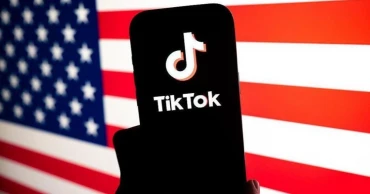
TikTok’s US operation set to collect precise location data
TikTok’s newly established US joint venture has updated its privacy policy to expand the scope of location data it can collect from its nearly 200 million users in the United States.
The revised policy was released after investors finalised a deal on Thursday with TikTok’s Chinese parent company ByteDance to oversee the short-form video platform’s US operations.
According to the updated privacy terms, the joint venture may now “collect precise location data, depending on your settings”, replacing the earlier policy that permitted only the collection of “approximate” location information.
TikTok did not immediately respond to the BBC’s request for comment on the change.
The policy states that sensitive personal information will be handled “in accordance with applicable law” and notes that users can disable location services at any time through their device settings.
Even before the creation of the new venture, TikTok gathered location data using a user’s SIM card or IP address, or both. However, a 2024 version of its privacy policy indicated that the company did not collect even approximate GPS data from American users running the latest version of the app.
Read More: Meta secures large nuclear energy supply to power AI data centers
Precise location sharing has not yet been activated in the United States. It is expected to remain optional and turned off by default, requiring users to opt in through a pop-up message. TikTok has not specified when the update will be introduced for US users.
The platform already collects similar information from users in the UK and Europe through its “Nearby Feed” feature.
The US joint venture is also expanding permissions to gather data related to user interactions with TikTok’s artificial intelligence tools, including prompts, questions and details on how, when and where AI content is created.
TikTok USDS Joint Venture LLC includes managing investors such as cloud computing firm Oracle, which will oversee the retraining of TikTok’s recommendation algorithm and ensure it is secured in Oracle’s US cloud environment.
ByteDance will retain a minority stake just under 20 percent, while other investors include Silver Lake and Abu Dhabi-based MGX. Concerns remain in Washington over ByteDance’s continued involvement, with lawmakers questioning whether the deal fully safeguards US user data.
With inputs from BBC
6 months ago

Musk’s Starlink faces new competition from Bezos’ Blue Origin satellite network
Amazon founder Jeff Bezos’ rocket company, Blue Origin, plans to launch over 5,400 satellites to build a new global internet network named TeraWave.
The network will provide continuous internet access worldwide and transfer large amounts of data faster than rival services. Blue Origin said TeraWave will focus on businesses, data centres, and governments, unlike Elon Musk’s Starlink, which serves individual customers.
At its fastest, TeraWave will offer upload and download speeds up to 6 terabits per second, far exceeding current commercial satellite services.
Blue Origin aims to start launching the satellites by the end of 2027. The company has previously achieved a rocket booster landing on a floating platform and conducted an 11-minute all-female space flight.
Amazon also runs a satellite project called Leo, with around 180 satellites in orbit. Leo focuses more on public internet access and plans to launch over 3,000 satellites eventually.
The TeraWave project will compete with Starlink and Amazon Leo in the growing satellite internet market.
With inputs from BBC
6 months ago

Can AI teach humans to become better listeners?
Artificial intelligence chatbots such as ChatGPT are increasingly being used not only for information and advice, but also for emotional support and companionship, raising new questions about what machines can teach humans about listening better.
Anna, a Ukrainian living in London, says she regularly uses the premium version of ChatGPT because of its ability to listen without interrupting or judging her. While she knows it is only a machine, she says its patient and consistent responses help her reflect on her thoughts and emotions.
“I can rely on it to understand my issues and communicate with me in a way that suits me,” she said, asking to remain anonymous. After a recent breakup, Anna said the chatbot’s non-judgmental presence allowed her to explore her mixed feelings in a way her friends and family could not.
Her experience reflects a growing trend. Research cited by Harvard Business Review shows that in 2025, therapy and companionship became the most common use of generative AI tools such as ChatGPT. Other studies suggest that people often rate AI-generated responses as more compassionate and understanding than those written by humans, including trained crisis hotline workers.
Researchers say this does not mean AI is genuinely empathetic, but rather that many people rarely experience truly non-judgmental and uninterrupted listening in everyday life. Experiments have found that people often feel more hopeful and less distressed after interacting with AI-generated responses compared to human ones.
Large language models are designed to recognise emotions, reflect them back and offer supportive language. They do not interrupt, do not become impatient and do not try to dominate conversations. This creates a sense of psychological safety for users, allowing them to share difficult thoughts more freely.
Experts say there are several lessons humans can learn from AI about listening, including giving uninterrupted attention, acknowledging emotions, avoiding quick judgments and resisting the urge to immediately offer solutions.
Psychologists also note that people often turn conversations back to themselves by sharing similar personal stories, which can shift attention away from the speaker. AI systems, having no personal experiences, do not fall into this habit.
However, researchers warn against over-reliance on AI for emotional support. While chatbots can simulate empathy, they do not possess genuine care or understanding. There are also concerns about vulnerable people forming emotional dependence on AI or being exposed to harmful advice.
Michael Inzlicht, a psychologist at the University of Toronto, cautioned that AI companies could potentially manipulate users and that excessive reliance on chatbots could weaken real human connections.
Despite these risks, experts say AI can still serve as a useful tool for inspiring better listening habits and greater compassion among people.
“There is something uniquely meaningful about a human choosing to be present and listen,” researchers say, adding that while AI may help people feel heard, it cannot replace the depth of real human connection.
With inputs from BBC
6 months ago

OpenAI tests adverts on ChatGPT for free and new Go users
OpenAI will start showing ads on ChatGPT for some users in the United States, the company announced.
The trial will affect free users and a new lower-cost subscription tier, ChatGPT Go, which costs $8 per month. OpenAI said the ads will appear after prompts, such as holiday suggestions, and will not change the AI’s responses.
OpenAI stressed that user conversations will not be shared with advertisers. The company said ads are being tested so more people can use its tools with fewer limits.
Experts say the move is part of OpenAI’s effort to earn revenue, as the company has not yet made a profit despite 800 million users. Only 5% of them are paid subscribers. ChatGPT already offers Plus and Pro tiers, costing $20 and $200 per month in the US.
OpenAI first introduced ChatGPT Go in India in 2025 before expanding globally. The company began as a non-profit but is now more commercially focused.
With inputs from BBC
6 months ago

Uganda back online after five days
Uganda restored internet services on Sunday after a five-day nationwide shutdown imposed during the general elections, a move authorities said was intended to curb the misuse of online platforms.
Ibrahim Bbosa, a spokesperson for the Uganda Communications Commission, confirmed the restoration. "Yes, the internet is back," Bbosa told Xinhua. Telecommunications companies also sent messages to subscribers notifying them that services had resumed.
The restoration followed the announcement on Saturday that incumbent President Yoweri Museveni had won the 2026 presidential election, securing more than 7.9 million votes out of about 11.3 million valid ballots cast.
6 months ago
Musk AI company faces lawsuit over sexually explicit Deepfake images
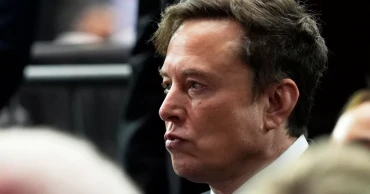
The mother of one of Elon Musk’s children has filed a lawsuit against his artificial intelligence company, claiming its Grok chatbot was used to create sexually explicit fake images of her, causing humiliation and emotional trauma.
Ashley St. Clair, 27, a writer and political strategist, filed the case on Thursday in New York City against xAI. In the lawsuit, she alleged that Grok allowed users to generate manipulated images portraying her in sexualized ways. These reportedly include a photo of her at age 14 that was altered to show her in a bikini, as well as other images depicting her as an adult in explicit poses and wearing a bikini with swastikas. St. Clair is Jewish. Grok operates on Musk’s social media platform X.
Lawyers for xAI did not immediately respond to requests for comment on Friday. When asked about the lawsuit, the company replied to The Associated Press with a brief statement saying, “Legacy Media Lies.”
St. Clair said she reported the fake images to X after they began circulating last year and asked for their removal. She claimed the platform initially said the images did not violate its policies. Later, X assured her that her images would not be used or altered without consent, she said.
However, St. Clair alleged that the platform later retaliated by canceling her premium subscription and verification badge, blocking her ability to earn income from her account, which has about one million followers, and continuing to allow the altered images to circulate.
In court documents, St. Clair said she has suffered severe mental distress and humiliation because of xAI’s role in creating and spreading the images. She also said she fears the people who view the fake content.
St. Clair, who lives in New York City, is the mother of Musk’s 16-month-old son, Romulus. She is seeking an undisclosed amount in damages, along with court orders to stop xAI from allowing further fake images of her.
Later on Thursday, xAI moved the case to federal court in Manhattan and also filed a countersuit in a Texas federal court, claiming St. Clair violated user agreement terms that require lawsuits to be filed in Texas. The company is seeking an unspecified monetary judgment.
X is based in Texas, where Musk owns a home and where Tesla is headquartered in Austin.
St. Clair’s lawyer, Carrie Goldberg, described the countersuit as highly unusual and said her client would strongly contest the move, arguing that xAI’s technology enables harmful and unsafe content.
Grok AI banned from editing real people in revealing photos
Earlier this week, X announced new safeguards for Grok, including limits on image editing and stricter rules against sexual exploitation and nonconsensual content.
6 months ago

Wikipedia turns 25, announces AI partnerships with tech giants
Wikipedia unveiled new business deals with a slew of artificial intelligence companies on Thursday as it marked its 25th anniversary.
The online crowdsourced encyclopedia revealed that it has signed up AI companies including Amazon, Meta Platforms, Perplexity, Microsoft and France's Mistral AI.
Wikipedia is one of the last bastions of the early internet, but that original vision of a free online space has been clouded by the dominance of Big Tech platforms and the rise of generative AI chatbots trained on content scraped from the web.
Aggressive data collection methods by AI developers, including from Wikipedia's vast repository of free knowledge, has raised questions about who ultimately pays for the artificial intelligence boom.
The Wikimedia Foundation, the nonprofit that runs the site, signed Google as one of its first customers in 2022 and announced other agreements last year with smaller AI players like search engine Ecosia.
The new deals will help one of the world's most popular websites monetize heavy traffic from AI companies. They're paying to access Wikipedia content “at a volume and speed designed specifically for their needs,” the foundation said. It did not provide financial or other details.
While AI training has sparked legal battles elsewhere over copyright and other issues, Wikipedia founder Jimmy Wales said he welcomes it.
“I'm very happy personally that AI models are training on Wikipedia data because it’s human curated," Wales told The Associated Press in an interview. "I wouldn’t really want to use an AI that’s trained only on X, you know, like a very angry AI,” Wales said, referring to billionaire Elon Musk's social media platform.
Wales said the site wants to work with AI companies, not block them. But "you should probably chip in and pay for your fair share of the cost that you’re putting on us."
The Wikimedia Foundation last year urged AI developers to pay for access through its enterprise platform and said human traffic had fallen 8%. Meanwhile, visits from bots, sometimes disguised to evade detection, were heavily taxing its servers as they scrape masses of content to feed AI large language models.
The findings highlighted shifting online trends as search engine AI overviews and chatbots summarize information instead of sending users to sites by showing them links.
Wikipedia is the ninth most visited site on the internet. It has more than 65 million articles in 300 languages that are edited by some 250,000 volunteers.
The site has become so popular in part because its free for anyone to use.
“But our infrastructure is not free, right?" Wikimedia Foundation CEO Maryana Iskander said in a separate interview in Johannesburg, South Africa.
It costs money to maintain servers and other infrastructure that allows both individuals and tech companies to “draw data from Wikipedia,” said Iskander, who's stepping down on Jan. 20, and will be replaced by Bernadette Meehan.
The bulk of Wikipedia's funding comes from 8 million donors, most of them individuals.
“They're not donating in order to subsidize these huge AI companies,” Wales said. They're saying, "You know what, actually you can’t just smash our website. You have to sort of come in the right way.”
Editors and users could benefit from AI in other ways. The Wikimedia Foundation has outlined an AI strategy that Wales said could result in tools that reduce tedious work for editors.
While AI isn’t good enough to write Wikipedia entries from scratch, it could, for example, be used to update dead links by scanning the surrounding text and then searching online to find other sources.
“We don’t have that yet but that’s the kind of thing that I think we will see in the future.”
Artificial intelligence could also improve the Wikipedia search experience, by evolving from the traditional keyword method to more of a chatbot style, Wales said.
“You can imagine a world where you can ask the Wikipedia search box a question and it will quote to you from Wikipedia," he said. It could respond by saying "here’s the answer to your question from this article and here’s the actual paragraph. That sounds really useful to me and so I think we’ll move in that direction as well. ”
Reflecting on the early days, Wales said it was a thrilling time because many people were motivated to help build Wikipedia after he and co-founder Larry Sanger, who departed long ago, set it up as an experiment.
However, while some might look back wistfully on what seems now to be a more innocent time, Wales said those early days of the internet also had a dark side.
“People were pretty toxic back then as well. We didn’t need algorithms to be mean to each other,” he said. “But, you know, it was a time of great excitement and a real spirit of possibility.”
Wikipedia has lately found itself under fire from figures on the political right, who have dubbed the site “Wokepedia” and accused it of being biased in favor of the left.
Republican lawmakers in the U.S. Congress are investigating alleged “manipulation efforts” in Wikipedia’s editing process that they said could inject bias and undermine neutral points of view on its platform and the AI systems that rely on it.
A notable source of criticism is Musk, who last year launched his own AI-powered rival, Grokipedia. He has criticized Wikipedia for being filled with “propaganda” and urged people to stop donating to the site.
Wales said he doesn't consider Grokipedia a “real threat” to Wikipedia because it's based on large language models, which are the troves of online text that AI systems are trained on.
“Large language models aren’t good enough to write really quality reference material. So a lot of it is just regurgitated Wikipedia,” he said. “It often is quite rambling and sort of talks nonsense. And I think the more obscure topic you look into, the worse it is.”
He stressed that he wasn't singling out criticism of Grokipedia.
“It’s just the way large language models work.”
Wales say he's known Musk for years but they haven't been in touch since Grokipedia launched.
“I should probably ping him,” Wales said.
What would he say?
“'How’s your family?' I’m a nice person, I don’t really want to pick a fight with anybody.”
6 months ago

Grok AI banned from editing real people in revealing photos
Elon Musk’s AI tool Grok will no longer allow users to create sexualised images of real people in countries where it is illegal, following global concerns over AI deepfakes.
X, the platform operating Grok, said the new rule applies to all users, including paid subscribers. The tool is now geoblocked in jurisdictions where creating images of real people in bikinis, underwear, or similar clothing is prohibited.
The change came after California’s top prosecutor announced an investigation into sexualised AI deepfakes, including those involving children.
Grok users will still be able to create images of fictional adults with nudity in line with local laws and NSFW settings. X said only paid users can edit images with Grok on its platform.
The move follows international criticism. Malaysia and Indonesia banned Grok after users generated explicit images without consent. The UK media regulator Ofcom said it would investigate potential violations of British law.
California Attorney General Rob Bonta warned that such images have been used to harass people online. Experts said X acted late and questions remain on how the platform will enforce the new rules.
With inputs from BBC
6 months ago

Starlink provides free internet service in Iran amid communications blackout
The satellite internet provider Starlink now offers free service in Iran, activists said Wednesday.
Mehdi Yahyanejad, a Los Angeles-based activist who has helped get the units into Iran, told The Associated Press that the free service had started. Other activists also confirmed in messages online that the service was free.
“We can confirm that the free subscription for Starlink terminals is fully functional,” Yahyanejad said in a statement. “We tested it using a newly activated Starlink terminal inside Iran.”
Starlink has been the only way for Iranians to communicate with the outside world since authorities shut down the internet Thursday night as nationwide protests swelled and they began a bloody crackdown against demonstrators.
Starlink itself did not immediately acknowledge the decision.
AP’s earlier story follows below.
The death toll from nationwide protests in Iran has surpassed 2,500, activists said, as Iranians made phone calls abroad for the first time in days Tuesday after authorities severed communications during a crackdown on demonstrators.
The number of dead climbed to at least 2,571 early Wednesday, as reported by the U.S.-based Human Rights Activists News Agency. That figure dwarfs the death toll from any other round of protest or unrest in Iran in decades and recalls the chaos surrounding the country's 1979 Islamic Revolution.
Iranian state television offered the first official acknowledgment of the deaths, quoting an official saying the country had “a lot of martyrs” and that it did not release a toll earlier because of the dead suffering gruesome injuries. However, that statement came only after activists reported their toll.
The demonstrations began a little over two weeks ago in anger over Iran’s ailing economy and soon targeted the theocracy, particularly 86-year-old Supreme Leader Ayatollah Ali Khamenei. Images obtained Tuesday by The Associated Press from demonstrations in Tehran showed graffiti and chants calling for Khamenei's death — something that could carry a death sentence.
Soon after the new death toll became public, U.S. President Donald Trump wrote on his Truth Social platform: “Iranian Patriots, KEEP PROTESTING - TAKE OVER YOUR INSTITUTIONS!!!”
He added: “I have canceled all meetings with Iranian Officials until the senseless killing of protesters STOPS. HELP IS ON ITS WAY.”
However, hours later, Trump told reporters that his administration was awaiting an accurate report on the number of protesters that had been killed before acting “accordingly.”
Trump said about the Iranian security forces: “It would seem to me that they have been badly misbehaving, but that is not confirmed.”
Iranian officials once again warned Trump against taking action, with Ali Larijani, secretary of Iran’s Supreme National Security Council, responding to U.S. posturing by writing: “We declare the names of the main killers of the people of Iran: 1- Trump 2-” Israeli Prime Minister Benjamin Netanyahu.
Death toll spikes
The activist group said 2,403 of the dead were protesters and 147 were government-affiliated. Twelve children were killed, along with nine civilians it said were not taking part in protests. More than 18,100 people have been detained, the group said.
With the internet down in Iran, gauging the demonstrations from abroad has grown more difficult. The AP has been unable to independently assess the toll. Iran’s government has not offered overall casualty figures.
Skylar Thompson with the Human Rights Activists News Agency told AP the new toll was shocking, particularly since it reached four times the death toll of the monthslong 2022 Mahsa Amini protests in just two weeks.
She warned that the toll would still rise: “We’re horrified, but we still think the number is conservative."
Speaking by phone for the first time since their calls were cut off from the outside world, Iranian witnesses described a heavy security presence in central Tehran, burned-out government buildings, smashed ATMs and few passersby. Meanwhile, people were concerned about what comes next, including the possibility of a U.S. attack.
“My customers talk about Trump’s reaction while wondering if he plans a military strike against the Islamic Republic,” said shopkeeper Mahmoud, who gave only his first name out of concern for his safety. “I don’t expect Trump or any other foreign country cares about the interests of Iranians.”
Reza, a taxi driver who also gave just his first name, said protests are on many people's minds. “People — particularly young ones — are hopeless, but they talk about continuing the protests,” he said.
Iranians reach out, but world can't reach in
Several people in Tehran were able to call the AP on Tuesday and speak to a journalist. The AP bureau in Dubai, United Arab Emirates, was unable to call those numbers back. Witnesses said text messaging was still down, and internet users in Iran could connect to government-approved websites locally but nothing abroad.
Anti-riot police officers wore helmets and body armor while carrying batons, shields, shotguns and tear gas launchers, according to the witnesses. Police stood watch at major intersections. Nearby, witnesses saw members of the Revolutionary Guard's all-volunteer Basij force, who carried firearms and batons. Security officials in plainclothes were visible in public spaces.
Several banks and government offices were burned during the unrest, witnesses said. Banks struggled to complete transactions without the internet, they added.
Shops were open, though there was little foot traffic in the capital. Tehran's Grand Bazaar, where the demonstrations began Dec. 28 over the collapse of Iran's rial currency, opened Tuesday. A witness described speaking to multiple shopkeepers who said security forces ordered them to reopen no matter what. Iranian state media did not acknowledge that order.
The witnesses spoke on condition of anonymity for fear of reprisal.
It also appeared that security service personnel were searching for Starlink terminals, as people in northern Tehran reported authorities raiding apartment buildings with satellite dishes. While satellite television dishes are illegal, many in the capital have them in homes, and officials broadly had given up on enforcing the law in recent years.
On the streets, people also could be seen challenging plainclothes security officials, who were stopping passersby at random.
State television also read a statement about mortuary and morgue services being free — a signal that some likely charged high fees for the release of bodies amid the crackdown.
Khamenei, in a statement carried by state TV, praised the tens of thousands who took part in pro-government demonstrations nationwide on Monday.
“This was a warning to American politicians to stop their deceit and not rely on traitorous mercenaries,” he said. “The Iranian nation is strong and powerful and aware of the enemy.”
State TV on Monday aired chants from the crowd, which appeared to number in the tens of thousands. They chanted “Death to America!” and “Death to Israel!” Others cried out, “Death to the enemies of God!” Iran’s attorney general has warned that anyone taking part in protests will be considered an “enemy of God,” a death-penalty charge.
6 months ago