Tech-News

Govt giving the highest priority to developing AI-skilled workforce: Faqir Mahbub Anam
Minister for Posts, Telecommunications and Information Technology and Science and Technology Faqir Mahbub Anam on Saturday said the government is giving the highest priority to developing an AI-skilled workforce, describing artificial intelligence as a key driver of the country's future economy, innovation and competitiveness.
He made the remarks while inaugurating the Artificial Intelligence Research Laboratory and AI Project Competition 2026 at Daffodil International University (DIU) in Birulia, Savar.
Speaking at the event, the minister said AI is no longer just an emerging technology but has become a transformative force shaping education, healthcare, agriculture, industry, business and public administration.
"Building a new Bangladesh requires sustained investment in research, innovation and the development of a highly skilled workforce," he said.
He said university-based AI research laboratories can serve as centres of excellence by equipping students with advanced knowledge and practical skills, enabling them to conduct research, develop innovative prototypes and create industry-focused solutions.
Highlighting the government's digital transformation agenda, the minister said continued investment in the ICT sector has laid a strong foundation for developing future-ready human resources through a range of initiatives.
Referring to the government's long-term vision, Anam said Prime Minister Tareq Rahman considers young people the driving force behind tomorrow's Bangladesh.
"Our goal is to create one million new jobs in the ICT sector over the next five years," he said, adding that AI will play a central role in achieving that target by driving economic growth, employment and innovation.
The minister also announced that the government and the Ministry of Posts, Telecommunications and Information Technology would support the most promising AI projects developed by DIU students through the ministry's Startup Fund and other relevant platforms.
He said the government is also working to establish AI training centres across the country while expanding satellite-based internet connectivity to the grassroots to ensure wider access to digital services.
The newly inaugurated AI Research Laboratory includes 25 NVIDIA DGX Spark workstations, along with five high-performance computers powered by RTX 3060 and RTX 4090 graphics processing units (GPUs).
According to the university, the laboratory has appointed five full-time researchers who are working on AI-driven solutions to real-world challenges, including AI agents and product development. The research team has already developed platforms such as AI Professor, AI Proctor and AI Registrar, and is currently developing a Smart Classroom system.
The minister later distributed prizes to 12 winning teams across six categories in the AI Project Competition 2026, where 145 student-developed AI projects were showcased.
Dr Md Sabur Khan, chairman of the Board of Trustees of Daffodil International University chaired the session.
Among those present were Vice-Chancellor Prof Dr S M R Kabir, Pro-Vice Chancellor Prof Dr Md Shams Iqbal, Head of the Department of Computing and Information Systems Prof Dr Md Sarwar Hossain Mollah, faculty members, students and invited guests.
23 days ago

Apple sues OpenAI, accuses ChatGPT maker of stealing trade secrets for AI hardware
Apple has filed a lawsuit against OpenAI, accusing the ChatGPT maker of stealing confidential trade secrets while developing its own artificial intelligence hardware, marking a major escalation in tensions between the two companies.
The lawsuit, filed Friday in a federal court in California, alleges that OpenAI encouraged Apple employees it was recruiting to share confidential company information and even advised them on how to avoid attracting attention when leaving Apple.
"This case is about Apple's former employees stealing Apple's trade secrets for the benefit of OpenAI," Apple said in the court filing, adding that it filed the lawsuit to stop the alleged misuse of its proprietary information.
The lawsuit also names two former Apple employees who now work at OpenAI.
One of them is Tang Tan, who played a key role in designing the iPhone, Apple Watch and iPod before becoming OpenAI's chief hardware officer. The other is Chang Liu, who worked on Apple's product development before joining OpenAI earlier this year.
OpenAI said it is reviewing the lawsuit. Company spokesperson Drew Pusateri said OpenAI has "no interest in other companies' trade secrets" and remains focused on developing technology that benefits users.
Apple claims OpenAI's hardware project relies partly on confidential information taken from the company. Although OpenAI has not revealed details of the device it is developing, it has said the goal is to create a new way for people to interact with artificial intelligence beyond traditional computers and smartphones.
According to the lawsuit, Apple launched an internal investigation after suspecting that confidential information had been compromised and found what it described as a pattern of trade secret theft involving former employees who later joined OpenAI.
The complaint alleges that Liu accessed and downloaded confidential hardware-related files on an Apple-issued device after leaving the company. It also claims Tan encouraged Apple employees interviewing for jobs at OpenAI to bring actual Apple hardware components to interviews.
Apple said it raised its concerns with OpenAI in February but did not receive a response.
An Apple spokesperson said the company would continue to protect its employees' work and innovations through appropriate legal action.
The lawsuit comes as relations between the two companies have shifted from partnership to growing competition.
Apple partnered with OpenAI in 2024 to integrate ChatGPT into the iPhone, allowing users to access AI-powered responses when Siri could not answer their questions.
Since then, OpenAI has expanded its hardware ambitions by hiring former Apple designer Jony Ive to lead the development of an AI-powered device that industry analysts believe could eventually compete with Apple's products.
Last year, OpenAI announced a confidential hardware collaboration with Ive and acquired io Products, a company co-founded by Ive, Tang Tan and others, in a deal valued at nearly $6.5 billion.
Apple's lawsuit also names io Products as a defendant.
The legal battle comes as OpenAI considers a future public stock market listing while facing growing competition in the AI sector from companies including Anthropic and Google.
Despite scaling back some business projects earlier this year to focus on ChatGPT, OpenAI has continued developing its consumer hardware. Chief Financial Officer Sarah Friar told The Associated Press in April that the company expects to introduce its first consumer hardware product later this year.
23 days ago

Japan successfully tests reusable rocket in boost for low-cost space launches
Japan's space agency successfully carried out the first test flight of its experimental reusable rocket on Saturday, marking an important step toward developing cheaper space launches and strengthening its position in the global space industry.
The reusable vehicle, known as RV-X, lifted off from the Japan Aerospace Exploration Agency's (JAXA) Noshiro Testing Center in northeastern Japan. During the test, the rocket rose vertically, hovered, moved sideways and then landed safely after a flight lasting less than one minute.
The launch was livestreamed by NVS, a Japanese space enthusiasts' group.
According to Takashi Ito, JAXA's reusable rocket project manager, the test went as planned. The rocket climbed to a height of 11 metres (36 feet), moved 16 metres (52 feet) horizontally while maintaining an upright position, and then landed successfully.
The test is part of Japan's efforts to develop reusable rocket technology that can significantly reduce launch costs, similar to the system used by Elon Musk's SpaceX for several years.
JAXA hopes the technology will eventually support the development of a reusable successor to Japan's current H3 rocket, which is designed for a single launch.
The successful test came a day after Chinese state media reported that China had recovered the first stage of a rocket for the first time following a launch.
Japan's H3 rocket was introduced as a more affordable replacement for the highly reliable H-2A rocket. However, officials say further cost reductions will be necessary for Japan to compete effectively in the growing global launch market.
The Japanese government considers a reliable and commercially competitive launch system essential for both the country's space programme and national security.
JAXA and Mitsubishi Heavy Industries are jointly developing the RV-X. The rocket measures 7.3 metres (23.9 feet) in length and 1.8 metres (5.9 feet) in diameter. It is equipped with a more durable engine and four shock-absorbing landing legs designed for repeated use.
Ito said the rocket's engine has already completed 165 combustion tests, demonstrating its durability.
JAXA is also working with partners in France and Germany on reusable rocket technology. Future test flights of the RV-X are expected to reach altitudes of around 100 metres (328 feet) as development continues.
23 days ago

Technology fuels growing security threats in UK, senior police officials warn
British counterterrorism officials have warned that technology and online platforms are increasingly being used by hostile states, extremist organisations and far-right groups to threaten the United Kingdom, making online security a growing challenge.
Speaking on Thursday, Vicki Evans, the Metropolitan Police's senior national coordinator for counterterrorism, said tackling online threats has become a "constant battle" and stressed that police cannot address the problem without stronger cooperation from technology companies.
While Islamist extremism continues to pose the biggest security threat, officials said risks linked to far-right extremism and hostile foreign states have risen sharply over the past five years.
Laurence Taylor, head of counterterrorism policing, said hostile state activity has become one of the fastest-growing security concerns facing Britain.
Evans said police have uncovered more than 20 Iran-linked plots in 2025, including alleged assassination attempts, kidnappings and other serious crimes targeting the UK. Authorities are also investigating whether arson attacks on Jewish sites earlier this year were connected to Iran.
She added that Russia has continued to organise surveillance operations across Britain, targeting individuals and institutions, seeking to identify people viewed as enemies by Moscow and recruit others to spread Russian narratives or carry out activities on its behalf.
Across Europe, Russia has reportedly recruited dozens of people through messaging platforms such as Telegram to carry out acts of vandalism and arson, including an attack on a London warehouse storing communications equipment intended for Ukraine.
Authorities said Dylan Earl, who led that plot, was recruited through Telegram by the Wagner Group, a mercenary organisation designated as a terrorist group by the UK government.
Evans also revealed that police have arrested teenagers as young as 15 in connection with proxy operations linked to hostile states. She warned that anyone could become a target, particularly through online platforms.
"This isn't something happening somewhere else," she said. "It's happening here—in our communities, workplaces and online spaces."
Taylor said Britain's national terrorism threat level was raised from "substantial" to "severe" in April, partly because cases involving far-right extremism have increased significantly.
He said police have seen a rise in online content promoting racism, misogyny and extreme homophobia, creating an environment where extremist views are becoming more common and less likely to be challenged.
As an example, Taylor referred to the case of 18-year-old Alina Burns, who was sentenced to nearly 20 years in prison in May after attacking a stranger with an axe. Police said the attack was motivated by far-right extremist beliefs.
Officials also expressed concern about the growing online radicalisation of children and teenagers.
Taylor said 22-year-old Alfie Coleman, who was sentenced on Wednesday to 13 and a half years in prison for attempting to buy a gun from an undercover MI5 officer, had been radicalised online from the age of 14.
Evans said extremist groups are deliberately creating online content that appeals to young people by combining propaganda with gaming footage, music and historical images. Some are encouraged to imitate violent acts seen in video games or compete in carrying out harmful activities online and offline.
She warned that some online groups encourage cybercrime, violent extremism, serious assaults, child sexual abuse and even terrorism.
Evans also raised concerns about the widespread availability of violent and graphic online content that, while legal, can distort young people's understanding of what is acceptable and make them more vulnerable to manipulation by extremist groups and hostile states.
Although the UK government has proposed banning social media use for children under 16, Evans said that measure alone would not be enough. She called for technology companies to take greater responsibility for limiting harmful content, noting that laws often struggle to keep pace with rapidly evolving online platforms.
She warned that young people can quickly become drawn into harmful online content, making early intervention essential.
24 days ago

Polymarket seeks to rebuild trust as it returns to the US market
Prediction market platform Polymarket is trying to rebuild its reputation as it returns to the US market after spending four years operating outside the country.
The company is investing heavily in marketing and new partnerships while assuring regulators, policymakers and customers that its US business will operate under stricter rules than its international platform, which has faced criticism in recent years.
Polymarket has worked with social media influencers to promote its services on TikTok and other platforms. Its account on X has attracted millions of followers, while the company has signed partnership deals with Major League Baseball, several sports teams and media organisations including CNBC and CNN.
The company says its prediction markets offer a more accurate way to measure the likelihood of future events than traditional opinion polls or expert commentary.
Polymarket left the US market in 2022 after settling federal charges over operating an unregistered derivatives exchange. Although Americans were officially barred from using its international platform, many continued to access it through other means.
The offshore platform later drew criticism over allegations of insider trading and allowing bets linked to wars and other violent events.
Polymarket officially returned to the US at the end of 2025 after acquiring derivatives exchange QCEX, giving it the regulatory licence needed to operate in the country.
Company executives say the US business is completely separate from its international platform. They have also recruited compliance, regulatory and surveillance experts to ensure the platform follows US laws.
"Trust is the product we are building here," Dan Lee, head of US operations at Polymarket, said in an interview. Lee joined the company earlier this year after working at Coinbase.
Among the recent appointments is Megan McGrath, formerly of Robinhood, who has become Polymarket's chief compliance officer. The company has also hired former officials from the US Department of Justice and the FBI to oversee enforcement and market surveillance.
Lee said earning public trust will be critical to the success of Polymarket's US operations.
Both the US and international platforms allow users to trade on the probability of future events, including politics, sports, weather and current affairs.
However, the two services operate differently. The international platform is built on blockchain technology and requires users to trade with cryptocurrency, while the US platform is regulated by the Commodity Futures Trading Commission (CFTC) and uses traditional US dollars.
Customers will notice little difference apart from the payment method, although the US platform offers fewer contracts and operates under tighter regulations.
Todd Phillips, a prediction market researcher at the Roosevelt Institute, said the key distinction is that the US platform must comply with American laws, while the international version operates under far fewer restrictions.
The competition has also intensified since Polymarket exited the US market. The prediction market industry has expanded rapidly, with combined trading volume on Polymarket and rival Kalshi reaching $26.6 billion, according to blockchain analytics firm Dune. That compares with $9.75 billion recorded across the platforms in October last year.
Kalshi currently dominates the US market, largely because of its sports-related contracts, and was valued at $22 billion in its latest funding round.
The industry has also received support from the Trump administration. The CFTC has challenged state efforts to regulate prediction markets, arguing that federal law should take precedence. Meanwhile, Donald Trump Jr. is an investor in Polymarket through venture capital firm 1789 Capital.
Despite its return, Polymarket has faced fresh scrutiny over its promotional campaigns.
The Wall Street Journal reported that some of the company's advertisements allegedly used paid influencers who appeared to profit from trades that were not genuine. Politico also reported in June that a Polymarket executive paid at least 20 political content creators without many of them publicly disclosing the partnerships.
The company said it is investigating both its advertising and promotional activities.
Questions also remain over whether Polymarket's US business can separate itself from controversies involving its international platform.
Earlier this year, a US Army sergeant was indicted over bets related to the capture of Venezuelan President Nicolás Maduro that were placed on Polymarket's international platform.
In April, The Associated Press also reported that dozens of newly created accounts placed large bets on a US-Iran ceasefire shortly before President Donald Trump announced the ceasefire on social media, raising concerns about possible insider trading.
Lee said he believes the safeguards introduced in the US business will strengthen its credibility despite the controversies surrounding the international platform.
He added that the size of the international business often overshadows the progress Polymarket is making in establishing a trusted and fully regulated operation in the United States.
25 days ago

Microsoft to cut 4,800 jobs, including 1,600 at Xbox, amid gaming business overhaul
Microsoft is cutting 4,800 jobs, or about 2.1% of its global workforce, including around 1,600 positions in its Xbox gaming division, as the company restructures the business to improve its performance.
The company announced Monday that the Xbox layoffs are part of a broader reorganization aimed at "resetting" the gaming business as it faces growing competition.
"Our business today is not healthy," Xbox CEO Asha Sharma said in a memo to employees. Sharma, who took charge of the gaming division earlier this year, said Xbox's profit margins are three to 10 times lower than those of comparable gaming platforms and publishing businesses.
She said the gaming industry is also facing a major hardware crisis as the cost of console components continues to rise. Xbox competes with Sony's PlayStation and Nintendo's Switch in the global console market.
Sharma said Microsoft plans to eliminate another 1,600 Xbox jobs during the current fiscal year, which began last week. The company will also spin off four video game development studios that it had previously acquired.
Microsoft completed its $69 billion acquisition of gaming company Activision Blizzard nearly three years ago. The deal brought popular franchises such as Call of Duty under Microsoft's ownership and was intended to strengthen its game development portfolio while expanding its Netflix-style game subscription service.
However, Sharma said those businesses had generated value but had not grown as quickly as the company had expected.
The Xbox job cuts come on top of Microsoft's wider workforce reduction announced Monday. Chief People Officer Amy Coleman said the broader layoffs reflect changing customer needs.
In a blog post, Coleman also clarified that the positions being eliminated are "not being replaced by AI."
The latest layoffs follow voluntary buyout offers Microsoft made to about 8,750 employees in May. According to Coleman, more than 30% of eligible workers accepted those retirement offers.
27 days ago
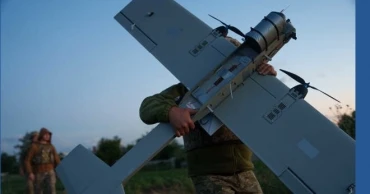
Ukraine uses midrange drones to hit Russian supply lines and slow advances
Ukraine is increasingly using midrange drones to strike Russian supply routes far behind the front lines, a strategy military commanders say is disrupting logistics, slowing Russian advances and helping Ukrainian forces regain ground.
From an underground command centre in Ukraine's Kharkiv region, drone operators monitor live thermal images of roads in Russian-held territory. Once they spot a military vehicle, they guide the drone toward its target, aiming to destroy fuel, ammunition and troop supplies before they reach the battlefield.
"Our mission is to cut logistics," said Kat, commander of Ukraine's K-2 Brigade. "If we stop their supply lines, frontline troops are left without food, ammunition, batteries and night-vision equipment. That's how we weaken them."
The soldiers interviewed by The Associated Press used only their military call signs, following Ukrainian military rules.
By repeatedly targeting roads used to transport fuel, ammunition and reinforcements, Ukrainian commanders say they have made Russia's supply operations slower, more expensive and less reliable. They believe this has helped slow Russian offensives while allowing Ukraine to launch counterattacks and carry out strikes in Russian-occupied Crimea.
Until recently, this area was difficult for Ukraine to reach. Frontline drones lacked the necessary range, while long-range drones were reserved for strategic targets hundreds of kilometres away. That left a large area where Russian forces could move supplies with little threat.
Now, fixed-wing midrange drones equipped with Starlink satellite communications have filled that gap, turning Russian supply routes into active targets.
"They are putting constant pressure on Russian logistics and making it harder for Russia to keep some parts of the front supplied," said Samuel Bendett, a researcher at the Center for Naval Analyses.
Bendett said Ukraine will need to maintain this pressure while Russia develops ways to counter the drones. Although he expects Moscow to adapt over time, he said Russia's larger military can absorb greater losses for now.
"The key question is whether Ukraine can keep up this pressure in the coming weeks and months," he said.
The K-2 Brigade operates from what looks like an ordinary office, while drones are assembled in workshops and launched from hidden locations near the front.
Inside the command room, drone pilots dressed in civilian clothes work at desks covered with coffee cups, energy drink cans and electronic devices. Their computer screens display satellite maps and target locations rather than office documents.
In May alone, the brigade launched 800 midrange drones, successfully hitting their intended targets with 650 of them.
The drones are launched more than 200 kilometres away, after which pilots in Kharkiv take control. They can guide the aircraft for up to four hours and more than 100 kilometres behind Russian lines.
Some operators are flying drones over towns they once called home before Russia's invasion forced them to leave. They now search those same streets for Russian troops, military vehicles and ammunition depots.
The brigade even keeps a scoreboard tracking the performance of its 10 drone teams. The current record stands at 17 successful strikes in a row.
One of the unit's top drone operators, 20-year-old Pharaon, said his gaming experience helped prepare him for the job.
"When I was younger, I spent a lot of time playing Counter-Strike," he said. "It's similar in some ways because you're competing to destroy enemy targets."
Military experts say Ukraine's campaign gained momentum earlier this year after SpaceX blocked Russian forces from using Starlink satellite services without authorisation. The move disrupted Russian drone operations while giving Ukraine a technological advantage.
Rob Lee, a senior fellow at the Foreign Policy Research Institute's Eurasia Program, described the Starlink restriction as one of the year's most significant developments on the battlefield.
Pharaon said the improvement has been dramatic.
"Now, eight out of every 10 missions are successful," he said. "A few months ago, it was the opposite."
The K-2 Brigade mainly uses the Dart drone, an inexpensive aircraft made from lightweight materials including wood, polystyrene and 3D-printed parts. It is mainly used to attack Russian supply convoys. Larger drones, such as the Hornet, carry heavier explosives and are used against bridges and other infrastructure.
Before every mission, crews inspect batteries, cameras, flight controls and the Starlink communication system to ensure the drone remains connected throughout the flight.
The drones are then taken to concealed launch sites near the front line, where soldiers prepare them for takeoff using catapult launchers.
Russia was initially caught off guard when Ukraine expanded the campaign about three months ago. It has since increased mobile air defence teams, machine-gun positions and drone interception units, but Ukrainian commanders say the speed and scale of the attacks have allowed them to stay ahead.
Bendett said Russia also faces coordination problems between military units, making it harder to respond quickly when drones are detected.
Ukraine has focused many of its attacks on key highways linking the occupied cities of Mariupol, Berdyansk, Melitopol and Crimea, which are major supply routes for Russian forces in southern and eastern Ukraine.
According to Ukraine's military intelligence, repeated drone attacks have made parts of the land corridor connecting Russia to Crimea increasingly dangerous, disrupting the movement of fuel, ammunition and reinforcements.
Pharaon said Russia is now expanding its anti-aircraft defences and deploying more interception teams near major cities.
In response, Ukrainian drone operators plan routes that avoid known Russian air defence positions. During flights, they sometimes see anti-aircraft fire below as the drones continue toward their targets.
Lee said Russia has also been testing electronic warfare systems designed to interfere with Starlink since 2024, but so far those efforts have had only limited success.
"I think they have achieved some success, but we'll have to wait and see how effective it becomes," he said.
28 days ago

High-tech ball technology plays key role in dramatic World Cup VAR decision
A piece of advanced technology inside the official match ball played a decisive role in one of the most dramatic moments of the FIFA World Cup, helping officials rule out a late Croatia goal against Portugal.
The controversial decision came deep into stoppage time on Thursday when Croatia appeared to have scored a dramatic equalizer against Portugal in Toronto. However, the goal was disallowed after the Video Assistant Referee (VAR) determined that Croatia's Igor Matanovic had made a slight touch on the ball before it reached Mario Pasalic, who was in an offside position.
Portugal went on to win the match 2-1 and secure a place in the Round of 16, while Croatia's players and supporters were left frustrated, believing the goal had been wrongly ruled out.
According to FIFA, the decision was based on its "connected ball technology," which uses advanced sensors inside the official Adidas "Trionda" match ball to detect even the slightest contact that cannot be seen by the human eye or standard video replays.
The sensor, known as an inertial measurement unit (IMU), collects data around 500 times per second, allowing officials to identify the exact moment a player touches the ball.
The system works alongside multiple stadium cameras, sending real-time information to VAR officials to help review offside decisions, handballs and penalty incidents.
During the review, referee Espen Eskås was asked to check the pitch-side monitor. FIFA said the technology showed a clear signal indicating the ball had lightly brushed Matanovic's head before reaching Pasalic, making the offside call valid.
Professor Manos Tentzeris of the Georgia Institute of Technology said the system is highly accurate, regardless of how fast the ball is moving or how much it is spinning.
He said the technology can determine the ball's position with about 99.99% accuracy and precisely identify where players are on the field, even down to the tip of a shoe in close offside situations.
FIFA first introduced connected ball technology at the 2022 World Cup after testing it between 2020 and 2022 at competitions including the Arab Cup and the Club World Cup. It was also used during the UEFA European Championship in 2024.
The technology has previously influenced major decisions. At Euro 2024, ball sensors detected that Denmark defender Joachim Andersen had handled the ball in the penalty area against Germany. After a VAR review, Germany was awarded a penalty, which Kai Havertz converted in a 2-0 victory.
Following that match, Denmark coach Kasper Hjulmand criticized the growing influence of technology, saying it was not how football was meant to be played.
Croatia coach Zlatko Dalić expressed similar frustration after his team's World Cup exit, saying such decisions were taking the joy out of football.
30 days ago

Australia PM criticizes Senate delay to tougher child social media ban measures
Australian Prime Minister Anthony Albanese has criticized senators for delaying proposed changes to the country's world-first social media ban for children, warning that the hold-up could allow technology companies to destroy documents that may be used as evidence against them.
The government this week introduced amendments to strengthen the powers of Australia's online safety regulator, eSafety Commissioner Julie Inman Grant, to enforce the ban that prevents children under 16 from holding accounts on platforms such as Facebook, Instagram and YouTube.
The proposed changes would allow the commissioner to demand documents from social media companies, in addition to information, about the steps they are taking to keep children off their platforms. Under the current law, she can only request information.
However, the opposition Liberal Party and the Greens referred the bill to an eight-week Senate inquiry on Thursday, delaying its passage. The ruling Labor government does not have a majority in the Senate.
Albanese called the delay "outrageous," saying it gives social media platforms time to delete important records before regulators can legally demand them.
He told the Australian Broadcasting Corp. that if the bill had passed immediately, the commissioner could already have started requesting documents and issuing fines where necessary.
The amendments would also allow the commissioner to seek information from third parties, including providers of age-verification technology, to check whether platforms' claims about preventing children from accessing their services are accurate.
The bill also proposes doubling the maximum penalty for companies that fail to take reasonable steps to keep children off their platforms, increasing the fine to 99 million Australian dollars (about $68 million).
Greens Senator David Shoebridge, who has consistently opposed the social media ban, questioned the need to double a penalty that has never been imposed.
He argued that increasing fines alone would not necessarily make children safer online.
Opposition communications spokesperson Senator Sarah Henderson said the proposed changes were still not strong enough.
She described the social media ban as poorly designed, rushed and ineffective, saying Parliament should examine the amendments carefully and consider stronger measures.
Australia's Parliament passed the original legislation in 2024 with broad bipartisan support, giving the 10 affected social media platforms more than a year to implement the restrictions.
The Australian law has drawn global attention, with several countries monitoring its progress as they consider introducing similar child safety measures.
The government initially said more than five million children's accounts had been removed, deactivated or restricted after the ban became law.
However, the eSafety Commission reported in March that about 70% of children who had accounts on restricted platforms when the ban took effect on Dec. 10 were still using Facebook, Instagram, Snapchat and TikTok.
In April, Inman Grant said she was considering legal action against Facebook, Instagram, Snapchat, TikTok and YouTube, arguing they had failed to take reasonable steps to prevent children from accessing their services.
She said the remaining restricted platforms, including X, Kick, Reddit, Threads and Twitch, had shown more satisfactory progress.
Communications Minister Anika Wells said she had been receiving monthly updates from the eSafety Commission since March and that the government had not seen the improvements it expected.
30 days ago

AI brings challenges and opportunities for office assistants
Artificial intelligence is changing the way administrative assistants work, raising concerns about future job losses while also creating new opportunities for those willing to adapt.
Secretaries and administrative assistants, a profession largely made up of women, have already seen their numbers decline over the past two decades. Now, AI tools such as ChatGPT, Claude and Microsoft Copilot are expected to automate many routine office tasks, adding to concerns about the future of the profession.
Still, many administrative professionals are embracing the technology, saying it helps them work faster and focus on more valuable responsibilities.
Deanna Danger, 43, who has worked as an administrative professional since 2003, believes adapting to new technology has always been part of the job.
"All you have to do is evolve," she said.
Danger, executive assistant to Vanderbilt University's chief information officer, began using AI at work in 2022. Today, AI tools take meeting notes for her, allowing her to actively participate in discussions instead of focusing on typing everything being said.
She said tasks that once took hours can now be completed in less than five minutes.
Despite these productivity gains, government data shows the profession has been shrinking for years. About 3.5 million people worked as secretaries and administrative assistants in the United States in 2004, with women making up nearly 97% of the workforce. By 2024, that number had dropped to around 2.1 million, even as the overall workforce grew.
The U.S. Bureau of Labor Statistics expects most administrative support jobs to continue declining through 2034, although medical secretaries and administrative assistants are projected to grow because of increasing demand in the healthcare sector.
The unemployment rate for office and administrative support workers rose to 4% in June from 3.6% a year earlier, according to the U.S. Labor Department.
Emily Rolen, lead economist for employment projections at the Bureau of Labor Statistics, said technology has steadily reduced demand for administrative workers over many years.
Word processing software, speech-to-text programs, digital scheduling tools and similar technologies have all made office work more efficient while reducing the need for some traditional administrative roles.
A January report by the Brookings Institution found that clerical and administrative workers could be among the groups most affected by AI because many have limited financial resources, fewer opportunities to switch careers and narrower skill sets. Women account for about 86% of the six million workers in these occupations.
The report also noted that many administrative workers are older than the average U.S. employee, earn below the national median wage and often enter the profession with only a high school diploma.
However, many assistants argue that the data does not reflect their ability to adapt.
Danger regularly hosts online discussions through the American Society of Administrative Professionals, where members share ways they use AI to design flyers, plan executive events, write social media posts, prepare standard operating procedures and complete other routine tasks.
Some participants have also raised concerns about data privacy, security and the lack of clear AI regulations. Many agreed that AI cannot replace human qualities such as emotional intelligence, relationship management and sound judgment.
Fiona Young, founder of AI training company Carve and a former executive assistant, said demand for AI training has increased sharply since 2023. She has trained administrative professionals at companies including Google, Amazon, Uber, Salesforce and LinkedIn.
According to Young, employers increasingly expect staff to make AI part of their everyday work rather than simply understand the technology.
Oana Manolache, founder and CEO of webinar platform Sequel.io, has strongly encouraged employees to use AI. However, she said the technology cannot replace her executive assistant, Stephanie Martinez.
Instead, Martinez uses AI to handle repetitive tasks such as note-taking and meeting preparation, giving her more time to focus on building relationships, supporting executives and making informed decisions.
Working remotely from El Salvador through Viva Talent, Martinez also used AI to analyse customer communications, identify satisfied clients and draft emails requesting product reviews, saving significant time while allowing her to focus on creative problem-solving.
Melissa Peoples, an executive assistant coach based in Austin, Texas, said many assistants want to use AI but often lack the time, training or support from employers to do so.
She added that workplace culture also plays a role. While some executives encourage assistants to develop new skills, others still treat them as support staff with limited opportunities to contribute.
Peoples said proper AI training can help administrative professionals strengthen their skills, increase their value to employers and remain competitive as AI becomes more common in the workplace.
1 month ago