Tech-News
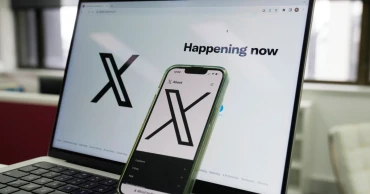
Musk threatens legal action against Apple over exclusion of X, Grok from top apps list
Billionaire SpaceX, Tesla and X owner Elon Musk says he plans to sue Apple for not featuring X and its Grok artificial intelligence chatbot app in its top recommended apps in its App Store.
Musk posted the comments on X late Monday, saying, “Hey @Apple App Store, why do you refuse to put either X or Grok in your ‘Must Have’ section when X is the #1 news app in the world and Grok is #5 among all apps? Are you playing politics? What gives? Inquiring minds want to know.”
Grok is owned by Musk's artificial intelligence startup xAI.
Musk went on to say that “Apple is behaving in a manner that makes it impossible for any AI company besides OpenAI to reach #1 in the App Store, which is an unequivocal antitrust violation. xAI will take immediate legal action.”
He gave no further details.
In an emailed statement, Apple defended the fairness of its App Store.
“The App Store is designed to be fair and free of bias,” it said. "We feature thousands of apps through charts, algorithmic recommendations, and curated lists selected by experts using objective criteria. Our goal is to offer safe discovery for users and valuable opportunities for developers, collaborating with many to increase app visibility in rapidly evolving categories.”
The company has faced various allegations of antitrust violations in recent years.
A federal judge recently found that Apple violated a court injunction in an antitrust case filed by Fortnite maker Epic Games.
Regulators of the 27-nation European Union fined Apple 500 million euros in April for breaking competition rules by preventing app makers from pointing users to cheaper options outside its App Store.
Last year, the EU fined the U.S. tech giant nearly $2 billion for unfairly favoring its own music streaming service by forbidding rivals like Spotify from telling users how they could pay for cheaper subscriptions outside of iPhone apps.
As of early Tuesday, the top app in Apple's App Store was TikTok, followed by Tinder, Duolingo, YouTube and Bumble. Open AI's ChatGPT was ranked 7th.
11 months ago

Global Anti-Scam Summit Asia 2025 to convene in Singapore with stronger regional alliance
Amid the rise of coordinated scam networks across Southeast Asia, the Global Anti-Scam Alliance (GASA) is set to host the Global Anti-Scam Summit (GASS) Asia 2025 in Singapore on September 2–3, bringing together more than 1,200 leaders from over 60 countries in person and online.
“Scams are now systemic, cross-border threats,” said GASA Managing Director Jorij Abraham. “Our role is to connect the dots across sectors and borders, building the shared infrastructure needed to act faster and smarter.”
Over the past year, GASA has doubled its global membership, with the Singapore Chapter surpassing 100 members, including Amazon, Google, MasterCard, Meta, and Microsoft, alongside government and civil society partners. It has also launched new national chapters in the Philippines and Indonesia — two mobile-first economies facing high scam risks due to widespread digital finance use.
The Indonesia chapter, chaired by Indosat Ooredoo Hutchison’s Chief Legal & Regulatory Officer Reski Damayanti, aims to tackle phishing, SMS spoofing, and fake service alerts. In the Philippines, Globe Telecom executives Irish Salandanan-Almeida and Derick Ohmar Adil lead efforts to block malicious SMS and run awareness campaigns.
Energea launches stylish, travel-ready tech collection
“These chapters are strategic footholds in markets where digitalisation boosts living standards but scams threaten to undermine progress,” said Rajat Maheshwari, Chair of GASA Singapore Chapter.
A key initiative, the Global Signal Exchange (GSE), now aggregates over 370 million scam and fraud signals — up from 40 million at launch in January 2025 — with contributions from more than 35 organisations, including GASA, Google, GSMA, Meta, and Microsoft.
Summit highlights include a fireside chat with Senior Minister of State Tan Kiat How, the launch of the Southeast Asia Scam Report, INTERPOL and UN sessions on cybercrime and trafficking, and panel discussions on scam typologies, enforcement, and cross-border disruption.
Founded as a global non-profit, GASA works with governments, law enforcement, tech companies, and financial institutions to share intelligence, coordinate responses, and develop strategies to reduce the financial and emotional harm caused by scams.
Source: Agency
11 months ago

Energea launches stylish, travel-ready tech collection
Energea has unveiled its latest travel tech lineup, blending elevated design with high performance, now available in Gunmetal, Cobalt and Champagne. Leading the new range is the MagDuo Arc, winner of the Best Product award in the Mobile Products category at Channel Summit META.
Designed for modern travelers, the collection combines style with practicality. Each product features refined finishes and compact, travel-friendly designs.
The MagDuo Arc is a 2-in-1 wireless charger with an 85cm retractable cable and zinc alloy housing. It supports fast wireless charging up to 15W for Android, 7.5W for iPhone, and 2.5W for Apple Watch, and includes a built-in kickstand for hands-free use.
Also featured is the TravelWorld Edge 65, a slim wall charger just 13mm thick with a 90° flat profile that fits into tight spaces. Capable of delivering 65W output for laptops and phones in over 150 countries, it uses GaNSmart technology to be 40% smaller than typical chargers of its kind.
The TravelGo Adapter 45 is a compact, high-powered travel adapter for devices like the MacBook Air and tablets. It has a secure pin-lock system, dual USB-C ports (25W and 20W), and intelligent power identification for safe, efficient charging.
DeepMind Genie 3: New Features, Limitations of Google’s 3D Environment Generator AI Model
For multi-device charging, the AluMag Trio powers an iPhone, Apple Watch and AirPods simultaneously with Qi2 technology. Its aluminum body offers durability and heat management, while folding flat for portability and supporting iPhone StandBy and Apple Watch Nightstand modes.
Rounding out the collection, the ComPac Arc 45 power bank delivers 10,000mAh capacity with PD45W output, an integrated 70cm retractable cable, digital display, and braided lanyard for easy attachment to bags. Despite its power, it’s smaller than a soda can.
Energea says its Travel Series is built to keep up with life on the move while adding a touch of style, offering solutions from slim wall chargers to compact power banks.
The collection is available now in Gunmetal, Cobalt and Champagne. More details can be found on Energea’s website and social media channels.
Source: Agency
11 months ago

DeepMind Genie 3: New Features, Limitations of Google’s 3D Environment Generator AI Model
Genie 3 is the newest iteration of Google DeepMind’s world model AI, a technology that can generate interactive 3D environments on-the-fly from simple text prompts. It allows users to navigate and interact with AI-generated worlds in real time at 24 frames per second, with 720p resolution, maintaining coherence for several minutes.
Previously, environments lasted only 10 to 20 seconds. Genie 3 now sustains interactivity for multiple minutes. It remembers object placements and environmental changes, even if you look away and return later. Users can modify scenes in real time, adjusting weather, adding characters, or altering settings via text.
Read more: Best 10 Smartphones Releasing in August 2025
Genie 3 provides richly simulated environments ideal for embodied agent research, teaching AI systems how actions translate into outcomes in virtual settings. It also offers creative potential for game designers, educators, and content creators by enabling dynamic, evolving world-building. DeepMind sees Genie 3 as a foundational step toward artificial general intelligence (AGI), offering agents a limitless training curriculum in simulated worlds.
While impressive, Genie 3 still has constraints. The range of agent actions (“action space”) is somewhat limited. Difficulty simulating complex multi-agent interactions and real-world geographic accuracy. Text rendering can be poor unless explicitly included in the prompt. Sessions are still only a few minutes, not yet suitable for hours-long experiences.
Read more: Speaking with AI: Best Free Apps for English Speaking Practice
Genie 3 is currently available as a limited research preview, accessible only to select academics and creators. DeepMind emphasises careful, responsible rollout to monitor risks and gather feedback.
11 months ago

Cloudera launches on-pemises pvt AI with latest data services update
Cloudera, the only company offering AI for data across all environments, has unveiled the latest update of Cloudera Data Services, enabling Private AI capabilities directly within enterprise data centers. This release introduces secure, GPU-accelerated generative AI behind corporate firewalls, complete with governance tools and hybrid cloud flexibility, allowing enterprises to build and scale their own sovereign data clouds on-site—eliminating security risks. Cloudera remains the only provider offering a unified data lifecycle with consistent cloud-native services both on-premises and in the public cloud.
Security concerns around protecting sensitive data and proprietary information continue to be a major barrier to AI adoption across sectors. A report by Accenture shows that 77% of organizations lack the foundational security and data practices necessary to protect critical AI models, data pipelines, and infrastructure. Cloudera addresses these risks head-on, helping enterprises accelerate their AI development from prototype to production in weeks instead of months.
This release extends the benefits of Cloudera Data Services to on-site infrastructure, enabling organizations to cut infrastructure costs, simplify data lifecycles, and boost productivity for data teams. With automated security tasks and streamlined deployment processes, organizations can now realize faster ROI from their AI initiatives. This update also delivers a cloud-native user experience within internal environments, giving enterprises the flexibility to scale without compromising data security.
Included in this update are on-premises versions of Cloudera AI Inference Service and Cloudera AI Studios, both previously available only in the cloud. These tools are designed to eliminate the primary obstacles to enterprise AI adoption, allowing companies to safely develop and operate generative AI applications within their internal networks.
Cloudera AI Inference Service, now available on-prem and powered by NVIDIA, is among the first in the industry to offer integrated NVIDIA NIM microservices. This offering supports the secure and scalable deployment of large AI models within the data center, keeping data and models inside secure infrastructure.
WeFi launches tailored vendor program to boost India’s IT channel
Cloudera AI Studios brings a low-code platform to enterprise data centers, democratizing the development and deployment of generative AI applications and agents across teams.
A Total Economic Impact™ (TEI) study conducted by Forrester Consulting on behalf of Cloudera found that a composite customer using Cloudera Data Services on-premises experienced an 80% reduction in deployment time, a 20% productivity boost among data and platform teams, and a 35% cost savings due to the cloud-native architecture. Organizations also reported major operational improvements, with some increasing hardware efficiency from 30% to 70% and requiring 25% to over 50% less capacity post-modernization.
“Enterprises have long struggled with cobbled-together, fragile solutions for on-prem AI,” said industry analyst Sanjeev Mohan. “With AI adoption becoming urgent, security concerns remain paramount. Enterprises need streamlined, secure solutions to adopt AI without sacrificing performance.”
“Cloudera Data Services On-Premises provides a truly cloud-native experience within private infrastructure, enabling both agility and security,” said Leo Brunnick, Cloudera’s Chief Product Officer. “This release represents a major leap in modernizing enterprise data architecture, shifting from rigid clusters to flexible, container-based applications.”
Toto Prasetio, Chief Information Officer at Bank Negara Indonesia (BNI), said: “We are proud to be early adopters of Cloudera’s AI Inference service. It offers the secure and scalable backbone we need to expand our generative AI initiatives while complying with Indonesia’s evolving regulations. This is a crucial step in delivering smarter, faster, and more reliable digital banking to Indonesians.”
Cloudera is showcasing the new release at EVOLVE25, its annual global data and AI conference series, beginning this week in Singapore. Participants can register to learn how Cloudera enables AI across any enterprise data environment.
Tesla grants Elon Musk $29 billion in stock amid ongoing controversy
To explore how Cloudera Data Services accelerates AI deployment and adoption, tune in to ClouderaNow on October 15, 2025, at 8:00 AM PT / 11:00 AM ET / 4:00 PM GMT / 5:00 PM CET, or visit the Cloudera AI Inference page for more details.
About ClouderaCloudera is the only trusted data and AI platform provider that enables large enterprises to bring AI to all their data, wherever it resides. Unlike other providers, Cloudera offers a consistent cloud experience across public cloud, on-premises, and edge environments—built on a proven open-source base. As a pioneer in big data, Cloudera empowers organizations to unlock AI capabilities while maintaining full control over their data, improving governance, security, and real-time insights. Leading global brands rely on Cloudera to enhance decision-making, drive performance, guard against risks, and even save lives.
For more information, visit Cloudera.com and follow Cloudera on LinkedIn and X. “Cloudera” and associated trademarks are owned by Cloudera, Inc.; other company names may be trademarks of their respective holders.
Source: Agency
11 months ago

WeFi launches tailored vendor program to boost India’s IT channel
As developing economies continue to grow, global tech firms see vast potential in expanding into markets like India. To support this, international finance and technology firm WeFi has introduced a market-specific vendor program aimed at streamlining operations and accelerating growth in India’s dynamic IT channel.
WeFi’s program is designed to navigate the complex financial and regulatory landscape typical of emerging economies, where varying tax systems, compliance rules, currency volatility, and political instability pose challenges. The company’s tailored approach seeks to simplify these hurdles while empowering vendors through innovative financial solutions.
“Channel finance in emerging markets like India is complex but full of opportunity,” said Boris Todorov, WeFi’s Chief Client Officer. He noted that WeFi’s non-recourse and funded capital solutions are structured to manage credit, interest rate, and foreign exchange risks, while ensuring alignment with shifting regulations.
WiFi Wireless Router Buyer Guide with Price Ranges in Bangladesh
The initiative is powered by WeFi’s proprietary cloud-based platform IZZI, which offers AI-driven automation, real-time data visibility, secure invoice management, and workflow optimisation across multiple languages.
WeFi aims to expand its footprint in India by partnering with technology vendors to unlock capital, drive innovation, and support long-term growth in the IT sector.
Source: Agency
11 months ago

Tesla grants Elon Musk $29 billion in stock amid ongoing controversy
On Monday, Tesla awarded CEO Elon Musk a stock package worth approximately $29 billion, recognizing years of significant growth, even as the company faces recent struggles related to Musk’s political involvement, declining sales, and falling stock prices.
The company granted Musk 96 million restricted shares, noting that he hasn't received compensation in years due to a 2018 pay package being struck down by a Delaware court. That package was invalidated again eight months ago, though Tesla is appealing the decision.
Calling the new award a “first step” in good faith, Tesla said the move is aimed at retaining Musk and ensuring he stays focused on the company, especially as he also leads other ventures like SpaceX and xAI. Musk has argued that he needs more control over Tesla to prevent activist shareholders from forcing him out.
In a regulatory filing, Tesla defended the move, saying, “Rewarding Elon for what he has done and continues to do for Tesla is the right thing to do,” referencing the $735 billion increase in Tesla’s market value since 2018.
Despite this long-term growth, Tesla’s stock has dropped 25% this year, partly due to Musk’s alignment with Donald Trump and a growing backlash. The company is also under pressure from increasing competition, both from U.S. automakers and Chinese EV brands.
Tesla's latest financial report showed profits falling sharply from $1.39 billion to $409 million, with revenue also declining and the company missing even reduced Wall Street expectations.
Investors have become increasingly concerned about Musk’s focus, especially as he has been actively involved in political affairs in Washington, taking a visible role in Trump’s efforts to shrink the federal government.
The company stated in its filing that Musk will need to pay $23.34 per share for the restricted stock to vest, which matches the exercise price from the earlier 2018 package.
Last December, Delaware Judge Kathleen St. Jude McCormick reaffirmed a ruling canceling Musk’s 2018 compensation, stating it had been arranged through sham negotiations with non-independent board members. The decision stemmed from a lawsuit filed by a Tesla shareholder.
The original pay deal had a potential value of $56 billion, though the actual worth has changed over time with Tesla's fluctuating stock price. Musk appealed the ruling in March, and in April Tesla announced a special committee would reevaluate Musk’s compensation.
Musk remains one of the world’s wealthiest individuals.
Wedbush analyst Dan Ives said the new stock grant could ease investor concerns, writing that it likely secures Musk's leadership at Tesla through at least 2030 and removes uncertainty that has surrounded the company since the Delaware court battles began.
Under shareholder pressure, Tesla recently announced it would hold its annual meeting in November, in line with Texas law. A group of over 20 shareholders had demanded that the company publicly confirm the meeting after watching the stock's continued decline.
Tesla shares rose nearly 2% during midday trading on Monday.
11 months ago

Tesla ordered to pay $240 million in Autopilot crash case, jury finds company partly liable
A Miami federal jury has ordered Tesla to pay over $240 million in damages after determining that its Autopilot system was partly responsible for a fatal 2019 crash in Florida, even though the driver admitted to being distracted by his phone at the time.
The jury found that while the driver, George McGee, acted negligently, Tesla also bore significant responsibility due to failures in its driver assistance technology. The crash killed 22-year-old Naibel Benavides Leon and seriously injured her boyfriend, Dillon Angulo, as the couple were stargazing in a parked vehicle.
The verdict comes at a critical moment for Tesla and CEO Elon Musk, who is promoting self-driving technology and preparing to roll out a robotaxi service in multiple U.S. cities. It also marks a rare legal defeat for the company, which has typically managed to avoid courtroom trials in such cases through settlements or dismissals.
“This will open the floodgates,” said attorney Miguel Custodio, who was not involved in the case. “It will encourage more victims to take legal action.”
Plaintiffs accused Tesla of withholding or mishandling key evidence, including data and video recorded seconds before the crash. They hired a forensic expert who discovered the material, challenging Tesla’s claims that it wasn’t available.
Elon Musk’s social media influence amplifies Europe’s far-right voices
“We finally learned what happened that night—the car was defective,” said Neima Benavides, the victim’s sister. “Justice was achieved.”
Tesla denied wrongdoing and issued a statement criticizing the verdict: “Today’s verdict is wrong and undermines the development of life-saving automotive technology.” The company argued that the driver alone was at fault, noting he admitted to being distracted.
Still, the jury awarded $200 million in punitive damages and $43 million in compensatory damages out of a total $129 million, meaning Tesla is liable for $243 million. Tesla plans to appeal and believes a pre-trial agreement will reduce its liability to $172 million, though the plaintiffs contend the full amount must be paid.
Financial analyst Dan Ives of Wedbush Securities said the verdict “sends shock waves across the industry,” warning other automakers of the legal risks associated with driver-assist technology.
The 2019 crash happened on a dark, rural road in Key Largo, when McGee, distracted by a dropped cellphone, drove through flashing lights and a stop sign at 62 mph, crashing into a parked Chevrolet Tahoe. The impact threw Benavides 75 feet into nearby woods, killing her, and left Angulo with severe injuries, including a brain injury and broken bones.
Tesla was faulted for allowing Autopilot to remain engaged on roads it wasn’t designed for and for not disabling the system when drivers showed signs of distraction. McGee himself admitted: “I trusted the technology too much. I believed the car would warn me or stop.”
Google loses appeal in antitrust battle with Fortnite maker
Tesla’s lead defense lawyer argued the company clearly warns drivers to remain attentive, blaming the crash solely on McGee’s distraction and speeding.
The case is being closely monitored by the auto industry, as it sets a precedent for potential liability in crashes involving partially automated systems, even when drivers admit fault.
Source: Agency
1 year ago

SpaceX swiftly delivers four astronauts to International Space Station within 15 hours of launch
SpaceX successfully transported a new international crew to the International Space Station (ISS) on Saturday, completing the journey in just 15 hours after liftoff from NASA’s Kennedy Space Center.
The newly arrived team — comprising NASA astronauts Zena Cardman and Mike Fincke, Japan’s Kimiya Yui, and Russia’s Oleg Platonov — will spend at least six months aboard the ISS, replacing the current crew who have been stationed there since March. SpaceX is expected to bring those four astronauts back to Earth as early as Wednesday.
“Hello, space station!” Fincke radioed cheerfully as their SpaceX capsule docked with the ISS high above the South Pacific.
The crew members are all seasoned professionals who were reassigned from other missions. Cardman had previously been pulled from a SpaceX mission last year to make room for Boeing Starliner test pilots Butch Wilmore and Suni Williams, whose intended one-week stay at the ISS turned into an unexpected nine-month mission due to technical issues.
Google loses appeal in antitrust battle with Fortnite maker
Fincke and Yui had been preparing for the next Starliner mission, but with the spacecraft grounded until at least 2026 due to ongoing thruster problems, both astronauts shifted to the SpaceX crew. Meanwhile, Platonov had been removed from a previous Soyuz mission a few years ago due to an undisclosed illness.
Their arrival brings the ISS crew count temporarily to 11.
“It was such an unbelievably beautiful sight to see the space station come into our view for the first time,” Cardman said after boarding.
While the SpaceX trip was rapid by U.S. standards, Russia still holds the record for the fastest ISS journey — an incredible three-hour flight.
Source: Agency
1 year ago

BSCPLC hits new milestone with 4 terabits
The state-owned Bangladesh Submarine Cable PLC (BSCPLC) has crossed a major milestone in internet infrastructure by supplying over 4.00 terabits per second of international bandwidth, marking the highest-ever capacity transmission by the company.
The BSCPLC, which is listed on the stock exchange, achieved this new record on August 1, shortly after the commercial launch of satellite-based internet service (Starlink) in July, which added 200 gigabits of bandwidth per second to the country’s overall internet capacity, said a press release issued by the Chief Adviser’s Press Wing on Saturday.
Earlier, on April 28, BSCPLC reached the 3-terabit mark, and in just three months, the company added another terabit.
In contrast, it took eight months for the company prior to April to increase bandwidth by only 1.10 terabits.
Earlier, during the Awami League's tenure, more than 65% of the company's capacity was left unutilised.
During the current government’s tenure, the company’s bandwidth supply has increased by more than 2.2 terabits of capacity in just one year, with the growth rate exceeding 105%.
This achievement has been made possible over the past few months due to policy support and guidance from the Ministry of Posts and Telecommunications, the sincere efforts of the company’s management and two phases of price reductions.
As Bangladesh Submarine Cables PLC’s share in the country’s bandwidth usage has steadily increased, the company’s revenue collection has also risen significantly.
Recently, through an amendment to its licensing guidelines, BTRC has directed all IIG operators to source at least 50 percent of their utilised bandwidth from submarine bandwidth.
This move aims to reduce overreliance on unilateral, India-dependent internet supply and promote greater use of submarine bandwidth.
In line with this, Bangladesh Submarine Cables PLC has begun offering additional discounts on increased bandwidth usage to those IIG operators who have started using more than 50 percent of their total bandwidth from submarine sources.
Besides, the company has introduced dedicated internet packages for data centres, cloud service providers, and hyperscalers—outside of the regular discounted bulk packages.
In addition to the existing SEA-ME-WE 4 and SEA-ME-WE 5, the government has signed an agreement for the revised route of SEA-ME-WE 6, which was approved at the latest ECNEC meeting.
Through this initiative, an additional 17 terabits of new capacity will be added to the real-time internet footprint of Bangladesh Submarine Cable Company.
1 year ago