Tech-News
Space Force, governors at odds over plans to pull talent from National Guard units
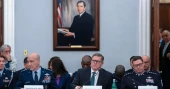
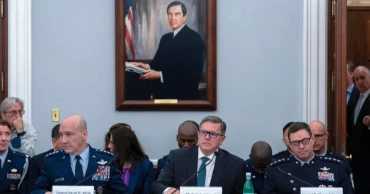
The leader of the U.S. Space Force is pressing forward with a proposal to transfer personnel from Air National Guard units to support the growing needs of the relatively new military branch. However, several state governors are pushing back, arguing that the move undermines their authority over their respective National Guard forces.
The plan would impact a total of just 578 service members across six states and the Air National Guard headquarters. Rather than establishing a separate Space Force National Guard — which officials say would be inefficient due to its small size — the initiative aims to integrate these personnel directly into the Space Force structure.
“We’re actively evaluating where we want to place our part-time workforce and the roles they’ll fill,” said Gen. Chance Saltzman, Chief of Space Operations, during remarks at a POLITICO conference on Thursday.
The Space Force was established by President Donald Trump in late 2019, during his first term. In the years since, the Air Force has transferred its space missions into the now five-year-old military branch — except for the 578 positions still contained in the Air National Guard, which is part of the Air Force. In the 2025 defense bill, Congress mandated that those positions move over to the Space Force as well.
Cyber crooks stole customer information, demanded $20 million ransom payment: Coinbase
The transferred service members would be a part-time force like they are now, just serving under the Space Force instead of their state units.
But space missions are some of the most lucrative across the military and private sector and the states that lose space mission service member billets are potentially losing highly valuable part-time workforce members if they have to move away to transfer in to the Space Force.
Last month, the National Governors Association said the transfers violate their right to retain control over their state units.
“We urge that any transfers cease immediately and that there be direct and open engagement with governors,” the Association said in April. The group was not immediately available to comment on Space Force’s plan.
“There’s a lot of concern in the National Guard about these individuals who are highly skilled that want to be in the Guard being transferred out,” Oklahoma Republican Sen. Markwayne Mullin said at an Air Force manpower hearing this week.
The contention between the states and the Space Force has meant the service hasn’t so far been able to approach individual members about transferring in.
According to the legislation, each National Guard will get the option to either stay with their units — and get re-trained in another specialty — or join the Space Force. Even if they do transfer into the Space Force, their positions would remain located in those same states for at least the next 10 years, according to the 2025 legislation.
The affected personnel include 33 from Alaska, 126 from California, 119 from Colorado, 75 from Florida, 130 from Hawaii, 69 from Ohio and 26 from Air National Guard headquarters.
1 year ago

Microsoft confirms supplying AI to Israeli military, denies use in Gaza attacks
WASHINGTON (AP) — Microsoft has confirmed providing advanced artificial intelligence and cloud services to the Israeli military during the Gaza conflict, including support for efforts to locate and rescue hostages. However, the tech giant insists there is no evidence its technologies were used to harm civilians in Gaza.
In a blog post published Thursday, Microsoft acknowledged its involvement in the war following the October 7, 2023, Hamas attack that killed around 1,200 Israelis and triggered a war in Gaza, where tens of thousands have since died. This marks the company’s first public statement on its support to Israel’s military.
The announcement comes months after an Associated Press investigation revealed Microsoft's previously undisclosed ties with Israel’s Ministry of Defense, showing a sharp increase in the military’s use of Microsoft’s AI services after the October assault. The military reportedly used Microsoft’s Azure platform to process surveillance data, which could be integrated with its AI-driven targeting systems.
While Microsoft said its support included cloud services, translation tools, and cyber defense assistance, it also stressed that the help was limited, selectively approved, and aimed at saving hostages. The company claimed it had not found evidence that its technologies were used to intentionally target civilians or violate its ethical use policies.
Prompted by employee protests and media scrutiny, Microsoft launched an internal review and hired an external firm for further investigation. However, the company has not disclosed the name of the external firm, the full report, or whether Israeli officials were consulted during the process.
The blog post also noted Microsoft lacks visibility into how its products are used once deployed on customer servers or third-party platforms, limiting its ability to fully track their usage in war zones.
Israel’s military also has cloud and AI contracts with other U.S. tech giants including Google, Amazon, and Palantir. Like its competitors, Microsoft said it enforces usage restrictions through its Acceptable Use Policy and AI Code of Conduct, asserting that no violations had been identified.
Experts say Microsoft’s statement sets a notable precedent in corporate responsibility. Emelia Probasco of Georgetown University remarked it is rare for a tech company to impose ethical usage terms on a government engaged in active conflict.
Nevertheless, critics remain skeptical. “No Azure for Apartheid,” a group of Microsoft employees and alumni, accused the company of attempting to polish its image rather than address real accountability concerns. Former employee Hossam Nasr, who was fired after organizing a vigil for Palestinians, criticized the company for not releasing the full investigation report.
Cindy Cohn of the Electronic Frontier Foundation welcomed Microsoft’s partial transparency but emphasized that many questions remain unanswered—especially regarding how Israeli forces are using Microsoft tools in military operations that have led to high civilian casualties.
Israeli raids, such as one in Rafah in February and another in Nuseirat in June, have rescued hostages but resulted in hundreds of Palestinian deaths, fueling continued debate over the ethical implications of AI in modern warfare.
1 year ago

Cyber crooks stole customer information, demanded $20 million ransom payment: Coinbase
Coinbase, the largest cryptocurrency exchange based in the U.S., said Thursday that criminals had improperly obtained personal data on the exchange’s customers for use in crypto-stealing scams and were demanding a $20 million payment not to publicly release the info.
Coinbase CEO Brian Armstrong said in a social media post that criminals had bribed some of the company’s customer service agents who live outside the U.S. to hand over personal data on customers, like names, dates of birth and partial social security numbers.
“(The stolen data) allows them to conduct social engineering attacks where they can call our customers impersonating Coinbase customer support and try to trick them into sending their funds to the attackers,” Armstrong said.
Social engineering is a popular hacking strategy, as humans tend to be the weakest link in any network. Many large companies have suffered hacks and data breaches as a result of such scams in recent years.
DoorDash delivery driver pleads guilty to stealing $2.5 million in deliveries scam
Coinbase did not specify how many customers had their data stolen or fell prey to social engineering scams. But the company did pledge to reimburse any who did.
Coinbase shares fell 6% in trading around midday. The shares are still up about 22% this month due to gains in bitcoin and other cryptocurrencies.
In a filing with the Securities and Exchange Commission, Coinbase estimated that it would have to spend between $180 million to $400 million “relating to remediation costs and voluntary customer reimbursements relating to this incident.”
The SEC filing said that the company had, “in previous months,” detected some of its customer service agents “accessing data without business need.” Those employees had been fired, and the company said it stepped up its fraud prevention efforts.
Coinbase said it received an email from the attackers on Sunday demanding a ransom of $20 million worth of bitcoin not to publicly release the customer data they had stolen.
Armstrong said the company was refusing to pay the ransom and would instead offer a $20 million bounty for anyone who provided information that led to the attackers’ arrest.
Nvidia to send 18,000 AI chips to Saudi Arabia
“For these would-be extortionists or anyone seeking to harm Coinbase customers, know that we will prosecute you and bring you to justice,” Armstrong said. “And know you have my answer.”
1 year ago

Largo.ai teams with Brilliant Pictures for first fully AI-automated film company
Largo.ai, an AI-powered analytics platform for the film, television, and advertising sectors, has entered into a strategic alliance with London and Rome-based Brilliant Pictures to create what is being hailed as the world’s first fully AI-automated film sales, production and finance company.
Announced during the Cannes Film Festival, the partnership combines Largo.ai’s proprietary data-driven technology with Brilliant Pictures’ slate of projects and industry expertise, reports Variety.
The initiative aims to streamline production processes and strengthen strategic positioning to maximise box office and commercial success.
Brilliant Pictures’ current development line-up features a post-World War II drama helmed by Oscar-winning director Bille August (“Pelle the Conqueror,” “The Best Intentions”), a feature documentary focused on acclaimed filmmaker Guillermo del Toro (“Pan’s Labyrinth,” “The Shape of Water”), and a new film by Roland Joffé (“The Mission,” “The Killing Fields”).
DoorDash delivery driver pleads guilty to stealing $2.5 million in deliveries scam
Largo.ai, which recently completed a $7.5 million Series A funding round with actor Sylvester Stallone among its latest investors, was launched in 2020 in collaboration with Swiss technical university EPFL (École Polytechnique Fédérale de Lausanne). The company currently collaborates with over 600 partners, including major Hollywood studios and global agencies.
“We’ve been following Sami and Largo.ai’s trajectory since their early formation,” said Sean O’Kelly, chairman of Brilliant Pictures.
“As one of the earliest pioneers of AI-assisted filmmaking, their technology is way ahead of the curve. For us, it’s about making better content in a faster, easier and less risky way…. Working together we hope to set a new standard for AI-assisted filmmaking, embracing the future whilst respecting the creative contributions that make cinema magic.”
Largo.ai CEO and co-founder Sami Arpa added, “We are excited to be partnering with Sean and Marc at Brilliant Pictures, who share our vision of pushing the boundaries of AI-assisted movie making. This marks a pivotal point for the adoption curve within the industry.”
1 year ago
DoorDash delivery driver pleads guilty to stealing $2.5 million in deliveries scam
A former food delivery driver has admitted to participating in a scheme to defraud DoorDash out of more than $2.5 million by arranging for the company to pay for fake deliveries, according to federal prosecutors.
Sayee Chaitanya Reddy Devagiri, 30, of Newport Beach, California, pleaded guilty on Tuesday in federal court in San Jose to one count of conspiracy to commit wire fraud, the U.S. Attorney’s Office announced.
Prosecutors said Devagiri collaborated with three others during 2020 and 2021 to carry out the scam, which targeted the San Francisco-based food delivery platform.
Prosecutors said Devagiri used customer accounts to place high-value orders and then used an employee’s credential to gain access to DoorDash software and manually reassign the orders to driver accounts that he and others controlled. Devagiri then caused the fraudulent driver accounts to report that the orders had been delivered when they had not, and manipulated DoorDash’s computer systems to pay the fraudulent driver accounts for the nonexistent deliveries, officials said.
Xiaomi Redmi Turbo 4 Pro Review: Can It Survive the Competition?
Devagiri would then use DoorDash software to change the orders from “delivered” status to “in process” status and manually reassign the orders to driver accounts he and others controlled, beginning the process again, prosecutors said.
The now-former employee in the scam pleaded guilty to conspiracy to commit wire fraud in November 2023 and admitted to being involved in the scheme, prosecutors said.
Devagiri is the third defendant to be convicted of his role in this conspiracy. He faces a maximum sentence of 20 years in prison and a fine of $250,000. He is scheduled to return to court on Sept. 16.
1 year ago

Nvidia to send 18,000 AI chips to Saudi Arabia
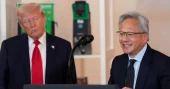
U.S. chip maker Nvidia will partner with Saudi Arabia’s sovereign wealth fund-owned AI startup Humain and will ship 18,000 chips to the Middle Eastern nation to help power a new data center project.
The partnership was revealed Tuesday as part of a White House trip to Saudi Arabia, Qatar and the United Arab Emirates. Saudi Arabia has been working to develop its artificial intelligence capacity and strengthen its cloud computing infrastructure with the help of foreign investment.
“AI, like electricity and internet, is essential infrastructure for every nation,” said Jensen Huang, founder of Nvidia. “Together with Humain, we are building AI infrastructure for the people and companies of Saudi Arabia to realize the bold vision of the Kingdom.”
Microsoft to lay off about 3% of workforce
The cutting-edge Blackwell chips will be used in a 500 megawatt data center in Saudi Arabia, according to remarks at the Saudi-U.S. Investment Forum in Riyadh on Tuesday. The California company said its first deployment will use its GB300 Blackwell chips, which are among Nvidia’s most advanced AI chips at the moment, and which were only officially announced earlier this year.
1 year ago
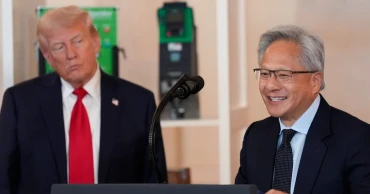
Nvidia to send 18,000 AI chips to Saudi Arabia
US chip maker Nvidia will partner with Saudi Arabia’s sovereign wealth fund-owned AI startup Humain and will ship 18,000 chips to the Middle Eastern nation to help power a new data center project.
The partnership was revealed Tuesday as part of a White House trip to Saudi Arabia, Qatar and the United Arab Emirates. Saudi Arabia has been working to develop its artificial intelligence capacity and strengthen its cloud computing infrastructure with the help of foreign investment.
“AI, like electricity and internet, is essential infrastructure for every nation,” said Jensen Huang, founder of Nvidia. “Together with Humain, we are building AI infrastructure for the people and companies of Saudi Arabia to realize the bold vision of the Kingdom.”
US, Saudi sign $142bn weapons deal during Trump visit
The cutting-edge Blackwell chips will be used in a 500 megawatt data center in Saudi Arabia, according to remarks at the Saudi-US Investment Forum in Riyadh on Tuesday.
The California company said its first deployment will use its GB300 Blackwell chips, which are among Nvidia’s most advanced AI chips at the moment, and which were only officially announced earlier this year.
1 year ago

Microsoft to lay off about 3% of workforce
Microsoft says it is laying off nearly 3% of its entire workforce.
The tech giant didn't disclose the total amount of lost jobs but it will amount to about 6,000 people.
Microsoft employed 228,000 full-time workers as of last June, the last time it reported its annual headcount. About 55% of those workers were in the US, reports AP.
Microsoft said the layoffs will be across all levels and geographies but will focus on reducing management levels. Notices went out on Tuesday.
OpenAI reverses course and says its nonprofit will continue to control its business
Microsoft announced a smaller round of performance-based layoffs in January. But the 3% cuts will be Microsoft's biggest reported layoffs since early 2023, when the company cut 10,000 workers, almost 5% of its workforce, joining other tech companies that were scaling back their pandemic-era expansions.
The latest layoffs come just weeks after Microsoft reported strong sales and profits that beat Wall Street expectations for the January-March quarter, which investors took as a dose of relief during a turbulent time for the tech sector and US economy.
1 year ago

Elton John and Dua Lipa seek protection from AI
Dua Lipa, Sir Elton John, Sir Ian McKellen and Florence Welch are among a list of stars calling on the prime minister to update copyright laws in a way that protects them from artificial intelligence.
A letter signed by more than 400 British musicians, writers and artists, addressed to Sir Keir Starmer, says failing to give that protection would mean them "giving away" their work to tech firms.
Also at risk, they write, is "the UK's position as a creative powerhouse".
They want the PM to back an amendment to the Data (Use and Access) Bill that would require developers to be transparent with copyright owners about using their material to train AI models.
A government spokesperson said: "We want our creative industries and AI companies to flourish, which is why we're consulting on a package of measures that we hope will work for both sectors.
"We're clear that no changes will be considered unless we are completely satisfied they work for creators," they added.
Other signatories include author Kazuo Ishiguro, playwright David Hare, singers Kate Bush and Robbie Williams, as well as Coldplay, Tom Stoppard and Richard Curtis.
Sir Paul McCartney, who told the BBC in January he was concerned about AI ripping off artists, has also signed the letter.
"We are wealth creators, we reflect and promote the national stories, we are the innovators of the future, and AI needs us as much as it needs energy and computer skills," it states.
They say their concerns can be met if the government backs an amendment proposed by Baroness Beeban Kidron ahead of a key vote in the House of Lords on Monday.
Baroness Kidron's amendment, it says, would "allow both AI developers and creators to develop licensing regimes that will allow for human-created content well into the future."
Advertisement
Not everyone agrees with the artists' approach.
Julia Willemyns, co-founder of the Centre for British Progress think tank, said such proposals could hamper the UK and its bid for growth.
The measures would "do nothing to stop foreign firms from using content from the British creative industries," she told the BBC.
"A restrictive copyright regime would offshore AI development, chill domestic innovation, and directly harm the UK economy," she said.
However, the letter comes amid mounting concern from artists over the inclusion of their works, and material protected by copyright, in the data used to develop generative AI systems.
These tools, which can produce new content in response to simple text prompts, have become increasingly popular and available to consumers.
But their capabilities have been accompanied by concerns and criticism over their data use and energy demand.
· What is AI, how does it work and what are the concerns about it?
In February, artists including Annie Lennox and Damon Albarn released a silent album to protest about the government's proposed changes to copyright law.
The government carried out a consultation around its proposal to allow developers to be able to use creators' content on the internet to help develop their models, unless the rights holders elect to "opt out".
According to The Guardian, ministers were reconsidering the proposal following creator backlash.
Mr Ishiguro pointed the BBC to an earlier statement in which he wrote, "why is it just and fair - why is it sensible - to alter our time-honoured copyright laws to advantage mammoth corporations at the expense of individual writers, musicians, film-makers and artists?"
The Nobel Prize-winning author added that since then the only limited advance was that it now appeared the government had accepted the opt-out proposals were not likely to be workable, He thought a new consultation to find a fairer scheme was possible, though it remained to be seen how meaningful any consultation would be.
"It's essential that they get this right," he wrote.
MPs recently rejected a separate amendment tabled by Baroness Kidron that aimed to make AI developers accountable to UK copyright law.
Now, she says transparency obligations for tech firms under the new proposed amendment could support the development of licensing agreements between creators and companies.
"The UK is in a unique position to take its place as a global player in the international AI supply chain, but to grasp that opportunity requires the transparency provided for in my amendments, which are essential to create a vibrant licencing market," Baroness Kidron said.
In their statement the government said: "It's vital we take the time to work through the range of responses to our consultation, but equally important that we put in the groundwork now as we consider the next steps.
"That is why we have committed to publishing a report and economic impact assessment – exploring the broad range of issues and options on all sides of the debate."
Advertisement
1 year ago
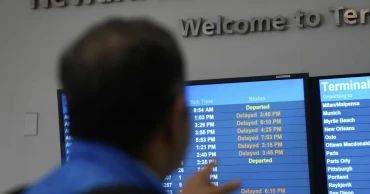
Software update keeps Newark airport radar online but network concerns and flight limits remain
A new software update prevented a third radar outage in the last two weeks at New Jersey's busy Newark airport when a telecommunications line failed again over the weekend, Transportation Secretary Sean Duffy said Monday.
At a news conference, Duffy also said the recent problems that have led to hundreds of cancellations and delays in Newark could have been avoided had action been taken by President Joe Biden's administration to better equip the air traffic control facility in Philadelphia — particularly after issues with the hardware in October and November that should have set off alarms.
The delays continued at Newark Liberty International Airport on Monday evening with average backups of more than 1 1/2 hours. This time it wasn't caused by technical failures, but a shortage of air traffic controllers that has been made worse because several of them went on leave due after the first radar outage under a 45-day trauma leave, said Federal Aviation Administration spokesperson Kristen Alsop.
The FAA had already restricted traffic into Newark after the first incident due to the staffing shortages. Those limits, designed to keep flights safe, combined with an ongoing runway construction project in Newark, has created lingering cancellations and delays. Later this week, the FAA will meet with all the airlines to discuss making those limits last into the summer.
Trump administration fires top copyright official days after firing Librarian of Congress
Duffy said the update the Federal Aviation Administration installed Friday night helped ensure the backup system worked on Sunday when there was another problem with the primary line coming into the air traffic control facility in Philadelphia. When a similar issue happened Friday and on April 28, the radar and communications systems went offline briefly, leaving controllers unable to see or talk to the planes.
Even though the radar system stayed online Sunday, controllers were worried because of the two previous outages, so Duffy said they stopped all traffic at Newark airport for about 45 minutes as a precaution.
Duffy said he will request an investigation into last year's move of Newark air traffic controllers from New York to Philadelphia to determine why more wasn't done to ensure there wouldn't be problems. Philadelphia is about 85 miles (137 kilometers) southwest of Newark.
“The Biden-Buttigieg FAA bungled this move without properly hardening the telecom lines feeding the data, which was already well-known to be error-prone,” Duffy said. “Without addressing the underlying infrastructure, they added more risk to the system.”
Duffy also said the FAA should have set up a new radar system for Newark in Philadelphia instead of piping the signal in from New York for controllers.
Duffy and President Donald Trump have said that the problems in Newark are a prime example of why they developed a multibillion-dollar plan to overhaul that nation's air traffic control system, unveiled last week. Duffy blames the Biden administration for failing to do that, but those problems go back decades, even before the first Trump administration.
An adviser to former Transportation Secretary Pete Buttigieg said Duffy should spend more time trying to deal with the nation's problems, and he defended the Biden administration's efforts to bolster air traffic controller hiring and make a down payment on dealing with some of the infrastructure problems.
Google to pay $1.4 billion to settle Texas lawsuit over unauthorised data collection
“Secretary Duffy has a tough job. But he needs to spend more time doing what the American people are paying him to do — fix problems — and less time blaming others," said Chris Meagher.
Duffy laid out an extensive plan to replace the nation's outdated air traffic control system last week, including installing 4,600 new high-speed data connections and replacing 618 radars, but didn't put a price tag on the plan other than to say it will cost billions.
The FAA has installed new fiber optic lines at Newark airport and New York's Kennedy International and LaGuardia airports to replace old copper wires since the first outage, but plans to spend the next two weeks testing those new lines out before switching over to them.
1 year ago