Tech-News

How affiliate marketing creating a new generation of digital earners
Affiliate marketing is no longer just a niche internet trend for tech enthusiasts or bloggers. It has become a major digital earning industry worldwide, and the global affiliate marketing market is expected to cross USD 20 billion by 2026. A large part of this growth comes from Amazon’s affiliate ecosystem alone, which is estimated to contribute around USD 9 to 10 billion. It shows how product recommendations and creator-driven sales are becoming a powerful part of modern online business.
Affiliate marketing is a simple earning model where people promote products through special links and earn a commission when someone makes a purchase through those links. What makes it so popular today is how easy it is to start. Anyone with a smartphone, social media account, or online audience can earn by sharing useful product recommendations without needing investment, stock, or delivery management. From TikTok gadget reviews to Instagram fashion posts, affiliate marketing has now become a growing part of the digital economy.
Globally, Amazon Associates is one of the most popular examples of affiliate marketing. Through the program, creators and influencers earn commissions by sharing Amazon product links. In many countries, affiliate marketing is now a serious side hustle and even a full-time profession for people who build audience trust through content and reviews.
Closer to home, Bangladesh’s influencer and content creator ecosystem is growing rapidly. According to StateGlobe, more than 150,000 active influencers are creating content across TikTok, Facebook, Instagram, and YouTube, while influencer and social media-driven advertising spending could reach nearly USD 120 million by 2026. At the same time, around 68% of Bangladeshi brands are already using influencer marketing as part of their campaigns. This shows that the opportunity for digital income is no longer a future idea, the ecosystem is already here.
For Bangladesh, affiliate marketing is highly relevant because the country has a young, digitally active population, growing smartphone use, and a rising e-commerce culture. Daraz, country’s leading e-commerce platform, has helped bring this opportunity to scale. Through the Daraz Affiliate Program, where affiliates simply choose products or campaigns, share links with their communities, and earn commissions on successful orders.
According to Daraz, affiliate marketing is already becoming a meaningful part of the platform’s business. Every month, more than 10,000 active affiliates engage with the platform, a number that surges during major sales campaigns. To date, over 53,000 individuals and brands have participated in the program.
On average, active affiliates earn around 5,000 Taka per month. However, the highest-performing contributor has earned approximately 150,000 Taka, showing that with consistent effort, trusted content, and the right audience connection, affiliate marketing can become a meaningful source of income.
The ecosystem provides affiliates with access to more than 50,000 active sellers and a catalog of over 23 million products, ensuring relevance for any audience whether they are looking for tech, fashion, or household essentials.
The program works on a simple “Cost Per Sale” model, meaning affiliates earn money when someone successfully places an order through their shared link. On average, the commission is around 5%. If a customer buys within 7 days after clicking the link, the affiliate can still earn commission. In some cases, earnings can go up to BDT 1,050 from a single order.
Many Bangladeshis are already doing affiliate marketing for Amazon, but many newcomers often face challenges such as payment issues, account setup complexity, and international platform restrictions. For those who want to understand how affiliate marketing works in a more local and accessible way, they can explore Daraz’s website or apps to learn about the process, commission structure, and how the model has been operating in Bangladesh over the past few years.
In the long run, affiliate marketing can help Bangladesh build a new generation of digital earners by teaching useful skills like content creation, digital marketing, product research, audience building, and performance tracking. A student can eventually become a performance marketer, a homemaker can grow into a lifestyle creator, and a Facebook group admin can turn into a digital entrepreneur.
The digital ecosystem in Bangladesh is no longer just about consumption, it is about contribution. As affiliate marketing continues to mature, it will remain a vital gateway for the next generation of digital earners to build sustainable careers in the palm of their hands.
Author: Tahsin Reza, Communication Professional
2 months ago

Samsung faces strike after pay talks with union fall apart
Samsung Electronics is facing the prospect of a strike after wage negotiations between management and union leaders broke down on Wednesday, raising concerns over possible disruptions to global semiconductor supplies and South Korea’s trade-driven economy.
The breakdown comes after the latest round of talks ended without agreement. Union leader Choi Seung-ho said workers would begin an 18-day strike from Thursday.
Both sides blamed each other for the failure to reach a deal. Choi accused management of rejecting a government-mediated proposal, while the company said the union’s demands for higher compensation were excessive, particularly for loss-making units.
Government officials have warned they may invoke rarely used emergency powers to force a settlement at Samsung Electronics, where the union represents about 74,000 workers. The union argues that the company has not provided fair compensation despite strong profits driven by the global artificial intelligence boom.
Samsung and its rival SK Hynix together produce about two-thirds of the world’s memory chips, a key component in AI-driven demand. Samsung recently reported an eightfold rise in operating profit for the January–March quarter to a record 57.2 trillion won ($38 billion).
Union leaders are demanding that Samsung allocate 15% of annual operating profits to employee bonuses and remove existing bonus caps, currently set at 50% of annual salaries. Management has rejected the proposal, citing the cyclical nature of the semiconductor industry.
Prime Minister Kim Min-seok has warned that a strike could cause up to 100 trillion won ($66 billion) in economic losses due to disruptions in highly complex chip production processes.
A local court earlier granted a partial injunction on the planned strike, requiring minimum staffing levels to protect facilities and ensure safe operations, while also restricting access to key offices and production areas.
Despite the deadlock, both sides said they remain open to further negotiations.
2 months ago

OpenAI sidesteps costly defeat in Musk lawsuit, but fallout leaves both sides bruised
OpenAI has avoided a potentially damaging legal setback in its high-profile dispute with Elon Musk, but the courtroom battle has left reputational dents on both sides as the artificial intelligence industry faces growing scrutiny.
A federal jury in Oakland ruled Monday that Musk filed his lawsuit too late, missing a statutory deadline, effectively handing OpenAI a victory after a three-week trial that featured extensive evidence and testimony from prominent figures in the tech world. The jury deliberated for less than two hours before reaching its decision.
The verdict allows the ChatGPT maker, valued at around $852 billion, to stay on course for what could become one of the largest initial public offerings in history. However, the proceedings exposed internal tensions, personal rivalries and governance concerns at the heart of one of the world’s most influential AI companies.
Musk had sought to remove OpenAI CEO Sam Altman and accused the company’s leadership — including co-founder Greg Brockman — of abandoning its original nonprofit mission to develop AI for the benefit of humanity. Altman, in response, alleged Musk was attempting to undermine OpenAI to advance his own AI venture.
Despite the legal outcome, testimony during the trial raised questions about Altman’s leadership. Several witnesses described him as lacking transparency, with former board members Helen Toner and Tasha McCauley citing concerns about his truthfulness. The trial also revisited Altman’s brief ouster from OpenAI’s board in 2023 before his swift reinstatement.
Musk, reacting sharply to the ruling, said he would appeal and criticized Judge Yvonne Gonzalez Rogers, calling her a “terrible activist Oakland judge, who simply used the jury as a fig leaf” to set a harmful precedent. “She just handed out a free license to loot charities if you can keep the looting quiet for a few years!” Musk wrote on his platform X. The decision marks his second major courtroom loss in less than two months.
Beyond the legal clash, the case underscored broader concerns about the future of artificial intelligence and the small circle of powerful individuals shaping its development.
“The trial was a reminder … of how much the future of AI still depends on a remarkably small group of powerful tech figures and their personal rivalries,” said Sarah Kreps, director of Cornell University’s Tech Policy Institute. “The trial highlighted not just a dispute between Musk and Altman, but a broader disconnect between the people building these systems and many of the people increasingly expected to live and work alongside them."
Although the judge sought to keep the proceedings focused on legal issues rather than AI risks, concerns about job losses, mental health effects and even existential threats formed a backdrop throughout the trial. Protesters regularly gathered outside the courthouse, criticizing both Musk and Altman and warning about the influence of billionaire-led tech companies.
“This is a funny microcosm of this moment where we have this hugely important technology that’s being developed by for-profit corporations run by people like Musk and Altman and not as the part of some government-led initiative,” said Columbia Law School professor Dorothy Lund.
The trial also revealed behind-the-scenes communications within Silicon Valley, including emails, diary entries and text messages that highlighted internal disputes and, at times, became fodder for online satire.
OpenAI dismissed Musk’s claims as unfounded, characterizing them as an attempt to slow its rapid expansion while boosting his own AI company, now part of SpaceX.
Meanwhile, both OpenAI and Musk’s ventures — along with AI firm Anthropic, founded by former OpenAI leaders — are preparing for major IPOs, signaling continued momentum in the sector despite the controversy.
“It’s a lot of dirty laundry that doesn’t look very appealing, I suppose, and so that may hurt their reputation and may have downstream effects on all kinds of things that you can’t even anticipate,” said University of Richmond law professor Carl Tobias. “But you know, AI is likely to come forward and continue even if it isn’t OpenAI.”
2 months ago

China vows crackdown on illegal drone flight system tampering
China's Ministry of Public Security on Monday vowed to maintain a tough stance against the illegal use of drone flight control systems by releasing 10 typical cases of such offenses.
In some cases, individuals used technical means to help others illicitly bypass drone restrictions, such as altitude limits and no-fly zones, or tampered with factory-set payload parameters, assisting unauthorized drone flights for illegal profit, according to the ministry.
It warned that such acts pose risks to public and national security. All suspects involved in the 10 cases have been subjected to criminal compulsory measures by police, with further investigation underway.
A ministry official also warned that privately providing services to remove no-fly zone and altitude restrictions for drone owners may constitute a criminal offense, adding that police will continue to crack down on such acts in accordance with the law.
Experts said drones with altitude restrictions removed could intrude into civil aviation routes and potentially cause collisions with serious consequences, while those with disabled geographic restrictions could enter prohibited areas, such as military control zones, risking the leakage of state secrets.
In addition, drones with altered performance parameters are more likely to lose control and crash during flight, posing a direct threat to lives and property, experts noted.
2 months ago

Soderbergh defends using AI in John Lennon documentary at Cannes
Oscar-winning director Steven Soderbergh has defended his decision to use artificial intelligence in his new documentary John Lennon: The Last Interview, saying he believes filmmakers should be fully transparent about how they use the technology.
The film, which premiered Saturday at the Cannes Film Festival, is built around a two-hour interview that John Lennon and Yoko Ono gave to a San Francisco radio crew on Dec. 8, 1980, the day Lennon was shot and killed in New York.
During the interview, the couple spoke openly about their relationship, love, creativity, life after The Beatles, raising their young son and songwriting. Soderbergh said he was deeply moved by their honesty and warmth.
The documentary uses AI-generated visuals in about 10% of the film, mainly during more philosophical parts of the conversation where there was little archival material available.
The decision sparked criticism after Soderbergh revealed it earlier this year, with some in the film industry expressing concern about the growing use of generative AI.
However, Soderbergh said he wanted to be open about the process.
"Transparency is very important," he said in an interview with The Associated Press. "People should know exactly how this technology is being used."
The director said he understands why many people are worried about AI, but does not believe the technology will replace most essential jobs in filmmaking.
He said his personal rule is that AI should only be used when it is truly necessary and when there is no better way to achieve a creative goal.
"I think a lot of people will use AI in ways that fail those tests," he said.
Soderbergh added that each part of the filmmaking process — from writing and acting to costume and sound design will have a different relationship with AI, making it difficult to set one universal standard for its use.
Despite the controversy, he hopes younger viewers will focus on Lennon's message.
Soderbergh said the documentary highlights Lennon's lifelong commitment to honesty and his desire to challenge the traditional image of the male rock star.
"He wanted to tell the truth and ask how we could become better human beings," Soderbergh said.
2 months ago

Smart Lab expands IT and cloud services into Nepal market
Bangladesh-based technology company Smart Lab has officially launched its IT and cloud solutions services in the Nepalese market.
As part of this expansion, Smart Lab signed a Memorandum of Understanding (MoU) with one of Nepal’s leading marketing and communications service providers, Outreach. The agreement was signed on Saturday night at Hotel Himalaya in Lalitpur, Nepal, with representatives from both organisations present, including Outreach Founder and Strategic Planning Director Ujaya Shakya and a Smart Lab delegation.
Under the partnership, Smart Lab will provide advanced IT solutions, system integration and cloud services to clients in Nepal.
Smart Lab Founder and CEO Reyad Hasnain said the company’s international expansion is helping generate remittance earnings for Bangladesh and strengthen the country’s foreign exchange reserves.
“We are already working with clients in 15 countries, including the USA, Singapore, Switzerland, China and Nepal. This expansion marks the next step in our global growth,” he said.
Smart Lab specialises in system integration, professional services, IT operations management, software development and messaging solutions. It is an associate company of Smart Voice Limited and serves more than 50 corporate clients and banking institutions in Bangladesh.
Outreach, established in 2003, is a leading advertising and marketing firm in Nepal and has received several international recognitions for its communications services.
Following the MoU signing, Smart Lab representatives also attended the launch of a book by Ujaya Shakya.
Stakeholders said the collaboration is expected to strengthen technological cooperation and regional connectivity between Bangladesh and Nepal.
2 months ago

Vatican prepares major document on AI, urging focus on ethics and human dignity
The Vatican is preparing to release the first encyclical of Pope Leo XIV, a major teaching document expected to call for an ethical approach to artificial intelligence (AI) that puts human dignity, social relationships and peace at the center.
Vatican officials said the pope signed the document on Friday, exactly 135 years after Pope Leo XIII issued his landmark encyclical Rerum Novarum. That document addressed workers’ rights, the limits of capitalism and the responsibilities of governments and employers during the Industrial Revolution.
The Vatican believes AI raises similar questions today about labor, justice and the future of society.
Experts say the Catholic Church is well placed to contribute to the debate because of its long tradition of reflecting on what it means to be human.
Shortly after becoming pope in 2025, Leo told cardinals that the Church should use its social teachings to help address the challenges AI poses to human dignity, justice and work.
The pope is expected to return to the issue on Sunday during the Vatican’s World Communications Day, which this year focuses on the human consequences of the global race to develop AI.
In a message released earlier, Leo warned that people must protect real human relationships as chatbots become more common. He also expressed concern over AI-generated music, videos and deepfakes that can spread false information.
The encyclical, likely to be released in the coming weeks, could put the Vatican at odds with the administration of US President Donald Trump, which has strongly supported rapid AI development and opposed many international efforts to regulate the technology.
Since the launch of ChatGPT, AI has advanced rapidly, bringing both promising applications and serious concerns. Experts have warned about risks ranging from biased hiring systems to autonomous weapons.
The Vatican has been active in the debate for years. In 2020, it launched the Rome Call for AI Ethics, an initiative supported by companies such as Microsoft, IBM and Cisco Systems. The initiative promotes principles including accountability, fairness, privacy and inclusion.
The late Pope Francis also called for an international treaty to regulate AI and urged governments to ensure that decisions involving weapons remain under human control. He advocated a ban on fully autonomous lethal weapons, often referred to as “killer robots.”
Pope Leo has continued that message. While acknowledging AI’s contributions to medicine and scientific research, he has warned that the technology could undermine humanity’s connection to truth and beauty.
The pope has also raised concerns about AI’s role in modern conflicts, including in Ukraine and the Middle East, where increasingly sophisticated drones and automated systems are being used.
Speaking recently at Sapienza University of Rome, Leo said the wars in Ukraine, Gaza, Lebanon and Iran show how new technologies are making warfare more destructive and less humane.
2 months ago
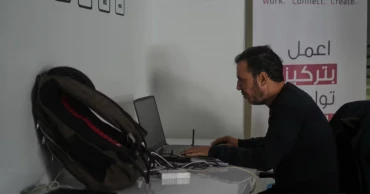
Gaza’s freelance coders keep working amid war, power cuts and payment hurdles
Amid constant drone noise, blackouts and damaged streets, some young tech workers in Gaza are still trying to earn a living by coding for clients abroad.
Tarik Zaeem, a 44-year-old programmer, spends his days working on software for an app in Saudi Arabia, fixing issues in a barcode system while sitting at a laptop in Gaza City. He often walks through destroyed streets to reach a shared workspace where freelancers can charge devices and access more stable internet.
Remote work has become both a vital income source and a mental escape for many in the war-hit territory.
“When I work, I forget everything and focus on coding,” he said, adding that his wife and children are now in Egypt. “I stop thinking about airstrikes or searching for drinking water.”
Zaeem is part of a growing community of freelancers in Gaza who work for international clients through platforms such as Upwork, Freelancer.com and Mostaql. Despite the ongoing war and widespread destruction, many continue to design websites, build apps and create digital services for clients in countries including Canada, Kuwait and Turkey.
The digital freelancing sector in Gaza developed over the past decade, especially after traditional industries weakened following political changes and restrictions. High unemployment and widespread internet access helped push many graduates toward online work, while donors and NGOs supported training programs and tech hubs.
One such initiative, Mercy Corps’ Gaza Sky Geeks, once ran busy coworking spaces before much of its infrastructure was destroyed during the war. The group is now helping revive remote work through smaller shared workspaces.
However, the conflict has severely disrupted daily life. Telecommunications networks were heavily damaged, and frequent power cuts have made it difficult for freelancers to meet deadlines. Many have also lost homes, relatives and stable internet access due to airstrikes and displacement.
Software engineer Sharif Naim, who runs a solar-powered coworking space called Taqat Gaza, said working conditions have slowly improved as new shared workspaces opened across the territory. His centre now supports hundreds of freelancers with internet access and training.
Women have also increasingly relied on online work as households face growing financial pressure. Graphic designer Reem Alkhateeb said freelancing has become her family’s main income source after her husband lost his job and food and water shortages worsened.
“Our dreams are now very basic,” she said. “We just want electricity, internet and a normal life where we can work.”Getting paid remains another major challenge. Many freelancers cannot access international banking services or payment platforms, forcing them to rely on relatives abroad or informal cash transfer systems with high fees.
In response, local initiatives such as “Gaza Talents,” founded by Salsabil Bardawi after personal loss in the war, are helping connect freelancers with international clients and manage payments through partner financial services. The platform says it has helped generate hundreds of thousands of dollars in income for workers.
Despite the hardships, many freelancers say they continue working not only for survival, but also to maintain a sense of normal life in the midst of destruction.
2 months ago

Americans remain deeply attached to iPhones despite concerns over overuse
Americans continue to have a complex love-hate relationship with the iPhone, a device that has become deeply embedded in daily life while also raising concerns about overdependence.
For many users, the iPhone feels almost essential, offering instant access to a wide range of services. People use it to take and share photos on social media, play games, watch videos, listen to music, send messages, check emails, browse the internet, follow news updates, get navigation directions and even make digital payments. Making or receiving phone calls, however, has become just one of many uses.
At the same time, critics say the device often encourages excessive screen time. Constant notifications and alerts can pull users into endless scrolling, reducing attention spans and making it harder for people to disconnect.
The debate reflects a broader paradox in American life as smartphones, including those powered by Apple’s iOS and Google’s Android systems, have become almost unavoidable in modern society.
The iPhone was first introduced in 2007 by Apple co-founder Steve Jobs, who predicted it would transform everyday life. Since then, it has reshaped communication, entertainment and work habits in ways few could have fully anticipated.
Some surveys even suggest that many people would choose to sleep beside their phones rather than their partners if forced to decide, highlighting how deeply integrated the devices have become in personal routines.
Now, observers are questioning how society can balance the benefits of smartphones with their potential downsides, including whether their impact should be compared to addictive products such as cigarettes, alcohol or junk food.
For now, however, the trend appears to continue toward greater digital dependence, as daily life becomes increasingly centered around glowing screens.
2 months ago

Swedish cafe experiment puts AI in charge of operations
A human barista serves coffee, but an artificial intelligence agent is running operations at an experimental café in Stockholm, where almost all business decisions are handled by AI in a real-world test of automation.
The Andon Café, operated by San Francisco-based startup Andon Labs, has placed an AI agent named “Mona” in charge of management tasks while human staff continue to prepare and serve drinks. Powered by Google’s Gemini, the system oversees hiring, contracts, inventory and day-to-day operations.
International cyberattack disrupts universities and schools across three countries
Since opening in mid-April, the café has earned over $5,700 in sales but remains below break-even, with less than $5,000 left from an initial budget exceeding $21,000. Organisers say most early spending went on setup costs and expect performance to stabilise over time.
Customers have reacted with curiosity, with visitors able to call the AI via an in-café telephone. “It’s nice to see what happens if you push the boundary. The drink was good,” said customer Kajsa Norin.
Andon Labs, founded in 2023, says it is stress-testing AI systems in real environments and has worked with OpenAI, Anthropic, Google DeepMind and xAI. It envisions AI-run organisations in the future.
Technical staff member Hanna Petersson said the café is a controlled experiment to study ethical questions in AI-led management.
However, experts including KTH’s Emrah Karakaya warned of accountability risks, calling it “opening Pandora’s box.”
Mona has made major errors, including over-ordering supplies and mismanaging bread deliveries. Barista Kajetan Grzelczak said jobs remain safe for now, but middle management could be affected.
2 months ago