Tech-News

China issues new rules to advance AI agent innovation
China has unveiled a set of guidelines aimed at regulating and advancing the innovative development of artificial intelligence (AI) agents, as the country accelerates efforts under its “AI plus” initiative.
The guidelines, jointly issued by the Cyberspace Administration of China, the National Development and Reform Commission(NDRC) and the Ministry of Industry and Information Technology(MIIT), are intended to support the implementation of the State Council’s “AI plus” action plan and promote the orderly growth of intelligent agents as key forms of AI products and services, according to an official statement.
Instagram drops private messaging feature worldwide
The document defines AI agents as intelligent systems capable of autonomous perception, memory, decision-making, interaction and execution, noting that they are increasingly integrating with cyberspace and the physical world with the advancement of technologies such as large language models.
It outlines key principles for AI agent development, emphasizing safety and controllability, standardization and order, innovation-driven growth, and application-oriented development.
The guidelines identify four major areas of action. These include strengthening development foundations by improving technological infrastructure and establishing standards and protocols; ensuring safety and security; promoting application-driven development through 19 typical scenarios across scientific research, industrial development, consumption, public services and social governance; and fostering an innovation ecosystem through enhanced industrial collaboration and broader application promotion.
2 months ago

Instagram drops private messaging feature worldwide
Instagram users around the world can no longer send highly private direct messages after parent company Meta disabled end-to-end encryption (E2EE) on the platform from Thursday.
The move marks a major shift by Meta, which had earlier promoted the technology as the future standard for online privacy.
End-to-end encryption is considered one of the safest forms of digital communication because only the sender and receiver can read messages. Critics, however, have long argued that it can also make it harder for authorities to detect crimes such as child abuse and online grooming.
With the feature now removed, Instagram will be able to access the contents of direct messages, including photos, videos and voice notes.
Meta had announced plans in 2019 to expand E2EE across Facebook and Instagram messaging services. While Facebook Messenger fully adopted the system in 2023, Instagram only offered it as an optional feature and had planned to make it standard later.
The company has now abandoned those plans after seven years.
Instead, Instagram will use standard encryption, a system commonly used by services such as Gmail, where providers can access data if necessary.
Child safety organisations welcomed the decision. The NSPCC, a UK-based children’s charity, said the removal of E2EE would help prevent criminals from hiding abusive activities online.
“We are really pleased,” said Rani Govender of the NSPCC, adding that encrypted messaging could allow child abuse and grooming to go undetected.
Privacy campaigners strongly criticised the decision, calling it a setback for online security.
Maya Thomas of privacy group Big Brother Watch said E2EE helps protect children’s personal data and warned that Meta may be responding to government pressure.
Meta did not publicly announce the policy reversal but quietly updated Instagram’s terms and conditions in March, stating that end-to-end encrypted messaging would no longer be supported after May 8, 2026.
The company said the decision was made because only a small number of users had enabled the feature.
Cybersecurity experts, however, believe the move may also reflect Meta’s growing interest in using data for targeted advertising and artificial intelligence development.
Victoria Baines, professor of information technology at Gresham College, said social media companies increasingly see user communications as valuable data for AI training and advertising purposes.
Instagram previously said direct messages were not used to train AI systems.
The decision could also affect the wider social media industry, where encrypted messaging had increasingly become common.
Apps such as WhatsApp, Signal, Facebook Messenger, iMessage and Google Messages currently use E2EE by default.
Meanwhile, Telegram offers the feature as optional, while TikTok recently said it has no plans to introduce end-to-end encryption for direct messages.
Experts say Meta’s latest move could slow the wider expansion of encrypted messaging on social media platforms.
With inputs from BBC.
2 months ago

AI safety concerns overshadow Musk-OpenAI courtroom battle
Concerns over the risks posed by artificial intelligence have emerged as a major theme in the ongoing courtroom battle between billionaire Elon Musk and Sam Altman, even though the technology itself is not formally on trial.
The federal trial in Oakland, California, centres on Musk’s lawsuit accusing Altman and fellow OpenAI leaders of abandoning the organisation’s original nonprofit mission.
Musk claims the company betrayed its founding promise to develop artificial intelligence for the benefit of humanity rather than private profit. OpenAI, however, argues that Musk is attempting to slow down the company to help his own AI venture, xAI.
Although Judge Yvonne Gonzalez Rogers warned lawyers not to turn the case into a debate over AI safety, discussions about the technology’s dangers have repeatedly surfaced during testimony.
Witnesses and lawyers have raised concerns ranging from job losses and misinformation to discrimination and emotional dependency on AI chatbots. Some testimony also touched on Musk’s long-standing warnings that highly advanced AI could eventually threaten humanity itself.
AI researcher Stuart Russell testified as an expert witness for Musk’s legal team, saying the intense competition among companies to dominate artificial intelligence could itself pose risks.
Russell, a computer scientist at the University of California, Berkeley, told the court that whichever company first develops artificial general intelligence (AGI) could gain enormous power over competitors.
He listed several concerns linked to AI, including racial and gender bias, job displacement, misinformation and psychological harm to some chatbot users.
“Whichever company develops AGI first would have a very big advantage,” Russell told jurors.
The trial focuses on the founding of OpenAI in 2015 as a nonprofit research organisation backed in part by Musk.
Both Musk and Altman have publicly stated that OpenAI was created to safely develop advanced AI for humanity’s benefit, though each side now accuses the other of trying to gain control over the technology.
A nine-member jury from the San Francisco Bay Area will decide whose claims are more credible.
Before testimony began, Judge Gonzalez Rogers cautioned lawyers against broad discussions about whether AI is harmful to humanity.
“This is not a trial on the safety risks of artificial intelligence. This is not a trial on whether or not AI has damaged humanity,” the judge said.
Despite that warning, Musk used part of his testimony last week to discuss his concerns about the future of AI.
He described AGI as a stage where AI becomes “as smart as any human” and claimed society is approaching that point rapidly.
“We are getting close to that point,” Musk said, adding that AI could surpass human intelligence as early as next year.
Musk said he had long viewed AI as “a double-edged sword” and was worried about the concentration of power within major technology firms such as Google.
According to Musk, one of the reasons for helping establish OpenAI was to create a counterbalance to Google’s dominance in AI development.
During testimony, Musk also said he intentionally helped create OpenAI as a nonprofit organisation rather than a profit-driven company.
“I deliberately chose this for the public good,” he said.
The judge questioned that argument, noting that Musk later launched his own AI company, xAI, which now operates in the same field.
OpenAI co-founder and president Greg Brockman defended the organisation’s mission during his testimony this week.
Brockman said OpenAI’s work was always intended to serve humanity rather than any single corporation or individual.
“It was about humanity as a whole,” he said.
He also claimed Musk sought personal control over the company in its early days.
According to Brockman, Musk initially appeared supportive of Altman becoming OpenAI’s chief executive but later insisted people needed to know “he was in charge.”
Musk is seeking damages in the case and also wants Altman removed from OpenAI’s board. Legal experts say a victory for Musk could complicate OpenAI’s plans for a future stock market listing.
2 months ago

AI boom lifts tech stocks, sends South Korea’s Kospi to record
South Korea’s KOSPI surged nearly 7% to an all-time high on Wednesday, led by a sharp rally in tech shares as optimism grows over artificial intelligence expansion and easing geopolitical tensions.
Shares of Samsung Electronics jumped almost 13%, while SK Hynix rose about 10% in early trading. Both firms are key producers of advanced chips essential for AI technologies.
Investor sentiment improved further following reports that Iranian officials were heading to China ahead of a planned meeting between Donald Trump and Xi Jinping. The development also helped stabilize oil market fluctuations.
After remaining closed Tuesday for a public holiday, South Korea’s market reopened strongly, with the KOSPI climbing 6.7% early in the session to 7,398.34.
Elsewhere in Asia, stock markets mostly moved higher, though trading in Tokyo was shut due to a holiday.
Australia’s S&P/ASX 200 advanced nearly 1% to 8,766.80, while Hong Kong’s Hang Seng rose 0.7% to 26,081.52. China’s Shanghai Composite also gained 1% to 4,152.68.
In energy markets, benchmark U.S. crude fell $1.37 to $100.90 per barrel, and Brent crude dropped $1.50 to $108.37. Despite recent declines, prices remain significantly higher than pre-war levels near $70.
U.S. military officials said a ceasefire with Iran is in place, though uncertainty persists. Efforts are ongoing to secure shipping routes through the Strait of Hormuz, a critical passage for global oil transport.
On Wall Street, the S&P 500 rose 0.8% to a record close of 7,259.22. The Dow Jones Industrial Average gained 0.7% to 49,298.25, while the Nasdaq Composite climbed 1% to a new high of 25,326.13.
U.S. economic data offered mixed signals. One report indicated slower-than-expected growth in the services sector, partly attributed to the war’s impact on spending. Another showed job openings were slightly higher than forecast at the end of March, suggesting continued resilience in the labor market.
In currency trading, the U.S. dollar edged down to 157.88 Japanese yen, while the euro strengthened to $1.1720.
2 months ago

Asian markets dip as oil prices ease amid renewed US-Iran tensions
Asian stock markets mostly declined on Tuesday, following losses on Wall Street where U.S. equities pulled back from recent record highs.
Oil prices, which had surged earlier due to rising tensions between the United States and Iran, retreated slightly. Meanwhile, U.S. stock futures posted modest gains of about 0.1%.
Trading activity across the region remained subdued, with markets in Japan, South Korea and mainland China closed for public holidays.
In Hong Kong, the Hang Seng Index dropped 1.3% to 25,757.56, while Taiwan’s Taiex index rose 0.3%. Australia’s S&P/ASX 200 fell 0.4% to 8,659.90 after the Reserve Bank of Australia increased its key interest rate to 4.35% in response to inflation pressures driven by rising fuel and commodity costs linked to Middle East instability. This marked the central bank’s third rate hike of 0.25 percentage points this year.
The bank reported Australia’s annual inflation rate stood at 4.6% through March, above its target range of 2% to 3%.
Elsewhere, India’s Sensex index declined 0.7%.
Geopolitical tensions remained a key concern. A fragile ceasefire between the United States and Iran appeared to weaken after the U.S. military said it had sunk six Iranian boats allegedly targeting civilian vessels. Despite two U.S.-flagged ships passing through the Strait of Hormuz, the crucial route for global oil and gas shipments remains largely restricted.
The United States has also imposed a maritime blockade on Iranian ports, while President Donald Trump launched “Project Freedom,” aimed at escorting stranded vessels through the strait.
Global oil benchmarks declined after recent gains. Brent crude fell $1.13 to $113.31 per barrel after briefly exceeding $114, while U.S. crude dropped $2.04 to $104.38 per barrel. Prices had been near $70 before the conflict escalated in late February.
Efforts to reach a lasting peace have stalled, with tensions rising further after the United Arab Emirates reported an Iranian attack — the first since last month’s ceasefire.
Analysts warned that the situation could deteriorate further, noting that ongoing maritime operations may heighten risks in the Persian Gulf region.
On Wall Street, the S&P 500 fell 0.4% to 7,200.75, while the Dow Jones Industrial Average dropped 1.1% to 48,941.90. The Nasdaq Composite slipped 0.2% to 25,067.80.
Shares of GameStop plunged 10.1% after it announced plans to acquire eBay, a firm with a market value roughly four times larger.
In currency trading, the U.S. dollar edged up slightly against the Japanese yen, while the euro weakened marginally against the dollar.
2 months ago

New Mexico seeks tighter child safety rules on Meta apps
New Mexico prosecutors are calling for major changes to Meta’s social media platforms, including Facebook and Instagram, to better protect children, as the second phase of a landmark court trial begins.
Opening arguments are set for Monday in a three-week bench trial that will decide whether Meta’s platforms create a public nuisance under state law by harming users, especially children.
In the first phase of the case, a jury ordered Meta to pay $375 million in civil penalties. It found that the company knowingly harmed children’s mental health and hid information about child sexual exploitation on its platforms.
Now, prosecutors are asking the court to force Meta to redesign key features of its apps. Their proposals include limiting addictive design tools, improving age verification systems, strengthening privacy settings for minors, and increasing safeguards against child exploitation.
They also want changes to how content is recommended, arguing that current algorithms push users toward endless engagement. Features such as infinite scrolling, push notifications, and visible “like” counts are also being targeted as drivers of compulsive use.
Another proposal would require child accounts to be linked with a parent or guardian and introduce a court-supervised monitor to track Meta’s compliance with safety improvements over time.
Meta has said it will appeal the jury’s verdict and warned it may suspend Facebook and Instagram services in New Mexico if forced to follow what it calls unrealistic requirements.
Legal experts say the case is unusual in how it challenges long-standing protections for internet companies. Eric Goldman of Santa Clara University said the legal theory of “public nuisance” is rarely applied to online platforms and may not fit well in this context.
New Mexico Attorney General Raúl Torrez said the verdict in the first phase weakened the protection tech companies have long relied on under Section 230 of the U.S. Communications Decency Act, which limits liability for user-generated content.
The case comes amid growing scrutiny of Big Tech, with another jury in Los Angeles also recently finding Meta and YouTube responsible for harms to children.
Prosecutors argue the court order could force a broader rethink of how social media companies operate, not just Meta. They say the goal is to address what they describe as a youth mental health crisis linked to platform design.
Meta, however, says it already invests heavily in child safety and claims many of the proposed measures are unnecessary or unworkable. The company also argues it is being unfairly singled out while many other apps used by teenagers face less regulation.
It has invoked free speech protections, saying the proposed rules could restrict expression and interfere with parental authority.
“The state’s proposed mandates infringe on parental rights and stifle free expression for all New Mexicans,” Meta said in a statement.
The trial is the first to reach court among more than 40 similar lawsuits filed by U.S. state attorneys general against Meta over youth mental health concerns. Many of those cases are being handled in federal courts.
Experts say the outcome could have wider implications for how social media companies are regulated in the future, especially if courts approve stricter requirements such as mandatory age verification.
The first phase of the trial included six weeks of testimony from educators, mental health experts, investigators, Meta executives and former employees.
2 months ago

Trump open to government stakes in companies, but skips Spirit Airlines deal
President Donald Trump has shown growing interest in the government taking ownership stakes in U.S. companies, but his administration stepped back from a possible deal involving Spirit Airlines, which shut down operations on Saturday after failing to reach an agreement.
Officials had been considering a plan for the government to invest in the struggling low-cost airline, which has faced rising fuel costs linked to the Iran war. However, talks stalled as the administration weighed whether the deal would bring financial benefits.
Trump made clear his position was driven more by potential profit than ideology. “If we can help them, we will, but it has to be a good deal,” he told reporters on Friday, adding that any move must serve U.S. interests first. He did not immediately comment on the airline’s shutdown.
The Republican president has increasingly supported the idea of government investment in key industries, a shift from traditional party views that favour minimal state involvement in business. Trump argues such steps are necessary to strengthen economic security and compete with countries like China.
He has pointed to investments in major companies, including chipmaker Intel, as examples of how government involvement can generate returns. Trump recently claimed the U.S. made significant profits from its stake in the company.
Under his administration, the government has taken or explored stakes in several sectors, including rare earth minerals, lithium, and nuclear energy, while also shaping deals involving major firms such as U.S. Steel and semiconductor companies like Nvidia and AMD.
Trump has also maintained government control over mortgage giants Fannie Mae and Freddie Mac, saying their value has increased as a result.
Supporters say these moves help level the playing field against foreign competitors that receive state backing. Analysts note that China’s strong industrial policies have pushed the U.S. to rethink its approach.
However, critics argue Trump’s strategy gives the government too much control over private industry. Tad DeHaven of the Cato Institute said the approach reflects a desire for greater influence over the economy.
Others caution that such investments carry risks if not carefully managed. Monica Gorman, a former Biden administration official, said clearer rules are needed to guide when and how the government should invest in businesses.
The potential Spirit Airlines deal, estimated at around $500 million, had also faced opposition from some Republican lawmakers. Trump had suggested the government could later sell its stake for profit if market conditions improved.
While previous administrations have supported industries through loans and incentives, Trump’s approach has relied more on direct government ownership and executive action, marking a notable shift in U.S. economic policy.
3 months ago

US military signs deals with 7 tech firms to deploy AI in classified systems
The United States military has signed agreements with seven major technology companies to integrate their artificial intelligence systems into classified defence networks, enabling the armed forces to use AI-powered capabilities for military operations and decision-making.
The Pentagon said on Friday that the deals include Google, Microsoft, Amazon Web Services, Nvidia, OpenAI, Reflection and SpaceX. The companies will help “augment warfighter decision-making in complex operational environments,” the Defence Department said.
US building unions back tech firms as demand for AI data centres surges
The Pentagon is rapidly expanding AI use, which can speed up target identification, battlefield strikes, and improve logistics, including weapons maintenance and supply chains, according to a March report by the Brennan Center for Justice.
However, concerns remain over privacy risks and the possibility of AI systems being used to select targets autonomously. Some agreements reportedly include requirements for human oversight in certain operations.
AI in warfare has also raised global concern after its use in Israel’s operations in Gaza and Lebanon, where U.S. technology was reportedly used for tracking targets amid rising civilian casualties.Notably, Anthropic is absent from the list following disputes with the Trump administration over AI ethics and safety in military use. Defence Secretary Pete Hegseth said all uses must remain lawful.OpenAI confirmed its Pentagon agreement, while officials said multiple providers were needed to avoid reliance on a single firm.
Military personnel are already using AI via GenAI.mil to reduce tasks from months to days. Experts warn of “automation bias,” urging careful human oversight despite AI’s operational benefits.
3 months ago
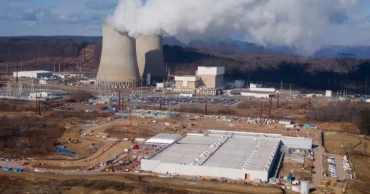
US building unions back tech firms as demand for AI data centres surges
Building trades unions in the United States are emerging as key partners of major technology companies as the country rapidly expands its artificial intelligence infrastructure.
Union workers are playing a central role in constructing large data centres across the country, with demand for labour rising sharply. Many unions are now increasing training programmes and recruiting more apprentices to meet the growing need.
At the same time, unions have aligned themselves with tech firms and supportive government officials, often highlighting concerns that the US is in a strategic race with China to lead in AI development.
Their involvement has also made them a strong voice in local debates, where communities have raised concerns about data centres over issues such as energy use, water demand, rising utility costs and noise.
Union leaders have responded directly to such criticism, stressing the economic benefits these projects bring.
“These projects create thousands of construction jobs in local communities,” said Rob Bair, head of the Pennsylvania Building and Construction Trades Council. He added that instead of rejecting projects outright, communities should negotiate benefits such as improved project plans or funding for local services.
The boom in data centre construction is proving highly beneficial for unions. In some regions, these projects now account for a large share of work hours. Union officials say apprenticeship programmes are expanding rapidly and membership is reaching record levels.
North America’s Building Trades Unions reported record numbers of members and trainees in 2025, with growth driven by data centres, energy projects and government-backed investments in technology and infrastructure.
The surge in demand is also linked to the high energy needs of data centres, which has led to increased construction of power plants and related infrastructure.
Some unions that had struggled with declining work in recent years are now seeing renewed growth. For example, a union in Pennsylvania that had not recruited new apprentices for years is now training hundreds.
Technology companies say they also need more skilled workers and are investing heavily in training programmes, often in partnership with unions.
OpenAI CEO Sam Altman said earlier this year that union construction workers are helping build the foundation of the AI economy. Google also noted that much of the workforce on its data centre projects is unionised and highlighted its funding for electrician training programmes.
Union leaders acknowledge criticism over their close ties with large tech companies but argue that the projects would move forward regardless of their involvement.
“If unions step back, the data centres will still be built,” said Mark McManus of the United Association of Plumbers and Pipefitters. He added that his members are involved in a large share of such projects across the country.
Unions have also become active in political discussions around data centre development. They have supported projects and opposed stricter regulations in several states, including proposals to limit or delay construction.
In some cases, their position has created tension with environmental groups and progressive lawmakers seeking tighter controls.
At local meetings, union members have often voiced strong support for data centre projects, sometimes dominating discussions. In several cities, they have been among the few groups openly backing new developments.
Supporters argue that these projects bring jobs and economic growth, while critics continue to raise concerns about environmental impact and community costs.
3 months ago

Teens in US rely more on social media and influencers for news, study finds
Teenagers in the United States are increasingly turning to social media platforms and online influencers for news, signalling a clear generational shift in how people consume information, according to a new national study.
The survey by the Media Insight Project found that 57 percent of people aged 13 to 17 get news from social media at least once a day, compared with 36 percent of adults.
A similar pattern was seen in reliance on influencers and independent content creators. While 43 percent of adults said they sometimes get information on national issues from such sources, the figure rises to 57 percent among teenagers.
The study, a collaboration between The Associated Press-NORC Center for Public Affairs Research, the American Press Institute and journalism schools at Northwestern University and the University of Maryland, highlights the growing influence of nontraditional news sources in teens’ daily lives.
Despite this shift, traditional journalism still holds importance, though trust is evolving. Robyn Tomlin, executive director of the American Press Institute, said audiences, particularly younger ones, are increasingly drawn to creators they perceive as authentic and transparent.
She noted that while national and local news outlets remain trusted, the rise of personal connections with digital creators could significantly shape the future of journalism.
The survey also found teenagers are more likely than adults to use search engines and artificial intelligence tools to access news. Around 40 percent of teens said they get news daily through search, while about 20 percent rely on AI chatbots.
However, television and digital news platforms continue to attract similar levels of audiences across age groups. About four in 10 both adults and teenagers said they watch TV news daily, with a comparable number accessing digital news sites or apps.
Tom Rosenstiel, a journalism professor at the University of Maryland involved in the study, said video-based news remains popular but is evolving in format, with platforms like YouTube offering a different experience from traditional broadcasts.
Despite frequent use of influencers and AI, many teenagers remain cautious about the information they receive. Only 11 percent of teens expressed strong confidence in information from AI chatbots, compared with 4 percent of adults.
Teenagers also showed greater confidence in their ability to identify AI-generated content, with about one-third saying they can clearly distinguish it from human-created material, compared with roughly one in five adults.
Trust in influencers is also limited. Just 12 percent of teenagers said they have a high level of confidence in information from independent creators, though this is still higher than the 6 percent reported by adults.
The study further found that teenagers are more interested in entertainment-related news, including celebrities, music, movies and sports, while adults tend to focus more on politics, business and the economy.
At the same time, both groups are showing signs of news fatigue, especially regarding politics. A majority of respondents said they often or sometimes avoid political news, with around six in 10 saying they steer clear of coverage related to US President Donald Trump.
Rosenstiel said many people are becoming more selective about the news they consume, partly due to a sense of being overwhelmed by current events.
He added that teenagers often seek information differently, showing less interest in avoiding celebrity news or social media content. This suggests that what is considered “important” news may vary widely, posing challenges for traditional journalism in defining its role.
3 months ago