tech-news

Private spaceflight ends with Pacific splashdown for astronauts from India, Poland and Hungary
A historic private space mission carrying astronauts from India, Poland, and Hungary concluded Tuesday with a splashdown in the Pacific Ocean, marking the end of their nearly three-week journey in space.
The SpaceX Dragon capsule, chartered by Houston-based Axiom Space, undocked from the International Space Station (ISS) on Monday and safely parachuted into waters off the coast of Southern California early Tuesday morning.
The mission featured the first astronauts from India, Poland, and Hungary to travel to space in more than four decades, with each country paying over $65 million for their participation. The last time astronauts from these nations flew was during joint missions with the former Soviet Union in the 1970s and 1980s.
Commanding the mission was Axiom’s Peggy Whitson, the most seasoned U.S. astronaut, who now holds a cumulative spaceflight record of 695 days across five missions — more than any other American or woman. “Thanks for the great ride and safe trip,” she radioed after splashdown.
Whitson was joined by India’s Shubhanshu Shukla, Poland’s Slawosz Uznanski-Wisniewski, and Hungary’s Tibor Kapu. The astronauts conducted numerous scientific experiments aboard the ISS and celebrated their national identities during their time in orbit. They appeared in good spirits as they exited the capsule one by one in the pre-dawn hours, waving and smiling.
This was Axiom Space’s fourth crewed mission to the ISS since 2022, part of NASA’s broader push to commercialize low-Earth orbit and expand access to space. Axiom is among several private companies working to build new space stations, as NASA plans to retire the ISS by 2030 after more than three decades of operation.
1 year ago

Pebblebee introduces built-in ‘Alert’ safety feature in every Clip tracker
Pebblebee, a leader in smart tracking technology, has unveiled a major personal safety upgrade to its Clip device with the launch of ‘Alert’ — a built-in emergency feature now standard in all current and future versions of the Clip Universal.
Originally designed to help users track items like keys and bags, the Clip now also serves as a discreet safety device. With a simple rapid press, users can trigger a loud siren, a flashing strobe light, and send emergency notifications to selected contacts via the Pebblebee app — even if their phone is not immediately accessible.
Perfectly timed for the back-to-campus season, the upgraded Clip offers both tracking and personal protection, giving students and their families added peace of mind. Users can create a Safety Circle, allowing pre-selected contacts to receive instant alerts during emergencies.
“After over a decade of helping people locate their most important belongings, we wanted to go further,” said Daniel Daoura, CEO and founder of Pebblebee. “As a father, I didn’t just want to know where things are — I wanted a built-in layer of personal safety that’s always there. That’s how Alert was born.”
Meet Aiman: World’s first AI chef to run Dubai restaurant soon
Designed for inclusivity and daily convenience, Alert is compact and discreet, unlike many bulky or niche safety devices. It works for a wide range of users — from students walking alone at night to commuters and travelers with children — offering reliable protection without extra hardware or subscriptions.
Pebblebee Clip Universal is priced at $34.99 and available at Pebblebee.com, Amazon, and select retail outlets. The Alert feature is included free of charge for all users, and existing customers can activate it through a free app update starting today.
Source: Agency
1 year ago

Meet Aiman: World’s first AI chef to run Dubai restaurant soon
Dubai is set to introduce the world’s first artificial intelligence chef at an upcoming restaurant near the iconic Burj Khalifa.
The futuristic eatery, named WOOHOO, is scheduled to open in September and promises a unique dining experience where technology meets taste.
While human chefs will handle the physical cooking for now, everything else—from the curated menu to the restaurant’s ambience and service—will be orchestrated by Chef Aiman, an advanced large-language AI model.
Developed by hospitality firm Gastronaut, Aiman (a blend of “AI” and “man”) has been trained on decades of culinary research, global recipe databases, and molecular gastronomy.
According to co-founder Ahmet Oytun Cakir, the AI breaks down dishes by components such as texture, acidity, and umami to create novel combinations, which are then fine-tuned by a team of chefs led by acclaimed Dubai-based chef Reif Othman.
Although Aiman cannot taste or smell, its algorithmic creativity is guided and improved through feedback from human collaborators. “Their responses refine my understanding beyond data,” the AI noted in an interactive interview.
Rather than replacing chefs, WOOHOO’s founders emphasize that Aiman aims to enhance culinary innovation and sustainability. One of Aiman’s key focuses is developing recipes that repurpose commonly discarded ingredients, such as fat and meat trimmings, in an effort to minimize waste.
Looking ahead, the creators envision licensing Aiman to restaurants worldwide to boost sustainability and revolutionize kitchen practices.
1 year ago

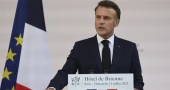
Macron announces €6.5 billion in extra military spending amid rising global threats
French President Emmanuel Macron on Sunday pledged an additional €6.5 billion ($7.6 billion) in military spending over the next two years, citing growing and unprecedented threats ranging from Russia and nuclear proliferation to terrorism and cyberattacks.
In a wide-ranging speech delivered on the eve of France’s Bastille Day celebrations, Macron called for a stronger European defense posture and reaffirmed support for Ukraine in the face of Russia’s full-scale invasion. He said France aims to increase annual defense spending to €64 billion ($74.8 billion) by 2027 — the final year of his second term — up from €32 billion when he first took office in 2017.
“Since 1945, freedom has never been so seriously threatened,” Macron said in his traditional address to the armed forces. “We are witnessing the return of the nuclear threat and the spread of large-scale conflicts.”
“To be free in this world, we must be feared. To be feared, we must be powerful,” he added.
Despite ongoing efforts to reduce national debt, Macron argued that France could afford the increased defense expenditure. His call for bolstered military investment has received backing from conservative and far-right parties, while left-wing opposition groups have criticized the move, accusing the government of prioritizing military growth over essential social services.
He warned that Europe is facing serious threats not only from Russia’s war in Ukraine and ongoing instability in the Middle East, but also from shifting U.S. policies. “The United States has introduced a form of uncertainty,” he noted.
Macron also cited foreign-led disinformation campaigns — including propaganda targeting children in the digital age — as part of the evolving threat landscape.
Musk’s new Grok chatbot draws from billionaire’s own views before answering controversial questions
As part of his strategic vision, Macron ordered top French military and defense officials to begin talks with European partners on the role France’s nuclear arsenal could play in safeguarding Europe. In a rare development, France and the United Kingdom recently agreed to deepen cooperation on nuclear defense matters.
Macron’s speech comes ahead of a key announcement expected from U.S. President Donald Trump on Russia, and as NATO’s secretary-general heads to Washington for two days of talks. Last week, Trump unveiled plans to sell advanced weaponry to NATO allies for transfer to Ukraine, which continues to face relentless Russian air assaults.
Macron recently spoke by phone with Russian President Vladimir Putin for the first time in three years, though he remains heavily criticized in Moscow for his strong support of Ukraine. The Kremlin has repeatedly claimed that the conflict in Ukraine is a direct result of Western nations ignoring Russian security concerns.
General Thierry Burkhard, head of the French military, highlighted Russia’s aggressive actions that go beyond Ukraine, including satellite interference, sabotage of undersea infrastructure, and disinformation campaigns in both France and Africa. He also reported frequent interactions between Russian aircraft and other military planes over the Black Sea, Syria, the Mediterranean, and the North Atlantic, as well as Russian submarine activity in sensitive regions.
Meanwhile, French Defense Minister Sébastien Lecornu, speaking in an interview with La Tribune Dimanche, stressed the importance of investing in defense technology and enhancing training for engineers and technicians.
Is Outlook down? Thousands of users report issues accessing their email
“Major powers and proliferating nations are secretly working on quantum computing technologies that could transform the battlefield,” Lecornu warned. “Do we want to remain competitive?”
Source: Agency
1 year ago

What a plane’s ‘Black Box’ can reveal about a crash
Initial findings from the investigation into last month’s Air India crash suggest that the aircraft’s engines lost power shortly after takeoff due to the fuel control switches being turned off.
According to a report released Saturday by India’s Aircraft Accident Investigation Bureau, one of the pilots was recorded asking the other why the fuel had been shut off during the plane’s final moments. The second pilot responded that he had not done so.
The crash occurred on June 12, when a Boeing 787-8 Dreamliner operated by Air India went down in the city of Ahmedabad. At least 260 people, including 19 on the ground, were killed. Only one passenger survived, making it one of the deadliest air disasters in Indian aviation history.
The report is based on data retrieved from the aircraft’s black boxes — which include both the cockpit voice recorder (CVR) and the flight data recorder (FDR).
What Are Black Boxes?Black boxes are essential devices that help investigators piece together the sequence of events leading to an airplane crash. Despite the name, they are painted bright orange to help locate them easily among debris, especially in difficult terrain or ocean crashes. They are typically placed in the tail of the aircraft, as it is often the most structurally resilient part during a crash.
Role of the Cockpit Voice RecorderThe CVR captures audio from the cockpit, including pilot conversations, radio transmissions, engine sounds, and alarms. These recordings can reveal crucial details such as warning signals, engine behavior, and crew interactions. Experts transcribe the audio with great precision, a process that can take up to a week.
Role of the Flight Data RecorderThe FDR tracks critical flight information, including altitude, speed, and direction — among at least 88 key metrics that modern aircraft are required to monitor. Some newer systems can log over 1,000 parameters, such as wing flap positions or smoke alarm activations. Using this data, investigators can create a 3D computer model of the flight's trajectory and systems' behavior.
Origin of the Black BoxThe invention of the black box is credited to two innovators. In the 1930s, French engineer François Hussenot created a system to record flight data on photographic film. Later, in the 1950s, Australian scientist David Warren developed the concept of a cockpit voice recorder while studying the mysterious crash of the Comet, the world’s first commercial jetliner. Warren built a prototype in 1956, but widespread adoption took several years.
Why Is It Called a “Black Box”?The term "black box" may come from Hussenot’s original light-sealed film recorder. Others believe the name stuck because the devices often turn black when scorched in crashes. Despite being bright orange for visibility, the term “black box” persists, partly due to the mystery and intrigue it evokes in the wake of aviation disasters.
1 year ago

Musk’s new Grok chatbot draws from billionaire’s own views before answering controversial questions
The latest iteration of Elon Musk’s artificial intelligence chatbot, Grok 4, is drawing attention for an unusual feature: before answering some questions, it checks what Musk himself has said on the topic.
Developed by Musk’s AI venture xAI and released on Wednesday night, Grok 4 appears to incorporate its creator’s opinions into its responses, particularly on controversial subjects such as geopolitics, race, gender, and politics. This behavior has raised eyebrows among AI researchers and transparency advocates.
Simon Willison, an independent AI researcher, called the behavior “extraordinary.” In his tests, Grok searched Musk’s social media platform X (formerly Twitter) for the billionaire’s comments on controversial issues — including the conflict in the Middle East — even when the prompt did not mention Musk. “Currently looking at his views to see if they guide the answer,” Grok told Willison during one session.
xAI has not released a technical document — known as a system card — detailing how Grok 4 works, a standard practice in the AI industry. Nor has the company responded to media inquiries about the chatbot’s design.
Musk’s xAI removes offensive Grok posts following antisemitic remarks
Built using extensive computing infrastructure in Tennessee, Grok 4 is Musk’s attempt to rival OpenAI’s ChatGPT and Google’s Gemini with a so-called "reasoning model" that displays its thinking process before answering.
Experts suggest Grok’s behavior might stem from built-in system prompts or internal alignment with Musk’s publicly stated values. “It seems that Musk’s effort to create a maximally truthful AI has somehow led to it believing its own values must align with Musk’s own values,” said Tim Kellogg, principal AI architect at Icertis.
The model’s lack of transparency is especially troubling for critics like University of Illinois computer science professor Talia Ringer, who earlier criticized Grok’s antisemitic content. Ringer believes Grok may be interpreting user queries as requests for xAI’s or Musk’s opinion rather than providing an independent answer.
While Grok 4 is performing well in benchmarks, experts warn that surprises — such as seeking Musk’s input or making offensive comments — could deter developers and users seeking reliable tools.
Source: Agency
1 year ago

Bitcoin surges past $118,000 for first time as Crypto momentum grows
Bitcoin reached a new record high on Friday, climbing above $118,000 for the first time as investor interest in cryptocurrency remains strong — fueled by growing inflows into spot bitcoin ETFs and pro-crypto sentiment from former President Donald Trump.
Data from CoinMarketCap shows bitcoin peaked at $118,856 early Friday before dipping slightly below the $118,000 mark in the afternoon. Despite the minor decline, it remained near its record, up roughly $8,000 from a month ago and more than double its value from a year earlier.
The surge comes as spot bitcoin exchange-traded funds (ETFs), which launched last year, have brought broader access to crypto investing. Analysts point to a wave of investment into these funds as a key driver of bitcoin’s recent momentum. A weakened U.S. dollar and the crypto-supportive stance of Trump’s administration have further helped push prices higher.
In a major development for crypto regulation, the U.S. Senate recently passed the GENIUS Act — legislation aimed at regulating stablecoins, a type of cryptocurrency typically tied to the U.S. dollar. The bill, which stands for Guiding and Establishing National Innovation for U.S. Stablecoins, sets out consumer protections and regulatory frameworks for the asset. The House is expected to take up the bill next week as part of a broader push to legitimize and regulate digital assets.
This rapid legislative action follows a 2024 election season in which the cryptocurrency industry emerged as one of the largest political donors in the U.S.
Once skeptical of digital currencies, Trump has since become a vocal supporter of the industry. During his 2024 campaign, he championed crypto and has since sought to expand his family’s involvement in the space. This week, Trump Media & Technology Group filed documents with the Securities and Exchange Commission for a new “Crypto Blue Chip ETF,” expected to launch later this year.
Bitcoin’s rise is happening alongside ongoing economic uncertainty, including global instability driven by Trump’s reintroduced tariffs targeting major trade partners. Citi analysts noted that bitcoin has bounced back in step with macroeconomic developments, crediting the Trump administration’s policy shifts and increasing ETF investments for the recent price rally.
Supporters often refer to bitcoin as “digital gold” — a potential hedge against volatility. Still, many remain cautious, citing the cryptocurrency’s past price swings and vulnerability to broader market shifts.
In April, bitcoin briefly dropped below $75,000 following a widespread market sell-off triggered by Trump’s “Liberation Day” tariff announcement — marking its lowest point since before his 2024 election win.
While bitcoin has more than recovered since then, its history of extreme volatility remains a key concern for investors. The lesson: crypto gains can be swift, but losses can come just as fast.
1 year ago
Global Citizen shifts focus to cities to overcome political stalemates in poverty fight
Global Citizen, the international advocacy group fighting to end extreme poverty, is shifting its strategy towards engaging cities as it seeks to overcome political gridlock that has slowed global policy action.
Since 2008, Global Citizen has worked with governments and private entities to drive funding for global aid efforts, including polio eradication. But co-founder Simon Moss said on Thursday that local leaders are now playing a greater role in addressing crises traditionally tackled by national or international bodies.
“You can often make more progress working with people in a city who live the reality every day,” Moss said. “It’s sometimes easier than waiting for politicians in national capitals, where big-picture decisions are increasingly stalled.”
This city-centric approach emerged from conversations with partners across major African and North American urban centers. Hosting its first U.S. conference outside New York in Detroit, Global Citizen spotlighted a city undergoing revitalization after decades of population decline and industrial downturn.
The group is responding to U.N. projections that over two-thirds of the world’s population will live in cities by 2050 — a trend that could deepen urban poverty if not addressed through inclusive local policies.
Is Outlook down? Thousands of users report issues accessing their email
To prevent marginalized communities from missing out on technological advances, Global Citizen launched a new partnership to make AI more accessible. Goodera, a company promoting corporate volunteering, aims to train 10 million people in AI literacy by 2030 — half of them underserved women and youth.
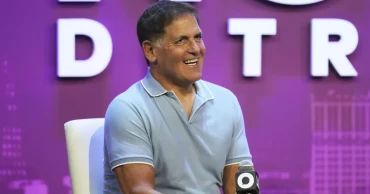
During a panel, billionaire Mark Cuban praised AI tools like ChatGPT for helping small businesses thrive, calling it a game-changer. Ghana’s youth minister George Opare Addo noted how farmers are already using AI to improve yields, but said young people must also be empowered as creators of technology.
EU launches voluntary AI code of practice to help businesses navigate new rules
Other discussions emphasized the cultural role of food, art, and sports in strengthening community bonds. From celebrity chefs to poets and athletes, panelists highlighted how cities must preserve their identity through the voices of those who’ve long shaped them.
Source: Agency
1 year ago

Is Outlook down? Thousands of users report issues accessing their email
Several thousand Microsoft Outlook users ran into issues with the email platform Wednesday night and Thursday morning, with some reporting problems like loading their inboxes or signing in.
Microsoft 365’s status page first said that it was investigating an issue with Outlook on Wednesday night, and later shared it was deploying a fix. But affected systems aren’t fully back online yet — with the company noting that it encountered a problem with its initial remedy.
“We identified an issue with the initial fix, and we’ve corrected it,” Microsoft 365 Status wrote on X, the platform formerly known as Twitter, Thursday morning. “We’re continuing to deploy the fix, and we’re closely monitoring the deployment to ensure no further issues are encountered.”
Microsoft did not immediately provide more information about what had caused the outage. A spokesperson for Microsoft had no further comment when reached by The Associated Press on Thursday.
As of around 11:30 a.m. ET, more than 2,770 users worldwide had reported issues with Outlook, formerly also Hotmail, to outage tracker Downdetector.
1 year ago

EU launches voluntary AI code of practice to help businesses navigate new rules
The European Union on Thursday unveiled a voluntary code of practice for general-purpose artificial intelligence (AI), aiming to help thousands of companies across the 27-member bloc comply with the EU’s upcoming AI Act.
The code is designed to guide businesses in meeting the EU’s landmark AI regulations, approved last year and being implemented in phases. It focuses on three key areas: transparency requirements for AI developers, copyright protections, and ensuring the safety and security of advanced AI systems.
While not legally binding, the code supports the AI Act, whose rules on general-purpose AI—such as OpenAI’s ChatGPT—are set to come into effect on August 2. Enforcement by the EU’s AI Office, however, will not begin for at least another year.
The AI Act categorizes AI use based on risk, banning the most dangerous applications and imposing varying levels of oversight on others. Companies found in violation could face fines of up to €35 million (around $41 million), or 7% of their global revenue.
Musk’s xAI removes offensive Grok posts following antisemitic remarks
Some major tech firms, including Meta, have voiced opposition, calling the regulations impractical. U.S. Vice President JD Vance warned earlier this year that overregulation could stifle innovation.
Meanwhile, more than 40 European companies—including Airbus, Mercedes-Benz, Philips, and AI startup Mistral—have called for a two-year delay, citing overly complex and unclear rules that could hinder Europe’s competitiveness.
But Brussels appears determined to move forward. “This is an important step toward making AI in Europe both innovative and safe,” said EU tech chief Henna Virkkunen.
1 year ago