Arts-&-Culture

Capella hotels and resorts to debut in Europe with historic Florence property in 2027
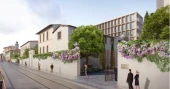
Capella Hotels and Resorts is set to make its eagerly awaited entry into Europe in 2027 by transforming a historic complex of former 12th-century convents in Florence, Italy.
Where and What
• Situated in the heart of Florence on Via San Gallo, the hotel will be within walking distance of both the Piazza della Libertà—marking the northern edge of the city’s historic center—and the iconic Duomo.• The site has previously housed the convents of Sant'Agata, San Clemente, and Santa Lucia di Camporeggi, once home to artistic talents like Arcangela Paladini.• The location has also served as a military hospital in its long history.• The design is being led by prestigious Italian architectural firms RPA and De Vita & Schulze, with interiors crafted by French design house Liaigre.• The project represents the revival of one of Florence’s most culturally significant and historic sites.• “Capella Florence represents a natural evolution of our vision, bringing the Capella experience to a city where culture, history, and artistry are deeply ingrained in everyday life,” said Cristiano Rinaldi, President of Capella Hotel Group.
Over tourism forces The Louvre to shut doors
What Capella Florence Will Comprise• The luxury hotel will feature 89 keys, including 33 suites, 56 guestrooms, and 10 exclusive residences blending classical and modern design, each with its own private entrance.• Guests will have access to two elegant dining venues—one dedicated to authentic Tuscan cuisine and the other to a sophisticated Japanese sushi omakase experience.• Additional offerings include a rooftop bar, a subterranean speakeasy wine vault, and Capella’s signature Living Room social space.• A standalone Clubhouse will house a 600-square-metre Capella Spa, complete with a hydro pool, fitness center, and wellness café.• The property will also feature an indoor amphitheatre, paying homage to the site's 800-year legacy of cultural and artistic expression.
Following the success of its luxury hotels across Asia and the Pacific, Capella Hotels and Resorts is poised to bring its acclaimed hospitality to Europe with Capella Florence, welcoming guests beginning in 2027.
Source: NDTV
1 year ago
South Korea's last circus ‘Dongchoon’ holds up as it marks centennial
No more elephant and monkey acts. No more death-defying motorbike stunts. No more singing or acting on stage.
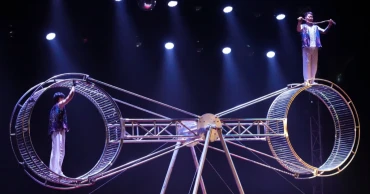
Several hundred spectators still clapped constantly when acrobats with Dongchoon Circus Troupe, South Korea’s last and 100-year-old circus, twirled on a long suspended fabric, juggled clubs on a large, rotating wheel and rode a unicycle on a tightrope under the big top, reports AP.
“As I recall the hardship that I’ve gone through, I think I’ve done something significant,” Park Sae-hwan, the head of the circus, said in a recent Associated Press interview. “But I also feel heavy responsibility because if Dongchoon stops, our country’s circus, one genre in our performing arts, will disappear. That’s the problem.”
The golden age of circuses
Founded in 1925, Dongchoon is Korea's oldest circus. In the golden ages of South Korean circuses in the 1960s when most households still had no TVs, Dongchoon travelled across the country, wowing audiences with then exotic animals like an elephant and a giraffe and a variety of shows including skits, comic talks, singing, dancing and magic shows. At its peak years, it had more than 200 artists, acrobats and other staff, according to Park.
Like in many other countries, TVs and movies later syphoned off the audiences of Dongchoon and other circuses in South Korea. Their actors, singers and comedians moved to TV stations, and some became bigger stars. The advent of the internet, video games and professional sports were another blow. South Korean circuses also dropped animal shows that faced protests by animal rights campaigners.
Now, Dongchoon is the only circus in South Korea after all its rivals went out of business.
How Dongchoon survives
Park, who joined Dongchoon in 1963, served as a show host and sometimes sang and acted in the circus's drama programs. He left the circus in 1973 and ran a lucrative supermarket business. In 1978, he returned to the circus industry by taking over Dongchoon, which was put up for sale after devastating typhoon damage.
Over tourism forces The Louvre to shut doors
Park, now 80, said he worried Dongchoon could disappear into history after seeing newspaper reports that its assets would be split into parts and sold.
“I thought Dongchoon must not disappear. When we want to study the roots of our country's dramas, we should look back on the traces of Dongchoon. The same goes for the history of our other shows, traditional music performances and magic shows as well as circuses themselves,” Park said.
Heo Jeong Joo, an expert at the All That Heritage Research Institute, also values highly the legacy of Dongchoon, which she said incorporated many traditional performers and artists who operated before its 1925 founding.
“Its foundation exceeds 100 years. In a historical perspective, I think it should be designated as an intangible cultural asset,” Heo said.
Park said he almost closed the circus in 2009 after his shows drew only 10-20 spectators each for several months during a widespread flu outbreak. It survived after local media reports sympathizing with the plight of Dongchoon prompted many people to flock and fully pack shows for weeks, he said.
Dongchoon leaps again at its seaside big top
Since 2011, Dongchoon has been performing at a big top at a seaside tourist area in Ansan, just south of Seoul. Its circus workers also frequently travel to other areas for temporary shows. Dongchoon officials said their business is doing relatively well, drawing several hundred spectators on weekdays and up to 2,000 on weekends at Ansan alone.
Ansan official Sharon Ham said local tourism has been boosted by Dongchoon's presence. She said Dongchoon shows are popular with both older generations wanting to recall childhood memories of circuses and younger generations seeking something new.
“It was a very impressive and meaningful circus,” Sim Chung-yong, a 61-year-old spectator, said after one show last week. “But I also thought about how much big pains and hardships those circus acrobats underwent to perform like this.”
Dongchoon officials say they now offer only acrobatic performances and refrain from too-risky acts because many people don't like them any longer.
Its all 35 acrobats are now Chinese, as a circus job is generally shunned by more affluent South Koreans who consider it too dangerous and low-paying. Park said he bought land at Ansan where he hopes to build a circus school to nurture South Korean circus artists.
Xing Jiangtao, 37, has been working for Dongchoon since 2002 — initially as an acrobat and now as its performance director. He recalled that when he first came to South Korea, he and his Chinese colleagues all worked as assistants to Dongchoon's 50 South Korean acrobats but they've all left one by one.
“Now, it's the only circus in South Korea, and I hope we will create good circus performances to show to spectators so that we can help Dongchoon exist for another 100 years," Xing said in fluent Korean.
1 year ago
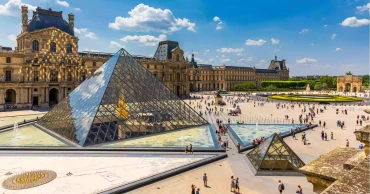
Over tourism forces The Louvre to shut doors
The Louvre, the most-visited museum in the world, came to a halt on Monday as staff members went on strike, protesting what they described as unmanageable tourist crowds.
Thousands of visitors hoping to view iconic works like the Mona Lisa faced long, stagnant lines outside the museum's famous glass pyramid entrance designed by I.M. Pei. The strike began unexpectedly after a routine staff meeting escalated into a walkout.
Employees—including security personnel, ticket clerks, and gallery attendants—refused to report to their posts, citing unbearable working conditions due to excessive visitor numbers, which they said were causing significant physical stress and making it increasingly difficult to manage day-to-day operations.
Japanese artist Takashi Murakami unveils major exhibit at Cleveland Museum of Art
The Louvre Is Breaking Down
The recent strike at the Louvre has brought renewed attention to a deepening internal crisis, reflecting concerns previously raised during staff walkouts in 2013 and 2019. However, this time, frustrations among employees appear to have reached a tipping point.
The museum, which hosted more than 8.7 million visitors last year, is grappling with several critical issues. These include a lack of adequate rest areas for staff, limited on-site facilities, and an aging infrastructure that is increasingly ill-equipped to meet current demands.
Louvre President Laurence des Cars has also raised alarms over the condition of the building itself. In an internal memo cited by The Washington Post, she warned that certain parts of the museum are no longer waterproof, and that extreme temperature fluctuations pose a threat to the priceless artworks. She described the present-day environment for both visitors and staff as “a physical ordeal.”
The Opening Of The 'Louvre New Renaissance'The French President Emmanuel Macron recently announced a 10-year plan to fix the Louvre's problems. Macron unveiled a decade-long restoration initiative, the "Louvre New Renaissance," which promises a new entrance for the Mona Lisa - which alone draws around 20,000 visitors per day into the Salle des États, as reported by Associated Press.
While the plan promises to address long-term improvements, it does not address the museum's and the staff's immediate needs. The staff called the action hypocritical as Macron promotes new projects, but little is being done to fix the problem at hand.
São Paulo celebrates city art museum’s new Renoir exhibit
The Louvre employees also don't want to wait years for relief. Workers argue that the state's operating subsidies for the museum have declined by over 20 percent in the last decade, but the number of visitors continues to increase.
One of the most iconic cultural spots is now caught in limbo, struggling to fix a problem that no one has a solution to, according to AP.
With inputs from NDTV
1 year ago

Frederick Forsyth, author of 'The Day of the Jackal,' dies at 86
Frederick Forsyth, the renowned British author best known for the political thriller The Day of the Jackal, has passed away at the age of 86 following a brief illness, his literary agent confirmed on Monday.
Forsyth died peacefully at home early Monday morning, surrounded by his family, according to his agent Jonathan Lloyd.
“We are deeply saddened by the loss of one of the world’s greatest thriller writers,” Lloyd said in a statement.
Born in Kent, England, in 1938, Forsyth began his career as a pilot with the Royal Air Force before transitioning into journalism as a foreign correspondent. His coverage of the 1962 assassination attempt on French President Charles de Gaulle became the basis for The Day of the Jackal, which catapulted him to global acclaim upon its release in 1971.
The novel was adapted into a 1973 film starring Edward Fox and more recently into a television series featuring Eddie Redmayne and Lashana Lynch.
Shigeo Nagashima, known in Japan as 'Mr. Pro Baseball,' dies at 89
In a 2015 interview with the BBC, Forsyth revealed that he had also carried out assignments for the British intelligence agency MI6 during his reporting years, beginning with his coverage of the Nigerian civil war in the 1960s. Though unpaid, Forsyth said it was difficult to refuse intelligence requests during that era. “The Cold War was in full swing,” he remarked.
Over his prolific career, Forsyth authored more than 25 titles, including The Afghan, The Kill List, The Dogs of War, and The Fist of God. His works have sold over 75 million copies worldwide, Lloyd noted.
Bill Scott-Kerr, his publisher, announced that a posthumous release titled Revenge of Odessa—a sequel to Forsyth’s 1974 novel The Odessa File, co-written with thriller writer Tony Kent—will be published in August.
‘Duck Dynasty’ star Phil Robertson dies at 79
“Freddie’s thrillers have long set the standard in the genre and remain essential reading for fans around the world,” Scott-Kerr said.
Source: With inputs from agency
1 year ago

SCO film festival to kick off in China's Chongqing
The 2025 SCO (the Shanghai Cooperation Organization) Film Festival will take place from July 3 to 7 in Yongchuan District, southwest China's Chongqing Municipality, highlighting the latest advancements in film technology and production across member states, local authorities announced Monday.
The upcoming film festival aims to promote people-to-people exchanges and cooperation between SCO member states, the municipal government said at a press conference.
The event will feature 11 major activities, including film screenings, cooperation forums, a film technology exhibition, and a gala concert. Ten awards will be presented at the event, including "best film" and "best director," according to Qin Zhengui, deputy director of the China Film Administration.
The organizing committee has received 27 film submissions from SCO member states, with a curated selection to be screened during the event.
Yongchuan, located in the western part of Chongqing, has emerged as a burgeoning hub for film technology innovation in recent years. The district is now home to over 100 film and TV enterprises and boasts cutting-edge production facilities, including a 3,000-square-meter virtual production stage and a 5,000-square-meter standardized soundstage.
1 year ago

Shilpakala Academy hosts ‘Ananda Utsab’ celebrating Eid-ul-Azha
Marking the holy occasion of Eid-ul-Azha, Bangladesh Shilpakala Academy (BSA) organised a festive cultural programme titled 'Ananda Utsab' on Friday night at the Nandan Mancha of the academy premises in the capital’s Segunbagicha.
Supported by the Ministry of Cultural Affairs, the event featured an array of musical performances and festive activities.
Secretary of the Ministry of Cultural Affairs Md Mofidur Rahman was present as a special guest at the programme, alongside BSA Secretary and Acting Director General Mohammad Wares Hossain.
The event was inaugurated with a welcome speech by Nava Mehjabeen Rahman, director of the Music, Dance, and Recitation Department at BSA.
The cutural programme commenced with a qawwali performance by Samir Kawal and his troupe, followed by solo musical renditions by popular singers Atia Anisa and Parsha Mahjabeen Purna.
‘Taandob’ is Raihan Rafi’s best film yet: Shakib Khan
Renowned singer Angel Noor performed a series of songs including 'Jodi Abar', 'Til', and 'Amay Proshno Kore'.
She was followed by noted artist Mithun Chakra, who entertained the audience with popular tracks such as 'Swapno Jabe Bari', 'Shada Shada Kala Kala', and 'Ore Shampan Wala'.
1 year ago
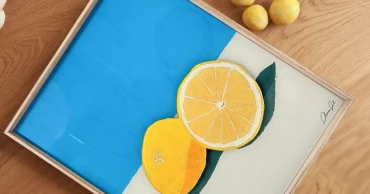
Neon dreams and nature scenes make for two very different home decor trends in 2025
Home decor's got a split personality this year: Call it “city glow” and “cottage flow.”
At the two international design fairs that I attended — Maison et Objet in France, Ambiente in Germany — acres of exhibition booths were full of Art Deco furnishings, island-vibe rattan seating and lighting, and lots of emphasis on sustainably produced materials.
But a couple of aesthetics drawing crowds were especially interesting.
Capturing the ‘city glow’
One was an exuberant urban vibe I’m nicknaming “city glow.” It’s full of highlighter-hued throw pillows, edgy surrealism, street art and hefty, Brutalist-style furniture — lots of sharp-cornered steel or concrete consoles and lamps that loomed over rooms — as well as rugs and wallcoverings covered in graffiti-style motifs or swaths of vibrant color.
Gretchen Rivera, an interior designer in Washington, D.C., sees it as a look that resonates especially with “younger generations who grew up with digital influences. There’s surrealist art, energetic colors and playful, almost toy-like design.”
Interior designer Anton Liakhov in Nice, France, agrees: “For a generation clamoring for creativity and self-expression, it’s loud and in-your-face.”
For surface colors, look at Benjamin Moore’s spicy orange Bryce Canyon or the bubblegum-pink Springtime Bloom. Daydream Apothecary has a whole collection of neon wall paints for intrepid decorators.
Sisters Ana and Lola Sánchez use art as a bold form of self-expression at their luxe brand Oliver Gal, in South Florida. It's known for its handcrafted, statement-making pieces — including large acrylic gummy bears, graphic surfboards and wall art inspired by fashion, pop culture and modern surrealism. The result is a vibrant, edgy aesthetic.
A new collection, Rococo Pop, introduces rococo-inspired frames in high-gloss acrylics paired with playful graphic imagery. “We wanted to take the opulence of 18th century rococo,” notes Ana Sánchez, “and give it a cheeky, pop-art punch.”
“These frames are like little rebels in ballgowns — elegant, over-the-top and totally unexpected,” adds Lola Sánchez.
The style, her sister says, “celebrates contrast. Old World charm meets modern mischief.”
Following the ‘cottage flow’
The other impressive decor style at the design fairs was very different from the urban look. I’m calling this one “cottage flow,” and Liakhov describes it as evoking a “peaceful sanctuary, where you can play around with textures that are anchored in, and in tune with, nature.”
India’s ‘History Hunter’ on a mission to preserve the past for future generations
Think nubby woolen throws in mossy hues. Softly burnished wooden tables. Vintage quilts, and dishware. Gingham and garden florals. Landscape prints. Imagery of birds and woodland animals on textiles and wallcoverings.
Etsy’s 2025 spring/summer trend report showed that searches for “French cottage decor” were up over 26,000% compared to 2024.
“I see people embracing a slower pace to life where they can,” says New York-based interior and decor designer Kathy Kuo about the country cottage style.
“The past two decades or so were dominated by a glorification of fast-paced ‘hustle culture’ — trends like cottagecore and coastal grandmother are evidence that the pendulum’s swinging toward taking pleasure in simpler, more nature-adjacent things in life, whether or not you actually live in a country cottage,” she says.
Paint colors are also reflecting the trend. A calming sage green called Quietude is HGTV Home by Sherwin-Williams’ color of the year. Little-Greene’s collection has names like Rolling Fog, Tea with Florence and Hammock.
Mixing the styles
Watching design show visitors excitedly discovering new finds among the aisles, I thought THIS is what’s fun about home decorating: You can think as creatively as you like when it comes to your own home.
You’re all about high-octane city nightlife? Come this way.
Scottish crofts, Scandi cabins and cozy porches more your thing? Right over here.
And if you want to mix these two aesthetics? Go for it. There’s space to blend elements of both, says Kuo.
“Design trends are so fluid. I absolutely see the potential to merge these into each other,” she says. “Many city dwellers love time in nature and have an affinity for a more rustic look, while still feeling called to honor their urban environment in their home. I see plenty of modern interior design motifs that are sleek and urban on the surface, but in the details, they’re infused with organic textures and biophilic elements.”
“Really, the best designs are the ones that are personal, rather than perfect,” she adds.
You could display an array of contemporary glass bowls on a curvy walnut credenza. Mix botanical patterns in vibrant, unexpected colors. Soften room elements like a sleek table and industrial-style lamp with boucle or velvet cushions and a fluffy rug. Pair polished concrete floors with vintage-inspired wallcovering.
If you don’t want to mix elements in one space, consider using sliding partitions from one room to another. You’ll create a little style “journey.”
If the recent international design fairs are any indication, you’re going to find loads of fun home decor in stores over the coming months. Get ready to flow.
1 year ago

Nepal mountaineering community celebrates 72nd anniv since Everest's first summit
Nepal's mountaineering community celebrated the conquest of the world's highest mountain with a rally of climbers, guides and others who gathered for International Everest Day.
The event Thursday marked the 72nd anniversary of the first summit climb of Mount Everest on May 29, 1953, by New Zealander Edmund Hillary and Sherpa guide Tenzing Norgay, reports AP.
Nepal's minister for culture and tourism led the celebration in the capital, Kathmandu,that included a walk around the city and a gathering at the old palace.
“We are celebrating May 29 as the international Sagarmatha (Everest) day because the world needs to continue to recognize the achievement and contribution of Sir Edmund Hillary and Tenzing Norgay,” said Ang Tshering, who runs Kathmandu-based Asian Trekking.
Nepal hosts environment conference as Himalayan glaciers melt
The event was not just a celebration for the mountaineering community but also a festival for Nepal and the world, said Tshering, who has helped hundreds of clients scale the Himalayan peaks.
Nepal contains eight of the highest peaks in the world and every year hundreds of foreign climbers fly to the country in South Asia to tackle the mountains. The climbers hire thousands of people in Nepal to assist their climbs by carrying gear, cooking food and generally taking care of them as they spend weeks in the mountains.
Nepal's government collects money from the climbers through permit fees.
The end of May also marks the end of the popular spring mountaineering season, when climbers finish their adventures and retreat from the peaks before the monsoon season brings foul weather.
"This day is celebrated also to mark the end of the climbing season where we gather climbers and the community," Jiban Ghimire of Shangri-La Nepal Trek said.
According to Nepal’s Department of Mountaineering, 468 foreign climbers from 57 countries received permits to climb Everest by the end of May, along with a roughly equal number of Nepalese mountain guides.
Many were able to scale the peak, but officials were still working to verify how many reached the 8,849-meter (29,032-foot) summit. Climbers must report to the department with proof they reached the summit and cleared their garbage before they are issued the official certificate.
Nepal seeks partnerships with Bangladesh in key areas
Famed Sherpa guide Kami Rita reached the Everest summit for the 31st time Tuesday, breaking his own record for the most climbs to the top of the famed mountain.
1 year ago
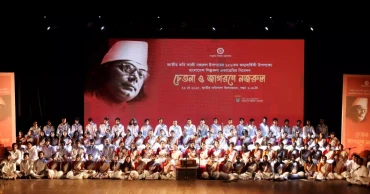
In Spirit and Awakening: BSA celebrates 126th birth anniversary of National Poet Kazi Nazrul Islam
Bangladesh Shilpakala Academy (BSA) celebrated the 126th birth anniversary of National Poet Kazi Nazrul Islam on Monday evening with a cultural event titled 'Chetona O Jagorone Nazrul' at BSA's National Theatre Hall Auditorium in Segun Bagicha.
The programme was organized by the academy’s Music, Dance and Recitation Department.
Mohammad Wares Hossain, Secretary and Acting Director General of Bangladesh Shilpakala Academy, presided over the event, while Mehjabeen Rahman, Director of the Music, Dance and Recitation Department, delivered the welcome address.
In his remarks, Mohammad Wares Hossain highlighted the historic significance of the government's recent official recognition of Kazi Nazrul Islam as the National Poet through a gazette notification for the first time.
“Although Nazrul has long been regarded as our national poet in spirit, the current interim government has made it official. This recognition fulfills a long-cherished dream of Nazrul lovers and researchers,” he said.
He further noted, “Nazrul was a poet of equality and rebellion; whenever he saw oppression, he voiced resistance through his poems and prose. We witnessed that same spirit during the mass uprising of July 2024.”
1 year ago
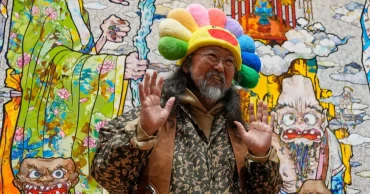
Japanese artist Takashi Murakami unveils major exhibit at Cleveland Museum of Art
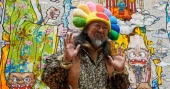
Renowned Japanese contemporary artist Takashi Murakami, known for his signature smiling, rainbow-hued flowers, has launched a vibrant and thought-provoking exhibit at the Cleveland Museum of Art, opening to the public this Sunday.
Titled “Takashi Murakami: Stepping on the Tail of a Rainbow,” the exhibition is an expanded version of a show previously held in Los Angeles and features over 100 works spanning various media — from paintings and sculptures to collaborations with luxury fashion brands like Louis Vuitton, album art, and even Major League Baseball merchandise.
Murakami, whose style often blends playful imagery with deeper socio-historical commentary, said he intentionally pairs cheerful visuals with references to collective trauma, reflecting on how events shape societies. “It might seem like my work is very light and accessible — and that’s intentional,” he told the Associated Press. “It’s one of my tricks.”
The exhibit explores themes of cultural memory and resilience. According to Ed Schad, curator at The Broad museum in Los Angeles, the artworks are steeped in historical context and serve as a reflection of societal health and response to trauma. “What society is reacting to most in this exhibition is the idea of trauma,” he noted.
Among the standout pieces is Pom and Me, a sculpture depicting Murakami and his dog, half of their bodies rendered in anatomical detail, revealing internal organs and bones. The piece symbolizes the artist’s Western experiences filtered through his Japanese identity.
Another installation features a wall of square portraits of cartoon-like flowers, their expressions ranging from joyful to sorrowful — some crying, others zombie-like or stunned as if watching fireworks. Organized by background color to form a rainbow, these images hint at emotional complexity beneath their playful surface.
While the works don’t explicitly depict historical events, the museum contextualizes them against three major moments in Japanese history: the atomic bombings of Hiroshima and Nagasaki in World War II, the 2011 Tōhoku earthquake and resulting Fukushima nuclear disaster, and the global COVID-19 pandemic.
Visitors to the lower-level gallery first pass through a structure modeled after the Yumedono (Hall of Dreams) from Horyuji Temple in Nara, Japan. Inspired by the 2024 TV series Shōgun, this octagonal pavilion houses four recent Murakami paintings: Blue Dragon Kyoto, Vermillion Bird Kyoto, White Tiger Kyoto, and Black Tortoise Kyoto — completed between 2023 and 2025.
The ticketed exhibition will remain on view through early September.
1 year ago