Fashion
Met Gala fashion show aims to reclaim overlooked body types in art history
A new fashion exhibition opening alongside Monday’s Met Gala is aiming to challenge long-held ideas of beauty in art by spotlighting body types that have often been ignored.
The exhibit, titled “Costume Art,” begins with familiar classical ideals, including a glittering Dolce & Gabbana gown decorated with sequins and an image of the Greek goddess Aphrodite holding a golden apple, a symbol of traditional beauty standards rooted in ancient Greek art.
But curators say the goal is not to celebrate only that classical form. Instead, the show uses it as a starting point to question and expand how bodies are represented in art history.
Andrew Bolton, head curator at the Metropolitan Museum of Art’s Costume Institute, said the exhibition seeks to “reclaim the body” by bringing attention to forms that have long been overlooked or underrepresented.
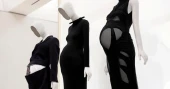
Those include corpulent bodies, disabled bodies, pregnant bodies and aging bodies. The exhibition features around 400 items, many displayed on newly designed mannequins based on real people with diverse body shapes and conditions.
One section focused on aging includes a large grey hoodie with the phrase “I’M RETIRED. (This is as dressed up as I get.),” reflecting a more casual, humorous approach to aging and identity.
Bolton said the exhibition is the most body-inclusive show the museum has ever staged, and visitors attending the Met Gala will preview it before it opens to the public on May 10.
The show also marks the opening of new gallery space for the Costume Institute inside the museum’s main floor, near the Great Hall. The expansion was funded in part by the Met Gala, which raised a record $31 million last year. The new space will allow fashion exhibitions to run longer, with “Costume Art” scheduled to remain on view for eight months.
The exhibition pairs fashion pieces with artworks from different periods, arguing that fashion itself should be seen as art, and that art can also be understood through fashion. It begins with Grecian-inspired garments and classical imagery but gradually moves toward more diverse and modern interpretations of the human body.
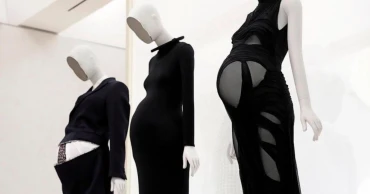
One section focuses on pregnancy, featuring designs that highlight and celebrate the pregnant form. Among them is British designer Georgina Godley’s 1986 “Bump and Lump” dress, which emphasizes the shape of pregnancy. It is shown alongside a rare early 20th-century sculpture by Edgar Degas titled “Pregnant Woman,” depicting a nude figure holding her belly.
Another section explores larger body types and challenges stereotypes linking size with fertility or femininity. Designer Michaela Stark’s corsetry works are included, some of which are displayed on mannequins based on her own body. One piece titled “Fat Not Fertile” is paired with an ancient marble figurine of a similar body shape, highlighting changing perceptions of beauty and power.
Disability is also a central focus, with different displays highlighting physical, sensory and cognitive conditions. One mannequin inspired by Paralympian Aimee Mullins wears prosthetic-style boots designed by Alexander McQueen, paired with a 1965 sculpture titled “The Amputee.”
Irish disability activist Sinéad Burke is also represented through mannequins wearing adapted fashion pieces, including a Burberry trench coat and a Vivienne Westwood design. Another display features model and wheelchair user Aariana Rose Philip, presented in a seated pose wearing casual clothing with a slogan shirt.
The exhibition also addresses less visible conditions, including Alzheimer’s disease. A coat by designer Nadia Pinkney incorporates patterns inspired by brain scans of her relatives who lived with the condition. It is shown alongside artwork by Willem de Kooning, whose later work was affected by Alzheimer’s.
A final section explores themes of shared human experience such as aging and mortality. It includes pieces like a Vivienne Westwood jacket decorated with red beads symbolizing blood and injury, paired with historical religious artwork.
“Costume Art” will open to the public on May 10 and run through January 10, 2027.
3 months ago
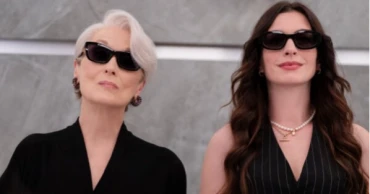
‘The Devil Wears Prada 2’ delivers style and nostalgia
Two decades after the original hit, ‘The Devil Wears Prada 2’returns with the same charm, fashion flair and star power, but struggles to match the sharp storytelling that made the first film iconic.
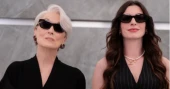
Meryl Streep, Anne Hathaway and Stanley Tucci reprise their roles, while Emily Blunt, once a lesser-known name, now returns as a full-fledged star. The cast slips back into their characters with ease, giving the sequel its strongest appeal. Nostalgia and high-fashion glamour also add to the attraction for fans of the 2006 film.
However, the film’s story feels less sharp. While the original thrived on the tense relationship between a demanding boss and her inexperienced assistant, the sequel shifts focus to a changed media and fashion world, where digital influence and corporate struggles dominate.
The story follows Andrea Sachs, played by Hathaway, who is laid off from a newspaper job after receiving an award for investigative journalism. Around the same time, Runway magazine is struggling to stay relevant in a digital-first world. After a major PR crisis involving a fashion brand, Andrea is brought back into Runway’s orbit, setting up a complicated professional reunion with Miranda Priestly.
The film adds further corporate drama as ownership changes and new power players enter the scene, including a tech-focused executive and Emily Blunt’s character, now working in the luxury fashion industry. Subplots involving media influence, brand reputation and corporate takeover give the sequel a more modern backdrop.
Despite these updates, critics may find the emotional impact weaker than the original. The intense boss-assistant dynamic that defined the first film is largely replaced by a more polite, less tense workplace environment. Even Miranda Priestly appears softer, with fewer of the biting remarks that once defined her character.
The sequel also leans heavily on cameos, international locations and multiple side characters, which at times distract from the main narrative. While it attempts to reflect today’s media and fashion industries, it loses some of the tight focus that made the original so engaging.
Overall, ‘The Devil Wears Prada 2’ offers style, nostalgia and strong performances, but its story does not carry the same weight as its predecessor.
The film runs for 119 minutes, is rated PG-13 for strong language and suggestive references, and earns two stars out of four.
3 months ago
Britain honours Queen Elizabeth II on her centenary as a style and cultural icon
The late Queen Elizabeth II believed the monarch had to be seen to be believed. And she made sure that was true even when Britain’s famously changeable weather intervened, pioneering the use of a clear plastic raincoat so that a stodgy black umbrella didn’t obscure her from public view.
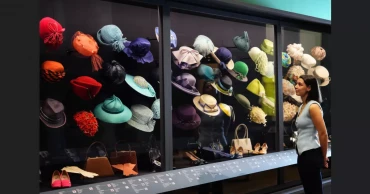
That raincoat is one of some 300 garments and other fashion artifacts that go on display Friday at the King’s Gallery at Buckingham Palace in an exhibit that celebrates the late queen’s life and reign as Britain prepares to mark the centenary of her birth. The most comprehensive exhibition of her style choices ever mounted, the show charts Elizabeth’s story, and her impact on British fashion.
“I think she had a definite sense of what suited her,’’ exhibition curator Caroline de Guitaut said. “She absolutely knew how she wanted to appear.”
An Olympian moment
Some of the items are easily recognizable since Elizabeth was one of the most photographed people ever. But the ball gowns, tweed suits and trademark headscarves are sometimes strange to see on museum mannequins instead of the queen herself.
And then there are the items that are truly one-offs.
Like the dress, complete with bloomers, that Elizabeth’s stunt double wore during the opening ceremony for the 2012 London Olympics, when the then-86-year-old queen appeared to parachute into the stadium alongside Daniel Craig in his James Bond persona. To complete the illusion, the queen soon emerged in the stands identically attired.
Both dresses, designed by Elizabeth’s longtime dressmaker Angela Kelly, are displayed side by side, though the stunt double’s version has large zipper in back to accommodate the parachute.
Fashion connection to the public
The exhibition, drawn from some 4,000 items once owned by the queen, explores how fashion became one of her most powerful tools of communication as she evolved from a young princess into Britain’s longest-reigning monarch.
That could often be seen in her choice of color and decorative detail, as in the green and white Norman Hartnell gown she chose to wear for the state banquet during her 1961 visit to Pakistan, honoring her hosts by donning their national colors.
“The queen had an intimate understanding of how fashion could lend itself to diplomacy, a trait which, while its origins certainly lay in earlier reigns, the queen developed into nothing short of an art form,’’ de Guitaut said. “Color or embellishment communicated messages of respect to her host nation before she had even uttered a word in her speech.”
Particularly as she got older, Elizabeth opted to wear bright or distinctive shades during large public events so she could be easily spotted, and visitors could say they had seen the queen.
The exhibit also explores the queen’s off-duty wardrobe. The tweed suits she wore at Balmoral Castle, the royal family’s summer retreat in Scotland, are on display alongside clothes for riding, hiking and other outdoor pursuits. There’s a thick woolen coat Kelly designed during Elizabeth’s later years alongside items by Burberry and British designer Hardy Amies.
Big occasions, big statement gowns
Clothes worn during the many milestones of the queen's long life are also on display, from her christening robe, commissioned by Queen Victoria for the baptism of the future King Edward VII, to dresses she wore for her wedding and coronation.
The exhibit also includes sketches and notes that show just how involved the queen was in designing her wardrobe.
Naomi Pike, commissioning editor for Elle UK, said the collection finally recognizes Elizabeth’s status as a fashion icon, even though other royals, including her younger sister, the late Princess Margaret, and her daughter-in-law, the late Princess Diana, stole the spotlight during her lifetime.
“I think we’re very quick in this day and age to afford people icon status. … It’s thrown around so easily,’’ Pike said. “But I think in the case of the queen, she was an icon and so much of that comes down to having a very strong sense of personal style.’’
On fairy wings
While the gowns may be the exhibit’s biggest draw, the show also provides a few surprises. With the task of showing us ‘’what the monarch wore,’’ the curators conjured up a somewhat battered fairy outfit made from a tutu with wings on the back.
The piece is a favorite of Cecilia Oliver, a textile conservator at the King’s Gallery, who described it as the “cutest thing in the world."
“I think what I love most about it is that it was bought for Elizabeth as a child, and to think of her as this tiny little girl that then grew up into this magnificent woman with all this weight of responsibility on her shoulders, it just feels very, sort of sentimental,’’ Oliver said.
Oliver grew almost wistful as she described the months of work on the exhibit and the privilege of handling so many things connected to a person familiar to so many but truly known by so few.
“As a conservator, I have a really intimate knowledge of these pieces. I’ve been able to touch them. I’ve been able to smell them. I’ve been able to understand them,’’ she said. “And through that, I felt really close to her.”
Queen Elizabeth II: Her Life in Style runs until Oct. 18 at the King’s Gallery, Buckingham Palace.
3 months ago

Dhurandhar 2’s watches: from Rs 9,000 G-shocks to Rs 44 lakh Rolex
The luxury watches in ‘Dhurandhar 2’ are more than just accessories they reflect the personalities, power, and worlds of the characters. From rugged field-ready timepieces to high-end statement pieces, each watch is carefully chosen to convey style, status, and intention.
Hamza Ali Mazari’s collection spans extremes. For high-power moments, he sports the ‘Rolex Cosmograph Daytona Ref. 126503’, a 40 mm two-tone Oystersteel and yellow gold chronograph with a golden dial, tachymeter bezel, and 72-hour power reserve. Priced around Rs 18–22 lakh, it signals wealth and authority, even if it slightly predates the film’s timeline. On the battlefield, he switches to the ‘Casio G-Shock GA-100-1A1’, a shock-resistant, water-resistant, analog-digital watch built to endure extreme conditions, priced at Rs 7,500–9,500. A simpler G-Shock variant also features in his rotation, highlighting the character’s mix of practicality and occasional flair.
Jameel Jamali favors the ‘Rolex Day-Date ‘President’, a pure power watch crafted from 18 ct yellow gold, with a fluted bezel, President bracelet, and day-date display. Marketed at Rs 44 lakh+, it mirrors Jameel’s flashy and authoritative persona, symbolizing influence and prestige.
Uzair Baloch, meanwhile, opts for functionality over flash with the ‘Casio G-Shock Mudmaster GG-1000-1A3’, designed for harsh environments. Shock-proof, mud-proof, water-resistant up to 200 metres, and featuring a compass and thermometer, this watch, priced around Rs 70,000–75,000, fits the chaotic, survivalist edge of Uzair’s world.
Whether it’s Rolex luxury or G-Shock toughness, ‘Dhurandhar 2’ uses watches to deepen character storytelling. Each wrist accessory becomes a statement—highlighting status, personality, and the tension between glamour and grit.
Source: NDTV
4 months ago
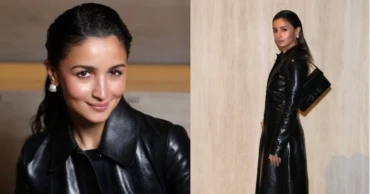
Alia Bhatt stuns Gucci look at Milan fashion week
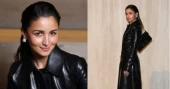
Bollywood star Alia Bhatt turned heads at the Gucci show during Milan Fashion Week, dazzling in an all-black look that blended glamour with a gothic edge. She attended the much-anticipated debut runway presentation of Georgian designer Demna Gvasalia as the brand’s new Creative Director.
The show took place at Palazzo Delle Scintille, a renovated sports arena that hosted a star-studded audience. Alia, who is Gucci’s first Indian Global Ambassador, stood out with a bold “femme fatale” style drawn from Demna’s debut collection, which mixed gothic themes with ironic streetwear elements.
She wore a glossy black leather car coat with a tailored fit, paired with pointed black kitten heels. Her accessories included oversized dark-tinted aviator sunglasses, pearl stud earrings and a structured black Gucci Horsebit handbag, adding an elegant finish to the look.
Keeping her makeup fresh yet powerful, Alia chose dewy skin with soft blush and highlighter, nude lips and thin eyeliner. Defined brows, minimal nails and a sleek, wet hairstyle completed her polished appearance.
Demna’s first show for Gucci highlighted the brand’s roots while bringing back ‘90s and early 2000s nostalgia with a modern twist.
The high-profile event was also attended by celebrities such as Demi Moore, Gulf Kanawut, Xiao Zhan and Lee Know.
With inputs from BBC.
5 months ago
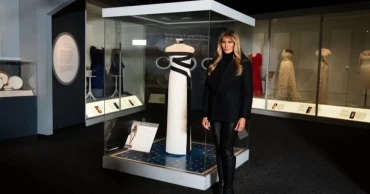
Melania Trump donates inaugural ball gown to Smithsonian collection
Melania Trump has donated her white gown with black trim from the 2025 inaugural ball to the Smithsonian Institution's National Museum of American History, calling it an “incredible” moment to see it on display.
This is the second inaugural gown she has given to the museum’s First Ladies Collection, after donating her 2017 dress earlier.
On Friday, she formally handed over the strapless sheath gown along with a black neckpiece featuring a reproduction of a Harry Winston diamond brooch she wore on Jan. 20, 2025. The outfit was first shown on a mannequin during a brief ceremony.
In short remarks, Melania described the gown as more than just clothing, saying it reflects decades of her experiences, memories and creative influences. She noted that the bold black “Z” shape on the bodice represents different stages of her life, stitched into the design.
A former fashion model, she said fashion is a powerful form of creative expression and that the black-and-white contrast of the gown conveys deep emotion while presenting a modern, dignified and bold look.
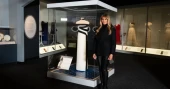
After the event, the mannequin was moved upstairs and placed in the museum’s exhibit, which showcases more than two dozen inaugural gowns worn by US first ladies. Melania and designer Hervé Pierre later viewed the dress inside its display case.
5 months ago

Valentino partner recalls designer’s legacy of elegance and respect for women
Legendary Italian fashion designer Valentino Garavani devoted his life to creating outfits that celebrated women’s beauty and dignity, his longtime partner Giancarlo Giammetti said on Tuesday, following the designer’s death at the age of 93.
Speaking to journalists outside Valentino’s headquarters in Rome, Giammetti said the designer always believed fashion should enhance women rather than overshadow them.
“He often said, ‘It’s not my fault, I just love beauty,’” Giammetti said. “From a creative point of view, he taught us to respect women.”
Valentino, who founded his fashion house in 1960, dressed some of the world’s most famous women, including Elizabeth Taylor, Nancy Reagan, Sharon Stone and Julia Roberts. He was known for creating iconic red-carpet looks and for his signature shade, widely known as “Valentino red”.
Giammetti said Valentino’s lasting legacy was the belief that fashion exists to embellish, not to ridicule. His business partner’s vision and craftsmanship helped turn the Valentino label into one of the world’s most recognisable luxury brands.
Valentino’s body will lie in state from Wednesday at the Valentino Garavani and Giancarlo Giammetti Foundation, next to the designer’s historic atelier in central Rome.
On Tuesday, admirers gathered outside the foundation, laying red roses in tribute. Among them was 21-year-old fashion student Luca Bonilli, who said Valentino had been a source of inspiration.
“It is a great loss. Even for those who are not deeply interested in fashion, he was an important figure,” Bonilli said.
Valentino’s funeral will be held on Friday at the Basilica of Saint Mary of the Angels and of the Martyrs in the Italian capital.
With inputs from NDTV
6 months ago
Iconic designer Valentino dies at 93
Valentino Garavani, the celebrated Italian fashion designer whose glamorous gowns dressed generations of royals, first ladies and Hollywood stars, has died at the age of 93.
The Valentino Garavani and Giancarlo Giammetti Foundation said in a statement posted on social media that the designer died at his residence in Rome on Monday. No cause of death was disclosed.
Universally known simply as Valentino, he was famed for his high-glamour creations, often in his signature shade of “Valentino red”, and remained a dominant force on international runways for nearly half a century.
“Valentino Garavani was not only a constant guide and inspiration for all of us, but a true source of light, creativity and vision,” the foundation said.
Adored by generations of royals, first ladies and movie stars, Valentino dressed icons ranging from Jacqueline Kennedy Onassis and Julia Roberts to Queen Rania of Jordan and Diana, Princess of Wales. He once said, “I know what women want. They want to be beautiful.”
Although Italian-born and based in Rome, Valentino regularly unveiled his collections in Paris, establishing himself as a global symbol of elegance and timeless style.
Tributes poured in from across the fashion world. Italian Prime Minister Giorgia Meloni described him as “an indisputable maestro of eternal style and elegance of Italian high fashion.” Designers, supermodels and celebrities also expressed their sorrow, hailing him as a master of his craft.
Born on May 11, 1932, in Voghera in northern Italy, Valentino trained in Milan and Paris before founding the Valentino fashion house on Rome’s Via Condotti in 1959 with his longtime partner Giancarlo Giammetti, who managed the business side of the empire.
His career spanned from the early 1960s to his retirement in 2008, during which he became the designer of choice for red-carpet events, dressing Oscar winners including Julia Roberts and Cate Blanchett.
Valentino’s empire later expanded into ready-to-wear, menswear and accessories, and the brand was sold in 1998 for an estimated 300 million dollars. He continued designing for another decade before stepping down.
A public viewing will be held at the Valentino Garavani and Giancarlo Giammetti Foundation on Wednesday and Thursday, while his funeral is scheduled for Friday in central Rome.
6 months ago

Kenyan barber wields shovel to carve social media fame
Safari Martins, known online as Chief Safro, gives haircuts using unconventional tools—including a razor-sharp shovel—at his roadside shack in Kiambu, on Nairobi’s outskirts. His unusual approach has made him one of Kenya’s most recognized barbers, with nearly one million followers each on Instagram and TikTok.
Born in Rwanda, Martins began barbering in 2018 while in high school, offering trims outside classrooms with borrowed clippers. Five years later, he embraced social media, dropping traditional tools in favor of dramatic implements and creating videos that combine haircuts with African folk tales and cultural voiceovers.
Customers, like Ian Njenga, pay a premium for both the haircut and a chance at social media exposure. Martins charges up to 1,500 Kenyan shillings (around $12), far above typical Nairobi rates.
While social media in Kenya has grown rapidly—reaching 15.1 million users by 2025—Martins says barbers often struggle to monetize content compared to creators in gaming or lifestyle niches. “Barbers get viral but are not respected,” he says.
Source: AP
7 months ago
Buckingham Palace to host largest-ever exhibition of Queen Elizabeth II’s fashion
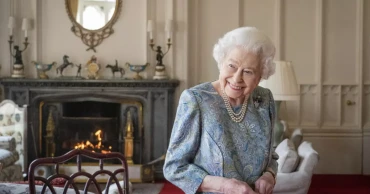
Buckingham Palace will stage the largest-ever exhibition of the late Queen Elizabeth II’s fashion next year, showcasing around 200 items — including many never publicly displayed — to mark what would have been her 100th birthday, officials announced Tuesday.
The exhibition, titled “Queen Elizabeth II: Her Life in Style,” will run from April 10 to October 18, 2026, and will feature the monarch’s iconic gowns, including her wedding and coronation dresses, as well as opulent outfits worn during state occasions over her historic 70-year reign.
Elizabeth, who died in September 2022 at the age of 96, was Britain’s longest-reigning monarch, and her wardrobe is considered one of the most important archives of 20th-century British fashion. She would have celebrated her centenary on April 21, 2026.
Highlights include a tulle bridesmaid dress worn by an 8-year-old Princess Elizabeth in 1934, along with many couture creations by her most influential designer, Norman Hartnell. Hartnell designed some of the queen’s most memorable looks, including the apple-green gown she wore at a 1957 state banquet for U.S. President Dwight D. Eisenhower, a pastel blue gown for her sister Princess Margaret’s wedding in 1960, as well as her wedding and coronation dresses.
Visitors will also see items from the queen’s private wardrobe, ranging from riding outfits and Harris tweed jackets to raincoats, headscarves, design sketches, and fabric samples that offer insight into the process behind dressing the monarch. A notable piece is a transparent raincoat by Hardy Amies from the 1960s, designed to display Elizabeth’s vibrant daywear to crowds regardless of the weather.
The exhibition will also feature creations by contemporary British designers Erdem Moralioglu, Richard Quinn, and Christopher Kane, reflecting the queen’s enduring influence on modern fashion.
“Queen Elizabeth II’s wardrobe is one of the most significant living archives in modern fashion history,” said Kane. “Her garments tell the story of Britain and its changing identity through fashion and provide a masterclass in silhouette, construction, symbolism, and restraint.”
Tickets for the exhibition will go on sale Tuesday. Source: AP
9 months ago