Others
32 ex-DCs linked to 'controversial' 2018 polls sent into compulsory retirement
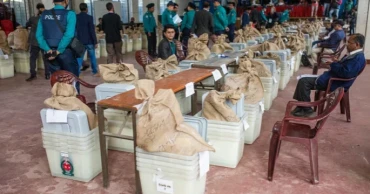
The government has sent 32 former deputy commissioners (DCs) who served as returning officers during the controversial 2018 parliamentary elections during the Awami League retime, into compulsory retirement.
The Ministry of Public Administration issued a gazette notification on Monday in this regard.
According to the notification, the officials, who were serving as officers on special duty (OSDs) at the rank of joint secretary, have completed 25 years of service and sent into retirement under Section 45 of the Government Service Act, 2018 in the public interest.
They will be entitled to retirement benefits in accordance with the existing rules, it said.
Those sent into compulsory retirement include former DCs Md Majedur Rahman Khan (Chandpur), Md Abul Fazal Mir (Cumilla), Md Aslam Hossain (Kushtia), Moinul Islam (Netrokona), Mohammad Daudul Islam (Bandarban), Md Shahriar (Natore), Kazi Abu Taher (Shariatpur), AZM Nurul Haque (Chapainawabganj), Md Mizanur Rahman (Mymensingh), Mohammad Elias Hossain (Chattogram), Anjan Chandra Pal (Lakshmipur), AKM Mamunur Rashid (Rangamati), Md Kamal Hossain (Cox's Bazar), Md Abdul Ahad (Sunamganj), Md Jasim Uddin (Pabna), Saroj Kumar Nath (Jhenaidah), Md Shahidul Islam (Khagrachhari), Md Wahiduzzaman (Feni), SM Azior Rahman (Barishal), Mohammad Masud Alam Siddique (Bhola), Md Matiul Islam Chowdhury (Patuakhali), Nazia Shirin (Nilphamari), SM Abdul Quader (Rajshahi), Md Ali Akbar (Magura), Mahmudul Kabir Murad (Habiganj), Md Sarwar Murshed Chowdhury (Kishoreganj), Syeda Farhana Kawnain (Narsingdi), Mohammad Helal Hossain (Khulna), Anar Kali Mahbub (Sherpur), Mosammat Sultana Parvin (Kurigram), SM Ferdous (Manikganj) and Gopal Chandra Das (Chuadanga).
On February 20 last year, the then interim government made 33 former DCs who had served as returning officers in the 2018 parliamentary election OSDs. Since then, they had been serving as joint secretaries in different ministries and departments.
The 11th parliamentary election was held on December 30, 2018, in which the Awami League-led alliance secured an overwhelming majority to form the government.
The election, however, was marred by widespread allegations of irregularities, ballot stuffing and vote rigging before and during polling.
According to an enquiry commission constituted by the then interim government on June 26, 2025, the three national elections held in 2014, 2018 and 2024 were orchestrated at the highest levels of the state, with segments of the administration, police, Election Commission, and intelligence agencies mobilised to implement the plans.
The National Election Investigation Commission submitted its report to then Chief Adviser Prof Muhammad Yunus on January 12 this year.
According the commission, the 2018 polls saw overnight ballot stamping in 80 percent of voting centres to secure the Awami League’s victory.
“Within the administration, there was a form of dishonest competition to ensure the party’s win, resulting in voter turnout figures exceeding 100 percent in some centres,” it had said.
The commission also noted that during those elections, control of the electoral process moved away from the EC to the administration.
7 days ago
Booth rental fees to be waived for SME participation in int’l fairs: Minister
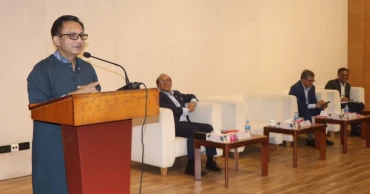
Commerce Minister Khandakar Abdul Muktadir on Monday announced that booth rental fees will be waived for small entrepreneurs participating in international trade fairs to help boost the country’s exports.
He made the announcement while speaking as the chief guest at a debriefing session on the 10th China-South Asia Expo and the 30th China-Kunming Import and Export Fair 2026 at the Bangladesh-China Friendship Exhibition Centre in Purbachal in the afternoon.
The minister said small entrepreneurs play a vital role in Bangladesh’s export sector, and their participation in international fairs is crucial for promoting their products and expanding access to global markets.
However, many of them are unable to take part in such fairs due to a lack of financial support, he said.
Muktadir, also industries, jute and textiles minister, and chairman of the Export Promotion Bureau (EPB) Board of Management, said the government is taking special initiatives to facilitate trade and business activities, particularly for small entrepreneurs. “We are taking special initiatives to make trade and business easier, especially for small entrepreneurs,” he said.
He also said the validity of trade licences for businesses will be extended to five years.
Steps are also being taken to enable traders to obtain trade licences online from home, the minister added.
The session was chaired by EPB Vice Chairman and Chief Executive Officer Mohammad Hasan Arif, while Commerce Secretary Md Ataur Rahman Khan was present as a special guest.
The minister listened to the views and proposals of participating small entrepreneurs and heard about their experiences at the Kunming fair before sharing his observations.
At the beginning of the event, Muktadir and other guests unveiled the latest quarterly newsletter published by the EPB.
7 days ago
‘Poor enforcement leaves Bangladesh's e-waste crisis worsening despite legal framework’
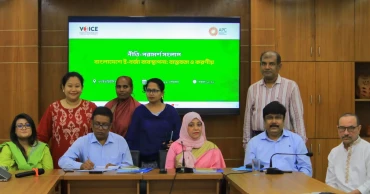
Weak enforcement of existing regulations, the absence of an effective collection system and poor coordination among stakeholders are preventing Bangladesh from tackling its rapidly growing electronic waste (e-waste) problem, speakers said at a policy dialogue in Dhaka on Monday.
They warned that though Bangladesh has the Hazardous Waste (E-Waste) Management Rules, 2021, implementation remains inadequate, allowing millions of tonnes of electronic waste to be discarded without proper recycling or resource recovery.
The dialogue, titled "Electronic Waste Management in Bangladesh: Reality and Way Forward," was organised by rights-based advocacy organisation VOICE with support from the Association for Progressive Communications (APC) at the YWCA auditorium.
According to VOICE's latest assessment on the enforcement mechanism, Bangladesh generates around 30 lakh tonnes of e-waste every year, but less than 10 percent is formally recycled.
The assessment also found serious shortcomings in compliance with the 2021 rules. Although all surveyed entities were registered with the Department of Environment (DoE), none collected end-of-life electronic products during the last fiscal year, exposing major gaps in implementation.
Presenting an overview of the global e-waste situation, VOICE Deputy Director (Programmes) Musharrat Mahera said the world generated around 6.2 crore tonnes of e-waste in 2022, while Bangladesh alone produces about 30 lakh tonnes annually.
She said e-waste contains valuable materials that could be recovered, estimating that resources worth US$ 200-221 million could potentially be extracted from discarded electronic products each year.
Prof Dr Rowshan Mamtaz of Bangladesh University of Engineering and Technology (BUET) said city corporations' waste management systems need to become more strategic and efficient.
She also stressed that committees formed under the Department of Environment should assign responsibilities according to members' expertise and ensure effective implementation.
Founding Managing Director and Chief Executive of Change Initiative Zakir Hossain Khan said Bangladesh lacks a robust monitoring and tracking system for electronic products, making it difficult to determine the actual volume of e-waste generated.
He also urged the private sector to adopt circular economy approaches and develop market-based solutions for e-waste management.
Consultant (Medical Waste Management) at the Directorate General of Health Services (DGHS) Tarit Kanti Biswas emphasised the importance of social responsibility and evidence-based policymaking.
He said greater reliance on primary data, rather than secondary information, and stronger collaboration among all stakeholders are essential to develop a comprehensive strategy that can transform e-waste into a valuable resource.
Concluding the dialogue, VOICE Executive Director Ahmed Swapan Mahmud called on the government to issue an official circular establishing a clearer framework for e-waste management and ensuring proper utilisation of discarded electronic products.
Representatives from Citizens' Initiative, Arannayk Foundation, Work for a Better Bangladesh (WBB) Trust, recycling companies and media organisations attended the dialogue.
The participants stressed that without stronger commitment from government agencies, better enforcement of existing regulations and coordinated action among regulators, industry, civil society and the media, Bangladesh's e-waste problem will continue to pose serious environmental and public health risks.
7 days ago
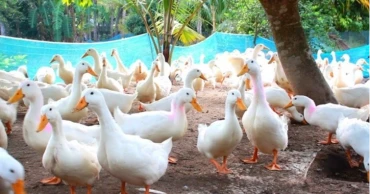
BAU researchers develop low-cost duck plague vaccine using local virus
Researchers at Bangladesh Agricultural University (BAU) have developed a low-cost duck plague vaccine using a locally isolated strain of the virus, a breakthrough that could significantly reduce losses in the country's duck farming sector.
The lead researcher, Prof Dr Md Bahanur Rahman, dean of the Faculty of Veterinary Science and a Syndicate member of BAU, confirmed the development to UNB on Monday.
He said duck plague is a highly contagious viral disease with a mortality rate ranging from 40 percent to 100 percent in infected ducks.
Prof Bahanur said the research initially focused on developing an attenuated vaccine.
However, following a request from the Department of Livestock Services (DLS), the team also worked on inactivated and DNA vaccines. While the inactivated vaccine did not produce the expected results, the DNA and oral vaccine candidates have shown promising outcomes.
According to the lead researcher, the vaccine is currently awaiting field trials. Once all the required procedures are completed, it could be made available to farmers within the next one to one-and-a-half years.
He expressed hope that the newly developed vaccine will provide more than 90 percent protection against duck plague and, through the DLS, contribute to improving the country's duck farming sector.
Prof Dr Md Samsul Alam, coordinator of the Committee for Advanced Studies and Research (CASR) at BAU, said treatment is often ineffective once ducks are infected with the viral disease, making vaccination the most effective preventive measure.
He said the development of the low-cost vaccine using a local duck plague virus marks a significant milestone, continuing the long-standing vaccine research tradition of BAU's Department of Microbiology and Hygiene.
Samsul added that the vaccine's effectiveness could be further improved in the future by addressing the evolving characteristics of the virus.
7 days ago
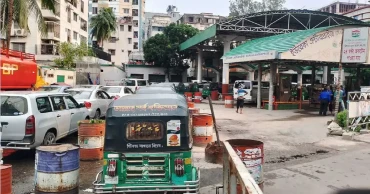
CNG station owners withdraw planned July 30 shutdown, retain Aug 23 indefinite strike
Bangladesh CNG Filling Station and Conversion Workshop Owners Association on Monday withdrew its planned one-day symbolic shutdown of CNG filling stations scheduled for July 30, citing the ongoing gas supply disruption.
However, the association said it would proceed with its previously announced indefinite nationwide shutdown of all CNG filling stations from August 23 if the government fails to meet its long-standing demands.
The announcement came at a press conference in the capital.
Speaking at the briefing, the convener of the association’s steering committee Amiruzzaman Chowdhury said the decision to suspend the July 30 programme was taken in view of the current gas supply crisis and to cooperate with the government during the difficult situation.
He said the recent fire at a section of the floating LNG terminal at Maheshkhali disrupted gas supplies across the country, making it inappropriate to continue with the symbolic shutdown at this time.
Despite withdrawing the one-day protest, the association warned that CNG station owners are facing mounting financial losses, making it increasingly difficult to continue their businesses.
The association alleged that although it has been raising its demands with the authorities for more than a decade, no effective steps had been taken to resolve the issues.
It said that following the latest electricity tariff revision on June 3, the association held press conferences on June 6 and July 21 to place a set of demands before the government.
According to the association, Petrobangla invited its leaders to a meeting on July 25 to discuss the country’s gas supply situation, where they also highlighted the sector’s long-standing problems.
However, the association claimed that Petrobangla only reiterated previous assurances without offering any concrete solution.
It also said recommendations made by expert committees formed by the Energy Division in 2013 and 2017 remained unimplemented.
The association further alleged that requests submitted on April 20 and June 8 seeking a meeting with the Energy Minister received no response.
Following the announcement of the protest programme on July 21, a three-member delegation met the ministers concerned to explain the sector’s problems and demands, it added.
The association urged the Energy Division and other relevant authorities to take immediate and effective measures instead of offering what it described as routine assurances.
It also sought the intervention of Prime Minister Tarique Rahman to help resolve the crisis and protect the sector from further decline.
7 days ago
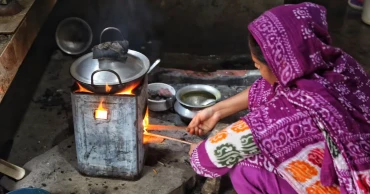
Gas shortage persists, Dhaka households struggle to cook
Prolonged gas shortages across the capital are disrupting daily life, leaving many households unable to cook meals on time.
7 days ago

Net investment in savings certificates turns positive after three-month decline
Net investment in national savings certificates (Sanchayapatra) returned to positive territory in April and May after remaining negative for three consecutive months, providing some relief to the government’s budget financing in the closing months of fiscal year 2025-26.
According to the latest Bangladesh Bank data, the government’s net borrowing from savings certificates stood at around Tk 805 crore during the first 11 months (July-May) of FY2025-26.
The recovery was driven by stronger sales and lower redemptions in April and May, reversing the negative trend recorded earlier in the fiscal year.
Economists said renewed public interest in savings certificates stemmed from uncertainty in the banking sector and concerns over the safety of deposits.
Towfiqul Islam Khan, Additional Research Director at the Centre for Policy Dialogue (CPD), told UNB that small investors, middle-income households and retirees continue to regard government savings schemes as one of the safest investment options.
“Persistent inflation has also encouraged people to prefer fixed-income instruments over riskier investment avenues,” he said.
He explained that net investment is calculated by deducting repayments of matured or prematurely encashed certificates from total sales. The resulting balance is used by the government to help finance its budget deficit.
In the original FY2025-26 budget, the government targeted Tk 12,500 crore in net borrowing from savings certificates.
However, the target was later revised down to Tk 11,500 crore following weak sales in the earlier months.
Data from the National Savings Directorate show that total sales reached Tk 6,464 crore in May, while encashments amounted to Tk 5,230 crore, resulting in a net investment of Tk 1,234 crore.
In April, sales stood at Tk 7,973 crore against redemptions of Tk 5,712 crore, generating a net investment of Tk 2,260 crore.
The strong performance in the two months offset losses incurred during the previous three months.
During the first nine months (July-March) of FY2025-26, net investment fell into negative territory by Tk 2,690 crore.
Overall, net investment reached around Tk 803 crore during the first 11 months of FY2025-26, a marked improvement from the same period of FY2024-25, when net investment stood at negative Tk 5,893 crore as repayments significantly exceeded fresh sales.
Monthly data show positive net investment in July (Tk 1,293 crore), August (Tk 279 crore), September (Tk 373 crore), October (Tk 424 crore), December (Tk 384 crore), April (Tk 2,260 crore) and May (Tk 1,234 crore).
Net investment, however, remained negative in November (Tk 293 crore), January (Tk 1,851 crore), February (Tk 1,165 crore) and March (Tk 2,135 crore).
Market analysts said sales of savings certificates have slowed in recent years due to lower profit rates, mandatory Taxpayer Identification Number (TIN) requirements, stricter investment rules and attractive returns offered by treasury bills, government bonds and bank deposits.
For FY2026-27, the government has further reduced its reliance on savings certificates, setting a net borrowing target of Tk 8,500 crore, Tk 4,000 crore lower than the original target for the outgoing fiscal year.
7 days ago
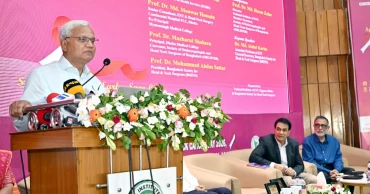
No one will be denied treatment for lack of money: Zahid
Women and Children Affairs, and Social Welfare Minister Dr AZM Zahid Hossain on Monday said no one will be deprived of treatment due to a lack of money in “humane Bangladesh” being built under the leadership of Prime Minister Tarique Rahman.
He made the remarks while addressing as the chief guest a programme organised at the National Institute of ENT (Ear, Nose and Throat) in Tejgaon, marking World Head and Neck Cancer Day 2026 observed with the theme “Speak Up, Detect Early, Save Lives.”
The minister said the government is committed to overall development, not just the health sector, and that all the commitments made by BNP in its election manifesto will be implemented gradually.
He urged journalists to raise public awareness that people with hearing and speech impairment living in society can also recover, calling on the media to help spread this message among the people.
During the programme, Zahid inaugurated a newly built Auditory Verbal Therapy (AVT) Centre at the hospital.
Children who have lost their hearing ability, either congenitally or later in life, and for whom no other means of restoring speech is possible, undergo costly cochlear implantation surgery with support from the Ministry of Social Welfare.
They are subsequently taught to speak normally through therapy at the AVT Centre, which operates under the Ministry of Health.
The minister also expressed plans to expand the AVT Centre to the divisional level.
At the end of the programme, Zahid distributed donation cheques and devices among patients suffering from various head and neck-related diseases.
7 days ago
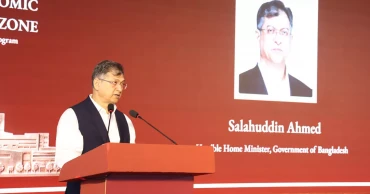
China economic zone to usher in new era of industrialisation, jobs: Salahuddin
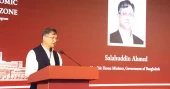
Home Minister Salahuddin Ahmed on Monday said the China Economic and Industrial Zone (CEIZ) in Anwara upazila of Chattogram marks the beginning of a new era of industrialisation and employment generation in Bangladesh.
"With the foundation stone of CEIZ laid today (Monday) on the fertile land of Anwara, we are not merely breaking ground for another project; we are opening a new chapter in Bangladesh's industrial transformation," he said.
The minister came up with the remarks while addressing the foundation stone-laying ceremony of the CEIZ on the eastern bank of the Karnaphuli River in Anwara as a special guest.
The government-to-government (G2G) project, undertaken jointly by Bangladesh and China under the framework of the Belt and Road Initiative (BRI), will play a transformative role in the country's long-term economic growth, industrial diversification and job creation.
Finance Minister Amir Khosru Mahmud Chowdhury attended the event as the chief guest, while State Minister for Land and Chittagong Hill Tracts Affairs Mir Mohammed Helal Uddin also addressed the programme.
Bangladesh Investment Development Authority (BIDA) and Bangladesh Economic Zones Authority (BEZA) Executive Chairman Ashik Chowdhury presided over the event.
Highlighting the significance of the project, Salahuddin said the 776-acre (314.39-hectare) economic zone is expected to create direct employment for more than 36,000 people in the Chattogram region.
In addition to ready-made garments and textiles, the zone will accommodate high-value industries, including biopharmaceuticals, food and beverage processing, and leather products, helping diversify Bangladesh's export basket, he said.
The minister also underscored the strategic location of the economic zone, noting that it is situated only 700 metres from the Karnaphuli Tunnel, six kilometres from Shah Amanat International Airport and 12 kilometres from Chattogram Port, with direct connectivity to the N-1 national highway.
The zone will feature international-standard environmental facilities, including a central effluent treatment plant (CETP), to support sustainable industrial development, he said.
Assuring investors of comprehensive security, Salahuddin said law enforcement agencies will ensure the overall security of the zone, uninterrupted transport corridors and a safe working environment.
He also reaffirmed the government's commitment to providing quick approvals and utility services through BEZA's One-Stop Service (OSS), creating a more efficient and investor-friendly business environment.
The minister thanked BEZA, China Road and Bridge Corporation (CRBC), the Chinese Embassy in Dhaka and the people of Anwara and Chattogram for their support in implementing the project.
In his speech, the finance minister said the government remains committed to facilitating both domestic and foreign investment.
Nearly US$1 billion in investment is expected for infrastructure and industrial development in the CEIZ with government policy support, he said.
Khosru also said the government is set to launch a fully operational single-window service to ensure faster and easier services for investors and is taking initiatives to attract strategic foreign investment in the capital market.
He stressed the importance of ensuring workers' accommodation, improved living standards and environmental conservation alongside industrialisation and urged the Chinese partners to establish a modern skills development centre in Anwara to strengthen local industries, supply chains and skilled human resources.
Chinese Ambassador to Bangladesh Yao Wen, Chattogram-13 lawmaker Sarwar Jamal Nizam, CRBC Vice Chairman Li Changgui and Bangladesh CEIZ Company Ltd (BCCL) Chairman Wang Benqian also spoke at the programme.
7 days ago

Bangladesh among 10 countries with highest hepatitis C cases: WHO
The World Health Organization (WHO) has called for urgent action in Bangladesh to expand access to hepatitis prevention, testing and treatment by breaking down the barriers that continue to prevent millions of people from receiving the care they need.
The WHO made the call ahead of the World Hepatitis Day that falls on July 28.
Bangladesh is among the 10 countries with the highest numbers of people living with hepatitis C globally, said the UN agency on Monday.
Chronic viral hepatitis remains one of the world's leading infectious disease killers, causing an estimated 1.3 million deaths every year, mainly from liver cirrhosis and liver cancer.
Hepatitis B and C account for approximately 95% of all viral hepatitis deaths and continue to spread silently, resulting in around 6000 new infections and 3500 deaths worldwide every day.
In the WHO South-East Asia Region, an estimated 43 million people are living with viral hepatitis.
In 2024 the Region recorded an estimated 266 000 new hepatitis B and C infections and 200 000 hepatitis-related deaths.
The prevalence of active hepatitis C infection in the general population is estimated at approximately 0.6%, although the burden is substantially higher among key populations and other vulnerable and underserved populations, including Rohingya refugees.
Bangladesh also bears a high burden of hepatitis B and is among the 10 countries that together accounted for 69% of hepatitis B-related deaths worldwide in 2024.
This is despite the availability of vaccination to prevent hepatitis B and effective treatments to manage hepatitis B and cure hepatitis C, highlighting significant barriers to access.
"Hepatitis is preventable, treatable and, in the case of hepatitis C, curable. Yet too many people continue to miss out on the services they need because they are diagnosed too late or cannot
access timely testing and treatment," said Dr Ahmed Jamsheed Mohamed, WHO Representative to Bangladesh.
"This World Hepatitis Day, WHO calls for accelerated action to break down the
barriers that continue to prevent people from accessing lifesaving hepatitis prevention, testing and treatment services."
Bangladesh has in recent years demonstrated strong commitment to eliminating viral hepatitis as a public health threat through the development of the National Strategic Plan 2020–2030, strengthened hepatitis B birth-dose vaccination, expanded testing and treatment services, and the generation of evidence to inform policy and action.
Supported by WHO's technical assistance, these efforts are helping accelerate progress towards the national goal of eliminating viral hepatitis as a public health threat by 2030.
However, significant barriers continue to limit access to hepatitis services, including low public awareness, late diagnosis, limited access to affordable testing and treatment, stigma and discrimination, and the uneven availability of hepatitis services, particularly for key populations and vulnerable and underserved populations.
Four Priority Areas
Overcoming these barriers requires sustained, coordinated action across four priority areas, said the WHO on Monday.
First, strengthening hepatitis prevention by sustaining high hepatitis B vaccination coverage, including timely birth-dose vaccination, ensuring safe blood transfusion and injection practices, and raising public awareness of hepatitis prevention through accurate, clear and actionable public messaging.
Second, expanding access to hepatitis testing and treatment by integrating hepatitis services into primary health care, antenatal care, blood services and HIV and tuberculosis programmes.
Integrating hepatitis into routine health services will increase early diagnosis and ensure that more people, particularly key populations and other vulnerable and underserved populations, have equitable access to testing, treatment and care.
Third, decentralizing and scaling up hepatitis services by making simplified hepatitis C treatment available beyond specialist facilities and ensuring access to affordable diagnostics and medicines.
Simplified models of care can reduce delays in diagnosis and treatment, improve treatment uptake and enable more people to access quality hepatitis services closer to their homes and communities.
Fourth, strengthening hepatitis surveillance and data systems through routine recording of hepatitis testing, confirmed infections, treatment outcomes, cirrhosis and liver cancer.
High-quality data are essential to understanding the burden of disease, identifying populations at greatest risk, guiding policy and investment decisions, and monitoring Bangladesh's progress towards eliminating viral hepatitis as a public health threat by 2030.
"Bangladesh has demonstrated strong commitment to tackling viral hepatitis and is well positioned to accelerate progress towards elimination," said Dr Ahmed Jamsheed Mohamed.
"WHO is proud to support the Government's efforts and will continue to provide technical assistance to expand access to prevention, testing and treatment, strengthen health systems and ensure that no one is left behind."
As the world marks World Hepatitis Day 2026, the opportunity to eliminate viral hepatitis as a public health threat has never been greater.
By expanding access to prevention, testing and treatment, Bangladesh can save lives, reduce the burden of liver disease and accelerate progress towards the 2030 elimination goal.
7 days ago