Others

Maritime ports asked to hoist cautionary signal No 3
Maritime ports of Chattogram, Cox's Bazar, Mongla and Payra have been advised to hoist local cautionary signal No 3 as a low-pressure area has formed over Northwest Bay and adjoining Gangetic West Bengal-North Odisha coasts.
Under its influence, squally weather may affect the Maritime Ports, North Bay and adjoining Coastal areas of Bangladesh, said a special bulletin of Met office.
All fishing boats and trawlers over North Bay have been advised to come close to the coast and proceed with caution till further notice.
9 days ago
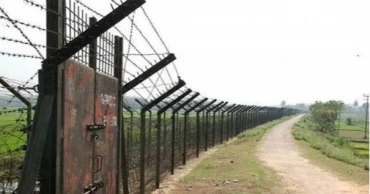
BGB foils attempt to push 9 women into Bangladesh through Dinajpur border
Border Guard Bangladesh (BGB) on Saturday foiled an attempt to push nine women into Bangladesh through Khiyar Mahmudpur border in Birampur upazila of Dinajpur district.
A patrol team of BGB's 20 Battalion prevented the group from entering Bangladesh around 4:00 am, said Subedar Tia Alam, camp commander Bhaigor camp under BGB-20 Battalion.
After being stopped by BGB, the women attempted to return to the Indian side.
But the BSF prevented them from re-entering India, leaving them stranded in the zero line between the two countries, said witnesses.
BGB personnel remained deployed on the Bangladesh side of the border, while BSF members took position on the opposite side.
The nine women were seen waiting under the open sky.
9 days ago

PM inaugurates National Semiconductor Symposium, BEAR Conference
Prime Minister Tarique Rahman on Saturday inaugurated the two-day National Semiconductor Symposium and the Biotechnology, Electronics, Artificial Intelligence and Robotics (BEAR) Conference 2026, highlighting the government's commitment to building Bangladesh's high-tech ecosystem.
The Prime Minister opened the conference at 10:00 am at the Novo Theatre in Tejgaon, organised by the Bangladesh Semiconductor Industry Association in partnership with the Ministry of Science and Technology and the Silicon River Bangladesh programme.
The event, themed "Building Bangladesh's Semiconductor Future through Global Partnership," brought together policymakers, global semiconductor industry leaders, researchers, entrepreneurs, academics, investors and members of the Bangladeshi diaspora to discuss the country's long-term strategy for developing the semiconductor sector.
According to the organisers, the conference aims to promote Bangladesh's semiconductor industry and strengthen the country's position in emerging technologies.
The event features 11 technical sessions and seven strategic dialogue sessions focusing on semiconductor industry development, global technology leadership, technology convergence, the future of high-tech industries, entrepreneurship, engagement of Bangladeshi technology professionals living abroad and advanced manufacturing.
Participants included representatives from Texas Instruments, Purdue University, GlobalFoundries, NXP, Applied Materials, SanDisk, CREDO and the Vietnam Semiconductor Alliance and Partnership, among others.
9 days ago
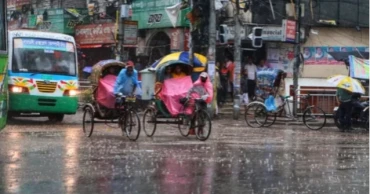
Rain likely across country: BMD
Bangladesh Meteorological Department (BMD) has forecast rains in all the divisions in 24 hours commencing 9 am on Saturday.
“Light to moderate rain or thunder showers accompanied by temporary gusty wind is likely to occur at many places over Khulna, Barishal, Chattogram and Sylhet divisions and at a few places over Rangpur, Rajshahi, Dhaka and Mymensingh divisions with moderately heavy falls at places over the country,” Met office said.
Day and night temperatures may rise slightly over the country.
A low-pressure area has formed over Northwest Bay and adjoining Gangetic West Bengal-North Odisha coasts.
The axis of monsoon troughs runs through Rajasthan, Madhya Pradesh, Uttar Pradesh, Bihar, center of the low to Assam across southern part of Bangladesh.
Monsoon is fairly active over Bangladesh and strong elsewhere over the North Bay.
9 days ago
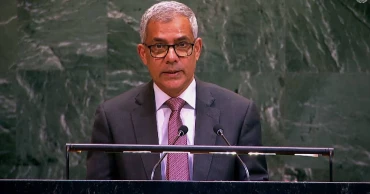
UN General Assembly adopts Bangladesh-led Culture of Peace Resolution
United Nations General Assembly has adopted Bangladesh's flagship resolution, "Follow-up to the Declaration and Programme of Action on a Culture of Peace," reaffirming the international community's commitment to dialogue, tolerance, solidarity and peaceful coexistence.
Introducing the resolution, Bangladesh's Permanent Representative to the United Nations Ambassador Salahuddin Noman Chowdhury underscored that building peaceful, inclusive and resilient societies requires sustained dialogue, mutual understanding, respect for diversity and steadfast adherence to the principles of the United Nations Charter, said a press release received on Saturday.
He also thanked the Member States for their constructive engagement and broad support, calling for renewed collective efforts to promote dialogue over division, cooperation over conflict and understanding over intolerance.
Originally adopted in 1999 at the initiative of Bangladesh, the resolution has since served as the United Nations' principal framework for advancing a culture of peace. It promotes the values of respect for diversity, tolerance, solidarity and non-violence while reinforcing international efforts to prevent conflict, foster peaceful coexistence and strengthen multilateral cooperation.
9 days ago

River ports asked to hoist cautionary signal No 1
River ports in some regions have been asked to hoist cautionary signal No 1 as a rain or thunder showers accompanied by temporary south or southeasterly gusty or squally wind is likely to occur in many parts of the country, according to the special bulletin Bangladesh Meteorological Department (BMD).
Rain or thunder showers accompanied by temporary south or south -easterly gusty or squally wind speed (45-60) kph is likely to occur over the regions of Khulna, Barishal, Patuakhali, Noakhali, Cumilla, Chattogram and Cox’s Bazar wherein river ports shall hoist cautionary signal no one (r) one.
The warning for Inland River ports to remain valid till 1 pm on Saturday according to a bulletin.
9 days ago

Woman stabbed dead in Rajshahi; accused's house set on fire
A woman was stabbed to death and her son was injured in an attack allegedly carried out by a young man in Harian Purbapara of Paba upazila in Rajshahi district on Friday night.
The deceased was identified as Farida Khatun, 40, wife of Lalon Sheikh, a village police of Harian Union Parishad.
Suman Kaderi, Officer-in-Charge of Katakhali Police Station, said Porosh, 18, son of Babu, a neighbor of the victim, allegedly entered Farida's house around 7:30 pm and stabbed her indiscriminately, leaving her dead on the spot.
Farida's son, Faisal, was also injured while trying to save his mother. He was taken to Rajshahi Medical College and Hospital.
Following the incident, angry locals set fire to Porosh's house.
However, Porosh's family members had fled the house before the fire, the OC said.
The motive behind the killing could not be known immediately, said police.
9 days ago
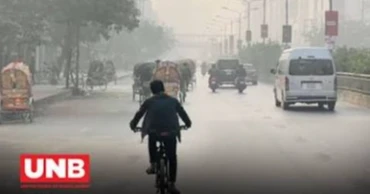
Dhaka’s air quality continues to be ‘moderate’
Dhaka, the overcrowded capital city of Bangladesh, has ranked 17th on the list of cities with the worst air quality with an AQI score of 91 at 09:10 am this morning.
Today Dhaka’s air was classified as ‘moderate,’ referring to a light healthy threat, according to the AQI index.
Uganda’s Kampala, the Democratic Republic of Congo’s Kinshasa and Chile’s Santiago occupied the first, second and third spots on the list, with AQI scores of 174, 152, and 151, respectively.
When the AQI value for particle pollution is between 50 and 100, air quality is considered ‘moderate’, usually sensitive individuals should consider limiting prolonged outdoor exertion, between 101 and 150, air quality is considered ‘unhealthy for sensitive groups’, between 150 and 200 is ‘unhealthy’, between 201 and 300 is said to be 'very unhealthy', while a reading of 301+ is considered 'hazardous', posing serious health risks to residents.
The AQI, an index for reporting daily air quality, informs people how clean or polluted the air of a certain city is and what associated health effects might be a concern for them.
The AQI in Bangladesh is based on five pollutants: particulate matter (PM10 and PM2.5), NO2, CO, SO2, and ozone. Bangladeshtravel guide
Dhaka has long been grappling with air pollution issues. Its air quality usually turns unhealthy in winter and improves during the monsoon.
The World Health Organization estimates that air pollution causes around seven million deaths globally each year, mainly due to stroke, heart disease, chronic obstructive pulmonary disease, lung cancer and acute respiratory infections.
9 days ago

Habibur elected SRFB president, Rakib general secretary
Senior Reporter of Channel One Habibur Rahman has been elected president and Mahmud Rakib of Ekhon TV general secretary of the Shipping Reporters Forum Bangladesh (SRFB).
The election was held on Friday following the organisation's biennial general meeting at Sanskriti Bikash Kendra in Paribagh, Dhaka.
Of the 13-member executive committee for the 2026-2027 term, 11 members were elected unopposed.
The election was conducted by a committee led by Dhaka Reporters Unity (DRU) President Abu Saleh Akon, with DRU General Secretary Mainul Hasan Sohel and former DRU General Secretary Mohi Uddin serving as election commissioners.
The other office-bearers are: Vice-President Mahbub Saikat (My TV), Joint General Secretary Tarikul Islam Sumon (Bhorer Dak), Treasurer Borhan Uddin (Dhaka Mail), Office Secretary Rashim Molla (Manabzamin) and Publicity and Publication Secretary Faruk Alam (Kalbela).
The elected executive members are Shamsul Islam (Naya Diganta), Faisal Ahammed (The Bangladesh Mail), Harlal Ray Sagar (Bhorer Kagoj) and Ashish Kumar Sen (Daily Janata).
Earlier, the biennial general meeting was chaired by outgoing acting President Habibur Rahman. Treasurer Shamsul Islam presented the financial report, while General Secretary Afrin Jahan presented the organisational report, both of which were approved by the members with applause.
10 days ago

BAU food safety expert weighs in on Khulna's green meat scare
A curious case of beef turning green while being cooked in Paikgacha municipality of Khulna has set off a wave of speculation across the country, with a food safety expert cautioning against both panic and complacency until proper tests are done.
The episode unfolded last Wednesday afternoon when a group of employees at Modern Bakery in Paikgacha were cooking beef bought for a picnic. Midway through cooking, they noticed the meat had inexplicably turned green. Startled and unnerved, they carried the pot straight to the local police station.
Days later, no one has been able to say for certain what caused the change and in the absence of answers, theories have run wild on social media, from spoiled meat to chemical contamination at the bakery.
Speaking to UNB on Friday, Dr. Mst. Minara Khatun, professor at the Department of Microbiology and Hygiene at Bangladesh Agricultural University (BAU) and a specialist in food safety and public health, said the explanation was not as simple as it might seem.
"The claim that the meat was a day old is not, by itself, a sufficient explanation for it turning green," she said. "People should neither panic over a photo circulating online nor brush off such an unusual change. In matters of food safety, scientific evidence must take precedence.
If meat shows an unnatural green colour, foul smell, sliminess or any other abnormality, it should not be eaten, the sample should be sent for laboratory testing."
Dr. Khatun said that meat stored for a single day after slaughter, at the correct temperature of 0-4 degrees Celsius, would not normally develop a green tinge. It might darken slightly or turn brownish, she said, but that is different from a distinct green colour, which is not a typical sign of ageing meat.
Many have pointed to the red-coloured broth as evidence the meat could not have been unsafe. Dr. Khatun called this an interesting but misleading observation. I
f the greenish discolouration is limited to certain parts of the meat, she explained, the broth can still take on its usual red or reddish hue since its colour comes largely from blood pigments, spices, and chemical reactions during cooking, not uniformly from the meat tissue itself. "A red broth does not scientifically confirm that the meat was safe," she said.
The butcher who sold the meat has claimed that other customers who bought from the same animal faced no problems. Some online have instead pointed fingers at chemicals allegedly used at the bakery.
She said neither claim stands on solid ground. Different cuts from the same animal can be exposed to different storage conditions, temperatures, humidity, and levels of contamination meaning one portion could turn while another does not. "Other people not falling sick is not scientific proof that the meat was safe," she said.
Equally, she added, there is no specific evidence to support the chemical-exposure theory either, since most chemicals commonly used in food settings do not turn meat green upon heating.According to Dr. Khatun, similar instances of meat turning green have been recorded in various countries before, and science offers several possible explanations.
Chemical changes in myoglobin, the pigment that gives meat its red colour, can be one cause, as can storage at improper temperatures.
Certain hydrogen sulphide-producing bacteria can lead to the formation of sulfmyoglobin, which imparts a greenish tint.
Contact with copper or other metallic compounds may also cause similar discolouration in rare cases, though this is uncommon in typical retail settings.
Growth of pigment-producing bacteria, particularly Pseudomonas species, linked to lapses in post-slaughter handling and transport, is another possible culprit.
In some instances, she noted, the effect can even come down to how light reflects off the structure of the muscle fibres, producing a green, blue, or rainbow-like sheen with no spoilage involved at all.Dr. Khatun called for an unbroken cold chain maintained safely from slaughter all the way to the consumer's kitchen.
She stressed the need for hygienic slaughtering and processing practices, clean environments, safe water, and trained workers throughout the supply chain.
Refrigerator and freezer temperatures should be checked regularly, she said, and consumers should stay alert to any unusual change in the meat they buy.
She also recommended keeping records of where meat comes from, when the animal was slaughtered, and how it has been stored along the way.
10 days ago