Others

Woman found dead at Khulna residence
A 45-year-old woman who returned home from Saudi Arabia recently was found dead at her rented house on Tank Road in Khulna city early Thursday.
The deceased was identified as Sheuli Begum, who had married her second husband Md Salauddin Khan only a few days ago.
Neighbours said her first husband’s son Riad, 28, a tiles worker, used to live with his mother in the same house.
Sheuli returned from Saudi Arabia 10 days ago and rented the house.
About one month ago, she divorced her first husband from abroad and married Salauddin after returning home, said Shahjahan Ahmed, inspector (investigation) of Khulna Sadar Police Station.
Around five to six days back, she withdrew Tk 5.75 lakh from a bank and brought the money home which the family members knew, the police official said.
Shihab Karim, assistant commissioner of police (Khulna Zone), said the body was recovered from a locked room, and since the murder her son Riad remained abscoding.
Senior officers visited the spot and a CID forensics team collected evidence from the scene, he said.
Investigators suspect she was first struck on the left side of her head and later suffocated with a pillow.
No case has been filed yet.
7 months ago
Election schedule hours away; candidates ordered to remove campaign materials
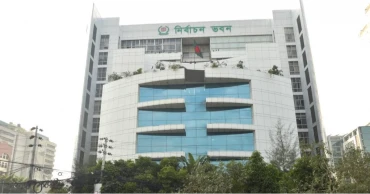
The Election Commission has directed all aspirants in the upcoming national election to remove their campaign materials within the next 48 hours, ahead of the announcement of the polls schedule and the July National Charter referendum this (Thursday) evening.
Chief Election Commissioner AMM Nasir Uddin will announce the election schedule at his pre-recorded address to the nation, which is set to be aired by the state-owned Bangladesh Television and Bangladesh Betar at 6:00pm (December 11, 2025).
The much-sought schedule for the 13th parliamentary election and the national referendum will be announced at 6pm.
The Election Commission issued a notification on Wednesday night, asking the probable candidates to remove all election-related displays, including posters, banners, wall writings, billboards, gates, arches, pandals, and decorative lighting, at their own expense.
Read more: Election schedule to be announced Thursday evening
Besides, the EC directed local government bodies, including city corporations, municipalities and union parishads to ensure implementation of the removal order within the stipulated time.
The CEC’s speech was already recorded by Bangladesh Television and Bangladesh Betar on Wednesday afternoon.
EC Senior Secretary Akhtar Ahmed on Wednesday afternoon said the schedule would be declared for elections in all 300 constituencies.
Earlier on Wednesday, the Election Commission, headed by Chief Election Commissioner AMM Nasir Uddin, met President Mohammed Shahabuddin at Bangabhaban to brief overall preparations to hold the upcoming parliamentary elections and the referendum.
Four election commissioners Abdur Rahmanel Masud, Tahmida Ahmad, Anwarul Islam Sarker and Brig Gen (Retd) Abul Fazal Md Sanaullah as well as EC Senior Secretary Akhtar Ahmed were present in the meeting.
Read more: President expresses satisfaction over EC’s preparations for polls, referendum
The President expressed satisfaction over the overall preparations undertaken by the EC for the upcoming election and the referendum.
“The President expressed satisfaction after we informed him in detail,” EC Secretary Akhtar Ahmed said while talking to reporters after a meeting.
The Secretary said they informed the President about extending the balloting hours by one hour—now set from 7:30am to 4:30pm. “When we said that we extended the balloting hour by one hour from 7:30am to 4:30pm, he termed the decision logical and expressed his satisfaction,” he said.
During the meeting, he said, they apprised the President of various preparatory activities, including the updating of electoral rolls, the registration of new political parties and Out-of Country Voting (OCV) and In-Country Postal Voting (ICPV).
The President was also briefed on the Commission’s plan to use two types of ballot papers—one for the national election and another for the referendum—to be held simultaneously on the same day, said Akhtar Ahmed.
The President assured them that he would extend all necessary cooperation and support for the arrangement of a free, fair and meaningful election.
Read more: Avoid unauthorised gatherings after election schedule: Govt
There are some 12.76 crore voters under 42,761 polling stations across the country’s 300 constituencies. White ballot papers will be used for the national election and pink ballot papers for the referendum.
Though the postal balloting system has been in the laws for a long time, it was never practiced in the previous elections.
This is the first time the Election Commission is introducing a hybrid postal balloting system, enabling expatriates, government staff, polling personnel, and the persons who will be in the legal custody to exercise their franchise through a combination of digital registration and manual voting.
Till Wednesday (December 10), nearly 300,000 expatriate voters from some 120 countries across the world have already registered through ‘Postal Vote Bd’ app to vote in the national election and referendum. The registration process for expatriates will continue till December 25.
The ICPV (In-Country Postal Voting) registration process for the government staff on duty outside their voting places, polling personnel, and the persons under the legal custody (jails) will start after the announcement of election schedule and continue for 15 days.
Read more: Election schedule soon as request made for recording CEC’s address
According to EC’s projection, some 10 lakh people from inside the country may vote through the postal ballot papers in the election.
7 months ago

Bangladesh capital market sees mixed trend in early trading
The country’s stock markets witnessed a mixed performance in the first half of Thursday’s trading session, with key indices at both the Dhaka Stock Exchange (DSE) and Chittagong Stock Exchange (CSE) fluctuating between gains and losses.
At the DSE, the benchmark DSEX edged up by 1 point, while the Shariah-based DSES dropped by 2 points and the blue-chip DS30 declined by 3 points.
A total of 219 companies saw price gains against 91 that declined, while prices of 80 issues remained unchanged.
The turnover at the bourse surpassed Tk 200 crore during the first half of the session.
Meanwhile, trading at the CSE moved into negative territory as the overall index fell by 15 points.
Despite the index decline, most issues at the port city bourse posted gains, with 41 companies advancing, 34 losing and 17 remaining unchanged.
The turnover at the CSE exceeded Tk 5 crore in early trading.
7 months ago

Housewife killed by ‘thieves’ in Jamalpur
A 40-year-old housewife was killed allegedly by a gang of thieves at Shimlapolli in Sarishabari municipality area of Jamalpur district early Thursday.
The deceased was identified as Lipi Begum, wife of Mohor Ali, assistant sub-inspector of Rab-2 in Mohammadpur area of the capital.
Bachhu Mia, officer-in-charge of Sarishabari Police Station, said a group of thieves entered the house of Mohor Ali around 2:30 am after breaking open the grill of a window.
Sensing the presence of the thieves, Lipi tried to resist them. At one stage, the thieves strangulated her with a scarf, leaving her dead on the spot and left the place.
Hearing screams from other house inmates, local people rushed in and took Lipi to Sarishabari Upazila Health Complex where the doctors declared her dead.
On information, police rushed to the spot and sent the bodies to Jamalpur General Hospital morgue.
7 months ago

‘BNP’s internal clash’ leaves one dead in Mirsarai
An activist of Jatiyatabadi Chhatra Dal (JCD) was killed in a clash reportedly between two factions of the BNP in Baraiyarhat municipality under Mirsarai upazila of Chattogram district early Thursday.
The victim, Gazi Tahmid Khan, 25, died around 12:30am while undergoing treatment at Chittagong Medical College Hospital.
According to locals, the clash broke out between followers of former BNP municipality unit convener Didarul Alam Miazi at the Traffic Point area on Wednesday evening, leaving several people injured.
Tahmid was initially taken to Baraiyarhat General Hospital and later transferred to Chittagong Medical College Hospital, where he succumbed to his injuries.
Kazi Nazmul Haque, officer-in-charge of Zorarganj Police Station, said a police team rushed to the spot to bring the situation under control. One of the injured was taken to Chattogram and later died, he said, adding that they would investigate the incident if any complaint is lodged.
He also said no case has been filed so far in connection with the clash.
Locals said Tahmid was previously involved in the anti-discrimination student movement in northern Chattogram and later served as organising secretary of Islami Chhatra Andolan (Charmonai) under Zorarganj Police Station.
Recently, he joined Chhatra Dal in his locality.
7 months ago

Sylhet jolted as 2 mild quakes strike
Within a span of five minutes, Sylhet experienced two mild earthquakes early Thursday, triggering panic among people.
The first quake struck at 2:20:31 am followed by a second at 2:25:14 am, Shah Md Sajib Hossain, assistant meteorologist of the Sylhet Seismic Observatory Centre, said on Thursday morning.
No damage or casualties were reported so far, he said.
According to the Seismic Observatory of the Bangladesh Meteorological Department, the first quake measured 3.5 on the Richter scale, with its epicentre reported to be in Beanibazar upazila of Sylhet district.
Mild earthquake jolts parts of Bangladesh
The second tremor, measuring 3.3 on the Richter scale, originated from Borolekha upazila in neighbouring Moulvibazar district, according to the BMD.
Bangladesh had recently experienced several earthquakes, with the epicentre in Narsingdi, raising concerns among people across the country.
7 months ago

A Rajshahi village holds its breath as little Sajid remains trapped underground
For nearly 20 long hours, the people of Koelhat village in Tanore upazila have been living in fear, worry and helplessness.
Two-year-old Sajid, who slipped into an abandoned deep tube well pipe on Wednesday afternoon, is still missing underground, and rescue teams have yet to reach him.
By 9:30am on Thursday, firefighters said there was still no sign of movement inside the pipe.
The long night that passed brought no relief. Sajid’s family and villagers stayed awake, their faces stiff with hope and anxiety.
The Fire Service said the little boy fell into an 8-inch-wide pipe, too narrow for anyone to enter.
Rescuers dug a larger hole beside it, using three excavators to create a tunnel that could lead to the child. But even after hours of work, they have not been able to find him, said Didarul Alam, Assistant Director of the Rajshahi Fire Service.
“We are trying every possible method,” he told UNB on Thursday morning from the site, his voice carrying the weight of the tense rescue effort.
A special camera was lowered into the pipe to look for Sajid, but it got stuck around 40 feet deep. It showed no trace of the child.
Fire Service officials believe he may be somewhere around that depth, and they are continuously supplying oxygen into the pipe in an effort to keep him alive.
Witnesses had earlier reported hearing faint sounds from inside the pipe soon after the accident.
But by nightfall, the cries fell silent, leaving rescuers and villagers deeply worried about whether the child is still alive.
The tragedy began around 1pm on Wednesday, when Sajid was walking behind his mother on their way home.
7 months ago
Police help Finance Adviser exit after 6 hours confined at Secretariat
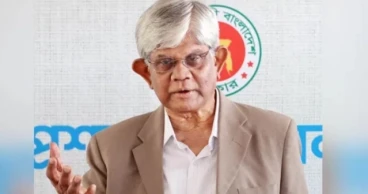
Finance Adviser Dr. Salehuddin Ahmed left the Secretariat around 8:30 p.m. on Wednesday after being held for nearly six hours by non-cadre service staff. He was escorted out with police assistance.
The mostly non-cadre service employees had confined Dr. Ahmed in his office on the fourth floor of Building 11 from 2:30 p.m., insisting on a 20 percent “Secretariat Allowance” for all staff employed there.
Before releasing him, a specialized police unit entered the office and attempted to disperse the staff using bamboo sticks, leading to scuffles between the protesters and police. Staff members raised slogans against the authorities during the confrontation.
Ministry of Finance sources said a government notification regarding the Secretariat allowance for employees will be issued on Thursday. One of the protesters confirmed that they left the office after receiving assurance that the notification would be issued by 3pm on Thursday.
The protest began around 2:30 pm, led by Badiul Kabir, president of a section of the Secretariat Employees’ Association. Protesters remained outside the adviser’s office, chanting slogans and demanding the allowance, insisting they would not leave until the Gazette notification was issued.
Additional law enforcement personnel were deployed around the adviser’s office and on the lower floors of Building 11 during the standoff, with some officers moving to the fourth floor after evening.
7 months ago
SI found dead at CID Training Centre in Dhaka
The hanging body of a police sub-inspector was recovered from the CID Training Centre (DTS) in the capital's Paltan on Wednesday.
The deceased was identified as Aftab Uddin Regan, a resident of Moulvibazar district.
He was serving in the Cyber and Special branch of the Dhaka Metropolitan Detective Branch (DB).
Shamim Hasan, Sub-Inspector of Paltan Police Station, said they received information about the incident and went to the scene. The door was broken open, and Regan’s body was recovered.
His body was later sent to Dhaka Medical College morgue for autopsy.
Regan joined the 35th Outside Cadet Sub-Inspector batch after completing training in 2017. He was staying at the CID Training Centre dormitory for ongoing training.
7 months ago

Hajj journeys exempted from excise duty
The National Board of Revenue (NBR) has waived excise duty on air tickets for Bangladeshi pilgrims travelling to Saudi Arabia for Hajj in 2026.
The move is aimed at reducing overall pilgrimage expenses and making the holy journey more accessible for ordinary worshippers.
According to an official notification issued on December 7, 2025, the NBR granted full exemption from excise duty applicable for air tickets for all outbound and inbound Hajj flights in 2026.
The exemption mirrors a similar measure taken for the 2025 Hajj season.
Officials said the government’s decision is part of its broader initiative to reduce Hajj-related costs and support devout Muslims who aspire to perform the pilgrimage.
Saudi Arabia to allow 78,500 Bangladeshis for 2026 Hajj
By lifting the duty, each pilgrim is expected to save around Tk 5,000 on their air travel.
The NBR noted that the waiver reflects the government’s commitment to facilitating a smoother, more affordable Hajj experience, while upholding
the welfare of citizens undertaking one of the most significant religious obligations in Islam.
7 months ago