Others
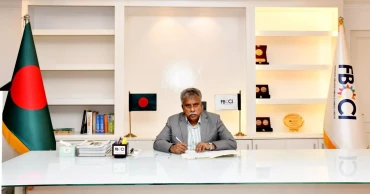
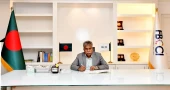
Fazlul Hoque takes charge as FBCCI administrator
Fazlul Hoque, former president of the Bangladesh Knitwear Manufacturers and Exporters Association (BKMEA) and former director of the Federation of Bangladesh Chambers of Commerce and Industry (FBCCI), on Sunday officially took charge as the administrator of the FBCCI, following his appointment by the Ministry of Commerce.
Fazlul, who is also the managing director of Plummy Fashions Ltd, was appointed to the post with the mandate to conduct a free and fair election within 120 days and hand over responsibilities to the newly elected body thereafter.
Soon after assuming charge, Fazlul convened an introductory session with officers and staff of the FBCCI Secretariat. Addressing the gathering, he sought the complete cooperation and wholehearted support of all personnel to ensure smooth execution of the electoral mandate within the stipulated timeframe.
Responding to the call, FBCCI Secretary General Md Alamgir pledged the secretariat's full backing, saying the team remains committed to maintaining integrity and upholding a neutral election process, while also continuing to advance the federation's broader agenda in trade facilitation and strategic policy advocacy.
1 day ago
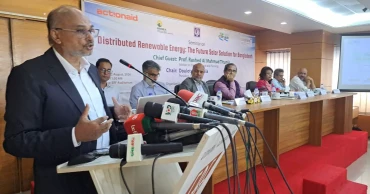
Oligarchic grip on energy system being dismantled through green innovation: Titumir
Prime Minister's Finance and Planning Adviser Dr Rashed Al Mahmud Titumir on Sunday said that the country's energy system was kept in the hands of a few oligarchs through a state-sponsored political economy during the 16 years of the “fascist government”.
He said the current government is working to establish an equality-based society by actively involving citizens in energy system innovations and fostering clean energy adoption, he said at a seminar and joint press briefing titled "Distributed Renewable Energy: The Future Solar Solution for Bangladesh" at ERF auditorium in the capital.
The event was organised by Economic Reporters' Forum (ERF) in collaboration with the Distributed Renewable Energy Platform (DREP).
Stressing the need for a nationwide social movement to expand clean energy use, Dr. Titumir highlighted three priority areas: building social awareness to protect the environment via clean energy, articulating public demand for renewables, and leveraging microfinance institutions to install small-scale solar panels in rural areas.
"If we can demonstrate the practical use of solar energy for cooking purposes, a large number of people will be encouraged to adopt solar setups," he said adding that animating renewable energy use requires affordable storage system innovations.
He assured that the government is providing privileges for setting up solar panel and storage battery manufacturing plants within Bangladesh to make solar power more affordable. Reiterating that the government is "for the people and by the people," he stressed that innovation and public inclusion are essential to resolving challenges in every sector.
Moderated by Dr. Khondaker Golam Moazzem, Coordinator of DREP, the event opened with remarks from ERF General Secretary Abul Kashem.
Several thematic presentations were delivered by platform partners including
‘Challenges Faced by EPCs and Industry Actors’ by A.S.M. Munir, Company Secretary of the Bangladesh Sustainable and Renewable Energy Association (BSREA);
Role of Awareness in Adoption and Retention of DRE Technologies by Hasan Mehedi, Chief Executive Officer of Coastal Livelihood and Environmental Action Network (CLEAN); Role of Storage in the Future of DRE by Ishtiaque Ahmeti, Director of Engineering & Innovation at SOLshare; and Financing Challenges and Priorities for DRE Expansion by Abul Azad, Manager – Just Energy Transition at ActionAid Bangladesh.
Md Mehadi Hasan Shamim, Research Associate at the Centre for Policy Dialogue (CPD), was also present as a presenter and discussant.
During the event, DREP officially launched a new public resource website titled "Renewables in Bangladesh". DREP, hosted under The Sunrise Project, a collaborative initiative comprising CPD, ActionAid Bangladesh, SOLshare, BSREA, and CLEAN, aimed at strengthening policies, acts, and institutional mechanisms for distributed renewables in the country.
Key recommendations placed at the seminar:
Residential Sector: Reforming Net Metering by simplifying eligibility, fast-tracking approvals, and launching a unified digital application platform across utilities, establishing dedicated green financing facilities with partial credit guarantees and pay-as-you-save models, rationalising duties on essential PV components, strengthening institutional coordination across SREDA, utilities, and BERC, and repowering legacy Solar Home Systems into hybrid grid-tied systems.
Industrial Sector: Building a RESCO collateral framework, recognising Power Purchase Agreements (PPAs) as bankable security to unlock OPEX lending, streamlining Bangladesh Bank's green, refinancing schemes into single-tier disbursements, and building commercial bank capacity for standardized DRE credit appraisals.
Solar Irrigation: Shifting Solar Irrigation Pumps (SIPs) toward shared ownership farmer cost-sharing models, expanding nationwide net metering for SIPs to sell surplus power, phasing out diesel subsidies while streamlining SIP licensing, bundling SIPs with agricultural equipment financing, and aligning irrigation awareness campaigns with daytime solar generation hours.
Adoption and Retention: Forming a SREDA-led national DRE coordination body to track technology retention rather than just initial installations, institutionalising user feedback loops and field audits, training local technicians for performance-based service contracts, and establishing centralised real-time DRE monitoring systems across all technologies.
1 day ago
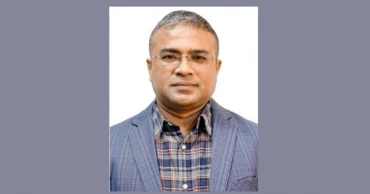
Sabbir Mostafa appointed Dhaka WASA chairman
The government has appointed Prof Dr Engineer Md Sabbir Mostafa Khan, head of the Department of Water Resources Engineering at the Bangladesh University of Engineering and Technology (BUET), as the new chairman of the Dhaka Water Supply and Sewerage Authority (Dhaka WASA) for a three-year term.
The appointment was announced through a gazette notification issued on Sunday by the Water Supply-2 Section of the Local Government Division under the Ministry of Local Government, Rural Development and Co-operatives.
According to the notification, the appointment has been made under Section 7(1) of the Water Supply and Sewerage Authority (Amendment) Act, 2025, and takes effect immediately in the public interest.
Sabbir Mostafa is widely recognised as one of Bangladesh's leading experts in water resources engineering, with nearly three decades of experience in teaching, research, consultancy and infrastructure planning.
His appointment comes at a time when Dhaka faces mounting challenges related to groundwater depletion, urban flooding, ageing water infrastructure, sewerage expansion and climate resilience.
1 day ago
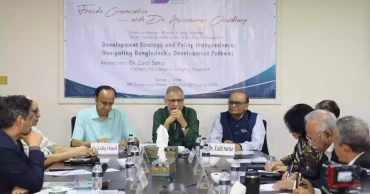
Bangladesh's dependence on foreign assistance reflects mental poverty: Anisuzzaman
Bangladesh continues to rely on other countries and international bodies for its development even as other developing nations advance by harnessing their own strength, Prof Anisuzzaman Chowdhury, former special assistant to the chief adviser of the last interim government, said on Sunday.
Speaking as the chief guest at a seminar organised by the Policy Research Institute of Bangladesh (PRI), he said the country's tendency to look abroad for help whenever reform or development is discussed reflects "mental poverty," adding that countries in worse positions than Bangladesh are outperforming it simply by shedding this mindset.
Criticising Bangladesh's dependence on India, Anisuzzaman, the Emeritus Professor of Western Sydney University, said India helped the country achieve independence during the 1971 Liberation War, but that this did not mean Bangladesh should remain “subservient” to New Delhi decades later.
He said gratitude could be expressed for a lifetime, but development will remain difficult without a firm backbone of self-reliance.
Citing Vietnam as an example, Anisuzzaman said many mistakenly believe the country developed through China's support. In reality, he said, war-ravaged Vietnam rebuilt itself by relying on its own strength and only later began trade relations with China.
Turning to reliance on the World Bank and International Monetary Fund (IMF), he said Vietnam has rejected a loan offer from the World Bank, while Zimbabwe declined United Nations financial assistance during its economic crisis despite the offer being extended.
The Emeritus Professor said while other nations were surviving with their self-respect intact, Bangladesh's attention remained fixed on loans from the World Bank and IMF, questioning when this mindset will change.
Addressing his role in the interim government, Anisuzzaman clarified that although many believe he is related to Prof Muhammad Yunus, this is not the case.
He said he was not personally acquainted with Prof Yunus beforehand, despite their homes being located close to each other, and that he was contacted over the phone with a proposal to work with him, which he accepted.
PRI Chairman Zaidi Sattar moderated the event.
1 day ago
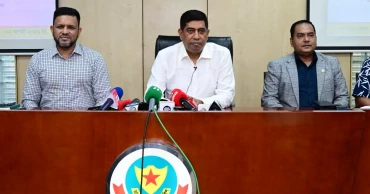
Police alert a routine security reminder, not based on specific intelligence: DB chief
The recent security alert for police issued following a series of bomb scares and recoveries of suspicious objects in Dhaka and elsewhere was not based on any specific intelligence, but was a routine reminder aimed at strengthening security measures, Dhaka Metropolitan Police (DMP) Additional Commissioner (Detective Branch) Mohammad Shafiqul Islam said on Sunday.
Responding to a question at a briefing at the DMP Media Centre, he said police remain vigilant at all times to ensure public safety as well as the security of police personnel and installations.
Shafiqul said the reminder was issued in the wake of several recent bomb-related incidents and the spread of rumours.
"We always remain alert. Recently, there have been a few bomb scares and some rumours. We are active on these issues. Such reminders are issued from time to time to ensure the security of police vehicles, installations and personnel," he said.
Describing the directive as a routine reminder, the DB chief said police were asked to remain more cautious so that all police vehicles and facilities remain secure.
Asked whether law enforcement agencies have received any specific intelligence about possible attacks targeting police, he replied in the negative, saying, "There is no specific intelligence. However, we always remain alert. Our senior officers supervise us, and those working in the field have been reminded to exercise greater caution."
Replying to a question about the improvised explosive device (IED) recovered from an umbrella beneath Motijheel Metro Rail Station, Shafiqul said the Counter Terrorism and Transnational Crime (CTTC) unit was leading the investigation while the DB is conducting a parallel inquiry.
He said efforts are underway to identify and arrest those involved, but declined to disclose further details as the investigation is continuing.
Asked whether investigators have identified any organisation behind the incident, the DB chief said such acts are generally not carried out by a single individual and are usually intended to promote a particular mandate or ideology.
Earlier on Saturday, the Police Headquarters Operations Control Room issued an emergency message instructing all field-level units to strengthen security measures.
According to the directive, members of extremist groups or criminals could target police vehicles, including jeeps, pickups and buses. It instructed officers to park duty vehicles only in safe locations when temporarily halted and keep them under constant surveillance.
It also called for enhanced security of vehicles parked at police stations, police lines and office premises through regular patrols, increased monitoring and heightened vigilance for suspicious persons or objects.
Although Police Headquarters did not issue an official statement, Assistant Inspector General (Media) AHM Shahadat Hossain told the media that such directives are issued regularly to keep police personnel alert and active, adding that there is no reason for public concern.
Over the past week, several bomb scares have been reported in the capital.
On July 24, police recovered and defused a powerful IED concealed inside an umbrella beneath the Motijheel Metro Rail Station. Authorities later said it had been placed targeting the route of the Hindu community's Ulto Rath Yatra procession.
The following day, a sack with an umbrella protruding from it near Bangladesh Bank triggered panic, but no explosives were found.
On Saturday, two suspicious bags and sacks recovered at Mirpur-10 and Farmgate metro stations were examined by the DMP Bomb Disposal Unit, which confirmed that neither contained explosive materials.
Police sources said the latest directive was issued to reinforce vigilance among field-level officers in light of these recent incidents.
1 day ago
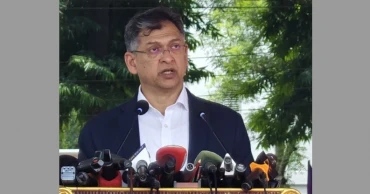
Govt to build police force free from political influence: Home Minister
Home Minister Salahuddin Ahmed on Sunday said the police must not serve as an instrument of any political party or group but should instead become a true friend of people and a symbol of public security.
The government's priority is to ensure public safety and build a modern, professional and people-oriented police force free from political influence, he said while addressing the graduation parade of the first phase of the 27th BCS (Police) batch at the Bangladesh Police Academy in Sardah, Rajshahi.
He said the government has taken various steps to restore the morale of the police force which was undermined by excessive politicisation during the previous “fascist government”.
The minister said a strict system of rewards for professionalism and disciplinary action for misconduct has been introduced to strengthen integrity and discipline within the force.
Congratulating the newly appointed officers who took part in the parade, the minister said this joyous moment should have come much earlier in their lives. He said it was deeply painful that they had endured 18 years of severe deprivation and inhumane suffering as victims of the vindictive actions of the previous authoritarian and fascist government.
The minister extended his heartfelt greetings to all the officers for regaining their rightful positions and due recognition following the fall of the authoritarian regime.
He said they were beginning their careers at a historic time for the country and urged them to uphold equality before the law.
“From political activists to marginal farmers, everyone is equal in the eyes of the law. No one seeking police services should face discrimination,” he added.
He also stressed the importance of maintaining the chain of command, discipline, loyalty and teamwork, while urging the officers to enhance their expertise in cyber security and criminal investigation to meet emerging challenges.
Reaffirming the government's zero-tolerance policy against corruption, Salahuddin called on all police members to perform their duties with honesty and dedication.
The minister expressed hope that members of the 27th BCS (Police) batch would use their knowledge and experience gained over the past 18 years in different professions to strengthen the Bangladesh Police.
A total of 58 probationary ASPs — 57 from the first phase of the 27th BCS (Police) batch and one from the 28th batch — officially entered service through the parade.
At the ceremony, Probationary ASP Dr Md Nurul Huda Bhuiyan won the Best in Field Activities award and was also named the Best Probationer. Probationary ASP ABM Mamun received the Best Shooter award, while Abu Numan Mohammad Khairul Islam won the Best Academic Award.
During the ceremony, the minister inspected the parade, took the salute and distributed awards among the best-performing probationary officers.
The event was attended as special guests by Land Minister Mizanur Rahman Minu, local Members of Parliament, Inspector General of Police (IGP) Md. Ali Hossain Fakir, Principal of Bangladesh Police Academy G M Azizur Rahman, Rajshahi Divisional Commissioner Dr. A.N.M. Bazlur Rashid, and Rajshahi Range Deputy Inspector General (DIG) Md. Ashik Saeed.
Senior military and civilian officials, local and foreign invited guests, guardians of the ASP probationers, and journalists from various media outlets were also present at the ceremony.
1 day ago
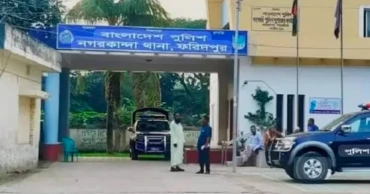
Minor girl found dead near railway track in Faridpur; 3 held
Police recovered the body of an eight-year-old girl from beside a railway track at Tarakandi village in Nagarkanda upazila of Faridpur district on Saturday night.
The deceased was identified as Mahmuda, daughter of Idris Molla of Tarakandi village in the upazila.
Rasul Samdani Azad, Officer-in-Charge of Nagarkanda Police Station, said Mahmuda went out from her house around 5 pm on Saturday and since then she remained missing.
When the family failed to trace her, they, along with local residents, launched a search and found her body beside the railway tracks around 9 pm, he said.
On information, police recovered the body and sent it to the Faridpur Medical College and Hospital morgue for an autopsy.
The body bore severe injury marks on her head, said OC.
Police also detained three people for interrogation.
Legal action will be taken based on the autopsy report and the findings of the investigation, said OC.
1 day ago
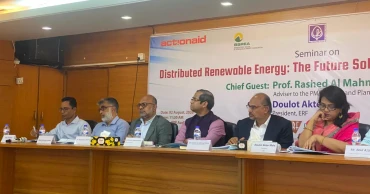
Call for prioritising distributed renewable energy to cut fuel imports
Bangladesh should prioritise distributed renewable energy, including rooftop solar and battery storage, to reduce dependence on imported fuels and strengthen energy security, Coordinator of the Distributed Renewable Energy Platform (DREP) Khondaker Golam Moazzem said on Sunday.
“Distributed renewable energy should be viewed as a distinct component of the country’s renewable energy strategy rather than being grouped with conventional utility solar and wind projects,” he said while speaking at a seminar titled “Distributed Renewable Energy: The Future Solar Solution for Bangladesh” organised by the Economic Reporters’ Forum (ERF) at its auditorium in collaboration with the DREP.
Prime Minister’s Adviser for Finance and Planning Rashed Al Mahmud Titumir attended the seminar as the chief guest.
Moazzem, also the Centre for Policy Dialogue (CPD) research director, said renewable energy discussions in Bangladesh generally focus on large-scale solar, wind or hydropower projects, but distributed renewable energy offers a different approach by generating electricity close to where it is consumed.
“Unlike utility-scale power plants that require vast tracts of land and extensive transmission infrastructure, distributed renewable energy systems can be installed on residential and industrial rooftops, agricultural land and other small sites,” he said.
Moazeem mentioned that electricity generated from these systems can either be consumed directly or supplied to the national grid through distribution networks.
He said such systems include rooftop solar installations under net metering, industrial rooftop solar, agrivoltaics, battery-backed renewable energy systems, solar home systems and solar-powered irrigation.
The DREP coordinator noted that one of the biggest advantages of distributed renewable energy is that it does not require large areas of land, addressing one of the common criticisms of utility-scale renewable energy projects.
Presenting data on the sector’s current capacity, he said Bangladesh now has around 213 megawatts (MW) of rooftop solar connected through net metering, while another 94 MW comes from rooftop solar systems outside the net metering scheme.
Solar home systems contribute around 263 MW, solar irrigation pumps 60 MW, while solar charging stations, drinking water systems and solar street lighting account for about 17 MW. Mini grids add another six MW.
Altogether, Bangladesh has around 655 MW of distributed renewable energy capacity, Moazzem said.
He said the sector has significant growth potential as industries increasingly turn to rooftop solar because of gas shortages and rising energy costs. “The country’s energy crisis is unlikely to disappear soon, while reliance on imported fuel will become increasingly expensive. Therefore, Bangladesh must expand the use of domestic energy resources, including renewable energy and rooftop solar,” he said.
The CPD research director said energy-efficient technologies, battery storage and rooftop solar will play a growing role across industries, agriculture, transport, households and healthcare facilities.
Electric vehicles, battery systems, solar irrigation, mini grids and electric cooking appliances are also expected to become more widespread in the coming years, he added.
Moazzem also announced that the Distributed Renewable Energy Platform, launched in July 2025, will work on policy research, legal and regulatory reforms, technology development, financing mechanisms and community-level expansion of distributed renewable energy across the country.
The platform currently comprises five member organisations: ActionAid Bangladesh, Bangladesh Solar & Renewable Energy Association (BSREA), CPD, Coastal Livelihood and Environmental Action Network (CLEAN) and SOLshare.
The platform will also engage with the government, private sector and development partners while drawing lessons from countries such as China and Vietnam to accelerate the adoption of distributed renewable energy in Bangladesh.
1 day ago
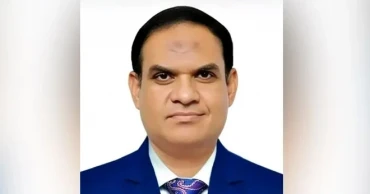
No public money will be allowed to go to waste: Nuruddin Ahmed Apu
Whip of the Jatiya Sangsad and Shariatpur-3 MP Mia Nuruddin Ahmed Apu on Saturday said not a single penny of public money would be allowed to go to waste, warning that no compromise would be made over the quality of development work.
He made the remarks while inspecting several roads in Dhankati Union.
Apu said roads should be built to such a standard that they would not require major repairs for the next 50 years.
"I have come to work, not to make money. No irregularities or substandard work using public funds will be tolerated. Every project must be durable and of high quality," he said.
The whip warned that contractors or others involved in development projects would face action if any irregularities were found.
He also instructed the engineers and contractors concerned to ensure quality in all construction work.
He said the government's development activities are aimed at ensuring long-term benefits for the people, stressing that every project must uphold transparency, accountability and quality.
District LGED Executive Engineer SM Rafeul Islam, Upazila Engineer Abu Naim Nabil, local public representatives, political leaders and people from different walks of life were present.
2 days ago
No plan to increase gas prices at the moment: Petrobangla
The government currently has no plan to increase gas prices, Petrobangla and the Energy and Mineral Resources Division said on Saturday, urging people not to be misled by recent media reports suggesting a hike.
In a public notice issued following reports carried by various media outlets on a possible increase in gas prices, the authorities clarified that there is no proposal at this moment to raise gas tariffs.
“The government has no plan to increase gas prices at this moment,” the notice said.
Petrobangla and the Energy and Mineral Resources Division requested all concerned not to be confused or misled by speculative reports regarding any gas price hike.
The clarification came amid public discussion triggered by recent media reports on a possible increase in gas prices.
2 days ago