Others
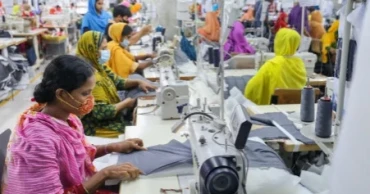
35 labor federations demand Tk 37,125 as minimum monthly wage for garment workers
Thirty-five labor federations under four major alliances have demanded that the minimum monthly wage for ready-made garment (RMG) workers be fixed at Tk 37,125 (or $300).
The leaders also called for the formation of a new minimum wage board for the 2026–2029 terms, urging the inclusion of genuine worker representatives as members on the board.
The demands were raised during a joint press conference held on Monday morning at the Shafiqul Kabir Auditorium of the Dhaka Reporters Unity (DRU).
Shah Md. Abu Zafar, a frontline leader of the alliance and the Shromik-Karmaçhari Oikya Parishad (SKOP), former Member of Parliament, and valiant freedom fighter, presided over the event. The written statement was read out by alliance leader Khalequzzaman Lipon, with the conference conducted by Nahidul Islam Noyon and an introductory speech delivered by Abul Hossain.
Addressing journalists, labor leaders emphasized that national and international labor laws, Article 15 of the Constitution of Bangladesh, and Section 141 of the Bangladesh Labour Act outline clear statutory provisions for determining wages based on 11 distinct criteria, including cost of living, living standards, production costs, productivity, commodity prices, nature of work, risk factors, product market value, business capacity, and overall socio-economic conditions. They noted that the proposed Tk 37,125 minimum wage was formulated after carefully analyzing these benchmarks and current market realities.
Highlighting the backbone of the national economy, the speakers noted that the RMG sector earned $38.70 billion out of Bangladesh's total export earnings of $48 billion in the 2025–26 fiscal year, accounting for roughly 81 percent of total export revenue.
Comparing data from past fiscal years, leaders pointed out that during the 2014–15 fiscal year, total export earnings stood at $31.20 billion, of which $25.49 billion came from the apparel sector—marking an increase of $13.21 billion over the last decade. Despite a reduction in the number of active factories and workers over this period, export revenues have continued to grow, making it imperative that the wages of workers directly fueling this growth align with the surging cost of living.
Citing various research organizations, the leaders stated that considering per capita income, poverty line thresholds, and the actual cost of decent living, the monthly expenditure for a worker's family is significantly higher, potentially ranging between Tk 57,000 and Tk 70,000.
They argued that even if a primary earner covers 60 percent of a household's total expenses, a monthly income of Tk 37,000 to Tk 38,000 is necessary—notwithstanding additional costs like parental care, recreation, medical emergencies, festival expenses, and rural travel.
Furthermore, economic calculations factoring in equal proportions for food and non-food expenses dictate that a four-member family spending Tk 35,080 on food alone incurs a total monthly expenditure of nearly Tk 70,000. Under these economic pressures, setting a realistic wage is critical.
The labor leaders urged authorities to take government pay structures, the Bangladesh Bureau of Statistics' (BBS) 2025 special survey, prevailing market prices, cost of living indices, per capita income, productivity, value addition, minimum wages in competing apparel-exporting nations, and various research reports into active consideration.
They stressed that keeping employers' financial capacity and industry realities in mind, setting the entry-level minimum wage for assistant operators at Tk 37,125 is both justified and necessary, and urged the government to promptly establish the new wage board with authentic worker representation.
Prominent trade union leaders including Naimul Ahsan Jewel, Lovely Yasmin, Bachchu Mia, Rafiqul Islam Sujan, Asad Chowdhury, Saleha Islam Shantona, Sumaiya Islam, Shamima Akter, and Bappi Deb Bormon, alongside representatives from the four federations, were present at the press conference.
1 day ago

TIB calls for withdrawal of IGP’s remarks, accountability
Transparency International Bangladesh (TIB) on Monday strongly condemned and expressed deep concern over the Inspector General of Police’s (IGP) remarks that the police would resort to crossfire, if necessary, to maintain law and order, provided the government gives its approval.
TIB called on the government to obtain a formal explanation of the IGP’s remarks, ensure their withdrawal along with an unconditional public apology, and hold him administratively accountable.
The organisation has also called for his removal from office until accountability is ensured.
According to TIB, the remarks send a dangerous message by presenting extrajudicial killings as an acceptable means of crime control, rather than addressing failures in maintaining law and order and institutional weaknesses.
Describing the remarks as an expression of utter disregard for the Constitution and the rule of law, TIB demanded their immediate withdrawal, accountability of the IGP, and accountability for making a declaration that contradicts the government’s stated position against extrajudicial killings.
TIB Executive Director Dr. Iftekharuzzaman said, “Is the police chief seeking to use the discredited practice of crossfire as a shield for the police’s failure to maintain law and order? Does seeking to legitimise extrajudicial killings by making them conditional on government approval amount to an admission of failure to combat crime through lawful means?”
He said the responsibility of the police is to conduct professional investigations, identify offenders and bring the accused to trial on the basis of admissible evidence.
“Presenting crossfire as an alternative cannot resolve institutional weaknesses; rather, it is an example of professional bankruptcy. In the same remarks, the IGP spoke of discharging duties in accordance with the law and the Constitution, while also saying that the police would resort to crossfire if the government approved it,” Iftekharuzzaman said.
He said these two positions are contradictory. “No government approval can legitimise an extrajudicial killing. The rights to legal protection and to life and personal liberty guaranteed under Articles 31 and 32 of the Constitution cannot be set aside by executive decisions. Regardless of the seriousness of an allegation, the police have no authority to kill anyone by bypassing due process.”
Recalling past experiences, the TIB Executive Director said the conviction of police officers in the Sinha murder case, along with allegations reported in connection with the verdict that crossfire was used to extort money, torture people and kill them, serves as a reminder of the horrific nature of this practice.
“The killing of Teknaf municipal councillor Ekramul Haque in a purported gunfight also raised serious questions, particularly following the release of an audio recording by his family and allegations of murder.”
He said the convictions of former RAB officials in the Narayanganj seven-murder case provide another judicially established example of the criminal abuse of power by law enforcement agencies.
“Despite thousands of such experiences, and amid public expectations for police reform and broader state reform, the police chief is once again raising the prospect of crossfire. He must answer the question of what lessons the police have learned from past crimes.”
Iftekharuzzaman said such reckless and ill-considered remarks by the police chief could be perceived as an implicit licence for unlawful use of force at the field level.
“When the person responsible for ensuring that the force operates within the law presents crossfire as an alternative, questions about his sense of responsibility and suitability for leadership inevitably arise,” he said.
“How can the public trust that, under his leadership, citizens’ lives and legal protections will be safeguarded? On the other hand, on 14 September, the Law Minister stated that the government would not resort to crossfire to combat terrorism and that existing laws were sufficient to tackle terrorism. Why, then, is the police chief raising the prospect of crossfire subject to government approval? The government must clearly explain this inconsistency and specify how accountability will be ensured for implementing its declared position,” he added.
TIB said that any use of force by the police must be lawful, necessary and proportionate. Under international standards, the intentional lethal use of firearms is permissible only when strictly unavoidable to protect life. There is no scope to portray this narrowly defined exception as authorisation for extrajudicial killings.
Regarding allegations that journalists criticise the police because they have not received money, TIB said that if there are specific allegations of criminal conduct against any journalist, lawful action must be taken on the basis of evidence.
Sweeping allegations undermine the role of a free media in oversight and accountability and risk discouraging independent journalism.
The need to ensure a conducive working environment and adequate capacity for the police cannot be used as a justification for evading legitimate criticism.
1 day ago
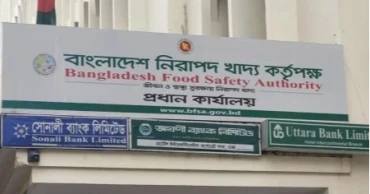
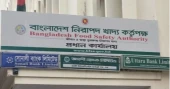
BFSA declares all offices 100% tobacco, smoke-free
All offices of the Bangladesh Food Safety Authority (BFSA) have been declared 100% tobacco- and smoke-free to protect non-smokers from the harmful effects of secondhand smoke.
The authority will now conduct all its activities in line with national tobacco control guidelines to maintain a completely tobacco- and smoke-free environment across its offices.
BFSA Chairman Md. Shafiqul Islam, an additional secretary, made the announcement as the chief guest at an event titled “Declaration of All Offices of the Bangladesh Food Safety Authority as 100% Tobacco- and Smoke-Free” at the authority’s headquarters in the capital on Monday.
The event was jointly organised by Dhaka Ahsania Mission (DAM) and the BFSA.
He said the decision was taken to protect officers, employees and citizens visiting the authority for services from the harmful effects of secondhand smoke.
Presenting the keynote paper, Md. Shariful Islam, coordinator of the Tobacco Control Project at Dhaka Ahsania Mission, said tobacco smoke contains approximately 7,000 chemicals, around 250 of which are harmful to human health and can cause serious diseases and death.
He noted that tobacco use claims approximately 200,000 lives in Bangladesh every year.
Citing data from the Global Adult Tobacco Survey (GATS), he said 42.7% of non-smoking adults in enclosed workplaces and 21.6% of non-smoking adults in government offices are exposed to the health risks associated with secondhand smoke.
He also said approximately 37.8 million people in Bangladesh use tobacco products, including 19.2 million who smoke. In addition, nearly 40 million people are exposed to secondhand smoke despite not using tobacco themselves.
He emphasised that protecting people from the harmful effects of secondhand smoke requires ensuring 100% smoke-free environments in all public places, including workplaces.
Speakers at the event said the BFSA’s initiative could inspire other government institutions to establish completely smoke-free environments.
They also stressed the need to formulate rules under the amended tobacco control law without delay to provide clearer guidance for public and private institutions.
Calling for the swift formulation of rules under the Smoking and Tobacco Products Usage (Control) Act, 2026, the speakers said any delay would hinder the effective implementation of public health protection measures incorporated into the amended law and postpone the benefits for the public.
The discussion was moderated by Ferdous Arafat, legal officer of the BFSA.
Anwarul Islam Sarker, member of the BFSA; Kawsarul Islam Sikder, additional director of the authority; Dr Naila Parvin, assistant director of the Health and Nutrition Sector at Dhaka Ahsania Mission; members of the Ahsania Mission Youth Forum for Health and Wellbeing; and senior officials from the relevant organisations, among others, were present.
2 days ago

Police may resort to crossfire if government permits: IGP
Inspector General of Police (IGP) Md Ali Hossain Fakir on Monday said police might resort to crossfire if the government allows it and it becomes necessary to maintain law and order and curb crimes.
“When the police act tough, they are called fascist police and when they remain silent they are called weak police,” he said while speaking as the chief guest at the formal inauguration of Community Bank Bangladesh PLC’s Islamic banking service, ‘Community Islamic’, at Chawkbazar of the capital.
“If the government permits and it becomes necessary to maintain law and order and suppress crimes, we will not hesitate to resort to crossfire,” the IGP said.
He said police are working under a zero-tolerance policy to prevent the spread of drugs.
Stressing that attempts to render the police ineffective would not be tolerated, he said maintaining social order would be difficult if the police are repeatedly targeted or obstructed from performing their duties.
He said police officers found involved in criminal activities are not being spared, adding that the force has its own system of checks and balances.
The IGP also said some members of then Awami League (now facing ban on activities) patronised the spread of drugs, while some police personnel had also been involved in the drug trade.
“Drugs are widespread at almost every gathering in neighbourhoods and local communities today. Who created this situation? If you look closely, you will see that the leaders of the then ruling party patronised it. Some members of our police force were also involved, and some still are,” he said.
Fakir said around 27 police members have been sent to jail over the past two months as part of efforts to address wrongdoing within the force.
“We are cleaning up our own house first, as you can see. Yet, various misinterpretations are being spread even about this,” he said.
He called for greater empowerment of the police, saying restoring peace in society would not be possible without allowing law enforcement agencies to enforce the law.
The IGP also urged people to avoid rumours and misinformation and cooperate with the police in discharging their duties in accordance with the Constitution and the law.
Speaking about the banking sector, Fakir, also chairman of Community Bank, stressed the need for ethical practices, transparency and accountability in Islamic banking.
He said interest and bribery were strictly prohibited in Islam, adding that genuine Islamic banking should be entirely interest-free and based on partnership, ethical conduct and fair business practices.
Criticising past irregularities in the banking sector, including the takeover of banks and alleged deception of ordinary customers through promises of high profits, he said effective supervision and monitoring by Bangladesh Bank are essential to ensure compliance with the law.
He urged customers to place their trust in the bank’s current management, saying there would be no opportunity for a recurrence of past irregularities or crises under the present management.
He also emphasised the need to strengthen monitoring of mobile financial services (MFS).
Community Bank Bangladesh PLC’s directors, managing director and senior officials at different levels attended the inauguration ceremony.
2 days ago

Hearings on RTI complaints to resume on Nov 16
Hearings on complaints filed with the Information Commission are set to resume on November 16 after a hiatus of nearly two years.
A total of 920 complaints have been lodged with the Commission during the period, according to a press release.
The newly constituted Commission held a meeting on Monday to review and scrutinise the complaints ahead of the resumption of hearings.
On October 17, the government constituted the Information Commission by appointing Prof Dr Nahreen Islam Khan of the Department of Geography and Environment at Jahangirnagar University as Chief Information Commissioner and journalists SAM Mahfuzur Rahman and Khan Mohammad Abul Hossain as Information Commissioners.
Following the formation of the new Commission, it held its first meeting to address complaints filed under the Right to Information Act.
2 days ago

Microplastics detected in all commercially dried seafood samples in Bangladesh: Study
Microplastics (MPs) have been detected in all commercially dried seafood samples examined from four coastal regions of Bangladesh, with abundance ranging from 0.25 to 1.30 MPs g− 1 dry weight, according to a latest study.
Hazardous polymers (PP, PE, PET) contributed to elevated risk levels and multivariate analysis revealed distinct spatial pollution signatures.
Microplastic (MP) contamination in seafood has received increasing attention, yet information on commercially dried seafood remains limited.
Mohammed Ashraful Azam Khan, Kazi Nusrat Jahan Ouishi, Habibur Rahman Pias, Nadia Islam Riya, Shanjida Akter Joyoti from the Department of Fisheries, Faculty of Marine Sciences and Fisheries, University of Chittagong, conducted the study titled “Occurrence, characteristics, and polymer associated hazard of microplastics in commercially dried marine seafood from coastal Bangladesh.”
The study assessed MP abundance, physical characteristics, polymer composition, spatial variation, and polymer associated hazard in commercially dried seafood from the Sundarbans, Kuakata, Teknaf, and Cox's Bazar.
Six species were examined: Harpadon nehereus, Trichiurus lepturus, Setipinna phasa, Johnius argentatus, Penaeus monodon, and Metapenaeus monoceros.
MPs were detected in all samples, with abundance ranging from 0.25 to 1.30 MPs g− 1 dry weight. Regional mean abundance ranged from 0.57 ± 0.26 MPs g− 1 in Teknaf to 0.91 ± 0.36 MPs g− 1 in Sundarban, with no significant difference among the four regions (p = 0.165).
Fibers were the dominant morphology, blue and black particles were frequently observed, and smaller size fractions constituted a substantial proportion of the recovered MPs, according to the Marine Pollution Bulletin, an international peer-reviewed journal published by Elsevier that focuses on the marine environment, pollution control, and the management of ocean and coastal resources.
Fourier-Transform Infrared Spectroscopy (FTIR) analysis identified seven polymer types, with polyethylene (30.49%) and polypropylene (24.39%) occurring most frequently.
The Polymer Hazard Index (PHI) varied markedly among regions, from 86.7 in Sundarban to 2642.7 in Kuakata, reflecting differences in polymer composition and polymer specific hazard scores.
Multivariate analyses further revealed interconnected variation in MP abundance, physical characteristics, and polymer composition across the examined samples.
Overall, the findings provide a quantitative baseline for MP occurrence and polymer-associated hazard in commercially dried marine seafood from coastal Bangladesh and highlight the need to distinguish environmental contamination from inputs occurring during post-harvest processing and handling.
Overall, this study provides a quantitative baseline for the occurrence, characteristics, polymer composition, and associated polymer hazard of MPs in commercially dried marine seafood from coastal Bangladesh.
As contamination may occur at different stages, from the marine environment through postharvest processing and handling, future studies comparing seafood before and after drying, together with assessment of individual processing stages and dietary exposure, are needed to clarify the major contamination pathways and establish the implications for consumer exposure and food safety.
Microplastics (MPs), defined as plastic particles smaller than 5 mm, have emerged as one of the most persistent and ubiquitous contaminants in aquatic environments.
They originate from the fragmentation of larger plastic debris (secondary MPs) as well as from primary sources, including industrial products, synthetic textiles, wastewater effluents, and personal care products.
Owing to their persistence, resistance to degradation, and continuous release into the environment, MPs have become widely distributed throughout marine ecosystems, where they are recognised as an emerging threat to ecological integrity and environmental sustainability.
What is Microplastic?
Microplastics are tiny particles of synthetic polymers and plastics and their products that are less than 5 millimeters in size.
Microplastics can either be intentionally added to products, for example in cosmetics or cleaning products, or be a waste product from the decomposition of larger plastic parts.
Microplastics enter the environment through many different pathways, where they are difficult to degrade and can pose a potential threat to wildlife and human health.
2 days ago

21st National Furniture Fair to begin at ICCB Tuesday
The five-day 21st National Furniture Fair 2026 will begin at the International Convention City Bashundhara (ICCB) in Dhaka on Tuesday.
The Bangladesh Furniture Shilpa Malik Samity (BFSMS) is organising the fair – under the slogan “My Country, My Dream – Decorating Homes with Local Furniture”— to promote the domestic furniture industry and expand export markets for Bangladeshi furniture.
Export Promotion Bureau (EPB) Vice Chairman and Chief Executive Mohammad Hasan Arif will be the chief guest at the opening ceremony, while Federation of Bangladesh Chambers of Commerce and Industry (FBCCI) Administrator Md Fazlul Hoque and Bangladesh Furniture Exporters Association President Dr KM Akhtaruzzaman will attend as special guests.
Sheikh Abdul Awal, BFSMS vice chairman and convener of the Fair Committee, will deliver the welcome address. BFSMS Chairman Selim H Rahman will preside over the opening ceremony.
According to a press release, the fair will remain open from 10:00am to 9:00pm daily until October 31 across Hall 2 (Pushpoguchcho), Hall 3 (Rajdarshan) and Hall 4 (Noboratri) of the ICCB.
A total of 44 leading furniture companies will display their products and designs in 323 stalls at the fair.
Visitors will have the opportunity to explore and purchase the latest furniture designs from well-known brands, including Akhtar, Hatil, Brothers, Nadia, Ayoto, Omega, JMG, Navana, Athena’s, Partex, Regal and Legacy, all under one roof.
Abdul Awal said the entry is free for visitors.
He also said there will be a children’s art competition on the opening day, with 20 to receive awards.
2 days ago
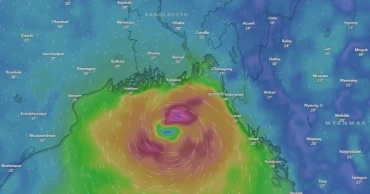
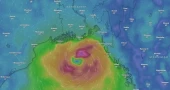
Cyclone Arnab likely to become severe by midnight: BMD
Cyclonic Storm Arnab is likely to intensify into a severe cyclonic storm over the west-central Bay of Bengal by Monday midnight, Bangladesh Meteorological Department (BMD) said.
The deep depression over the east-central Bay of Bengal and adjoining south-east Bay moved north-westwards and intensified into Cyclonic Storm Arnab, said a special weather bulletin of the BMD on Monday morning.
At 6:00am on Monday, the storm was centred over the east-central Bay and adjoining west-central Bay, near latitude 15.4°N and longitude 89.0°E.
It was about 820km south-west of Chattogram, 745km south-west of Cox's Bazar, 785km south of Mongla and 745km south of Payra, the bulletin said.
The storm is likely to move west-north-westwards and intensify into a severe cyclonic storm over the west-central Bay by midnight and expected to move north-westwards and cross the Andhra Pradesh coast by October 28 as a very severe cyclonic storm, it added.
The maximum sustained wind speed near the storm's centre is about 62 kilometres per hour, rising to 88kmph in gusts or squalls. The sea is likely to remain very rough near the centre of the storm.
The BMD has advised the maritime ports of Chattogram, Cox's Bazar, Mongla and Payra to hoist distant warning signal No. 2 (R) instead of warning signal No. 1.
All fishing boats and trawlers operating in the North Bay have been advised to remain close to the coast and proceed with caution until further notice, the bulletin added.
2 days ago
Thakurgaon-1 by-election: Outsiders barred from constituency
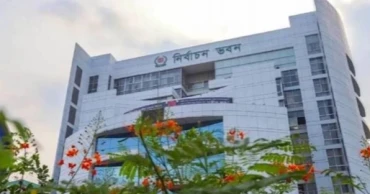
The district administration has barred outsiders from staying in Thakurgaon-1 constituency from 8:00am on October 27 to 4:00pm on October 30 to ensure a peaceful and impartial by-election scheduled for October 29.
The restriction was announced in a public notice signed by Deputy Commissioner and District Magistrate Mohammad Rafiqul Huq on Sunday.
People who are neither residents nor registered voters of the constituency will not be allowed to stay in the area during the specified period.
However, election officials, people authorised by the Election Commission, and residents and registered voters of the constituency will be exempt from the restriction.
The notice warned that legal action would be taken against anyone violating the directive.
Election campaigning is scheduled to end at 8:00am on Tuesday (October 27), while preparations for the by-election have been completed.
Speaking about the restriction, Deputy Commissioner Mohammad Rafiqul Huq said the move aimed to ensure that voters could go to polling stations and cast their votes without fear or intimidation.
The by-election will be held in the constituency, which covers Thakurgaon Sadar, Ruhia and Bhulli.
It comprises 22 unions and one municipality across Thakurgaon Sadar, Ruhia and Bhulli upazilas.
Earlier, Chief Election Commissioner AMM Nasir Uddin said the upcoming Thakurgaon-1 parliamentary by-election will be held in a praiseworthy manner, like the February-12 national election.
“Insha'Allah, I can guarantee that just as we conducted the 13th parliamentary election— which earned acclamation both at home and abroad— you will similarly appreciate the way this one (by-election) is held,” he said.
The Thakurgaon-1 seat fell vacant after Mirza Fakhrul Islam Alamgir was elected president.
Five candidates are contesting the by-election: Mirza Faisal Amin of the BNP; Delwar Hossain, representing Jamaat-e-Islami and like-minded parties; Md Khademul Islam of Islami Andolan Bangladesh; Md Abdul Alim Nizami of Bangladesh Khilafat Andolan; and Hussain Muhammad Omar Faruk of Bangladesh Congress.
2 days ago
NBR raids Gulshan restaurant, seizes alcohol over suspected duty evasion
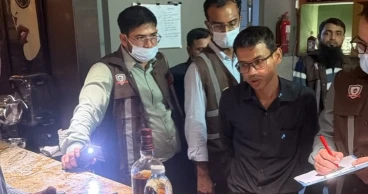
A joint team of four intelligence agencies of the National Board of Revenue (NBR) seized a large quantity of alcohol and alcoholic beverages without valid documents during a raid on Kingfisher Restaurant Ltd in the capital’s Gulshan area.
The special operation was conducted from 12:30am on Sunday and continued for around three hours, following confidential information received by the NBR that highly dutiable goods, particularly alcohol and alcoholic beverages, are being procured and sold by evading duties.
The operation was carried out under the NBR’s directives and the overall supervision of the Customs Intelligence and Investigation Directorate (CIID), according to a press release issued on Monday.
The participating agencies were the Central Intelligence Cell (CIC), CIID, Tax Intelligence and Investigation Unit (TIIU), and VAT Audit, Intelligence and Investigation Directorate (VAIID).
The team conducted the raid to identify stocks of alcohol allegedly obtained through illegal sources and smuggling, prevent value-added tax (VAT) evasion on local sales, verify whether sales proceeds had been properly declared in income tax returns, and examine possible links between the transactions and money laundering.
The operation was conducted under provisions of the Customs Act, 2023, the Value Added Tax and Supplementary Duty Act, 2012, the Value Added Tax and Supplementary Duty Rules, 2016, and the Income Tax Act, 2023.
The Special Response Battalion (SRB-1) provided support throughout the operation.
The NBR did not specify the quantity or estimated value of the seized alcohol in its press release issued on Monday.
2 days ago