others

No VIP exception: Minister’s car takes the wrong lane, faces two cases
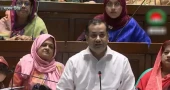
Police have filed two cases against a minister’s vehicle for driving on the wrong side on Circuit House Road on Thursday morning.
A senior official of Dhaka Metropolitan Police’s traffic division said the vehicle, a Range Rover bearing registration number Dhaka Metro-Gha-18-2125, was stopped by traffic police at around 9:08am while it was heading towards the Secretariat on the wrong side of the road.
The driver, Arif Hossain, was sued for reckless driving, the official said.
Police imposed fines of Tk 3,000 for each of the two offences, totalling Tk 6,000, he said.
The vehicle was identified as belonging to the Ministry of Civil Aviation and Tourism and Minister Rashiduzzaman Millat was inside the vehicle when it was stopped, officials said.
Traffic officials described the case as unprecedented, saying they could not recall any previous instance in Bangladesh where a case was filed against a minister’s vehicle for driving on the wrong side of the road.
There have been previous reports of vehicles carrying ministers driving against traffic to avoid congestion or reach destinations quickly, but such incidents had not resulted in cases, the officials said.
The incident sparked discussion at the Secretariat, with senior police officials saying the action demonstrated that traffic rules should apply equally to all, regardless of the status of passengers in a vehicle.
A senior police official said the Prime Minister’s motorcade was following traffic rules and obeying signals while travelling through congested roads.
The official said the case against the minister’s vehicle should serve as a message for senior government officials to comply with traffic laws.
26 minutes ago
Govt signs $1bn loan deal with IsDB for Eastern Refinery expansion to cut refined fuel import costs
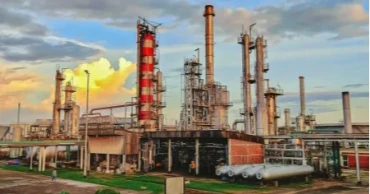
The government on Thursday signed a US$1 billion loan agreement with the Islamic Development Bank (IsDB) for the Modernisation and Expansion of the Eastern Refinery Project.
The agreement was signed at the Cabinet Division of the Bangladesh Secretariat in the presence of Prime Minister Tarique Rahman and the IsDB Group President Dr Muhammad Al Jasser, said PM’s Deputy Press Secretary Hasan Shiplu.
The financing will support the construction of the second unit of Eastern Refinery Limited (ERL), Bangladesh’s only state-owned crude oil refinery, in Chattogram.
The project is considered strategically important for reducing the country’s dependence on imported refined petroleum products and strengthening long-term energy security.
The long-delayed Eastern Refinery expansion project has been under consideration for more than a decade.
Once completed, the second unit is expected to significantly increase Bangladesh’s domestic refining capacity and reduce the foreign currency spent on importing refined fuels.
The signing ceremony was held during Dr Al Jasser’s visit to Bangladesh from September 2 to 4.
The IsDB president arrived in Dhaka on Wednesday to lead a high-level delegation and take part in official development programmes.
The IsDB Board of Executive Directors had approved the $1 billion financing for the Eastern Refinery modernisation and expansion project at its 367th meeting in Baku, Azerbaijan, in June.
Eastern Refinery was established in Chattogram in 1968. Plans for a second refining unit were first drawn up in 2010, but the project faced repeated delays over financing and implementation.
The expansion is now being pursued as a priority project to boost domestic refining capacity, reduce reliance on imported finished petroleum products and improve Bangladesh’s overall energy security.
1 hour ago

80 gold bars weighing 9.33kg seized at Dhaka airport
Customs officials have seized 80 gold bars weighing 9.33kg from underneath a seat of a Flydubai aircraft at Hazrat Shahjalal International Airport.
The Customs House, Dhaka, said on Thursday said tipped off, its officials conducted a search in Flydubai flight FZ523 after it arrived at the airport at around 9:20pm on Wednesday.
During the search, they found several objects wrapped in black Scotch tape concealed underneath seat 19A.
The packages were taken to the customs hall and inventoried in the presence of representatives of different agencies.
The estimated market value of the seized gold is around Tk 20 crore, according to the National Board of Revenue (NBR).
The gold bars were found abandoned and had been concealed under the aircraft seat in a highly concealed manner, apparently to evade applicable customs duties and taxes and smuggle them into Bangladesh, said the NBR.
Customs officials said the consignment could have been taken outside the airport through any route if it had not been detected.
The operation was conducted jointly by the Customs House, Dhaka, and various intelligence agencies.
The seized gold bars were immediately deposited at the airport customs’ valuables warehouse.
A criminal case was filed with Airport Police Station in connection with the seizure.
3 hours ago
Past govt's flawed policy of import dependency to blame for power crisis: Finance and Planning Adviser
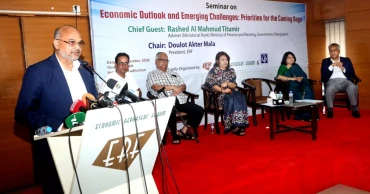
Prime Minister’s Finance and Planning Adviser Rashed Al Mahmud Titumir blamed the past (Awami League) government's flawed energy policies, including over-reliance on imports, alongside its failure to build national capacity, for the ongoing energy crisis in the country.
Speaking as the chief guest at a seminar titled "Economic Context and Emerging Challenges: Priorities for the Coming Days," organized jointly by the Economic Reporters' Forum (ERF) and the Centre for Policy Dialogue (CPD) in Dhaka on Wednesday, he stressed the need to clearly inform the public that the present government bears no responsibility for the current energy distress.
Power situation to improve within 15 days: Amit
"A major portion of the crisis is the result of past wrong policies and decisions. Allowing the public to recognize this distinction enables them to evaluate the effectiveness of an accountable government," Titumir said.
He noted that global energy price volatility and supply uncertainties stemming from Middle East tensions are impacting Bangladesh. LNG imports from Qatar currently cost around $11 per unit, whereas sufficient domestic gas exploration and production could have supplied energy at significantly lower costs.
"Past policies prioritized import dependency over national energy security," he stated, adding that inadequate domestic gas exploration and a lack of initiatives to meet renewable energy targets caused the present situation.
Titumir emphasized the urgency of assessing the 'cost of inaction' alongside the 'cost of wrongdoing,' money laundered abroad, and accumulated energy sector liabilities. He urged the Bangladesh Economic Association, universities, think tanks, and professional bodies to conduct comprehensive research covering these four interconnected areas to ensure governance and accountability.
He remarked that past crony patronage and import reliance created an oligarchic structure in the energy sector, damaging long-term energy security while wasting public funds.
Highlighting ongoing government interventions, Titumir stated that initiatives are underway to secure future energy needs, including a target to produce 4,000 megawatts of solar power. Under a recent notification, measures are being implemented to purchase electricity from solar power producers, transform consumers into producers through net metering, and provide VAT and advance income tax exemptions on solar equipment.
On healthcare, the adviser called for ensuring proper utilization of budgetary allocations while expanding sub-district level health infrastructure, including plans for 150-bed Upazila Health Complexes, district-level kidney dialysis centers, and coronary care units.
Regarding inflation, Titumir attributed past inflationary pressures to corruption, looting, and supply chain irregularities. He noted that inflation currently stands slightly above 8 percent, with a target to gradually bring it down to 6 percent.
He also announced that a Tk 60,000 crore package has been finalized to reopen closed industrial plants, with commercial banks signing agreements to commence financing starting September.
Furthermore, he highlighted record revenue collection at Chittagong Custom House during the last fiscal year and urged media outlets to evaluate government performance based on verified statistics. Detailed progress data following the government's first quarter will be presented in mid-October.
Titumir reiterated that the government aims to recover from past losses and build an accountable, effective, and sustainable state system across energy, revenue, education, health, and employment sectors.
Presided over by ERF President Doulot Akter Mala, the seminar was also attended by National Professor Dr. Mahbub Ullah, FBCCI Administrator Fazlul Haq, and CPD Distinguished Fellow Dr. Fahmida Khatun. as special guests.
16 hours ago
Flawed policies, monopolies hindering transition to green energy: Speakers
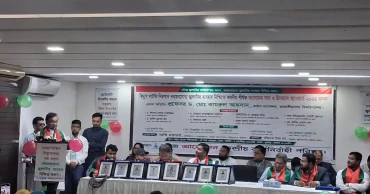
Speakers at a discussion on Wednesday urged the government to formulate a strong, comprehensive energy policy to resolve the ongoing power crisis, stressing the need to keep the emerging green energy sector free from monopoly.
They also called for reviving 37 renewable energy projects cancelled during the previous interim government, prioritising rooftop solar, and implementing strict energy demand management to ensure equitable power distribution across urban and rural areas.
Access to clean energy to become increasingly important for Bangladesh: Michael Miller
The environmental platform Sobuj Andolon (Green Movement) arranged the discussion, titled ‘Measures to ensure the use of renewable energy to address the power deficit,’ at the National Press Club in the city to mark its 9th founding anniversary.
Jahangirnagar University Vice-Chancellor Prof Dr Md Kamrul Ahsan, who attended as the chief guest, said the country cannot overcome the current crisis simply by blaming the fascist regime of the past 17 years.
“Complaints alone will not solve the problem; making efforts to survive is paramount,” he said.
He stressed the need to bring all stakeholders together to formulate a policy based on a balanced fuel mix incorporating coal, gas and renewable energy, while giving greater attention to domestic exploration instead of excessive spending on power-generation capacity and capacity charges.
Criticizing the energy master plans drafted by the ousted Awami regime Prof Dr Adil Muhammed Khan said, “They pushed Bangladesh into an ‘energy trap’ through quick rentals and environmentally destructive fossil fuel projects.”
He also said renewable energy must not fall into the hands of a few large corporate oligarchs like gas and electricity sectors were monopolised in the past.
"Renewable energy is also a business sector. We must establish community-based business models, so that ordinary farmers and households can access and benefit from it easily," Prof Khan said.
Speaking about the stark energy inequity in the country he said, “Air-conditioned high-rises in Dhaka enjoy uninterrupted power while rural areas suffer 10 to 14 hours of load shedding.”
Prof Ahmad Kamruzzaman Majumder of Stamford University Bangladesh pointed out significant operational inefficiencies in existing green projects.
Citing one of his recent studies, he said the country’s 1,500 MW solar power generation capacity loses about 20 percent of its potential output simply due to dust accumulation.
“If solar panels are not cleaned, efficiency drops by 7 to 8 percent within three days and nearly 20 percent within a week,” he explained.
Mohsin Sikder, secretary general of Sobuj Aundolon’s central executive council, urged citizens who have the space and capacity to adopt rooftop solar and biogas systems to ease the mounting pressure on the national grid.
The event was chaired by Sobuj Aundolon founder and Chairman Bappi Sardar, JU Prof Md Farhadur Reza among others was present at the program.
At the program, seven individuals and institutions were honoured with the ‘National Green-man Award-2026’ for their outstanding contributions to environmental awareness and green initiatives.
19 hours ago
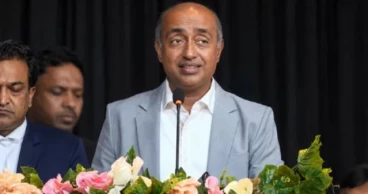
Law on AI use to be enacted after expert review: Minister
Law, Justice and Parliamentary Affairs Minister Md Asaduzzaman on Wednesday said a draft law on the use of artificial intelligence (AI) will be placed before Parliament after necessary additions and deletions based on recommendations from experts.
“We are examining the issue of artificial intelligence and looking at how it can be matched with the Cyber Security Act. Expert recommendations are necessary in drafting the law. After incorporating or removing necessary provisions, the draft will be brought before Parliament in the form of a bill,” he said.
The minister was speaking on the closing day of the five-day “Bangladesh AI Governance Summer School” on the Asiatic Society premises in the capital.
He said the use of AI in the judiciary could create major risks in the absence of a specific legal framework.
Asking judges to remain extremely cautious about the misuse of AI and new types of risks created through the technology, Asaduzzaman said AI is creating new challenges for the judicial system.
He said judges need to become aware of AI and exercise their own wisdom and judicial discretion to protect the justice system from the impact and misuse of the technology. “It is now possible to imitate someone’s voice, alter or superimpose images and present misleading information in a convincing manner using AI,” he said.
AI can even influence people’s thinking and decision-making, the minister said, stressing the need to develop an effective regulatory framework to address its risks and misuse.
He said false statements could be generated using AI, while fake evidence could also be created through manipulated images and other digital means to mislead courts.
Asaduzzaman said poor and middle-class litigants could suffer the most from such misuse, while influential people could also face new social and legal risks.
He also warned that judges could face pressure or AI-driven propaganda campaigns if a verdict goes against someone’s preference, stressing the need for caution and a clear legal framework regarding the use of AI in the judiciary.
The minister said the government has no intention of banning AI. “Rather, the government will remain alert to ensure the positive use of AI while preventing its misuse,” he said.
Welcoming the organisers’ initiative, he said cooperation from all relevant stakeholders is needed to formulate an effective law on AI.
Asaduzzaman urged the parties concerned to prepare a draft and submit it to the government as soon as possible.
The “Bangladesh AI Governance Summer School” was jointly organised by the Society for Justice and AI (SJAI) and Legalized Education Bangladesh Limited, with the cooperation of Dhaka University.
Prof Dr Borhan Uddin Khan and Prof Dr Mohammad Ekramul Haque of the Department of Law at DU also spoke at the programme conducted by Deputy Attorney General Barrister Tasnuva Shelley.
Various aspects of AI governance in the judiciary, human rights, financial services, healthcare and public administration were discussed at the event.
Judges, lawyers, teachers, technologists and government officials took part in the programme.
Later, certificates were distributed among the participants.
19 hours ago
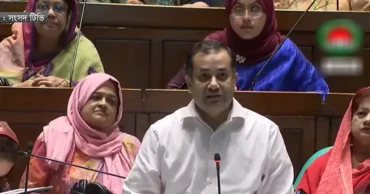
Govt not controlling media in any way: State Minister Yasser
The government is not controlling any media outlet and the media are enjoying more freedom than at any time in the past, State Minister for Information and Broadcasting Yasser Khan Choudhury told Parliament on Wednesday.
“Following Prime Minister Tarique Rahman’s instructions, we do not want to control the media in any way, and we are not doing so,” he said, while replying to a supplementary question from National Citizen Party (NCP) lawmaker Abdul Hannan Masud (Noakhali-6) during the question-answer session in Parliament.
The state minister responded to the questions in the absence of Information and Broadcasting Minister Andaleeve Rahman in the House.
He said the media are independent and it is entirely up to any media outlet to decide which news they will upload, remove, publish or not publish. “The Bangladesh government does not interfere in this matter,” he said.
“If a media outlet realises after publishing a report that the information is incorrect or that the report should not have been published, it can remove the report. We do not interfere in such matters. We believe in press freedom, and that is why we will not interfere,” Yasser said.
Earlier, in his supplementary question, Hannan Masud alleged that some news reports critical of the government or its ministers have been removed from media outlets or have become inaccessible following publication.
He said the removal of the news reports has raised questions in the public mind about whether the government is stifling freedom of expression.
The lawmaker sought an explanation from the information and broadcasting minister on this matter.
In reply to another supplementary question from independent lawmaker Sultana Jesmen (Women Seat-49), the state minister said many journalists with political ideologies are members of press clubs, which is a normal process.
“Anyone can have their own political views or ideology. But we expect them to play a neutral role in journalism,” he said.
Yasser said the ministry is working to check misinformation, disinformation, untrue and fake information circulating on social media through various fact-checking initiatives.
Responding to a question from ruling party lawmaker SM Jahangir Alam (Dhaka-18), the information and broadcasting minister said the Press Council Act does not provide for trying a person merely on the basis of a complaint. “If a complaint is proved, the Press Council can only issue a warning, reprimand or censure,” he said.
He also said online newspapers and journalists do not fall under the jurisdiction of the Press Council Act.
Responding to a question from BNP lawmaker Joynal Abdin (Feni-2), the minister said Bangladesh ranked 152nd in the international press freedom index, while India ranked 157th and Pakistan 153rd.
In response to a question from Khilafat Majlis lawmaker Mohammed Abul Hasan (Sylhet-5), he said 39 of the 56 approved private television channels are currently operating in the country.
Of the 28 approved FM radio stations, 21 are currently broadcasting, the minister said, adding that there are currently 3,393 registered newspapers in the country.
19 hours ago
Power situation to improve within 15 days: Amit
State Minister for Power, Energy and Mineral Resources Aninda Islam Amit on Wednesday expressed firm optimism that the country’s electricity situation will see visible improvement within the next 15 days.
“The government is making all-out efforts to prevent a recurrence of the power and gas supply woes experienced in August,” he said in Parliament.
Replying to a supplementary question from opposition lawmaker Nurul Islam Bulbul, the state minister said the government is aware of the hardship caused by shortages of electricity and gas, and apologised for the situation.
“I am saying this with responsibility. I do not want to hide the truth behind mere words. The people of Bangladesh are currently suffering due to electricity and gas shortages,” he said.
Amit attributed the ongoing crisis largely to the consequences of long-standing policy mistakes in the power and energy sectors, compounded by the recent crisis in the Middle East, which he said created additional pressure on fuel supplies.
He also highlighted the constraints arising from Bangladesh’s heavy dependence on gas for power generation.
The state minister said the country’s gas-fired power plants have a combined generation capacity of around 12,000 megawatts and require nearly 1,900 million cubic feet of gas per day (mmcfd) to operate at full capacity.
Against this requirement, the current availability of gas from domestic production and imported liquefied natural gas (LNG) stands at around 2,300 to 2,700 mmcfd he said.
As a result, increasing gas allocation to power plants could disrupt supplies to industries and households, requiring the government to maintain a balance among the power, industrial and residential sectors, Amit said.
He said the shutdown of several power generation units has also contributed to the electricity shortage.
One 616MW unit of the Payra power plant is currently out of operation due to a technical fault, while another 616MW unit at Matarbari is undergoing maintenance, the state minister said.
He also said Bangladesh was receiving less electricity than contracted from India’s Adani Group.
Under the agreement, Bangladesh is supposed to receive 1,600MW from the group, but the actual supply currently stands at around 900MW during the daytime and about 1,100MW in the evening, Amit said.
He said faults at two floating storage regasification units (FSRUs), used to handle imported LNG, have also put significant pressure on the fuel supply system.
According to the state minister, the FSRU problems emerged on July 21 and took around 21-22 days to repair, affecting electricity generation as a result.
However, he claimed that around 88 percent of the crisis has already been addressed.
The government is now prioritising the early reopening of the affected units at the Payra and Matarbari power plants, Amit said.
“We are making every possible effort so that the people of Bangladesh do not have to endure the suffering they faced in August, at least during September,” he said.
Looking ahead to next summer, the state minister said the government is also pursuing longer-term measures, including rooftop solar, to strengthen electricity supply.
He expressed hope that the rooftop solar policy adopted by the government will help prevent people from facing the level of power-related hardship experienced during the current period next summer.
Amit said concerns raised by lawmakers over the power and energy situation are natural, adding that the government will seek to provide parliamentarians with accurate information and address misunderstandings surrounding the sector.
20 hours ago
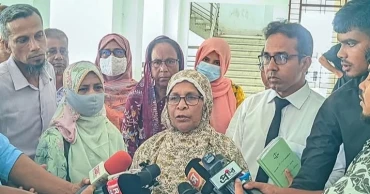
Man to die, two get life imprisonment for killing Rangpur journalist
A Rangpur court on Wednesday sentenced a man to death and two others to life imprisonment for killing journalist Mashiur Rahman alias Utshya Rahman in 2015.
Rangpur District and Sessions Judge Mashiur Rahman handed down the punishment.
The condemned convict is Rubel alias Hekram, while the two convicts sentenced to life imprisonment are Alin and Shubho Kumar. All three were tried in absentia.
The court also acquitted three people including Johiron Akter Jui, an alleged drug peddler and the alleged mastermind of the killing, as the charges brought against them could not be proved.
According to the prosecution, journalist Mashiur Rahman alias Utshya Rahman of the Dainik Juger Alo went missing on December 23, 2015, after leaving his home for work.
Later, his body was recovered from Dharma Das in Rangpur city, with his hands and legs tied to a tree.
Nurjahan Begum Nuri, mother of Mashiur, filed a case with Kotwali Police Station.
Police later submitted a charge sheet against eight people, while the court framed charges against six accused in the case.
21 hours ago

Bottled soybean oil price hiked by Tk 5 per litre to Tk 204
The government has increased the retail price of bottled soybean oil by Tk 5 per litre, raising it to Tk 204 from Tk 199.
The decision was taken following a price review meeting between business representatives and Commerce Minister Khandaker Abdul Muktadir at the Ministry of Commerce on Wednesday.
Speaking to reporters after the meeting, the Commerce Minister said prices of various commodities have surged in the international market due to adverse global condition.
"For products where Bangladesh is entirely import-dependent, a price hike at the source directly impacts overall import costs. Since soybean oil is completely import-dependent, the increase in international market prices has inevitably affected our domestic market," the minister said.
Earlier this year on April 26, soybean oil prices were revised upward by Tk 4 per litre, raising the retail price to Tk 199 from the prior rate of Tk 195.
22 hours ago