others

Pedestrian killed as bus crashes into Kurmitola General Hospital premises in Dhaka
A pedestrian was killed and several others were injured after a bus lost control and crashed into the premises of Kurmitola General Hospital in the capital on Sunday evening.
The accident occurred between 7:00 pm and 7:15 pm, according to police.
Witnesses said the bus was supposed to stop at the hospital gate after arriving from Mohakhali. However, it lost control, rammed into the wall of a gas control room adjacent to the entrance and broke through it.
The bus struck several people during the crash, leaving one person dead on the spot and injuring several others.
The injured were rescued and taken to Kurmitola General Hospital, where they received primary treatment.
The bus has been seized, police said, adding that the gas control room beside the gate was damaged in the crash.
Confirming the incident, Cantonment Police Station Officer-in-Charge (OC) Rakibul Hasan said the deceased was identified as Rafiqul Islam, a storekeeper at Radisson Blu Hotel.
"He was a pedestrian at the time of the accident. The body has been kept at the morgue," the OC said.
8 days ago
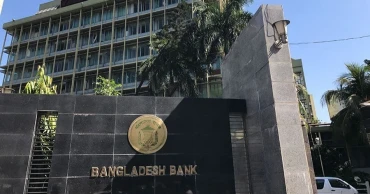
Central bank rules out separate probe into Shahabuddin Chuppu
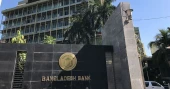
Bangladesh Bank has no plans to conduct a separate or targeted investigation into former president Md. Shahabuddin Chuppu, according to the central bank's Executive Director and Spokesperson Arief Hossain Khan.
Speaking to journalists at the central bank on Sunday, Arief Hossain Khan clarified that since Md. Shahabuddin served in the highest constitutional office of the country, no fresh probe targeting him individually is under consideration.
He noted, however, that if evidence links him to any financial irregularities during ongoing or past institutional investigations, appropriate decisions will be taken in accordance with existing laws and regulations.
"Institution-specific investigations are currently underway to ensure good governance across the country's banking sector," the spokesperson said, adding that regulatory oversight focuses on institutions rather than targeting specific individuals.
"If evidence of irregularities or involvement by any individual or entity is uncovered during these proceedings, action will be taken under the relevant laws," he said.
Md. Shahabuddin resigned from the presidency on Friday. On Sunday, he vacated Bangabhaban and moved to his personal residence in Gulshan, Dhaka.
8 days ago
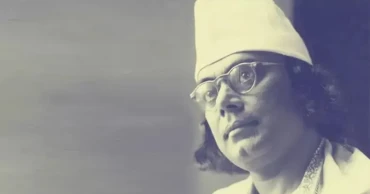
Use ‘Nazrul Barsho’ logo on official letters until May 2027: Cabinet Division
The Cabinet Division has directed all government offices to use the designated logo of ‘Nazrul Barsho’ in official letters until May 25, 2027.
A letter containing the instruction was sent on Sunday to the senior secretaries and secretaries of all ministries and divisions, divisional commissioners, deputy commissioners (DCs) and all Upazila Nirbahi Officers (UNOs).
The letter said the government has declared the period from May 25, 2026 to May 25, 2027 as ‘Nazrul Barsho’.
On the occasion, the Prime Minister unveiled the designated logo of ‘Nazrul Barsho’ on July 2.
It further said that, as part of efforts to uphold the ideals, spirit and literary works of national poet Kazi Nazrul Islam in the thoughts and actions of the nation and to observe ‘Nazrul Barsho’ with due dignity, the Ministry of Cultural Affairs requested the use of the designated logo on all official letters until May 25, 2027.
8 days ago

HC issues rule over 'excessive' charges of bKash, Nagad and Rocket
The High Court on Sunday issued a rule asking the authorities concerned to explain why the arbitrary and excessive service charges imposed on customers by mobile financial service (MFS) providers — bKash, Nagad and Rocket — should not be declared illegal and unconstitutional.
The court also asked the government to explain why it should not be directed to formulate a separate law to regulate mobile financial services.
The bench of Justice Md Mozibur Rahman Miah and Justice Rezaul Karim issued the rule following a public interest litigation petition filed by Supreme Court lawyer Obaidullah Al Mamun Shakib.
The proposed law would regulate service charges, ensure consumer protection and accountability, and make MFS charges reasonable, fair and affordable, particularly for low-income people and those without access to conventional banking services.
The Finance Secretary, the Posts and Telecommunications Secretary, the Governor of Bangladesh Bank and other concerned authorities have been asked to respond to the rule within four weeks.
8 days ago
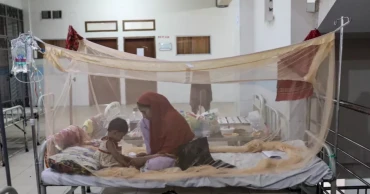
Death toll reaches 43 as 3 more die of dengue in 24 hrs
Three people died of dengue and 458 new patients were admitted to hospitals across the country in 24 hours until 8:00am on Sunday.
With the latest fatalities, the dengue death toll has risen to 43 in the country this year, according to the Directorate General of Health Services (DGHS).
The new deaths were reported in Dhaka South City Corporation, Khulna and Barishal divisions, it said.
During the reporting period, 458 patients were discharged from hospitals after recovery.
Since January 1, a total of 13,098 dengue patients have been admitted to hospitals across the country.
Of them, 11,937 have recovered and been discharged, while 1,118 patients are currently undergoing treatment.
8 days ago
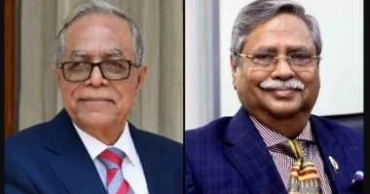
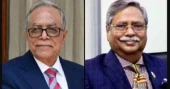
Complaints lodged against former presidents Hamid, Shahabuddin at ICT
Complaints have been filed with the International Crimes Tribunal (ICT) against former presidents Abdul Hamid and Mohammed Shahabuddin over crimes against humanity committed during their tenure.
Bangladesh Azad Party and the Rashtra Sanglap Forum, a platform, submitted separate complaints on Sunday.
In its complaint, Bangladesh Azad Party said the two former presidents failed to fulfill their constitutional duties in the face of enforced disappearances, murders and genocide committed while they held the highest constitutional office of the state, and indirectly supported those crimes by remaining silent.
After filing the complaint, leaders of Bangladesh Azad Party told reporters that although the two former presidents received salaries and allowances from taxpayers' money while in office they failed to properly discharge their constitutional responsibilities.
They alleged that neither the presidents protested against or played any effective role in preventing the enforced disappearances, murders, secret detention centres (Aynaghar) and other incidents that took place in the country at different times up to August 5, 2024.
They said the President, as the Supreme Commander of the Armed Forces, holds important constitutional powers.
However, they alleged that neither of the two former presidents took any initiative to protect the lives and property of the people or prevent such crimes by exercising those powers.
In a separate complaint, Al Noor Mohammad Ayas, central member secretary of the Rashtra Sanglap Forum (State Dialogue Forum), urged the tribunal to investigate Shahabuddin's alleged role in ordering or facilitating shootings, torture, killings and enforced disappearances during the July Uprising.
Ayas also called for an independent investigation into whether Shahabuddin bore any legal responsibility for or involvement in the 2024 national election, human rights violations during the July mass uprising.
8 days ago
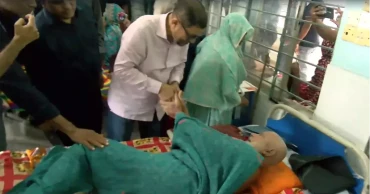
2 physicians suspended following surprise visit by health minister at govt hospitals in Satkhira
Health Minister Sardar Md. Sakhawat Husain on Sunday conducted surprise inspections at three government hospitals in Satkhira, suspending two doctors over prolonged absence from duty.
The suspended physicians, both female, were on the books of Tala Upazila Health Complex, and Satkhira Medical College and Hospital respectively.
The health minister visited Tala Upazila Health Complex, Satkhira Medical College Hospital and Satkhira Sadar Hospital from around 11:30 am.
During the visits, he spoke with patients to assess the quality of healthcare services and inquired about doctors' behaviour toward patients.
He also inspected ticket counters, operating theatres, wards, kitchens and store rooms to review the overall condition and management of the hospitals.
Besides, he ordered the suspension of night guard Mostafa over the alleged theft of an air conditioner from Tala Upazila Health Complex.
Expressing satisfaction with the quality of food served to patients after inspecting the hospital kitchen, the minister said maintaining cleanliness and ensuring quality patient care should remain priorities.
During the visit, Sharmin Akter, a visually impaired woman who completed her master's degree from Jahangirnagar University, sought employment from the minister.
Responding to her request, the health minister asked her to join the state-owned Essential Drugs Company Limited on the first day of next month.
Administrator of Satkhira Zila Parishad, Habibul Islam Habib, Deputy Commissioner Kawsar Aziz and other officials of the district administration were present during the inspections.
8 days ago
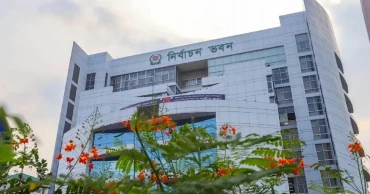
Presidential election: EC to seek Speaker’s appointment for schedule announcement
The Election Commission (EC) would seek appointment of the Speaker of the Jatiya Sangsad to discuss the Presidential election schedule, said EC senior secretary Akhtar Ahmed on Sunday.
“As per tradition, the Chief Election Commissioner meets the Speaker before the announcement of the Presidential election,” he said.
The EC Secretary disclosed the development to reporters after a meeting at the Nirbachan Bhaban in the city’s Agargaon area.
Now Barrister Kayser Kamal is serving as the acting Speaker as the Speaker Hafiz Uddin Ahmad took the charge as the acting President following the resignation of President Mohammed Shahabuddin on Friday last.
Article 54 of the Constitution provides that the Speaker shall discharge the functions of the President until a new President is elected. While the Speaker is acting as President, Article 74(3) provides that the Speaker's functions shall be performed by the Deputy Speaker.
The Election Commission held the meeting on Sunday to review the legal provisions relating to the presidential election and decided that the CEC would meet the Acting Speaker to discuss the next steps before the election schedule is announced.
According to the Presidential Election Act, 1991, the Election Commission must consult the Speaker before issuing the election schedule.
If Parliament is in session, the Commission is required to issue the election notification at least seven days before the polling date. If Parliament is not in session, the Commission, in consultation with the Speaker, must convene a meeting of Members of Parliament at least seven days before the election.
As part of the process, the Jatiya Sangsad Secretariat will send the list of MPs to the EC, which will prepare and publish the electoral roll for the presidential election before announcing the schedule.
The Article 123(2) of Constitution stipulates that an election to fill a vacancy caused by the death, resignation or removal of the President must be completed within 90 days of the vacancy.
Chief Election Commissioner AMM Nasir Uddin will act as the Returning Officer for the presidential election which will be held with direct votes of Members of Parliament.
Under the Presidential Election Act, a candidate's nomination paper must be proposed by one MP and seconded by another.
The candidate securing the highest number of votes will be declared elected by the CEC. In the event of a tie, the result will be determined by a lottery, and the CEC's declaration of the result will be final.
8 days ago
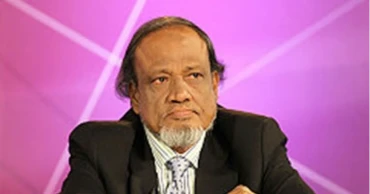
BNP's Rafiqul Islam Miah remains critical despite successful esophageal surgery
BNP Standing Committee member and former minister Rafiqul Islam Miah remains in critical condition despite undergoing successful esophageal surgery in a city hospital.
The surgery was conducted on Saturday by a medical board formed for his treatment at Evercare Hospital, said his personal political secretary Moksedur Rahman Abir on Sunday.
"The doctors successfully completed surgery on Sir's esophagus. He remains on life support and his condition is still critical," Abir told UNB.
He said the veteran BNP leader has been kept under doctors' observation for the next 72 hours. "The physicians have said it is too early to make any assessment. We have to wait," he added.
The two sons of the BNP leader Rafiqul Islam Miah have returned to Bangladesh from abroad.
He said Dr Zubaida Rahman, wife of Prime Minister Tarique Rahman, has been in regular contact with the medical team to monitor the veteran leader's condition.
On July 23, Rafiqul Islam Miah was placed on life support at Evercare Hospital after his health deteriorated.
The former minister was admitted to the hospital on July 21 and has been undergoing treatment under the supervision of specialist physician Farid Hossain.
8 days ago
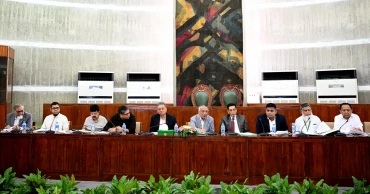
JS body reviews central bank’s monetary policy, eyes shift to inflation-targeting regime
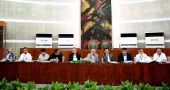
The Parliamentary Standing Committee on the Finance Ministry on Sunday held its first to review Bangladesh Bank’s monetary policy framework and discussed the future direction of monetary policy including a gradual transition from the existing interest rate-targeting framework to an inflation-targeting regime.
The meeting chaired by Committee Chairman Mushfiqur Rahman was held at the Jatiya Sangsad Bhaban.
At the meeting, Bangladesh Bank delivered a detailed presentation on its monetary policy, outlining the existing policy framework, its implementation and future priorities.
Following the presentation, the committee members held extensive discussions on the issues raised and exchanged views on the country’s monetary policy and financial sector.
According to the presentation, an appropriate monetary policy framework is indispensable for achieving the government’s vision of transforming Bangladesh into a trillion-dollar economy.
To support that goal, Bangladesh Bank highlighted the need for a gradual transition from the current interest rate-targeting monetary policy framework to an inflation-targeting framework.
The central bank noted that a number of emerging economies have successfully stabilised inflation in recent years by adopting inflation-targeting monetary policy frameworks.
Bangladesh could also move in that direction through the gradual adoption of a similar framework, it said.
As part of the proposed transition, the presentation suggested that the Bangladesh Bank Order, 1972 could be amended to make it more contemporary and better suited to the requirements of an inflation-targeting monetary policy regime.
The committee members discussed the presentation in detail and sought clarifications on various aspects of the proposed policy direction and the implementation of monetary policy.
They also exchanged views on issues relating to macroeconomic stability, inflation management and the role of the central bank in supporting sustainable economic growth.
Finance Minister Amir Khosru Mahmud Chowdhury attended the meeting as a member of the committee.
Chief Whip Md Nurul Islam, State Minister for Local Government, Rural Development and Cooperatives Mir Shahe Alam , and committee members Md Jalal Uddin, Moinul Islam Khan, Md Shahadat Hossain, Md Saiful Alam, Syed Zainul Abedin, and Md Abul Hasnat, also participated.
The meeting was also attended by the Secretary of the Financial Institutions Division, the Secretary of the Internal Resources Division, the Acting Chairman of the National Board of Revenue (NBR), senior officials of the Finance Ministry and its divisions, and officials of the Jatiya Sangsad Secretariat.
No formal recommendations or decisions were announced after the meeting.
8 days ago