others

Gun attack on Hadi: RAB arrests three more
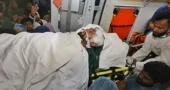
Members of the Rapid Action Battalion (RAB) have arrested three more people, including the wife and brother-in-law of suspected shooter Faisal Karim Masud, alias Daud Khan, in connection with the gun attack on Sharif Osman Hadi, an independent candidate for the Dhaka-8 constituency.
The arrestees are Faisal’s wife Begum Samia, his brother-in-law Shipu and Begum Maria.
RAB also recovered several bank cheques signed by Faisal Karim Masud and seized electronic devices from the arrestees.
With the latest arrests, the total number of detainees in the case has risen to six.
Hadi to be flown to Singapore on Monday: CA’s Press Wing
RAB Legal and Media Wing Deputy Director Major Lutful Haider said the arrests were made on December 14 based on secret information. The arrestees were later handed over to the police.
Earlier, on Sunday, RAB identified the motorcycle used in the attack and detained its registered owner from the Mohammadpur area of the capital. He was later produced before a court, which granted a three-day remand.
Independent candidate Sharif Osman Hadi, spokesperson of Inqilab Moncho, was critically injured in a gun attack at Purana Paltan Culvert Road on Friday afternoon while travelling by a rickshaw after Jum’a prayers.’
7 months ago

Bangladesh Polls: Permission must for social, religious events before electioneering
The Election Commission (EC) has allowed the celebration of the national and international days and arrangements of social and religious events during pre-campaign period with prior permission or consent from the returning officers concerned.
The directive was issued through a circular released on Sunday night (December 14, 2025) to ensure the maintenance of a conducive electoral atmosphere during the pre-election period.
The circular mentions that the schedule for the 13th parliamentary election and the referendum was announced on December 11, 2025, and the polls will be held on February 12, 2026.
According to the Section 18 of the Code of Conduct for Political Parties and Candidates in Parliamentary Elections Rule, 2025, the electioneering can be conducted from three weeks before the polling day until 48 hours prior to the start of voting, subject to compliance with the prescribed conditions.
Read more: UN briefs Bangladesh’s political parties on election commission support
“Outside the stipulated campaign period, national and international days can be observed as well as religious, social and similar events can be organised without hampering the electoral environment and in compliance with the code of conduct. However, prior consent or permission from the returning officer concerned must be obtained,” says the circular signed by EC Deputy Secretary Mohammad Monir Hossain.
The election campaign will start on January 22 and continue till 48 hours before the balloting period (7:30am on February 10), according to the schedule announced by Chief Election Commissioner AMM Nasir Uddin.
This circular was sent to all the 69 returning officers – Dhaka and Chattogram divisional commissioners, Dhaka, Chattogram and Khulna Regional Election Officers and 64 district deputy commissioners.
As per the schedule, the deadline for the submission of nomination paper is December 29, while the scrutiny of nomination paper is on December 30-January 4 and the last date for the withdrawal of candidature is January 20.
Read more: Bangladesh national election, referendum on Feb 12; schedule announced
The last date for submission of appeal against the decisions of the returning officers is January 11 and the appeals would be disposed of on January 12-18. The returning officers will publish the final lists of candidates and allocate electoral symbols on January 21.
The balloting will be held from 7:30am to 4:30pm without any break on February 12.
7 months ago

Youth shot to death by miscreants in Khulna’s Rupsa
A youth was shot dead by miscreants near the east side of the Rupsa Bridge in Chourasta area of Japusa in Rupsa upazila of Khulna district on Sunday night.
The deceased was identified as Sagar Sheikh, 30, son of Foyek Sheikh and a resident of Green Bangla Residential Area. He had run a cloth shop.
According to Rupsa police, local resident Abdur Rahman, hearing gunshots around 11pm, called the national emergency service 999 to report the incident.
The police were subsequently informed and rushed to the scene.
Sub inspector Saurav Das of Rupsa Police Station said he was on duty in the Japusa area and reached the spot after receiving the information.
Preliminary investigation suggest that Sagar had recently purchased land and built a new house in the area, which might have led to the killing, he suspected, saying that the motive and identity of the attackers are yet to be determined.
Officer-in-charge of the police station Abdur Razzak Mir said efforts were underway to detain those involved in the murder.
7 months ago

Scientific fish farming opening new avenues in food security: Fisheries Adviser
Fisheries and Livestock Adviser Farida Akhtar on Sunday said scientific sea bass (coral) fish farming is creating new opportunities for strengthening Bangladesh’s food security and fish supply system.
“I am very pleased to see that the entire process—from brood fish to egg production—is being conducted in a highly scientific manner. Its role as a hatchery is extremely important,” she said.
The adviser made the remarks after visiting a modern greenhouse-based mariculture hatchery in Kalatoli, Cox’s Bazar, said a handout.
She said the most encouraging aspect of the initiative is that such fish farming is not confined to coastal areas like Cox’s Bazar, but can also be implemented in regions such as North Bengal. As a result, fish production will increase across different parts of the country, further strengthening the national food supply system.
Farida Akhtar said the government would support the expansion of mariculture (marine fish farming) in various ways, but stressed that private sector initiatives would be the main driving force behind its growth.
“The greater the involvement of private entrepreneurs, the more technology development, employment generation and scientific fish production will be ensured,” she said.
She added that such modern and sustainable initiatives would make a significant contribution to Bangladesh’s blue economy in the future, helping to build a strong foundation for the country’s economy and food security.
Officials from the Ministry of Fisheries and Livestock, the Department of Fisheries and other relevant agencies were present on the occasion.
7 months ago
Hadi to be flown to Singapore on Monday: CA’s Press Wing
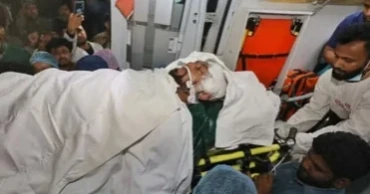
Sharif Osman Hadi, a leader of the July Uprising, a spokesperson for the Inqilab Moncho and an independent candidate for the Dhaka-8 constituency, will be flown to Singapore by air ambulance on Monday afternoon (December 15, 2025) for advanced medical treatment.
Over the past two days, the government has contacted several hospitals in Singapore, Thailand and Malaysia regarding Hadi’s treatment, said the CA's Press Wing on Sunday (December 14, 2025).
On the instructions of Chief Adviser Professor Muhammad Yunus, the decision was taken in an emergency conference call involving Cultural Adviser Mostofa Sarwar Farooki, Professor Dr Md Sayedur Rahman, Special Assistant to the Chief Adviser for Health Ministry Affairs, Evercare Hospital specialist Dr Zafar and Hadi’s brother Omar Bin Hadi, the Press Wing said.
It said all necessary arrangements, including the medical air ambulance, medical team and travel-related preparations, have already been completed.
Read more: What we know about at least one of Hadi's would-be assassins
Arrangements have also been made for his treatment at the Accident and Emergency Department of Singapore General Hospital.
Special Assistant Professor Dr Md Sayedur Rahman informed the Chief Adviser that Hadi’s physical condition has remained unchanged.
The Press Wing said all expenses related to Hadi’s treatment will be borne by the state, while the Chief Adviser has instructed the authorities concerned to keep his health condition under constant observations.
The Chief Adviser has also sought prayers from people for Hadi’s speedy recovery.
Read more: NBR freezes bank accounts of Hadi’s suspected attacker Masud and his firm
Osman Hadi was shot and injured by assailants in the capital’s Bijoynagar area at noon on Friday, triggering widespread concerns and condemnation.
7 months ago

Dialogue urges parties to prioritise rights of women and children in election manifestos
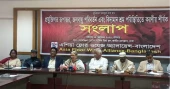
A high-level dialogue held in Dhaka on Sunday urged political parties to prioritise women’s and children’s rights in their election manifestos.
Seven leading national and international organisations attended the event.
Organised under the banner of the Coalition for Equality and Justice, the event convened political leaders, civil society representatives, development practitioners and members of the media for a collective push toward a more inclusive national agenda ahead of the upcoming National Parliament Election.
During the event, the coalition formally handed over its proposed position paper on women’s and children’s rights to representatives of political parties, urging its integration into their electoral commitments.
The dialogue forms part of the coalition’s wider effort to strengthen collaboration between civil society and political actors, emphasising that political commitments must translate into concrete policy action and sustained investment to ensure a fairer, more resilient and inclusive future for women and children in Bangladesh.
The coalition comprising Manusher Jonno Foundation, Breaking the Silence, JAAGO Foundation, Save the Children in Bangladesh, WaterAid Bangladesh, Plan International Bangladesh and Oxfam in Bangladesh was established to ensure that the lived experiences, needs and aspirations of women and children are meaningfully reflected in political agendas.
Shaheen Anam, Executive Director of Manusher Jonno Foundation, said that Bangladesh has made notable progress in areas such as gender parity in primary education, maternal and child health, and poverty reduction. However, without sustained political commitment and
Senior management representatives from Oxfam in Bangladesh, Save the Children in Bangladesh, WaterAid Bangladesh, Breaking the Silence, Plan International Bangladesh and the JAAGO Foundation shared their reflections, highlighting the growing challenges faced by women and children as a result of climate shocks, economic pressures, shrinking civic space and entrenched social norms.
They called for stronger enforcement of laws, increased investment in public services, expanded social protection for marginalised families and enhanced accountability mechanisms to ensure that commitments translate into tangible change.
The speakers emphasised that political parties must adopt rights-based, evidence-driven approaches and place women and children at the centre of national development priorities.
7 months ago

258 factories shut in a year leaving 100,000 jobless: AFWA
At least 258 factories shut down over the past year, leaving more than 100,000 workers unemployed and heightening social and economic risks, according to a report by the Asia Floor Wage Alliance (AFWA).
Amrin Hossain Annie, Gender Officer of Bangladesh Nari Progati Sangha, presented the findings at a dialogue titled “Actions Needed amid Technological Transition, Climate Change and Existing Labour Conditions” held at the National Press Club on Sunday.
Presided over by labour leader Abul Hossain, the function was addressed, among others, by economist Prof MM Akash, Joint convenor of Sramik Karamchari Oikya Parishad Abdul Quader Howlader, President of Bangladesh Mohila Parishad Fouzia Moslem and Bangladesh Representative of AFWA Arifur Rahman.
Speakers said the combined impact of technological transformation, climate change and fragile labour conditions had pushed the garment sector into a more complex and uncertain reality. They stressed the need for a coordinated roadmap integrating technology, climate resilience and labour rights to overcome the ongoing crisis.
Amrin Hossain Annie said there was a clear disparity between the total profits generated by the garment industry and the wages received by workers. Despite Bangladesh’s critical position in the global supply chain, workers’ wages have yet to reach a living standard, she noted. Production costs and international competition are often shifted onto workers, limiting improvements in their quality of life.
Currently, nearly four million workers are employed in the garment sector, more than 60 percent of them women. While women’s participation in the workforce is a major achievement for economic development, their access to safe employment, gender-sensitive workplaces and decision-making processes remains limited. Political instability, declining buyer confidence, export market competition, power and energy shortages, and the global economic slowdown have further deepened uncertainty in the sector, she added.
Economist Professor MM Akash said resolving the crisis required coordinated action, including the declaration and enforcement of a humane, living national minimum wage. No worker’s wage should fall below the poverty line, he said, calling for rationing systems, training centres and the right to form trade unions across all sectors.
He urged labour organisations to unite on a common platform to strengthen workers’ solidarity.
In his closing remarks, labour leader Abul Hossain said resolving the industry’s problems required the participation of all stakeholders, including workers, owners and the government.
He emphasised the need to address low wages and wage discrimination and to ensure healthy and safe working conditions in factories.
7 months ago
Action on Sports Ministry graft, time permitting: Asif Nazrul
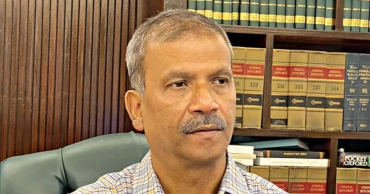
Newly appointed Youth and Sports Adviser Dr Asif Nazrul on Sunday said action will be taken against corruption or irregularities in the Youth and Sports Ministry if there is any scope to act.
“Two months is a very short time, yet I have set two priorities. One of them is to take steps against any form of corruption or irregularity if I get scope,” he told journalists during an introductory meeting with the ministry officials at its conference room at the Secretariat.
Adviser Asif Nazrul was appointed to lead the Youth and Sports Ministry after the resignation of its adviser Asif Mahmud.
Asif Nazrul said he was supposed to take charge on his first day with great enthusiasm and interest. “But now I could not say I am assuming responsibility with a joyful mind due to the shooting of Osman Hadi and the overall situation prevailing in the country afterward.”
The adviser praised his predecessor Asif Mahmud saying he was a very successful adviser who did a lot of work, especially in the sports sector.
He said the country has achieved several rare successes in sports under Asif Mahmud’s leadership that had not been achieved before.
The adviser also mentioned the Youth Festival Fair as a very good programme and said he would maintain the continuity of the work done earlier while also looking into what new initiatives could be taken.
He said he would try to activate stadiums outside Dhaka as well as various offices of the ministry in different districts.
7 months ago

Chevron CSR program restores mobility for 60 disabled persons in Sylhet
The 'Restoring Mobility: Artificial Limb Support' initiative, a key component of the SMILE project supported by Chevron Bangladesh, concluded successfully in Sylhet, providing life-changing prosthetic and orthotic devices to 60 beneficiaries.
The closing ceremony, held at a hotel in Sylhet, marked the culmination of the intervention implemented in collaboration with the Jalalabad Disabled Rehab Centre and Hospital (JDRCH). The project specifically targeted individuals from Sylhet and Nabiganj upazilas who had long struggled with physical disabilities and lacked access to affordable rehabilitation services.
The event drew high-profile attendees, underscoring the strong public-private partnership behind the effort. The Additional Secretary of Coordination & Monitoring, Energy and Mineral Resources Division Md. Abdul Mannan was present at the event as the Chief Guest.
Eric M. Walker, Managing Director and President, Chevron Bangladesh; Muhammad Imrul Kabir, Director, Corporate Affairs, Chevron Bangladesh; A K M Arif Akter, Head of Social Investment, Chevron Bangladesh; Helal Hussain, Country Director, Swisscontact; and Rtn. PP Engr. Shoaib Ahmed Matin, Chairman, Board of Trustees, JDRCH, were present on the occasion.
The collaboration between Chevron Bangladesh, Swisscontact, and JDRCH was hailed as a powerful model for driving resilient and inclusive community development.
Impact beyond medical assistance, the chief guest, Md. Abdul Mannan, highlighted that the artificial limb support goes far beyond medical aid, emphasizing its "broader social significance."
“I sincerely appreciate Chevron Bangladesh, Swisscontact and JDRCH, whose collective partnership and expertise have improved mobility, and hope for persons with disabilities, demonstrating the power of collaborative action in creating meaningful societal change," he said.
Eric M. Walker echoed this sentiment, noting that nearly 80 percent of people have limited access to such specialized support.
He stated, "Every step taken by these beneficiaries is a strong step toward a better tomorrow."
Helal Hussain of Swisscontact stressed the economic and social empowerment achieved: "This initiative was impactful and went beyond just mobility, it enabled them to return to work, continue education, actively engage in social life, and contribute economically while fostering greater inclusion within their communities.”
Restoring Dignity and Livelihoods Muhammad Imrul Kabir reiterated Chevron's long-term commitment to Bangladesh, which extends beyond energy partnership.
He noted that the SMILE project supports 9 out of the 17 UN Sustainable Development Goals, including health, education, and inclusion for people with disabilities.
The most moving part of the ceremony was the heartfelt testimonies from beneficiaries, who spoke about regaining independence and returning to work, education, and household responsibilities.
The provision of prosthetic devices has stabilized household incomes and boosted personal confidence, creating a positive ripple effect that strengthens families and contributes to broader socio-economic development, the release concluded.
Chevron Bangladesh and Swisscontact affirmed their continued efforts to improve livelihoods through sustainable and impactful development initiatives.
7 months ago
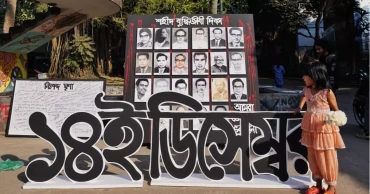
'Martyred Intellectuals Day' observed with due solemnity
Bangladesh on Sunday observed the Martyred Intellectuals' Day paying rich tributes to a galaxy of intellectuals systematically killed by Pakistani occupation forces and their local collaborators just before the end of the Liberation War.
Marking the day, President Mohammed Shahabuddin paid homage to the nation's intellectuals at the Martyred Intellectuals Memorial in Mirpur at 7am.
Later, he stood there silently for a while.
Followed by the President, Chief Adviser Professor Muhammad Yunus also paid tribute to the nation's finest intellectuals and observed a silence for a while there.
Family members of the martyred, freedom fighters and people from all walks of life paid tributes to the martyred intellectuals by placing wreaths at the memorial in Mirpur and Rayerbazar Killing Ground in Mohammadpur.
The government, socio-cultural, political organisations and different public universities observed the day with elaborate programmes.
Dhaka University observed the Martyred Intellectuals Day through a series of programmes.
On this occasion, black flags were hoisted at the Vice-Chancellor’s residence and other important buildings of the university.
Leaders and activists of different political and social organisations also paid homage to the martyred intellectuals at Mirpur Martyred Intellectuals' Graveyard.
Special doa and munajat are offered at mosques, temples and churches marking the day.
Bangladesh Television and private television channels broadcasted special programmes highlighting the significance of the day.
National dailies also published special supplements marking the day.
On this day in 1971, some of the country’s renowned academicians, doctors, engineers, journalists, artists, teachers and other eminent personalities were dragged out of their homes, blindfolded and taken to unknown places.
Their bodies were later found at Rayerbazar, Mirpur and some other killing fields in the capital.
Pakistani occupation forces and their local collaborators committed the cold-blooded mass murder to cripple the emerging Bangladesh intellectually.
Among the martyred intellectuals are Prof Munier Chowdhury, Dr Alim Chowdhury, Prof Muniruzzaman, Dr Fazle Rabbi, Sirajuddin Hossain, Shahidullah Kaiser, Prof GC Dev, JC Guha Thakurta, Prof Santosh Bhattacharya, Mofazzal Haider Chowdhury, journalists Khandaker Abu Taleb, Nizamuddin Ahmed, SA Mannan (Ladu Bhai), ANM Golam Mustafa, Syed Nazmul Haq and Selina Parvin.
7 months ago