others
Interim govt formulated Bangladesh’s best labour law ever: Adviser Sakhawat
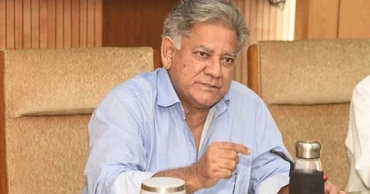
Labour and Employment Adviser Brigadier General (retd) M Sakhawat Hussain on Sunday said the labour law enacted under the interim government is the best Bangladesh has ever had, compared to all previous labour laws in the country’s history.
“Considering all labour laws in Bangladesh’s history, it was not possible to have a better law than the one enacted during the interim government,” he said.
Speaking at a programme organised by the Citizen’s Platform at city’s Agargaon, Sakhawat said major changes were brought to the Bangladesh Labour Act based on the recommendations of the Labour Reform Commission.
“While there may be frustration over other reform commissions, we have introduced significant changes to the Labour Act following the labour reform commission’s recommendations. This law can truly be described as worker-friendly,” he said.
Sakhawat said conflict of interest had long been a major obstacle to formulating a strong labour law, adding that although the law could have been improved further, the newly enacted law is the best possible within the limited time.
The adviser said business leaders had accused him of prioritising workers alone. “That allegation is true. This labour law has been prepared keeping workers’ rights in mind. Chief Adviser gave me full freedom in drafting this law,” he said.
The adviser said the International Labour Organization (ILO) has praised the new labour law, describing it as an ‘eye-opening law’. “The ILO said they never expected such a strong labour law from Bangladesh.”
Expressing frustration over the state of public administration, Sakhawat said nearly every ministry is facing severe institutional collapse and has yet to fully recover.
“In the few months I have worked across different ministries, I found all of them in a collapsed administrative state. Massive misappropriation of public funds takes place here. Being part of the cabinet, there are many things I want to say but cannot,” he said.
The adviser expressed optimism that reforms initiated during the interim government’s tenure would be completed by an elected government.
“When the interim government assumed office, the country was in a shattered state. It was not possible for this government to fix everything under such circumstances—this limitation cannot be denied,” he added.
7 months ago
Bangladeshi peacekeepers killed, injured in Sudan identified
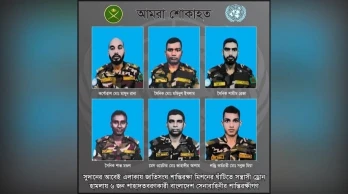
The Inter-Services Public Relations (ISPR) on Sunday released the identities of Bangladeshi peacekeepers killed and injured in a terrorist drone attack on a UN peacekeeping base in Sudan’s Abyei region.
The deceased peacekeepers are Corporal Md Masud Rana of the Army Service Corps from Natore; Soldier Md Mominul Islam (Bir) of Kurigram; Soldier Shamim Reza (Bir) of Rajbari; Soldier Shanta Mondol (Bir) of Kurigram; Mess Waiter Mohammad Jahangir Alam of Kishoreganj; and Laundry Worker Md Sabuj Mia of Gaibandha.
Those injured are Lt Col Khondkar Khalekuzzaman, of the Ordnance Corps from Kushtia; Sergeant Md Mostakim Hossain (Bir) of Dinajpur; Corporal Afroza Parvin Iti of Signals from Dhaka; Lance Corporal Mohibul Islam of EME from Barguna; Soldier Md Mezbaul Kabir (Bir) of Kurigram; Soldier Umme Hani Akter of Engineering from Rangpur; Soldier Chumki Akter of Ordnance from Manikganj; and Soldier Md Manajir Ahsan (Bir) of Noakhali.
The attack took place at the Kadugli Logistic Base under the UN peacekeeping mission between 3:40pm and 3:50pm (local time) on Saturday.
According to the ISPR, a separatist armed group targeted the base by drones while Bangladeshi peacekeepers were on duty.
The injured are receiving treatment while Mezbaul underwent a surgery and remains under close observation, according to the ISPR.
The rest of the injured were airlifted for advanced medical care and they are out of danger.
Condemning the ‘heinous terrorist attack’ strongly, the Bangladesh Army said the sacrifice of the fallen peacekeepers would remain a proud testament to Bangladesh’s commitment to global peace.
It also expressed deep condolences for the bereaved families and wished the injured a speedy recovery.
7 months ago

Guterres condemns drone attack in Sudan that killed Bangladeshi peacekeepers
UN Secretary-General António Guterres has strongly denounced the “horrific” drone attacks on a UN base in Sudan that killed six Bangladeshi peacekeepers and injured eight others.
He expressed his deepest condolences to the Government and people of Bangladesh as well as to the families of those who lost their lives and wished a speedy recovery to the wounded.
“Attacks targeting United Nations peacekeepers may constitute war crimes under international law and I remind all parties to the conflict of their obligation to protect UN personnel and civilians,” Guterres said in a statement.
“Attacks as the one today in South Kordofan against peacekeepers are unjustifiable. There will need to be accountability.”
The drone strikes targeted the UN logistics base in Kadugli, Sudan, killing six and injuring eight peacekeepers, all members of the Bangladeshi contingent serving with the UN Interim Security Force for Abyei, known as UNISFA.
The oil-rich Abyei region lies between Sudan and South Sudan and has remained disputed since the two countries separated in 2011.
Kadugli is the capital of South Kordofan state, where intense fighting has continued between the Sudanese Armed Forces and the paramilitary Rapid Support Forces, who have been locked in conflict for nearly three years.
The Secretary-General also voiced solidarity with peacekeepers serving in high-risk missions worldwide.
“I reiterate my call on the warring parties to agree on an immediate cessation of hostilities and to resume talks to reach a lasting ceasefire and a comprehensive, inclusive and Sudanese-owned political process,” he said.
In a separate social media post, the head of UN Peacekeeping, Jean-Pierre Lacroix, said he was “shocked by today’s horrific drone attack” and stressed that “UN peacekeepers are not a target,” adding that “this attack may constitute a war crime.”
UNISFA was set up in 2011, with a mandate that includes strengthening the Abyei Police Service, monitoring and verifying the redeployment of forces, supporting humanitarian assistance, and protecting civilians.
Nearly 4,000 military and police personnel, along with civilian staff, are currently serving with the mission.
7 months ago

Politicians, bureaucrats failed to learn from July Uprising: Iftekharuzzaman
Transparency International Bangladesh (TIB) Executive Director Iftekharuzzaman on Sunday said politicians and bureaucrats have failed to draw lessons from the July 2024 mass uprising.
“Although the interim government formed several task forces, including six major commissions, with the aim of reforms, the key reforms could not be implemented due to bureaucrats. The first instance of mob violence in Bangladesh after July was created by bureaucrats at the Secretariat — within a week of the previous government’s fall, a mob situation emerged at the Secretariat at their behest. They are controlling everything,” he said.
Iftekharuzzaman was speaking at an event organised by the Citizen’s Platform at city’s Agargaon.
Iftekharuzzaman, who also heads the Anti-Corruption Reforms Commission, said the government has considered only three of the 47 recommendations submitted by him and the commission, while the fate of the remaining proposals remains unknown.
“We proposed publishing the Anti-Corruption Commission’s report every six months, which would have enhanced transparency and accountability. But under pressure from bureaucrats, this proposal was not accepted. Most proposals capable of bringing reforms were dropped in this manner,” he said.
Speaking on the Human Rights Commission ordinance, he said the government moved in the opposite direction of the recommendations made by the commission, adding that the ordinance has now become hostage to bureaucratic control.
Politicians also face growing security concerns alongside citizens: Debapriya
“Bangladesh was on the verge of getting a near-international-standard human rights law. But the entire process was ruined solely due to the mindset of bureaucrats,” he said.
Alleging that the interim government resorted to secrecy over publishing the draft ordinance, Iftekharuzzaman said, “The government was repeatedly pressured to disclose the draft ordinance. But so far, it has not made any progress on the recommendations.”
He also expressed concern that the Police Reform Commission may never see the light of day, citing the composition of the commission with several retired police officials and bureaucrats as a major reason.
“I am an optimistic person. But it is not possible for us to besiege the Secretariat even if we want to. July was a major opportunity for positive change — but we failed to utilise it,” he added.
7 months ago
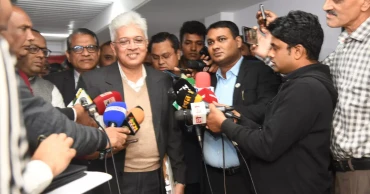
Adilur vows to resist ‘remaining fascist forces’ at any cost
Industries and Local Government Engineering Department (LGED) Adviser Adilur Rahman Khan on Sunday said the government would resist what he termed ‘remaining fascist forces’ in the country at any cost.
He made the remarks at his office at the Local Government Ministry in the Secretariat on his first working day after assuming his new responsibilities.
Replying to a question about the political environment ahead of the upcoming elections and the prospects of ensuring a fair atmosphere, Adilur said, “We will suppress the remaining fascist forces in the country and resist them. This government will stand by the July revolution fighters to protect the interests of the people of Bangladesh.”
Speaking about his ministry’s activities ahead of the polls, he said there was a limited scope for undertaking major initiatives as the election schedule had already been announced.
“Other than routine work, there is not much scope for new initiatives. We will try to carry out day-to-day activities and ensure that people receive the services they are entitled to,” he added.
Asked about his plans after taking charge from the previous adviser, Adilur said discussions would be held with all concerned before deciding on future steps.
“We will sit together, discuss matters and then decide the way forward. The two ministries have been operating in a certain manner, and we will try to continue that process,” he said.
When asked about the shooting of an aspiring election candidate following the announcement of the election schedule, the adviser declined to comment.
7 months ago

Nat’l Human Rights Commission Ordinance hostage to bureaucratic capture: TIB
Transparency International Bangladesh (TIB) has expressed deep concern and disappointment over the ‘conspiratorial fundamental changes’ to the National Human Rights Commission Ordinance 2025.
The process of forming the Commission under bureaucratic control has completely destroyed the possibility that had emerged for constituting the Commission independently of government influence, it said in a statement on Saturday.
The organisation cited the fact that stakeholders involved in drafting the ordinance were kept in the dark, which illustrates how bureaucratic rigidity and even sabotage are holding the long-anticipated reform process hostage.
The Cabinet Secretary was included on the Selection Committee solely to confirm government control of the process by maintaining authoritarian practices, said TIB.
The organisation described these developments as embarrassing examples of the government’s surrender to bureaucrats with anti-reform interests.
TIB Executive Director Dr. Iftekharuzzaman said, “After the National Human Rights Commission Ordinance was published in gazette form, TIB and other stakeholders—despite identifying several weaknesses—had hoped that an opportunity had emerged to free the Commission from bureaucratic capture and to constitute it in line with public expectations and international standards. However, within just one month, on 9 December, the very Selection Committee that could have served as the cornerstone for preventing bureaucratic abuse of power has been transformed into an instrument of government control. The Human Rights Commission and other commissions in Bangladesh have long been ineffective due to government influence, and this change in the Selection Committee is essentially not an isolated incident but rather an example of a conspiratorial attempt to maintain the same process.”
Describing this bureaucratic takeover of the Selection Committee—and the government’s acquiescence to it—as deeply disappointing, Dr. Iftekharuzzaman said that the amendment includes a commendable provision to establish a National Preventive Mechanism to prevent cruel, inhuman, or degrading treatment.
The inclusion of the Cabinet Secretary in the Selection Committee alone effectively undermines all prospects of the independence, impartiality, and effectiveness of the National Human Rights Commission and the very spirit of that provision.
Dr. Zaman said replacing the obligation to inform the Commission of actions taken in cases of non-compliance with its orders with permissive wording such as “may be informed,” along with the addition of several similar provisions, has trampled all the positive potential that the ordinance was expected to deliver.
TIB calls for election manifesto commitments to curb the misuse of powers and religion in politics
TIB calls upon the government to immediately withdraw from this embarrassing position of surrender to a ‘sabotage-driven, anti-reform bureaucratic clique’ to repeal all imposed provisions in the ordinance—particularly the decision to include the Cabinet Secretary in the Selection Committee—and to completely overhaul the National Human Rights Commission Ordinance anew.
It may be noted that Ordinance No. 62 for the formation of the National Human Rights Commission, which was published in the Gazette on 9 November 2025, did not include any representative of the bureaucracy in the Selection Committee as stipulated in Article 7.
This demonstrated the government's and all stakeholders’ common understanding of the long-standing, difficult interaction with the National Human Rights Commission's inefficiency.
However, in the subsequently amended Ordinance No. 74, published in the Gazette on 8 December, the Cabinet Secretary was unilaterally included in the Selection Committee—without informing any of the stakeholders involved in the drafting process—solely to ensure bureaucratic dominance over the committee, it added.
7 months ago

‘In-Country Postal Vote’ registration to continue till Dec 25: EC
Government officials and employees staying outside their respective voter areas will be able to register for postal voting for the upcoming election till December 25, the Election Commission (EC) said on Sunday.
Director (PR) of the Election Commission Ruhul Amin Mollik said that all government officials and employees residing outside their voter constituencies, along with civilian and military personnel engaged in election duties can complete registration through the ‘Postal Vote BD’ app.
The registration will remain open every say from 8am to 8pm until December 25 for participation in the 13th parliamentary election and referendum, he said.
Mollik said the ‘In-Country Postal Vote’ (ICPV) system will also apply to election-duty officials and employees, government servants posted outside their constituencies and voters currently under lawful custody.
All eligible voters under these categories must complete registration on the app within the stipulated time-frame to cast their votes, he informed.
The EC official added that officers and employees working across all government ministries, divisions, and their subordinate agencies, directorates, and departments are being encouraged to participate in voting through the IT-supported postal ballot system.
Mollik noted that government officials and employees will be identified using the iBAS++ system, which remains inactive from 8:00 pm to 8:00 am. The registration, therefore, must be completed outside those hours, he said.
Postal voter registration for govt staff open until Dec 25
On December 11 last, Chief Election Commissioner AMM Nasir Uddin announced the schedule to arrange the 13th parliamentary election and a referendum on the July National Charter (Constitutional Reform) Implementation Order 2025 simultaneously on February 12 (Thursday) in 2026.
Though the postal balloting system has been in the laws for a long time, it was never practised in the previous elections.
This is the first time the EC has introduced an IT-supported hybrid postal balloting system, enabling expatriates, government staff, polling personnel, and the persons who will be in the legal custody to exercise their franchise through a combination of digital registration and manual voting.
As of 1:45 pm on Sunday, a total of 373,971 expatriate Bangladeshi voters from different countries across the world registered through a mobile app, ‘Postal Vote Bd’ since November 18 last to vote in the upcoming election.
The out-of-country voting (OCV) registration process will continue till December 25.
7 months ago
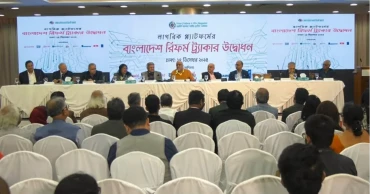
Politicians also face growing security concerns alongside citizens: Debapriya
Amid recent attacks on political figures, politicians in Bangladesh are now facing serious security concerns alongside ordinary citizens, said Centre for Policy Dialogue (CPD) Distinguished Fellow and Citizen’s Platform Convener Debapriya Bhattacharya on Sunday (December 14, 2025).
Speaking at the inauguration of the Bangladesh Reform Tracker, organised by the Citizen’s Platform at Agargaon in the capital, Debapriya said citizens across the country are suffering from acute insecurity, with politicians now joining that list.
“Citizen’s Platform has travelled across districts and identified a common problem—citizens are facing severe insecurity. Now politicians have joined them,” he said.
Referring to the recent attack on Inqilab Mancha General Secretary Osman Hadi, Debapriya said, “We do not think this attack will be the last on politicians. Violence against women, attacks on minorities, citizens’ safety and now politicians’ security have all become major issues.”
On the ongoing reform process, he said prolonged democratic deficits during previous governments had led to the emergence of a powerful oligarchic society, which now poses a major obstacle to reforms.
Read more: BNP leaders meet CA; Tarique's security might be agenda
Breaking this cycle of non-competitive politics and economy and advancing reforms remains a major challenge for present-day Bangladesh, he added.
Appreciating the interim government, Debapriya said that while reforms were undertaken during previous governments, this is the first time an interim government has been formed with reform as its core objective.
“The interim government has formed several commissions and taskforces as part of the reform initiative, which deserves appreciation,” he said.
He, however, said the initial momentum of the reform process has weakened.
“There has been a lack of consistent transparency in the reform process. Poor coordination within the government and inadequate public outreach on reforms have slowed the pace,” he said.
Read more: Govt ready to provide special security to Tarique Rahman: Home Adviser
Debapriya also pointed out that the absence of a political manifesto has made the implementation of reforms more challenging.
Speaking about the Reform Tracker, he said citizen participation is essential for successful reforms.
“Without meaningful citizen engagement, vested groups may capture reforms for their own interests. The Reform Tracker has been launched to keep citizens continuously connected with the reform process,” he said.
“Planning reforms is not as difficult as implementing them. Without alignment between theory and practice, reforms cannot succeed,” Debupriya added.
In a presentation at the event, CPD Additional Director (Research) Towfiqul Islam Khan said the website would allow anyone to track the progress of reforms across various issues.
Read more: Bangladesh shifts fiscal gears as bank debt falls
“This will ensure citizens remain actively engaged with the reform process and its implementation,” he said.
7 months ago

NBR freezes bank accounts of Hadi’s suspected attacker Masud and his firm
The National Board of Revenue (NBR) has frozen the bank accounts of Faisal Karim Masud, who is suspected of attacking Sharif Osman Hadi.
Hadi is the spokesperson of Inquilab Mancha and a probable independent candidate for the Dhaka-8 constituency.
Read more: CID freezes Tk 3.28 crore of former Sirajganj-1 MP Shakil, his family
Besides, the bank accounts of Masud’s IT firm, Apple Soft IT Limited, have also been frozen.
An NBR source confirmed that letters instructing all banks to freeze the accounts of Faisal Karim Masud and his organisation were issued on Sunday morning.
Masud is also a member of the Bangladesh Association of Software and Information Services (BASIS).
Read more: What we know about at least one of Hadi's would-be assassins
7 months ago
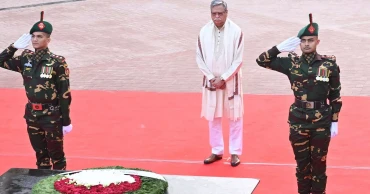
President Shahabuddin, Prof Yunus pay tributes to martyred intellectuals
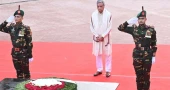
President Mohammed Shahabuddin and Chief Adviser Prof Muhammad Yunus on Sunday paid rich tributes to the martyred intellectuals, marking the Martyred Intellectuals Day.
President Shahabuddin paid tributes to the martyred intellectuals by placing a wreath at the Martyred Intellectuals Memorial around 7.04 am.
7 months ago