others
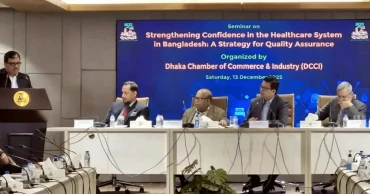
USD 5 billion spent abroad annually due to healthcare gaps in Bangladesh: DCCI
Bangladesh loses around USD 5 billion every year as patients seek medical treatment abroad, mainly due to a lack of trust in the domestic healthcare system, inaccurate diagnoses and weak service management.
The Dhaka Chamber of Commerce and Industry (DCCI) revealed the information at a seminar in the capital on Saturday (December 13, 2025).
The issue was highlighted in the keynote paper presented at the seminar titled 'Building Trust in Bangladesh’s Healthcare Sector: Ensuring a Strategic Framework for Quality Control', held at the DCCI building in Motijheel.
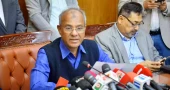
United Hospital Managing Director Malik Talha Ismail Bari, who presented the keynote, said Bangladeshis spend nearly USD 5 billion annually on overseas treatment, with India being the top destination.
Read more: Don’t settle for a weak health savings account
He said around 52 percent of Indian medical visas are issued to Bangladeshi patients. In 2024 alone, about 482,000 Bangladeshi patients received medical treatment in India. Thailand, Singapore and Malaysia follow India as preferred destinations.
The keynote paper pointed out that a lack of trust among patients and their families, doubts over proper diagnosis, sudden increases in hospital bills, fear of hidden charges, concerns over counterfeit medicines and substandard equipment push many to believe that seeking treatment abroad is a safer choice.
Several major challenges stand in the way of improved healthcare services in Bangladesh, the paper said. Government health expenditure remains below 1 percent of GDP, while patients bear about 73 percent of total healthcare costs out of pocket.
Only 2.5 percent of the population is covered by health insurance, and nearly 80 percent of hospitals lack advanced diagnostic equipment.
Read more: ACC uncovers major irregularities at Sreepur Upazila Health Complex
Although the private sector provides around 60 percent of healthcare services, high costs and inconsistent quality remain major concerns, it added.
The paper also cited poor service quality, skill gaps among healthcare workers, a shortage of specialist doctors and limited availability of advanced treatment as key reasons forcing patients to seek care abroad.
Other issues include the absence of pre-fixed treatment costs, inadequate post-treatment care for complex diseases, lack of a unified health information system, weaknesses in monitoring and procurement processes, and overall low confidence in the healthcare system among patients and their families.
Read more: MMCH doctor suspended over misconduct with health DG
Bangladesh’s public healthcare spending is the lowest in South Asia, with per capita expenditure standing at only Tk 1,070. Nearly 49 percent of the population still lacks access to quality healthcare, while government healthcare initiatives remain insufficient to meet public needs, the paper noted.
The keynote also projected that Bangladesh’s healthcare market would reach USD 14 billion in 2025 and expand to around USD 23 billion by 2030–2033, nearly doubling in size.
At the same time, the medical devices market is growing rapidly and is expected to exceed USD 820 million in 2025, up from USD 442 million in 2020, driven largely by rising import demand.
DCCI said the strong growth of the healthcare sector could create new opportunities for both the economy and health services, recommending increased public and private investment in the sector.
The seminar was chaired by DCCI President Taskeen Ahmed, while Bangladesh Diabetic Association President National Professor AK Azad Khan attended as the chief guest.
Read more: Nuvista Pharma joins hands with BGMEA-Olwel to provide digital healthcare for RMG workers
7 months ago

IFAD approves $51.4m co-financing for climate-resilient project in Bangladesh
The Executive Board of the International Fund for Agricultural Development (IFAD) has approved $51.4 million in financing as IFAD’s contribution to the US$211.7 million project in Bangladesh.
This new investment will enhance climate resilience, strengthen food security, and promote rural entrepreneurship for approximately 1.1 million people living in some of the country’s most climate-vulnerable regions.
The approval came during its 146th session held on December 9-10, IFAD said on Saturday.
The Growth for Climate Resilient and Environmental Entrepreneurship and Nutrition (GREEN) project will be implemented over six years, from 2026 to 2031, in the Haor wetlands, Coastal Belt, High Barind, and River Char regions.
By supporting smallholder farmers, rural microenterprises, and young entrepreneurs, the project will foster adaptive capacities to climate change, stimulate diversified and resilient livelihoods, and accelerate the development of sustainable rural enterprises.
The project will be executed by the Financial Institutions Division of the Ministry of Finance and implemented by Palli Karma Sahayak Foundation (PKSF).
Strategic oversight will be ensured through a national steering committee comprising the Finance Division, the Economic Relations Division, and PKSF thereby reinforcing strong governance and alignment with national priorities.
“The GREEN project builds on the long-standing partnership between IFAD and the government of Bangladesh, and our close collaboration with PKSF, to enhance rural livelihoods and expand income opportunities for small producers through inclusive, climate-aware financing and environmentally responsible growth,” said Valantine Achancho, IFAD Country Director for Bangladesh.
“This initiative represents a new generation of investment that connects climate adaptation, agroecological practices and market-responsive rural enterprises to create pathways for rural communities to prosper while safeguarding their ecosystems.”
The project will scale climate-smart practices across crops, livestock, and fisheries, introducing renewable energy solutions, efficient water-use technologies, organic farming methods, and small-scale processing to raise productivity, conserve natural resources and support healthier and more diverse diets.
Through PKSF’s nationwide network, GREEN will expand access to affordable, climate-informed financial services for women, youth, and microenterprises, helping small producers adopt sustainable technologies, strengthen value chains and create rural jobs..
GREEN will also strengthen institutional capacity and deepen policy engagement. Working closely with the Ministry of Finance and the Ministry of Environment, Forest and Climate Change, the project will support the integration of climate adaptation, nutrition, and gender equality into rural finance and development planning.
Prof Yunus urges IFAD to create Social Business Fund for young agri-entrepreneurs in Bangladesh
By linking climate action with entrepreneurship and inclusive finance, GREEN will contribute directly to the Government’s 8th Five-Year Plan, National Adaptation Plan, Nationally Determined Contributions, and Delta Plan 2100 while advancing progress toward the Sustainable Development Goals, particularly No Poverty, Zero Hunger, Gender Equality, Reduced Inequalities, and Climate Action.
This new investment is part of IFAD’s broader commitment to supporting countries across the Asia and Pacific region build climate-resilient food systems and inclusive rural economies, ensuring that vulnerable communities are better equipped to face future shocks and seize emerging opportunities.
7 months ago

Tk 50 lakh reward announced for information on Hadi attackers
Home Affairs Adviser Lt Gen (retd) Jahangir Alam on Saturday announced a reward of Tk50 lakh for anyone providing information that leads to the arrest of those involved in the shooting of Inquilab Moncho spokesperson Osman Hadi.
The adviser made the announcement while talking to reporters after a Core Committee meeting at the Secretariat in the afternoon.
He said the reward would be given to anyone who helps identify and arrest the attackers.
“Please pray for Hadi. He is in a critical state. With your prayers, he will recover. May Allah grant him recovery and bring him back among us,” said the adviser.
‘Hadi our backbone; he must survive’: His sister tells Prof Yunus
When asked about the re-arrest of top criminals who were granted bail after August 5, the adviser said that efforts are underway to arrest them again.
Regarding Hadi’s security, Jahangir Alam said there is no current threat and assured that all necessary measures have been taken to ensure his safety.
7 months ago
‘Hadi our backbone; he must survive’: His sister tells Prof Yunus
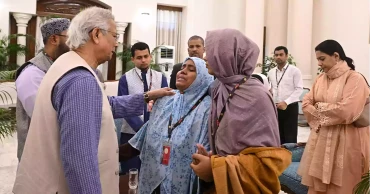
Chief Adviser Prof Muhammad Yunus on Saturday assured the family of Sharif Osman Hadi that law enforcement agencies are actively working to arrest those responsible for the attack on him, stressing that all members of the gang involved in the brutal incident will be identified and brought to justice.
“Instructions have already been given for a thorough investigation, analysing the incident from the very beginning,” Prof Yunus said during a meeting with Hadi’s family.
Hadi is a spokesperson for Inquilab Mancha and a potential independent candidate for the Dhaka-8 constituency.
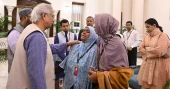
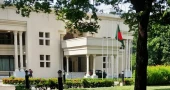
Hadi’s brother Abu Bakr Siddique, his sister Masuma, and three leaders of Inquilab Mancha - Abdullah Al Jaber, Fatima Tasnim Juma, and Md Borhan Uddin - met the Chief Adviser at the State Guest House Jamuna.
Prof Yunus said the government is taking all necessary steps to ensure the best possible treatment for Hadi.
“The whole country is praying for him. Everyone is trying to ensure that he receives the best medical care. If his physical condition requires treatment abroad, the government will make arrangements to send him wherever necessary,” he said.
Hadi’s sister Masuma said he has loved the country wholeheartedly since childhood and has long been involved in revolutionary activities. “Revolutionary poetry is his favorite, and he loves to recite it. He has a 10-month-old child. Hadi is our backbone,” she said.
Masuma that Hadi has much work ahead of him and must survive. “You, the revolutionary government, must protect the July revolutionaries at any cost. Otherwise, the independence and sovereignty of this country will be threatened,” she said.
Demanding the immediate arrest of the perpetrators, Inquilab Mancha leader Abdullah Al Jaber said that after August 5, many people returned home, but Hadi continued working tirelessly for the July revolution.
Gun Attack on Hadi: DMP releases suspect’s photo, seeks public help
“He embraced the July movement and worked day and night for it. I have heard that the person who fired the shot was earlier arrested in another case. The process through which he was granted bail must be investigated,” Jaber said.
Fatima Tasnim Juma demanded that the government take steps to ensure the overall security of the July fighters.
Legal Adviser Dr Asif Nazrul; Environment, Forest and Climate Change Adviser Syeda Rizwana Hasan; Industries Adviser Adilur Rahman Khan; and National Security Adviser Dr Khalilur Rahman were also present at the meeting.
7 months ago

Gun Attack on Hadi: DMP releases suspect’s photo, seeks public help
The Dhaka Metropolitan Police (DMP) on Saturday (December 13, 2025) released a photograph of a suspect involved in the gun attack on Inquilab Moncho spokesperson Sharif Osman Hadi and urged people to share any information about the suspect.
A suspect has been identified preliminarily through analysis of CCTV footage collected from the scene, said a DMP media release signed by Muhammad Talebur Rahman, Deputy Police Commissioner.
Fakhrul urges govt to ensure law and order after Hadi shooting
Osman Hadi was seriously injured when a group of assailants opened fire on him in the Box Culvert area of Bijoynagar in the capital.
A major operation is underway in Dhaka to arrest those involved in the attack, it said.
Anyone having information about the suspect or his whereabouts has been requested to contact the police immediately by dialing the national emergency number 999 or calling the following numbers: DC Motijheel at 01320040080 and OC Paltan at 01320040132.
Prof Yunus terms attack on Hadi a planned strike on Bangladesh’s democratic path
The identities of informants will be kept secret, and suitable rewards will be given for credible information, the release added.
7 months ago

BNP leaders meet CA; Tarique's security might be agenda
BNP Standing Committee members Salahuddin Ahmed and Hafizuddin Ahmed on Saturday sat in a meeting with Chief Adviser Professor Muhammad Yunus.
The meeting began at around 11:40am at the Chief Adviser’s official residence Jamuna, said BNP Media Cell member Sayrul Kabir Khan.
The meeting is taking place two days after the announcement of the schedule for the national election and the referendum on the July Charter.
Prof Yunus terms attack on Hadi a planned strike on Bangladesh’s democratic path
Although the party did not formally announce the specific agenda of the meeting, BNP insiders said the two leaders are likely to discuss the return of Tarique Rahman to the country, his security, the shooting of Dhaka-8 independent candidate Sharif Osman Hadi, and the overall security of election candidates.
On Thursday, the Election Commission announced the schedule for the country’s 13th National Parliamentary Election and the July Charter referendum, which will be held on February 12, 2026.
At a press conference on Friday night, BNP Secretary General Mirza Fakhrul Islam Alamgir announced that the party’s Acting Chairman, Tarique Rahman, will return to Bangladesh on December 25, ending nearly 17 years of exile.
7 months ago
BSF returns body of Bangladeshi youth through C’nawabganj border
The Indian Border Security Force (BSF) has handed over the body of a Bangladeshi youth, recovered from the Indian territory along the Chapainawabganj border, to the Border Guard Bangladesh (BGB).
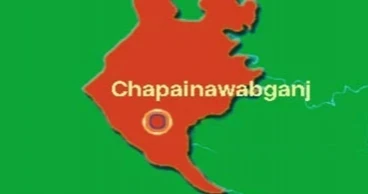
The body of Tasir Ali, son of Ibrahim Haque of Bakher Ali Paschimpara area in Chapainawabganj Sadar upazila, was returned through a flag meeting between BGB and BSF at the Johorpur Tek border in Chapainawabganj on Friday night.
Commander of the 53 BGB Battalion Lieutenant Colonel Kazi Mustafizur Rahman said the flag meeting was held around 9pm on Friday after which Indian police formally handed over the body to Bangladesh police.
Inspector Sukomal Chandra Debnath, investigation officer of Chapainawabganj Sadar Police Station, received the body on behalf of Bangladesh police.
He said marks of pellet injuries were found on the right side of Tasir’s chest but it could not be confirmed who fired the shots.
The body was handed over to the family later that night.
Earlier on Wednesday, Indian police recovered Tasir Ali’s body from the Bhagirathi River on the Indian side near Bakher Ali border under Chapainawabganj Sadar upazila.
According to family members, Tasir had gone missing after illegally crossing the border into India with several associates.
7 months ago

Election office set on fire in Laxmipur
Miscreants set fire to the district election office in Laxmipur town early Saturday.
Md Abdur Rashid, District Election Officer, said the miscreants set the office on fire after pouring petrol around 3:30 am through the windows of the office and fled.
However, the security guard of the office with the help of local people managed to extinguish the fire immediately.
Some documents were gutted in the fire and legal steps will be taken in this regard, Rashid said.
On information, deputy commissioner, police and election officials visited the spot in the morning.
Md Rezaul Haque, additional superintendent of police (Sadar Circle), said efforts are on to arrest the arsonists.
7 months ago
Dhaka’s air quality continues to be ‘unhealthy’
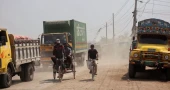
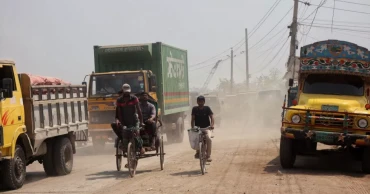
Dhaka, the overcrowded capital city of Bangladesh, has ranked ninth on the list of cities with the worst air quality with an AQI score of 165 at 9:09 am this morning (December 13, 2025).
Today Dhaka’s air was classified as ‘unhealthy’ referring to an alarming threat, according to the AQI index.
India’s Delhi, Pakistan’s Lahore and India’s Kolkata occupied the first, second and third spots on the list, with AQI scores of 577, 317, and 263 respectively.
Read more: ‘Unhealthy’ air quality persists in densely populated Dhaka
When the AQI value for particle pollution is between 50 and 100, air quality is considered ‘moderate’, usually sensitive individuals should consider limiting prolonged outdoor exertion, between 101 and 150, air quality is considered ‘unhealthy for sensitive groups’, between 150 and 200 is ‘unhealthy’, between 201 and 300 is said to be 'very unhealthy', while a reading of 301+ is considered 'hazardous', posing serious health risks to residents.
The AQI, an index for reporting daily air quality, informs people how clean or polluted the air of a certain city is and what associated health effects might be a concern for them.
The AQI in Bangladesh is based on five pollutants: particulate matter (PM10 and PM2.5), NO2, CO, SO2, and ozone.
Dhaka has long been grappling with air pollution issues. Its air quality usually turns unhealthy in winter and improves during the monsoon.
Read more: How to Reduce Air Pollution in Bangladesh?
As per World Health Organization (WHO), air pollution kills an estimated seven million people worldwide every year, mainly due to increased mortality from stroke, heart disease, chronic obstructive pulmonary disease, lung cancer, and acute respiratory infections.
7 months ago

Keraniganj building fire under control; 45 rescued
The massive fire that broke out in a 10-storey building at Aganagar near Babu Bazar Bridge area of South Keraniganj has been brought under control after seven hours of efforts.
The fire was brought under control around 12:30 pm on Saturday but a total of 20 units were still working to extinguish the blaze, said Lt Col Mohammad Tajul Islam Chowdhury, director, Fire Service and Civil Defence (Operation and Maintenance).
Firefighters rescued at least 45 people who were trapped in the building and brought them to safety using various stairways.
Witnesses said some 10-12 tenants of the building fell sick due to smoke and they were taken to a local clinic.
Read more: 4 of a family suffer burn injuries in fire from ‘gas leak’ in N’ganj
7 months ago