others

EC asks to recruit 2 Executive Magistrates in each upazila
The Election Commission (EC) on Thursday asked the Ministry of Public Administration to take measures to recruit two Executive Magistrates in each upazila or thana from the day after the announcement of the election schedule until two days after the polling day, to ensure election code of conduct.
The Election Commission Secretariat sent a letter in this regard on Thursday.
According to the notice, the EC, under the Mobile Court Act, 2009, a minimum of two (02) Executive Magistrates should be appointed in each upazila or thana from the day after the announcement of the election schedule until two days after the polling day to ensure strict enforcement of the code of conduct for the 13th Parliamentary Election.
The much-sought schedule for the 13th parliamentary election and the national referendum will be announced at 6pm today.
7 months ago

Journalist Shaukat Mahmood placed on 5-day remand
A Dhaka court on Thursday placed senior journalist and former Jatiya Press Club president Shaukat Mahmood on a five-day remand in a case filed under the Anti-Terrorism Act.
Dhaka Metropolitan Magistrate Fahmida Khandaker Anna passed the order when he was produced before the court.
On December 8, a Dhaka court sent journalist Shaukat to jail in the case.
The investigation officer of the case, Inspector Akhtar Morshed of DB Police’s Ramna Zonal team, sought a 10-day remand for questioning.
Shaukat was arrested on December 7 from Malibagh area of the capital in connection with a case filed against Bangladeshi-origin US citizen Enayet Karim Chowdhury over his involvement in a “conspiracy to topple” the interim government.
Sub-Inspector Azizul Hakim of Ramna Police Station filed the case on September 14, a day after Enayet’s arrest from the capital’s Mintoo Road area for suspicious movement in a Land Cruiser Prado SUV.
According to the case statement, Enayet, described as an agent of a foreign intelligence agency, was involved in a conspiracy to undermine public security and overthrow the interim government.
Shaukat Mahmood, a former BNP vice-chairman expelled from the party on March 21, 2023, recently returned to politics through Janata Party Bangladesh formed on April 25 this year.
7 months ago
Prof Yunus hosts farewell luncheon for two outgoing Advisers
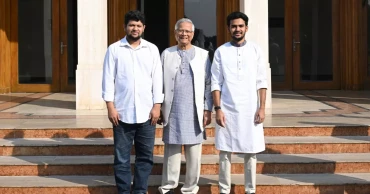
Chief Adviser Prof Muhammad Yunus on Thursday (December 11, 2025) hosted a luncheon in honour of outgoing Advisers Md Mahfuj Alam and Asif Mahmud Shojib Bhuyain who submitted their resignation letters on Wednesday (December 10, 2025).
Their resignations will be effective as soon as the Election Commission announces the schedule (Thursday).
Members of the Council of Advisers attended the event at the Chief Adviser’s Office in Tejgaon, where advisers Asif Mahmud and Mahfuj Alam, the front-runners of last year’s July Uprising, led the proceedings.
Advisers Mahfuj Alam and Asif Mahmud Sajib Bhuiyan submitted their resignations to Chief Adviser Muhammad Yunus at the State Guest House Jamuna on Wednesday, and both were accepted.
Read more: Advisers Asif, Mahfuj step down ahead of national election
After accepting the resignation letters of these two student leaders, who led from the front lines in the July mass uprising, the Chief Adviser, "Today is a historic day. The interim government will always remember your contribution. I wish you a bright and prosperous future. The nation will never forget what you have given to the nation in such a short time."
7 months ago
Gulshan-Pragati Sarani Road renamed ‘Felani Avenue’; inauguration in Dec
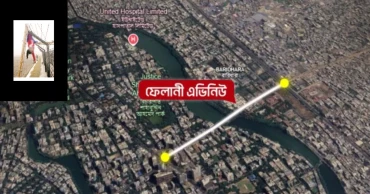
A road stretching from Gulshan-2 to Pragati Sarani has officially been renamed ‘Felani Avenue’ in memory of Felani Khatun, the teenage girl killed by India’s Border Security Force (BSF) in 2011.
The announcement was first made on Tuesday by Local Government Adviser Asif Mahmud Shojib Bhuyain, who submitted his resignation on Wednesday. He shared the update in a post on his verified Facebook page shortly before stepping down from office.
He wrote that the diplomatic zone road from Gulshan-2 to Pragati Sarani would henceforth carry the name ‘Felani Avenue’ to honour the 15-year-old who became a symbol of outrage against border killings.
As naming and renaming of roads fall under the jurisdiction of city corporations, the responsibility in this case lies with the Dhaka North City Corporation (DNCC).
Read more: March for Felani: Sarjis Alam vows justice for border killing victims
Confirming the development, DNCC Administrator Mohammad Azaz told UNB on Thursday (December 11, 2025), “DNCC has formally renamed the Gulshan-2 to Pragati Sarani road as Felani Avenue. All necessary documentation is done. All official procedures for the renaming have already been completed.”
Regarding the inauguration timeline, Azaz said, “The nameplate for Felani Avenue will be installed and unveiled anytime in December.”
Felani Khatun was shot dead by BSF on January 7, 2011, at the Anantapur border point in Kurigram’s Fulbari upazila while returning to Bangladesh with her father. Her body was left hanging on the barbed-wire fence for hours, sparking widespread outrage in national and international media.
Since then, various groups have repeatedly demanded that the road in front of the Indian High Commission in Gulshan be named after Felani.
Read more: Felani’s brother joins BGB
On September 13, 2024, the Peoples’ Activist Coalition (PAC) symbolically named the road ‘Shaheed Felani Sarak’ and installed an unofficial signboard in protest against border killings. Now, the interim government has officially renamed the stretch as Felani Avenue.
7 months ago

Anti-graft platform demands wealth disclosure of advisers Asif, Mahfuj
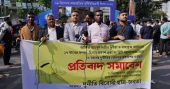
A youth-led anti-graft platform on Thursday demanded that two advisers Asif Mahmud Shojib Bhuiyan and Mahfuj Alam, who stepped down on Wednesday, disclose their assets.
The platform under the banner of ‘Anti-Graft Students and People’ made the demand at a human chain formed in front of the Anti-Corruption Commission (ACC) headquarters in the capital in the morning.
It also urged the authorities to publish corruption-related records from the ministries the two advisers oversaw over the past 17 months.
Speakers at the event alleged that although corruption complaints were filed against the personal assistants of the two advisers the ACC has yet to take any action.
They claimed the advisers have “lost their moral eligibility for candidacy due to corruption” and called on the Election Commission to bar them from contesting the upcoming polls.
The speakers also said the Anti-Corruption Commission has failed to play an effective role in curbing corruption.
Youth and Sports Adviser Asif Mahmud Shojib Bhuiyan and Information Adviser Mahfuj Alam submitted their resignation letters to the Chief Adviser on Wednesday.
Chief Adviser’s press secretary Shafiqul Alam briefed reporters about their resignation at state guest house Jamuna on Wednesday evening.
The Chief Adviser accepted their resignation letters and their resignations will take effect once the Election Commission announces the election schedule, he said.
7 months ago

Mohammadpur Murders: Three days of work, a deadly climax
What began as a routine search for a missing sum of money spiralled into a shocking double murder inside a Mohammadpur flat, a crime that investigators say was rooted in a heated altercation between a housewife and the domestic worker she had employed only three days earlier!
Police have arrested the housemaid, Ayesha, and her husband, Rabbi, from Nalcity in Jhalakathi, ending their frantic run across districts following the killings.
The case has since unfolded as a chilling account of deception, theft and unverified domestic employment.
Read more: Mohammadpur Murders: Chilling details emerge as hunt for domestic help intensifies
Tracked Down Through an Old Police Record
At a briefing at the DMP Media Centre on Thursday noon, Additional Commissioner of DMP SN Nazrul Islam revealed how investigators identified Ayesha.
A crucial breakthrough came from an old record at Mohammadpur Police Station, a file containing her photograph, marked by burn scars on her face. This small but telling clue led police to the Geneva Camp, where she was already known for theft-related activities.
Nazrul Islam said Ayesha had a long history of stealing from the homes where she worked. She routinely concealed her identity, avoided using a mobile phone, provided no address and kept her face veiled, making it difficult for employers to identify her later.
In July, she allegedly stole Tk 8,000 from a residence, prompting the filing of a general diary at Mohammadpur Police Station. She has also been accused of stealing from her sister’s home.
Read more: Mohammadpur double murder: Maid disguised herself in victim’s school uniform to flee
A Husband Drawn into the Trail
Investigators traced Rabbi after learning that Ayesha had once handed him her damaged mobile phone for repair. That allowed police to track the SIM card previously used in the device.
Teams then conducted a series of raids — in Hemayetpur of Savar, Mohammadpur, Patuakhali’s Naluya, and finally in a village in Nalchity of Jhalakathi — where the couple were arrested around 12:30 pm on Wednesday. A stolen laptop was recovered from their room. Police say Ayesha has confessed to the murders.
Three Days of Work, A Deadly Climax
Ayesha joined the victims’ household only three days before the incident. Throughout her time there, she kept her face covered, preventing anyone from recognising her clearly.
Read more: Domestic help sued over Mohammadpur double murder
On the second day, she allegedly stole Tk 2,000, triggering an argument with the housewife, Laila Afrooz. On the third day, Ayesha returned with a switch-gear knife. Another confrontation broke out over the missing money — and this time, the dispute turned fatal.
According to police, Ayesha stabbed Laila. When Laila’s daughter, Nafisa, tried to intervene, she too was stabbed to death.
In her escape, Ayesha wore Nafisa’s school uniform and fled the apartment, taking with her a laptop, a mobile phone and other valuables. She later changed her clothes at her mother’s home in Savar, before travelling to Manikganj, where she disposed of the school uniform and blood-stained clothing in the Singair River.
A Call for Vigilance
The Additional Commissioner has urged city residents to verify the identity and background of any domestic worker before employing them, stressing that structured records and proper documentation could prevent similar tragedies in the future.
Read more: Mohammadpur Murders: Domestic help finally arrested after days on the run
7 months ago

20% of Bangladeshi pilgrims to go to Saudi Arabia via Madinah next year
Twenty percent of Bangladeshi Hajj pilgrims must travel to Saudi Arabia via Madinah next year and 30 percent will return through the same route, according to the 2026 Hajj agreement between Bangladesh and Saudi Arabia.
The Religious Affairs Ministry sent a letter to all lead Hajj agencies informing the new rule on Wednesday.
According to the letter, 20 percent of all pilgrims travelling under both government and private management must enter Saudi Arabia through Prince Mohammad bin Abdul Aziz International Airport in Madinah while 30 percent will return through the same airport.
As per the deal, all lead Hajj agencies have been instructed to ensure necessary arrangements in this regard.
The agencies were asked to prepare for all logistical arrangements related to flights and pilgrim movement through the airport.
Bangladesh has managed a quota of 78,500 pilgrims to perform Hajj next year.
7 months ago
46th BCS viva to begin on December 28
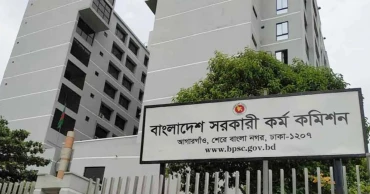
The viva voce of the candidates who passed the written examination of the 46th Bangladesh Civil Service (BCS) will begin on December 28.
The Public Service Commission (PSC) announced the schedule through a press release on Thursday.
A total of 975 candidates have been called for interviews.
The detailed interview schedule is available on the PSC’s official website www.bpsc.gov.bd or http://bpsc.teletalk.com.bd.
7 months ago
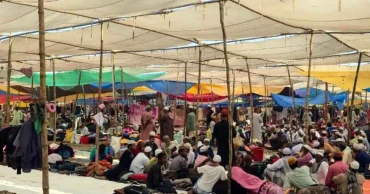
Divisional Ijtema: 2 devotees die in Rangpur
Two devotees died while nine others fell sick at the Rangpur Divisional Ijtema ground in Rangpur on Thursday.
The deceased were identified as Saidur Rahman of Pirganj upazila and Tara Mia of Tangail district.
Maidul Islam, officer-in-charge of Pashuram Police Station, said both of the devotees died from old age complications or cold-related diseases.
Abul Hossain, a supervisor of Ijtema ground No 6 tent, said the nine devotees who fell sick are receiving treatment at the venue.
The Rangpur Divisional Ijtema is being held at Amashu Kukrul area in Ward No. 4 of Rangpur city.
7 months ago

Woman found dead at Khulna residence
A 45-year-old woman who returned home from Saudi Arabia recently was found dead at her rented house on Tank Road in Khulna city early Thursday.
The deceased was identified as Sheuli Begum, who had married her second husband Md Salauddin Khan only a few days ago.
Neighbours said her first husband’s son Riad, 28, a tiles worker, used to live with his mother in the same house.
Sheuli returned from Saudi Arabia 10 days ago and rented the house.
About one month ago, she divorced her first husband from abroad and married Salauddin after returning home, said Shahjahan Ahmed, inspector (investigation) of Khulna Sadar Police Station.
Around five to six days back, she withdrew Tk 5.75 lakh from a bank and brought the money home which the family members knew, the police official said.
Shihab Karim, assistant commissioner of police (Khulna Zone), said the body was recovered from a locked room, and since the murder her son Riad remained abscoding.
Senior officers visited the spot and a CID forensics team collected evidence from the scene, he said.
Investigators suspect she was first struck on the left side of her head and later suffocated with a pillow.
No case has been filed yet.
7 months ago