USA
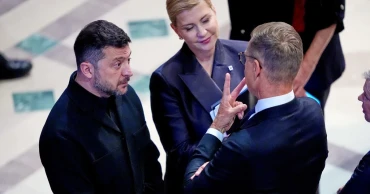
Zelenskyy has ‘good meeting’ with Trump at White House
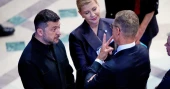
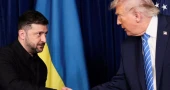
US President Donald Trump and Ukrainian President Volodymyr Zelenskyy met Tuesday ahead of Sen. Lindsey Graham’s funeral, discussing ways for Ukraine to produce more powerful weapons and “other ideas that could help” in its ongoing war with Russia.
The Oval Office meeting, which was closed to the media, followed a significant meeting at the NATO summit earlier this month in Ankara, Turkey, where Trump announced that the United States would give Ukraine a license to produce Patriot defense systems — a long-standing request from Kyiv to help counter Russian missile attacks.
The meetings highlight how Trump, who was once a major skeptic of continued US assistance to Ukraine, has grown more supportive of Zelenskyy as Ukraine continues to withstand Russia’s attacks more than four years after Moscow launched its invasion in 2022.
Zelenskyy’s relationship with Trump during the president’s second term was previously strained following a contentious White House visit during which the Ukrainian leader was criticized for appearing ungrateful. Since then, Zelenskyy has sought closer ties with the Republican administration and has relied on both expected and unexpected allies in Trump’s circle to influence the president.
The conflict in the Middle East, which has taken up much of the Trump administration’s attention this year, has also increasingly become linked to the Ukraine war. Ukraine fired on at least one Iranian vessel in the Caspian Sea over the weekend, while Zelenskyy has accused Russia of providing satellite images of US bases in the Persian Gulf to Iran.
After the meeting, Zelenskyy said on social media that he had a “good meeting” with Trump and thanked the Republican administration for its efforts to support Kyiv in the prolonged war.
Officials also agreed that Steve Witkoff and Jared Kushner, Trump’s main envoys, would travel to Kyiv at some point in the future, according to a person familiar with the talks who spoke on condition of anonymity because the meeting was closed to the media.
“The President and I discussed licenses for Patriot interceptor production and several other ideas that could help,” Zelenskyy said. He also expressed condolences to Trump over Graham’s death, describing the senator as a close ally.
“We also spoke about diplomacy — it's important that the diplomatic process be reinvigorated,” Zelenskyy said.
Trump later described the meeting as a “Great Honor” and said on Truth Social that “many things were discussed” and that “the meeting went very well.”
Zelenskyy seeks to boost Ukraine’s defense production
During his one-day visit to Washington, Zelenskyy also met with officials from Lockheed Martin to discuss further cooperation in defense production and technology exchanges.
“Ukraine has a lot to share with those who help us protect lives,” he wrote on social media.
Later, in a meeting with senators at the Capitol, Zelenskyy again made the case for Ukraine’s need for Patriot interceptors and urged support for a broad sanctions bill aimed at weakening Russian morale and increasing pressure on Moscow, according to two people familiar with the private discussion. They spoke on condition of anonymity to discuss the closed-door meeting.
Luke Coffey, a senior fellow at the conservative-leaning Hudson Institute, said increasing production of Patriot interceptors was important not only for Ukraine but also for the United States and its Gulf allies, particularly as supplies decline amid the war involving Iran.
“Ukraine has shown that its defense industry is capable, innovative and creative,” Coffey said. He said he expected Ukraine to be able to produce the missiles once it receives the license, which could also increase their availability for the United States.
Trump welcomed Zelenskyy to the White House as the Ukrainian president traveled to Washington to honor Graham. The senator’s final public act had been a visit to Kyiv, where he helped secure an agreement on a sanctions package aimed at countries that purchase Russian oil, gas and other exports.
In an interview with Fox News Channel on Tuesday, Trump recalled Graham’s strong support for Ukraine and said the South Carolina Republican senator’s position on the war had never changed.
Trump said Graham had suggested it was time to reach a deal with Iran but had made no similar proposal regarding the Russia-Ukraine war.
“Ukraine, he's very militant about,” Trump said on “Fox & Friends.” “I mean, Lindsey liked war, to be honest with you.”
The Trump administration’s closer engagement with Zelenskyy comes as far-right activist Laura Loomer, who has the president’s ear, has recently changed her views on Russia’s war against Ukraine.
Loomer, who is known for provocative social media posts and her influence with Trump, has traveled through Ukraine, witnessed Russian attacks firsthand and interviewed Zelenskyy. She has acknowledged being “bamboozled by Russian propaganda.”
Loomer said she spoke with Trump after meeting Zelenskyy in Ukraine last week and expects to meet with the president after returning from her trip.
Ukraine highlights Russia-Iran ties
Before meeting Trump, Zelenskyy warned that Russia has been assisting Iran by obtaining satellite images of US bases in the Gulf region that later appear in Iranian hands.
The Ukrainian president also said there was a “clear correlation” between the Russian images and subsequent Iranian strikes.
Iran is a key Russian ally in the war against Ukraine and has helped Moscow develop its drone capabilities.
Trump, however, played down the significance of possible Russian assistance to Iran on Monday, although he said he would raise the issue with Russian President Vladimir Putin.
“I don't think they've been doing it, certainly not at a high level,” Trump told reporters aboard Air Force One while traveling to Michigan. “And if they have, it has been very un-impactful.”
Regarding the attack on the Caspian Sea, the foreign ministers of Iran and Ukraine discussed the incident Tuesday, according to statements posted on social media.
Ukrainian Foreign Minister Andrii Sybiha described the conversation as “frank” and said Ukraine’s focus was “solely at defending our country from Russian aggression” and that it had never intended to target civilian vessels or people.
Iran said at least one sailor was killed in the attack.
Iranian Foreign Minister Abbas Araghchi said Tehran also did not seek escalation but made clear that “any attack on our citizens or interests is unacceptable” and that there “must be restitution for losses.”
Pro-Ukraine lawmakers push sanctions bill
Zelenskyy had a packed schedule during his latest Washington visit.
At his Capitol meeting, held shortly before a key vote on the Russia sanctions bill and after Graham’s funeral, the Ukrainian leader argued that there was an opportunity to bring Russian President Vladimir Putin to the negotiating table, according to one person familiar with the discussion.
The Senate took the first steps toward passing legislation in an 86-12 vote that would penalize countries continuing to purchase Russian oil, gas and other exports after more than a year of negotiations.
The bill has support from dozens of lawmakers from both major political parties and is seen as a major policy tribute to Graham, who died unexpectedly this month from a tear in his aorta.
The legislation would impose tariffs on goods from the world’s five largest buyers of Russian oil or natural gas, including China and India.
It also includes sanctions against Putin, senior Russian political and military officials, Russian financial institutions and energy projects.
6 days ago
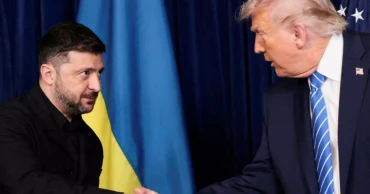
Zelenskyy meets Trump at White House, seeks stronger US support for Ukraine
Ukrainian President Volodymyr Zelenskyy met with US President Donald Trump at the White House on Tuesday, seeking deeper cooperation with Washington on defence and peace efforts as the two leaders held their second meeting this month.
The meeting took place ahead of the funeral of Republican Senator Lindsey Graham, a longtime supporter of Ukraine who had recently visited Kyiv and helped secure a sanctions package targeting countries that buy Russian oil, gas and other exports.
Shortly after arriving in the United States, Zelenskyy said on social media that his top priorities were strengthening Ukraine’s air defence capabilities and expanding strategic cooperation with Washington.
“Peace needs to be brought closer,” Zelenskyy said as he arrived at the White House.
A White House official said Trump planned to discuss the ongoing peace process between Russia and Ukraine during the closed-door talks.
Trump also reflected on Graham’s strong support for Ukraine, saying the senator had consistently backed Kyiv and had pushed for a deal to end the war. However, Trump noted that Graham had not taken the same approach regarding the Russia-Ukraine conflict as he had on Iran.
Meanwhile, Zelenskyy has received unexpected support from Laura Loomer, a conservative activist known for her influence among Trump’s supporters. After visiting Ukraine and meeting Zelenskyy, Loomer said she had changed her views after witnessing the impact of Russia’s attacks firsthand and acknowledged she had been influenced by Russian propaganda.
Loomer said she discussed her Ukraine visit with Trump and believed the situation was favourable for Kyiv ahead of Zelenskyy’s White House meeting.
Before the talks, Zelenskyy accused Russia of assisting Iran by providing satellite images of US military bases in the Gulf region that were later used in Iranian attacks. He said there was a clear connection between Russian imagery and subsequent strikes.
Trump, however, played down the significance of any possible Russian assistance to Iran, saying he did not believe Moscow had provided substantial help. He added that he would raise the issue with Russian President Vladimir Putin.
During his Washington visit, Zelenskyy is also scheduled to meet US senators at the Capitol following Graham’s funeral.
Republican leaders are seeking to move forward with Graham’s sanctions legislation, which has support from lawmakers of both major parties. The bill includes tariffs on goods from major buyers of Russian energy, including China and India, as well as sanctions targeting Russian President Vladimir Putin, senior officials, financial institutions and energy projects.
Trump and Zelenskyy previously met on the sidelines of the NATO summit in Ankara earlier this month, where Trump announced that the United States would help Ukraine produce Patriot air defence systems — a long-standing request from Kyiv to counter Russian missile attacks.
Trump said Washington and Kyiv had developed a good relationship and that Ukraine would be able to manufacture the advanced defence systems relatively quickly with US assistance.
6 days ago
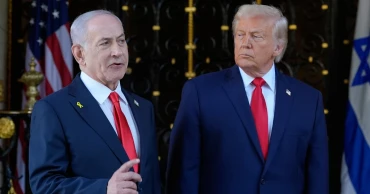
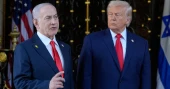
Trump voices frustration with Netanyahu ahead of first meeting since Iran war
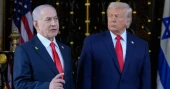
US President Donald Trump expressed frustration with Israeli Prime Minister Benjamin Netanyahu ahead of their first meeting since launching a joint war against Iran, highlighting tensions between the two allies over the future course of the conflict.
The Tuesday meeting comes as both leaders face mounting domestic pressure. Netanyahu is preparing for reelection while dealing with strains in his relationship with Trump, and Trump is facing calls to end a costly war that has disrupted regional stability and pushed up prices ahead of the US midterm elections.
Trump revealed his irritation over reports that Netanyahu planned to share intelligence about Iranian activities at Pickaxe Mountain, a potential nuclear site that the US president has repeatedly threatened to strike.
“I know exactly what’s going on at Pickaxe,” Trump told Fox News’ “Fox & Friends.” He said Iran’s activities there were “not a big problem” and suggested Netanyahu was raising the issue to keep Washington involved.
“Why do you have to announce to the world?” Trump said, indicating his frustration with the Israeli leader.
Despite their differences, the two leaders are expected to discuss several key issues, including a US-Israel framework agreement with Lebanon related to the Israel-Hezbollah conflict and efforts to expand the Abraham Accords, according to a White House official.
“We have a little difference,” Trump told reporters Monday when asked whether he and Netanyahu were on the same page regarding Iran. “But pretty close, yeah.”
Trump and Netanyahu have had a fluctuating relationship over the years. Their alliance appeared stronger after Trump returned to the White House last year, with both leaders presenting a united front when they launched military action against Iran in February.
However, after Iran retaliated with drone and missile attacks targeting US bases and cities across the Gulf region and disrupted shipping through the Strait of Hormuz, Trump faced increasing pressure from domestic opponents and regional allies to end the conflict.
Netanyahu had pushed for continuing military operations against Iran and its ally Hezbollah in Lebanon, while Trump moved toward seeking a deal with Tehran. The differences between Trump, Netanyahu and US Vice President JD Vance have become increasingly visible in recent weeks.
Israeli political analyst Amit Segal wrote in the newspaper Israel Hayom that Washington was making clear that it was leading the war strategy, leaving Israel in a less influential position.
During his White House visit, Netanyahu is expected to present Israeli intelligence on Iran’s nuclear programme, according to a person familiar with the matter.
In an interview with Fox News, Netanyahu said he wanted to hear Trump’s plans for Iran, adding that the US president’s decision would largely determine the next steps.
“If he can do so without returning to intense military fighting, that’s fine,” Netanyahu said, while insisting that Iran’s nuclear programme must be ended.
Netanyahu also warned Tehran against attacking Israel, saying any such move would trigger a “very forceful” response.
6 days ago
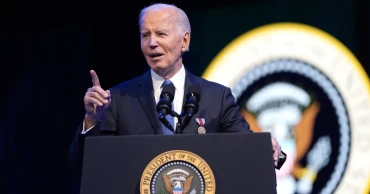
Biden memoir interview tapes released, show discussions of sensitive information and memory lapses
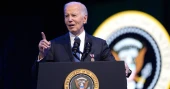
Audio recordings and transcripts from interviews conducted with former US President Joe Biden for his memoir have been made public, revealing conversations in which he discussed sensitive government matters and, at times, acknowledged difficulty recalling certain details.
The material, comprising about three hours of audio and 117 pages of partially redacted transcripts, was released by the Oversight Project, an initiative of the conservative Heritage Foundation, after Biden ended a legal effort to keep the interviews confidential.
The recordings were made in 2016 and 2017 with memoir ghostwriter Mark Lewis Zwonitzer, before Biden launched his successful 2020 presidential campaign.
In one 2016 interview, Biden referred to sensitive foreign policy issues handled during the administration of then-President Barack Obama, saying, "They didn't even know I had this," while discussing government documents.
During a 2017 session, Biden appeared to mention finding classified material from his vice-presidential tenure, although the specific contents remain redacted in both the audio recordings and transcripts.
The recordings became part of an investigation led by Special Counsel Robert Hur, who in 2024 decided not to bring criminal charges against Biden over his handling of classified documents. Hur concluded there was insufficient evidence to support prosecution and noted that a jury would likely view Biden as a sympathetic elderly figure with memory limitations.
The report sparked widespread debate over Biden's age and mental fitness as he sought re-election. Biden was 74 when the interviews took place and 81 when Hur's report was released. He later withdrew from the 2024 presidential race following a widely criticized debate performance against Republican Donald Trump.
The newly released recordings include moments where Biden struggles to recall dates or specific events. However, they also show him accurately recounting meetings and conversations, suggesting he retained detailed knowledge of many issues.
Jeff Clark, vice president of litigation at the Oversight Project, said the recordings demonstrated what he described as Biden's cognitive decline and argued the public had a right to access the material.
Biden's spokesman, TJ Ducklo, criticized the release, saying the interviews were intended to remain private and had been provided to the Justice Department under that understanding. He accused the current administration of using the Justice Department for political purposes.
Biden initially filed a lawsuit to block the release of the recordings but abandoned the case after a divided federal appeals court ruled that the public interest in disclosure outweighed his privacy claims. A three-judge panel concluded there was a "substantial" public interest in making the material available.
6 days ago
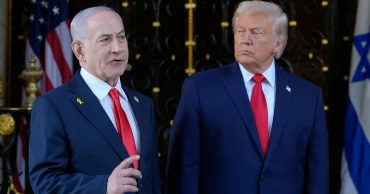
Netanyahu to meet Trump as US, Israel seek to ease tensions after Iran conflict
Israeli Prime Minister Benjamin Netanyahu is scheduled to meet US President Donald Trump on Tuesday in their first face-to-face talks since the United States and Israel launched joint military operations against Iran, with both leaders expected to discuss regional security and efforts to strengthen bilateral ties.
The meeting comes as both leaders face mounting domestic political pressures. Netanyahu is seeking to ease tensions in his relationship with Trump ahead of Israel's upcoming elections, while Trump is under pressure to resolve the conflict with Iran amid concerns over its economic impact and rising fuel prices before November's US midterm elections.
According to a White House official, the two leaders are expected to discuss the framework agreement reached between Israel and Lebanon following the Israel-Hezbollah conflict, as well as efforts to expand the Abraham Accords.
Speaking to reporters on Monday, Trump acknowledged minor differences with Netanyahu over Iran but suggested their positions remain largely aligned.
"We have a little difference. But pretty close, yeah," Trump said.
Security has been tightened around the White House ahead of the visits by Netanyahu and Ukrainian President Volodymyr Zelenskyy, with vehicle access restricted in surrounding areas.
Netanyahu is staying at Blair House, the official US government guest residence opposite the White House.
Earlier in the day, Trump is also scheduled to meet Zelenskyy, marking their second meeting this month.
In a post on X after arriving in Washington, Zelenskyy said his visit would focus on strengthening Ukraine's defence cooperation with the United States.
"Our schedule includes meetings with President Trump, his team, and those who can support our defense. Our number one priority is anti-ballistic defense and strategic cooperation with America. Peace needs to be brought closer," he wrote.
Both Netanyahu and Zelenskyy are in Washington to attend the funeral of US Senator Lindsey Graham, who will be honoured at memorial services on Tuesday. Graham's final overseas trip as a public official was to Kyiv, where he helped secure support for a sanctions package targeting countries purchasing Russian energy exports.
6 days ago
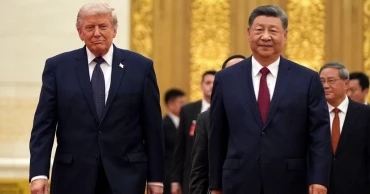
US plans hundreds of millions more in anti-China spending worldwide
The Trump administration is preparing to increase funding by hundreds of millions of dollars for programmes aimed at countering China's growing global influence, after many such initiatives were halted last year amid sweeping budget and personnel cuts.
The administration informed Congress late last week that it plans to spend $175.8 million to replace outdated undersea telecommunications cables in the Caribbean and Central America to prevent China from gaining influence in the sector, according to a copy of the notification obtained by The Associated Press on Monday.
The administration has expressed growing concern over China's activities in the Americas, including Chinese ownership of ports at both ends of the Panama Canal, infrastructure projects financed under China's Belt and Road Initiative and Chinese investments in telecommunications.
A State Department official said China's economic activities in the Western Hemisphere pose risks to US national security and prosperity. The official, who was not authorised to speak publicly and spoke on condition of anonymity, said Chinese offerings may initially appear cheaper but ultimately become more costly because of cost overruns, hidden maintenance fees and poor performance.
The funding for undersea cables appears to be part of a broader effort to revive programmes aimed at limiting Chinese influence worldwide, which could cost many hundreds of millions of dollars more.
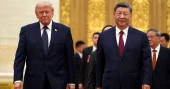
The move comes even as President Donald Trump and Chinese President Xi Jinping have sought to project cooperation, with Xi expected to visit the United States this fall.
US weighs wider spending to counter China globally
The State Department is considering nearly half a billion dollars in additional spending on programmes targeting Chinese influence across the Western Hemisphere, Africa and Asia, according to an internal State Department document obtained by AP.
“The United States must respond to the CCP's growing economic, technological, and diplomatic leverage around the world which undermines our national interests,” the document says, referring to the Chinese Communist Party.
Many of the proposed programmes are intended to “reclaim diplomatic leverage” through investments in areas where the US had previously funded projects but stopped them as the Elon Musk-led Department of Government Efficiency, or DOGE, carried out major budget and personnel cuts last year.
Those cuts dismantled the US Agency for International Development and eliminated several hundred diplomatic posts around the world. They also affected previously approved projects, including some designed to counter China's influence.
A senior US official, speaking on condition of anonymity about future administration plans, confirmed that the Trump administration wants to increase spending to counter China but declined to provide specific details.
The official acknowledged that large-scale projects were being discussed, but said many remained under consideration.
Congress notified about undersea cable project
The programme outlined to Congress on Friday is called the “Countering CCP Control of Caribbean and Central America Undersea Cables project.”
It will fund the installation of strategically selected undersea cable infrastructure and support foreign governments in working with private-sector cable installers, according to the notification.
The funding will support the replacement of outdated undersea telecommunications cables in the Caribbean and Central America with secure alternatives from US and trusted partners, the document said.
Even as the administration continues its war with Iran and peace efforts in Gaza and Lebanon, it has placed a strong focus on the Western Hemisphere.
The administration captured Venezuelan leader Nicolás Maduro earlier this year, increased pressure on Cuba's socialist government and imposed severe sanctions on Nicaragua.
Under the new programme, funding is expected to support undersea cable projects benefiting El Salvador, Guatemala, Honduras, Nicaragua and Haiti, the document said.
The US has strained relations with Nicaragua and would not work directly with its government on the programme.
China's embassy in Washington did not immediately respond to requests for comment.
Other anti-China efforts may target cyber, critical minerals
Meanwhile, the administration has drawn up plans to spend more than $340 million on over 50 specific projects aimed at countering China around the world, including many in the Western Hemisphere, according to the internal State Department document.
The administration told Congress in May that it had spent several hundred million dollars from the 2024 budget approved by the Biden administration on efforts to counter China.
However, many other projects funded for 2024 and 2025 had been put on hold.
Among the programmes proposed for revival are plans to establish security operations centres in Argentina and Belize to monitor Chinese threats to critical infrastructure and cyber platforms in the region.
Other initiatives would seek to protect Ecuador, Jamaica, Mexico, Paraguay, Peru and Uruguay from alleged Chinese efforts to infiltrate port operations and illegally exploit offshore fishing and critical mineral resources.
More broadly, the proposal, which is still under consideration, would seek to counter Chinese influence in the selection of a successor to the Dalai Lama by developing proprietary technology for secure communications and information gathering.
It would also seek to reduce international support for China's space programme and counter Chinese companies seeking to export surveillance and censorship technologies.
The document did not provide details of the proposed initiatives.
Trump is expected to meet Xi in September around the time of the annual UN General Assembly gathering of world leaders in New York.
Ahead of the meeting, Secretary of State Marco Rubio met Chinese Foreign Minister Wang Yi last week at a regional security conference in the Philippines.
Trump has alternated between anger and enthusiasm toward Xi, whom the US president has sought to cultivate as an ally even as China pursues policies that conflict with many of his administration's objectives.
The ultimate impact of the proposed programmes may not be clear for months or even years.
7 days ago
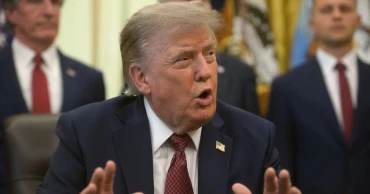
Trump demands Senate cancel August break until voting bill passes
President Donald Trump on Monday called on Senate Majority Leader John Thune to cancel the chamber’s upcoming August recess until senators pass a strict proof-of-citizenship voting bill, even as Republicans currently lack the votes to move the legislation forward.
Trump has repeatedly urged Thune to eliminate the legislative filibuster, which effectively requires 60 votes to pass most legislation in the 100-member Senate, or find another way to approve the voting bill, known as the SAVE America Act.
Republicans hold a 53-47 majority in the Senate, but Thune has repeatedly said they do not have enough votes either to pass the bill or change the rules to bypass the filibuster. The Senate is scheduled to begin its August recess on Aug. 7.
“John Thune should not allow the United States Senate to ‘leave town’ until it passes The Save America Act or, far better still, TERMINATES THE FILIBUSTER,” Trump wrote on social media.
The post was the latest escalation in a months-long campaign by Trump and his Republican supporters to get the SAVE Act passed ahead of the midterm elections. A small but vocal group of Republican senators has also stepped up pressure on Thune to find a way to advance the legislation.
House Republicans have sought another route for the bill through the budget reconciliation process, which would allow voting-related funding measures to pass the Senate with a simple majority.
The House last week approved a budget framework containing $10 billion for voting-related changes aligned with the SAVE America Act. But Thune has said Republicans also lack the votes to pursue the legislation through that process.
Trump pressure comes at key time
The dispute threatens to complicate the Senate’s final legislative push before the August recess. Thune had planned to use the period to work on a long list of priorities, including government funding, cryptocurrency legislation and sanctions on Russia.
The August break is also an important period for senators to return home and campaign ahead of the midterm elections.
Several Republican senators are facing competitive races, including Maine Sen. Susan Collins, Ohio Sen. Jon Husted and Alaska Sen. Dan Sullivan.
Republicans currently hold a 53-47 majority in the Senate and are also facing broader political challenges, including an unpopular war in Iran, rising gas prices and persistently high costs for voters.
Thune has maintained broad support within his Republican conference throughout the year as he has resisted Trump’s demands. He previously kept the SAVE Act on the Senate floor for weeks in an effort to gain more support, but failed to secure enough votes to advance it.
Utah Sen. Mike Lee, who has led the Senate push for the legislation, increased pressure on Thune late last week, warning that the Republican handling of the SAVE America Act “could impact not only the November midterm elections, but also the Senate GOP leadership elections.”
“Leaders must lead. And if they don’t, they’re not leaders,” Lee wrote on social media Friday.
Frustrated by the pressure despite lacking a clear path to pass the bill, Thune has urged Trump, Lee and others to help secure the necessary votes. Trump said Friday that he would “certainly be willing” to help contact senators.
Asked last week whether Trump was frustrated with Thune, White House press secretary Karoline Leavitt said that “his patience is running out.”
The late-summer dispute is similar to a fight before last year’s August recess, when Trump urged Thune to keep senators in Washington to clear a backlog of his nominees. The Senate ultimately left Washington without an agreement after negotiations with Democrats broke down.
SAVE America Act would impose national voting rules
The SAVE America Act, short for Safeguard American Voter Eligibility, would require Americans to prove their citizenship when registering to vote, mainly through a valid US passport or birth certificate.
The legislation would also require voters to present valid photo identification before casting ballots, a requirement already in place in some states.
Voting experts have warned that the bill could disenfranchise about 20 million American voters who do not have birth certificates or other required documents readily available.
Trump has made the legislation a top priority in 2026, saying it would “guarantee the midterms” and falsely claiming that election cheating is “rampant.”
He previously said he would not sign other legislation until the SAVE Act was passed.
7 days ago
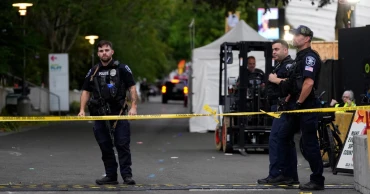
Gunfire at Seattle food festival leaves 2 dead, 5 injured
A shooting killed two people and wounded five including a child on Sunday evening during a popular food festival near the Space Needle in Seattle, a city fire department spokesperson said.
The gunfire erupted around 6 p.m. in the waning hours of the Bite of Seattle, an annual festival that draws hundreds of food and retail vendors and performers. Police were investigating the shooting and urged people to avoid the area just northwest of downtown. Authorities did not immediately say if anyone was in custody.
Two people died at the scene, said Grace Nuñez, spokesperson for the Seattle Fire Department.
Five patients were transported to Harborview Medical Center, including a 56-year-old woman in serious condition, Nuñez said.
A 2-year-old boy, a 23-year-old man and a 39-year-old woman are in stable condition, while a 40-year-old woman had minor injuries, she said.
A large number of police and emergency crews responded and began evacuating the area around the sprawling Seattle Center events campus. Authorities have not said where exactly the shooting occurred at the event, which had outdoor and indoor areas.
Washington Gov. Bob Ferguson said he was receiving briefings and State Patrol SWAT officers were deployed to assist local police.
“My prayers are with the families of the victims, and the responders as they work to keep people safe,” Ferguson said in a statement.
Faith Adia Hunter said she and her friends had just gotten food from a crepe vendor when gunfire broke out. She realized the shooter was near them.
“We were right next to him when it started so we took off running,” Hunter said. “So we took off running too into the building with the crowd.”
She and others found shelter in the nearby Seattle Children’s Museum, Hunter said.
In the chaos of the shooting, many vendors bolted toward the exits, abandoning their food stands. Hours afterward, some milled outside the police tape, wondering when they would be allowed to return to collect their tents, food and cooking gear.
Roberto Ramirez, a vendor at the event, said he heard what sounded like firecrackers before people began yelling “shooter” and frantically running out of the building.
“Suddenly everything was empty,” he said. “People were freaked out.”
Ramirez ran outside to grab his father but did not leave the event because his merchandise remained there. After the initial panic, new guests continued to arrive unaware of what had happened and were told by police to leave, he said.
Estan Wakonabo said he and his girlfriend were at the festival waiting in line for a photo booth when he was shoved from behind and he turned to see a rush of people fleeing.
“People were hiding, were pushing, people were falling on the ground, baby strollers were falling,” Wakonabo said, adding that was when he heard gunshots.
“Once I heard a ‘pop, pop, pop,’ that’s when I knew it was a shooter,” he said.
After he escorted his girlfriend to safety, he returned to the scene to make photos and saw multiple victims on the ground, Wakonabo said.
The annual festival started in 1982 and draws 350,000 attendees over “three days of food, drink, and community celebration,” according to its website.
7 days ago
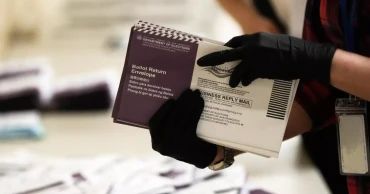
US appeals court upholds injunction blocking Trump’s order to create federal voter list
A federal appeals court has upheld a ruling that blocks President Donald Trump’s executive order to create a federal list of eligible voters and restrict the delivery of mail ballots to people included on the list in nearly half of US states.
A panel of judges from the 1st US Circuit Court of Appeals on Saturday rejected the Trump administration’s effort to implement the mail-in voting restrictions in 23 states that had challenged the order ahead of November’s midterm elections.
Trump issued the executive order in March directing the head of US Citizenship and Immigration Services and the commissioner of the Social Security Administration to create a “state citizenship list” of eligible voters. The order also directed the US Postal Service to deliver mail ballots only to people on the list.
Trump has described the proposed changes as safeguards to prevent non-US citizens from voting. However, state election officials argued that the measures could be abused and create confusion in the election process.
Democratic officials from 23 states and the District of Columbia challenged the order in a lawsuit filed in US District Court in Boston.
They argued that Trump’s order was unconstitutional because states and Congress, rather than the president, have the authority to establish election rules.
US District Court Judge Indira Talwani, who was nominated by Democratic President Barack Obama, agreed with the challengers and blocked implementation of Trump’s order for the Nov. 3 elections, but only in the states that filed the lawsuit.
The Justice Department said in an emailed statement Sunday that it is “reviewing all options” for its next legal steps and remains confident that Trump’s executive order will ultimately be upheld.
8 days ago

France's D-Day beaches, Greece's Mount Olympus secure UNESCO World Heritage designation
World War II’s D-Day landing beaches in northern France and the iconic Mount Olympus in Greece were among the sites added to the World Heritage List on Sunday at a U.N. committee meeting in South Korea reviewing dozens of nominations.
The UNESCO committee, which meets in Busan through Wednesday, also inscribed the ancient Japanese capitals of Asuka and Fujiwara and South Sudan’s Boma-Badingilo Migratory Landscape, host to one of the world’s largest land mammal migrations and the country’s first addition to the World Heritage List.
The French designation covers the five Normandy landing beaches — Omaha, Utah, Sword, Gold and Juno — where more than 150,000 Allied troops came ashore on June 6, 1944, along with the Pointe du Hoc assault site, all central to the campaign to liberate Western Europe from Nazi occupation during World War II.
International Council on Monuments and Sites, which evaluates submissions to the heritage committee, said the sites contain extensive remnants, from German fortifications and bomb-scarred landscapes to Allied harbor structures and sunken vessels, marking an “event widely perceived as having enabled the return of freedom and heralded a lasting peace on the European continent.”
ICOMOS also called for stronger monitoring and preservation efforts on the sites, citing potential threats posed by tourism, climate change and rising sea levels, and the development of wind farms near the areas.
Ahlem Gharbi, France’s permanent delegate to UNESCO, said the Normandy landings marked a turning point from global conflict toward a postwar order built on peace and security, and that the designation of the sites carries added significance at a time of escalating international crises and wars.
“It’s probably the greatest amphibious landing there’s ever been. It ought to be remembered for that alone,” historian David Edgerton said in a recent interview with The Associated Press.
The World Heritage inscription of Mount Olympus, the mythical home of the 12 Olympian gods, rewarded a 12-year effort by Greece to secure recognition for its tallest mountain as a mixed cultural and natural heritage site. Rising 2,918 meters (9,573 feet) from a base near sea level, the mountain was believed to be the throne of Zeus, king of the gods, while also harboring rich biodiversity.
Evangelos Geroliolios, mayor of Dion-Olympus, a municipality at the foot of the mountain, said in a recent interview with the AP that inclusion on the World Heritage List “places greater obligations on our part to protect this environment,” citing the potential impact of increased tourism.
“We reaffirm our unwavering commitment to safeguarding Mount Olympus for the benefit of present and future generations,” said Georgios Koumoutsakos, Greece’s delegate to UNESCO. “As Greek mythology wisely reminds us, it is always best to remain on good terms with gods.”
The designated Japanese locations in the western prefecture of Nara cover 19 archaeological sites from the 6th- to 8th-century capitals of Asuka and Fujiwara, where Japan established its first centralized state modeled after Chinese systems. The sites preserve the largely buried remains of royal palaces, government offices, Buddhist temples and tombs from capitals that influenced the later capitals of Nara and Kyoto.
Japanese Vice Culture Minister Shigeki Kobayashi thanked the committee for inscribing the Asuka-Fujiwara sites and said Japan reaffirms its commitment to “transmitting this valuable property to the future generations.” Japanese Prime Minister Sanae Takaichi, a Nara native, wrote on X that she hopes the World Heritage designation will boost tourism to the site.
Yoshiyuki Aihara, a Nara University archaeology professor, told AP the sites are significant because they show how Japan’s ancient state was formed through influences from China and the Korean Peninsula.
“If you dig underneath these rice paddies about 1 meter, you start finding a stretch of ruins in this area, though that’s not easy for ordinary visitors to understand,” said Aihara, who is continuing excavation work at the site.
South Sudan’s Boma-Badingilo site encompasses vast wetlands, flood plains and savannas shaped by seasonal rainfall and flood dynamics, with an estimated 6 million white-eared kob, tiang and Mongalla gazelles moving across the landscape in response to changing environmental conditions.
It also provides habitat for elephants, lions, cheetahs and other wildlife while supporting various ethnic communities that have lived by herding, farming and fishing for centuries, according to UNESCO.
8 days ago