USA
US military launches new strikes on Iran as clashes escalate over shipping routes
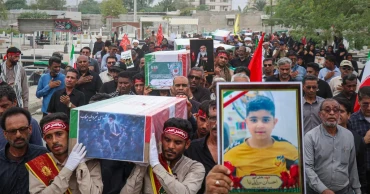
The U.S. military announced the 13th night of strikes Thursday against Iran as clashes escalate over shipping routes. The attacks came after Yemen’s Iran-backed Houthi rebels said they attacked two Saudi oil tankers in the Red Sea, potentially widening the Iran war as international oil topped $100 a barrel.
A short time later, Iranian state media reported explosions along the strait in Qeshm and Bandar Abbas, where two people were reportedly injured, as well as to the northwest near Andimeshk, Omidiyeh and Firuzabad.
U.S. Central Command said the latest attacks concluded shortly before 5 a.m. local time. The strikes were designed to “further degrade Iran’s ability to threaten civilian mariners and commercial vessels transiting regional waters” as the Americans push to regain control over the Strait of Hormuz and restore the flow of international shipping.
Meanwhile, the Houthis threatened to shut down another key trade route, with the world economy already reeling from Iran’s closure of the Strait of Hormuz. Iran and the U.S. have stepped up attacks as they vie for control of the strait, through which a fifth of the world’s oil and gas transited in peacetime, setting off a scramble for alternative routes.
President Donald Trump threatened “major military punishment” against the Houthis if their attacks on ships continue.
“If they do this again, the U.S. will hold Iran responsible, in that the Houthis are a Surrogate and/or Proxy of Iran, and major military punishment will be inflicted upon Iran and, of course, the Houthis, themselves,” Trump wrote on social media.
As the rhetoric escalated, so did the economic fallout. The price of Brent crude oil, the international standard, spiked more than 6% Thursday, to about $100 a barrel. That is the highest level since May, before the two sides reached a preliminary peace agreement last month that has since collapsed.
Prime Minister Ali al-Zaidi of Iraq, which has close ties to both the U.S. and Iran, was in Tehran on Thursday to call for peace and dialogue, and he promised not to allow Iraqi territory to be used for attacks on Iran, his office said. Al-Zaidi met with Trump earlier this month in Washington.
U.N. Secretary-General Antonio Guterres warned Thursday that the region is being pulled “into an ever-widening circle of confrontation” with one crisis feeding another and every escalation triggering the next.
“Diplomacy is the only way forward,” Guterres told the U.N. Security Council. He called for Pakistan’s efforts to mediate an end to the war to be strengthened.
Houthi attacks are a ‘double whammy’ on oil shipments
The Houthis’ SABA news agency said the rebels had struck two tankers, the Encelia and the Layla, in the Red Sea, causing fires on both. There were no reports of casualties.
It was the first reported Houthi attack on a vessel since they announced a blockade of Saudi-linked shipping through the Bab el-Mandeb Strait earlier this week in retaliation for the kingdom’s blockade on Yemen and a recent attack on the international airport in Yemen’s rebel-held capital, Sanaa.
Bab el-Mandeb, at the southern tip of the Arabian Peninsula, is a vital shipping chokepoint connecting the Red Sea to the Gulf of Aden. Around 12% of the world’s trade, including a fourth of global container traffic, passes through there, moving between Europe and Asia via Egypt’s Suez Canal.
The state-run Saudi Press Agency reported an attack set the Encelia ablaze overnight in the Red Sea. It did not mention the Layla.
The United Kingdom Maritime Trade Operations Center said it received a report of a tanker being struck by “an unknown projectile” 130 kilometers (80 miles) southwest of Al Shuqaiq, Saudi Arabia, in the Red Sea.
The Houthi attacks put at risk oil shipments from Saudi Arabia’s Yanbu port on the Red Sea and present a “double whammy” on top of the disruption in the Strait of Hormuz, said maritime data and analysis firm Lloyd’s List Intelligence.
Saudi Arabia has diverted millions of barrels a day of oil exports to Yanbu via an overland pipeline as the war has bottled up the Persian Gulf.
The Houthi threat “raises questions on the viability of this route,” Lloyd’s said in slides accompanying an online webinar Thursday.
The rebels say they are blockading Saudi Arabia, but during their announced blockade of Israel at the height of the war in Gaza, they targeted many vessels with little or no connection to that conflict, disrupting global trade.
Both sides dig in over Strait of Hormuz
Iran says it has the right to manage traffic and potentially charge fees in the Strait of Hormuz, which was open to all toll-free before the war. It has attacked ships using a route through the strait that is overseen by U.S. forces and intended to be outside Tehran’s control.
Trump said on social media Thursday that sanctioned Iranian funds in the possession of the U.S. will cover the expense of fixing boats damaged in the war.
“Please let this statement serve to represent, until further notice, that from this point forth, any and all damages done to Ships, Cargo, or anything related thereto, will be paid for by Iranian Money that the United States has in its possession, and controls,” Trump said.
It was unclear what legal mechanisms Trump would use to access and spend the funds, but he said that doing so would be “the fair and equitable thing to do.”
In response to Iran’s attacks, the U.S. began the widening campaign of strikes across Iran and restored a naval blockade of Iran’s ports. U.S. Central Command said it has redirected about a dozen commercial vessels and disabled one since the blockade resumed.
The war of words has also escalated. Iranian Foreign Minister Abbas Araghchi said Tehran would adopt an “eye for an eye” policy on U.S. strikes against its infrastructure. U.S. Secretary of State Marco Rubio retorted that Trump’s policy is “a head for an eye.”
“The price will continue to get higher every single night until they come to their senses,” Rubio told reporters while traveling in the Philippines for a regional summit.
Iran’s health ministry said Thursday that 55 people have been killed and 629 have been wounded since renewed U.S. airstrikes began on June 27.
Iran has responded to U.S. attacks by targeting energy infrastructure and desalination plants providing drinking water in parched neighboring Gulf countries.
Polls have shown the war is unpopular among Americans, a fact reflected in the narrow passage Thursday of a resolution in the U.S. House to halt the war. Though a handful of Republicans crossed party lines to support the measure, the vote remained largely symbolic.
10 days ago

Member of Vance's Secret Service detail under investigation over alleged leak
The US Secret Service has launched an internal investigation into a member of Vice President JD Vance's security detail over allegations related to a suspected leak of sensitive information, the agency said Thursday.
Secret Service spokesperson Anthony Guglielmi said the employee is under internal review and could also face a criminal investigation over allegations involving compromised "operational and information security."
"While we will not comment on the specifics of this matter, one principle is unequivocal: any conduct that potentially threatens the safety of a protectee will not be tolerated," Guglielmi said in a statement.
The agency did not identify the individual under investigation.
According to the Secret Service, the inquiry stems from a report published last week by MS NOW, which said some agents assigned to Vance's protective detail had privately expressed frustration over last-minute travel requests involving the vice president and his family.
Vance's office declined to comment and referred inquiries to the Secret Service.
Vice President Vance and his wife, Usha, reside at the official vice presidential residence at the US Naval Observatory in Washington with their children.
The couple welcomed their fourth child, Alec Neel Vance, on Sunday. According to the vice president's office, he is the first child born to a sitting US vice president in more than 150 years. The couple's other children are Ewan, 9, Vivek, 6, and Mirabel, 4.
11 days ago
Considering "bigger" strikes in Iran: Trump
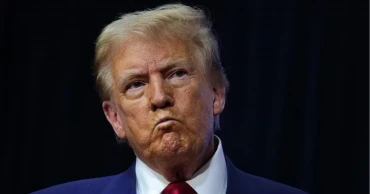
U.S. President Donald Trump said he is seriously considering restarting major combat operations in Iran, including strikes that would be bigger than the "Operation Epic Fury" launched on Feb. 28, Axios reported on Thursday.
"I am considering a massive attack. Bigger than ever before. I am close to making a decision. We are all set for it," Trump said in the interview, adding that Iran had not "received enough pain yet."
Israel "would join in two minutes if I ask them to," Trump said, admitting there would be "consequences" for Israel if it joined the strikes.
Trump didn't give a deadline for his decision, according to the report.
As of Wednesday, U.S. forces had launched strikes against Iranian military targets for 12 consecutive days following the collapse of a June memorandum of understanding intended to reopen the Strait of Hormuz.
International benchmark Brent crude rose to the highest level in two months, reaching 100 U.S. dollars per barrel on Thursday morning after two Saudi oil tankers were hit in the Red Sea.
As many as 68 percent of U.S. adults said the war with Iran was "not worth fighting," while only 28 percent said it was, according to a poll released by The Washington Post-Ipsos last week.
11 days ago

US announces over $200 million humanitarian assistance to ICRC, IFRC
The United States on Thursday announced more than $200 million in disaster and humanitarian assistance to the International Committee of the Red Cross (ICRC) and the International Federation of Red Cross and Red Crescent Societies (IFRC).
This assistance, including a nearly $133 million contribution to ICRC’s 2026 Global Appeal and $70 million to IFRC, furthers the Department’s approach of flexible humanitarian assistance awards with global coverage, enabling implementing organizations to address ongoing crises and respond to new disasters using funding they already have on hand, bypassing lengthy procurement timelines.
"Today’s contributions support organizations that respond quickly when disasters strike, provide unparalleled access to people in need in conflict settings, and leverage preexisting worldwide disaster and humanitarian response infrastructure," said the Spokesperson at the US Department of State.
Rapid, Flexible, and Efficient:
Through its extensive network of National Red Cross and Red Crescent Societies, comprising 18 million trained volunteers, IFRC delivers rapid, scalable humanitarian assistance in response to sudden onset disasters and complex emergencies.
When disasters strike, these National Societies are often first on the ground, providing immediate life-saving assistance.
This U.S. funding will help IFRC surge support to National Societies as needed, helping to meet immediate needs.
Worldwide Access:
This contribution to ICRC will support its work to deliver life-saving assistance to people living through armed conflict.
ICRC’s unique mandate and neutral and impartial positioning enable it to achieve unparalleled access to conflict-affected populations across frontlines and in hard-to-reach areas, providing life-saving assistance to people that may otherwise be inaccessible to other humanitarian implementers.
Providing Efficient Assistance Through Existing Response Infrastructure:
By providing assistance through such well-known and well-established organizations, the Department is leveraging existing response infrastructure to provide assistance quickly and efficiently.
The rapid, flexible, and global focus of this assistance complements similarly structured awards to Catholic Relief Services, UNICEF, and the World Food Program, in addition to the Department’s historic memorandum of understanding and $3.8 billion commitment to the UN Office for the Coordination of Humanitarian Affairs.
By prepositioning assistance with trusted and proven implementing organizations, the Department is enabling faster, more efficient humanitarian and disaster response while reducing bureaucratic burdens on Department staff.
"The United States remains the largest humanitarian donor in the world, and we continue to call on other governments and the private sector to join our push for a faster, more accountable, efficient, impact-driven, locally driven, and hyper-prioritized model of global humanitarian assistance," said the US government in a media note.
11 days ago
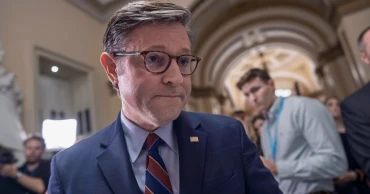
US House again backs resolution to limit Iran military action despite Republican opposition
The US House of Representatives has narrowly approved a resolution calling for congressional authorization before further American military action against Iran, marking the second time lawmakers have backed such a measure amid the escalating conflict.
The resolution passed Thursday by a 214-208 vote, with a small group of Republicans joining Democrats. The Senate was expected to consider a similar proposal later in the day.
Although the measure is largely symbolic and unlikely to become law, supporters say it reflects growing concern in Congress over the Trump administration's handling of the war and the absence of a clearly defined strategy.
Democratic Representative Pramila Jayapal, who led the resolution in the House, said the conflict has continued without "a clear mission, strategy or end goal."
Most Republicans opposed the measure, arguing the president should retain broad authority to direct military operations. House Foreign Affairs Committee Chairman Brian Mast defended the campaign, saying it was aimed at holding Iran accountable for attacks that had claimed American lives and cautioned against diminishing the sacrifices of US service members killed during the conflict.
Representative Gregory Meeks, the top Democrat on the House Foreign Affairs Committee, countered that military action should not proceed without congressional approval, arguing lawmakers deserve a full explanation of the administration's objectives.
President Donald Trump has maintained that the continued airstrikes do not represent a return to a prolonged war. Following the first House vote on the issue in June, he dismissed the resolution as "meaningless" and criticized Republicans who supported it.
The debate comes as US airstrikes continue and diplomatic efforts have shown little visible progress. Tensions over the Strait of Hormuz, a vital route for global oil shipments, remain unresolved, contributing to higher fuel prices and concerns about broader economic consequences.
Defense Secretary Pete Hegseth recently told lawmakers that the United States has spent an estimated $37.5 billion on the conflict so far.
The issue has also exposed divisions within the Republican Party. While many GOP lawmakers have publicly backed Trump's approach, some have privately questioned the duration and objectives of the campaign. Trump has previously criticized Republicans who voted in favor of limiting his war powers, calling them disloyal.
Recent opinion polls suggest the conflict has limited public support. Surveys indicate that a majority of Americans disapprove of Trump's handling of the war, with many unconvinced that military action and ongoing negotiations will prevent Iran from developing nuclear weapons. Even among Republican voters, a significant minority remains skeptical about the war's objectives and outcome.
11 days ago
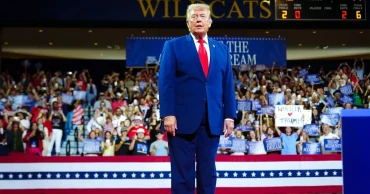
Trump says Saudi nuclear pact requires normalization with Israel
US President Donald Trump said Thursday that any agreement with Saudi Arabia on a civilian nuclear programme would be contingent on the kingdom establishing diplomatic relations with Israel under the Abraham Accords.
In a post on social media, Trump said the proposed deal would not permit Saudi Arabia to enrich uranium. The issue has drawn scrutiny from nonproliferation experts, who argue the agreement lacks sufficient safeguards to ensure uranium cannot be enriched to weapons-grade levels.
The remarks came as political debate intensified in Washington over the administration’s handling of the conflict with Iran.
The US House of Representatives narrowly approved a resolution on Thursday calling for congressional authorization before further US military action against Iran, marking the second time lawmakers have backed such a measure.
The resolution passed by a vote of 214-208 and now shifts attention to the Senate, which was expected to take up similar legislation later in the day.
Although the Democratic-led effort is largely symbolic and faces uncertain prospects, supporters say it sends a clear message that lawmakers want Congress to play a greater role in decisions involving military action.
Representative Pramila Jayapal, who led the measure on the House floor, criticized the administration’s approach, saying the conflict has continued without a clearly defined mission, strategy or end objective.
The resolution was approved with support from Democrats and a small number of Republican lawmakers who joined them. However, most Republicans opposed the measure, backing Trump’s handling of the conflict and rejecting efforts to limit the president’s authority over military operations.
11 days ago
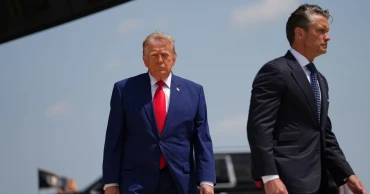
Republicans continue backing Iran war despite growing political risks
Republicans in the U.S. Congress are trying to balance support for the Iran war with the political risks of defending an increasingly unpopular conflict as elections approach and the future of the war remains uncertain.
The pressure has intensified in recent days, especially for Republican lawmakers seeking reelection in November. While some GOP members say they want more information from President Donald Trump's administration about the war's objectives and rising costs, they have continued to support the president's decision to engage militarily and have repeatedly voted to leave key war-making powers in the hands of the White House.
"Is anyone out there in the real world happy with gas prices? No," said Republican Sen. John Kennedy of Louisiana after questioning military leaders during a tense Senate hearing Tuesday. "But I think they understand why gas prices are as high as they are."
It remains unclear whether more Republicans who have privately expressed concerns about the conflict will begin speaking out publicly as the midterm elections get closer. Lawmakers in both the House and Senate are expected to face another major test of their support for Trump this week as Democrats push for new votes requiring congressional approval for military action against Iran.
The debate comes as the United States has launched multiple rounds of airstrikes against Iran during the escalating confrontation over the Strait of Hormuz. Fuel prices have risen sharply, and Defense Secretary Pete Hegseth told senators Tuesday that the war has already cost the United States about $37.5 billion. On Wednesday, Trump traveled to Dover Air Force Base to receive the remains of four American service members killed during the conflict.
Maryland Democratic Sen. Chris Van Hollen, who is expected to lead the next Senate war powers vote as early as Thursday, said the combination of congressional hearings, American casualties and rising economic costs makes it important for officials to be held accountable.
"This is a very unpopular war," Van Hollen said.
Polls show public opposition
Recent polling suggests that most Americans disapprove of Trump's handling of the Iran conflict. A July survey by The Washington Post and Ipsos found that relatively few Americans believe the war has been worth fighting, and most are not confident that U.S. military action and negotiations will prevent Iran from developing nuclear weapons.
The poll also showed that only about two-thirds of Republicans approve of Trump's handling of Iran. While around 60% of Republicans believe the war has been worth fighting and are confident it will stop Iran from obtaining a nuclear weapon, roughly one-third remain unconvinced.
Republican Sen. Mike Rounds of South Dakota, who is seeking reelection, said he has tried to explain to voters that he has reviewed classified intelligence and believes military action was necessary to prevent Iran from acquiring a nuclear weapon.
"It's challenging," Rounds said. "It's complicated, and a lot of the stuff we know, we can't talk about, because it's classified."
Maine Republican Sen. Susan Collins, another lawmaker facing reelection, questioned military leaders Tuesday about the closure of the Strait of Hormuz.
"It seems to me that there's been a different plan almost daily with dealing with this problem," she told Hegseth and Joint Chiefs Chairman Gen. Dan Caine.
War powers votes become more contentious
Opposing the war has also carried political risks. Collins was one of four Republicans who joined Democrats in June when the Senate passed a war powers resolution on Iran for the first time. The vote angered Trump, who reportedly called the four Republicans "losers" during a GOP Senate luncheon the following day.
Another Republican who supported that resolution was Louisiana Sen. Bill Cassidy, who later lost his Senate seat in a primary after Trump endorsed a challenger.
During the closed-door luncheon, Cassidy reportedly told Trump that the administration needed to provide more details about the conflict.
"This was supposed to last four weeks, it's lasted four months," Cassidy said. "Our original objectives have not been achieved."
Cassidy later said Trump argued back, and he refused to change his position until he received a briefing. After the White House arranged a private meeting with him, Cassidy changed his vote during a late-night revote before the Senate left for a two-week recess.
On Wednesday, Cassidy declined to say whether the latest developments would affect his vote on the next effort to halt the war.
House to take up another resolution
The House of Representatives is expected to consider a similar war powers resolution on Thursday after approving one in June. It is unclear whether enough Republicans will again join Democrats to pass the measure, which is being led by Democratic Rep. Pramila Jayapal of Washington.
House Speaker Mike Johnson has strongly urged Republican members to oppose the resolutions. Echoing Trump's argument, Johnson said the U.S. has acted to ensure that Iran does not obtain a nuclear weapon, which he called a potential disaster.
At the same time, Johnson said there is broad agreement that "now we got to wrap it up."
Before leaving for Dover on Wednesday, Trump defended his handling of the war.
"Americans don't want high gasoline prices but they aren't against the war," he said.
11 days ago
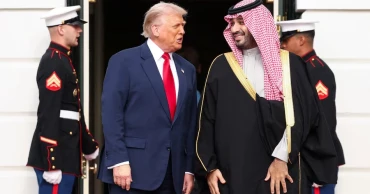
Trump approves nuclear deal that could let Saudi Arabia enrich uranium
US President Donald Trump has approved a nuclear cooperation agreement with Saudi Arabia that could eventually allow the kingdom to enrich uranium for its civilian nuclear energy programme, according to two people familiar with the decision.
The agreement, which has not yet been formally announced, could be made public as early as Wednesday, the sources said. They spoke on condition of anonymity because they were not authorised to discuss the matter publicly.
Expected to remain in force for 30 years, the agreement would involve US companies in developing Saudi Arabia's civilian nuclear sector. It also envisions the possible construction of a uranium enrichment facility in the kingdom after a joint US-Saudi feasibility study.
The proposal will be submitted to the US Congress for review, where it is likely to face scrutiny from lawmakers concerned that permitting Saudi Arabia to enrich uranium could increase the risk of nuclear proliferation and trigger a regional arms race.
Saudi Arabia is a member of the Vienna-based International Atomic Energy Agency (IAEA), which promotes the peaceful use of nuclear energy while monitoring member states to ensure they are not pursuing secret nuclear weapons programmes.
However, one of the sources said the agreement is not expected to include the IAEA's Additional Protocol, which provides inspectors with expanded authority to verify that nuclear activities remain exclusively peaceful.
The development comes amid heightened regional tensions following military operations by the United States and Israel targeting Iran's nuclear capabilities. Tehran maintains that its uranium enrichment programme is intended solely for peaceful purposes.
The White House and Saudi authorities did not immediately comment on the reported agreement. The Wall Street Journal first reported the decision.
Both Trump and former President Joe Biden had sought a civilian nuclear agreement with Saudi Arabia that would allow the kingdom to benefit from American nuclear technology.
Non-proliferation experts, however, have warned that domestic uranium enrichment could provide Saudi Arabia with the technical foundation for a future weapons programme. Crown Prince Mohammed bin Salman has previously suggested the kingdom would seek nuclear weapons if Iran were to acquire them.
US Energy Secretary Chris Wright visited Saudi Arabia last year and held discussions with Saudi officials on expanding the kingdom's commercial nuclear power sector. The US Department of Energy did not immediately respond to requests for comment.
Saudi Arabia has also strengthened security ties with nuclear-armed Pakistan. Analysts note that any future enrichment capability in the kingdom is likely to draw increased international attention given the region's security dynamics.
While uranium enrichment alone does not enable a country to build a nuclear weapon, it is considered a critical step in the nuclear fuel cycle and can significantly shorten the path to developing weapons-grade material if a country chooses to do so.
The United Arab Emirates, by contrast, built its Barakah nuclear power plant under a so-called "123 agreement" with the United States without pursuing domestic uranium enrichment—a model widely regarded by non-proliferation experts as the international benchmark for civilian nuclear cooperation.
12 days ago
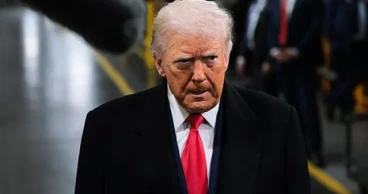
Trump approves nuclear deal that could allow Saudi Arabia to enrich uranium
US President Donald Trump has approved a nuclear cooperation agreement with Saudi Arabia that could allow the kingdom to enrich uranium for its civilian nuclear programme, according to two people familiar with the decision.
The sources, who were not authorised to discuss the matter publicly because the decision has not yet been formally announced, said the agreement could be unveiled as early as Wednesday.
The proposed deal is expected to remain in force for 30 years and would involve US companies in developing Saudi Arabia's civilian nuclear programme. It could also pave the way for the construction of a uranium enrichment facility in the kingdom following a joint US-Saudi feasibility study.
However, the agreement is expected to face scrutiny in Congress, where some lawmakers are concerned that allowing Saudi Arabia to enrich its own uranium could fuel nuclear proliferation and trigger a new regional arms race.
Saudi Arabia is a member of the Vienna-based International Atomic Energy Agency (IAEA), which promotes the peaceful use of nuclear energy while monitoring member states to ensure they are not pursuing secret nuclear weapons programmes.
According to one of the sources, the agreement is not expected to include the IAEA's Additional Protocol, which provides for more extensive inspections, monitoring and verification measures.
The expected announcement comes as the United States and Israel continue military operations against Iran, aimed in part at preventing Tehran from developing a nuclear weapon. Iran has consistently maintained that its uranium enrichment programme is for peaceful purposes.
The White House and Saudi officials in Riyadh did not immediately respond to requests for comment. The Wall Street Journal first reported the decision.
Both Trump and former President Joe Biden had previously sought to negotiate a civilian nuclear agreement with Saudi Arabia that would involve sharing American nuclear technology.
However, non-proliferation experts have warned that allowing Saudi Arabia to operate uranium enrichment facilities could eventually enable the kingdom to pursue a nuclear weapons programme. Saudi Arabia's de facto ruler, Crown Prince Mohammed bin Salman, has previously suggested the kingdom would seek nuclear weapons if Iran were to acquire one.
US Energy Secretary Chris Wright visited Saudi Arabia last year, shortly before Trump's trip to the kingdom, and discussed expanding Saudi Arabia's commercial nuclear power industry with Saudi officials. The US Department of Energy did not immediately respond to requests for comment on Tuesday.
Saudi Arabia has also strengthened its security ties with nuclear-armed Pakistan. The two countries signed a mutual defence pact after Israel launched an attack on Qatar targeting Hamas officials. Pakistan's defence minister later said his country's nuclear capability "will be made available" to Saudi Arabia if necessary, a statement widely viewed as a warning to Israel, which is widely believed to be the Middle East's only nuclear-armed state.
Although uranium enrichment alone does not automatically lead to the development of nuclear weapons, experts say it provides a critical capability that could eventually support a weapons programme if combined with other technologies. This concern has long been at the centre of Western objections to Iran's nuclear activities.
The United Arab Emirates, Saudi Arabia's neighbour, signed a so-called "123 Agreement" with the United States to build the Barakah nuclear power plant with South Korean assistance. Unlike Saudi Arabia's proposed arrangement, the UAE agreed not to pursue uranium enrichment, a model that non-proliferation experts have described as the international "gold standard" for civilian nuclear cooperation.
12 days ago

Hegseth to face Senate questions over Iran war funding
US Defense Secretary Pete Hegseth is set to face tough questions from senators on Tuesday over the war with Iran as Republicans seek to advance a $95 billion budget package to fund military operations, along with aid for farmers and voting law changes backed by the White House.
Hegseth, Gen. Dan Caine, chairman of the Joint Chiefs of Staff, and Agriculture Secretary Brooke Rollins are scheduled to testify before the Senate Appropriations Committee, days after the military announced that three more American service members had died in the conflict. The latest fatalities bring the US death toll to 17, while more than 100 troops have been injured since early July.
Sen. Patty Murray, the committee's top Democrat, is expected to warn that the conflict with Iran "could be another forever war."
According to her prepared remarks, Murray will say President Donald Trump has repeatedly promised that a deal is close and the war will end soon, yet is now seeking an additional $70 billion for the conflict.
Military funding makes up the largest share of the Republican budget proposal, which also includes $10 billion in assistance for farmers affected by Trump's tariffs and another $10 billion for voting law changes, including likely new voter identification requirements. None of the spending is offset by reductions elsewhere.
An AP-NORC poll found that most Americans continue to disapprove of Trump's handling of the Iran conflict. Meanwhile, fuel prices have risen as Iran seeks to control oil shipments through the Strait of Hormuz, US munitions are running low amid continued missile strikes, and Trump has moved away from his earlier campaign pledge to avoid prolonged military conflicts.
Despite growing concerns, Trump has shown no indication of changing course, while most Republicans have continued to support his strategy without using Congress' budgetary or war powers to limit the conflict.
House Speaker Mike Johnson said the administration was working to bring the conflict to an end but acknowledged there were still many questions about how that would happen.
Hegseth is also expected to face scrutiny over his leadership of the Pentagon.
Senate Democratic Leader Chuck Schumer accused the defense secretary of focusing on promoting testosterone screenings for troops instead of publicly disclosing the latest casualty figures from the Iran war.
Democratic lawmakers have also demanded the release of a Pentagon report into a deadly attack on an Iranian primary school at the start of the conflict and have threatened to withhold Hegseth's travel budget if the report is not made public.
The Senate is also expected to consider another war powers resolution this week after voting several times to try to limit the conflict. Although the House has passed a measure restricting Trump's authority to wage war, no such resolution has yet cleared both chambers.
Meanwhile, Republicans are moving the budget proposal through the reconciliation process, allowing it to pass with a simple majority despite Democratic opposition.
The House is expected to vote on the proposal this week. However, some Republicans, including Rep. Warren Davidson of Ohio, have criticised the plan, arguing that it would increase the federal deficit because the new spending is not matched by spending cuts. Several other conservative Republicans have voiced similar concerns, while GOP senators are waiting to see whether the House can advance the measure.
13 days ago