USA
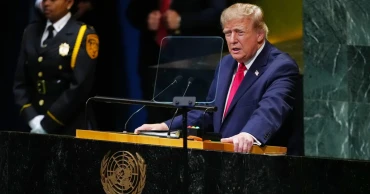
Trump says US, Iranian officials met Tuesday after warning he may ‘annihilate’ Iran
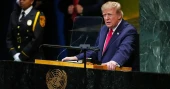
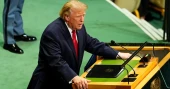
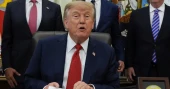
President Donald Trump said U.S. and Iranian officials met Tuesday in an unexpected diplomatic engagement, shortly after he warned in his address to the U.N. General Assembly that he could “annihilate” the Islamic Republic if an agreement is not reached soon to end the nearly seven-month war.
Trump told reporters that his chief envoys, Steve Witkoff and Jared Kushner, met with Iranian officials for about three hours on the sidelines of the annual gathering of world leaders. He provided few details about how the talks unfolded or what was discussed.
“It was a very good meeting,” Trump said, later adding that the Iranian officials were “not the highest level, but it’s something.”
Witkoff said in a post on X that the discussions took place through mediators who moved between the U.S. and Iranian teams. He said he was hopeful the effort “will prove constructive and promising.”
The talks came after months of stalled U.S.-Iran communications following the collapse of a brief ceasefire brokered in June. U.S. and Iranian negotiators separately met with Qatari and Pakistani mediators in Doha in early July for indirect talks.
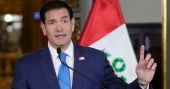
Earlier Tuesday, Secretary of State Marco Rubio said Trump was open to meeting Iranian President Masoud Pezeshkian while both were in New York for the General Assembly.
“This is a president that will meet with anybody for the most part, because he believes that engaging with people is important if you're going to solve problems,” Rubio said on NBC’s “Today” show. “It doesn't mean you're going to end up agreeing with them, but it's important.”
Trump also met Tuesday with leaders and senior officials from the Gulf Cooperation Council — Bahrain, Kuwait, Oman, Qatar, Saudi Arabia and the United Arab Emirates — as well as Jordan, to discuss the way forward in the war with Iran.
In his General Assembly address, Trump defended his decision to launch the war with Iran, arguing that he had shown resolve while other leaders had hesitated.
But he also suggested he may be facing a turning point in the conflict, while urging Iran to fully reopen the Strait of Hormuz and return to negotiations to reach a settlement.
“I have a big decision to make,” Trump said. “Will a deal be made with Iran that lets them rebuild and create a far greater country than it ever was before, maybe one of the greatest in the Middle East or even the world. Or do I annihilate the Islamic Republic and do it quickly, never giving them a chance to kill and destroy people and countries again?”
Trump made the remarks during a wide-ranging address in which he also celebrated the U.S. military operation this year that removed Venezuelan President Nicolás Maduro from power, praised a new agreement expanding the U.S. military presence in Greenland and opposed calls for greater regulation of artificial intelligence.
A central theme of the speech, however, was Trump's defense of the war and his rejection of the idea that Iran had demonstrated resilience.
“The terrorist regime is behaving badly, not because they are strong and confident, but because they are weak and desperate,” Trump said.
Most members of Iran’s delegation left the chamber as Trump criticized the Islamic Republic.
Trump’s speech begins busy day of diplomacy
After his speech, Trump met with Danish Prime Minister Mette Frederiksen and Greenlandic Prime Minister Jens-Frederik Nielsen on the sidelines of the General Assembly to sign a new security agreement.
The agreement, announced last week, followed repeated threats by Trump to “take over” Greenland, a territory of NATO ally Denmark, by military force if necessary.
Trump said Tuesday that the United States would immediately begin work on expanding its military presence in Greenland, including “building two very major military bases.”
Under the agreement, Greenland will remain Danish territory.
Trump also held talks on the sidelines of the General Assembly with new British Prime Minister Andy Burnham, Japanese Prime Minister Sanae Takaichi, South Korean President Lee Jae Myung and Ukrainian President Volodymyr Zelenskyy, as well as Venezuela’s acting President Delcy Rodríguez.
Trump and Rodríguez met Tuesday evening at a reception, marking their first engagement since Trump ordered a U.S. operation in January to capture Maduro and bring him to New York to face federal narcoterrorism and drug-trafficking charges.
Maduro’s lawyers have objected to the U.S. military operation that removed him from power.
Iran war looms over General Assembly
Trump’s visit to the U.N. came as his foreign policy approach, particularly his decision to launch the war with Iran, has become a political issue for Republicans ahead of the U.S. midterm elections.
Nevertheless, Trump argued in his speech that the world is better off under his leadership.
“I have no interest in leaving dangers to grow for another day,” he said.
In last year’s address to the U.N., Trump claimed the United States had “demolished” Iran’s nuclear capabilities after ordering the June 2025 bombardment of three key facilities.
He returned to the General Assembly as the new war with Iran approached its seventh month, continuing to argue that it is necessary to counter the nuclear threat posed by the Islamic Republic.
The conflict has become increasingly complicated even as U.S. and Israeli strikes have killed much of Iran’s top leadership and destroyed its air force and navy. A U.S. blockade of Iranian oil has also severely damaged Tehran’s economy.
The war continues to unsettle energy markets, with oil prices remaining elevated. Saudi Arabia earlier this month shut down a key pipeline that had served as an alternative route for oil blocked in the Gulf after the pipeline was attacked by Iran-backed militants in Iraq.
Meanwhile, territorial actions by Yemen-based Houthi rebels, another Iranian-backed group, near the Bab al-Mandab Strait have made the Red Sea shipping route increasingly dangerous for oil carriers.
Trump’s frustration grows over Russia-Ukraine war
Trump also addressed Russia’s continuing war against Ukraine, a conflict he predicted during his 2024 campaign would be resolved on the first day of his second term. He again expressed hope that the fighting would soon end.
Trump has made clear that his patience is being tested by Ukraine’s attacks on Russian diesel refineries, which have contributed to volatility in global oil markets, as well as Russia’s attacks on Ukraine’s energy infrastructure.
Trump noted that he signed a new sanctions bill last week targeting Moscow. The legislation gives him the authority to impose tariffs of up to 100% on the five largest importers of Russian oil or natural gas.
The law includes an exception for countries importing less than 15% of Russia’s natural gas exports and taking significant steps to reduce those imports. Trump, however, has yet to impose the penalties.
“If necessary, I will have to use them,” Trump said. “It’s time to stop the killing.”
1 month ago
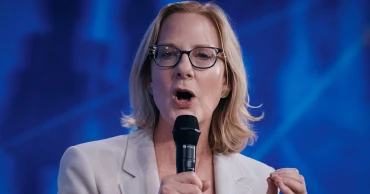
Bill Clinton urges leaders to fill gaps left by ‘retreating governments’
Former U.S. President Bill Clinton opened this year's Clinton Global Initiative conference in New York on Tuesday, urging participants to pledge to “step into the void created by retreating governments” following cuts to foreign assistance by the United States and other countries.
“We know that we can't completely fill the hole that retreating governments are leaving behind,” Clinton said, adding that philanthropy and other sectors would need to develop new ideas and find resources to preserve progress already made on key issues.
He made the appeal after opening the conference by challenging President Donald Trump and his administration on several fronts.
“I suppose I could take my entire allotted time to discuss the self-evident wisdom of building an Arc de Triomphe in Washington to hold all our drones,” Clinton joked. “Some of this stuff it's hard to make up.”
After the laughter died down, Clinton more seriously explained his disagreement with the notion that “cooperation is not important, that winning is important in the short run.”
The Clinton Global Initiative has brought together political, business and philanthropic leaders for more than two decades to address global challenges.
Donna McKay, president and CEO of the Breast Cancer Research Foundation, unveiled one of the new initiatives at Tuesday's conference.
New funding ideas for research and democracy
BCRF Ventures, the foundation's first venture philanthropy fund, is a $100 million initiative launched Tuesday with an $11 million donation from philanthropists Karen and Rob Hale to finance its creation and initial investments and encourage additional donors to contribute.
“It makes sense that at this point in time when there are extraordinary advances happening that BCRF throw everything that we can at research and science,” McKay told The Associated Press in an interview.
“What this venture philanthropy program will do is try to fast-track advances and get them to patients as quickly as possible,” she said.
The new initiative will not replace BCRF's traditional grants to breast cancer researchers. The foundation expanded that grantmaking last year amid federal funding cuts for medical research.
The venture philanthropy fund aims to use returns from successful companies it supports to invest in additional companies.
“The success of one breakthrough has the potential to finance the next and the next,” McKay said.
Stacey Abrams, a former Georgia state representative and leader of the vote mobilization and education nonprofit 10 Steps Campaign, announced a coalition of democracy-focused nonprofits that will launch the Democracy Index Fund.
The fund will pool resources to support pro-democracy organizations, while the Democracy Hedge Fund will seek to generate revenue while also providing support to such organizations.
“Authoritarians have a playbook. They also have a budget,” Abrams said while announcing the new funds. “And now, so should we.”
‘This is a moment to give out money. Lots of it. Right now.’
Carmen Rojas, president and CEO of the Marguerite Casey Foundation, outlined an approach that she described as common sense but is still considered radical by many in philanthropic circles.
“This is an invitation that I give to donors, to foundations in the room, to anybody who has a rich cousin, this is a moment to give out money,” she said. “Lots of it. Right now.”
Rojas said the current level of need is extraordinary and should be met with equally extraordinary action.
The Marguerite Casey Foundation announced in June that it planned to increase its annual giving to at least $500 million over the next decade to ease some of the pressure on communities it serves following federal funding cuts. In 2025, the foundation drew from its endowment to distribute $135 million.
“There was greater risk in inaction,” Rojas said, explaining a step many nonprofits would avoid because it could put future investment earnings at risk.
“The greatest risk we face is sitting on a set of resources that communities across this country desperately need to protect their neighbors, to be able to build relationships with one another, to have their needs met,” she said.
In an interview with The Associated Press, Rojas said her foundation's strategy had encouraged others to adopt a similar approach.
She also wants foundations to reconsider the requirement that they distribute 5% of their assets annually to retain their tax-exempt status, arguing that the requirement should be viewed as a floor rather than a ceiling.
Ford Foundation President Heather Gerken urged conference participants to continue imagining what they want to achieve.
“As much as we are in the trenches and fighting the fight, we need to look out over the horizon,” she said.
“The reason we are here is that we have had a democracy that has not served everyone. And so we need to figure out how to dream a new democracy into existence.”
1 month ago
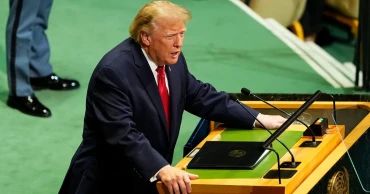
Trump says US, Iran held talks after ‘annihilate’ threat at UN
US President Donald Trump said Tuesday that American and Iranian officials held a three-hour meeting shortly after he warned at the UN General Assembly that he could “annihilate” Iran if no deal is reached soon to end the nearly seven-month war.
Trump gave reporters few details about the talks but described them as “a very good meeting.”
Earlier in his address to world leaders, Trump defended his decision to launch the war and accused Iran of delaying negotiations over reopening the Strait of Hormuz and reaching an agreement to end the conflict until after the US midterm elections.
But Trump later struck a softer tone, saying he believed a settlement was within reach after meeting British Prime Minister Andy Burnham.
“I think that a settlement is going to be reached,” Trump said while sitting alongside Burnham. “They want to talk to us. They have been talking to us, even today. They’ve been talking to us, and the relationship is developing.”
The Iran war has continued to disrupt the global economy, while Trump’s UN visit came amid a busy diplomatic schedule.
He also held talks with British Prime Minister Andy Burnham and Japanese Prime Minister Sanae Takaichi.
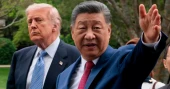
Trump is also hosting Chinese President Xi Jinping in Washington this week as economic and technological competition between the two countries intensifies. The leaders are seeking to stabilize strained relations, although no major agreements are expected.
The meeting is considered significant amid deep differences and a lack of trust between Washington and Beijing.
1 month ago
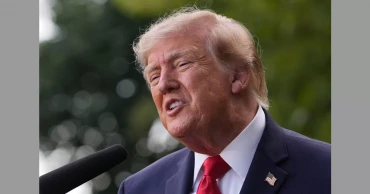
Trump returns to UN amid Iran war, AI concerns and questions over UN's future
US President Donald Trump is set to address the UN General Assembly on Tuesday as the world body faces heightened global tensions over the war with Iran, growing concerns about artificial intelligence and uncertainty over the future of the United Nations.
Trump's decision to launch a war against Iran has shaken global energy markets, while his administration's reduction of US financial support for the UN has raised questions about Washington's future role in the organisation.
After his UN address, Trump is scheduled to meet British Prime Minister Andy Burnham, Japanese Prime Minister Sanae Takaichi and Venezuela's acting President Delcy Rodriguez, according to the White House.
He is also expected to meet leaders and senior officials from the Gulf Cooperation Council -- Bahrain, Kuwait, Oman, Qatar, Saudi Arabia and the United Arab Emirates -- to discuss the Iran war and recent attacks by Iran-backed rebels on Saudi Arabia.
Trump's foreign policy, particularly the decision to launch the war with Iran, has also become a political challenge for Republicans ahead of the 2026 midterm elections.
US Ambassador to the UN Mike Waltz said Trump would highlight how his administration had confronted complex global problems.
Iran war likely to dominate
Trump's speech comes nearly seven months into the US war with Iran, which he has defended as necessary to address what Washington considers an Iranian nuclear threat.
The conflict has disrupted global energy supplies despite US and Israeli strikes that have killed senior Iranian leaders and damaged Iran's military capabilities. A US blockade of Iranian oil has also severely affected the Iranian economy.
Oil shipments through the Strait of Hormuz have improved in recent weeks with US Navy assistance, but remain below pre-war levels. Brent crude has stayed around $100 a barrel, compared with about $70 before the war.
Qatar and other mediators are seeking to overcome what Qatari Foreign Ministry spokesman Majed al-Ansari described as a deep lack of trust between Washington and Tehran and revive negotiations.
US Secretary of State Marco Rubio said Trump was open to meeting Iranian President Masoud Pezeshkian during the UN gathering.
Greenland deal
The Trump administration is also expected to sign an agreement with Danish and Greenlandic leaders during the UN week to establish a framework for expanding the US military presence in Greenland.
The agreement, announced last week, followed Trump's repeated threats to take control of Greenland, an autonomous territory of NATO member Denmark, by force if necessary. Under the deal, Greenland will remain part of Denmark.
Russia-Ukraine war
Trump may also address Russia's continuing war in Ukraine, which he had pledged during his 2024 campaign to resolve on the first day of his second term.
He has expressed growing frustration over continued attacks on energy infrastructure by both sides. Trump said last week that Russia and Ukraine had agreed not to target each other's energy facilities, but the two sides have continued strikes.
Talks with UK, Japan and Venezuela
Trump's meeting with Burnham will be their first face-to-face talks since the Labour leader became British prime minister in July. Rising oil prices and disruptions around the Strait of Hormuz are expected to be among the issues discussed.
Trump will also meet Japanese Prime Minister Takaichi ahead of Chinese President Xi Jinping's planned state visit to Washington later this week.
Relations between Japan and China have become increasingly tense, including over Taiwan and economic issues.
Trump's planned meeting with Venezuela's acting President Delcy Rodriguez will be their first since the US military operation that removed former Venezuelan President Nicolas Maduro in January and brought him to New York to face federal charges.
1 month ago
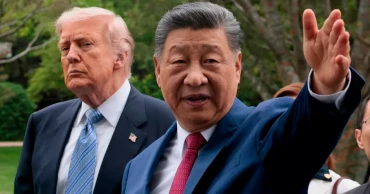
US-China trade commitments show uneven progress ahead of Trump-Xi meeting
The United States and China have made uneven progress in implementing trade commitments reached after US President Donald Trump and Chinese President Xi Jinping met in Beijing in May.
As Trump and Xi prepare to meet again in Washington this week, attention is turning to whether their second face-to-face meeting of the year can push their governments to make progress on issues ranging from US beef and Boeing aircraft to artificial intelligence.
Analysts expect some modest progress but do not anticipate any major breakthroughs from Xi's visit, which begins Wednesday.
"Instead, the main deliverable really is that the trip is happening, and the symbolism and the optics of that," said Sara Schuman, a former senior US negotiator for China trade and an adjunct fellow at the Washington-based Center for a New American Security.
The two countries agreed in May on a framework of "constructive strategic stability," under which they would seek to prevent disagreements from escalating. The framework also aims to identify areas of cooperation despite fundamental differences between the two sides.
Positive signs on Board of TradeMuch of the attention surrounding this week's meeting has focused on the possible creation of a Board of Trade and reciprocal tariff reductions covering $30 billion worth of goods in each direction. Both measures were agreed upon in May.
A Chinese Commerce Ministry spokesperson said earlier this month that the two countries hoped to implement the tariff reductions "at an early date."
Analysts expect an announcement, although some believe the eventual agreement could cover less than $30 billion in goods.
Experts at the World Economic Forum wrote last week that around 10 product categories are under discussion, but the two sides remain divided over the scope of the initiative.
The tariff reductions would apply only to nonsensitive products. Analysts said those could include toys, holiday decorations and other low-end manufactured goods from China. For US farmers, the reductions could involve Chinese tariffs on American agricultural exports.
"I think for the president, he wants to be able to demonstrate, just before the midterms, that this approach is working and that it benefits voters," Schuman said, referring to the US congressional elections in November.
Chinese farm purchases may fall short
The White House said in May that China had agreed to purchase at least $17 billion worth of US agricultural products annually, in addition to an earlier commitment to buy 25 million metric tons of soybeans each year.
That would put China's total annual purchases of US farm products at about $30 billion, according to Luke Lindberg, the US undersecretary of agriculture for trade.
However, it remains uncertain whether that level will be reached. The US Department of Agriculture forecast last month that China would import $21.5 billion worth of American agricultural products during the 12-month period beginning Oct. 1.
The two countries also agreed in May to work actively to remove barriers affecting Chinese exports of dairy products, seafood and potted bonsai, as well as US exports of beef and poultry.
China has renewed registrations for US beef processing plants, but negotiators are still working on technical issues needed to clear American shipments through Chinese ports, said Joe Schuele of the US Meat Export Federation.
"Hopefully it will get worked out soon," he said.
Boeing still waiting for orders
China, one of the world's major commercial aviation markets, promised in May to purchase 200 Boeing aircraft. Four months later, however, those orders have yet to materialize.
Boeing CEO Kelly Ortberg said last week that Chinese airlines would announce their orders according to their own schedules.
"We're progressing nicely," he told analysts. "And I'm confident that we will be receiving orders."
The Chinese side has raised concerns about access to aircraft parts, said Craig Allen, a nonresident fellow at the Asia Society Policy Institute.
AI finally draws attention
There had been little progress on an agreement to establish a dialogue on artificial intelligence until a recent surge of activity driven by concerns within the industry over potential misuse of the technology.
"AI is now on people's minds," said Alvin Graylin, a senior fellow at the Asia Society Policy Institute.
However, although the world's two leading AI powers share concerns about the risks associated with the technology, they also regard each other as competitors, making cooperation more difficult.
"They see little reason to collaborate in areas where they believe a competitive advantage is key, regardless of what they say about wanting to get along," said Ja Ian Chong, a political scientist at the National University of Singapore.
A smaller potential step would be the establishment of a channel for crisis communications.
"Given how low the trust is between these two countries, it's really important that people know who their counterparts are and can call them when there's a crisis," said Schuman, the former US trade negotiator.
Little prospect for Board of Investment
An agreement to establish a Board of Investment, also announced in May, has proven more difficult to advance than the trade-related measures.
While Trump has welcomed new factories being built in the United States, Chinese investment is facing scrutiny from the US Congress because of security and strategic concerns amid growing competition between Washington and Beijing.
China is similarly cautious about exporting its technology to the United States and remains uncertain about whether investing there is safe, said Kurt Tong, a former US diplomat who is now with consultancy The Asia Group.
"It kind of sets up a parameter on how far the relationship might be able to improve, given the levels of suspicion between the US and China," he said.
1 month ago
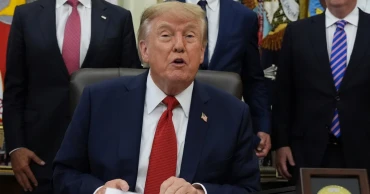
Trump says CNN, MS NOW, Politico barred from White House
US President Donald Trump said Friday that CNN, MS NOW and Politico would be barred from the White House, accusing the three news organisations of repeatedly reporting what he called “fake news.”
Trump made the announcement on his social media platform and later defended the move while speaking to reporters in the Oval Office. He also suggested that other media outlets could face similar restrictions.
Trump gave no details on how the ban would be implemented. Journalists from the three outlets were still working at the White House on Friday afternoon following his announcement.
“Because they’re fake news,” Trump said when asked why he was targeting the outlets. He said the decision was based on what he described as cumulative coverage over the past several years.
CNN condemned the move, saying it stands behind its White House team and its “fair and accurate reporting.” It said any ban would interfere with its constitutional right to report without government hindrance.
Politico said it would continue to report on the White House and defend its First Amendment rights. MS NOW did not immediately respond to a request for comment.
The announcement is the latest escalation in Trump’s disputes with news organisations during his second term. His administration has previously taken legal or regulatory action involving several major outlets, including The Associated Press, The New York Times and the BBC.
The move has also raised questions over First Amendment protections. Reuters reported that free-speech experts said restrictions based on the content of news coverage could face legal challenges.
A 1977 federal appeals court ruling, Sherrill v. Knight, held that while the White House is not required to provide press access, once it establishes facilities for credentialed journalists, access cannot be denied based on the content of their reporting. Any denial must meet a compelling government interest and provide procedural safeguards.
Trump has also indicated that additional media outlets could be excluded from the White House.
1 month ago
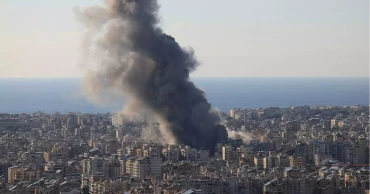
US military estimates Iran war cost at $43.6 billion
The cost of the Iran war to the US military has risen to an estimated $43.6 billion as of September 3, according to a new assessment provided to lawmakers this week.
The estimate from US Central Command, which oversees American military operations in the Middle East, is the latest accounting of the conflict since the United States and Israel launched the war on February 28.
A Congressional Budget Office report released Tuesday estimated that the war had cost $38 billion through August 1 and said expenses could continue to rise by about $3 billion a month, depending on the intensity of the conflict.
The latest breakdown, obtained by The Associated Press and previously reported by Bloomberg and Punchbowl News, shows continued heavy spending on munitions by US forces.
Spending on weapons increased by more than $6 billion in just over a month, rising from $21.7 billion in the CBO estimate to $28.1 billion in the latest US Central Command assessment.
The military costs are only one measure of the war’s broader impact. The conflict has also affected oil prices and financial markets and resulted in deaths and injuries among US troops.
The political impact of the war is expected to feature in the November midterm congressional elections, amid growing criticism of the conflict.
The latest cost estimate comes as the Trump administration seeks approval for a proposed $1.5 trillion military budget.
The White House is also asking Congress to approve a $95 billion package to help finance the Iran war and other priorities.
Defense Secretary Pete Hegseth urged lawmakers to approve the proposed budget during a speech Friday in Austin, Texas, at Saronic Technologies, a company that manufactures drones for the Navy.
“We’re asking for $1.5 trillion in the current budget to make generational investments to keep our country strong and sustain good, high-paying jobs for American manufacturers like Saronic,” Hegseth said. “We will deliver on this generational investment. We will fund this department.”
Meanwhile, Democratic senators have called on Hegseth to provide a full accounting of the costs of the Iran war.
In a letter to the Pentagon chief, the lawmakers accused the Defense Department of withholding basic budget information from Congress and the public as US casualties and taxpayer costs continue to rise.
The military’s one-page breakdown submitted to Congress includes expenses for operating warships, aircraft and bases, as well as equipment losses and medical support for troops.
According to the Defense Casualty Analysis System, Pentagon figures show 18 US troops have been killed and more than 830 wounded in the conflict.
The latest estimate does not include damage to US military bases in the Middle East that have been targeted by Iran with ballistic missiles and drones.
A Pentagon inspector general’s report released Monday said Iranian attacks had damaged or destroyed hundreds of buildings and other structures at US bases in Kuwait, Bahrain, Qatar, the United Arab Emirates, Saudi Arabia, Iraq, Oman and Jordan.
Munitions account for by far the largest share of the latest military expenditure, making up well over half of the total cost.
Among the weapons in highest demand are defensive missile interceptors, including those used by the Army’s Patriot and THAAD systems.
Falling stockpiles of the interceptors have also raised concern in Europe. US and NATO officials told AP that there is a “beyond critical” shortage of the missile interceptors.
Saudi Arabia is also facing dwindling supplies and has sought assistance from regional and Western allies as its standoff with Houthi rebels in Yemen continues.
1 month ago
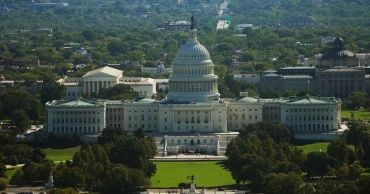
House votes for third time to end Iran war as conflict continues
The US House of Representatives has voted for a third time to end the war in Iran, approving a war powers resolution that would prevent President Donald Trump from continuing military operations without congressional approval.
The 220-204 vote late Tuesday was similar to previous efforts this summer, although several more Republicans joined Democrats in backing the measure.
None of the resolutions have reached the president's desk, where Trump would almost certainly veto such a measure.
"Remember when Donald Trump said that this war would last just a few weeks?" said Rep. Seth Moulton, D-Mass., who served as a Marine during the Iraq War and helped advance the resolution.
He said Congress should now "actually ask tough questions, as the Constitution directs us to do, rather than be subservient to another warmongering administration."
Republican Rep. Brian Mast of Florida, chairman of the House Foreign Affairs Committee, questioned what military resources Democrats would seek to withdraw from the region, where he said Iran continues to pose a threat.
Mast said Trump opposes "forever wars, and that is what he is ending" — referring to decades of hostilities involving Iran.
"They are a continuous ongoing threat to the United States," Mast said. "Enough is enough."
Last war powers vote before midterm elections
Tuesday's action is likely to be the final House vote on the Iran war before the midterm elections, with the conflict playing a significant role in political campaigns.
The war, launched by Trump on Feb. 28, has continued for nearly seven months, marked by intermittent and deadly missile exchanges that have caused widespread disruption across the region.
Lawmakers are scheduled to return home at the end of the week and campaign almost full-time, with fewer than 50 days remaining before elections that will determine control of Congress as Democrats seek to take power from Republicans.
Americans are also dealing with high prices, particularly at gas stations, as the conflict disrupts the movement of oil through the strategically important Strait of Hormuz.
The Congressional Budget Office said Tuesday that the war had cost more than $38 billion as of Aug. 1. It estimated that the conflict is costing between $2 billion and $3 billion each month, depending on the intensity of the fighting.
The budget office also projected that inflation would be 0.5 percentage points higher than previously expected heading into 2027 because of the war.
Trump had promised during his successful bid for a second term that he would not involve the United States in foreign wars. His actions against Iran are now weighing on the Republican Party, which controls both the House and Senate.
An AP-NORC poll conducted in July found that most Americans believe the war in Iran has not been worth fighting.
In previous House votes, four Republicans supported efforts to end the war. That number increased to seven in Tuesday's vote.
They included Republican lawmakers from battleground Iowa, Reps. Zachary Nunn and Mariannette Miller-Meeks, as well as retiring Rep. Nancy Mace of South Carolina.
They were joined by GOP Reps. Tom Barrett of Michigan, Warren Davidson of Ohio, Brian Fitzpatrick of Pennsylvania and Thomas Massie of Kentucky.
All House Democrats also voted in favor of the war powers resolution.
War powers authority put to the test
Congress has made repeated attempts to influence the course of the war against Iran, but efforts to restrict the Trump administration's military operations face slim prospects as long as the president can block or veto the measures.
The House approved its first war powers resolution in June and passed another in July, with both seeking to end US military action against Iran.
The Senate also approved a war powers resolution to end the conflict on its 10th attempt, but Republican senators reversed course the following day after Trump criticized them during a closed-door lunch.
The US Constitution grants Congress the authority to declare war while also giving the president, as commander in chief, the power to undertake certain military operations.
The War Powers Act, enacted after the Vietnam War, attempted to establish more specific limits on presidential military authority. It requires congressional approval for sustained military action after 60 or 90 days.
House Speaker Mike Johnson acknowledged at a news conference Tuesday that gas prices need to come down.
However, the Republican speaker said he believes the conflict with Iran is entering a "new phase" as allies increase their efforts to help stabilize the region.
Once that happens, Johnson said, "you're going to see, as the president said, anytime gas prices will go down again, the cost of groceries will as well."
Johnson said Trump expects the shift to take place after the election, adding, "I'd love it to happen today."
1 month ago
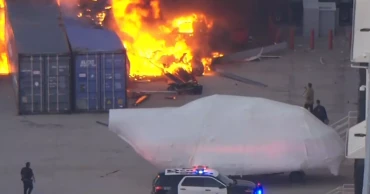
Helicopter crashes in Los Angeles, killing at least 1 near bus crash site
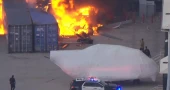
A helicopter crashed in Los Angeles on Tuesday, killing at least one person near the site of a deadly bus crash, officials said.
Authorities had yet to determine whether anyone aboard the helicopter survived.
"We're trying to determine how many patients were inside the helicopter," Los Angeles Fire Department spokesperson Capt. Branden Silverman said at a news conference.
The helicopter came down in a parking lot, striking or landing beside several parked vehicles, Silverman said. The lot serves a large, one-story building, although officials could not immediately identify what type of business operates there.
The person who was killed was outside the helicopter in the parking lot, he said.
Silverman said the helicopter was "pretty well destroyed" and firefighters would need to search through the wreckage to determine how many people were aboard.
Earlier Tuesday, two people were killed and six others injured when an SUV crashed into a city bus in Los Angeles, officials said.
Photos and videos posted online showed roughly half of the SUV embedded in the side of a Metropolitan Transportation Authority bus, while a large number of firefighters worked at the scene.
1 month ago
US shifts $52m military aid from Europe, Mideast to Americas
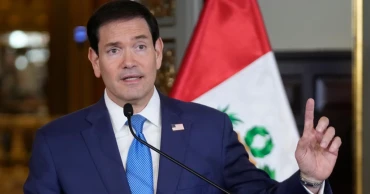
The Trump administration is redirecting $52 million in US military assistance from four European and Middle Eastern countries to Panama, Peru, Ecuador and Colombia, as it steps up its focus on the Western Hemisphere.
The State Department notified Congress on Tuesday that the foreign military financing originally allocated to Slovakia, North Macedonia, Tunisia and Iraq would be reprogrammed to the four Latin American countries.
The move follows Secretary of State Marco Rubio’s visit to Colombia, Ecuador and Peru last week, where he pledged additional US support as the administration places greater emphasis on the Western Hemisphere, particularly on combating drug trafficking and illegal immigration.
The funding shift is also the latest in a series of US moves affecting military assistance and troop deployments in Europe amid President Donald Trump’s criticism of NATO allies over defense spending and other issues. Both Slovakia and North Macedonia are NATO members.
At the same time, the administration has strengthened ties with conservative governments across Central and South America and has placed renewed emphasis on the Monroe Doctrine, the 19th-century US policy asserting Washington’s dominant role in the Americas.
Foreign military financing allows recipient countries to use US taxpayer-funded assistance to purchase military equipment from American defense contractors.
The State Department said the redirected funds would help “combat narcoterrorism in our backyard and help continue to secure the Panama Canal,” arguing that the Western Hemisphere has historically received less US military assistance.
“These funds will prevent adversaries from establishing strategic footholds in our hemisphere,” the department said, in an apparent reference to China’s growing economic and strategic presence in Latin America.
The reallocation does not end US foreign military financing for Tunisia, Iraq, North Macedonia or Slovakia, although the remaining amounts for those countries were not immediately available.
The State Department said the existing distribution of military financing no longer reflects the administration’s priorities, particularly its increased focus on the Western Hemisphere.
1 month ago