USA
War of words over big bill intensifies between Musk, Trump
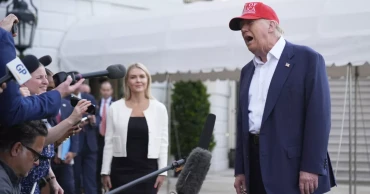
The escalating war of words between billionaire Elon Musk and U.S. President Donald Trump over tax breaks and government spending cuts has intensified, with Musk hinting at launching a new political party and Trump lashing out at the Tesla CEO over electric vehicle subsidies.
The primary flashpoint in their clash is the President's sweeping tax and spending bill. Musk has sharply criticized the legislation, which Republican senators are currently scrambling to push through, warning that it would harm jobs and stifle emerging industries.
Musk, who also heads SpaceX, took to X on Saturday, describing the bill as “political suicide for the Republican Party.”
As the Senate endured a marathon overnight session stretching into Tuesday, Musk ramped up his rhetoric, pledging to campaign against lawmakers who back the legislation.
“Every member of Congress who ran on cutting government spending and then turned around to vote for the biggest debt increase in U.S. history should hang their heads in shame,” Musk posted on X. “They will lose their primary next year if it’s the last thing I do on this Earth.”
The post attracted significant attention, garnering 26 million views.
Just hours later, Musk went a step further, declaring his intention to establish a new political movement if the bill becomes law.
Trump orders review to toughen US policy on Cuba
“If this insane spending bill passes, the America Party will be launched the next day,” Musk wrote. “Our country needs an alternative to the Democrat-Republican uniparty so the people finally have a real VOICE.”
His statement about forming the America Party quickly went viral, amassing 32 million views on X.
Meanwhile, Trump, via his social platform Truth Social, directed his criticism at Musk’s reliance on electric vehicle mandates and subsidies. Trump emphasized that he has always opposed forcing people to adopt electric vehicles.
“Elon probably receives more subsidies than any person in history by a huge margin, and without those subsidies, he’d likely have to pack up Tesla and head back to South Africa,” Trump wrote.
The President further argued that eliminating such subsidies could lead to major national savings.
“No more rocket launches, satellites, or electric vehicle production — our country could save a FORTUNE,” Trump added. “Maybe DOGE should take a long, hard look at this? BIG MONEY TO BE SAVED!!!”
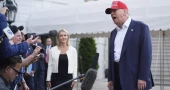
Later, speaking to reporters from the White House lawn before departing for Florida, Trump suggested Musk’s aggressive stance stems from concerns over losing EV subsidies.
“He’s very upset. You know, he could lose a lot more than that, I can tell you that right now,” Trump remarked. “Elon can lose a lot more than that.”
Senate votes on amendments to Trump’s big bill ahead of July 4 deadline
The President also issued a veiled warning to Musk, referencing the Department of Government Efficiency, or DOGE, which Musk once led.
“DOGE could be the monster that turns around and eats Elon,” Trump warned.
1 year ago

Trump orders review to toughen US policy on Cuba
President Donald Trump has directed his top Cabinet officials to review current U.S. policy on Cuba and propose ways to strengthen sanctions within the next 30 days.
In a memorandum issued Monday, Trump instructed officials to focus the review on Cuba’s treatment of dissidents, policies targeting opposition voices, and measures to curb financial transactions that “disproportionately benefit the Cuban government, military, intelligence, or security agencies at the expense of the Cuban people.”
One significant proposal under consideration is to shut down all US tourism to the island and limit educational tours to groups that are organized and operated solely by American citizens.
The move follows Trump’s repeated pledges to roll back the easing of sanctions and other penalties on Cuba introduced under former Democratic Presidents Barack Obama and Joe Biden. In his final days in office, Biden had lifted the US designation of Cuba as a state sponsor of terrorism.
According to a fact sheet, Trump’s memorandum “supports the economic embargo of Cuba and opposes calls in the United Nations and other international forums for its termination.”
Cuban Foreign Minister Bruno Rodríguez swiftly condemned the move, calling it an act of aggression.
“The Presidential Memorandum vs #Cuba released today by the US government strengthens the aggression & economic blockade that punishes the whole Cuban people and is the main obstacle to our development,” Rodríguez wrote on X. “It’s a criminal behavior that violates the #HumanRights of an entire nation.”
Trump halts trade talks with Canada over digital tax on tech firms
The Trump administration has already imposed stricter travel restrictions on Cuba, placing the country among seven nations facing heightened limitations on visitors. It has also revoked temporary legal protections for about 300,000 Cubans, which had shielded them from deportation.
Additionally, the administration has announced visa restrictions on Cuban and foreign officials involved in Cuba’s medical missions, which Secretary of State Marco Rubio has labeled “forced labor.”
In a recent interview with The Associated Press, Cuban Deputy Foreign Minister Carlos Fernandez de Cossio accused the US of trying to discredit the medical missions and criticized the reversal of policies that previously welcomed Cuban migrants.
Rubio, whose family emigrated from Cuba in the 1950s before Fidel Castro’s communist revolution, has long advocated for tough US sanctions on the island nation.
Source: AP
1 year ago
Senate votes on amendments to Trump’s big bill ahead of July 4 deadline
The US Senate on Monday launched an intense push to finalize President Donald Trump’s sweeping tax breaks and spending cuts package, with Republicans facing internal divisions and protests ahead of Trump’s July 4 deadline to pass the bill.
Dubbed the “One Big Beautiful Bill Act,” the 940-page legislation has become the central priority for both the White House and Republican-controlled Congress, though many proposed amendments—mostly from Democrats—are expected to fail in what’s called a vote-a-rama session, as reported by AP.
After a weekend of delays, senators gathered Monday for what is likely to be a marathon of votes and negotiations. Behind the scenes, lawmakers relaxed with card games, cigars, and pizza while waiting for progress on the bill, which includes significant tax breaks, spending cuts, and an increase to the debt ceiling by \$5 trillion.
Senate Majority Leader John Thune said there is still hope to wrap up votes by midnight, though late Monday that timeline was uncertain. “It’s time to vote,” Thune later declared on the Senate floor, pushing back against Democratic criticism that the package harms working families, noting similar welfare reforms were enacted under former President Bill Clinton.
Musk, protests and political fallout
Amid the legislative scramble, billionaire Elon Musk fiercely criticized Republicans for backing the bill, calling the GOP the “PORKY PIG PARTY!!” and pledging to help primary members who support it.
Musk confirmed on X his support for Rep. Thomas Massie, who voted against the measure, even as Trump allies prepared a super PAC to target Massie in upcoming elections. Musk had previously donated \$250 million to Trump’s campaign but recently said he would spend “a lot less” on politics.
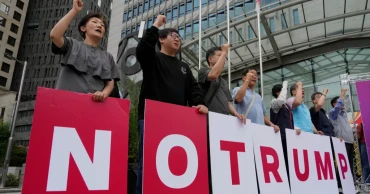
Meanwhile, protests erupted at the Capitol. Police arrested 38 people from the group Repairers of the Breach, who were charged with crowding and obstructing.
Some GOP senators remained cautious about criticizing Musk. “We should be thankful for the work that he did,” Sen. Jim Justice said, while acknowledging Musk’s “real ego.”
Trump to visit new Florida immigration detention facility
Democrats target GOP bill, Trump’s crypto interests
Democrats introduced amendments to block tax breaks for the wealthy and cuts to Medicaid, food stamps, and rural hospitals, though Republicans rejected most measures. Sen. Susan Collins and Sen. Lisa Murkowski broke ranks on amendments to protect rural hospitals and food stamp programs.
Another Democratic amendment aimed to ban Trump and his family from profiting off cryptocurrency ventures, but Republicans dismissed the proposal. GOP Sen. Cynthia Lummis argued such measures would stifle innovation.
Trump’s cabinet, immigration and foreign policy moves
President Trump directed his cabinet to review US sanctions on Cuba, with a focus on tightening restrictions within 30 days, particularly on remittances and tourism.
Trump also plans to visit a new migrant detention center in Florida’s Everglades, known as “Alligator Alcatraz,” alongside Homeland Security Secretary Kristi Noem and Rep. Byron Donalds. Florida Governor Ron DeSantis said the facility is ready for operation and is effectively escape-proof due to the surrounding wetlands and wildlife.
Separately, Trump signed off on a \$510 million arms sale to Israel, including 7,000 bomb guidance kits, reaffirming US support for Israeli defense. Israeli Prime Minister Benjamin Netanyahu is scheduled to visit the White House next week as part of ongoing talks about a ceasefire in Gaza.
Further legal, economic and political developments
The Trump administration is also facing legal battles over its use of the Alien Enemies Act against Venezuela’s Tren de Aragua gang. The case is pending before the conservative 5th Circuit Court of Appeals and may reach the Supreme Court.
In domestic policy, Trump is preparing to impose new tariff rates on several countries, including Japan, after the July 9 expiration of a tariff pause.
The Senate is expected to continue the amendment process late into the night, with final votes on the bill possible before July 4, fulfilling Trump’s self-imposed deadline.
1 year ago
Man found dead, lockdown lifted after sniper ambush kills 2 firefighters in Idaho
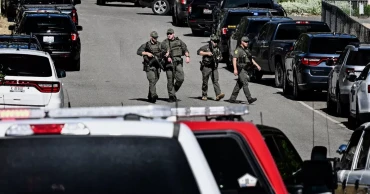
Authorities in northern Idaho lifted a shelter-in-place order Sunday night after discovering the body of a man believed to be behind a sniper ambush that killed two firefighters and wounded another, officials said.
The Kootenai County Sheriff’s Office confirmed a tactical team found the deceased man near a firearm but did not release his identity or details about the weapon. A news conference is expected later to provide further information.
The deadly ambush occurred as firefighters were responding to a brush fire on Canfield Mountain, just north of Coeur d’Alene, around 1:30 p.m. Within 30 minutes, gunfire erupted, turning the scene chaotic.
Sheriff Bob Norris said deputies came under active sniper fire for several hours. “We’re dealing with a shooter hiding in the rugged terrain, armed with a high-powered rifle,” Norris said earlier, adding that his deputies were instructed to return fire.
First responders made frantic radio calls for assistance: “Everybody’s shot up here... send law enforcement now,” one dispatcher was heard saying.
Three victims were transported to Kootenai Health Hospital, where two were pronounced dead and one remains under treatment, hospital spokesperson Kim Anderson said. The injured firefighter’s condition has not been disclosed.
2 dead and at least 3 injured in Las Vegas gym shooting, police say
Governor Brad Little condemned the violence, calling it a “heinous direct assault on our brave firefighters.” He urged Idahoans to keep the victims and their families in their prayers.
The sniper appeared to have exploited the mountainous, wooded terrain, which is popular for hiking and biking. Authorities ordered residents to stay away from the Canfield Mountain Trailhead and Nettleton Gulch Road area, located about 6.5 kilometers north of downtown Coeur d’Alene.
Although the lockdown was lifted following the discovery of the body, the sheriff’s office warned residents to stay alert as the wildfire continued to burn in the area.
The FBI also deployed technical teams and tactical support to assist local authorities, Deputy Director Dan Bongino confirmed.
State lawmakers expressed outrage over the attack. “We are horrified by the murder of two firefighters and shocked by this vicious assault on first responders,” Idaho House Republican leaders said in a statement, offering prayers for the victims and their families.
Local resident Bruce Deming, whose property borders the mountain trail system, described the confusion when he saw smoke but no firefighting aircraft. He later learned helicopters stayed grounded due to fears of being targeted by gunfire.
Deming guided deputies to a trail near his property leading toward the fire and sniper’s suspected location. “I just don’t want to wake up in the middle of the night wondering if someone’s prowling around my place,” he added.
10 killed in shooting at adult education center in Sweden
Canfield Mountain, covered in trees and heavy brush, provides direct access to national forest trails. Wildfires are a frequent concern for the region, made worse by the rugged landscape and dry summer conditions.
Source: With inputs from agency
1 year ago
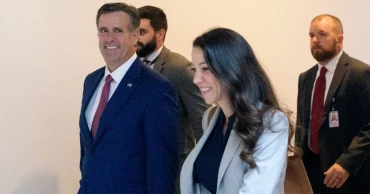
CIA chief says US strikes on Iran’s metal conversion site set nuclear program back by years
CIA Director John Ratcliffe has told U.S. lawmakers that recent American military strikes destroyed Iran's only metal conversion facility, delivering a significant blow to Tehran's nuclear program that could take years to recover from, a U.S. official said Sunday.
Speaking on condition of anonymity due to the classified nature of the information, the official confirmed Ratcliffe’s remarks were made during a closed-door briefing with members of Congress last week.
The revelations come amid continued scrutiny from Democratic lawmakers over the extent of the damage inflicted by U.S. and Israeli strikes, which preceded last Tuesday’s ceasefire with Iran.
“It was obliteration like nobody’s ever seen before,” President Donald Trump told Fox News Channel's “Sunday Morning Futures,” claiming the strikes brought an end to Iran's nuclear ambitions “at least for a period of time.”
Ratcliffe reportedly told lawmakers that while most of Iran’s enriched uranium stockpile is believed to remain buried beneath the rubble at Isfahan and Fordo—two of the main nuclear sites targeted—the loss of Iran's metal conversion capabilities severely limits its ability to produce a nuclear weapon.
Iran could resume uranium enrichment within months: IAEA
Metal conversion, the process of turning enriched uranium gas into dense metal for the explosive core of a bomb, is a critical step in nuclear weapons development. The destroyed facility was located at the Isfahan nuclear complex.
Rafael Grossi, head of the International Atomic Energy Agency (IAEA), echoed those assessments on CBS' “Face the Nation,” stating that Iran’s nuclear sites with capabilities for uranium treatment, conversion, and enrichment suffered "important" damage. However, he cautioned that “some is still standing” and full damage assessments depend on Iran granting access to inspectors.
“Frankly speaking, one cannot claim that everything has disappeared,” Grossi added, warning that Iran retains the technical knowledge to restart its program if it chooses.
Despite the cautious statements from international officials, Trump and his administration have maintained that Iran’s nuclear capabilities were effectively neutralized. Defense Secretary Pete Hegseth described the targeted sites as “destroyed,” while the U.S. Defense Intelligence Agency’s preliminary report acknowledged significant damage to Fordo, Natanz, and Isfahan but stopped short of confirming total destruction.
Israeli officials, speaking on condition of anonymity, also believe Iran’s nuclear enrichment capacity has been neutralized for an extended period. They attribute this to the loss of critical facilities, damage to Iran’s missile production infrastructure, the elimination of key scientists, and the near-collapse of Iran's air defense systems during the 12-day assault.
Ratcliffe also informed lawmakers that Iran’s air defense network was "shattered," making any future attempts to revive its nuclear program vulnerable to further Israeli strikes.
Secretary of State Marco Rubio reinforced the significance of the destroyed metal conversion site during last week’s NATO summit. “You can’t build a nuclear weapon without a conversion facility,” Rubio said, adding that satellite imagery shows the location has been completely obliterated. “It’s wiped out.”
Iran reports at least 71 dead in Israeli strike on Evin prison
While Iran’s physical capabilities have been significantly degraded, Grossi and other experts warn that Iran’s technical expertise remains intact.
“You cannot undo the knowledge or the capacity they have,” Grossi said, stressing the importance of renewed diplomatic efforts to resolve the nuclear dispute.
Source: Agency
1 year ago
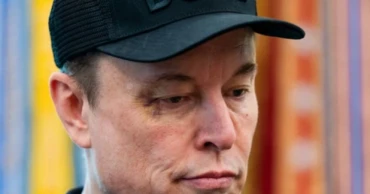
Elon Musk intensifies criticism of Trump’s tax bill as Senate GOP races to pass it
Elon Musk intensified his criticism of President Donald Trump’s extensive tax and spending cuts package on Saturday, warning that the legislation, which Senate Republicans are urgently trying to advance, would jeopardize American jobs and future industries.
“The latest version of the Senate bill will wipe out millions of American jobs and deal a massive strategic blow to the country,” Musk posted on X, hours before the Senate held a procedural vote to initiate debate on the nearly 1,000-page bill. “It props up outdated industries while undermining those critical to the future.”
The billionaire CEO of Tesla and SpaceX, who also celebrated his birthday Saturday, later called the bill “political suicide for the Republican Party.”
Musk’s latest remarks reignited a public feud with the administration he recently departed after serving as head of the Department of Government Efficiency. His comments further complicate efforts by Senate GOP leaders, who have been working intensely to secure enough votes to meet Trump’s goal of passing the bill by July 4th.
Musk has been an outspoken opponent of Trump’s so-called “big, beautiful bill” for weeks. Shortly after stepping down from his government role last month — a departure marked by praise from Trump during a White House ceremony — Musk blasted the legislation as “bloated with pork” and labeled it a “disgusting abomination.”
“Shame on those who voted for it — you know you betrayed your country,” he posted on X earlier this month. In another message, the Republican mega-donor hinted he might withdraw financial support from lawmakers he accused of “betraying the American people.”
Their clash escalated when Musk suggested, without evidence, that Trump’s name surfaced in documents related to sex offender Jeffrey Epstein — a claim that fueled tensions despite their prior alliance.
Musk later attempted to ease tensions, admitting that some of his previous remarks had “crossed the line.” Trump responded by downplaying the incident in an interview with The New York Post, saying, “These things happen. I don’t hold it against him.”
Musk’s renewed attacks cast uncertainty over the temporary truce he and Trump had appeared to reach. The White House declined to comment on Musk’s latest statements.
Since stepping away from politics, Musk has focused primarily on his business ventures, and his political clout has diminished. However, his financial backing — he contributed hundreds of millions to Trump’s 2024 campaign — underscores the influence he can wield if he reengages politically.
While Musk refrained from directly targeting Trump on Saturday, the president increased pressure on Senate Republicans during an unusual evening session, criticizing holdouts like Senator Thom Tillis of North Carolina, accusing him of grandstanding with his opposition vote, and threatening to oppose his reelection.
Despite the drama, the Senate narrowly passed the procedural hurdle late Saturday, allowing formal debate on the bill to begin.
1 year ago
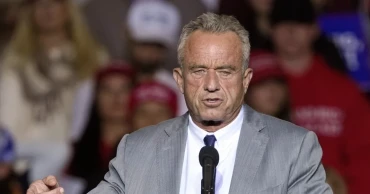
US cuts funding to Global Vaccine Alliance citing concerns over science, transparency
The United States has decided to withdraw its financial support from the global vaccine alliance Gavi, with Health Secretary Robert F. Kennedy Jr. accusing the organisation of disregarding scientific evidence and eroding public trust.
A pre-recorded video of Kennedy's remarks was played at a Gavi donor conference in Brussels on Wednesday where the alliance is seeking to raise at least $9 billion to fund its operations over the next five years.
Gavi, a partnership that includes the World Health Organization (WHO), UNICEF, the Bill & Melinda Gates Foundation, and the World Bank, has facilitated the vaccination of over 1 billion children worldwide, preventing an estimated 18 million deaths.
The U.S. has traditionally been one of Gavi's major donors, previously pledging $1 billion through 2030 before President Trump’s re-election.
Kennedy criticized Gavi’s approach, calling for the alliance to “regain public trust and demonstrate accountability for the $8 billion the U.S. has provided since 2001.” He insisted that the organization must incorporate “the best available science, even when it challenges existing narratives,” and warned that no further U.S. funding would be forthcoming until those standards are met.
A known vaccine skeptic, Kennedy also expressed concerns over Gavi and WHO’s collaboration with social media companies during the COVID-19 pandemic accusing them of “suppressing dissent, limiting free speech, and disregarding legitimate safety concerns.”
Kennedy specifically questioned Gavi’s ongoing recommendations such as promoting COVID-19 vaccinations for pregnant women and funding the distribution of vaccines for diphtheria, tetanus, and pertussis (DTP) in low-income countries.
WHO and leading health authorities have consistently advocated for COVID-19 vaccination among pregnant women, citing their elevated risk of severe illness.
Kennedy, however, referenced research claiming that young girls vaccinated with the DTP shot faced higher mortality rates from other causes compared to unvaccinated peers.
In response, Gavi emphasized its commitment to child health and safety, stating that its vaccine purchases are guided by WHO's independent expert recommendations.
The alliance underscored that its decisions are rooted in rigorous scientific evaluation and public health needs.
“Gavi’s investments are based on the best available science,” the organization said, adding that concerns raised about the DTP vaccine have been reviewed by global scientists, and that the vaccine has significantly contributed to reducing child mortality rates by half.
Meanwhile, the UK government announced a renewed commitment of 1.25 billion pounds ($1.7 billion) to Gavi for 2026-2030.
British officials said the funding would help protect up to 500 million children in some of the world’s most vulnerable regions from deadly diseases like meningitis, cholera, and measles.
1 year ago
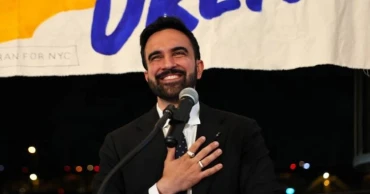
How Zohran Mamdani stuns New Yorkers with mayoral primary win
Zohran Mamdani, a 33-year-old Muslim of South Asian descent, shocked the political establishment by defeating former New York Governor Andrew Cuomo in Tuesday’s Democratic mayoral primary, positioning himself to become the party’s candidate for the top job in America’s largest city.
If Mamdani, a state assemblyman, wins the November election, he would be New York City’s first Muslim and first mayor of Indian origin.
As the votes came in, Mamdani quoted Nelson Mandela in a social media post early Wednesday, saying: “It always seems impossible until it’s done. My friends, it is done. And you are the ones who did it. I am honoured to be your Democratic nominee for the Mayor of New York City.”
Cuomo, who resigned as governor in 2021 following sexual harassment allegations, publicly conceded after calling Mamdani to congratulate him. “Tonight was Assemblyman Mamdani’s night, and he put together a great campaign,” Cuomo said at an event in Manhattan. “And he touched young people, and inspired them, and moved them, and got them to come out and vote. And he really ran a highly impactful campaign.”
Political commentators see Mamdani’s likely win as a signal of broader shifts within the Democratic Party, still reeling from its defeat in the 2024 presidential and Congressional elections.
How did Mamdani pull off the surprise win?
In the first-choice tally of New York City’s ranked-choice Democratic mayoral primary on June 24, Mamdani secured 43.5 percent of the vote—about 432,000 votes—while Cuomo trailed with 36.4 percent, or roughly 361,800 votes. Progressive Comptroller Brad Lander finished third with 11.3 percent, with the rest of the votes split among minor candidates.
As no candidate crossed the 50 percent mark initially, the ranked-choice system came into effect, eliminating lower-ranked contenders and redistributing their supporters’ next preferences. Reports suggest Mamdani benefited heavily from Lander’s progressive supporters, propelling him toward an eventual majority. Though final results may take days, Mamdani’s victory appears inevitable, reinforced by Cuomo’s concession.
Zohran Mamdani stuns Cuomo, poised to be NYC’s first Muslim mayor
Was Mamdani’s victory anticipated?
Not according to polls. In the run-up to the primary, major surveys consistently showed Cuomo in the lead, although Mamdani’s numbers were rising.
A Marist Poll conducted on June 18 placed Cuomo ahead with 38 percent of first-choice votes, while Mamdani trailed at 27 percent. That poll also projected Cuomo to ultimately win 55 percent in the ranked-choice rounds.
Earlier, a May poll by Emerson College found Cuomo at 37 percent and Mamdani at just 17 percent. In April, a Siena/AARP poll showed Cuomo with 39 percent support to Mamdani’s 15 percent.
Cuomo’s deep-rooted name recognition, boosted by his father Mario Cuomo’s legacy as a former state governor, coupled with a well-funded campaign, seemed to make him the frontrunner.
However, Mamdani’s grassroots strategy, powered by volunteers, small-dollar donors, and high turnout from young voters, proved decisive—especially in working-class areas across Queens, Brooklyn, and parts of Manhattan.
Despite critics, including Cuomo, portraying Mamdani as inexperienced and ill-equipped to handle the city’s complex governance, voters evidently disagreed.
Who is Zohran Mamdani?
Mamdani, a Democratic Socialist, was born in Kampala, Uganda, and moved to New York at age seven. He is the son of renowned Ugandan scholar Mahmood Mamdani and acclaimed Indian filmmaker Mira Nair.
He holds a degree in Africana Studies from Bowdoin College in Maine. Before entering politics, Mamdani worked as a housing counselor, helping low-income New Yorkers avoid evictions.
He was elected to the State Assembly in 2020, representing Astoria, Queens.
Earlier this year, Mamdani married Syrian artist Rama Duwaji, whose work has been featured in The New Yorker, The Washington Post, and VICE.
What is Mamdani’s position on Gaza?
Mamdani is one of the most outspoken critics of Israel’s war in Gaza among American elected officials. On October 31, 2024, he posted on X: “I will always be clear in my language and based in facts: Israel is committing a genocide.”
He is also a strong supporter of the Boycott, Divestment, and Sanctions (BDS) movement, which he links to “the core of my politics, which is non-violence.”
One of the most talked-about moments of his campaign came in December 2024 during an interview with Mehdi Hasan, where Mamdani declared: “As mayor, I would have Netanyahu arrested if he came to New York!”
“This is a city [where] our values are in line with international law. It’s time that our actions are also,” he added.
Mamdani has faced criticism for his refusal to distance himself from the slogan “Globalize the Intifada,” which some Jewish leaders and conservatives have labeled anti-Semitic.
In a June 2025 podcast appearance on The Bulwark, Mamdani responded: “As a Muslim man who grew up post 9/11, I’m all too familiar (with) the way in which Arabic words can be twisted, can be distorted, can be used to justify any kind of meaning.” He stressed the slogan is about global solidarity with oppressed peoples, not inciting violence.
Cuomo’s campaign also targeted Mamdani’s Muslim identity and his pro-Palestinian stance, accusing him of anti-Semitism. New York hosts the world’s largest Jewish community outside of Israel.
Addressing Islamophobic threats he received, Mamdani stated: “There is no room for anti-Semitism in this city or country.” He has repeatedly clarified that his criticisms are aimed at government policies, not at Jewish people.
Trump says US-Iran talks expected next week as ceasefire holds
His campaign was fuelled by more than 22,000 volunteers and endorsements from progressives such as Bernie Sanders, Alexandria Ocasio-Cortez, and the Working Families Party.
What are Mamdani’s key proposals?
Mamdani’s platform focuses on bold, progressive reforms aimed at wealth redistribution and public service expansion.
Notable pledges include making all city buses free by 2027, citing successful fare-free transit pilots that improved ridership and safety.
On housing, he has vowed to freeze rents on stabilized apartments, roll back rent hikes on city-owned properties, and create a Social Housing Development Agency to provide permanently affordable, publicly-owned homes.
Mamdani also wants to establish municipally-run grocery stores in each borough to improve access to affordable food in underserved communities. His education plans include expanding free meal programs to city colleges and offering universal childcare and early learning programs.
To fund these initiatives, he proposes increasing the corporate tax rate from 7.25 percent to 11.5 percent and introducing a 2 percent surcharge on individuals earning over $1 million annually, which his campaign estimates could raise $9.4 billion per year.
On public safety, Mamdani advocates reallocating resources from the NYPD to a new Department of Community Safety, comprising mental health experts, crisis responders, and outreach teams.
What’s next — is Mamdani set to be mayor?
The general election is scheduled for November 4. Mamdani will face Republican Curtis Sliwa, who lost the 2021 mayoral race by a wide margin.
Given New York’s strong Democratic majority—where Democrats outnumber Republicans by more than six to one—Mamdani is widely expected to secure victory and become the city’s next mayor.
The last Republican to win the mayor’s office was Michael Bloomberg in 2001, who later became an Independent during his second term.
Source: With inputs from Al Jazeera
1 year ago
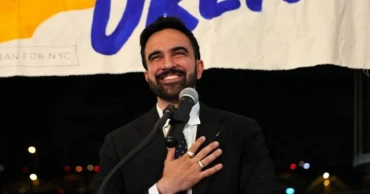
Zohran Mamdani stuns Cuomo, poised to be NYC’s first Muslim mayor
Zohran Mamdani, a 33-year-old Muslim of South Asian descent, delivered a political upset by defeating former New York Governor Andrew Cuomo in the Democratic primary for New York City mayor on Tuesday, positioning himself to make history as the city’s first Muslim and Indian-origin mayor.
If elected in November, Mamdani, currently a state assemblyman, would be the first person from his background to lead the United States' largest city.
As the vote tally unfolded, Mamdani took to social media early Wednesday, quoting Nelson Mandela: “It always seems impossible until it’s done. My friends, it is done. And you are the ones who did it. I am honoured to be your Democratic nominee for the Mayor of New York City.”
Cuomo, who resigned as governor in 2021 following a sexual harassment scandal, publicly conceded the race and praised Mamdani at a Manhattan event. “Tonight was Assemblyman Mamdani’s night, and he put together a great campaign,” Cuomo said. “And he touched young people, and inspired them, and moved them, and got them to come out and vote. And he really ran a highly impactful campaign.”
Israeli law enabling forcible transfer of Palestinians a war crime: UN
Mamdani’s apparent victory is being seen by analysts as a signal of deeper shifts within the Democratic Party, still reeling from defeats in the 2024 presidential and Congressional elections.
How Mamdani took the lead
In the initial round of ranked-choice voting during the June 24 Democratic primary, Mamdani led with 43.5% of the vote—nearly 432,000 ballots cast—followed by Cuomo with 36.4%, or 361,800 votes. Comptroller Brad Lander finished third with 11.3%, while the remaining votes were distributed among other candidates.
As no contender secured over 50% of the first-choice votes, New York’s ranked-choice system came into play, eliminating lower-ranked candidates and reallocating votes based on second-choice preferences.
Mamdani gained significant support from Lander’s voter base and other progressives, propelling him toward the majority threshold. While the final certified results are pending, Cuomo’s concession makes Mamdani’s win all but certain.
An unexpected result
Mamdani's rise surprised many political observers. Leading up to the primary, most polls suggested Cuomo was the favourite, though they acknowledged Mamdani's growing support.
A Marist Poll from June 18 showed Cuomo ahead with 38% of first-choice votes to Mamdani’s 27%. The same survey predicted Cuomo would eventually win with 55% after ranked-choice rounds.
Similarly, a May poll by Emerson College gave Cuomo 37% and Mamdani just 17%. An April Siena/AARP poll had Cuomo even further ahead, with 39% compared to Mamdani’s 15%.
Cuomo’s widespread name recognition, substantial campaign funds, and political lineage—his father Mario Cuomo also served as New York’s governor—appeared to give him the advantage. His campaign dominated TV ads and mailers across the city.
Turkey welcomes Iran-Israel ceasefire, condemns Israeli attacks on Gaza
But Mamdani's grassroots campaign, powered by volunteers, small donations, and a surge in young voter turnout, proved decisive. His appeal resonated with working-class New Yorkers, especially in Queens, Brooklyn, and parts of Manhattan.
Cuomo and other critics argued Mamdani lacked the administrative skills for the complex mayoral role. Tuesday’s outcome showed voters disagreed.
Who is Zohran Mamdani?
Mamdani, a self-identified Democratic Socialist, is the son of renowned Ugandan academic Mahmood Mamdani and Indian filmmaker Mira Nair. Born in Kampala, he moved to New York at age seven and later earned a degree in Africana Studies from Bowdoin College in Maine.
Before entering politics, Mamdani worked as a housing counselor assisting low-income families facing eviction. In 2020, he won a seat in the New York State Assembly representing Astoria, Queens.
Earlier this year, he married Rama Duwaji, a 27-year-old Syrian artist whose work has appeared in outlets such as The New Yorker, The Washington Post, and VICE.
Mamdani’s key proposals
Mamdani has campaigned on an ambitious progressive agenda focused on wealth redistribution, expanded public services, and social reform.
He has pledged to make all city buses free by 2027, citing pilot programs that increased ridership and reduced assaults on drivers.
Housing is central to his platform, with plans for a rent freeze on rent-stabilized apartments, stronger tenant protections, and the creation of a Social Housing Development Agency to build publicly owned, permanently affordable homes.
Mamdani has also proposed opening a city-run grocery store in every borough to ensure affordable, healthy food in underserved communities. His policies include expanding free meal programs to city colleges and introducing universal childcare and early education.
Trump defends US strikes on Iran as intel assessment stirs debate
To fund these initiatives, Mamdani plans to raise the corporate tax rate from 7.25% to 11.5% and implement a 2% surcharge on individuals earning over $1 million annually, projecting $9.4 billion in revenue.
On public safety, Mamdani advocates reallocating resources from the NYPD to a new Department of Community Safety, staffed by mental health professionals and crisis responders.
The road ahead
New York City’s general mayoral election is scheduled for November 4, with Mamdani set to face Republican nominee Curtis Sliwa, who previously lost the 2021 mayoral race.
Once the primary results are finalized, Mamdani will officially become the Democratic nominee—a significant advantage in a city where Democrats outnumber Republicans by more than six to one.
The last Republican to win the NYC mayoral race was Michael Bloomberg in 2001, who later became an Independent during his second term.
Mamdani is now the overwhelming favourite to become New York City’s next mayor.
Source: With inputs from Al Jazeera
1 year ago
Trump defends US strikes on Iran as intel assessment stirs debate
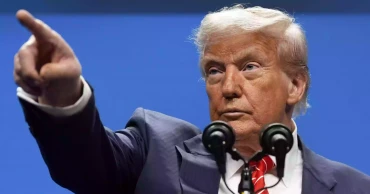
President Donald Trump on Wednesday asserted that U.S. airstrikes delivered a major blow to Iran’s nuclear program, despite an early U.S. intelligence report suggesting the damage was minimal.
“This was a devastating attack that left them reeling,” Trump said, as his administration mobilized senior officials to support his claim that Iran’s nuclear program had been “completely and fully obliterated.”
Defense Secretary Pete Hegseth dismissed the leaked intelligence report — which indicated Iran’s nuclear activities may only face a short-term disruption of a few months — calling it “preliminary” and “low confidence.” Secretary of State Marco Rubio went further, labeling those who leaked the assessment as “professional stabbers.”
The White House cited a statement from the Israel Atomic Energy Commission claiming Iran’s nuclear efforts had suffered a “many years” setback.
Trump says US, Iran to talk next week with war over
Assessing the real impact of the U.S. strikes remains challenging, fueling conflicting narratives that could influence American public opinion on Trump’s high-stakes decision to participate in Israel's offensive against Iran. The situation also raises questions about Trump's next moves in the region, where diplomatic steps may be necessary to prevent Iran from rebuilding its nuclear capabilities.
Iran insists its nuclear program is for peaceful purposes, but U.S. and Israeli leaders have accused Tehran of seeking nuclear weapons.
One major target of the U.S. attack was Iran’s Fordo enrichment facility, located deep underground. According to the Israeli commission, the bombing rendered the site “inoperable.” That statement was distributed by both the White House and the office of Israeli Prime Minister Benjamin Netanyahu.
The American strikes on Iran’s nuclear infrastructure, along with Israeli attacks on other military nuclear sites, have “set back Iran’s ability to develop nuclear weapons by many years,” according to the joint statement.
Meanwhile, Iran’s Foreign Ministry spokesperson Esmail Baghaei confirmed to Al Jazeera that Iran’s nuclear sites suffered significant damage. “Our nuclear installations have been badly damaged, that’s for sure,” he admitted.
The incident has reignited Trump’s longstanding tensions with intelligence agencies and leakers, whom he often accuses of belonging to a “deep state” aimed at sabotaging his agenda. He also harshly criticized media outlets reporting on the classified intelligence, calling them “scum” and “disgusting.”
Trump argued that questioning the success of the strikes insults the U.S. military, noting that stealth bombers flew halfway around the globe to carry out precision attacks with bunker-busting munitions.
“These reports are very unfair to the pilots who risked their lives for our country,” he said.
A key unanswered question is whether enriched uranium — which could potentially be converted into nuclear weapons fuel — was removed from the targeted sites before the strikes.
“I believe they didn’t have a chance to get anything out, because we acted fast,” Trump stated, adding that transporting such material is extremely difficult and dangerous.
Classified briefings for lawmakers on the situation, initially scheduled for Tuesday, have been postponed to Thursday and Friday.
1 year ago