usa
Trump asks Iran for full surrender as he knows Khamenei’s location
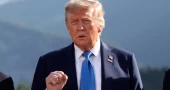
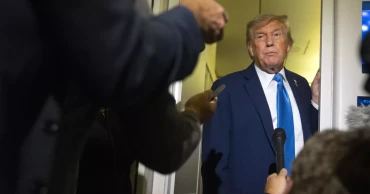
US President Donald Trump on Tuesday declared that the U.S. knows the whereabouts of Iran’s Supreme Leader Ayatollah Ali Khamenei but has chosen not to target him “for now.” He called for Iran’s “UNCONDITIONAL SURRENDER” amid the intensifying Israel-Iran conflict, now entering its fifth day.
“We know exactly where the so-called ‘Supreme Leader’ is hiding,” Trump posted on social media. “He’s an easy target, but we won’t take him out—at least not yet. But missile attacks on civilians and U.S. troops must stop. Our patience is running out.”
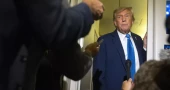
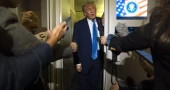
Returning early from the G7 summit, Trump said he was seeking a “real end” to the conflict and total abandonment of Iran’s nuclear ambitions. Speaking aboard Air Force One, he criticized Iran’s leaders for not agreeing to a deal, saying he was “not in the mood to negotiate.”
Despite U.S. intelligence maintaining that Iran isn’t actively building a nuclear bomb, Trump dismissed those assessments, insisting Tehran was close. He also rejected a proposed Israeli plan to assassinate Khamenei, though he appeared to be edging toward deeper American involvement as U.S. military assets reposition in the region.
US intelligence says Iran isn’t building nuclear weapons, but Trump rejects their assessment
Israel claims its strikes have devastated Iran’s air defenses and is seeking U.S. support—including bunker-busting bombs—to destroy key nuclear facilities like Fordo, which lies deep underground. While Trump has not ruled out diplomacy, he signaled a harder stance, calling for immediate evacuations in Tehran and warning that “IRAN CAN NOT HAVE A NUCLEAR WEAPON.”
Defense Secretary Pete Hegseth appeared on Fox News to reaffirm that the U.S. remains “postured defensively” in the region, as Trump’s MAGA base grows divided over potential U.S. military escalation. Some Trump-aligned voices, such as Tucker Carlson and Rep. Marjorie Taylor Greene, have expressed concern, while allies like Sen. Lindsey Graham are urging a more aggressive approach.
Source: With inputs from agency
1 year ago
Trump faces a crucial choice as Israel seeks more US support to cripple Iran’s nuclear program
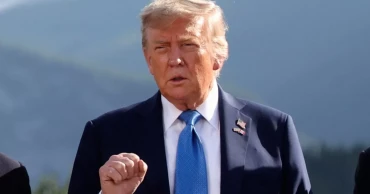
Within about eight hours, President Donald Trump shifted from suggesting a nuclear deal with Iran was still “achievable” to urging the 9.5 million residents of Tehran to evacuate for their safety. He cut short his trip to the G7 summit to return to Washington for urgent discussions with his national security team.
Trump arrived at the White House at a pivotal moment in his presidency. After five days of missile strikes, Israel has inflicted significant damage on Iran and believes it can now deliver a permanent blow to Tehran’s nuclear program—especially if it receives additional support from the Republican president.
However, deeper U.S. involvement, possibly including supplying Israel with bunker-buster bombs capable of reaching Iran’s underground nuclear facilities or other direct military assistance, carries major political risks for Trump.
On his way back, Trump expressed frustration with Iranian leaders for failing to reach a deal, calling for “a real end” to the conflict and a “complete give-up” of Iran’s nuclear ambitions.
“They should have done the deal. I told them, ‘Do the deal,’” Trump told reporters aboard Air Force One. “So I don’t know. I’m not too much in the mood to negotiate.”
Iran maintains its nuclear program is peaceful, and U.S. intelligence agencies assess that Tehran is not actively pursuing a nuclear bomb.
Trump, preparing to meet advisers in the Situation Room, appears to be building public support for a more direct American role. The U.S. has repositioned warships and aircraft in the region to respond if the conflict escalates.
The White House announced Trump’s early departure from the G7 summit in Canada on Monday. On social media, Trump wrote, “Simply stated, IRAN CAN NOT HAVE A NUCLEAR WEAPON. I said it over and over again! Everyone should immediately evacuate Tehran!”
Trump says he, Putin agree ‘war in Israel-Iran should end’
When asked about the evacuation comment aboard Air Force One, Trump said, “I just want people to be safe.”
“We’re looking at better than a ceasefire. We’re not looking for a ceasefire,” he added.
While not ruling out diplomacy, Trump said he might send Vice President JD Vance and special envoy Steve Witkoff to meet Iranians.
He also dismissed testimony from National Intelligence Director Tulsi Gabbard, who told Congress in March that U.S. intelligence agencies did not believe Iran was building a nuclear weapon.
“I don’t care what she said,” Trump said. “I think they were very close to having it.”
Israeli officials claim their offensive has destroyed much of Iran’s air defenses, enabling strikes across the country at will. Prime Minister Benjamin Netanyahu vowed bombardment will continue until Iran’s nuclear program and ballistic missile capabilities are eliminated.
Israel has hit multiple Iranian nuclear sites but has yet to destroy the deeply buried Fordo uranium enrichment facility.
Destroying Fordo may require the massive 30,000-pound GBU-57 Massive Ordnance Penetrator bomb, delivered by a B-2 stealth bomber—munitions Israel lacks.
While Israel’s defenses remain mostly intact despite Iranian retaliation, some Iranian missiles have penetrated and caused deadly damage.
The White House sent Defense Secretary Pete Hegseth for a prime-time TV appearance amid growing speculation about U.S. involvement. On Fox News, Hegseth said, “Of course” Trump wants a deal to curb Iran’s nuclear program.
“His position has not changed,” Hegseth added. “You’re watching peace through strength and America first. Our job is to be strong. We are postured defensively in the region to be strong in pursuit of a peace deal. And we certainly hope that’s what happens here.”
During the G7 summit, Trump declined to specify what might prompt more direct U.S. involvement but pressed Iran to negotiate immediately.
“They should talk, and they should talk immediately,” Trump said at a bilateral meeting with Canadian Prime Minister Mark Carney. “I’d say Iran is not winning this war.”
Trump has restrained Netanyahu’s more aggressive plans, reportedly rejecting an Israeli proposal to kill Iran’s Supreme Leader Ayatollah Ali Khamenei, according to a U.S. official who spoke anonymously.
Israel recently told the Trump administration it had a credible plan to assassinate Khamenei.
Within Trump’s MAGA base, a split is emerging over U.S. involvement in Iran.
Anti-Trump protests sweep across US; organizers say millions join
Trump criticized some supporters, including conservative commentator Tucker Carlson, who oppose expanding U.S. military engagement, writing on social media: “Somebody please explain to kooky Tucker Carlson that, ‘IRAN CAN NOT HAVE A NUCLEAR WEAPON!’”
Other prominent Trump allies, such as Rep. Marjorie Taylor Greene and Turning Point USA founder Charlie Kirk, argue voters backed Trump to avoid new foreign conflicts.
Trump campaigned to quickly end wars in Gaza and Ukraine but has struggled to find an exit strategy.
Conversely, some supporters like Sen. Lindsey Graham call on Trump to fully back Israel and destroy Iran’s nuclear program, urging him to “go all-in.”
Source: With inputs from agency
1 year ago
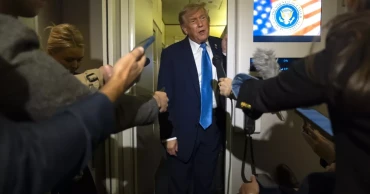
US intelligence says Iran isn’t building nuclear weapons, but Trump rejects their assessment
Tulsi Gabbard made it clear in her testimony to Congress earlier this year that Iran was not developing a nuclear weapon. According to the national intelligence director, Iran’s supreme leader had not reauthorized the country’s dormant nuclear weapons program.
Despite this, President Donald Trump dismissed the intelligence community’s evaluation during his overnight flight back to Washington, cutting short his attendance at the Group of Seven summit to address the escalating Israel-Iran conflict. “I don’t care what she said,” Trump told reporters, insisting that Iran was “very close” to acquiring a nuclear bomb.
Trump’s position aligned with Israeli Prime Minister Benjamin Netanyahu’s warnings of an imminent nuclear threat from Iran, contrasting with the views of his top intelligence officials. The president planned to consult national security advisors in the Situation Room on Tuesday to determine next steps.
This public contradiction mirrors Trump’s earlier clashes with U.S. intelligence agencies, whom he accused of undermining his agenda as part of a “deep state.” Notably, in 2018, he sided with Russian President Vladimir Putin’s denial of election interference.
The split over Iran is notable since Trump’s current administration is staffed with loyalists, unlike his first term. Gabbard, a military veteran and former Democratic congresswoman from Hawaii who left the party in 2022 and endorsed Trump, was narrowly confirmed by the Senate despite limited intelligence experience.
Israel orders evacuation of 300,000 in Tehran as Trump issues wrgent warning
Gabbard and CIA Director John Ratcliffe were expected to testify in a closed Capitol Hill session on Tuesday during a scheduled budget hearing, likely addressing Iran and Trump’s remarks. Neither Gabbard’s nor the CIA’s representatives immediately responded to requests for comment.
In March, Gabbard told lawmakers the intelligence community closely monitored Iran’s nuclear activities, noting Iran’s enriched uranium stockpile was at record levels for a non-nuclear weapons state. The International Atomic Energy Agency has warned Iran has enough enriched uranium to build several nuclear bombs if it chooses.
Iran maintains its nuclear program is peaceful.
A November intelligence report under President Joe Biden also stated Iran “is not building a nuclear weapon” but noted it was taking steps to be able to produce one, such as expanding uranium enrichment and operating advanced centrifuges. The report did not specify how quickly Iran could develop a bomb.
Trump’s immigration policies have also conflicted with intelligence findings. He cited a 1798 law to deport Venezuelan migrants, alleging links between the Tren de Aragua gang and the Venezuelan government, despite a recent intelligence assessment finding no such connection.
Gabbard dismissed two senior intelligence officers leading the panel that produced the assessment, attributing their firing to their opposition to Trump.
Trump orders expanding migrant deportation amid protests
In response, the White House issued a statement from Gabbard backing the president: “President Trump took necessary and historic action to safeguard our nation by deporting these violent Tren de Aragua terrorists. Now that America is safer, deep state actors have resorted to propaganda attacks against the President’s successful policies.”
Source: With inputs from agency
1 year ago
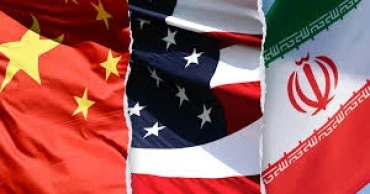
China warns US against intensifying Iran-Israel tensions
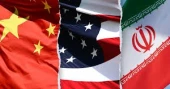
China has criticized US President Donald Trump for aggravating the escalating conflict between Iran and Israel, following his warning for Tehran residents to “immediately evacuate.”
“Fanning the flames, pouring oil, making threats and mounting pressure will not help to promote the de-escalation of the situation, but will only intensify and widen the conflict,” Chinese foreign ministry spokesperson Guo Jiakun said during a regular press briefing, responding to Trump’s statement.
Missile and drone strikes continue for fifth day as tensions escalate between Israel and Iran.
3 killed in Israeli strike on Iranian state broadcaster: State media
Explosions shook Tehran while air raid sirens sounded in Tel Aviv as Israel and Iran exchanged missile and drone strikes for a fifth consecutive day.
The Israeli military claimed to have killed Iran’s wartime chief of staff, amid Iranian media reports that suggest preparations are underway for what they describe as the most extensive and intense missile assault on Israeli territory to date.
Source: Al Jazeera
1 year ago
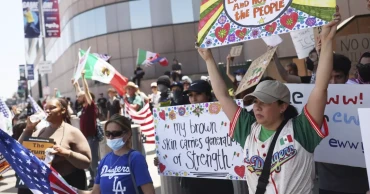
Trump orders expanding migrant deportation amid protests
US President Donald Trump has instructed federal agencies to intensify migrant detention and deportation efforts across the nation, as demonstrations against his immigration policies continue to escalate.
In a post on Truth Social, Trump urged agencies to fully commit to executing what he described as "the single largest mass deportation programme in history."
He specifically named Los Angeles, Chicago, and New York—cities currently witnessing widespread protests against immigration raids that began on June 6.
Trump has come under fire for his heavy-handed response to the protests, including legal pushback over his deployment of military forces to suppress demonstrations.
Despite this, he stated that his administration would mobilize all available resources to carry out the initiative, vowing to block individuals who "undermine the domestic tranquility of the United States" from entering the country.
Addressing agencies like the Drug Enforcement Administration (DEA) and Immigration and Customs Enforcement (ICE), Trump wrote, "You have my unwavering support. Now go, get the job done!"
The announcement came shortly after renewed nationwide protests under the banner of the “No Kings” movement, which held rallies from Los Angeles to New York on June 14. These coincided with a military parade in Washington, D.C., commemorating the U.S. Army’s 250th anniversary and the president’s 79th birthday. During one such protest in Salt Lake City, Utah, a fatal shooting was reported.
Trump also directed immigration officials to target so-called "sanctuary cities," which limit cooperation with federal immigration enforcement. These jurisdictions, often at odds with federal policy, argue they are exercising their legal right to protect undocumented residents.
The move to escalate deportations aligns with Trump’s campaign pledge to implement the largest expulsion of undocumented immigrants in U.S. history.
While polls leading up to the 2024 election suggested strong public backing for this policy, the intensification of deportations has sparked even more public outcry.
Ironically, the order came just a day after the Trump administration reportedly instructed immigration agents to scale back workplace raids on sectors like agriculture, hospitality, and food processing, according to Reuters.
Source: BBC
1 year ago
Israel and Iran exchange strikes for a third consecutive day as Nuclear talks collapse
For the third day in a row, Israel launched airstrikes across Iran on Sunday, escalating tensions and hinting at further military action. Some Iranian missiles bypassed Israeli air defenses and hit targets deep inside Israel, while nuclear negotiations that might have helped ease the crisis were abruptly called off.
The region is now bracing for a prolonged confrontation after Israel’s initial attack on Friday struck Iranian nuclear and military facilities, killing high-ranking generals and nuclear scientists. Iran claims two of its oil refineries were hit, raising fears of a broader attack on its energy sector — already under heavy international sanctions — with possible global economic consequences.
Israel’s military issued warnings via social media, advising Iranians to evacuate weapons manufacturing sites, suggesting that its campaign may soon expand. Explosions were once again heard in Tehran around midday.
U.S. President Donald Trump has voiced full support for Israel’s actions while warning Iran that it must agree to a new nuclear deal to avoid further damage.
Iran’s Foreign Minister, Abbas Araghchi, stated that if Israel halts its strikes, Iran will stop retaliating. He also accused the United States of being complicit in the attacks and said it must be held accountable.
Tehran Rocked by New ExplosionsExplosions continued in Tehran and other cities early Sunday. No updated death toll was provided after Iran's U.N. ambassador reported the previous day that 78 people were killed and over 320 injured.
In Israel, Iranian missile attacks overnight and into Sunday killed at least 10 people, bringing the total death toll there to 13. Israel’s main airport remained closed for a third day.
Israeli strikes on Sunday targeted Iran’s Defense Ministry and other key military and nuclear infrastructure. The targeted killings of top figures suggest Israeli intelligence has deeply infiltrated Iranian security.
Heavy Civilian Toll in IsraelAmong the dead in Israel were six people — including two children — killed when a missile hit an apartment block near Tel Aviv. Another missile killed four people, including a teenager, in the Arab town of Tamra, while a separate strike wounded 42 in Rehovot. The Weizmann Institute of Science in Rehovot reported some buildings were hit, but no injuries occurred there.
Though Israel has advanced missile defense systems, officials acknowledge they’re not foolproof.
Global Leaders Call for CalmWorld leaders are urging both nations to deescalate. China’s foreign minister warned that attacking nuclear facilities sets a dangerous precedent. Meanwhile, the conflict in Gaza between Israel and Hamas — an Iranian-backed group — continues to add pressure in the region.
Prime Minister Benjamin Netanyahu dismissed the global concerns, promising even harsher Israeli retaliation in the coming days. Israel, which is widely believed to have nuclear weapons (though it has never confirmed it), claims the strikes are intended to prevent Iran from building a nuclear bomb.
Iran insists its nuclear program is peaceful. However, it has significantly increased its uranium enrichment in recent years and is believed to be close to having enough material for multiple nuclear weapons.
Damage to Iranian Energy and Nuclear SitesIran’s Foreign Minister Araghchi confirmed Israeli strikes hit oil facilities near Tehran and in Bushehr province. He also said Iran retaliated by targeting Israeli “economic” sites, without offering specifics.
Iranian media reported a strong explosion at a natural gas plant caused by an Israeli drone strike. Israel did not immediately comment, but such facilities are usually protected by air defense systems — which Israel has also targeted.
In northern Israel, a strike damaged an oil refinery in Haifa, forcing parts of the operation to shut down. No injuries were reported.
Nuclear Talks SuspendedOman, which had been mediating indirect nuclear talks between the U.S. and Iran, announced that the next scheduled round was canceled. A senior U.S. official expressed hope the talks could resume soon.
However, Araghchi said resuming negotiations was now "unjustifiable," blaming Israel’s attacks and what he called direct U.S. support.
Former President Trump, in a Truth Social post, denied U.S. involvement in the Israeli strikes and warned Iran that any attack on the U.S. would trigger an unprecedented response. He also claimed a peace deal between Iran and Israel could be achieved.
Serious Damage at Iranian Nuclear FacilitiesSatellite imagery from Natanz showed major destruction to multiple buildings, including those that provide power to the uranium enrichment facility. The International Atomic Energy Agency (IAEA) said the above-ground areas were destroyed but the main underground centrifuge plant appeared intact — although the power loss could still compromise its operations.
In Isfahan, Israel targeted a nuclear research center, damaging four key buildings, including a uranium conversion site. No radiation leaks have been reported.
An Israeli military source said repairs to Natanz and Isfahan will take "far longer than a few weeks" and claimed intelligence shows Iran was using the Isfahan site for military nuclear purposes.
1 year ago
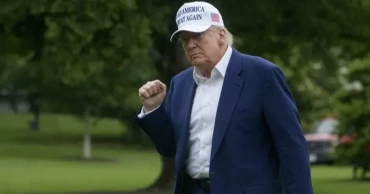
US had nothing to do with the attack on Iran: Trump
President Donald Trump has said the United States is not involved in the current escalation between Iran and Israel.
"The US had nothing to do with the attack on Iran, tonight," Trump wrote on his Truth Social platform, distancing Washington from the latest developments in the Middle East.
His comments come amid heightened tensions, as Iran has issued warnings to the US and its allies against intervening to support Israel in the face of Tehran’s retaliatory strikes.
7 killed in Israel in Iran’s attacks
Trump also issued a strong warning to Iran: "If we are attacked in any way, shape or form by Iran, the full strength and might of the U.S. Armed Forces will come down on you at levels never seen before."
"However, we can easily get a deal done between Iran and Israel, and end this bloody conflict!!!" he added.
Source: BBC
1 year ago
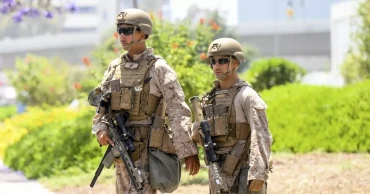
US cities prepare for nationwide 'No Kings' protests against Trump
Cities across the United States are gearing up for widespread protests on Saturday opposing President Donald Trump, as authorities call for calm, National Guard units mobilize, and Trump marks the U.S. Army’s 250th anniversary with a military parade in Washington.
The main demonstration — a "No Kings" march — will be held in Philadelphia, while no protests are scheduled in Washington, D.C., where Trump is set to appear at the parade, which coincides with his 79th birthday and Flag Day.
The protests come amid rising tensions over Trump’s recent orders to deploy the National Guard and Marines to Los Angeles following violent clashes sparked by federal immigration raids. Demonstrators blocked highways and torched vehicles, prompting a forceful police response that included tear gas, rubber bullets, and flash-bangs. Several cities have imposed curfews, while Democratic leaders criticized the deployments as an overreach of federal power.
Despite heightened tensions, both Republican and Democratic governors are urging peaceful protest. Republican-led states including Virginia, Texas, Nebraska, and Missouri have called up the National Guard, citing public safety. Virginia Gov. Glenn Youngkin warned of "zero tolerance" for violence or lawbreaking. Missouri’s Gov. Mike Kehoe emphasized a proactive response, and Nebraska's governor issued an emergency declaration as a precaution.
In Florida, protesters plan to march to Trump’s Mar-a-Lago resort. Gov. Ron DeSantis warned them not to cross the line. Democratic governors like Arizona’s Katie Hobbs and Washington’s Bob Ferguson called for nonviolent demonstrations.
Pennsylvania Gov. Josh Shapiro said law enforcement is coordinating in anticipation of up to 100,000 protesters in Philadelphia. DA Larry Krasner warned against unlawful actions and urged demonstrators to follow the example of Martin Luther King Jr.
The protests, organized under the banner “No Kings,” are being led by the 50501 Movement — named to represent 50 states, 50 protests, one cause. The campaign opposes authoritarianism and billionaire-driven politics, framing Trump as a figure behaving more like royalty than an elected official.
Protesters intend to send a message countering the expensive military celebration in Washington, emphasizing that the American flag and democracy belong to the people — not to any one man.
Events are scheduled in nearly 2,000 locations nationwide, with organizers expecting millions to participate in what could be the largest single-day protest since Trump’s return to office. Demonstrations are planned to be peaceful, with a strict ban on weapons and a commitment to nonviolence.
1 year ago
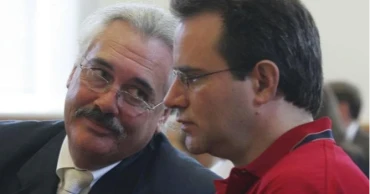
South Carolina executes a man serving death sentences in 2 separate murders
A South Carolina man sent to death row twice for separate murders was put to death Friday by lethal injection in the state’s sixth execution in nine months.
Stephen Stanko, 57, was pronounced dead at 6:34 p.m.
He was executed for shooting a friend and then cleaning out his bank account in Horry County in 2005.
Stanko also was serving a death sentence for killing his live-in girlfriend in her Georgetown County home hours earlier, strangling her as he raped her teenage daughter. Stanko slit the teen’s throat, but she survived.
The execution began after a 3 1/2 minute final statement where Stanko apologized to his victims and asked not to be judged by the worst day of his life. Witnesses could hear prison officials asking for the first dose of the powerful sedative pentobarbital which was different from previous executions.
Stanko appeared to be saying words, turned toward the families of the victims and then let out several quick breaths as his lips quivered.
Stanko appeared to stop breathing after a minute. His ruddy complexion quickly disappeared and the color drained from his face and hands. A prison employee asked for a second dose of pentobarbital about 13 minutes later. He was announced dead about 28 minutes after the execution started.
UN conference on Palestinian state postponed because of Middle East tensions
Three family members of his victims stared at Stanko and didn't look away until well after he stopped breathing. Stanko's brother and his lawyer also watched. Attorney Lindsey Vann, who watched her second inmate client die in seven months rubbed rosary beads in her hands.
Stanko was leaning toward dying by South Carolina’s new firing squad, like the past two inmates before him. But after autopsy results from the last inmate killed by that method showed the bullets from the three volunteers nearly missed his heart, Stanko went with lethal injection.
Stanko was the last of four executions scheduled around the country this week. Florida and Alabama each put an inmate to death on Tuesday. On Wednesday, Oklahoma executed a man transferred from federal to state custody to allow his death.
The federal courts rejected Stanko’s last-ditch effort to spare his life as his lawyers argued the state isn’t carrying out lethal injection properly after autopsy results found fluid in the lungs of other inmates killed that way.
Also South Carolina Gov. Henry McMaster refused clemency in a phone call to prison officials minutes before the execution began.
A governor has not spared a death row inmate’s life in the previous 48 executions since South Carolina reinstated the death penalty about 50 years ago.
Stanko is the sixth inmate executed in South Carolina in nine months after the state went 13 years without putting an inmate to death because it could not obtain lethal injection drugs. The South Carolina General Assembly approved a firing squad and passed a shield law bill which allowed the suppliers of the drugs to stay secret.
In his final statement, Stanko talked about how he was an honor student and athlete and a volunteers and asked several times not to be judged by the night he killed two people.
“I have live for approximately 20,973 days, but I am judged solely for one,” Stanko said in his final statement read by his lawyer.
Stanko apologized several times to his victims and their families.
“Once I am gone, I hope that Christina, Laura's family and Henry's family can all forgive me. The execution may help them. Forgiveness will heal them.”
Stanko ate his last meal on Wednesday as prison officials give inmates a chance to enjoy their special food before their execution day. He ate fried fish, fried shrimp, crab cakes, a baked potato, carrots, fried okra, cherry pie, banana pudding and sweet tea.
END/UNB/AP/JS/0958hrs
1 year ago
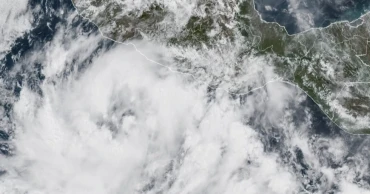
Tropical Storm Dalila forms and expected to bring rain to southwestern Mexico
Tropical Storm Dalila has formed in the eastern Pacific Ocean just south of the southwestern coast of Mexico, forecasters said Friday.
The cyclone is centered about 190 miles (305.78 kilometers) south of Zihuatanejo in Mexico's Guerrero state, the National Hurricane Center in Miami said.
The tropical storm had maximum sustained winds at 40 mph (65 kph) and is moving at 13 mph (20 kph) . Dalila was expected to bring up to 6 inches (15 centimeters) of rain to parts of Guerrero, Michoacán, and Colima states on Saturday.
Missiles strike Israel as Iran retaliates over attacks on nuclear, military targets
A tropical storm warning is in effect for a portion of coastal Mexico west of Mexico City.
Forecasters expect Dalila to move parallel to the coast but remain offshore.
END/UNB/JS/0917hrs
1 year ago