usa

Judge orders Trump administration to admit roughly 12,000 refugees
A judge on Monday ordered the Trump administration to admit some 12,000 refugees into the United States under a court order partially blocking the president’s efforts to suspend the nation’s refugee admissions program.
The order from U.S. District Judge Jamal Whitehead followed arguments from the Justice Department and refugee resettlement agencies over how to interpret a federal appeals court ruling that significantly narrowed an earlier decision from Whitehead.
During a hearing last week, the administration said it should only have to process 160 refugees into the country and that it would likely appeal any order requiring it to admit thousands. But the judge dismissed the government’s analysis, saying it required “not just reading between the lines” of the 9th Circuit’s ruling, “but hallucinating new text that simply is not there.”
“This Court will not entertain the Government’s result-oriented rewriting of a judicial order that clearly says what it says,” Whitehead wrote Monday. “The Government is free, of course, to seek further clarification from the Ninth Circuit. But the Government is not free to disobey statutory and constitutional law — and the direct orders of this Court and the Ninth Circuit — while it seeks such clarification.”
Iran's top diplomat holds talks in Pakistan to mediate in escalation with India over Kashmir attack
The refugee program, created by Congress in 1980, is a form of legal migration to the U.S. for people displaced by war, natural disaster or persecution — a process that often takes years and involves significant vetting. It is different from asylum, by which people newly arrived in the U.S. can seek permission to remain because they fear persecution in their home country.
Upon beginning his second term on Jan. 20, President Donald Trump issued an executive order suspending the program.
That triggered a lawsuit by individual refugees whose efforts to resettle in the U.S. have been halted as well as major refugee aid groups, who argued that they have had to lay off staff. The groups said the administration froze their funding for processing refugee applications overseas and providing support, such as short-term rental assistance for those already in the U.S.
Whitehead, a 2023 appointee of former President Joe Biden, blocked enforcement of Trump’s order, saying it amounted to an “effective nullification of congressional will” in setting up the nation’s refugee admissions program.
The 9th U.S. Circuit Court of Appeals largely put Whitehead’s decision on hold in March, finding that the administration was likely to win the case given the president’s broad authority to determine who is allowed to enter the country.
But the appeals court also said the government should continue processing those who had already been approved for travel to the U.S., some of whom had upended their lives abroad by selling property or quitting their jobs. Such people had relied on promises made by the federal government that they would be admitted, the court found.
The appeals court said the government must continue processing refugees who already had “arranged and confirmable” travel plans before Jan. 20 to come to the U.S. The Justice Department put the number of refugees in that category at about 12,000.
During a hearing last week over how to interpret and enforce the appeals court ruling, Justice Department lawyer David Kim said the government took it to mean that the only refugees who should be processed for entry to the U.S. are those who were scheduled to travel to the U.S. within two weeks of Trump’s order. There were far fewer refugees who met that definition — just 160, the department said.
The judge and lawyers for refugee resettlement organizations disagreed with the government’s reading. They noted that nothing in the 9th Circuit’s order suggested a two-week window. Instead, Whitehead said, the order should apply to any refugees who had been approved to come to the U.S. and had established travel plans — regardless of when that travel was scheduled for.
Whitehead ordered the administration within the next seven days to instruct agency offices and staff, including U.S. embassies, to resume processing the cases of refugees who are protected by the court order. He also told the government to immediately take steps to facilitate admission to the U.S. for those refugees whose clearances, including medical and security authorizations, have not yet lapsed.
1 year ago
Trump dubbed ‘Sith Lord’ after White House’s Star Wars Day AI post draws backlash
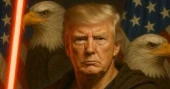
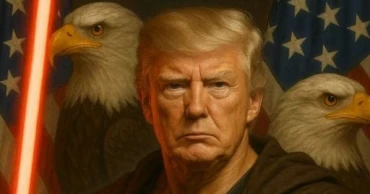
A White House social media post intended to celebrate Star Wars Day on May 4th drew widespread criticism after it featured an AI-generated image of former President Donald Trump wielding a red lightsaber—commonly associated with villains in the Star Wars universe.
The image, posted on the White House's official X account, depicted a muscular Trump holding a red Sith lightsaber against a backdrop of American flags and bald eagles. It was accompanied by a caption reading, “Happy May the 4th to all, including the Radical Left Lunatics who are fighting so hard to bring Sith Lords, Murderers, Drug Lords, Dangerous Prisoners, & well known MS-13 Gang Members, back into our Galaxy. You’re not the Rebellion—you’re the Empire. May the 4th be with you.”
But instead of rallying support, the post quickly became the subject of mockery from Star Wars fans who pointed out the irony of portraying Trump with a red lightsaber—a weapon typically used by Sith Lords, the franchise’s antagonists.
“You’re not the Rebellion—you’re the Empire,” one X user wrote. “Sith Lords, who are loyal to the Empire, use red lightsabers. I guess whoever made that AI garbage hasn’t watched Star Wars.”
Another commenter remarked, “If you’re gonna post stuff like this from the OFFICIAL White House account, it pays to know that red lightsabers means Sith Lords. Jedi usually wield blue or green sabers.”
Critics also noted the contradiction in the post’s attempt to label Trump’s opponents as the “Empire,” while portraying him with the hallmark weapon of the actual villains. “The lack of self-awareness and hypocrisy by calling the left ‘the Empire’ while showing Trump with a Sith lightsaber,” one user commented.
A fan further explained, “The Jedi have blue and green lightsabers except for Mace Windu who has purple because Samuel L. Jackson wanted one, and the Sith have red lightsabers. So the White House is making Trump look a Sith because of the red lightsaber, which are the bad guys.”
Source: The Indian Express
1 year ago
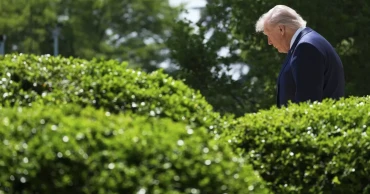
Trump threatens sanctions against buyers of Iranian oil after US-Iran nuclear talks are postponed
President Donald Trump on Thursday threatened sanctions on anyone who buys Iranian oil, a warning that came after planned talks over Tehran’s rapidly advancing nuclear program were postponed.
Trump wrote on social media, “All purchases of Iranian Oil, or Petrochemical products, must stop, NOW!” He said any country or person who buys those products from Iran will not be able to do business with the United States “in any way, shape, or form.”
It was unclear how Trump would implement such a ban as he threatened to levy secondary sanctions on nations that import Iranian oil. But his statement risked further escalating tensions with China — Iran’s leading customer — at a time when the relationship is severely strained over the U.S. president’s tariffs.
Based on tanker tracking data, the U.S. Energy Information Administration concluded in a report published last October that “China took nearly 90% of Iran’s crude oil and condensate exports in 2023.” Trump has separately placed 145% tariffs on China as a way to raise federal revenues and rebalance global trade.
Trump's social media threat came after Oman announced planned nuclear negotiations for this coming weekend had been postponed. Omani Foreign Minister Badr al-Busaidi made the announcement in a post on the social platform X.
Iran, US to hold next nuclear talks in Rome on Saturday
“For logistical reasons we are rescheduling the US Iran meeting provisionally planned for Saturday May 3rd,” he wrote. “New dates will be announced when mutually agreed.”
Al-Busaidi, who has mediated the talks through three rounds so far, did not elaborate.
Iran's Foreign Minister Abbas Araghchi also blamed “logistical and technical reasons” for the postponement.
“On Iran’s part, there is no change in our determination to secure a negotiated solution,” he wrote on X. “We are more determined than ever to achieve a just and balanced deal: guaranteeing an end to sanctions, and creating confidence that Iran’s nuclear program will forever remain peaceful while ensuring that Iranian rights are fully respected.”
U.S. Secretary of State Marco Rubio, newly tapped to take over the duties of national security adviser in addition to his current role as America's top diplomat, reiterated that if Iran wants nuclear power plants, it can import enriched uranium.
“Iran simply needs to say, ‘We’ve agreed to no longer enrich,’” Rubio said on Fox News Channel’s “Hannity” on Thursday night. About the talks, he added, “This is the best opportunity they’re going to have.”
Explosion at Iranian Port tied to missile fuel kills 25, injures 800
Meanwhile, a person familiar with the U.S. negotiations said America “had never confirmed its participation” in a fourth round of talks in Rome. However, the person said the U.S. expected the talks to occur “in the near future.” The person spoke on condition of anonymity to discuss the closed-door negotiations.
Rome will see the Vatican begin its conclave next week to pick a new pope after the death of Pope Francis. Two other rounds of U.S.-Iran talks have been held in Muscat, the capital of Oman.
The talks seek to limit Iran’s nuclear program in exchange for the lifting of some of the crushing economic sanctions the U.S. has imposed on the Islamic Republic closing in on a half-century of enmity. The negotiations have been led by Araghchi and U.S. Mideast envoy Steve Witkoff.
Trump has repeatedly threatened to unleash airstrikes targeting Iran’s program if a deal isn’t reached. Iranian officials increasingly warn that they could pursue a nuclear weapon with their stockpile of uranium enriched to near weapons-grade levels.
The U.S. president with his threat on social media would be going after Iran's major economic resource. It produced an average of 2.9 million barrels a day in 2023 of crude oil, according to the Energy Information Administration.
Iran’s 2015 nuclear deal with world powers did limit Tehran’s program. However, Trump unilaterally withdrew from it in 2018, setting in motion years of attacks and tensions. The wider Middle East also remains on edge over the Israel-Hamas war in the Gaza Strip.
Meanwhile, the U.S. continues an airstrike campaign, called “Operation Rough Rider,” that has been targeting Yemen's Houthi rebels, who long have been backed by Iran. U.S. Defense Secretary Pete Hegseth early Thursday warned Iran over the rebels.
“Message to IRAN: We see your LETHAL support to The Houthis. We know exactly what you are doing,” he wrote. “You know very well what the U.S. Military is capable of — and you were warned. You will pay the CONSEQUENCE at the time and place of our choosing.”
Iran and the US hold hours of expert talks in Oman over Tehran's rapidly advancing nuclear program
Last Saturday's round of talks, which included experts drilling down into the details of a possible deal, also took place as an explosion rocked an Iranian port, killing at least 70 people and injuring more than 1,000 others.
1 year ago
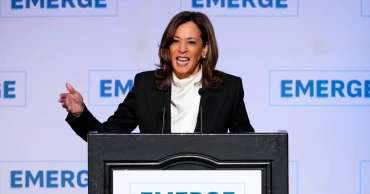
Harris accuses Trump of 'wholesale abandonment' of American ideals
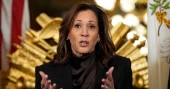
Former Vice President Kamala Harris used a high-profile speech to sharply criticize President Donald Trump amid speculation about whether she will mount another presidential campaign or opt to run for California governor.
In her most extensive public remarks since leaving office in January following her defeat to Trump, Harris said Wednesday she’s inspired by Americans fighting Trump’s agenda despite threats to their freedom or livelihood, reports AP.
“Instead of an administration working to advance America’s highest ideals, we are witnessing the wholesale abandonment of those ideals,” Harris said a day after Trump reached 100 days in office.
Before Wednesday, Harris had barely mentioned Trump by name since she conceded defeat to him in November.
In a 15-minute speech, she spoke to the anxiety and confusion that have gripped many of her supporters since Trump took office but discouraged despair.
“They are counting on the notion that if they can make some people afraid, it will have a chilling effect on others. But what they have overlooked is that fear is not the only thing that’s contagious,” Harris said. “Courage is contagious.”
Trump went after Harris in a campaign-style rally Tuesday marking his 100th day in office. He sarcastically called her a “great border czar" and a “great candidate," and repeated some of the applause lines he routinely delivered during the campaign.
Kamala Harris plans speech sharply criticising Trump's policies
Until Harris replaced Joe Biden atop the Democratic ticket last summer, Trump said, “I knew nothing about her."
Harris cautioned Americans against viewing Trump’s administration as merely chaotic, casting it instead as a “high-velocity event,” the culmination of extensive work on the right to remake government.
“A vessel is being used for the swift implementation of an agenda that has been decades in the making," Harris said. “An agenda to slash public education. An agenda to shrink government and then privatize its services. All while giving tax breaks to the wealthiest among us.”
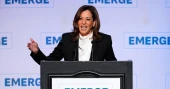
Harris chose a friendly audience for her return to the political arena, addressing the 20th anniversary gala for Emerge America, an organization that recruits and trains Democratic women to run for office. It grew in part from Harris’ run for San Francisco district attorney in the early 2000s.
The speech was delivered below luminous chandeliers in a gold-trimmed ballroom in the landmark Palace Hotel.
Harris is ramping up her public presence as Democrats nationally search for a path forward after November's election, in which Republicans also won control of Congress. While a slate of high-profile Democrats — from governors to businessmen — seek leadership roles within the party, the former vice president retains unique influence and would reshape any future race she chooses to enter.
1 year ago
US and Ukraine sign minerals deal after Trump presses Kyiv to pay back US for helping repel Russia
The United States and Ukraine on Wednesday finalized a long-anticipated agreement granting Washington access to Ukraine’s extensive reserves of critical minerals and natural resources. The deal, known as the United States-Ukraine Reinvestment Fund, is intended to compensate the U.S. for its ongoing support in helping Ukraine resist Russia’s invasion.
While specific terms of the agreement remain largely undisclosed, officials indicated it will allow the U.S. to tap into Ukraine’s rich deposits of rare earth elements. In return, the deal is expected to provide Ukraine with added reassurance of continued American backing as the war with Russia continues.
“This agreement signals clearly to Russia that the Trump administration is committed to a peace process centered on a free, sovereign, and prosperous Ukraine over the long term,” Treasury Secretary Scott Bessent said in a statement. “President Trump envisioned this partnership between the American people and the Ukrainian people to show both sides’ commitment to lasting peace and prosperity in Ukraine.”
Kamala Harris plans speech sharply criticising Trump's policies
The announcement comes at a critical moment in the three-year war as Trump has grown increasingly frustrated with both sides. The signing comes two months after a different but similar agreement was nearly signed before being derailed in a tense Oval Office meeting involving
Trump has long criticized Zelenskyy, saying he didn’t “have the cards” to win the war and blaming him for prolonging the killing by not giving up Crimea, but in recent days has rebuked Russian President Vladimir Putin as well, saying he was complicating negotiations with “very bad timing” in launching deadly strikes on Kyiv.
Trump said Wednesday night on NewsNation that the deal, “in theory,” means that the U.S. will get more from Ukraine than it contributed. “I wanted to be protected,” he said, adding that he didn’t want to be looking “foolish” by not getting money back for the investment.
Ukraine praises signing as an ‘equal and good international deal’
For Ukraine, the agreement is seen as key to ensuring its access to future U.S. military aid.
“Truly, this is a strategic deal for the creation of an investment partner fund,” said Prime Minister Denys Shmyhal. “This is truly an equal and good international deal on joint investment in the development and restoration of Ukraine between the governments of the United States and Ukraine.”
Ukraine’s economy minister, Yulia Svyrydenko, flew to Washington on Wednesday to help finalize the deal.
“Together with the United States, we are creating the Fund that will attract global investment to our country,” she said in a post on X after the signing.
White House had raised doubts that agreement was ready
Earlier Wednesday, Bessent said during a Cabinet meeting at the White House — hours after Ukrainian officials indicated a deal was nearly finalized — that there was still work to do.
“The Ukrainians decided last night to make some last-minute changes,” Bessent said when asked about reports that Ukraine was ready to agree to the pact. “We’re sure that they will reconsider that. And we are ready to sign this afternoon if they are.”
He didn’t elaborate as to the late changes he said Ukraine made.
The U.S. has been seeking access to more than 20 raw materials deemed strategically critical to its interests, including some non-minerals such as oil and natural gas. Among them are Ukraine’s deposits of titanium, which is used for making aircraft wings and other aerospace manufacturing, and uranium, which is used for nuclear power, medical equipment and weapons. Ukraine also has lithium, graphite and manganese, which are used in electric vehicle batteries.
After Kyiv felt the initial U.S. draft of the deal disproportionately favored American interests, it introduced new provisions aimed at addressing those concerns.
According to Shmyhal, the latest version would establish an equal partnership between the two countries and last for 10 years. Financial contributions to a joint fund would be made in cash, and only new U.S. military aid would count toward the American share. Assistance provided before the agreement was signed would not be counted. Unlike an earlier draft, the deal would not conflict with Ukraine’s path toward European Union membership — a key provision for Kyiv.
The Ukrainian Cabinet approved the agreement Wednesday, empowering Svyrydenko to sign it in Washington. The deal still needs to be ratified by the Ukrainian Parliament before it can take effect.
Putin wants answers before committing to a ceasefire
The negotiations come amid rocky progress in Washington’s push to stop the war.
Putin backs calls for a ceasefire before peace negotiations, “but before it’s done, it’s necessary to answer a few questions and sort out a few nuances,” Kremlin spokesman Dmitry Peskov said. Putin is also ready for direct talks with Ukraine without preconditions to seek a peace deal, he added.
“We realize that Washington wants to achieve quick progress, but we hope for understanding that the Ukrainian crisis settlement is far too complex to be done quickly,” Peskov said during his daily conference call with reporters.
Trump has expressed frustration over the slow pace of progress in negotiations aimed at stopping the war. Western European leaders have accused Putin of stalling while his forces seek to grab more Ukrainian land. Russia has captured nearly a fifth of Ukraine’s territory since Moscow’s forces launched a full-scale invasion on Feb. 24, 2022.
Trump has long dismissed the war as a waste of lives and American taxpayer money — a complaint he repeated Wednesday during his Cabinet meeting. That could spell an end to crucial military help for Ukraine and heavier economic sanctions on Russia.
1 year ago
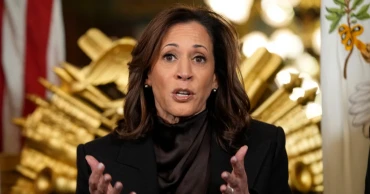
Kamala Harris plans speech sharply criticising Trump's policies
Former Vice President Kamala Harris plans to use a high-profile speech Wednesday to sharply criticise President Donald Trump amid speculation about whether she will mount another presidential campaign or opt to run for California governor.
Harris will address the 20th anniversary gala for Emerge America, an organization that recruits and trains Democratic women to run for office that grew in part from Harris’ run for San Francisco district attorney in the early 2000s, according to AP.
Her speech comes the day after Trump reached 100 days in office. It is expected to be her most extensive public remarks since leaving office in January following her defeat to Trump, with planned critiques of the Republican president's handling of the economy, US institutions and foreign policy.
US inflation eases in March as consumers rush to beat Trump tariffs
Harris is ramping up her public presence as Democrats nationally search for a path forward after November's election, in which Republicans also won control of Congress. While a slate of high-profile Democrats — from governors to businessmen — seek leadership roles within the party, the former vice president retains unique influence and would reshape any future race she chooses to enter.
Harris, a former state attorney general and US senator from California, has not discouraged speculation that she might enter the race to replace term-limited Gov. Gavin Newsom, himself a potential contender for president. And she has not ruled out another run for the White House.
She continues to fundraise, using a joint committee that includes Harris for President, the Democratic National Committee and state Democratic parties. The committee, the Harris Victory Fund, reported having about $4.5 million on hand at the end of March, according to federal records.
1 year ago
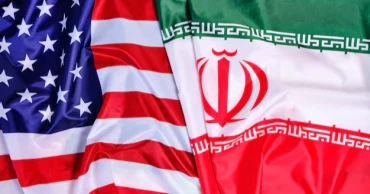
Iran, US to hold next nuclear talks in Rome on Saturday
Iran said Wednesday the next round of negotiations over its rapidly advancing nuclear program it will have with the United States will be in Rome on Saturday.
Iranian Foreign Minister Abbas Araghchi made the comment on the sidelines of a Cabinet meeting, adding that Iran also anticipated having a meeting Friday with France, Germany and the United Kingdom to discuss the talks, AP reports.
The talks with the US again will be mediated by Oman. The sultanate has hosted two rounds of talks in Oman's capital, Muscat, and one round at its embassy in Rome.
Massive wildfire near Jerusalem triggers evacuations and closes key highway
The talks seek to limit Iran’s nuclear program in exchange for the lifting of some of the crushing economic sanctions the US has imposed on the Islamic Republic closing in on a half-century of enmity.
US President Donald Trump has repeatedly threatened to unleash airstrikes targeting Iran’s program if a deal isn’t reached.
Iranian officials increasingly warn that they could pursue a nuclear weapon with their stockpile of uranium enriched to near weapons-grade levels.
1 year ago

US inflation eases in March as consumers rush to beat Trump tariffs
A closely watched inflation gauge cooled last month in a sign that prices were steadily easing before most of President Donald Trump’s tariffs were implemented.
At the same time, consumers accelerated their spending, particularly on cars, likely in an effort to get ahead of the duties.
Wednesday’s report from the Commerce Department showed that consumer prices rose just 2.3% in March from a year earlier, down from 2.5% in February. Excluding the volatile food and energy categories, core prices rose 2.6% compared with a year ago, below February’s 2.8%. Economists track core prices because they typically provide a better read on where inflation is headed.
The slowdown in inflation could be a temporary respite until the widespread duties imposed by Trump begin to push up prices in many categories. Economists forecast that inflation could reverse its recent decline and reach 3% or higher by the end of this year.
Wednesday’s report also showed that consumer spending increased 0.7% from February to March, a healthy gain. Much of the increase appeared to be driven by efforts to get ahead of duties, such as Trump's 25% duty on imported cars, which took effect April 3.
Spending on autos surged 8.1% in March, the government said. But spending on restaurants and hotels also jumped after falling in February, a sign Americans are still willing to splurge a little on travel and dining out.
Car sales spiked last month as consumers and businesses accelerated acquisitions to get ahead of tariffs. That means auto sales may fade in the coming months because those assets have already been secured.
Earlier Wednesday, the government reported that consumer spending slowed in the first three months of the year, compared with last year’s final quarter, as bad weather depressed shopping and Americans took a breather after healthy spending over the winter holidays.
The nation’s economy actually shrank 0.3% in the January-March quarter as imports surged as companies sought to get ahead of Trump’s tariffs.
Pakistan warns of imminent Indian Military Strike amid rising tensions
Trump benefited in last year’s election from broad dissatisfaction among voters about the steep rise in prices that began in 2021 and that, on average, pushed prices up about 25% by the middle of last year. Grocery costs shot up nearly 30%. As a candidate, Trump said he would immediately lower prices if elected.
Yet the president has slapped 25% duties on steel and aluminum, as well as cars, and a 10% tariff on nearly all other imports. And China, the United States’ third-largest trading partner, now faces a 145% duty on its exports.
The inflation-fighters at the Federal Reserve target a 2% inflation rate and pay close attention to Wednesday’s inflation gauge, known as the personal consumption expenditures price index. The better-known consumer price index was released earlier this month and also showed a steady decline.
Trump has pushed the Fed to cut its key short-term interest rate because inflation has cooled. But Fed Chair Jerome Powell has underscored that the central bank is likely to remain on the sidelines as officials gauge how tariffs will impact the economy. The Fed isn’t expected to lower its rate at its policy meeting next week.
1 year ago
Trump's team disrupted some $430b in federal funds
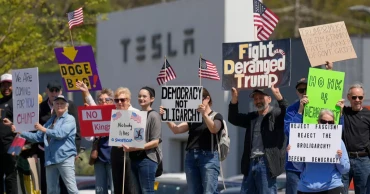
The Trump administration has frozen, stalled or otherwise disrupted some $430 billion in federal funds — from disease research to Head Start for children to disaster aid — in what top Democrats say is an “unprecedented and dangerous" assault on programs used by countless Americans.
Sen. Patty Murray of Washington and Rep. Rosa DeLauro of Connecticut on Tuesday released an online tracker that is compiling all the ways President Donald Trump and his adviser Elon Musk's Department of Government Efficiency are interrupting the flow of federal funds, often going up against the law.
“Instead of investing in the American people, President Trump is ignoring our laws and ripping resources away,” said Murray and DeLauro, who are the top Democrats on the Appropriations committees in Congress.
“No American president has ever so flagrantly ignored our nation’s spending laws or so brazenly denied the American people investments they are owed," they said.
The tally is far from complete or exhaustive, the lawmakers said, but a snapshot in time. It comes in a rapidly changing political and legal environment as the Trump administration faces dozens of lawsuits from state and local governments, advocacy organizations, employees and others fighting to keep programs intact.
Musk damaged Tesla’s brand in just a few months. Fixing it will likely take longer
At 100 days into Trump's return to the presidency, the project showcases the extent to which the White House is blocking money that Congress has already approved, touching off a constitutional battle between the executive and legislative branches that has real world ramifications for the communities the lawmakers serve.
The White House and its Republican allies in Congress have said they are working to root out waste, fraud and abuse in government. The Trump administration is in court fighting to keep many of the administration's cuts even as Musk, whose own popularity has dropped, says he will be cycling off DOGE’s day-to-day work.
And Trump's director of the Office of Management and Budget intends to soon send Congress a $9 billion rescissions package, to claw back funds through cuts to the U.S. Agency for International Development and others.
Murray and DeLauro said they want to “shine a light on President Trump’s vast, illegal funding freeze and how it is hurting people in every zip code in America.” They said it's time for Trump and Musk “to end this unprecedented and dangerous campaign."
While Republicans have also stirred with concerns about Trump's spending cuts, many are reluctant to do so publicly as they try to avoid Trump’s reactions. Instead, they tend to work behind the scenes to restore federal dollars to their home states or other constituencies that have been put at risk by Trump’s actions.
The powerful Appropriations committees in the House and the Senate, where Republicans have majority control of both chambers, draft the annual funding bills that are ultimately approved by Congress and sent to the president’s desk for his signature to become law.
1 year ago

Trump's demand for free US access to Suez Canal draws strong backlash in Egypt
U.S. President Donald Trump's recent call for toll-free access for American ships through Egypt’s Suez Canal has sparked widespread criticism across Egypt, with legal scholars, political figures, and citizens condemning the demand as both legally unfounded and a threat to international norms.
In a Saturday post on Truth Social — the platform he predominantly owns — Trump insisted that U.S. military and commercial vessels should pass through the Suez and Panama canals without paying fees. He asserted that neither canal "would exist" without American involvement and said he had instructed Secretary of State Marco Rubio to "take care of, and memorialize, this situation."
"Trump's proposals about international waterways constitute a serious threat to international peace, security, and public order," said Ayman Salama, a professor of international law at Cairo University, in remarks to Xinhua on Monday.
Salama referred to the 1888 Constantinople Convention, which established key legal principles for the operation of the Suez Canal, emphasizing equal access for all nations. He argued Trump’s remarks disregard the sovereignty of coastal nations and the legal principle of non-interference in domestic affairs — posing potential risks to global trade and economic stability.
No court decision on Suez Canal s claim over massive vessel
Calling the statements "legally baseless," Salama urged the international community to uphold maritime law and resist attempts to undermine the established legal framework for navigation.
Samaa Soliman, deputy chairman of the Egyptian Senate's Foreign, Arab, and African Affairs Committee, stressed Monday that "only Egypt is responsible for securing and protecting the Suez Canal," adding that the transit fees are a vital national revenue stream that supports the economy and public services.
She labeled Trump’s comments as "unjustified interference in the affairs of a sovereign state, and is inconsistent with the principle of mutual respect between states." Soliman also blamed U.S. policies for contributing to regional instability, citing Washington's stance on the Palestinian issue and its inaction against Houthi attacks in the Red Sea.
According to the Suez Canal Authority (SCA), Egypt’s revenue from the canal dropped by over 60 percent year-on-year in 2024 due to tensions in the Red Sea, resulting in a loss of nearly $7 billion.
Sayed Abdel Aal, head of Egypt’s socialist Tagammu Party, called Trump’s statement "provocative rhetoric" and said it reflects "a hateful colonial mentality." He noted that canal fees are applied fairly and in line with international standards, and the U.S. has no right to demand exceptions. "Trump's call can only be viewed as economic colonialism in a new garment," he added.
The Egyptian Parties Alliance, representing around 42 political parties, also issued a statement on Sunday rejecting Trump's comments and accusing him of "ignoring historical facts."
On Egyptian social media, users strongly pushed back against Trump’s assertion that the U.S. deserves credit for the canal’s existence. One widely circulated post stated, "Our grandfathers built the Suez Canal with their blood when America was engulfed in civil war. We will continue the course of our ancestors, and Trump will not impose his conditions on us."
With ship now freed, a probe into Suez Canal blockage begins
Opened in 1869, the Suez Canal has long been central to global maritime trade, linking the Mediterranean Sea with the Red Sea. Though shaped by colonial influence, it has become a powerful emblem of Egyptian sovereignty, particularly after its nationalization in 1956 by President Gamal Abdel Nasser — a landmark moment in the country's modern history.
1 year ago