usa

More than 100 immigrants detained at an illegal after-hours nightclub in Colorado
Dhaka, Aprin, 28 (AP/UNB)--More than 100 immigrants suspected of being in the United States illegally were taken into custody early Sunday following a federal raid at an illegal after-hours nightclub in Colorado Springs, Colorado, authorities said.
Video posted online by the Drug Enforcement Administration showed agents announcing their presence outside the building and ordering patrons to leave with their hands up. Other videos showed dozens of people fleeing the building through its entrance after federal agents smashed a window. Later, dozens of suspects were shown in handcuffs standing on a sidewalk waiting to be transported.
Russia launches nearly 150 drones against Ukraine
During his second stint as U.S. president, Donald Trump ’s unprecedented campaign of immigration enforcement has pushed the limits of executive power, and he has clashed with federal judges trying to restrain him. The crackdown has included detaining more than 1,000 international college students, some of whom have seen their legal status restored, at least temporarily. The policies have slowed immigration at the southern border to a relative trickle.
On Sunday in Colorado, U.S. Immigration and Customs Enforcement took the club-going immigrants into custody, said Jonathan Pullen, special agent in charge of the DEA’s Rocky Mountain Division.
“Colorado Springs is waking up to a safer community today,” he said. The city, Colorado’s second largest, lies about 70 miles (113 kilometers) south of Denver.
More than 300 law enforcement officers and officials from multiple agencies responded to the nightclub, which had been under investigation for several months for alleged activities including drug trafficking, prostitution and “crimes of violence,” Pullen said at a news conference. Cocaine was among the drugs found, he said.
“When the cops showed up at the door, most of the drugs hit the floor,” Pullen said.
END/UNB/AP/MA
1 year ago
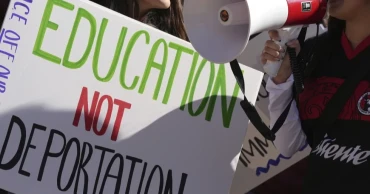
ICE is reversing the termination of legal status for international students around the US
The U.S. government announced Friday that it is reversing recent terminations of legal status for international students, following widespread legal pushback. Immigration and Customs Enforcement (ICE) had removed many students from its federal database, stripping them of their legal right to stay in the country. However, multiple federal judges across the country have since issued temporary orders restoring the students’ status as part of lawsuits contesting the terminations.
Foreign students face visa revocation
Over 1,200 international students were affected, losing their visas or legal status—putting them at risk of deportation. Many reported being unaware of any serious violations, with some citing only minor issues or confusion about the reasons for the crackdown. As a result, some students left the U.S., while others have been forced to stop attending classes or go into hiding.
Government says it will restore student status
Word of the policy pivot came Friday from lawyers representing the government in several of the lawsuits.
Iran to ink $4b oilfields deal with Russia
A lawyer for the plaintiff in one of the lawsuits, Brian Green, provided The Associated Press with a copy of a statement a government lawyer emailed to him on the restoration of legal status for people whose records were recently terminated.
It says: “ICE is developing a policy that will provide a framework for SEVIS record terminations. Until such a policy is issued, the SEVIS records for plaintiff(s) in this case (and other similarly situated plaintiffs) will remain Active or shall be re-activated if not currently active and ICE will not modify the record solely based on the NCIC finding that resulted in the recent SEVIS record termination.”
SEVIS is the Student and Exchange Visitor Information Systems database that tracks international students’ compliance with their visa status. NCIC is the National Crime Information Center, a database of criminal justice information maintained by the FBI.
Tricia McLaughlin, an assistant Homeland Security secretary, said ICE had not reversed course on any visa revocations but did “restore SEVIS access for people who had not had their visa revoked.”
Several colleges said Friday they noticed legal status already had been restored for some of their students, but uncertainty remained.
“It is still unclear whether ICE will restore status to everyone it has targeted and whether the State Department will help students whose visas were wrongly revoked,” said Greg Chen of the American Immigration Lawyers Association.
Legal fights may not be over
Green, who is involved in lawsuits on behalf of several dozen students, said his cases only sought restoration of the student status and that he would be withdrawing them as a result of the statement Friday from ICE.
But lawyers in the Oakland case are seeking a nationwide order from the court prohibiting the government from arresting or incarcerating students, transferring them to places outside their district or preventing them from continuing work or studies.
Pam Johann, a government lawyer, said it was premature to consider anything like that given that ICE was in the process of reactivating records and developing a policy. “We should take a pause while ICE is implementing this change that plaintiffs are seeking right now, on its own,” she said.
But U.S. District Judge Jeffrey S. White asked her to humor the court.
“It seems like with this administration there’s a new world order every single day,” he said. “It’s like whack-a-mole.”
He ordered the government to clarify the new policy.
1 year ago
12 states sue Trump over tariffs, calling policy 'economically reckless'
A group of 12 U.S. states has filed a lawsuit challenging President Donald Trump's aggressive tariff policy, arguing that the administration overstepped its legal authority and bypassed Congress.
Led by Arizona Attorney General Kris Mayes, the lawsuit criticizes the tariffs as both harmful to the economy and unconstitutional. "President Trump's insane tariff scheme is not only economically reckless — it is illegal," Mayes said in a statement.
The states involved include Democratic-led Arizona, Minnesota, New York, Oregon, and others. California, though not part of this coalition, launched its own legal challenge just a week earlier.
Since returning to office, Trump has disrupted global trade markets by announcing sweeping new tariffs as part of his so-called "Liberation Day" policy shift. The U.S. has slapped an additional 145% import tax on Chinese goods, prompting China to retaliate with a 125% tariff on American exports. Trump insists he's negotiating a "fair deal" with Beijing, but tensions remain high.
Trump's Social Media ‘Buy’ tip pays off as markets rally following tariff delay
In addition to the China-focused tariffs, the White House has implemented a 10% levy on imports from other trading partners, with threats of even more aggressive measures looming.
At the heart of the legal challenge is the 1977 law Trump invoked to justify the tariffs, which the states argue does not grant the president the authority to impose sweeping trade restrictions unilaterally. The suit asserts that Trump's actions sidestep Congress and destabilize the economy.
"The President cannot declare an emergency on a whim and levy massive tariffs at will," the lawsuit contends. "This undermines the constitutional balance of power and injects uncertainty into the global market."
Global shares jump following historic gains on Wall St after Trump paused most of his tariffs
Trump maintains that his protectionist approach is aimed at revitalizing U.S. manufacturing, but critics argue the costs fall on American consumers and businesses.
"Tariffs are taxes, plain and simple — and Arizona families will be the ones footing the bill," Mayes said.
Meanwhile, political fallout continues. According to The New York Times, Trump’s approval rating has dropped to 44%, just three months into his second term. Democratic leaders have pounced on the numbers, blaming the administration’s economic policies for rising costs and market instability.
California Governor Gavin Newsom last week blasted the tariff strategy, calling it “the worst own-goal in the history of this country.”
1 year ago
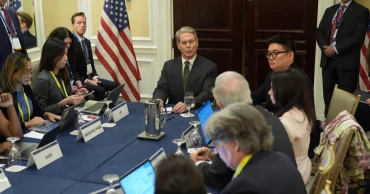
Bessent criticises IMF, World Bank; sees ‘big deal’ opportunity with China
Treasury Secretary Scott Bessent levelled harsh criticism at the operations of the World Bank and the International Monetary Fund on Wednesday even as he tried to reassure nervous investors that the United States would maintain its global leadership role.
“America first does not mean America alone,” he said in a speech to the Institute of International Finance. "To the contrary, it is a call for deeper collaboration and mutual respect among trade partners.”
Although Bessent said the IMF and the World Bank are “falling short,” he stopped short of calling for the US to withdraw from the institutions as some conservatives have advocated.
It was the latest example of how Bessent, a former hedge fund manager who keeps a close eye on the financial markets, has tried to calm the economic turmoil as President Donald Trump tries to rewire international trade through aggressive tariffs.
After Bessent's remarks, reporters asked him about a Wall Street Journal article that said the huge US tariffs that the Republican president has levied on China could be cut in half, citing unidentified people familiar with the matter.
Bessent said: “I’d be surprised if that discussion is happening." However, he said he expects “there’d have to be a de-escalation” from Washington and Beijing’s trade confrontation.
Trump had said on Tuesday that the 145% tariffs on China could “come down substantially." And then on Wednesday, he told reporters that “everybody wants to be a part of what we're doing" and “everyone's going to be happy.”
Bessent's speech in Washington represented a broadside against the IMF and the World Bank, which provide loans and other financial support around the world.
He said the Trump administration “will leverage US leadership and influence at these institutions and push them to accomplish their important mandates.”
EVs in the spotlight as China claims a leading global role at Shanghai's auto show
Some of Bessent's criticisms echoed the Trump administration's efforts to root out progressive ideology from federal institutions. Bessent said the IMF “has suffered from mission creep” and “devotes disproportionate time and resources to work on climate change, gender and social issues.”
He said there were similar problems at the World Bank, which he said “should no longer expect blank checks for vapid, buzzword-centric marketing accompanied by half-hearted commitments to reform.”
One of the problems, Bessent said, is that China is still treated like a developing country, which gives it more favorable treatment from global institutions. With China as the second-largest economy in the world, he said, “it's an adult economy.”
Despite growing friction between Beijing and Washington, Bessent said “there is an opportunity for a big deal here.”
Bessent wants the US to boost manufacturing while China increases consumption, making its economy less reliant on flooding the globe with cheap exports.
“If they want to rebalance, let’s do it together,” he said. “This is an incredible opportunity.”
Beijing said Wednesday that “exerting pressure is not the right way to deal with China and simply will not work.”
1 year ago
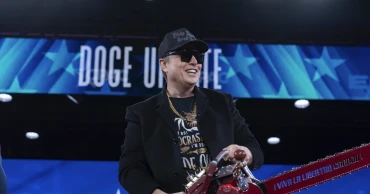
Musk to scale back role in Doge amid Tesla profit slump
Elon Musk has announced plans to "significantly" reduce his involvement in the US government's advisory operations following a major dip in Tesla’s profits and sales at the beginning of the year.
Since last year, Musk has headed the Department for Government Efficiency (Doge), a new advisory body focused on reducing federal spending and workforce, placing the billionaire at the forefront of major political decision-making, reports BBC.
However, amid growing concerns over his attention to Tesla, Musk said his "time allocation to Doge" would "drop significantly" starting next month. He indicated he would limit his work on the initiative to just one or two days per week.
His political activities have triggered international backlash, including protests and calls to boycott Tesla vehicles.
Typically, temporary federal advisors like Musk are restricted to 130 working days annually, a limit he is nearing if calculated from President Donald Trump's inauguration date. Despite that, it remains uncertain when Musk, who donated over $250 million to Trump’s re-election bid, will officially step down.
Trump recently stated he would retain Musk “as long as I could keep him”.
Musk reiterated his commitment to Tesla, saying he would now "be allocating far more of my time to Tesla." Still, he stopped short of a full exit from government duties, calling the Doge project “critical” and saying he would remain involved “as long as the president would like me to do so and as long as it's useful”.
Tesla reported a 20% year-on-year decline in vehicle sales for the first quarter, with profits dropping over 70%. The company refrained from providing a growth outlook, warning that “changing political sentiment” might significantly affect demand.
Musk attributed the backlash to those seeking to “attack me and the Doge team.”
Tesla shares have fallen around 37% this year, though they saw a post-earnings recovery of over 5% in after-hours trading on Tuesday.
The firm is also grappling with the effects of Trump’s tariffs on China. Although Tesla’s US-market vehicles are assembled domestically, many components are sourced from China. The company warned that “rapidly evolving trade policy” could disrupt its supply chain and increase costs.
“This dynamic, along with changing political sentiment, could have a meaningful impact on demand for our products in the near-term,” the company stated in its quarterly report.
Musk has had disagreements over trade policy with Trump officials, including trade adviser Peter Navarro. On Tuesday, Musk claimed Tesla is among the least affected carmakers due to localized supply chains across North America, Europe, and China, but acknowledged tariffs still pose challenges. “I’ll continue to advocate for lower tariffs rather than higher tariffs but that’s all I can do,” he said.
Earlier in the month, Musk called Navarro a “moron” following the latter’s remarks dismissing Tesla as merely a “car assembler, in many cases.”
Georg Ell, a former Tesla executive and current CEO of translation software firm Phrase, told BBC’s Today programme, “If the multi-billionaire focuses on the companies where he is extraordinary, I think people will focus once again on the quality of the product and experiences.” He added, “I think Elon is not someone who surrounds himself with a great diversity of opinion to challenge his thinking, he’s a pretty single-minded individual.”
Tesla expressed optimism about artificial intelligence driving future growth, though investors remain skeptical.
Dan Coatsworth, an investment analyst at AJ Bell, said expectations were at “rock-bottom,” citing a 13% fall in car sales—Tesla’s lowest quarterly figure in three years. He also pointed to intensifying competition and potential global supply chain disruptions stemming from Trump’s trade actions.
“Tesla’s problems are mounting,” Coatsworth said.
1 year ago

What is the highly coveted H-1B visa? Trump administration moves put attention on the program
The H-1B visa has long been a highly coveted employment visa for foreign citizens with specialized skills to live and work in the U.S., and recent requests from the Trump administration have put greater attention on the program.
The requests for more information from people applying for or renewing H-1B visas come amid heightened tensions over immigration as President Donald Trump seeks to make good on his vow of mass deportations of people in the country illegally.
Much of Trump's agenda has been focused on arresting people in the country illegally or reversing Biden-era temporary deportation protections. There has been less attention on employment-based visas or other parts of the legal immigration system — though more than 1,000 international students have had their visas or legal status revoked.
The requests for information come as the H-1B visa program is already a source of division within Trump’s Republican Party.
Here’s a look at what the H-1B visa program is, what critics and supporters say about it, and how the administration's recent questions have raised concerns.
What is an H-1B visa?
The H-1B was created as part of the 1990 Immigration Act.
It is a type of nonimmigrant visa, meaning it allows for a temporary stay in the U.S. and is not intended for people who want to immigrate permanently. Some eventually do, but only after transitioning to different immigration statuses.
The Biden administration is poised to allow Israeli citizens to travel to the US without a US visa
An H-1B allows employers to hire foreign workers who have specialized skills and a bachelor's degree or equivalent.
Who uses H-1B visas?
The visa is most commonly associated with the tech industry. About 60% or more of the H-1B visas approved every year since 2012 have been for computer-related jobs, according to the Pew Research Center.
But health care facilities, financial institutions, universities and just about any other employer looking to address workforce shortages can and do apply for H-1B visas.
The number of new visas issued annually has been capped at 65,000, plus an additional 20,000 for people with a master's degree or higher. Some employers, such as universities and nonprofits, are exempt from the limits.
People from India are by far the biggest users of these visas, according to Pew. The organization said that since 2010, the majority of approvals every year have gone to people born in India.
What makes the H-1B program controversial?
The idea behind the H-1B visa is that it allows employers to hire from abroad for jobs that they haven't been able to fill in the U.S.
Proponents say the visa is a critical tool for hard-to-fill positions. But critics on both sides of the aisle have said that it undercuts U.S. citizens who could take those jobs. Some on the right have called for the program to be eliminated. And earlier this year, Bernie Sanders, an independent senator from Vermont, wrote a scathing open letter saying the program's real purpose was to “replace American workers with lower-paid workers from abroad who often live as indentured servants.”
The debate over the future of H-1B visas is especially pronounced within the GOP.
On one side are wealthy members of the tech world who support the visas to help bring in more highly skilled workers. On the other side are people of Trump’s Make America Great Again base who championed his immigration policies and say these visas allow employers to pay foreigners lower wages than if they hired Americans.
The issue played out in a very public spat late last year after Trump tapped Sriram Krishnan, who favors bringing in more skilled immigrants into the U.S., as an adviser on artificial intelligence policy.
What's going on with reports of unusual letters over H-1B visas?
In recent days, some immigration lawyers have reported receiving unusual requests about clients applying for or renewing H-1B visas or other types of employment-related visas.
Kevin Miner, a partner at global immigration law firm Fragomen, said dozens of members from the American Immigration Lawyers Association, or AILA, received the requests in letters over roughly the last two weeks.
He cited two versions: One says the immigration service has identified “adverse information” related to the visa applicant, and they must schedule an appointment to collect biometrics for the case to proceed.
The second, he said, just says that biometrics are needed without any mention of “adverse information.” Miner said these requests have generally been asked of people applying for or renewing an H-1B visa or an I-140, which is an employee-sponsored green card.
US visa restrictions: State Dept spokesperson once again refrains from mentioning media
Miner pointed to two things that make these requests unusual: Generally, biometrics aren’t required for these types of visas and, usually, when the government wants more information, its requests are specific.
“It’s usually a back-and-forth process,” said Miner, who chairs a policy and benefits committee for the nonpartisan AILA. “This is different.”
Miner also said that if the government is going to add additional steps to the process, officials would usually go through the notice-and-comment period, which alerts lawyers and applicants of approaching changes.
“That’s not something that they’ve done here,” Miner said.
A spokesman for U.S. Citizenship and Immigration Services, which falls under the Department of Homeland Security, said in an emailed statement that they are increasing screening and vetting of all foreign citizens filing for immigration benefits as part of the Trump administration's “commitment to restoring integrity to our immigration system" and said those efforts had “lapsed” under the previous administration.
“Collecting beneficiary information and biometric data is a necessary part of USCIS’s efforts to promote national security and public safety and to mitigate fraud by conducting screening and vetting in all immigration programs and the agency is proud to be returning to this important work,” agency spokesman Matthew Tragesser said.
What is happening with immigration policy?
The Trump administration has promised mass deportations of people living in the U.S. illegally, tried to strip hundreds of thousands of people of their deportation protections and is revoking visas of international students.
More than 1,000 international students have had their visas or legal status revoked since early April, according to an Associated Press review of university statements, correspondence with school officials and court records.
The revocations often come with little notice to either students or their schools, and are being initiated by the government, a departure from past precedent — university officials have largely made administrative updates to the database when a student graduated or fell out of good academic standing.
Miner said people are concerned that similar actions might follow for those on employment-related visas.
“There’s just so much unknown,” he said.
1 year ago
Trump’s tariffs and uncertainty dampen US, global economic prospects: IMF
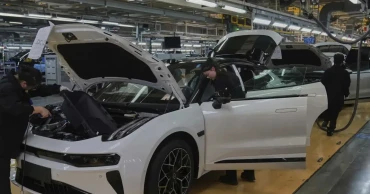
WASHINGTON, Apr 22 (UNB/AP) — The International Monetary Fund (IMF) reported Tuesday that the economic outlook for both the United States and the broader global economy has deteriorated significantly due to President Donald Trump’s tariffs and the uncertainty they have triggered.
In its latest World Economic Outlook, the IMF revised its projection for global growth this year to 2.8%, down from the 3.3% it forecast in January.
The fund also expects global growth to reach just 3% in 2026, falling short of its earlier estimate of 3.3%.
The U.S. economy is now forecast to grow only 1.8% in 2025, a sharp decline from the previous projection of 2.7%, and one percentage point lower than the estimated growth for 2024. While the IMF does not predict a recession in the United States, it has increased the likelihood of one from 25% to 37%.
These projections are broadly consistent with those of many private analysts, though some foresee even greater risks. JPMorgan economists, for instance, now assess the chance of a U.S. recession at 60%. The Federal Reserve also expects a slowdown, forecasting 1.7% growth this year.
“We are entering a new era,” said Pierre-Olivier Gourinchas, the IMF’s chief economist. “This global economic system that has operated for the last eighty years is being reset.”
The IMF, a 191-member international financial institution, aims to foster global economic growth, maintain financial stability, and alleviate poverty.
Gourinchas noted that due to the elevated uncertainty linked to the import tariffs, the IMF took the unusual measure of developing multiple scenarios for future economic outcomes. Its projections were finalized on April 4, just after the Trump administration unveiled sweeping tariffs covering nearly 60 countries and imposing nearly universal 10% duties.
Although the tariffs were suspended on April 9 for 90 days, Gourinchas said this temporary pause did not substantially affect the IMF’s forecasts, given the continued imposition of steep tariffs between the U.S. and China.
The IMF warned that the ongoing uncertainty over future U.S. trade policy is likely to put further pressure on both domestic and global economic performance. Businesses may delay investment or expansion decisions while awaiting clearer policy direction, potentially slowing growth further.
The impact of U.S. tariffs is also expected to curb China’s economic expansion. The IMF now anticipates China’s economy will grow 4% in both 2025 and 2026—about half a percentage point lower than previously forecast.
While the U.S. economy is likely to experience a “supply shock” akin to the one seen during the pandemic—when inflation surged in 2021 and 2022—Gourinchas said China will face weaker demand as American imports of Chinese goods decline.
Inflation in the U.S. is projected to climb to around 3% by the end of the year, while China’s inflation rate is expected to remain relatively stable, according to the IMF.
Europe is also set to experience slower growth, though the impact of tariffs is expected to be less severe there, partly because U.S. duties on EU goods are lower than those on Chinese imports. Additionally, increased government spending in Germany is expected to help cushion some of the economic blow.
The IMF projects the eurozone’s 27 member states will grow by 0.8% in 2025 and 1.2% in 2026—both figures trimmed by just 0.2 percentage points from January’s estimates.
Meanwhile, Japan’s economic outlook has also been revised downward. The IMF now expects the country to grow by 0.6% in both 2025 and 2026, representing reductions of 0.5 and 0.2 percentage points, respectively, from its earlier projections.
1 year ago
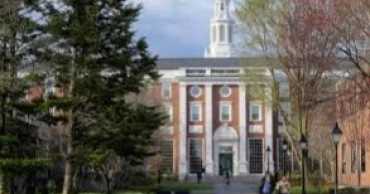
Harvard sues Trump administration to stop the freeze of more than $2 billion in grants
Harvard University announced Monday that it has filed suit to halt a federal freeze on more than $2.2 billion in grants after the institution said it would defy the Trump administration’s demands to limit activism on campus.
Zelenskyy says Russia is trying to create an ‘impression of a ceasefire’ as attacks continue
In an April 11 letter to Harvard, the Trump administration had called for broad government and leadership reforms at the university and changes to its admissions policies. It also demanded the university audit views of diversity on campus and stop recognizing some student clubs. The administration has argued universities allowed antisemitism to go unchecked at campus protests last year against Israel’s war in Gaza.
Harvard President Alan Garber said the university would not bend to the demands. Hours later, the government froze billions of dollars in federal funding.
“The Government has not — and cannot — identify any rational connection between antisemitism concerns and the medical, scientific, technological, and other research it has frozen that aims to save American lives, foster American success, preserve American security, and maintain America’s position as a global leader in innovation,” said the lawsuit, filed in Boston federal court.
“Nor has the Government acknowledged the significant consequences that the indefinite freeze of billions of dollars in federal research funding will have on Harvard’s research programs, the beneficiaries of that research, and the national interest in furthering American innovation and progress,” it added.
Harvard's suit called the funding freeze “arbitrary and capricious,” saying it violated its First Amendment rights and the statutory provisions of Title VI of the Civil Rights Act.
Within hours, the White House lashed back.
“The gravy train of federal assistance to institutions like Harvard, which enrich their grossly overpaid bureaucrats with tax dollars from struggling American families is coming to an end," White House spokesman Harrison Fields said in an email Monday. "Taxpayer funds are a privilege, and Harvard fails to meet the basic conditions required to access that privilege.”
For the Trump administration, Harvard presents the first major hurdle in its attempt to force change at universities that Republicans say have become hotbeds of liberalism and antisemitism. A part of that is targeting research funding which has fueled scientific breakthroughs but has become an easy source of leverage for the Trump administration.
In its letter earlier this month, the administration told Harvard to impose tougher discipline on protesters and to screen international students for those who are “hostile to the American values.”
It also called for broad leadership reforms at the university, admissions policy changes and the end of college recognition for some student clubs. The government also demanded Harvard audit its faculty and student body to ensure wide viewpoints in every department and, if necessary, diversify by admitting additional students and hiring new faculty.
Last Monday, Harvard said it would not comply, citing the First Amendment. The following day, Trump took to his Truth Social platform, questioning whether the university should lose its tax-exempt status “if it keeps pushing political, ideological, and terrorist inspired/supporting ‘Sickness?’”
The lawsuit follows one filed earlier this month by the American Association of University Professors demanding a federal judge declare unlawful and put aside a pending review and investigation of Harvard’s funding.
The university frames the government’s demands as a threat not only to the Ivy League school but to the autonomy the Supreme Court has long granted American universities.
“Today, we stand for the values that have made American higher education a beacon for the world,” Garber wrote Monday to the Harvard community.
“We stand for the truth that colleges and universities across the country can embrace and honor their legal obligations and best fulfill their essential role in society without improper government intrusion," he added.
Anurima Bhargava, one of the alumni who has encouraged Harvard to take a tougher stand against the administration, praised the filing of the lawsuit.
“The Trump administration continues its reckless and unlawful attack for power and control over Harvard, slashing billions in funding for scientific research and innovation that improves and saves lives,” she said. “Today, Harvard once again refused to accede to the administration’s dangerous and escalating demands.”
The American Council on Education, a nonprofit with more than 1,600 member colleges and universities, applauded Harvard.
“It has been clear for weeks that the administration’s actions violated due process and the rule of law. We applaud Harvard for taking this step and look forward to a clear and unambiguous statement by the court rebuking efforts to undermine scholarship and science,” said Ted Mitchell, the council's president.
1 year ago

60,000 Americans to lose their rental assistance and risk eviction unless Congress acts
Moments after Daniris Espinal walked into her new apartment in Brooklyn, she prayed. In ensuing nights, she would awaken and touch the walls for reassurance — finding in them a relief that turned to tears over her morning coffee.
Those walls were possible through a federal program that pays rent for some 60,000 families and individuals fleeing homelessness or domestic violence. Espinal was fleeing both.
But the program, Emergency Housing Vouchers, is running out of money — and quickly.
Funding is expected to be used up by the end of next year, according to a letter from the U.S. Department of Housing and Urban Development and obtained by The Associated Press. That would leave tens of thousands across the country scrambling to pay their rent.
It would be among the largest one-time losses of rental assistance in the U.S., analysts say, and the ensuing evictions could churn these people — after several years of rebuilding their lives — back onto the street or back into abusive relationships.
"To have it stop would completely upend all the progress that they’ve made,” said Sonya Acosta, policy analyst at the Center on Budget and Policy Priorities, which researches housing assistance.
“And then you multiply that by 59,000 households,” she said.
The program's future rests with Congress
The program, launched in 2021 by then-President Joe Biden as part of the pandemic-era American Rescue Plan Act, was allocated $5 billion to help pull people out of homelessness, domestic violence and human trafficking.
People from San Francisco to Dallas to Tallahassee, Florida, were enrolled — among them children, seniors and veterans — with the expectation that funding would last until the end of the decade.
But with the ballooning cost of rent, that $5 billion will end far faster.
Last month, HUD sent letters to groups dispersing the money, advising them to "manage your EHV program with the expectation that no additional funding from HUD will be forthcoming."
The program's future rests with Congress, which could decide to add money as it crafts the federal budget. But it's a relatively expensive prospect at a time when Republicans, who control Congress, are dead set on cutting federal spending to afford tax cuts.
Americans remain sceptical of generative AI in journalism, study reveals
Democratic Rep. Maxine Waters, who championed the program four years ago, is pushing for another $8 billion infusion.
But the organizations lobbying Republican and Democratic lawmakers to re-up the funding told the AP they aren't optimistic. Four GOP lawmakers who oversee the budget negotiations did not respond to AP requests for comment.
“We’ve been told it’s very much going to be an uphill fight,” said Kim Johnson, the public policy manager at the National Low Income Housing Coalition.
Recipients face uncertainty after years of stability
Espinal and her two daughters, aged 4 and 19, are living on one of those vouchers in a three-bedroom apartment with an over $3,000 monthly rent — an amount extremely difficult to cover without the voucher.
Four years ago, Espinal fought her way out of a marriage where her husband controlled her decisions, from seeing her family and friends to leaving the apartment to go shopping.
When she spoke up, her husband said she was wrong, or in the wrong or crazy.
Isolated and in the haze of postpartum depression, she didn’t know what to believe. “Every day, little by little, I started to feel not like myself,” she said. “It felt like my mind wasn’t mine.”
When notices arrived in March 2021 seeking about $12,000 in back rent, it was a shock. Espinal had quit her job at her husband's urging and he had promised to cover family expenses.
Police reports documenting her husband’s bursts of anger were enough for a judge to give her custody of their daughter in 2022, Espinal said.
But her future was precarious: She was alone, owed thousands of dollars in back rent and had no income to pay it or support her newborn and teenage daughters.
Financial aid to prevent evictions during the pandemic kept Espinal afloat, paying her back rent and keeping the family out of shelters. But it had an expiration date.
Around that time, the Emergency Housing Vouchers program was rolled out, targeting people in Espinal's situation.
53% of Americans have unfavorable view of Israel, compared to 42% in 2022
A "leading cause of family homelessness is domestic violence" in New York City, said Gina Cappuccitti, director of housing access and stability services at New Destiny Housing, a nonprofit that has connected 700 domestic violence survivors to the voucher program.
Espinal was one of those 700, and moved into her Brooklyn apartment in 2023.
The relief went beyond finding a secure place to live, she said. “I gained my worth, my sense of peace, and I was able to rebuild my identity."
Now, she said, she's putting aside money in case of the worst. Because, “that’s my fear, losing control of everything that I’ve worked so hard for.”
1 year ago
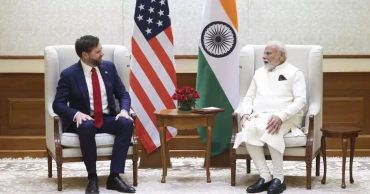
Vance and Modi meet in New Delhi to discuss trade deal and avoid US tariffs
U.S. Vice President JD Vance held talks with Indian Prime Minister Narendra Modi on Monday as New Delhi looks to avoid American tariffs, negotiate a bilateral trade deal with Washington and strengthen ties with the Trump administration.
Vance, who is on a largely personal four-day visit to India, met with Modi at his residence in New Delhi and the two leaders “reviewed and positively assessed the progress in various areas of bilateral cooperation," Modi’s office said in a statement. They also “welcomed the significant progress” in the negotiations of an expected trade deal between the two countries, the statement said.
The U.S. is India’s largest trading partner and the two countries are now holding negotiations aiming to seal a bilateral trade agreement this year. They have set an ambitious target of more than doubling their bilateral trade to $500 billion by 2030. If achieved, the trade deal could significantly enhance economic ties between the two countries and potentially strengthen diplomatic ties as well.
The deal “presents an opportunity to negotiate a new and modern trade agreement focused on promoting job creation and citizen well-being in both countries, with the goal of enhancing bilateral trade and supply-chain integration in a balanced and mutually beneficial manner,” Vance’s office said in a statement.
Vance’s first visit to New Delhi came amid the backdrop of U.S. President Donald Trump's now-paused tariff program against most countries, including India. It also coincides with a rapidly intensifying trade war between the United States and China, which is New Delhi’s main rival in the region.
Modi's office said that the two leaders “noted continued efforts towards enhancing cooperation in energy, defense, strategic technologies and other areas" and “exchanged views on various regional and global issues of mutual interest, and called for dialogue and diplomacy as the way forward.”
Indian Foreign Ministry spokesperson Randhir Jaiswal said on Monday that Vance’s visit will “further deepen the India–U.S. comprehensive global strategic partnership.”
Vance combines business with pleasure
Vance was greeted with an Indian classical dance performance after he arrived at New Delhi’s Palam airport on Monday, following his visit to Rome, where he met with Pope Francis on Easter Sunday, a day before the pontiff's death.
Vance was accompanied by his wife, Usha Vance, a practicing Hindu whose parents are from India, along with their three children and officials from the U.S. administration.
Vance to meet Modi, Meloni during trip to India and Italy with wife Usha
The family visited the Akshardham Hindu temple in New Delhi after their arrival and are expected to tour the iconic Taj Mahal monument and the 12th-century Amer Fort — a UNESCO world heritage site — during their trip.
India's importance in counterbalancing China's influence
India is a close partner of the U.S. and an important strategic ally in combating the rising influence of China in the Indo-Pacific region. It was also part of the Quad, which is made up of the U.S., India, Japan and Australia and is seen as a counterbalance to China’s expansion in the region. Trump is expected to attend a summit of Quad leaders in India later this year.
Washington has long sought to develop a deeper partnership with New Delhi, which is seen as a bulwark against China. Modi particularly established a good working relationship with Trump during his first term in office, and the two leaders are likely to further boost cooperation between their countries.
Modi was among the first leaders to visit the U.S. and hold talks with Trump after he returned to the White House. During his visit, he hailed a “mega partnership” with the U.S., and kickstarted a negotiation process to minimize the possible fallout of Trump’s tariffs.
The two leaders also said they planned to grow their defense partnership, with India signaling compliance with the Trump administration’s demands, saying it will purchase more oil, energy and defense equipment from the U.S. Modi also has cooperated with Trump's moves to deport migrants as India has accepted many of its citizens from the U.S. in the past few months.
Regardless, Trump targeted India with a 26% levy, part of which has since been paused. However, he has continued to call India a “tariff abuser” and “tariff king.”
Trade talks are pressing for India
The trade negotiations are especially urgent for India, which could be hit hard by Trump’s tariffs, particularly in the agriculture, processed food, auto components, high-end machinery, medical equipment and jewelry sectors.
Harsh Vardhan Shringla, India’s former foreign secretary and ambassador to the U.S., said that Vance’s visit comes at a time of global upheaval in world trade. He said ties between New Delhi and Washington could see an upsurge under Trump’s presidency, mainly in technology-sharing and defense.
“U.S. trade policy under Trump offers an opportunity for India to embed itself in a bigger way in the U.S. markets and global supply chains,” Shringla said.
Modi's government is also hoping to attract investment from Tesla and SpaceX CEO Elon Musk.
Last month, Musk’s Starlink entered into agreements with two of India’s top telecom operators to provide satellite-based internet services. Musk also indicated that he would visit India later this year after speaking last week with Modi, signaling that there could be progress in the electric carmaker’s push to enter the Indian market.
Modi expressed respect for Yunus despite Hasina’s disrespect: CA’s Press Secretary
India is also a major defense partner of the U.S. It has in recent years embedded advanced American jets, helicopters, missiles and military gear into its armed forces. The two countries have announced plans to sign a 10-year framework later this year for strengthening their defense partnership.
1 year ago