usa

NYC sightseeing helicopter plunges into river, killing 6, including family of Spanish tourists
A New York City sightseeing helicopter broke apart in midair Thursday and crashed upside-down into the Hudson River, killing the pilot and a family of five Spanish tourists in the latest U.S. aviation disaster, officials said.
The victims included Siemens executive Agustin Escobar, his wife, Merce Camprubi Montal, and three children, in addition to the pilot, a person briefed on the investigation told The Associated Press. The person could not discuss details of the investigation publicly and spoke to the AP on condition of anonymity.
Photos posted on the helicopter company’s website showed the couple and their children smiling as they boarded just before the flight took off.
Mayor Eric Adams said the flight began at a downtown heliport around 3 p.m. and the bodies — had been recovered and removed from the water. The flight north along the Manhattan skyline and then back south toward the Statue of Liberty lasted less than 18 minutes.
Video of the crash showed parts of the aircraft tumbling through the air into the water near the shoreline of Jersey City, New Jersey. A witness there, Bruce Wall, said he saw it “falling apart” in midair, with the tail and propeller coming off. The propeller was still spinning without the helicopter as it fell.
Dani Horbiak was at her Jersey City home when she heard what sounded like “several gunshots in a row, almost, in the air.” She looked out her window and saw the chopper "splash in several pieces into the river.”
The helicopter was spinning uncontrollably with “a bunch of smoke coming out” before it slammed into the water, said Lesly Camacho, a hostess at a restaurant along the river in Hoboken, New Jersey.
Passenger jet with 60 aboard, army helicopter collide while landing at Reagan airport in US
Rescue boats circled the submerged aircraft within minutes of impact near the end of a long maintenance pier for a ventilation tower serving the Holland Tunnel. Recovery crews hoisted the mangled helicopter out of the water just after 8 p.m. using a floating crane.
The flight was operated by New York Helicopters, officials said. No one answered the phones at the company’s offices in New York and New Jersey.
A person who answered the phone at the home of the company’s owner, Michael Roth, declined to comment. Roth told the New York Post he was devastated and had “no clue” why the crash happened.
“The only thing I know by watching a video of the helicopter falling down, that the main rotor blades weren’t on the helicopter,” the Post quoted him as saying. He added that he had not seen such a thing happen during his 30 years in the helicopter business, but noted: “These are machines, and they break.”
Emails seeking comment were sent to attorneys who have represented Roth in the past.
The Federal Aviation Administration identified the helicopter as a Bell 206, a model widely used in commercial and government aviation, including by sightseeing companies, TV news stations and police. It was initially developed for the U.S. Army before being adapted for other uses. Thousands have been manufactured over the years.
The National Transportation Safety Board said it would investigate.
Escobar worked for the tech company Siemens for more than 27 years, most recently as global CEO for rail infrastructure at Siemens Mobility, according to his LinkedIn account. In late 2022 he briefly became president and CEO of Siemens Spain. In a post about the position, he thanked his family: “my endless source of energy and happiness, for their unconditional support, love ... and patience.”
Escobar regularly posted about the importance of sustainability in the rail industry and often traveled internationally for work, including journeying from India to the UK in the past month. He also was vice president of the German Chamber of Commerce for Spain since 2023.
Camprubi Montal worked in Barcelona, Spain, for energy technology company Siemens Energy for about seven years as its global commercialization manager, according to her LinkedIn account.
Video of the crash suggested that a “catastrophic mechanical failure” left the pilot with no chance to save the helicopter, said Justin Green, an aviation lawyer who was a helicopter pilot in the Marine Corps.
It is possible the helicopter’s main rotors struck the tail boom, breaking it apart and causing the cabin to free fall, Green said.
Russian officials recover the bodies of all 22 people killed in a helicopter crash in the Far East
“They were dead as soon as whatever happened happened,” Green said. “There’s no indication they had any control over the craft. No pilot could have prevented that accident once they lost the lifts. It’s like a rock falling to the ground. It’s heartbreaking.”
The skies over Manhattan are routinely filled with planes and helicopters, both private recreational aircraft and commercial and tourist flights. Manhattan has several helipads from which business executives and others are whisked to destinations throughout the metropolitan area.
At least 38 people have died in helicopter accidents in New York City since 1977. A collision between a plane and a tourist helicopter over the Hudson in 2009 killed nine people, and five died in 2018 when a charter helicopter offering “open door” flights went down into the East River.
New York Helicopters also owned a Bell 206 that lost power and made an emergency landing on the Hudson during a sightseeing tour in June 2013. The pilot managed to land safely, and he and the passengers — a family of four Swedes — were uninjured. The National Transportation Safety Board found that a maintenance flub and an engine lubrication anomaly led to the power cutoff.
Thursday’s crash was the first for a helicopter in the city since one hit the roof of a skyscraper in 2019, killing the pilot.
The accidents — and the noise caused by helicopters — have repeatedly led some community activists and officials to propose banning or restricting traffic at Manhattan heliports.
Other recent crashes and close calls have already left some people worried about the safety of flying in the U.S.
Seven people were killed when a medical transport plane plummeted into a Philadelphia neighborhood in January. That happened two days after an American Airlines jet and an Army helicopter collided in midair in Washington in the deadliest U.S. air disaster in a generation.
1 year ago
EU pauses tariff retaliation for 90 days to align with Trump’s delay
Dhaka, Apr 10 (UNB)-The European Commission announced Thursday it will delay its planned retaliatory tariffs against the United States for 90 days, mirroring President Donald Trump’s temporary pause on newly imposed tariffs.
The move is intended to allow time for negotiations.
U.S. Treasury Secretary Scott Bessent clarified that the tariff freeze wasn't triggered by recent market turmoil, but rather to accommodate countries seeking dialogue.
Trump later told reporters that public anxiety over the tariffs prompted his decision to ease up.
1 year ago

Trump admin halts $1b in federal funding for Cornell, $790m for Northwestern
More than $1 billion in federal funding for Cornell University and around $790 million for Northwestern University has been frozen while the government investigates alleged civil rights violations at the schools, the White House said.
It's part of a broader push to use government funding to get major academic institutions to comply with President Donald Trump's political agenda. The White House confirmed the funding pauses late Tuesday night but offered no further details on what they entail or what grants to the schools are being affected, AP reports.
The moves come as Trump's Republican administration has increasingly begun using governmental grant funding as a spigot to try to influence campus policy, previously cutting off money to schools including Columbia University and the University of Pennsylvania. That has left universities across the country struggling to navigate cuts to grants for research institutions.
In a statement, Cornell said that it had received more than 75 stop work orders earlier Tuesday from the Defense Department related to research “profoundly significant to American national defense, cybersecurity, and health” but that it had not otherwise received any information confirming $1 billion in frozen grants.
“We are actively seeking information from federal officials to learn more about the basis for these decisions,” said the statement from Michael I. Kotlikoff, the university president, and other top school officials.
China raises retaliatory tariff on US to 84% as it vows to 'fight to the end'
Northwestern spokesperson Jon Yates said Tuesday evening the school had not received any notice from the federal government. Yates said the school has fully cooperated with investigations by both the Education Department and Congress.
“Federal funds that Northwestern receives drive innovative and life-saving research, like the recent development by Northwestern researchers of the world’s smallest pacemaker, and research fueling the fight against Alzheimer’s disease,” Yates said. “This type of research is now at jeopardy.”
Last month, the Education Department sent letters to more than 60 universities, including Cornell and Northwestern, warning of “potential enforcement actions if they do not fulfill their obligations” under federal law to “protect Jewish students on campus, including uninterrupted access to campus facilities and educational opportunities.”
The Trump administration has threatened to cut off federal funding for universities allowing alleged antisemitism to go unchecked at campus protests last year against Israel's war with Hamas in Gaza — accusations the universities have denied.
The funding freezes have jeopardized science and research without advancing the goal of creating campuses free of antisemitism, said Ted Mitchell, president of the American Council on Education.
”This was wrong last week, it is wrong this week, and it will be wrong next week,” he said.
A spokesperson for the Education Department did not respond to a request for comment.
1 year ago
US to hold direct talks with Iran, Trump says
President Donald Trump announced Monday that the United States will engage in direct discussions with Iran regarding its nuclear programme, while warning that Iran would face “great danger” if the talks fail to persuade Tehran to abandon its pursuit of nuclear weapons.
Iran, meanwhile, confirmed that talks will take place but maintained they will be indirect, mediated through a third party.
Trump warns of additional tariffs on China
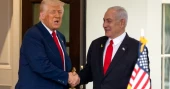
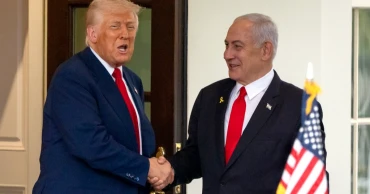
Speaking to reporters following a meeting with Israeli Prime Minister Benjamin Netanyahu, Trump said the negotiations will begin Saturday and stressed that Iran must not acquire nuclear weapons.
“We’re dealing with them directly and maybe a deal is going to be made,” Trump said, adding, “doing a deal would be preferable to doing the obvious.”
When asked whether he would resort to military action if a diplomatic resolution cannot be reached, Trump replied, “Iran is going to be in great danger, and I hate to say it.”
“If the talks aren’t successful, I think it’s going to be a very bad day for Iran,” he added.
Iranian Foreign Minister Abbas Araghchi, writing on X (a platform banned in Iran), asserted that the negotiations would not be face-to-face.
“Iran and the United States will meet in Oman on Saturday for indirect high-level talks,” he posted. “It is as much an opportunity as it is a test. The ball is in America’s court.”
Trump’s Letter Reopens Dialogue
Trump recently sent a letter to Iran’s Supreme Leader Ayatollah Ali Khamenei proposing direct negotiations on Iran’s accelerating nuclear programme. Iranian President Masoud Pezeshkian said last month that while Tehran rejected the offer for direct talks, it remained open to indirect discussions with the U.S.
Trump, however, has repeatedly called on Iran — a key backer of Hamas, Hezbollah, and the Houthi rebels — to dismantle its nuclear programme or face consequences.
“If they don’t make a deal, there will be bombing,” Trump said in a March interview with NBC News. “It will be bombing the likes of which they have never seen before.”
During his first presidential term, Trump withdrew the U.S. from the 2015 nuclear deal brokered under President Barack Obama.
Netanyahu expressed support for Trump’s diplomatic initiative, stating that both the U.S. and Israel are committed to preventing Iran from obtaining nuclear weapons. Notably, Netanyahu was a vocal critic of the original 2015 deal and encouraged Trump’s 2018 withdrawal.
The Israeli leader said he would welcome an agreement similar to Libya’s 2003 deal to dismantle its nuclear programme — a move that saw Libyan leader Moammar Gadhafi give up his secret programme entirely. However, Iran insists its nuclear activities, under the oversight of the International Atomic Energy Agency, should continue.
“I think that would be a good thing,” Netanyahu said. “But whatever happens, we have to make sure that Iran does not have nuclear weapons.”
Trump noted that the talks would take place “at almost the highest level,” but declined to reveal the location or the identity of the lead U.S. negotiators.
While Oman played a key role in facilitating past U.S.-Iran discussions, it has not confirmed its involvement this time.
Netanyahu's Visit Highlights Regional Tensions, Trade Disputes
Trump announced the planned talks during Netanyahu’s sudden visit to the White House — his second in just over two months — where they also discussed Trump’s global tariff policies, Iran’s nuclear ambitions, and the ongoing conflict between Israel and Hamas.
The two leaders also touched on Iran’s regional influence, Israel’s relationship with Turkey, and the International Criminal Court (ICC), which issued a warrant for Netanyahu’s arrest last year. In February, Trump signed an executive order imposing sanctions on the ICC over its probes involving Israel.
Dr Yunus urges Trump to delay reciprocal tariffs on Bangladesh by 3 months
Ahead of their meeting, Trump had phone calls with French President Emmanuel Macron, Egyptian President Abdel Fattah el-Sisi, and Jordan’s King Abdullah II — all of whom are involved in efforts to calm tensions in the region and end the Israel-Hamas war.
On Sunday evening, Netanyahu met with Commerce Secretary Howard Lutnick and U.S. Trade Representative Jameson Greer to discuss tariffs. On Monday, he met Trump’s Middle East envoy Steve Witkoff before speaking with the president.
Netanyahu said he assured Trump that Israel would address its trade imbalance with the U.S., which stood at $7.4 billion in 2024 out of $37 billion in total bilateral trade.
“We will eliminate the trade deficit with the United States,” Netanyahu said. “We intend to do it very quickly.”
Trump pointed out that beyond trade, the U.S. provides nearly $4 billion in annual assistance to Israel, mostly for military purposes. When asked whether he would consider lowering Israel’s tariff rate, Trump said, “Maybe not, maybe not. Don’t forget we help Israel a lot.”
Instead of economic concessions, Trump might pressure Netanyahu to make progress towards ending the war in Gaza — possibly through a temporary truce with Hamas to pause hostilities and release hostages.
Eytan Gilboa, a U.S.-Israel relations expert at Israel’s Bar-Ilan University, said Trump aims to return from his upcoming trip to Saudi Arabia with movement on normalising ties between Israel and the kingdom — a development that would likely require Israeli compromises in Gaza.
Such progress could bolster Trump’s regional standing and reinforce diplomatic pressure on Iran, against which he has signalled intentions to impose new sanctions or take military action.
Trade and Tariff Issues Loom Large
Last week, in anticipation of U.S. tariffs, Israel announced it was eliminating duties on U.S. imports, mostly agricultural products. However, the move did not exempt it from Trump’s broader trade actions.
Despite being a relatively small market for U.S. goods, Israel is a significant trade partner, especially in high-tech services — which are less affected by tariffs. Still, critical Israeli sectors could feel the impact.
According to the Manufacturers Association of Israel, Trump’s tariffs could cost the country $3 billion annually in exports and result in 26,000 job losses across industries such as biotechnology, chemicals, plastics, and electronics.
Israel’s GDP, according to the World Bank, exceeds $500 billion annually.
1 year ago

‘Shame on you all’: Indian-American engineer resigns over Microsoft’s Israel ties
Dhaka, Apr 7 (UNB)- Microsoft’s 50th anniversary celebration on March 4 took an unexpected turn when pro-Palestinian protests broke out during the event.
One of the most striking moments came from Vaniya Agrawal, an Indian-American software engineer in Microsoft’s AI division, who vocally confronted former CEOs Steve Ballmer and Bill Gates, as well as current CEO Satya Nadella, while they were onstage.
“Shame on you all. You’re all hypocrites,” Agrawal declared, as another woman began escorting her away. Despite being booed by some attendees, she continued her protest.
“Fifty thousand Palestinians in Gaza have been murdered with Microsoft technology. How dare you. Shame on all of you for celebrating on their blood. Cut ties with Israel,” she said.
Ballmer, Gates, and Nadella remained silent during the disruption and resumed their discussion once Agrawal was removed from the venue, reports Hindustan Times.
Footage of the protest quickly spread online. Following the event, Agrawal sent a mass email announcing her resignation from the company, stating that her final day would be April 11.
“You may have seen me stand up earlier today to call out Satya during his speech at the Microsoft 50th anniversary,” she wrote, explaining her decision to step away from a company whose work she believes supports Israel's actions in Gaza.
She referenced reports, including one by the Associated Press, which revealed Microsoft’s $133 million contract with Israel’s Ministry of Defense. The report claimed that Microsoft Azure and AI technologies have played a role in enabling mass surveillance and military operations against Palestinians.
Agrawal’s protest was one of two pro-Palestinian demonstrations that took place during the anniversary event. Earlier, employee Ibtihal Aboussad interrupted a speech by Mustafa Suleyman, adding to the growing internal dissent within the company over its ties with Israel.
1 year ago
Trump defends tariffs as 'medicine' despite market turmoil
President Donald Trump declared on Sunday that he remains firm on imposing broad tariffs on imports from much of the world, stating he will only consider backing down if other countries address their trade imbalances with the US.
This steadfast approach, which has shaken financial markets and sparked fears of a global downturn, reflects Trump’s commitment to implementing the duties despite widespread concerns.
Texas town that backed Trump faces fallout from immigration raid at popular bakery
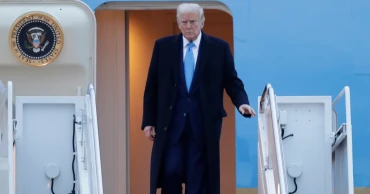
During a press interaction aboard Air Force One, Trump remarked that although he does not wish to see global markets slide, he is also unfazed by the current sell-off, saying, “sometimes you have to take medicine to fix something.”
His remarks came as global markets looked set to continue their decline when trading resumed Monday. Meanwhile, members of Trump’s administration attempted to calm market jitters by noting that over 50 countries had expressed interest in launching talks to ease the tariffs.
“I spoke to many leaders—European, Asian, from around the globe,” Trump said. “They’re eager to strike deals. I made it clear that we will not tolerate trade deficits with their countries. For me, a deficit equals a loss. We aim for trade surpluses or, at the very least, a balanced outcome.”
The increased tariffs are scheduled to take effect on Wednesday, marking the beginning of a phase of economic uncertainty with no clear resolution in sight. Treasury Secretary Scott Bessent stressed that the issues at hand stem from unfair trade practices, which “aren’t the type of problems you can negotiate away quickly.” He added that the U.S. will have to assess each country's proposals to see if they are credible.
From Florida, where he spent the weekend golfing, Trump posted on social media, “WE WILL WIN. HANG TOUGH, it won’t be easy.” His Cabinet members and top economic aides actively defended the tariffs on Sunday, downplaying their broader impact on the global economy.
“There’s no certainty of a recession. No one knows how markets will behave in the short term,” Bessent said. “What matters is laying down the long-term economic foundation for prosperity.”
Millions take to streets across US against Trump and Musk
U.S. stock futures fell Sunday night, reflecting continued market turbulence driven by the tariffs. Futures for the S&P 500 fell 2.5%, the Dow Jones Industrial Average declined 2.1%, and Nasdaq futures dropped by 3.1%. Bitcoin, which had been relatively stable, also slid by nearly 6%.
In Asia, markets suffered significant losses. Tokyo’s Nikkei 225 dropped almost 8% after opening, later narrowing to a 6% loss by midday. A circuit breaker temporarily halted trading in Topix futures after steep losses in U.S. futures. Chinese markets followed suit—Hong Kong’s Hang Seng plunged 9.4%, while the Shanghai Composite fell 6.2%.
Trump’s announcement on April 2 of widespread tariffs fulfilled a major campaign pledge, as he bypassed Congress to reshape global trade rules. The decision aligns with his longstanding criticism of international trade agreements, which he sees as unfavourable to the U.S. Trump is betting that the American public will tolerate price increases on consumer goods in exchange for a restructured economic order.
Many nations are now working to formulate their responses to the U.S. tariffs. China and others have already begun retaliating.
Top White House economic adviser Kevin Hassett acknowledged the global backlash, saying that although other nations are “angry and retaliating,” they are also coming to the negotiation table. He referred to reports from the U.S. Trade Representative indicating that over 50 countries had contacted the administration to begin discussions.
Adding complexity to the situation, the new tariffs are being applied not only to rival nations but also to U.S. allies. Israel, for instance, is now subject to a 17% tariff. Prime Minister Benjamin Netanyahu is scheduled to visit the White House and hold a joint press briefing with Trump on Monday, during which the tariffs—alongside the Gaza war and other matters—are expected to be discussed.
Another ally, Vietnam—a key hub for clothing manufacturing—has also reached out regarding the tariffs. Trump stated that Vietnam’s leader told him by phone that the country is willing to reduce tariffs to zero if a trade deal with the U.S. can be reached. Italian Prime Minister Giorgia Meloni, a vital European partner, expressed disagreement with Trump’s approach but affirmed her readiness to use “all tools—both diplomatic and economic—to protect our businesses and industries affected by these measures.”
Commerce Secretary Howard Lutnick confirmed that there will be no delay in implementing the tariffs. “The tariffs are absolutely going into effect,” he stated, explaining that the move is necessary to reset global trade dynamics. However, he only committed to the tariffs staying in place “for days and weeks” for now.
In Congress, Trump’s tariff policy has received both applause and concern, particularly from his own Republican Party, which traditionally supports free trade.
A group of Republican senators has backed a new bipartisan proposal requiring presidents to justify any new tariffs to Congress. The plan would give lawmakers 60 days to approve the measures—otherwise, they would automatically lapse. On Sunday, Republican Representative Don Bacon from Nebraska said he would introduce a House version of the bill, arguing that Congress must reclaim its tariff authority.
“We transferred some of that power to the executive branch, and in hindsight, that may have been a mistake,” Bacon said. He noted, however, that it will be difficult to pass the legislation unless economic conditions worsen—such as further market declines, rising inflation, or job losses.
Senator John Barrasso of Wyoming, the second-ranking Republican in Senate leadership, affirmed Trump’s legal right to impose the tariffs but acknowledged growing nationwide concerns. “People are watching the markets closely,” he said. “There will be a discussion in the Senate—we’ll see where it leads.”
Elon Musk, the billionaire heading the Department of Government Efficiency under Trump, had previously kept quiet about the tariffs. But at an event in Italy over the weekend, he voiced support for a “zero-tariff” policy between the U.S. and Europe. His comments were promptly criticised by White House trade adviser Peter Navarro.
“Elon is great when he sticks to his DOGE lane,” Navarro said. “But let’s be clear—Elon sells cars. He’s simply advocating for his business, just like any entrepreneur would.”
Trump also signalled disagreement with Musk, stating Sunday that the European Union “wants to talk, but there will be no discussions unless they commit to paying us significant annual sums.”
Former Treasury Secretary Lawrence Summers, who served under Democratic President Bill Clinton, said Trump’s economic strategy lacks consistency. He argued that if the administration’s goal is to encourage manufacturing and generate revenue, they need to commit to the tariffs long-term. But if they’re merely negotiating, the U.S. won't achieve either objective.
“If it’s about striking deals and removing tariffs mutually, then we don’t raise revenue or boost domestic manufacturing. If it’s about creating revenue and bringing industries back to the U.S., then the tariffs have to be permanent,” Summers explained. “The president can’t have it both ways.”
Bessent appeared on NBC's Meet the Press, while Hassett and Summers were interviewed on ABC’s This Week. Lutnick and Barrasso featured on CBS's Face the Nation, and Navarro spoke with Fox News Channel’s Sunday Morning Futures.
1 year ago
Trump’s immigration rules, research cuts prompt US scientific brain drain
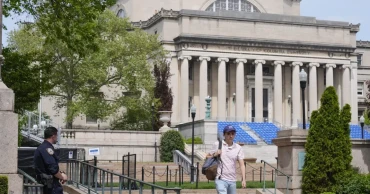
SACRAMENTO, United States, Apr 6 (Xinhua/UNB) – The tightening of immigration policies and significant reductions in research funding during U.S. President Donald Trump’s administration are driving many skilled scientists to look for opportunities abroad.
A recent survey by Nature journal revealed that over 1,200 U.S.-based researchers—around 75 percent of those surveyed—are contemplating moves to countries like Canada or those in Europe due to the prevailing political climate. The data points to a potential mass departure of scientific talent from the United States.
The trend is particularly strong among early-career scientists, with nearly 80 percent of postgraduate researchers saying they are considering leaving the country. Experts are concerned this could lead to the loss of an entire generation of American scientific potential.
Two main factors are contributing to this exodus: increasingly restrictive immigration measures and historic funding cuts to scientific research at U.S. federal agencies.
“The massive cuts to funding are irrational and will greatly diminish the ability of the United States to provide world-leading research, and this will impact the health and national security of our country,” said Daniel Cox, a distinguished emeritus professor of physics at the University of California, Davis, in an interview with Xinhua.
On the immigration side, the Trump administration has issued several executive orders targeting foreign-born scientists and engineers. These directives included scaling back humanitarian parole, restricting border crossings, narrowing legal immigration options, and boosting deportation efforts.
The repercussions for the scientific sector have been immediate. According to National Public Radio (NPR), around half of the U.S. doctoral-level scientists and engineers are foreign-born. Despite this, the Trump administration sought to limit access to H-1B visas. Immigration specialists cautioned that these restrictions could push top-tier foreign researchers to relocate to more welcoming countries.
At the same time, there have been widespread reports of deep cuts to research funding. Since Trump took office in January, the National Institutes of Health (NIH)—the largest funder of biomedical research in the U.S.—has experienced sudden multi-billion-dollar reductions, with many grant applications being put on hold.
Beyond budget cuts, the administration’s influence extends to actions against scientific institutions. NASA has already shut down certain departments, including its Office of the Chief Scientist, laying off more than 20 employees. Reports also indicate that the NIH is preparing to eliminate about 1,200 positions, around 6 percent of its total workforce.
An open letter signed by nearly 2,000 scientists, including multiple Nobel Prize laureates, warned that the United States' global leadership in science is being “decimated.”
The letter, released Monday, describes a growing “climate of fear” in the research community. It mentions instances where scientists have removed their names from academic papers, halted studies, or revised proposals to exclude terms like “climate change,” which are now flagged as controversial by certain agencies.
“There’s a fire sale on American academics right now,” said Carl Bergstrom, a biology professor at the University of Washington, speaking to STAT News. He noted that the current political atmosphere is discouraging many from pursuing academic careers in the U.S.
Other countries are moving quickly to attract disillusioned U.S. scientists. France has launched an aggressive campaign, including Aix-Marseille University’s “Safe Place For Science” initiative, which aims to host around 15 American scientists with up to 15 million euros (about 16.2 million U.S. dollars) in funding over three years. The program has already received more than 150 applications.
Another French institution, Ecole Centrale de Marseille, has allocated 3 million euros for U.S.-originated research projects that are now stalled.
Spain’s Atrae initiative is offering grants exceeding 1 million U.S. dollars per scientist, while Canada is simplifying immigration for skilled researchers through programs such as Express Entry and the Global Talent Stream.
“You come to a country where the social majority trusts its scientists,” Spain’s Science Minister Diana Morant said during the March 2025 launch of Atrae’s third edition.
The potential long-term economic impact of this talent migration could be considerable. A joint study by Duke and Harvard universities showed that one in four engineering and tech companies founded in the U.S. between 1995 and 2005 had at least one immigrant founder, generating 52 billion U.S. dollars in revenue and creating 450,000 jobs.
Innovation may also take a hit, especially in high-tech sectors. The Silicon Valley Competitiveness and Innovation Project reports that 57 percent of STEM professionals with bachelor’s degrees or higher in Silicon Valley are foreign-born.
The MIT Technology Review reported last month that the U.S. risks losing the innovation engine that has driven 85 percent of its economic growth since 1945. Laboratories are canceling cancer studies and artificial intelligence projects, and hiring has been frozen at institutions like Harvard University and the University of Pennsylvania.
1 year ago

At least 16 dead in flooding and tornadoes as storms slash from Texas to Ohio
Another round of torrential rain and flash flooding came Saturday for parts of the South and Midwest already heavily waterlogged by days of severe storms that also spawned deadly tornadoes. Forecasters warned that rivers in some places would continue to rise for days.
Day after day of heavy rains have pounded the central U.S., rapidly swelling waterways and prompting a series of flash flood emergencies in from Texas to Ohio. The National Weather Service said dozens of locations in multiple states were expected to reach what the agency calls “ major flood stage,” with extensive flooding of structures, roads, bridges and other critical infrastructure possible.
At least 16 weather-related deaths have been reported since the start of the storms, including 10 in Tennessee.
A 57-year-old man died Friday evening after getting out of a car that washed off a road in West Plains, Missouri. Flooding killed two people in Kentucky — a 9-year-old boy swept away that same day on his way to school, and a 74-year-old whose body was found Saturday inside a fully submerged vehicle in Nelson County, authorities said.
Also Saturday a 5-year-old died at a home in Little Rock, Arkansas, in a weather-related incident, according to police. No details were immediately provided.
Tornadoes earlier in the week destroyed entire neighborhoods and were responsible for at least seven of the deaths.
And interstate commerce is affected — the extreme flooding across a corridor that includes the major cargo hubs in Louisville, Kentucky, and Memphis could lead to shipping and supply chain delays, said Jonathan Porter, chief meteorologist at AccuWeather.
The outburst comes at a time when nearly half of NWS forecast offices have 20% vacancy rates after Trump administration job cuts — twice that of just a decade ago.
Massive march storm to bring blizzards, tornadoes, flooding, and fires across US
Louisville Mayor Craig Greenberg said Saturday that the Ohio River rose 5 feet (about 1.5 meters) in 24 hours and would continue to swell for days.
“We expect this to be one of the top 10 flooding events in Louisville history,” he said.
Flash flood threat looms over many states
Flash flood emergency and tornado warnings continued to be issued Saturday across Arkansas, Mississippi, Tennessee and Kentucky, with more heavy rains and damaging winds in the mix. All of eastern Kentucky was under a flood watch through Sunday morning.
Hundreds of Kentucky roads across the state were impassable because of floodwaters, downed trees or mud and rock slides.
Downtown Hopkinsville, Kentucky, reopened in the morning after floodwaters from the Little River receded, giving a much-needed reprieve, but still more rainfall was on its way, Mayor James R. Knight Jr. said.
“We got a little rain, but most of it went north of us,” Knight said. “Thank goodness on that. Gave us a little break.”
In north-central Kentucky, emergency officials ordered a mandatory evacuation for Falmouth, a town of 2,000 people in a bend of the rising Licking River. The warnings were similar to catastrophic flooding nearly 30 years ago when the river reached a record 50 feet (15 meters), resulting in five deaths and 1,000 homes destroyed.
In Arkansas, weather officials pleaded with people to avoid travel unless absolutely necessary due to widespread flooding.
BNSF Railway confirmed that a railroad bridge in Mammoth Spring was washed out by floodwaters, causing the derailment of several cars. No injuries were reported, but there was no immediate estimate for when the bridge would reopen.
Why so much nasty weather?
Since Wednesday, more than a foot of rain (30.5 centimeters) has fallen in parts of Kentucky, and more than 8 inches (20 centimeters) in parts of Arkansas and Missouri, forecasters said Saturday.
Forecasters attributed the violent weather to warm temperatures, an unstable atmosphere, strong wind shear and abundant moisture streaming from the Gulf.
At least two reports of observed tornadoes were noted Friday evening in Missouri and Arkansas, according to the National Weather Service. One, near Blytheville, Arkansas, lofted debris at least 25,000 feet (7.6 kilometers) high, according to NWS meteorologist Chelly Amin. The state’s emergency management office reported damage in 22 counties from tornadoes, wind, hail and flash flooding.
In Dyersburg, Tennessee, dozens of people arrived Saturday at a storm shelter near a public school in the rain, clutching blankets, pillows and other necessities.
Winter storms bring flooding and 'thunder ice' in several US states
Among them was George Manns, 77, who said he was in his apartment when he heard a tornado warning and decided to head to the shelter. Just days earlier the city was hit by a tornado that caused millions of dollars in damage.
“I grabbed all my stuff and came here,” said Mann, who brought a folding chair, two bags of toiletries, laptops, iPads and medications: “I don’t leave them in my apartment in case my apartment is destroyed. I have to make sure I have them with me.”
1 year ago
Trump and Netanyahu will meet again Monday on Gaza, tariffs and more
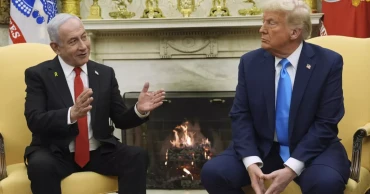
President Donald Trump plans to meet with Israeli Prime Minister Benjamin Netanyahu on Monday in what would be their second White House sit-down since Trump's return to office.
The visit, confirmed by a White House official and Netanyahu's office Saturday, comes as Israel deploys troops in a new security corridor across Gaza to pressure the Hamas militant group. Netanyahu's defense minister has said Israel will seize large areas of the territory and add them to its so-called security zones.
Last month, Israel shattered the ceasefire with a surprise bombardment in Gaza after trying to pressure Hamas to accept proposed new terms for the ceasefire, a move supported by the White House. Hundreds of Palestinians have since been killed.
Israel has pledged to escalate the war in Gaza until Hamas returns the remaining hostages seized in the Oct. 7, 2023, attack that sparked the war, disarms and leaves the territory. Israel also has halted all supplies of food, fuel and humanitarian aid into Gaza.
Netanyahu's office in a statement on social media said he and Trump would discuss “the tariff issue, the efforts to return our hostages, Israel-Turkey relations, the Iranian threat and the battle against the International Criminal Court.” Israel faces a 17% tariff.
Netanyahu is wanted by the court for alleged crimes against humanity in Gaza. The U.S. is not a member of the court.
In February, Netanyahu became the first foreign leader invited to the White House during Trump's second term. Their meeting focused on Israel’s war with Hamas and the next steps as a ceasefire deal took hold.
Israeli strikes kill at least 17 in Gaza as ground troops move into northern territory
At a joint news conference afterward, Trump made the surprise proposal that displaced Palestinians in Gaza be permanently resettled outside the territory and the United States take “ownership” in redeveloping the area into “the Riviera of the Middle East.” Palestinians objected to leaving their homeland, and Arab nations and rights groups sharply criticized the idea.
That February meeting gave Netanyahu a chance to remind the world of the Trump administration’s support for Israel, defend the conduct of the war and distract from political pressures back home.
Those pressures have only grown as Israelis protest both the lack of a deal to bring remaining hostages home from Gaza and Netanyahu’s moves to fire the head of the country’s domestic security agency and its attorney general. He also faces calls to accept responsibility for his role in failing to prevent the Oct. 7. attack.
In a statement Saturday, relatives of hostages held in Gaza pleaded with Trump to “please use all your power to pressure Netanyahu to end this war and bring our hostages back now.”
“We are addressing President Trump: Netanyahu is lying when he says that military pressure will bring back the abductees. The only way to quickly return all the abductees is to end the war and return them all in one fell swoop,” Ifat Calderon, aunt of hostage Ofer Calderon, said in Tel Aviv, Israel.
Hamas says it will only release the remaining 59 hostages — 24 of whom are believed to be alive — in exchange for the release of more Palestinian prisoners, a lasting ceasefire and an Israeli pullout from Gaza.
The Oct. 7 attack on southern Israel killed about 1,200 people, mostly civilians. Some 251 hostages were taken, most of them since released in ceasefire agreements and other deals.
More than 50,000 Palestinians have been killed in Gaza as part of Israel’s offensive, according to Gaza’s Health Ministry, which doesn’t say whether those killed are civilians or combatants. Israel says it has killed around 20,000 militants, without providing evidence.
Meanwhile, police arrested two of Netanyahu's close associates this week on suspicion of accepting money from Qatar to promote a positive image of the Gulf Arab state in Israel. Qatar is a key mediator for Hamas in its negotiations with Israel but denies backing the militant group. Netanyahu says the case is baseless.
The prime minister is also the subject of a long-running corruption trial and regularly rails against a “deep state” that he alleges is out to get him.
Israeli strikes on Gaza overnight leaves more than 50 Palestinians dead
Trump says the first foreign trip of his second administration will include stops in Saudi Arabia, Qatar and possibly the United Arab Emirates, and “other places.” The trip could come as soon as May. Trump has said he wants to reward Saudi Arabia for its investment in the U.S. and that all three Gulf countries would be making commitments to creating jobs in the U.S. during his trip.
1 year ago
'Hands Off!' protests against Trump and Musk are planned across the US
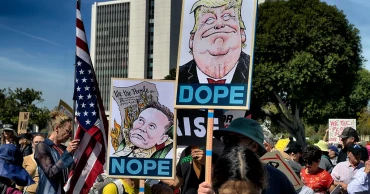
Opponents of President Donald Trump and billionaire Elon Musk plan to rally across the US on Saturday to protest the administration's actions on government downsizing, the economy, human rights and other issues.
More than 1,200 “Hands Off!” demonstrations have been planned by more than 150 groups, including civil rights organisations, labour unions, LBGTQ+ advocates, veterans and fair-elections activists. The protests are planned for the National Mall in Washington, DC, state capitols and other locations in all 50 states.
The White House did not return an email message seeking comment about the protests. Trump has promoted his policies as being in the best interest of the US.
Protesters are assailing the Trump administration's moves to fire thousands of federal workers, close Social Security Administration field offices, effectively shutter entire agencies, deport immigrants, scale back protections for transgender people and cut federal funding for health programs.
Trump grants 2nd extension for TikTok to remain operational in US
Musk, a Trump adviser who owns Tesla, SpaceX and the social media platform X, has played a key role in government downsizing as the head of the newly created Department of Government Efficiency. He says he is saving taxpayers billions of dollars.
Activists have staged nationwide demonstrations against Trump or Musk multiple times since the new administration took power. But the opposition movement has yet to produce a mass mobilization like the Women's March in 2017, which brought thousands of women to Washington, DC, after Trump's first inauguration, or the Black Lives Matter demonstrations that erupted in multiple cities after George Floyd's killing in 2020.
Organisers say they hope Saturday's demonstrations will be the largest since Trump returned to office in January.
1 year ago