usa

Trump grants 2nd extension for TikTok to remain operational in US
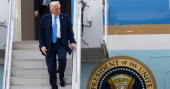
US President Donald Trump has approved another 75-day extension for TikTok to comply with a US law that mandates the popular video-sharing platform to either divest its American business or face a ban.
"We do not want TikTok to 'go dark'," Trump wrote on Truth Social. "We look forward to working with TikTok and China to close the Deal." TikTok is owned by the Chinese tech firm ByteDance.
Trump initially granted an extension after taking office in January, which was set to expire this weekend.
With over 170 million US users, TikTok faces potential shutdown under a law passed by Congress unless a sale is completed.
ByteDance, in a statement on Friday, confirmed ongoing talks with the Trump administration but noted that "an agreement has not been executed".
"There are key matters to be resolved. Any agreement will be subject to approval under Chinese law," a company spokesperson said.
The Biden administration previously raised national security concerns, claiming TikTok could be used by Beijing for surveillance or political influence.
A bipartisan law passed last year gave ByteDance six months to sell its majority stake or face a ban. Free speech advocates, however, have argued against banning the platform.
The latest extension aims to give more time to finalize a deal and keep TikTok running in the US under new ownership.
"The Deal requires more work to ensure all necessary approvals are signed," Trump said on Truth Social on Friday.
Although a deal was nearly secured earlier in the week, it fell apart after Trump announced sweeping new global tariffs, including on Chinese imports.
According to a CBS News source, ByteDance then reached out to the White House, saying China would not approve the transaction unless tariff discussions were included in the negotiations.
The source said the plan had involved Trump signing an order to begin a 120-day window to close the deal, allowing time for final paperwork and funding. The agreement reportedly had backing from ByteDance, new and existing investors, and the US government, but China withdrew once tariffs were imposed.
In a statement, the Chinese embassy in Washington said it "opposed practices that violate the basic principles of the market economy".
Currently, Chinese goods face an overall 54% tariff when entering the US, while China has hit back with 34% in countermeasures.
Several new potential buyers have surfaced. CBS reports that Amazon submitted a last-minute bid, though the company has not commented. Other interested parties include billionaire Frank McCourt and Canadian investor Kevin O’Leary. Reddit co-founder Alexis Ohanian has joined McCourt’s consortium.
Microsoft, private equity firm Blackstone, venture capital group Andreessen Horowitz, and search engine Perplexity AI are also reportedly exploring bids.
Trump mentioned that four groups are in talks with his administration about a possible acquisition, without naming them. Vice-President JD Vance is leading efforts to secure a deal.
Trump has also floated the possibility of a broader agreement with China, where Beijing might greenlight a TikTok sale in return for reduced US tariffs.
"We hope to continue working in Good Faith with China, who I understand are not very happy about our Reciprocal Tariffs," Trump wrote on Truth Social.He emphasized that the tariffs remain "the most powerful economic tool, and every important to our national security".
Source: BBC
1 year ago
Trump admin to halt $500M federal funding to Brown University
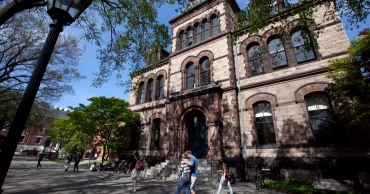
The Trump administration is moving to suspend over $500 million in federal contracts and grants awarded to Brown University, expanding its list of Ivy League institutions facing threats to their federal funding in response to how they’ve handled antisemitism, according to a White House official on Thursday.
The official, speaking anonymously due to lack of authorisation to address the matter publicly, stated that nearly $510 million in federal research and project funds are at risk.
Trump tariffs ignite global backlash, shake markets, trade alliances
In an email sent Thursday to campus leadership, Brown Provost Frank Doyle acknowledge awareness of “concerning rumours” regarding potential government action on the university’s research funding. “At this moment, we have no confirmation to support any of these rumours,” Doyle noted.
Brown would be the fifth Ivy League institution targeted by the Trump administration, which is leveraging federal funding to enforce its policies on campuses. Numerous universities — including all Ivy League schools except Penn and Dartmouth — are currently under federal investigation for alleged antisemitism following a wave of pro-Palestinian demonstrations last year.
Columbia University was the first to be impacted, losing $400 million in federal funds and facing additional funding threats unless it improved safety for Jewish students. Last month, the university agreed to a range of federal demands, such as revising student disciplinary procedures and reviewing its Middle East studies department.
Subsequently, around $175 million in federal funding was suspended from the University of Pennsylvania over a transgender swimmer who previously competed for the school. On Monday, a federal task force on antisemitism reported it was reviewing close to $9 billion in grants and contracts at Harvard University as part of a broader inquiry into campus antisemitism.
And on Tuesday, Princeton University reported that numerous federal research grants had been suspended by the administration.
This mounting pressure has posed a significant challenge for U.S. universities, which depend heavily on federal research support as a primary income source.
The Trump administration has vowed to adopt a more forceful stance on antisemitism at colleges, accusing former President Joe Biden of being too lenient. It has launched fresh investigations, and detained or deported multiple foreign students linked to pro-Palestinian protests. Last month, an incoming assistant professor of medicine at Brown was deported to Lebanon after “openly admitting” to supporting a Hezbollah leader and attending his funeral, according to the Department of Homeland Security.
Trump’s promised ‘reciprocal’ tariffs unleashed on dozens of countries; Bangladesh slapped with 37%
During last year’s student protests against the Israel-Hamas conflict, Brown drew attention for striking an agreement with student activists: in return for dismantling an encampment, the university promised to allow its governing board to vote on divesting from companies accused of enabling Israel’s occupation of Palestinian land.
Brown’s governing body later declined the divestment request.
1 year ago
Transgender student’s arrest under Florida bathroom law may be first of its kind
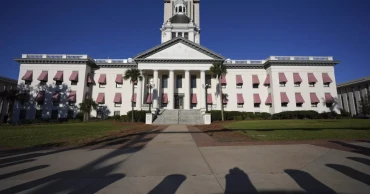
A transgender college student, Marcy Rheintgen, was arrested last month for entering a women’s restroom at the Florida State Capitol—an act that civil rights attorneys say marks the first known arrest under transgender bathroom laws passed in multiple U.S. states.
Before being detained, 20-year-old Rheintgen declared, “I am here to break the law,” as she entered the building in Tallahassee on March 19. Capitol police, who had been alerted in advance, warned her she would face a trespass notice if she proceeded into the restroom. According to an arrest affidavit, Rheintgen entered to wash her hands and pray the rosary, and was arrested after refusing to leave.
She has been charged with misdemeanor trespassing, an offense that carries a penalty of up to 60 days in jail. A court appearance is scheduled for May.
“I wanted people to see how absurd this law is in practice,” Rheintgen told the Associated Press. “If I’m a criminal now, just for washing my hands, how am I supposed to live a normal life? It’s ridiculous.”
At least 14 U.S. states have enacted laws barring transgender women from using women’s bathrooms in public schools and some government facilities. But only Florida and Utah impose criminal penalties for violations. A similar law in Montana was temporarily blocked by a judge this week.
According to Jon Davidson, senior staff attorney with the American Civil Liberties Union, Rheintgen’s case is the first known arrest under such criminal provisions.
Rheintgen, who was visiting her grandparents in Florida, said she sent letters to all 160 Florida lawmakers ahead of her protest, informing them of her intentions. She said her civil disobedience was fueled by disappointment in how the state she frequently visits has become increasingly unwelcoming to transgender people.
Author JK Rowling draws criticism for transgender comments
In her message to lawmakers, Rheintgen wrote, “I know that you know in your heart that this law is wrong and unjust. I know that you know that transgender people are human too, and that you can’t arrest us away.”
The incident underscores the difficulty states are facing in enforcing transgender restroom laws. Several states — including Alabama, Kansas, Kentucky, and North Dakota — have passed such measures without specifying how they would be enforced. Others, like Utah, rely on reports from the public, though activists there have swamped tip lines with fake submissions in protest.
Florida lawmakers behind the bill, Representative Rachel Plakon and Senator Erin Grall, did not respond to requests for comment. They have previously defended the law as a means to safeguard women and girls in gender-segregated spaces.
Critics, however, argue the law endangers transgender individuals and fosters invasive behavior.
“This arrest isn’t about safety,” said Nadine Smith, executive director of Equality Florida. “It’s about cruelty, humiliation, and systematically stripping people of dignity. Transgender people have been using restrooms matching their gender for generations without incident. What’s new is this wave of laws designed to push them out of public life.”
Rheintgen said she’s deeply anxious about the legal consequences. If convicted, she fears being jailed with men, having her hair cut, and being temporarily cut off from her hormone treatment.
“People are calling this a test case,” she said. “But I didn’t do it to challenge the law—I did it because I was upset. I honestly don’t know what to expect. It’s terrifying.”
Source: With input from agency
1 year ago
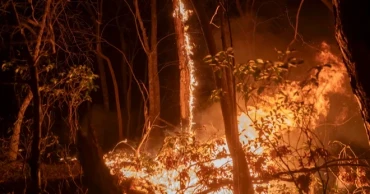
Carolina wildfires continue to rage
Wildfires continue to spread across the western regions of North and South Carolina, with dry, windy conditions fueling the flames.
State agencies report that over 12,000 acres have burned in South Carolina alone, while North Carolina is currently battling four separate fires.
South Korea battles devastating wildfires as death toll reaches 27
Dr. Beverly Hargus, a local veterinarian, describes the situation as dire, explaining that debris left behind by a previous hurricane has acted as fuel for the fires. “Everything is so dry that it’s burning rapidly, and the wind is making it unpredictable,” she said. With her clinic just a mile and a half from the fire, she and her team have begun preparing for a possible evacuation, organizing essential equipment and documents while waiting to see how the fire progresses.
Hargus’ clinic is already housing evacuated pets, but if the fire moves closer, they will need to relocate the animals again. While her facility is unable to accommodate large animals, the Western North Carolina Agricultural Center has taken in horses, goats, and sheep.
Evacuations ordered as strong winds hinder California wildfire battle
“We started receiving calls from displaced pet owners on Sunday night, and we’ve been placing dogs and cats wherever we can,” Hargus said. “For larger animals, we direct them to the agricultural center, which has plenty of stalls.”
As the fires advance, Hargus admits she feels overwhelmed by the uncertainty and difficult decisions ahead.
Source: With input from agency
1 year ago

Danish prime minister heads to Greenland as Trump seeks control of the Arctic territory
Danish Prime Minister Mette Frederiksen is traveling to Greenland on Wednesday for a three-day trip aimed at building trust and cooperation with Greenlandic officials at a time when the Trump administration is seeking control of the vast Arctic territory.
Frederiksen announced plans for her visit after US Vice President JD Vance visited a US air base in Greenland last week and accused Denmark of underinvesting in the territory.
Greenland is a mineral-rich, strategically critical island that is becoming more accessible because of climate change. Trump has said that the landmass is critical to US security. It's geographically part of North America, but is a semiautonomous territory belonging to the Kingdom of Denmark.
Frederiksen is due to meet the incoming Greenlandic leader, Jens-Frederik Nielsen, after an election last month that produced a new government. She is also to meet with the future Naalakkersuisut, the Cabinet, in a visit due to last through Friday.
“It has my deepest respect how the Greenlandic people and the Greenlandic politicians handle the great pressure that is on Greenland," she said in government statement announcing the visit.
On the agenda are talks with Nielsen about cooperation between Greenland and Denmark.
Nielsen has said in recent days that he welcomes the visit, and that Greenland would resist any US attempt to annex the territory.
“We must listen when others talk about us. But we must not be shaken. President Trump says the United States is ‘getting Greenland.’ Let me make this clear: The US is not getting that. We don’t belong to anyone else. We decide our own future,” he wrote Sunday on Facebook.
Houthis claim downing American drone amid US strikes
“We must not act out of fear. We must respond with peace, dignity and unity. And it is through these values that we must clearly, clearly and calmly show the American president that Greenland is ours.”
For years, the people of Greenland, with a population of about 57,000, have been working toward eventual independence from Denmark.
The Trump administration's threats to take control of the island one way or the other, possibly even with military force, have angered many in Greenland and Denmark. The incoming government wants to take a slower approach on the question of eventual independence.
The political group in Greenland most sympathetic to the US president, the Naleraq party that advocates a swift path toward independence, was excluded from coalition talks to form the next government.
Peter Viggo Jakobsen, associate professor at the Danish Defense Academy, said last week that the Trump administration’s aspirations for Greenland could backfire and push the more mild parties closer to Denmark.
He said that “Trump has scared most Greenlanders away from this idea about a close relationship to the United States because they don’t trust him.”
1 year ago
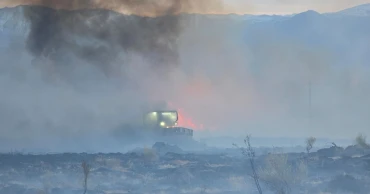
Evacuations ordered as strong winds hinder California wildfire battle
Firefighters managed to halt the forward spread of a wildfire sweeping through a remote region of eastern California, yet evacuation orders for residents of hundreds of homes remained in effect, officials reported Monday evening.
The Silver Fire ignited Sunday afternoon along Route 6 in Inyo County, approximately 5 miles (8 kilometers) northeast of Bishop in the Owens Valley, near the Nevada border. Authorities were investigating the cause.
AI-enabled drone deployed in Germany to accelerate wildfire detection and response
By Monday, the fire had scorched nearly 2.5 square miles (about 6.5 square kilometers) of grass and brush, according to a post on the social platform X by the California Department of Forestry and Fire Protection. Containment had reached 47%.
Following the outbreak, evacuation orders were issued for around 800 homes near the small communities of Laws, Chalfant, and White Mountain Estates. However, officials did not provide an update Monday evening on how many residents remained under evacuation orders.
Fire crews planned to stay overnight to monitor hotspots and reinforce containment lines.
Gusts reaching 65 mph (104 kph) had restricted the deployment of water-dropping helicopters and kept air tankers grounded, Cal Fire spokesperson Chloe Castillo said earlier on Monday.
“The winds are highly unpredictable,” she noted. “At one moment, they push north; the next, they shift east.”
Cal Fire reported that the fire threatened land belonging to the Bishop Paiute Tribe, as well as habitats of endangered species such as the Owens pupfish and desert bighorn sheep.
Inyo County has experienced minimal recent rainfall and remains unusually dry, with some areas suffering from extreme drought.
South Korea battles devastating wildfires as death toll reaches 27
Similarly, much of Southern California is facing moderate to extreme drought conditions, according to the U.S. Drought Monitor.
1 year ago
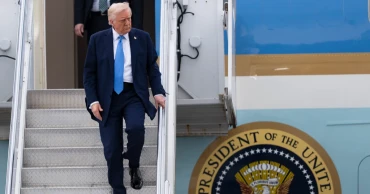
Trump says he’s exploring options for serving a third presidential term
US President Donald Trump has said that he is contemplating ways to serve a third term as president, emphasizing that he is not joking about the possibility.
In an interview with NBC News from his Mar-a-Lago club, Trump indicated there are potential methods to overcome the constitutional limit on presidential terms.
He later expanded on this in a conversation with reporters on Air Force One, claiming that many people have urged him to pursue a third term, which he described as a fourth term due to his belief that the 2020 election was rigged, despite losing it to Joe Biden.
However, Trump noted that he was not ready to focus on the idea of a third term, as there is still a long time until his second term ends. The 22nd Amendment, ratified in 1951, restricts any person from being elected president more than twice.
While any attempt to extend his presidency would face significant legal challenges, Trump’s comments highlight his continuing desire to maintain power, echoing his previous attempts to contest the 2020 election results.
Rep. Daniel Goldman, a Democrat from New York and lead counsel during Trump’s first impeachment, criticized the remarks as part of a broader effort to dismantle democratic norms, urging Congressional Republicans to oppose Trump’s aspirations for a third term.
At the Conservative Political Action Conference last month, Steve Bannon, a former Trump strategist, endorsed Trump’s potential 2028 run, while some supporters, like Kayla Thompson from Wisconsin, expressed strong backing for Trump to return for another term, believing that the country is on the right path under his leadership.
Constitutional law experts, such as Jeremy Paul from Northeastern University, dismissed the idea of Trump running for a third term, citing the clear legal barriers. Trump was also asked by NBC’s Kristen Welker about a hypothetical situation where Vice President JD Vance runs for president and hands the office to Trump, to which Trump acknowledged that this was one possibility but did not elaborate on others.
Election law professor Derek Muller pointed out that the 12th Amendment disqualifies anyone who is ineligible for the presidency from running for vice president, meaning that Trump could not circumvent term limits by seeking the vice-presidency.
Muller also noted that the pursuit of a third term would require cooperation from various political and legal authorities, and suggested that Trump’s talk about a third term might be more about asserting political strength as a “lame-duck” president.
Trump, who would be 82 at the end of his second term, said he enjoys working and would be willing to continue in the role. He also claimed that his popularity would make a third term feasible, citing inflated polling numbers. However, Gallup data shows that Trump’s approval rating never exceeded 47% during his second term, far lower than historical peaks seen by previous presidents.
Trump has previously joked about the possibility of serving beyond two terms, raising the idea playfully in front of supportive audiences. There was no immediate response from congressional leaders to Trump’s comments.
1 year ago
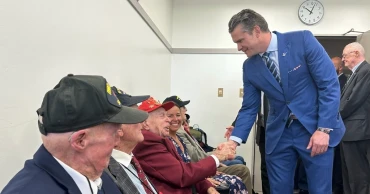
Hegseth joins WWII memorial service on his first trip to Japan
US Secretary of Defense Pete Hegseth praised Saturday the friendship and trust that his country and Japan have developed while attending a memorial service on Iwo Jima to honor those who died in battle during World War II.
Japan is Hegseth's second stop after the Philippines on his first Asia trip. His visit comes as Beijing has been showing increasingly assertive actions in the disputed South China Sea and following threats by President Donald Trump to impose trade tariffs on the East Asian country, a key US ally.
Hegseth landed on the Japanese island of Iwo Jima, now known as Iwoto, where Japanese and American soldiers faced off in one of the war's fiercest battles.
He joined several American veterans who survived the battle and Japanese bereaved families, as well as his Japanese counterpart, Gen Nakatani, Prime Minister Shigeru Ishiba and other officials at Saturdsay's Reunion of Honor event.
“Iwo Jima embodies our shared warrior ethos, our shared devotion to the nation, and to duty and our shared reverence for the men of valor who preceded us,” Hegseth said in front of the cenotaph built in 1985 marking their first joint memorial.
“The US-Japan alliance shows ... how yesterday’s enemy has become today’s friends,” Hegseth said. “Our alliance has been and remains the cornerstone of freedom, prosperity, security and peace in the Indo-Pacific.”
Recent polls show the Japanese feel more affinity toward the US than any other country. Most Americans and Japanese alive today were born after Japan surrendered in August 1945.
US grants initial approval for Qatar to acquire MQ-9 armed drones in a $2 billion deal
Japan, which faces growing threats from China, North Korea and Russia, has been accelerating its military buildup and increasingly working closely with the US military.
On Sunday, Hegseth will hold talks with Nakatani in Tokyo to discuss further strengthening the alliance.
“We must not forget that the peace and prosperity we enjoy today have been built upon the noble sacrifices of those who died in the war and the tireless efforts of the people over the past 80 years since the end of the war,” said Japan's Ishiba, who became the first serving Japanese prime minister to attend the joint Iwo Jima memorial.
Ishiba renewed his determination to peace and to further elevate the Japan-US alliance.
“And we must continue to endeavour to humbly face the history and keep telling the harrowing experience of the war to the world so that we never repeat the tragedy of war," Ishiba said.
The 1945 Battle of Iwo Jima is best known for the photo by The Associated Press’ Joe Rosenthal showing six Marines raising the US flag over Mount Suribachi.
1 year ago

What to know about the US military's Pituffik Space Base in Greenland
The remote Pituffik Space Base in northwestern Greenland, which Vice President JD Vance is visiting on Friday, is the U.S. Department of Defense's northernmost installation.
The base was built following a 1951 defense agreement between Denmark and the United States. It supports missile warning, missile defense and space surveillance operations for the U.S. and NATO.
The Pituffik base is located on the northwestern coast of Greenland, about 1,200 kilometers (750 miles) north of the the Arctic Circle and 1,524 kilometers (947 miles) south of the North Pole. It is about 1,500 kilometers (930 miles) north of Greenland's capital, Nuuk.
It was known as the Thule Air Base until 2023, when it was renamed to recognize Greenlandic cultural heritage and reflect its role in the relatively new U.S. Space Force.
Myanmar and Thailand hit by major earthquakes
The base is locked in by ice for nine months of the year, but its airfield remains open all year round. It is in constant darkness from November to February and constant daylight from May to August.
It is operated by the 821st Space Base Group and is also home to the world's northernmost deepwater sea port. The nearest town is Qaanaaq, around 120 kilometers (75 miles) to the northwest.
1 year ago

Canadian PM Carney condemns Trump's auto tariffs as a 'Direct Attack' on Canada
Canadian Prime Minister Mark Carney has criticized U.S. President Donald Trump’s decision to impose 25% tariffs on auto imports, calling it a “direct attack” on Canada. He warned that the trade war is harming Americans, citing a decline in consumer confidence.
Speaking on Wednesday, Carney vowed to protect Canadian workers and businesses, stating, “We will defend our workers. We will defend our companies. We will defend our country.” However, he said he would review the specifics of Trump's executive order before announcing any retaliatory measures. The prime minister, who is currently campaigning for Canada’s April 28 election, will return to Ottawa on Thursday to lead a special Cabinet committee on U.S. relations.
To counter the economic impact of the tariffs, Carney previously announced a CA$2 billion ($1.4 billion) “strategic response fund” aimed at safeguarding auto industry jobs. He stressed the importance of the sector, which directly employs 125,000 Canadians and supports nearly 500,000 more in related industries.
Trump, who declared the tariffs “permanent,” had earlier granted Mexico and Canada a one-month exemption for U.S. automakers. However, with the new tax hike set to take effect in April, car manufacturers could face increased costs and declining sales. The move is part of Trump’s broader trade war, which has contributed to economic uncertainty. The Conference Board reported on Tuesday that U.S. consumer confidence fell for the fourth consecutive month, dropping to its lowest level since January 2021.
“His trade war is hurting American consumers and workers, and it will only get worse,” Carney said while campaigning in Windsor, Ontario, near the U.S. border.
Trump places 25% tariff on imported autos, expecting to raise $100 billion in tax revenues
In addition to auto tariffs, Trump has previously imposed 25% tariffs on Canadian steel and aluminum and is threatening widespread levies on all Canadian imports and other U.S. trading partners starting April 2.
“He wants to break us so America can own us,” Carney said. “But that will never happen because we don’t just look out for ourselves—we look out for each other.”
Carney, a former central banker in both Canada and the U.K., made these remarks near the Ambassador Bridge, which carries 25% of all trade between the two nations and plays a crucial role in auto manufacturing. He highlighted that the bridge facilitates CA$140 billion ($98 billion) in goods annually, amounting to CA$400 million ($281 million) per day.
“Now those numbers—and the jobs and paychecks that rely on them—are at risk,” Carney said. “The relationship between Canada and the U.S. has changed. We did not change it.”
Ontario Premier Doug Ford warned that the tariffs would disrupt the auto industry on both sides of the border, leading to simultaneous plant closures.
“President Trump calls it Liberation Day. I call it Termination Day for American workers,” Ford said. “I know Trump likes to say, ‘You’re fired!’—I just didn’t think he meant U.S. auto workers when he said it.”
Trump has escalated tensions with Canada, even suggesting it should become the 51st U.S. state—a stance that has angered many Canadians. At a campaign rally in Kitchener, Ontario, crowds repeatedly booed when Trump's name was mentioned.
Despite taking office on March 14, Carney has yet to speak with Trump, an unusual delay in communication between the two nations’ leaders.
“It would be appropriate for the president and me to have a conversation given these recent developments. I expect that will happen soon,” Carney said.
Opposition Conservative leader Pierre Poilievre also criticized the tariffs, warning they would harm both American and Canadian workers.
Vermont businesses feel impact of Trump's tariffs on Canada
“The message to President Trump should be clear: knock it off,” Poilievre said. “He’s changed his mind before. He’s imposed tariffs, then removed them. It wouldn’t be surprising if he does it again.”
Source: With input from agency
1 year ago