usa
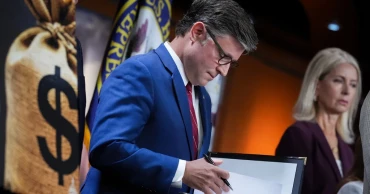
US House approves war powers resolution to curb military action against Iran, in a rebuke of Trump
The US House of Representatives on Wednesday approved a war powers resolution aimed at halting US military operations against Iran, marking a rare bipartisan rebuke of President Donald Trump as several Republicans joined Democrats in the vote.
The measure passed by a narrow 215-208 margin and reflects growing political opposition in Congress to the ongoing conflict, which has reshaped domestic and international politics over the past three months.
House Speaker Mike Johnson had previously attempted to block the measure, briefly halting floor proceedings two weeks ago when it was close to passing. However, support for the resolution increased amid rising dissatisfaction with the prolonged conflict.
Democratic Representative Gregory Meeks of New York, the ranking member of the House Foreign Affairs Committee, led the push for the resolution.
“Enough is enough,” Meeks said, adding, “It is time for the president to do the right thing. The people are tired of suffering because of his war of choice — suffering at the gas pump, suffering at the supermarkets.”
Although the resolution passed the House, its future remains uncertain. President Trump is expected to reject any congressional effort that limits his authority as commander-in-chief. Nonetheless, the vote was seen as a significant political setback, drawing applause in the chamber.
Opposition to the conflict has been gradually increasing, with this marking the fourth attempt by the House to limit US military involvement in Iran. The Senate also advanced a similar measure last month, with some Republican senators breaking ranks with the administration.
The conflict began after US forces joined Israel in launching strikes on Iran on February 28. Since then, tensions have persisted, with intermittent military exchanges continuing despite a declared ceasefire in April that remains fragile.
House Speaker Johnson said he had recently met President Trump and that the administration is focused on restoring stability in the Strait of Hormuz, a key global shipping route disrupted by the conflict.
He added that reopening the waterway is a priority due to its importance for global energy supplies.
The prolonged conflict has contributed to rising fuel prices and broader inflationary pressures in the United States, according to lawmakers.
Secretary of State Marco Rubio warned lawmakers that restricting presidential authority could weaken diplomatic leverage, arguing that Iran might interpret congressional action as a sign that Washington’s response options are limited.
While the House also advanced other foreign policy-related measures, including support for Ukraine and a potential resolution concerning Lebanon, none have yet been finalised.
Under the US Constitution, Congress holds the authority to declare war, while the president serves as commander-in-chief, creating ongoing legal and political tensions over war powers. The White House has argued that a declared ceasefire means active hostilities have ended, complicating the applicability of the War Powers Act timeline.
1 month ago
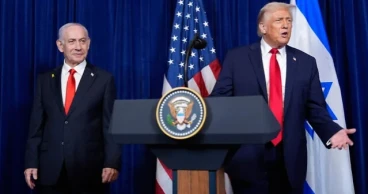
Trump says he called Netanyahu ‘crazy’ over Lebanon conflict, Iran talks
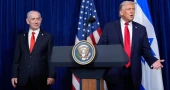
US President Donald Trump has confirmed that he described Israeli Prime Minister Benjamin Netanyahu as “crazy” during a phone conversation earlier this week, expressing frustration that Israel’s military operations against Hezbollah in Lebanon were complicating ongoing efforts to reach a peace agreement with Iran.
In an interview released Wednesday on The New York Post’s “Pod Force One,” Trump acknowledged tensions with Netanyahu but emphasized that their relationship remains strong.
“We’ve worked very well together. I like Bibi a lot. And I work very well with him,” Trump said, referring to the Israeli leader by his nickname.
Trump said he was “a little bit perturbed” by Israel’s actions in Lebanon, which he believes have hindered diplomatic progress with Tehran. The remarks come as the US administration faces increasing pressure to end the regional conflict amid concerns over rising energy prices, economic uncertainty and their potential political impact ahead of midterm elections.
Despite the challenges, Trump said negotiations involving Iran were continuing, although he declined to provide a clear timeline for a resolution. He noted that the strategically important Strait of Hormuz could remain closed through the US Labor Day holiday on Sept. 7 but expressed confidence that the situation would likely be resolved sooner.
“I think this will resolve itself fairly quickly,” Trump said.
The US president also said Iran’s Supreme Leader, Mojtaba Khamenei, is playing a role in ongoing peace discussions despite reportedly suffering injuries in an earlier airstrike. According to Trump, Iranian officials continue to seek Khamenei’s approval on key decisions.
Meanwhile, tensions remained high in Lebanon. An Israeli strike hit a vehicle on a busy highway south of Beirut on Wednesday, just hours before a second round of Lebanon-Israel talks in Washington. It was not immediately clear whether the targeted individual was killed.
The strike came days after Lebanon and Israel reached a US-mediated understanding under which Israel agreed not to target Beirut’s southern suburbs and Hezbollah pledged to halt attacks on northern Israel. The arrangement was reached shortly after Israel had announced plans for major strikes near the Lebanese capital.
The US State Department said progress had been made during the first day of talks on Tuesday. Lebanon is seeking a broader nationwide ceasefire, while Israel is demanding the immediate disarmament of Hezbollah before ending military operations and withdrawing troops from several Lebanese towns and villages.
Shortly after Wednesday’s strike, the Israeli military reported intercepting what it described as a hostile aircraft originating from southern Lebanon, though it did not directly blame Hezbollah. The group has not claimed responsibility for any cross-border attacks since the recent agreement was reached.
2 months ago
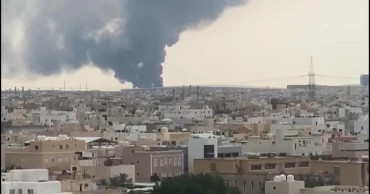
Drone attack hits Kuwait airport, flights suspended amid regional escalation
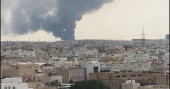
Kuwait suspended commercial flights on Wednesday after a drone attack attributed to Iran struck its international airport, injuring several people and damaging parts of the passenger terminal, officials said.
The incident came hours after renewed missile exchanges between Iran and U.S. forces in the region, further escalating already high tensions in the Gulf.
Kuwait’s Defence Ministry spokesperson Brig. Gen. Saud Abdulaziz Al-Otaibi said “a number of hostile drones” targeted Kuwait International Airport, causing significant damage to the passenger building and leaving several people injured. The airport had only recently resumed operations on June 1 after an earlier shutdown linked to regional conflict.
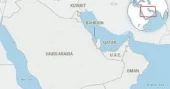
Late Tuesday, the U.S. military said it carried out strikes on an Iranian military facility in retaliation for missile fire that it said originated from Iran and targeted Kuwait and Bahrain. According to the U.S., two Iranian missiles aimed at Kuwait disintegrated mid-air, while others targeting Bahrain were intercepted.
U.S. Central Command also said it had shot down multiple drones directed at American forces stationed in Kuwait.
Iran’s Revolutionary Guard, however, said it had launched strikes targeting the headquarters of the U.S. Navy’s 5th Fleet in Bahrain and another location, though it did not name Kuwait. It said the attacks were in response to earlier U.S. military action against an Iranian oil tanker.
“We had previously warned that any aggression would be met with a stronger response,” the Guard said in a statement.
Central Command said it responded by striking an Iranian ground control facility on Qeshm Island near the Strait of Hormuz.
Meanwhile, Iranian semi-official news agencies reported that Tehran had paused communication with mediators over a possible ceasefire, as regional tensions also intensified in Lebanon involving Iran-backed Hezbollah.
However, a regional official involved in the talks told The Associated Press that Iran had not responded to mediation efforts on Tuesday, despite earlier discussions on linking negotiations to a ceasefire in Lebanon.
U.S. President Donald Trump rejected claims that talks had stalled, saying discussions were continuing daily.
“The conversations between us have been going on continuously… Where they lead, one never knows, but it’s time for a deal,” Trump said in a social media post.
U.S. Secretary of State Marco Rubio, speaking at a congressional hearing, did not confirm any break in communication but expressed cautious optimism about nuclear-related negotiations, while noting that an agreement was not guaranteed.
2 months ago
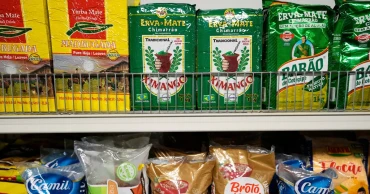
Trump administration proposes 25% tariff on Brazilian imports despite US trade surplus
The administration of US President Donald Trump has proposed imposing a 25% tariff on imports from Brazil, accusing the South American country of maintaining trade practices that unfairly disadvantage American businesses despite the United States enjoying a significant trade surplus with Brazil.
The proposal, announced Monday, follows an investigation by the Office of the U.S. Trade Representative (USTR), which alleged that Brazil has weak anti-corruption enforcement measures and imposes unfair trade barriers, among other concerns.
Brazilian President Luiz Inácio Lula da Silva strongly criticized the move, saying he received the decision "with indignation." He also blamed the development on political actions by Sen. Flávio Bolsonaro, son of former President Jair Bolsonaro, who recently visited Washington.
Lula suggested that domestic political interests linked to the Bolsonaro family were influencing US policy toward Brazil.
US Trade Representative Jamieson Greer said he and President Trump had held constructive discussions with Lula and other Brazilian officials, but significant differences remained over issues identified in the investigation.
Speaking on Tuesday, Lula accused US Secretary of State Marco Rubio of being hostile toward Latin America and claimed he had already informed Trump that Rubio did not have a favorable view of Brazil.
The Brazilian government said in a statement that ongoing diplomatic efforts between the two countries, including direct engagement by both presidents, were being undermined by what it described as electoral and family interests connected to the Bolsonaro family.
Brazil also warned that it would take all necessary measures to minimize any economic damage if the tariffs are ultimately implemented.
The latest proposal comes months after Trump imposed a 50% tariff on Brazilian goods, citing concerns over Brazil's prosecution of former President Jair Bolsonaro for allegedly attempting to overturn his 2022 election defeat. Relations between Trump and Lula appeared to improve during Lula's visit to the White House in early May.
However, tensions resurfaced after the Trump administration designated two Brazilian criminal gangs as terrorist organizations following Flávio Bolsonaro's recent trip to Washington. Lula opposes the designation, which analysts say could strengthen his political rivals.
The USTR has scheduled a public hearing on the proposed tariffs for July 6.
Trade experts noted that the proposal would exempt more than half of Brazilian exports to the United States, including aircraft and key mineral products.
The investigation was launched under Section 301 of the Trade Act of 1974, a legal authority frequently used by the United States to address alleged unfair trade practices abroad.
Lula also criticized Flávio Bolsonaro and his brother, former lawmaker Eduardo Bolsonaro, accusing them of encouraging foreign interference in Brazilian affairs. He described their actions as harmful to the country's interests.
The tariff proposal comes after the US Supreme Court ruled in February that Trump had exceeded his authority by using the International Emergency Economic Powers Act (IEEPA) to impose broad tariffs on trading partners. However, tariffs imposed under Section 301 have generally survived legal challenges, making them a more durable tool for the administration.
Lula emphasized that he had personally presented Trump with trade data during their May meeting, showing that the United States enjoys a substantial trade surplus with Brazil.
According to USTR figures, US exports to Brazil increased nearly 11% last year to $54.4 billion, while Brazilian exports to the United States fell 5.7% to $39.9 billion, resulting in a US goods trade surplus of more than $14 billion.
The imbalance is even greater in services trade. US services exports to Brazil reached $29.6 billion in 2024, roughly four times the value of Brazilian services exports to the United States.
Lula dismissed concerns that the tariffs would severely hurt Brazil, saying the country would seek alternative markets if necessary.
"If they don't want to buy from us, we will sell to someone else," he said.
Brazil's largest trading partner for the past decade has been China.
2 months ago
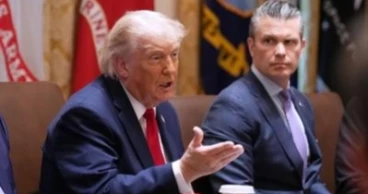
US strike on suspected drug-smuggling boat kills 3 in Pacific, death toll rises to 205
The U.S. military said it carried out another strike on a boat suspected of drug trafficking in the eastern Pacific Ocean on Saturday, killing three men in what was the fourth such operation this week. The latest attack has pushed the total death toll from the campaign to 205.
The U.S. Southern Command said the vessel was involved in drug-smuggling activities and was operated by a group designated as a terrorist organization. However, it did not provide any evidence to support the claim.
The strike is part of an ongoing military campaign targeting suspected drug-trafficking boats in the Caribbean Sea and eastern Pacific that has been underway for several months. Video released by the military showed a small boat at sea before it was struck and burst into flames.
According to U.S. officials, the latest operation followed similar strikes announced earlier this week on Tuesday, Wednesday and Friday. The campaign began in early September and has now resulted in 205 deaths.
The administration of U.S. President Donald Trump has described Latin American drug cartels as being in armed conflict with the United States, blaming them for the flow of illegal drugs into American communities.
The Southern Command said the latest strike was ordered by Francis L. Donovan, the top U.S. military commander overseeing operations in Latin America.
2 months ago
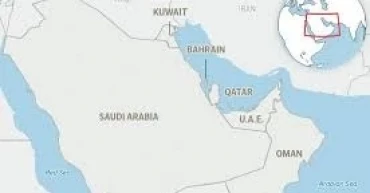
US strikes Iranian military sites as Kuwait reports drone and missile attacks
The United States has bombed Iranian radar and drone control facilities after Iran shot down a US MQ-1 Predator drone over the weekend, the US military said Monday. Iran confirmed it carried out retaliatory strikes, while Kuwait reported that its air defence systems intercepted incoming drones and missiles.
The back-and-forth attacks underline the fragility of a weeks-long ceasefire in the Iran conflict, which has seen repeated violations despite ongoing diplomatic efforts between Washington and Tehran to extend the truce. Iran has also continued to restrict access through the Strait of Hormuz, disrupting global energy supplies as a significant share of the world’s oil and gas once passed through the key waterway.
At the same time, violence is spreading across the wider region, with Israel expanding its presence in Lebanon beyond the Litani River and Hezbollah continuing drone attacks into Israeli territory.
US says it targeted Iranian military sites
US Central Command said it conducted strikes on Saturday and Sunday near Geruk and on Qeshm Island inside Iran.
It said the action was taken in response to “aggressive Iranian actions,” including the shooting down of a US MQ-1 drone operating over international waters.
According to the statement, US fighter jets destroyed Iranian air defence systems, a ground control station and two attack drones that posed a threat to commercial shipping in the region. No US troops were injured.
The MQ-1 Predator drone has largely been replaced in US Air Force service by the MQ-9 Reaper, though the US Army still operates the older model.
Kuwait reports interception of aerial threats
Kuwait said its air defence forces opened fire early Monday to intercept incoming drones and missiles. Iran’s Revolutionary Guard, quoted by state media IRNA, claimed US forces had struck a telecommunications tower.
The Guard also said it had launched a counterattack, without providing details, likely referring to the reported strike involving Kuwait. Kuwait hosts US Army Central, the forward headquarters of US forces in the Middle East.
Iranian state television later aired footage of missile launches, including one showing a message aimed at the United States and President Donald Trump, stating: “Until the last American soldier leaves the region.”
Ceasefire talks under strain
The latest attacks come despite continued diplomatic efforts to maintain the ceasefire, particularly discussions over Iran’s stockpile of highly enriched uranium. Over the weekend, US forces also targeted a Gambia-flagged cargo ship attempting to break a blockade of Iranian ports.
Although some ships have managed to pass through the Strait of Hormuz, tensions continue to threaten global energy and fertilizer supplies, raising concerns over potential shortages. The Gulf region accounts for around 30% of globally traded chemical fertilizers.
US President Donald Trump met advisers on Friday but has not yet decided on extending the ceasefire and reopening the strait. Iran has said no final agreement has been reached.
In a post on Truth Social, Trump said Iran was interested in a deal, adding: “It will be a good one for the U.S.A. and those that are with us.”
2 months ago
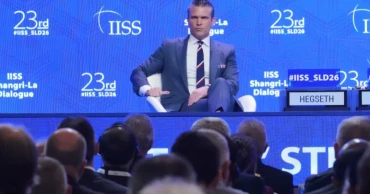
Hegseth Reaffirms US Commitment to Indo-Pacific, Strikes Softer Tone on China
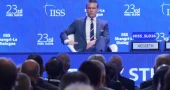
US Defense Secretary Pete Hegseth on Saturday reassured allies in the Indo-Pacific of Washington’s continued commitment to regional security, while adopting a more measured tone on China during his address at the Shangri-La Dialogue in Singapore.
Speaking before world leaders, diplomats and senior defense officials, Hegseth emphasized the strategic importance of the Indo-Pacific to US security and economic interests. He said Washington’s goal remains to maintain a stable and favorable balance of power across the region.
The remarks marked a contrast to his speech at last year’s forum, where he warned of growing military threats from China and accused Beijing of actively preparing for a potential move against Taiwan.
This year’s conference comes shortly after US President Donald Trump’s visit to Beijing, where he met Chinese President Xi Jinping. Following the talks, Trump described Xi as a “great leader” and expressed optimism about future relations between the two countries.
Reflecting the more conciliatory atmosphere, Hegseth said Trump and Xi had agreed to pursue a constructive and stable relationship based on fairness and mutual respect while safeguarding their respective national interests.
Despite the softer rhetoric, Hegseth stressed that the United States remains determined to prevent any single power from dominating the Indo-Pacific. He pointed to concerns over China’s expanding military capabilities and growing regional activities, saying many countries share concerns about preserving the current balance of power.
US Senator Tammy Duckworth, attending the conference as part of a congressional delegation, criticized the Trump administration’s approach toward China. She expressed concern that Washington could be weakening its commitments in the Indo-Pacific while aligning too closely with Beijing.
Questions have also emerged over US support for Taiwan after Trump described a proposed $14 billion arms package for the self-governed island as a potential bargaining tool in negotiations with China. Beijing considers Taiwan part of its territory and has not ruled out using force to bring the island under its control.
Hegseth reiterated that US policy toward Taiwan remains unchanged but declined to comment on the future of the arms package, saying any decision would ultimately rest with President Trump.
The defense secretary also renewed calls for US allies to increase defense spending, arguing that Washington seeks strong partners rather than nations dependent on American protection. He praised several Asian countries for boosting military investments and suggested some European allies could learn from Asia’s pragmatic approach to security cooperation.
2 months ago
White House depicts Iran report on draft deal as "fabrication"
The White House on Wednesday dismissed an Iranian state media report on a framework deal between the United States and Iran as "a complete fabrication."
Iranian state television reported earlier a draft of an initial, unofficial framework for a memorandum of understanding with the United States that included a withdrawal of U.S. forces and the lifting of its naval blockade on Iran.
2 months ago
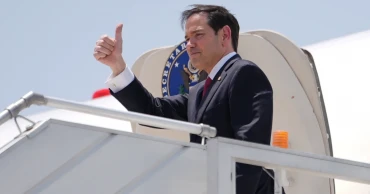
Rubio says Iran ceasefire talks may continue for several more days
US Secretary of State Marco Rubio has said negotiations with Iran over extending the ceasefire and reopening the Strait of Hormuz are expected to continue for several more days.
Speaking to reporters on Tuesday before departing India, Rubio said discussions were ongoing regarding the wording of an initial agreement document following recent US strikes in southern Iran despite the existing ceasefire.
“There is still a lot of back-and-forth over specific language in the draft document, so the process could take a few more days,” Rubio said.
He stressed that President Donald Trump would not agree to any deal considered unfavorable to the United States.
Rubio also highlighted the importance of reopening the Strait of Hormuz, saying the strategic waterway must remain accessible for global shipping without interference or additional charges imposed by Iran.
“The Strait needs to remain open and free for navigation, without any tolls,” he said.
2 months ago
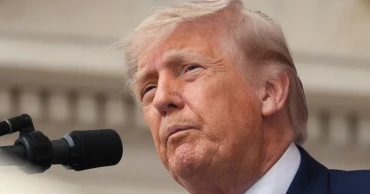
US carries out fresh strikes in Iran
The US military said on Monday that it carried out “self-defence” strikes in southern Iran, including on missile launch sites and boats placing mines, even as President Donald Trump said on social media that negotiations were “proceeding nicely.”
The strikes were done “to protect our troops from threats posed by Iranian forces,” but the military was “using restraint during the ongoing ceasefire,” Capt. Tim Hawkins, US Central Command spokesman, said in a statement.
Further details were not immediately available, including more specifics on the threats from Iran and what this means for negotiations. Earlier, Trump said any agreement to end the Iran war should include a requirement for several additional countries, including Saudi Arabia and Pakistan, to join the Abraham Accords, the US-brokered agreements from Trump’s first term aimed at normalising relations with Israel.
The proposal came as the emerging Iran deal faced criticism from fellow Republicans who favor a harder line on Iran, and it could add new diplomatic complications to the negotiations.
Trump pointed to Saudi Arabia and Qatar as countries that should “immediately” sign on, alongside Pakistan, Turkey, Egypt and Jordan. Bahrain and the United Arab Emirates became the first countries to join in 2020.
He wrote that “after all the work done by the United States to try and pull this very complex puzzle together, it should be mandatory that all of these Countries, at a minimum, simultaneously sign onto the Abraham Accords.”
Trump has long hoped Saudi Arabia would join, but the kingdom has maintained that any normalisation deal requires first establishing a clear path for Palestinian statehood. That’s also key for Pakistan, which is among the countries that do not have diplomatic relations with Israel.
Islamabad-based analyst Syed Mohammad Ali said Pakistan’s position on Israel remains unchanged despite Trump’s latest proposal.
The president said he brought up the Abraham Accords plan with leaders during negotiations on Saturday. He said he would accept “one or two” countries declining to sign, but said most should be willing. Egypt and Jordan already formally recognise Israel and have long-standing peace treaties. Turkey first recognised Israel in 1949.
Masood Khan, Pakistan’s former ambassador to the United States, said it remains to be seen how workable the proposal might be for the countries on Trump’s list.
“The invocation of the Abraham Accords at this stage gives an altogether new dimension to the diplomatic and mediatory processes because this issue was not on the agenda,” he said, pointing to the domestic pressure Trump is facing to strike a favourable deal.
Still, Khan said, “the diplomatic track is still working, and I believe Pakistan is very much at the centre of it, supported by regional countries.”
It remains unclear when or how any deal with Iran might be completed. Trump suggested even Iran could eventually sign on to the accords, if an agreement is reached.
The accords are a series of diplomatic, economic and security agreements created with U.S. influence during Trump’s first term, originally between Israel and the United Arab Emirates and Bahrain, followed by Sudan, Morocco, and, more recently, Kazakhstan.
They were framed as an effort to promote cooperation among countries in the Middle East and North Africa, and the administration saw them as partly paving the way for full ties with Israel.
2 months ago