Others
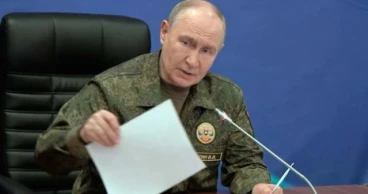
One killed in Crimea attack as Putin, Zelenskyy hold separate calls with Trump
A Ukrainian attack on Russian-occupied Crimea killed one person and injured two others early Sunday, according to Moscow-installed officials, as Russian President Vladimir Putin and Ukrainian President Volodymyr Zelenskyy held separate phone calls with US President Donald Trump on efforts to end the war.
Sergei Aksyonov, the Russia-appointed governor of Crimea, said the attack struck the northern part of the peninsula. One of the injured was reported to be in serious condition. He did not provide further details.
In recent weeks, Ukraine has intensified long-range strikes on military and infrastructure targets in Crimea as part of its efforts to isolate the strategically important peninsula, which Russia seized and illegally annexed in 2014.
Western officials and analysts say Ukraine's growing ability to strike deep inside Russian-controlled territory has increased pressure on the Kremlin, while Russia's battlefield advances have slowed in recent months.
The latest attack came shortly after Zelenskyy and Putin held separate telephone conversations with Trump.
In a post on X, Zelenskyy said he congratulated Trump on the 250th anniversary of US independence and discussed the situation on the battlefield.
"There is a real prospect of ending this war, and America's determination will be crucial," Zelenskyy wrote, adding that the two leaders agreed to continue discussions in person during the upcoming NATO summit in Ankara.
Meanwhile, the Kremlin described Putin's nearly 90-minute phone conversation with Trump on Saturday as "constructive."
Kremlin foreign policy adviser Yuri Ushakov said Putin also congratulated Trump and the American people on the 250th anniversary of US independence. The call was the fourth conversation between the two leaders this year.
According to Ushakov, Trump reaffirmed his willingness to help bring about a quick end to the fighting and support efforts to reach a peaceful settlement. He said Trump's envoys, Steve Witkoff and Jared Kushner, would continue mediation efforts and remain ready to visit Moscow.
Ushakov said Putin again stressed that Russia prefers a diplomatic solution, provided its long-standing demands are taken into account.
At the same time, Putin accused Ukraine and its European allies of trying to prolong and escalate the conflict, claiming they have misjudged the situation on the battlefield.
He also told Trump that Russian forces continue to make gains, capturing one settlement after another.
Putin specifically claimed that Russian troops had captured the Ukrainian stronghold of Kostyantynivka, describing it as an important step toward taking full control of Ukraine's Donetsk region.
Ukraine has rejected Russia's claim that Kostyantynivka has fallen.
29 days ago
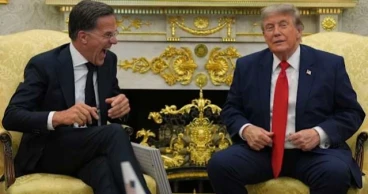
NATO chief faces fresh test as Trump demands allies' loyalty ahead of Turkey summit
NATO Secretary-General Mark Rutte heads into this week's NATO summit in Turkey facing a new challenge as US President Donald Trump shifts his focus from defense spending to demanding greater "loyalty" from America's allies.
Since taking office nearly two years ago, Rutte has spent much of his time trying to keep the United States committed to the 32-member military alliance. He has often praised Trump in an effort to ease tensions over the president's repeated threats to pull the US out of NATO.
For years, Trump's main complaint was that European allies were not spending enough on defense. At last year's NATO summit, member countries agreed to significantly increase military spending, bringing it closer to US levels as a share of national economic output.
But NATO now faces a different challenge: turning that extra money into stronger military capabilities, especially as European countries grow increasingly concerned about the threat from Russia.
During a White House meeting last month, Rutte presented Trump with a chart titled "The Trump Trillion," highlighting that European allies and Canada have invested $1.2 trillion in defense since 2017.
However, Trump appeared unimpressed. He criticized some NATO allies for refusing to join the US and Israel in military action against Iran, saying he wanted "loyalty" rather than financial contributions.
"We don't need their money. We don't need anything. I just want loyalty," Trump said.
Trump also suggested he might have skipped the upcoming NATO summit if it were not being hosted by Turkish President Recep Tayyip Erdogan, one of the few foreign leaders he has openly praised.
The remarks suggest both Erdogan and Rutte may face an uphill task in keeping the summit focused on alliance unity.
Traditionally, NATO's secretary-general, a role always held by a European, works to build consensus among member states and represent the alliance as a whole.
However, during both of Trump's presidencies, Rutte and his predecessor, Jens Stoltenberg, have devoted much of their efforts to preventing the United States from distancing itself from NATO.
Trump has repeatedly questioned America's commitment to the alliance. He has threatened to withdraw from NATO, suggested pulling US troops out of Europe, and raised doubts about defending allies that fail to spend enough on their militaries. He has also expressed interest in taking control of Greenland, a self-governing territory of NATO member Denmark.
Rutte has responded with careful diplomacy and public praise for Trump.
At the White House last month, he highlighted that increased European defense spending has created tens of thousands of American jobs and generated a $300 billion backlog of European military equipment orders from US manufacturers.
Rutte also gently challenged Trump's claim that NATO had failed to support the US during its military operation against Iran, noting that up to 5,000 American aircraft had flown from bases in Europe before an April ceasefire.
Meanwhile, NATO allies have become increasingly concerned after the Pentagon announced plans to reduce the number of US troops, warships, aircraft and drones available to defend Europe in the event of an attack.
Trump has also given mixed signals about whether US troop levels in Europe will rise or fall.
The uncertainty comes as Russia continues testing Europe's defenses. A study released Thursday said Moscow has increased drone activity near military bases across several European countries.
NATO summits are traditionally designed to demonstrate the alliance's commitment to collective defense under Article 5, which states that an attack on one member is considered an attack on all. The clause has been invoked only once, after the Sept. 11, 2001, attacks in the United States.
Last year's summit in The Hague ended on a positive note after allies agreed to boost defense spending, with Trump describing NATO members as a "nice group of people."
This year's gathering in Turkey is expected to be more difficult.
Rutte has argued that Europe's increased defense investment allows the US to shift more attention toward security challenges posed by China while European allies take greater responsibility for supporting Ukraine.
However, Trump's latest demand for greater "loyalty" from allies has added a new layer of uncertainty ahead of the summit.
In his memoir, former NATO Secretary-General Stoltenberg recalled that Trump nearly derailed the alliance's 2018 summit.
"If an American president says he no longer wishes to defend the other allies and leaves a NATO summit in protest, then the NATO treaty and its security guarantee aren't worth very much," Stoltenberg wrote.
29 days ago

Ukraine's climbing festival offers adventure, community and a break from war
On a granite cliff overlooking a river about two hours west of Kyiv, hundreds of outdoor enthusiasts gathered for Ukraine's largest climbing and music festival, where adventure, live performances and community spirit provided a brief escape from the realities of war.
Held last week in the Zhytomyr region, the Stoned Climbers festival brought together more than 500 participants for rock climbing, camping, swimming and stand-up paddleboarding during the day, while live bands and DJs entertained crowds in the evenings.
Despite the festive atmosphere, reminders of the ongoing war were never far away. Visitors received repeated air raid alerts on their phones, soldiers on leave quietly mingled with the crowd, and organizers donated all proceeds from this year's event to support Ukraine's Azov Brigade. Unlike last year, however, no Russian drones or missiles flew over the campsite on their way to Kyiv.
The volunteer-led festival was launched in 2023 by around 15 friends inspired by the climbing culture of Yosemite National Park in the United States, where rock climbing has long been associated with camping, outdoor living and a close connection with nature.
Festival co-founder Dmytro Isaienko said they wanted to show that climbing is more than a competitive sport.
"We realized climbing could be much more than just a sport. It's a lifestyle connected to nature, camping and the mountains," said the 39-year-old.
The founders also wanted to make climbing more accessible rather than something only for elite athletes. Their first festival attracted around 150 people. This year, attendance grew to more than 500, most of them beginners or amateur climbers.
Isaienko said the festival has taken on greater meaning during the war by giving people a chance to reconnect, learn new skills and take a break from the pressures of daily life.
"People need to step away from the war for a while, leave Kyiv and spend time together," he said.
At the climbing site, instructors helped first-time participants put on harnesses, prepare their equipment and make their way up the 25-meter-high granite wall. Whenever someone reached the top, fellow climbers and spectators applauded their achievement.
Among the newcomers was 21-year-old Liliia Karpach, who traveled from Ukraine's western Lviv region to attend her first Stoned Climbers festival.
She said she wanted to climb on real rock again and meet members of the climbing community.
Karpach described climbing as both a physical and mental challenge and encouraged others to give it a try.
"If you're nervous about coming alone, bring some friends. Even if none of you has climbed before, you'll still enjoy the experience together," she said.
Instructor Andrii Lamei said helping beginners overcome their fears is one of the most satisfying parts of the festival.
While guiding a young woman through her first climb, he encouraged her to pause and enjoy the view after she successfully reached the top.
"Look around. Enjoy the moment. You made it," he shouted.
Lamei said climbing teaches people how to cope with stress and remain calm in difficult situations.
Although he dreams of climbing in places such as Yosemite and Norway, wartime travel restrictions prevent most Ukrainian men from leaving the country.
"I'd love to visit Yosemite and Norway's mountains, but I can't. Maybe this has taught me to appreciate what we have here," he said.
Isaienko believes that is exactly why events like Stoned Climbers are important. Even as the war continues, he hopes the growing climbing community shows that people can still build new traditions and enjoy life together.
"This is a festival for everyone, including those who have never climbed before," he said.
As more first-time climbers reached the top of the cliffs to loud applause, the festival reflected the steady growth of Ukraine's outdoor climbing community despite the challenges of war.
30 days ago
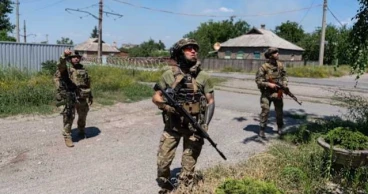
Ukraine targets oil terminal near St. Petersburg as drone strikes deepen pressure on Russia
A Ukrainian drone strike hit an oil terminal in Russia's St. Petersburg on Saturday, Russian officials said, as Kyiv continued its long-range attacks on Russia's energy infrastructure.
Ukraine has been targeting Russian oil facilities almost daily in recent months, a campaign aimed at disrupting fuel supplies and increasing pressure on the Kremlin as the war enters its fifth year.
St. Petersburg Governor Alexander Beglov said the attack struck the Kirovsky district on the Baltic Sea. He also said Russian air defenses intercepted 72 Ukrainian drones over the city and surrounding areas.
Ukrainian President Volodymyr Zelenskyy said the operation was part of Ukraine's "long-range sanctions" against Russia. In a post on Telegram, he said Ukrainian forces struck oil facilities at the port and also hit a military target on Kronstadt Island, located off the coast of St. Petersburg.
"The Ukrainian defense forces hit the port's oil infrastructure, which helps finance Russia's war, and also struck Kronstadt, an important military target," Zelenskyy said.
The Kirovsky district was also targeted in June, shortly before Russia hosted the St. Petersburg International Economic Forum.
Ukraine also continued attacks on Crimea, the peninsula Russia annexed in 2014. Moscow-installed Governor Sergei Aksyonov said a Ukrainian strike on Saturday killed one person and injured two others, including a 10-year-old child. Repeated attacks have forced local authorities to suspend gasoline sales to civilians.
Russian President Vladimir Putin has dismissed Ukraine's strikes on Russia's energy facilities as "not critical" and has insisted Moscow will continue the war until its objectives are achieved.
He has argued that the attacks are intended to shift attention away from Ukraine's battlefield losses. However, military analysts say Russia's advances have slowed in recent months.
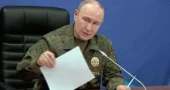
On Friday, Putin visited Russia's military headquarters overseeing the war in Ukraine, where he received a report claiming Russian forces had captured the eastern Ukrainian city of Kostyantynivka after weeks of heavy fighting. He described the development as an important step toward advancing on the nearby cities of Sloviansk and Kramatorsk, two of Ukraine's remaining strongholds in the Donetsk region.
Putin called the capture of Kostyantynivka, a major transport and industrial center, a development of "major strategic importance."
Ukraine denied the claim. General Staff spokesperson Maj. Andriy Kovalev told local media that Russian forces had not taken control of the city and accused Moscow of spreading "outright disinformation."
The ongoing drone campaign has increasingly brought the war into Russian territory. Local media reported that the border city of Belgorod was left almost entirely without electricity on Saturday following overnight Ukrainian drone attacks.
Meanwhile, Ukrainian authorities said eight people, including two children, were injured after Russian strikes hit residential buildings in the southeastern Zaporizhzhia region on Saturday.
30 days ago
China promotes two new generals as anti-corruption campaign reshapes military leadership
China's military has promoted two senior officers to the rank of general, a move that could signal a broader leadership reshuffle after years of anti-corruption investigations removed several top commanders.
The latest promotions are widely seen as part of efforts to strengthen the military's loyalty to the ruling Communist Party and its leader, Xi Jinping.
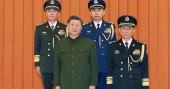
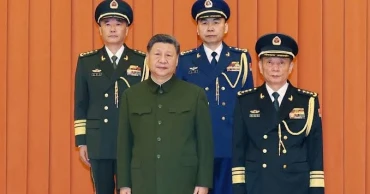
Xi, who also heads the armed forces, awarded the promotions to Zhang Shuguang and Air Force Commander Wang Gang during a ceremony on Friday. Zhang was also appointed to lead the anti-corruption investigation department under the Central Military Commission (CMC), the military's highest decision-making body.
The appointments could position both officers to fill vacant seats on the seven-member CMC, which has been left with only two active members following the removal of several senior officials in the ongoing anti-corruption campaign.
Xi serves as chairman of the commission, while Vice Chair Zhang Shengmin is currently its only other active member.
The campaign has led to the removal or sidelining of two former vice chairmen, including the military's highest-ranking general.
A new Central Military Commission is expected to be announced in the autumn of next year when the current five-year term ends.
30 days ago
US marks 250th Independence anniversary amid political divisions and extreme heat
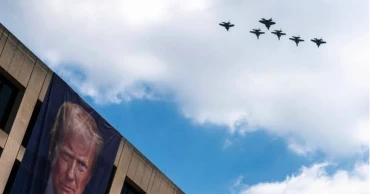
Americans are celebrating the 250th anniversary of the country's independence on Saturday with fireworks, concerts and public events, as political tensions and a severe heat wave shape this year's historic celebrations.
The anniversary marks the signing of the Declaration of Independence, one of the world's most influential documents on democracy.
President Donald Trump is expected to play a central role in the celebrations, delivering a speech on the National Mall in Washington before a major fireworks display over the U.S. capital.
On Friday, Trump spoke at Mount Rushmore in South Dakota, where he warned about what he described as the growing threat of communism in the United States.
Across the country, cities are hosting a wide range of events to mark the milestone. Fireworks displays are planned over Navy Pier in Chicago and New York City's skyline. New York also welcomed the anniversary with a midnight ball drop similar to its New Year's Eve celebration.
Bristol, Rhode Island, which says it has hosted the nation's oldest Independence Day celebration since 1785, is also holding special events.
In Los Angeles, a concert hosted by Queen Latifah will feature performances by The Smashing Pumpkins and Chris Stapleton, with Chaka Khan appearing as a special guest.
Many celebrations, however, have been disrupted by extreme heat affecting large parts of the eastern United States.
In Washington, the Great American State Fair was temporarily closed on Friday during the hottest part of the day, while the city's Independence Day parade scheduled for Saturday was canceled because of the weather.
Conditions were much cooler in the Pacific Northwest, where temperatures stayed in the 60s Fahrenheit with occasional light rain.
In Issaquah, near Seattle, resident Megan Kurowski said people in her community were excited to celebrate the country's 250th anniversary and that she planned to watch the fireworks from a paddleboard.
The holiday weekend also features several major sporting and entertainment events. More than a dozen Major League Baseball games are scheduled, while the 2026 FIFA World Cup continues with Round of 16 matches in Houston and Philadelphia.
The celebrations come at a time of deep political polarization in the United States, with debates over politics, race, immigration and social issues continuing to divide the country.
Speaking at Mount Rushmore, Trump described communism as the greatest threat to American freedom.
Meanwhile, New York City Mayor Zohran Mamdani, without mentioning Trump by name, urged Americans to uphold the country's democratic values and resist authoritarianism.
In Topeka, Kansas, auto technician Joe Fuqua-Bejarano said the country's greatest strength was its resilience rather than its politics. While selling fireworks, he expressed hope that Americans could find greater unity despite their differences.
Jerry Chin of Newcastle, Washington, said he planned to spend the holiday quietly at home with his wife and dogs instead of watching fireworks. While calling America "a great place," he acknowledged that the country still faces significant challenges.
30 days ago
Putin brushes aside Russia’s fuel shortages as attacks on Ukraine continue
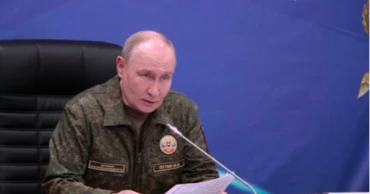
Despite growing fuel shortages across Russia, President Vladimir Putin has downplayed the impact of Ukraine’s escalating strikes on Russian oil refineries. Calling the situation “not critical,” he has rejected ceasefire proposals and maintained that Russia’s military campaign will continue until its objectives are achieved.
Putin has argued that Ukraine’s attacks on Russia’s energy infrastructure are intended to divert attention from setbacks on the battlefield. However, military analysts say Russia’s offensive has slowed considerably in recent months, suggesting the fighting has reached a more difficult phase. Even so, Putin appears confident that the fuel shortages will not significantly weaken public support for his leadership or the war.
Meanwhile, Russia launched one of its deadliest attacks on Kyiv since the full-scale invasion began, carrying out an 11-hour overnight assault into Thursday that killed at least 30 people.
Fuel Crisis DeepensSince March, Ukraine has reportedly carried out more than 50 strikes on Russian oil refineries and energy facilities, including sites in Russian-occupied Crimea. Ukrainian officials say the campaign is designed to increase pressure on Moscow to end the war.
The attacks have also brought the conflict closer to ordinary Russians, challenging the Kremlin’s long-standing narrative that the war has little impact on everyday life inside the country.
According to consultancy Macro-Advisory, roughly one-third of Russia’s oil refining capacity has been disrupted, with many facilities suffering damage that will take months and significant investment to repair.
One of Moscow’s main refineries has been struck twice despite strong air defenses. A second attack on June 18 caused a major fire that damaged critical equipment, with repairs expected to last until the end of the year.
Government figures show gasoline production has fallen by about 17% to around 850,000 barrels per day. Fuel rationing has been introduced in several regions, while motorists have faced long queues at filling stations.
To ease the shortage, authorities have temporarily allowed the production of lower-grade gasoline containing higher sulfur levels through the end of the year.
The most severe shortages have been reported in Crimea, where fuel sales to private consumers have occasionally been suspended altogether.
Putin Seeks to Reassure the PublicDuring a government meeting last weekend, Putin acknowledged that Russia was experiencing a “difficult period” but described the shortages as temporary. He promised faster repairs to damaged energy facilities and said Russia could import gasoline if necessary. He also pledged to increase production of air defense systems to protect critical infrastructure from future attacks.
Putin accused Ukraine of trying to divide Russian society, undermine Moscow’s military campaign, and pressure the Kremlin into negotiations on terms favorable to Kyiv.
“We will not give them that chance,” he said.
Although Putin insisted the strikes on oil facilities have had no impact on the battlefield, Western analysts believe Ukrainian attacks on Russian supply lines and logistics have slowed Russia’s advance and contributed to a prolonged military stalemate.
On Friday, Putin visited Russia’s military headquarters overseeing operations in Ukraine, where commanders reported the capture of Kostyantynivka after weeks of intense fighting. Putin described the city’s capture as strategically important because it could pave the way toward Sloviansk and Kramatorsk, two major Ukrainian strongholds in the Donetsk region.
Ukrainian authorities did not immediately confirm Russia’s claim. Earlier in the day, Ukraine’s General Staff said its forces had repelled 24 Russian assaults around Kostyantynivka and nearby settlements.
Putin also warned that continued Ukrainian strikes on Russian territory could force Moscow to expand the security buffer zone inside Ukraine. He further cautioned Ukraine’s Western allies that Russia would closely assess their involvement in the conflict before making future decisions.
Ceasefire Proposals RejectedPutin has dismissed repeated calls for a ceasefire from Ukraine and its Western partners, arguing that any pause in fighting would allow Ukrainian forces to regroup and strengthen their defenses.
He responded to Ukrainian President Volodymyr Zelenskyy’s offer for direct talks by suggesting the Ukrainian leader come to Moscow, a proposal Kyiv has rejected.
The Russian president has made any ceasefire dependent on Ukraine withdrawing from the parts of the Donetsk region it still controls. He has also insisted that any final peace agreement must require Ukraine to abandon its NATO ambitions, reduce its military capabilities, and guarantee protections for Russian language and culture.
In a recent interview, Putin claimed Ukraine had proposed limiting combat to the four regions Russia claims to have annexed—Donetsk, Luhansk, Kherson, and Zaporizhzhia. He said he rejected the idea because it would allow Ukrainian forces to shift troops from other fronts and reinforce their defenses in the southeast.
“Faced with a catastrophic shortage of personnel, the armed forces of Ukraine apparently believe this could be their salvation,” Putin said. “Saving the Kyiv regime is not part of our plans.”
The Kremlin said the proposal had been conveyed through confidential channels, though Ukrainian officials have not publicly acknowledged making such an offer.
Putin also rejected Ukraine’s suggestion that both sides stop carrying out long-range strikes inside each other’s territory, arguing that Russia’s attacks have far greater military impact.
While Moscow says it targets military infrastructure, Thursday’s large-scale attack on Kyiv again struck residential neighborhoods. In contrast, most Ukrainian long-range strikes inside Russia have focused on oil refineries, weapons factories, and other military-related facilities.
According to the United Nations, the war has claimed the lives of more than 16,000 Ukrainian civilians.
1 month ago
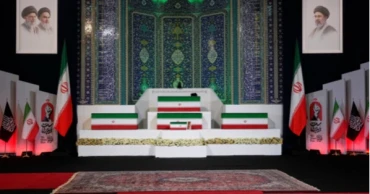
Iran begins dayslong funeral for late Supreme Leader Ayatollah Ali Khamenei
Iran on Saturday began a dayslong state funeral for Supreme Leader Ayatollah Ali Khamenei, who was killed in an airstrike at the start of the recent war. He was 86.
Thousands of mourners gathered at the Grand Mosalla in Tehran, where Khamenei's casket was displayed in a glass case. Many people were seen crying, chanting slogans calling for revenge, and beating their chests in a traditional Shiite mourning ritual.
Large banners and billboards featuring Khamenei's image were displayed across the capital as crowds paid their final respects.
"I came to say goodbye to my beloved leader," said 27-year-old mourner Hananeh Mousavi, who attended the ceremony with her mother. She said she never imagined witnessing such a day.
Khamenei's casket was placed above those of several family members who were also killed in the strike. His black turban, symbolizing his claimed descent from the Prophet Muhammad, rested on top of the coffin.
The funeral stage at the Grand Mosalla was designed to resemble the venue where Khamenei often delivered speeches at his Tehran compound, which was destroyed in the Israeli airstrike on Feb. 28.
Iranian authorities expect millions of people to join the funeral processions, drawing comparisons with the funeral of Ayatollah Ruhollah Khomeini in 1989. Organizers distributed cold drinks and sprayed water on mourners to help them cope with the summer heat.
Ali Kazemi, who traveled from the northwestern city of Tabriz, said he attended the funeral to demonstrate support for his country and religion.
A large turnout is expected to strengthen the government's position as it seeks to negotiate a permanent end to the conflict with the United States while tensions with Israel remain high.
The funeral began on July 4, the 250th anniversary of the founding of the United States. Although Iranian authorities did not comment on the timing, crowds at the ceremony chanted anti-American slogans.
At the same time, U.S. President Donald Trump, speaking at Mount Rushmore in South Dakota, said Iran wanted to reach a settlement after the conflict and remarked that the United States had given the country "a week off for a funeral."
Some mourners at the ceremony also displayed banners directed at Trump.
Khamenei's body will later be taken to several cities in Iran as well as neighboring Iraq as part of the funeral ceremonies. Authorities have closed roads, restricted airspace and disrupted normal activities in Tehran during the mourning period.
It remains unclear whether Iran's new supreme leader, Ayatollah Mojtaba Khamenei, will make a public appearance during the funeral. His wife was among the family members killed in the attack.
On Thursday, Iran's joint military command warned Israel and the United States against any actions that could further escalate tensions during the funeral period, following reported Israeli threats against Mojtaba Khamenei.
1 month ago
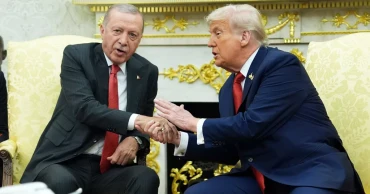
Trump-Erdogan ties strengthen Turkey's hand ahead of NATO summit
Turkish President Recep Tayyip Erdogan is entering next week's NATO summit with a diplomatic advantage, leveraging his close relationship with U.S. President Donald Trump to secure the American leader's attendance and potentially advance long-stalled defense cooperation between the two countries.
Trump, who has often criticized several European leaders, said he agreed to attend the summit in Ankara largely out of respect for Erdogan, describing the Turkish president as "a hell of a leader" and a good friend.
"I would not have gone for most people," Trump said recently, adding that Erdogan personally urged him to attend, emphasizing the importance of U.S. participation.
Trump's presence is seen as a significant boost for NATO at a time when the U.S. president has repeatedly questioned America's military commitments in Europe and called on alliance members to spend more on defense. He has also recently criticized some NATO allies for not backing his military campaign against Iran.
Beyond diplomacy, Trump has hinted at possible announcements during his Turkey visit involving defense cooperation, including the potential sale of F-35 fighter jets and F-110 jet engines sought by Ankara.
Turkey was removed from the F-35 fighter jet programme in 2019 after purchasing Russia's S-400 missile defense system, prompting U.S. concerns that the Russian equipment could compromise the aircraft's sensitive technology.
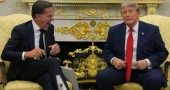
During a recent Oval Office meeting with NATO Secretary-General Mark Rutte, Trump suggested he may take steps that would "make (Erdogan) very happy." Vice President JD Vance also confirmed that Washington is exploring options to resume F-35 sales, provided Turkey complies with U.S. legal requirements.
The U.S. State Department has meanwhile notified key lawmakers of plans to move forward with a proposed sale of more than $700 million worth of F-110 jet engines, which would power Turkey's domestically developed KAAN fighter aircraft. The proposal, however, faces opposition from several members of Congress who remain concerned over Turkey's continued possession of the Russian S-400 system.
Analysts say Trump's personal rapport with Erdogan has become a defining feature of U.S.-Turkey relations.
Philip Gordon, a former national security adviser to Vice President Kamala Harris and now a senior fellow at the Brookings Institution, said Trump's favorable view of strongman leaders has translated into an unusually warm relationship with Erdogan.
"Erdogan is taking full advantage of it," Gordon said.
Unlike former President Joe Biden, who kept Erdogan at a distance over concerns about democratic backsliding and Ankara's ties with Moscow, Trump has maintained regular contact with the Turkish leader.
Observers say Erdogan also signaled confidence in Trump's political future by declining an invitation to visit Washington during Biden's presidency after Turkey approved Finland and Sweden's NATO membership.
Relations between Washington and Ankara have improved in other areas as well. Earlier this year, the U.S. Justice Department dropped a major sanctions-related case against Turkey's state-owned Halkbank, while longtime Trump ally Tom Barrack was appointed U.S. ambassador to Turkey.
Erdogan and Trump have also held frequent phone conversations on regional issues, including Syria, Gaza and broader Middle East security. Turkey has joined Trump's Board of Peace initiative aimed at overseeing the Gaza ceasefire.
Following a meeting with Trump at last year's NATO summit, Erdogan said the two leaders communicate regularly, noting that their telephone exchanges are usually returned within 24 hours.
"With my friend Trump, we are opening the door to a new era in Turkish-American relations," Erdogan said.
1 month ago
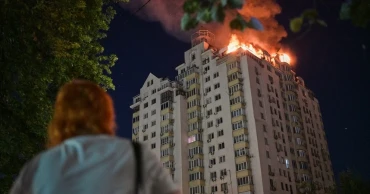
Putin plays down Russia's fuel shortages as attacks on Ukraine continue
Russian President Vladimir Putin has dismissed growing fuel shortages caused by repeated Ukrainian strikes on Russia's oil facilities, saying the problem is "not critical" as he vowed to continue the war until Moscow achieves its objectives.
Despite increasing disruptions to Russia's fuel supply, Putin has rejected ceasefire proposals and insisted that military operations will continue. He has described Ukraine's attacks on Russian energy infrastructure as an attempt to divert attention from Kyiv's battlefield setbacks, although military analysts say Russia's advance has slowed in recent months.
His remarks came as Russia launched one of its deadliest attacks on the Ukrainian capital in recent months. An 11-hour overnight barrage on Kyiv into Thursday morning killed at least 30 people.
Since March, Ukraine has reportedly carried out more than 50 attacks on oil refineries and energy facilities in Russia and Russian-occupied Crimea. Ukrainian officials say the campaign is aimed at increasing pressure on Moscow to end the war.
The attacks have also brought the impact of the conflict closer to ordinary Russians, challenging the Kremlin's long-standing message that daily life inside Russia remains largely unaffected by the war.
According to Chris Weafer, CEO of consultancy Macro-Advisory, about one-third of Russia's oil refining capacity has been disrupted. He said many of the damaged facilities will require costly and lengthy repairs.
One of Moscow's largest oil refineries has been hit twice despite heavy air defense around the capital. The latest strike on June 18 caused a major fire and reportedly damaged key equipment that may not be fully repaired until the end of the year.
Russian government data show gasoline production has fallen by about 17% to around 850,000 barrels per day. Fuel rationing has been introduced in several regions, with motorists waiting in long queues at filling stations.
The worst shortages have been reported in Crimea, which Russia annexed from Ukraine in 2014. At times, authorities have suspended gasoline sales to private consumers altogether.
At a government meeting last weekend, Putin acknowledged Russia was going through a "difficult period" but said the shortages were temporary. He pledged to speed up repairs to damaged energy facilities, said Russia could import gasoline if necessary, and promised to increase production of air defense systems to counter future Ukrainian strikes.
Putin accused Ukraine of trying to create divisions within Russian society and force Moscow into peace talks on terms favorable to Kyiv.
"We will not give them that chance," he said.
Although Putin insisted the attacks on Russian oil facilities have had no impact on the front line, Western military analysts say Ukrainian strikes on Russian military supply routes have complicated logistics and slowed Moscow's offensive, leaving much of the battlefield at a stalemate.
Putin maintained that Russian forces are still making gains along the roughly 1,000-kilometre front line.
The Russian leader has also rejected repeated calls by Ukraine and its Western allies for a ceasefire, arguing it would only allow Ukrainian forces time to regroup.
He has made any truce conditional on Ukraine withdrawing from the remaining parts of the Donetsk region under its control, a demand Kyiv has rejected. Putin also insists that any peace agreement must prevent Ukraine from joining NATO, reduce its military capabilities and guarantee protection for the Russian language and culture.
Putin also claimed Ukraine had privately proposed limiting the fighting to the four regions that Russia annexed but does not fully control: Donetsk, Luhansk, Kherson and Zaporizhzhia. He said he rejected the proposal because it would allow Ukrainian forces to reinforce those areas.
The Kremlin said the proposal was delivered through confidential channels, but Ukrainian officials have not publicly confirmed such an offer.
Putin also dismissed Ukraine's proposal for both sides to stop launching long-range strikes inside each other's territory, arguing that Russia's attacks are far more powerful and destructive.
Russia's latest assault on Kyiv again struck residential areas, despite Moscow saying it was targeting military facilities. In contrast, most Ukrainian strikes inside Russia have focused on oil refineries, weapons factories and other military-related infrastructure.
According to the United Nations, more than 16,000 Ukrainian civilians have been killed since Russia launched its full-scale invasion more than four years ago.
1 month ago