Others

Mexico, like US, grants birthright citizenship to children born on its soil
Mexico, like the United States, automatically grants citizenship to children born on its territory, a policy that has taken on renewed significance amid US President Donald Trump's efforts to restrict birthright citizenship in the United States.
Trump has repeatedly claimed that the United States is the only country that offers automatic citizenship to children born within its borders, as he seeks to deny the right to children whose parents are in the country illegally or have temporary legal status.
However, about three dozen countries, most of them in the Americas, guarantee birthright citizenship, including Mexico, Canada, Brazil, Argentina, Venezuela and Honduras.
The issue has gained prominence as the US Supreme Court is expected to rule on the constitutionality of Trump's executive order on birthright citizenship, signed on January 20, 2025, the first day of his second term in office as part of his administration's broader immigration crackdown.
In an April post on Truth Social, Trump wrote that the United States was "the only country in the world" that allows birthright citizenship.
For Haitian migrant Vivianne Petit Frere, who now runs a successful restaurant in the Mexican border city of Tijuana, Mexico's citizenship policy has transformed her family's future.
Petit Frere fled Haiti in 2019, travelling through Brazil and crossing the Panamanian jungle to reach Mexico with hopes of eventually settling in the United States with relatives in Florida. Instead, she chose to remain in Mexico, where her granddaughter, Alexca, was born two years ago and automatically became a Mexican citizen.
The Haitian migrant has since established a thriving restaurant called Lakou Lakay, meaning "home" in Haitian Creole, become fluent in Spanish and is pursuing a degree in social work.
She said being born in Mexico would provide her granddaughter with greater opportunities and easier international travel than a Haitian passport would allow.
According to the United Nations' International Organization for Migration, at least 10 percent of Haitian women arriving in Mexico during a surge in migration in 2021 were pregnant. Tens of thousands of Haitians currently reside in Mexico, though there are no official figures on how many children born to non-citizens have obtained Mexican citizenship.
Mexico also allows parents of children who acquire citizenship by birth to become permanent residents, a provision that has benefited many Haitian families in Tijuana, according to Petit Frere.
Birthright citizenship in the United States is protected by the 14th Amendment to the Constitution, adopted after the Civil War to ensure citizenship rights for formerly enslaved people.
The principle was later extended to the children of immigrants through a Supreme Court ruling in the late 19th century, which held that nearly anyone born on US soil is a citizen regardless of their parents' legal status.
The issue has generated controversy elsewhere in the region. The Dominican Republic ended birthright citizenship for children of undocumented migrants in 2007 and retroactively applied the policy to 1929 six years later.
According to the Center for Migration Studies of New York, as many as 130,000 people remained stateless more than a decade later despite legislation passed in 2014 to address the issue following international criticism.
Petit Frere, who has begun the process of becoming a Mexican citizen, now works as a community organiser with the Haitian Bridge Alliance, advocating for Haitian migrants in Mexico.
She said the children of immigrants often go on to achieve remarkable success and expressed hope of pursuing further studies in international migration in the future.
1 month ago
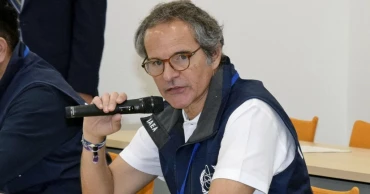
IAEA chief says inspectors will visit Iran's nuclear sites under interim deal
The head of the UN nuclear agency said Wednesday that inspectors would visit Iran's uranium enrichment facilities under the interim agreement reached between the United States and Iran, a key step toward ending tensions over Tehran's nuclear programme.
International Atomic Energy Agency (IAEA) Director General Rafael Mariano Grossi made the remarks during a visit to Japan, offering the clearest indication yet that the agency would resume inspections of Iran's key nuclear sites.
The IAEA has been barred by Tehran from accessing its uranium enrichment facilities since Israel's 12-day war with Iran in 2025. The sites are believed to hold enough highly enriched uranium that could potentially be used to produce up to 10 nuclear weapons if Iran decided to pursue one.
Iran has consistently maintained that its nuclear programme is entirely peaceful, although it remains the only country without a declared weapons programme to enrich uranium to 60 percent purity.
The United States and Iran issued conflicting statements on Tuesday over whether the enrichment sites would be opened to inspectors. Grossi described the disagreement as a "war of words."
Speaking to reporters at the Fukushima Daiichi nuclear power plant, Grossi said a memorandum of understanding signed by the presidents of both countries explicitly states that nuclear activities involving nuclear material and facilities would be supervised by the IAEA.
"Obviously, to do that, we will have to inspect," he said, adding that whether inspections begin in a few days or slightly later is not critical because "this is going to happen."
The inspections are considered essential to implementing the interim agreement, which requires Iran's stockpile of highly enriched uranium to be diluted to lower enrichment levels.
There was no immediate reaction from Tehran.
On Tuesday, Iranian Foreign Ministry spokesman Esmail Baghaei said UN inspectors were not scheduled to examine nuclear sites bombed by the United States last year, rejecting earlier comments by US Vice President JD Vance.
Although the IAEA has been allowed to visit other nuclear facilities in Iran, including the Bushehr nuclear power plant, the agency says it cannot verify the status of Iran's uranium stockpile or inspect centrifuges used for enrichment without access to the enrichment sites.
Both Iran and the IAEA say Tehran is not currently enriching uranium. However, non-proliferation experts have expressed concern that Iran could move its stockpile to undeclared locations.
The United States and Iran reached an interim agreement last week under which Tehran would dilute its enriched uranium stockpile and receive relief from US-backed sanctions on its oil sector. The two sides were also given 60 days to negotiate a broader agreement.
The fragile ceasefire surrounding the agreement has already faced challenges, with Iran saying it had again closed the strategic strait amid fighting between Israel and the Iran-backed Hezbollah movement in Lebanon. Violence resumed in Lebanon on Tuesday but did not escalate further.
Meanwhile, US Secretary of State Marco Rubio arrived in the Gulf region on Wednesday for a three-nation tour.
According to the State Department, Rubio began his trip in the United Arab Emirates, where he held a closed-door meeting and working lunch with UAE President Sheikh Mohamed bin Zayed Al Nahyan in Abu Dhabi.
Rubio is scheduled to travel later to Kuwait and Bahrain for meetings with their leaders.
1 month ago
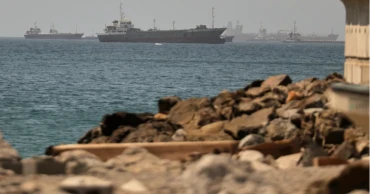
Hormuz Strait reopening eases shipping crisis, but 1,200 cargo vessels remain stranded
More than 1,200 cargo ships carrying goods worth an estimated $125 billion remain stranded following the closure of the strategically important Strait of Hormuz, the Financial Times reported on Wednesday, citing a report by insurance company Allianz.
According to the report, the disruption has significantly altered how insurers assess risks in major maritime chokepoints.
“We used to discuss possible disaster scenarios, but now we are dealing with a real one,” Justus Heinrich, Allianz’s head of marine underwriting, told the newspaper.
Shipping activity has started to recover after the United States and Iran announced an agreement to reopen the Strait of Hormuz, one of the world's busiest oil and trade routes.
Data from Lloyd’s List Intelligence showed that 69 vessels departed the Gulf during the week ending June 21, compared with just 24 ships the previous week. It was the highest weekly shipping volume since the US-Iran conflict began in February.
The conflict has also taken a heavy human and economic toll. The International Maritime Organization said at least 14 seafarers have been killed and more than 40 vessels, most of them oil tankers, have come under missile attack since the fighting erupted.
Despite signs of improvement in shipping traffic, industry experts warn that the impact of the crisis on global trade, maritime security and crew safety could continue for some time.
1 month ago
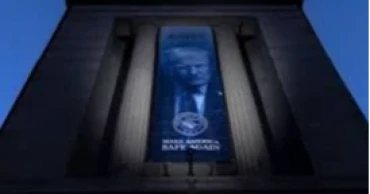
US Justice Department withdraws subpoenas targeting reporters in leak probe
The US Justice Department issued and later withdrew subpoenas that had sought to compel reporters from The Washington Post and The Wall Street Journal to appear before a grand jury in connection with a leak investigation, according to people familiar with the matter.
The move involved rare legal pressure on journalists, prompting concerns among press freedom advocates. The subpoenas were part of a broader crackdown on alleged national security leaks under the Trump administration, which earlier this year also included an FBI search of a Washington Post reporter’s home and the seizure of her electronic devices.
The Washington Post confirmed that one of its journalists had been served with a subpoena. Reporters at The Wall Street Journal also received similar legal orders, according to sources, though the government later withdrew them. The reason for the reversal was not immediately clear.
The subpoenas reportedly formed part of a wider investigation into leaks, but officials have not specified which reporting triggered the action.
In an internal email, Washington Post executive editor Matt Murray said the subpoena targeting national security reporter Ellen Nakashima had been withdrawn. Nakashima has covered issues including the Iran war and US military operations in the Caribbean.
The newspaper strongly criticised the initial move.
“The unwarranted subpoena of our reporter Ellen Nakashima… was a clear violation of constitutionally guaranteed press freedom,” a Washington Post spokesperson said, adding that the outlet would continue to defend its journalists and First Amendment rights.
The Wall Street Journal did not immediately comment.
Acting US Attorney General Todd Blanche declined to discuss the case, calling it a grand jury matter, but defended the broader effort to investigate national security leaks.
He said journalists are not the targets of such investigations, but added that officials have a duty to stop the unauthorized sharing of classified information. “There’s tension there,” he said, noting the government’s responsibility to protect sensitive material.
Press freedom groups sharply criticised the subpoenas. National Press Club president Mark Schoeff Jr. said the move represented “one of the most aggressive actions against a free and independent press in recent memory,” arguing that reporters were close to being forced into criminal investigations for doing their jobs.
The Justice Department has long maintained internal rules governing how it handles media leak investigations, but past administrations have sometimes used subpoenas and court orders to identify sources in national security cases. However, compelling journalists to testify before a grand jury remains extremely rare.
In April 2025, then-Attorney General Pam Bondi rolled back earlier protections that had limited government access to journalists’ records during leak probes, restoring broader authority to use subpoenas and search warrants in such cases, according to department guidance.
Earlier this year, FBI agents also searched the home of Washington Post reporter Hannah Natanson as part of a separate leak investigation involving classified material.
1 month ago
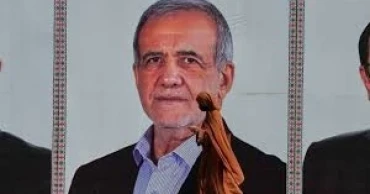
Iran president visits Pakistan as US–Iran talks continue amid Lebanon violence
Iran’s president Masoud Pezeshkian arrived in Pakistan on Tuesday for high-level talks as diplomatic efforts between Tehran and Washington continue to draft a potential agreement aimed at ending the ongoing Middle East conflict, even as fresh violence erupted in Lebanon and key disagreements surfaced over what has actually been agreed so far.
Pezeshkian’s visit to Islamabad comes as technical-level negotiations continue following talks held in Switzerland on Monday, led by US Vice President JD Vance and Iran’s parliamentary speaker Mohammad Bagher Qalibaf. The discussions are part of a wider diplomatic push to finalise a long-term settlement to the war.
However, gaps in the understanding between the two sides have already emerged. In Tehran, Foreign Ministry spokesperson Esmail Baghaei said there are no planned visits by the UN nuclear watchdog, the International Atomic Energy Agency (IAEA), to inspect Iranian nuclear sites that were bombed by the United States last year. This contradicts earlier US claims that an agreement had been reached to allow inspections.
The IAEA has maintained limited access to Iran since the 2025 Israel–Iran war, but has not been permitted to enter the damaged enrichment facilities targeted by US strikes.
At the same time, renewed violence in southern Lebanon has added fresh uncertainty to the fragile diplomatic process. Israeli forces opened fire in separate incidents, killing two people, according to Lebanese authorities, raising fears that the escalation could undermine ongoing negotiations.
Iran has insisted that any comprehensive deal must include a full ceasefire in Lebanon, where fighting between Israel and Hezbollah has continued alongside broader regional tensions.
Talks in Islamabad amid tight security
Security was significantly heightened in Islamabad as Pezeshkian met Pakistani President Asif Ali Zardari and Prime Minister Shehbaz Sharif. This is his first visit to Pakistan since the conflict began following US and Israeli strikes on Iran in February.
Pezeshkian and Sharif are expected to hold a joint press conference after their talks.
Diplomatic efforts are now entering a 60-day phase aimed at shaping a permanent agreement. Both sides have reportedly agreed in principle to establish a “de-confliction cell” to manage the Lebanon conflict and reduce risks of escalation between Israel and Iran-backed Hezbollah.
US officials also said discussions included mechanisms to keep the Strait of Hormuz open, a critical global oil route that Iran had previously disrupted during the conflict.
Ahead of the visit, Pezeshkian stressed that progress depends on strict adherence to commitments.
“The effectiveness of the talks depends on full commitment to the agreed obligations and their precise implementation,” he wrote on X, adding that “statements outside the agreed text do not help advance the negotiations.”
Sanctions, nuclear issues and disputed interpretations
Iranian officials said the Switzerland talks led to the formation of several working groups covering sanctions relief, nuclear issues, reconstruction, and monitoring arrangements, according to state media IRNA.
Deputy Foreign Minister Kazem Gharibabadi, who is leading the technical talks, also said a coordination mechanism was created for shipping through the Strait of Hormuz and for managing the Lebanon conflict.
However, it remains unclear whether these arrangements will be enough to halt fighting on the ground, particularly between Israel and Hezbollah, which continues to operate in southern Lebanon.
Dispute over use of frozen Iranian assets
Another point of disagreement has emerged over Iran’s access to frozen funds. US Vice President JD Vance said any released Iranian assets would be used to purchase American agricultural products, including soy, corn and wheat, with oversight from the US and Qatar.
Iran rejected that interpretation. Foreign Ministry spokesperson Baghaei said Tehran alone decides how to use its funds and would base import decisions on price and quality.
He also criticised the US framing of the war’s outcome, saying it is ironic that a conflict “aimed at destroying Iran” has been turned into what he described as benefits for American farmers.
Iran’s ambassador in Geneva, Ali Bahreini, also disputed claims of external control over the funds, saying Iran alone has authority over its assets.
Lebanon ceasefire under strain
Mediators Pakistan and Qatar said the proposed coordination cell would include the Lebanese government and aim to enforce a halt to military operations. But Israeli Prime Minister Benjamin Netanyahu has raised doubts, saying Israel will maintain “full freedom of action” to respond to threats.
Neither Israel nor Hezbollah is part of the US–Iran negotiations. Netanyahu has vowed to continue military operations until threats in southern Lebanon are eliminated, while Hezbollah has said it will not stop attacks unless Israel withdraws.
US President Donald Trump said he would review the situation, adding that he expects the crisis to be resolved.
“I’m a problem solver, I get problems solved real fast,” he said.
The latest deadly incidents in Lebanon came after a brief lull following a ceasefire brokered on Saturday. While no airstrikes were reported for two days, tensions remain high, and both sides have continued to accuse each other of violations.
Separately, Lebanon and Israel are expected to hold another round of indirect talks in Washington focused on a possible Israeli withdrawal plan.
1 month ago

Andy Burnham emerges as frontrunner in UK Labour leadership race amid leadership transition
Andy Burnham, Britain’s newly elected lawmaker and long-time Greater Manchester mayor, is positioning himself as the leading candidate to become the next Labour leader, in a contest that could effectively hand him the job unopposed.
Burnham met Labour colleagues on Tuesday as preparations intensified for a leadership race triggered by Prime Minister Keir Starmer’s announcement that he will step down within weeks after a turbulent two-year tenure marked by policy missteps and declining public support.
Starmer’s resignation has opened the door for a rapid leadership transition within the governing Labour Party. Burnham, widely seen as the frontrunner, could become prime minister as early as July 17 if no rival emerges. If a contest takes place, the new leader is expected to be in place by Parliament’s return from summer recess on September 1.
A former Cabinet minister, Burnham served as mayor of Greater Manchester since 2017 and recently returned to Parliament after winning a by-election last week, a move widely viewed as part of his bid for the leadership.
His position was strengthened on Monday after former Health Secretary Wes Streeting, previously considered a potential challenger, publicly backed him.
Under Britain’s parliamentary system, ruling parties can replace their leader and prime minister without a general election. The next national vote is not required until 2029.
Labour will open nominations for its leadership on July 9, with a deadline a week later. Any candidate must secure the backing of at least 81 Labour MPs, or one-fifth of the parliamentary party, to enter the race.
Burnham is expected to outline elements of his economic agenda in a speech next week. While he has promoted his “Manchesterism” approach credited with urban regeneration in Greater Manchester — his national policy platform remains largely undefined.
Supporters within Labour believe his leadership style and public appeal could help reconnect the party with voters more effectively than Starmer, whose leadership has been described by critics as cautious and managerial.
However, some MPs are calling for a full leadership contest to ensure proper scrutiny of Burnham’s policies, arguing that his national agenda has yet to be tested.
Former Armed Forces Minister Al Carns, who recently resigned in protest over defence spending, said the country needs a clear debate on its future direction. He has not ruled out entering the race but said he has not made a decision.
Senior minister Darren Jones has also been suggested as a possible candidate, though he has not commented on the speculation.
Some within Labour warn that a leadership battle could deepen internal divisions and prolong political uncertainty. Cabinet Office Minister Nick Thomas-Symonds said the transition should be “swift and orderly.”
Starmer’s departure follows a rapid fall in support since his landslide 2024 election victory. His government has struggled to deliver economic growth, improve public services and address rising living costs, while facing criticism over key appointments and policy decisions.
Labour is also facing mounting pressure from the opposition Reform UK, led by Nigel Farage, and losing support among liberal voters to the Green Party, adding further urgency to the leadership transition.
1 month ago
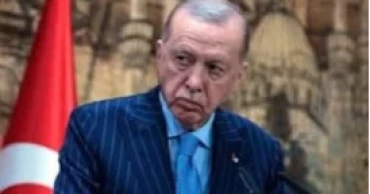
Turkey detains over 200 suspects in Ankara security sweep ahead of NATO summit
Turkish security forces have detained more than 200 people in a large-scale operation in the capital Ankara ahead of next month’s NATO summit, targeting individuals suspected of having links to extremist groups, including the Islamic State (IS) group.
US President Donald Trump is expected to join leaders of the 32-member military alliance at the NATO summit scheduled for July 7-8 in Ankara.
Turkish authorities are preparing extensive security arrangements for the event. Planned measures include restrictions on demonstrations, tighter controls on roads leading to airports, and security cordons around the summit venue and hotels hosting foreign delegations.
The government of President Recep Tayyip Erdogan has placed strong emphasis on security, and similar operations are carried out regularly. Last month, authorities detained 324 people across the country over suspected ties to the Islamic State group.
According to the Ankara Chief Prosecutor’s Office, prosecutors issued detention warrants for 241 suspects early Tuesday. By later in the day, police and gendarmerie teams had arrested 209 of them during coordinated raids across the capital. Efforts to detain the remaining suspects were continuing.
Officials said those detained included 56 suspected members of the Islamic State group and 35 alleged members of the Revolutionary People's Liberation Party/Front (DHKP-C), a far-left militant organization known for carrying out armed attacks and assassinations in Turkey.
The Islamic State group has been responsible for several deadly attacks in Turkey over the years, including the 2017 New Year’s Eve attack on an Istanbul nightclub that left 39 people dead.
1 month ago

AI is reinforcing gender bias, online abuse and workplace inequality, UN Women warns
As artificial intelligence becomes increasingly embedded in daily life, from drafting emails and preparing presentations to designing marketing campaigns, UN Women has raised concerns that the technology is reinforcing long-standing gender stereotypes, intensifying online abuse and sidelining women from critical decisions about the future of AI.
The agency issued the warning ahead of the United Nations Global Dialogue on Artificial Intelligence Governance and the AI for Good Global Summit, scheduled to take place in Geneva in early July.
It called on governments, technology firms and developers to integrate gender equality into every stage of AI development, deployment and governance.
Recent studies suggest that while generative AI is transforming how billions of people work and access information, it is also perpetuating existing inequalities through biased algorithms and discriminatory outputs.
In the United Kingdom, for example, 88 per cent of advertising and media agencies have already adopted AI technologies in some capacity.
According to UN Women, evidence shows that gender and racial bias remain widespread across AI systems. An analysis of 133 AI models found that 44 per cent exhibited gender bias, while more than one-quarter demonstrated both gender and racial bias.
Researchers have repeatedly found that large language models tend to associate women with domestic responsibilities such as childcare and family life, while linking men to leadership, business and professional achievement. Some AI-generated outputs have also portrayed women as sexual objects or as subordinate to men.
UN Women noted that when researchers asked AI systems to complete sentences that began with a person's gender, roughly one in five responses contained sexist or misogynistic content. Some responses even depicted women as property or objects.
Experts say these outcomes are not isolated mistakes but a recurring pattern across AI platforms. According to UN Women, the biases reflect decades of unequal representation embedded in the data used to train these systems.
Speaking to UN News, Jayathma Wickramanayake, UN Women Lead on Digital Technologies, explained that AI models “pull bias from decades of text written by people, about people, in a world where women were filed under home and family, and men were filed under business and career”.
She warned that the issue extends beyond technical shortcomings. For Ms. Wickramanayake, the most worrisome part is that this is not a design flaw – “it’s a real policy gap that was left wide open”.
The agency pointed out that among 138 countries assessed worldwide, only 24 explicitly mentioned gender in their national AI strategies, while just 18 included substantial gender-responsive measures.
For the UN Women digital expert, this isn’t a bug waiting to be fixed in the next update, “it’s a choice that we make over and over in training data, in design rooms, in policy documents that stay silent on half of the population”.
Beyond stereotypes, UN Women warned that AI is also contributing to growing online safety risks for women and girls. Existing forms of digital abuse are becoming easier to create, distribute and scale through AI-powered tools.
Data collected by the agency show that nearly one in four surveyed women human rights defenders, activists and journalists reported experiencing AI-assisted online violence. Twelve per cent said their personal images had been shared without consent, while six per cent reported being targeted through deepfake content or manipulated images and videos.
As AI-generated content becomes more common, concerns are increasing that harassment, misinformation and image-based abuse will become more difficult to identify and prevent.
UN Women also expressed concern over the limited representation of women in the industries responsible for building AI technologies. According to the International Labour Organization (ILO), women make up only 30 per cent of the global AI workforce despite the sector’s rapid growth.
The agency warned that the people designing AI systems do not adequately reflect the diversity of the populations these technologies are intended to serve. Without stronger participation from women and other underrepresented groups, existing biases could become permanently embedded in future technologies.
The economic consequences of AI are also expected to affect women disproportionately. UN Women noted that women are nearly twice as likely as men to work in occupations facing a high risk of automation outside the AI sector. Factors such as race, disability, income level and geographic location could further deepen these inequalities.
As labour markets continue to evolve under the influence of artificial intelligence, communities already facing exclusion may be pushed further behind unless governments adopt targeted interventions, the agency said.
At the same time, UN Women stressed that addressing bias is not only a matter of fairness and human rights but also a sound business strategy.
Research conducted by the Unstereotype Alliance, a UN Women-led initiative, found that advertising free from gender stereotypes consistently delivers stronger commercial performance. Brands using inclusive advertising experienced higher sales growth, stronger customer loyalty and greater pricing power than their competitors.
The agency said businesses that incorporate inclusion into AI-driven marketing and content creation are likely to benefit from stronger reputations and improved financial performance, while those that fail to do so may face commercial and reputational risks.
To help address these challenges, the Unstereotype Alliance launched a playbook in June 2026 designed to help marketers identify and eliminate bias whenever they use generative AI tools.
Despite the risks, UN Women emphasised that artificial intelligence also has significant potential to advance inclusion when developed responsibly. The technology can be used to identify and reduce stereotypes, increase representation and improve accessibility for people who are often overlooked by existing systems.
The agency stressed that achieving these benefits will depend largely on who participates in designing AI systems and whether the experiences of women and girls are reflected throughout the technology's lifecycle.
As policymakers, technology companies and international organisations prepare to gather in Geneva next month, UN Women delivered a clear message: excluding women and girls from the development of AI risks carrying historic inequalities into the technologies of the future.
The agency concluded that when designed safely and deployed intentionally, AI can help counter the very harms now being documented by detecting stereotypes rather than reproducing them, expanding representation rather than narrowing it, and improving accessibility on a large scale.
1 month ago
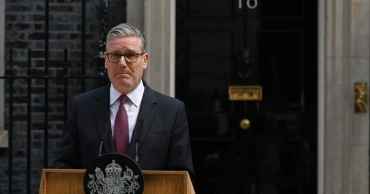
A decade after Brexit, political divisions still shape Britain
Ten years after Britons voted to leave the European Union, Brexit continues to influence the country's politics, economy and public debate, with many of its consequences still unresolved.
The June 23, 2016 referendum, in which 52% voted to leave the EU and 48% voted to remain, triggered one of the most turbulent periods in modern British politics. Then-Prime Minister David Cameron resigned the day after the vote, and the UK is now preparing to welcome its seventh prime minister since the referendum.
Brexit was promoted as a way for Britain to regain control over its laws, economy and borders. Supporters argued it would create new opportunities, while opponents warned of economic costs and political uncertainty.
Historians and political analysts say the campaign tapped into concerns about immigration, dissatisfaction with EU regulations and nostalgia for Britain's past.
Brexit promises met political reality
The years following the referendum were marked by difficult negotiations with the EU and fierce political disputes at home.
Former Prime Minister Theresa May resigned in 2019 after failing to secure parliamentary backing for her Brexit deal. Her successor, Boris Johnson, pledged to "get Brexit done" and eventually completed Britain's departure from the bloc in 2020.
However, analysts say many of the promises made during the campaign proved difficult to deliver. Trade barriers with Europe increased, political divisions deepened and debates over immigration continued.
Successive leaders, including Liz Truss, Rishi Sunak and most recently Labour Prime Minister Keir Starmer, have struggled with the economic and political challenges that followed Brexit.
Traditional parties weakened
Brexit also reshaped Britain's political landscape.
The issue intensified divisions within both the Conservative and Labour parties. Pro-EU and pro-Brexit factions clashed internally, while many voters turned away from the two major parties in favour of alternatives such as the Green Party and Reform UK.
Reform UK leader Nigel Farage, one of the most prominent Brexit supporters, has emerged as a major political beneficiary. His party now regularly performs strongly in opinion polls.
Economic and social challenges remain
Britain's economy has faced a difficult decade, with businesses adapting to new trading arrangements with Europe while also dealing with the impacts of the COVID-19 pandemic and international conflicts.
Public frustration has grown as many voters feel politicians have failed to deliver better public services, lower taxes and stronger economic growth at the same time.
Immigration remains one of the country's most divisive issues. Although migration patterns changed after Brexit, political debate over border control has remained intense.
Analysts also point to rising public distrust in politicians and growing political polarization. In recent years, anti-immigration protests and unrest have highlighted deeper social tensions.
Growing "Bregret"
Public opinion has gradually shifted since the referendum. Recent surveys suggest more Britons now support rejoining the EU than oppose it.
At the weekend, hundreds of people marched through London calling for Britain to rejoin the bloc, though the demonstrations were much smaller than those seen during the height of the Brexit debate.
Despite this, political leaders remain cautious about reopening the issue, and experts say any move to rejoin the EU would be a lengthy and complicated process.
Political analyst Chris Grey said Brexit continues to act like a lingering problem beneath many of Britain's current challenges.
He compared it to a chronic illness that has not been fully addressed, warning that the country could continue to face a period of political and economic uncertainty unless its long-term effects are confronted.
1 month ago
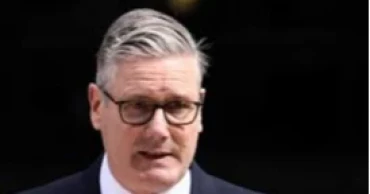
Keir Starmer announces resignation as UK Prime Minister
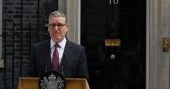
British Prime Minister Keir Starmer announced on Monday that he is stepping down as leader of the Labour Party, setting the stage for the United Kingdom to appoint its seventh prime minister in just over ten years.
Starmer, whose Labour Party secured a decisive victory in the 2024 general election, has faced mounting criticism in recent months as a series of political setbacks eroded both his personal popularity and public confidence in the government. He said he would remain in office as caretaker prime minister until Labour members elect a new leader in the coming weeks.
The leading contender to succeed him is Andy Burnham, who recently won a special parliamentary election and has emerged as the favorite in the leadership race.
In a brief but emotional statement outside 10 Downing Street, Starmer acknowledged that many within his party no longer believed he was the right person to lead Labour into the next general election.
“The question my party is asking now is whether I am best placed to lead us into the next general election,” he said. “I have heard the answer of my parliamentary party to that question, and I accept that answer with good grace.”
As Starmer delivered his remarks, demonstrators nearby played Beethoven’s “Ode to Joy,” the anthem of the European Union.
Speculation about his departure had intensified over the weekend following Burnham’s victory in the special election. Burnham, formerly the Labour mayor of Greater Manchester, had positioned himself as a challenger to Starmer’s leadership and is expected to be sworn in as a member of Parliament on Monday.
If confirmed, Starmer’s departure would make him the sixth British prime minister in a decade to leave office before completing a full term.
1 month ago