Others
Australian police seize record 3 tonnes of cocaine
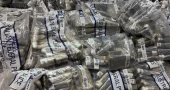
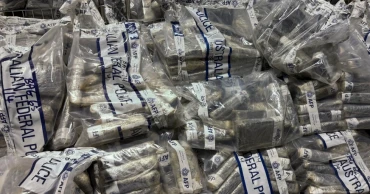
Police found 2.7 metric tons (3 tons) of cocaine on a property on Sydney’s outskirts in Australia’s largest ever seizure of the drug, officials said on Monday.
The drug was found on June 19 in plastic tubs buried in underground bunkers hidden beneath three shipping containers on a semirural property in the suburb of Londonderry on Sydney’s western edge, the Queensland Joint Organized Crime Taskforce said in a statement.
The containers had false floors that provided access to the cocaine, which police estimate had a street value of 816 million Australian dollars ($572 million). Two Sydney residents, men aged 21 and 25, were arrested at the property and charged with possessing a commercial quantity of an illicit drug. They face potential sentences of life in prison.
Australia’s previous record cocaine haul was 2.34 metric tons (2.58 tons) seized in 2024 from a fishing boat near K’gari, formerly known as Fraser Island, off the Queensland state coast.
Police said the cocaine found in Sydney, the capital of New South Wales state and Australia's most populous city, landed by boat at Midge Point in the sparsely-populated Queensland tropics. They allege that a Sydney organized crime group transported the drug by road to the city, a distance of 1,800 kilometers (1,100 miles), police said.
Police added that they suspect the shipment was landed from the same mother ship as 178 kilograms (392 pounds) of cocaine previously seized in Queensland. Six people have been charged over that cocaine and 142 kilograms (313 pounds) of methamphetamine that was also found in the investigation.
They suspect the mother ship to be MV Wealth, a Belize-flagged cargo ship that has been seized by authorities in Solomon Islands on suspicion of involvement in transitional organized crime.
The Solomons are 2,000 kilometers (1,200 miles) northeast of Queensland.
Australian Federal Police Commander Stephen Jay said organized crime groups were increasingly targeting Queensland’s 13,000-kilometer (8,000-mile) coastline to smuggle drugs.
Australians pay some of the world’s highest prices for cocaine, which makes Australia a lucrative market for drug traffickers.
1 month ago
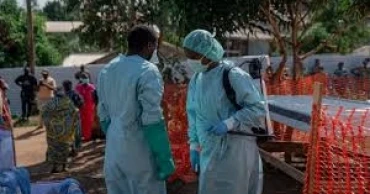
Ebola cases in Eastern Congo surpass 1,000 as death toll reaches 254
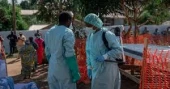
The Ebola outbreak in eastern Congo has exceeded 1,000 confirmed infections, with 254 fatalities reported so far, according to health authorities. Officials warned that tracking individuals who may have been exposed to the virus remains one of the biggest obstacles to containing the disease.
Since the outbreak was officially declared on May 15 in Ituri province, 100 patients have recovered. The Ministry of Health also reported that at least 365 infected individuals are currently receiving treatment in hospitals or remaining in isolation.
The outbreak, caused by the uncommon Bundibugyo strain of the Ebola virus, has become the most severe recorded during its first month. As no approved vaccine or specific treatment exists for this strain, authorities fear the actual number of infections could be significantly higher than reported, with the outbreak likely yet to reach its peak.
Health officials said contact tracing efforts have reached only 55% of identified contacts, highlighting ongoing challenges in monitoring the spread of the virus. Authorities have not yet determined the outbreak’s initial source case and continue efforts to locate and monitor more than 35,000 people who may have been exposed.
Response operations have been further complicated by persistent insecurity in eastern Congo. In Ituri province, attacks by the Allied Democratic Forces, a rebel group linked to the Islamic State, have restricted access to numerous communities and displaced large numbers of residents. Many affected people are living in crowded camps or moving frequently, making disease surveillance more difficult.
More than a month into the crisis, officials acknowledge that the outbreak appears to be spreading faster than response measures can contain it, leaving uncertainty about its true extent.
Speaking to The Associated Press last week, Africa CDC Director-General Dr. Jean Kaseya emphasized the importance of identifying the outbreak’s first known case. He noted that without knowing when and where the outbreak began, controlling its spread becomes considerably more challenging.
1 month ago
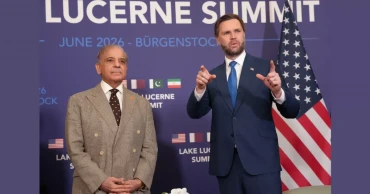
High-level US-Iran negotiations wrap up, focus shifts to Lebanon de-confliction
High-level negotiations in Switzerland seeking a permanent end to the Iran war ended early Monday, with lower-level talks planned for the rest of the week as Iran and the United States agreed to create a “de-confliction cell” to address the fighting in Lebanon.
A statement from mediators Pakistan and Qatar said the cell would include the Lebanese government and would “ensure the adherence of the termination of military operations in Lebanon." But it remains unclear whether that will be enough to stop fighting between the Iranian-backed militia Hezbollah and Israel, which occupies Lebanon and insists it must maintain a free hand to attack militants who are launching attacks into northern Israel.
The U.S. offered no immediate comment, while Iran praised the meditators' work.
The talks marked the start of a 60-day diplomatic process that seeks to reach a permanent deal to end the Iran war. But the fighting in Lebanon remains one of the key sticking points.
Meanwhile, Iran insisted it had again shut the Strait of Hormuz over the weekend, the narrow mouth of the Persian Gulf crucial to energy shipments, while the U.S. said traffic continued.
Tense start to talks
The negotiations had a tense start Sunday in Switzerland, when Tehran took offense at U.S. President Donald Trump's threat to attack and his warning that Iran's president should watch what he says.
“Iran must immediately stop their highly paid PROXIES in Lebanon from causing trouble,” Trump said on social media. “If they don’t, we’ll hit Iran very hard again, just like we did last week, only harder!!!”
The comments from afar — on social media and to news outlets — complicated efforts by Vice President JD Vance and mediators Pakistan and Qatar to keep Iran engaged in discussions.
“They would do better to be careful about their statements," Iran's lead negotiator, Mohammad Bagher Qalibaf, said on X after Trump's comments. "Our armed forces are prepared to respond to them in a different manner. They may keep talking, it is we who act.”
But later, Iranian Foreign Minister Abbas Araghchi wrote on X that “Tireless Pakistani and Qatari mediation has delivered major progress to end Lebanon War.” He said the first “real test” of negotiations would be whether the deconfliction cell succeeded in halting the fighting in Lebanon.
Vance and U.S. negotiators including Steve Witkoff and Jared Kushner, Trump’s son-in-law, had met with Qalibaf and Araghchi for what Iranian state media said was about 80 minutes.
Pakistan and Qatar after the meeting said lower-level technical talks would continue in Switzerland for the rest of the week. Such talks aim at producing the breakthroughs needed for high-level officials to return and sign agreements.
A senior U.S. diplomat engaged in the talks, speaking on condition of anonymity to describe private discussions, said the talks Sunday included clarifying what Iran meant by recent statements about the Strait of Hormuz. Negotiators also discussed “mechanisms” to ensure the strait remains open and that a ceasefire in southern Lebanon is enforced, along with “robust” discussions on the nuclear issue.
Iran first wants to focus on Israeli strikes in Lebanon
Negotiators are in a 60-day sprint to reach an agreement on the technical details that hold massive implications for the world economy and global security.
“The question before us now is how much more can we accomplish together? Can we turn over a new leaf?” Vance said as the talks began, and asked whether they could “change relations in the Middle East permanently.”
The U.S. wants Iran locked into negotiations over its nuclear program amid concerns it may be used for military purposes, which Iran denies. Vance also wants Tehran to commit to keeping open the Strait of Hormuz, which Iran on Saturday claimed to close. The U.S. has disputed that, saying shipping traffic continued Sunday.
A renewed ceasefire in Lebanon, brokered on Saturday, appeared to be holding, and Israel's military said it would lift movement restrictions for residents near the border with Lebanon on Monday morning — another sign of calm.
But neither Israel nor Hezbollah is a signatory to the U.S.-Iran deal, and Israeli Prime Minister Benjamin Netanyahu has vowed to keep his forces in southern Lebanon until any threat to Israel is eliminated. Hezbollah has refused to halt attacks unless Israel commits to withdrawing.
Sharp words are exchanged over Iran's nuclear program
The agreement signed by Trump and Iranian President Masoud Pezeshkian immediately allows Tehran to sell its oil freely and paves the way for Iran to tap into billions of dollars in assets that are currently frozen. A member of Iran's negotiating team told state television that draft wording was reached about “temporary sanctions waivers for oil and petroleum derivatives."
The agreement also calls for Iran to dilute its stockpile of highly enriched uranium, believed to be buried under nuclear sites that were targeted in U.S. strikes a year ago.
Pezeshkian, however, declared Sunday that "we will never back down from the right to enrich uranium, and the other side is also forced to accept it,” according to Iran’s state media.
Trump, in a telephone interview with Fox News, later warned that the Iranian president should watch what he says and threatened to take over Iran, in comments relayed by a Fox correspondent.
Iran had cautiously approached the talks given its previous experience with U.S. negotiations on the nuclear issue, which twice in the past year were interrupted by military strikes.
The deal has stirred controversy
Trump and Vance have come under searing criticism from parts of their own party for the deal, with Republican hard-liners unfavorably likening it to the nuclear agreement signed by the Obama administration that Trump and Republicans have insisted did nothing to terminate Iran’s nuclear program.
The new agreement says commercial vessels can pass through the Strait of Hormuz for 60 days without charge, but does not preclude future fees imposed by Iran. Trump made his own threat Saturday to levy U.S. tolls if there is no deal with Iran in 60 days, insisting that the money would be for “services rendered as the Guardian Angel to the countries of the Middle East.”
The Trump administration has been working to reassure global markets that the war has been merely a blip on oil prices, as Americans complain about high gasoline prices ahead of peak summer travel. After the deal was announced, oil futures dropped almost 8%.
1 month ago
Ukrainian drone attacks kill 5 across multiple Russian regions
Ukrainian drone attacks across several Russian regions overnight left at least five people dead and dozens injured on Sunday, according to regional authorities and the Russian Defence Ministry.
In Crimea's Kerch Peninsula, a drone strike killed four people and wounded 28 others, the Crimean governor said. A Russian Health Ministry aide said 14 of the injured remained hospitalized, including two children who were in critical condition.
Russian strike hits historic Kyiv religious site, kills 5 in Kharkiv
In Russia's Krasnodar Krai, east of Crimea, authorities said Ukrainian drones struck a Russian ferry in the Kerch ferry crossing area of Temryuk district, killing one person and injuring another.
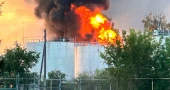
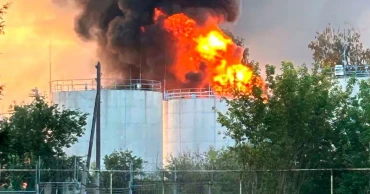
An oil terminal in Temryuk district also came under a Ukrainian drone attack.
"A drone attack caused a fire at an oil terminal in the village of Chushka. Fire and rescue units have arrived," a local task force said, adding that debris from downed drones fell on private homes in two other municipalities in the region, though no injuries were reported.
In the southwestern Crimean city of Sevastopol, authorities said a Ukrainian drone carrying explosives fell onto the roof of an apartment building in the city centre after being jammed by electronic warfare systems. The building was evacuated as a precaution, and bomb disposal experts removed explosives from the wreckage. No casualties were reported.
The Russian Defence Ministry said its air defence systems had shot down 239 Ukrainian drones overnight.
1 month ago
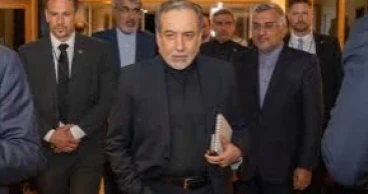
US, Iran set for Switzerland talks as Tehran again claims closure of Strait of Hormuz
American and Iranian negotiators are scheduled to meet in Switzerland on Sunday to discuss the next phase of an interim agreement aimed at ending ongoing regional hostilities, amid renewed tensions over Iran’s claim that it has shut down the Strait of Hormuz.
The talks come after Tehran announced that the strategic waterway had been closed in response to Israel’s military operations in Lebanon, warning that progress in negotiations could be limited if the conflict continues.
US President Donald Trump responded by threatening to impose transit tolls in the Strait of Hormuz if a comprehensive agreement with Iran is not reached within 60 days. Under the interim arrangement, commercial shipping is currently allowed to pass through the waterway without charges during the negotiation period.
Pakistan, which has been playing a mediating role, said technical-level discussions will begin Sunday with participation from Qatari mediators.
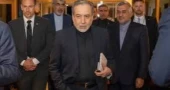
US Vice President JD Vance departed for Switzerland on Saturday, while Iranian state media showed members of Tehran’s delegation arriving in the country. The Iranian team is headed by Parliament Speaker Mohammad Bagher Qalibaf and includes Foreign Minister Abbas Araghchi, central bank officials and energy sector representatives.
Pakistan Prime Minister Shehbaz Sharif and Army Chief Field Marshal Asim Munir also travelled to Switzerland ahead of the talks.
Negotiations had originally been scheduled to start Friday but were postponed after intensified fighting in Lebanon prompted Iran to withdraw temporarily. US and regional officials said mediators later secured understandings aimed at reducing hostilities between Israel and the Iran-backed Hezbollah group.
Vance expressed optimism about progress on both Iran’s nuclear programme and efforts to secure a ceasefire in southern Lebanon. He confirmed that senior US negotiators Jared Kushner and Steve Witkoff were already in Switzerland.
However, Iranian Foreign Ministry spokesman Esmail Baghaei stressed that discussions on a final settlement would only proceed if commitments under the interim agreement are fully implemented.
The Strait of Hormuz emerged once again as a major point of contention. Iran’s military command claimed the waterway was closed due to what it described as a US failure to uphold commitments to help end regional fighting.
The United States rejected the claim, insisting that maritime traffic continued uninterrupted. US Central Command said 55 merchant vessels carrying more than 17 million barrels of oil transited the strait on Saturday under military monitoring.
The interim accord, signed earlier this week by Trump and Iranian President Masoud Pezeshkian, includes provisions for easing restrictions on Iranian oil exports and unfreezing billions of dollars in Iranian assets. Negotiators have been given 60 days to reach a broader nuclear agreement, although the timeline could be extended.
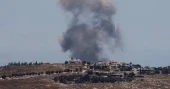
Meanwhile, violence continued in Lebanon. Israeli strikes on southern parts of the country killed at least 16 people, including two children, according to Lebanese media reports. Several people were also reported trapped beneath rubble in affected areas.
An Israeli military official said the army had received updated instructions to halt offensive operations while maintaining the right to respond to attacks. The official also confirmed that five Israeli soldiers had been killed in southern Lebanon during the past two days.
A Hezbollah official said Iran had informed the group that the Strait of Hormuz would remain closed until Israel publicly commits to a comprehensive ceasefire in Lebanon and ends military operations there. Hezbollah, the official said, would also observe a ceasefire if Israel does the same.
Despite diplomatic efforts, neither Israel nor Hezbollah is formally party to the US-Iran agreement.
The latest escalation has pushed the death toll from the Israel-Hezbollah conflict beyond 4,000, according to Lebanon’s Health Ministry.
Fresh US-backed discussions involving Lebanon and Israel are expected to take place in Washington next week as international efforts continue to secure a broader ceasefire.
Israeli Prime Minister Benjamin Netanyahu has maintained that Israeli forces will remain in southern Lebanon until all threats are eliminated, while Hezbollah insists it will not stop attacks without an Israeli withdrawal.
Residents on both sides of the border expressed mixed feelings about the prospects for peace, with some hoping for an end to the violence and others remaining skeptical that a lasting ceasefire can be achieved.
1 month ago

Dragon Boat Festival heritage sparks tourism boom in China
From early Friday morning, waterways crisscrossing Chinese cities, towns and villages have been reverberating with the rhythmic splash of paddles and the beat of drums as people celebrate the Dragon Boat Festival.
The festive spectacle offers city residents the perfect outing as they begin their three-day break on Friday, while also drawing villagers from nearby areas to cheer for their hometown teams and join the celebrations.
As traditional culture enjoys a resurgence in China, Dragon Boat Festival celebrations are more lively than ever, sparking increased demand for tourism and cultural products. Their economic and social ripple effects extend well beyond the three-day holiday, giving a sustained boost to local tourism and related industries.
Since May, the Jinjiang River winding through Tongren City in southwest China's Guizhou Province has turned into a training ground for dragon boat racers.
While this centuries-old sport traditionally honors Qu Yuan, a legendary poet and minister in the State of Chu during the Warring States Period (475-221 BC), who drowned himself in the Miluo River after being slandered and then exiled, its modern-day form continues to bring people together and, in particular, strengthens community bonds.
In Tongren, a city steeped in dragon boat racing tradition, even migrant workers return from distant cities to compete for the honor of their villages and neighborhoods. This deep-rooted devotion has turned the races into a major tourist attraction.
Last year, Tongren's annual event generated 384 million yuan (about 56.4 million U.S. dollars) in tourism revenue, with some 300,000 spectators packing the banks of the Jinjiang River.
Notably, the influx of visitors is no longer confined to the city center. Increasingly, tourists are extending their trips into the countryside, spending their day along the Jinjiang River watching dragon boat races before retreating to mountainous homestays in the evening.
In the nearby Banliyuan Village, bookings at local lodgings are already surging ahead of this year's event. Tang Chengyong, general manager of a homestay complex, said his property, which offers 25 rooms and 47 beds, was fully booked during last year's Dragon Boat Festival holiday. As of June 16, reservations for this year's holiday had already reached 80 percent capacity, with about 90 percent of guests from outside the province.
1 month ago
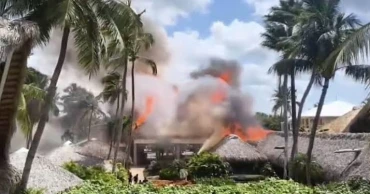
Massive fire ravages Dominican Republic resort, forcing evacuation of nearly 1,700 tourists
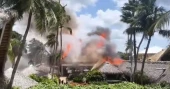
A devastating fire swept through a luxury beach resort in the Dominican Republic on Friday, causing extensive damage and forcing the evacuation of nearly 1,700 guests, according to authorities.
Local reports said an Italian tourist lost his life in the incident, while several others received medical treatment.
The affected property, Viva Dominicus Beach by Wyndham, is situated in Bayahibe, a well-known tourist destination on the country's southeastern coast that attracts visitors from the United States and around the world.
Officials said approximately 1,690 tourists were relocated to nearby hotels and accommodation facilities after the massive blaze engulfed much of the resort.
Authorities have launched an investigation into the cause of the fire. The country's emergency management agency said strong winds and sections of the resort's thatched roof likely contributed to the rapid spread of the flames.
A nearby sister property, Viva Wyndham Dominicus Palace, was not affected by the fire and continued operating normally, officials added.
1 month ago
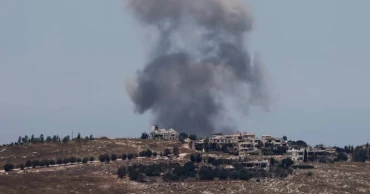
Truce reached between Israel and Hezbollah amid delays in US-Iran negotiations
Israel and the Hezbollah militant group, which is backed by Iran, have reportedly agreed to stop the intense fighting in southern Lebanon, according to regional and U.S. officials. However, neither side has officially confirmed the ceasefire. The development comes as ongoing tensions threaten a broader U.S.-Iran agreement aimed at ending their conflict and restarting nuclear negotiations.
The reported truce followed a deadly exchange of attacks that left 47 people dead in Lebanon and four Israeli soldiers killed. Since the wider regional conflict began, Hezbollah has launched rockets and drones into northern Israel, while Israeli forces have carried out operations across large areas of southern Lebanon.
The broader U.S.-Iran agreement has already led to the reopening of the Strait of Hormuz, restoring a critical route for global oil and natural gas supplies. It is also intended to revive negotiations over Iran’s nuclear program, a central issue behind the conflict that began on February 28. However, renewed violence in Lebanon has complicated these efforts and delayed planned talks in Switzerland.
Under the agreement, military activity in Lebanon is supposed to cease and the country’s sovereignty should be respected, although neither Israel nor Hezbollah is directly involved in the deal. Israeli Prime Minister Benjamin Netanyahu has stated that Israeli troops will remain in southern Lebanon until security threats are eliminated, while Hezbollah insists it will continue its attacks unless Israel commits to withdrawing from Lebanese territory.
Despite reports of a ceasefire, clashes appeared to continue along the border. Journalists reported hearing Israeli artillery fire and witnessing explosions inside Lebanon after the supposed start time of the truce.
The ceasefire effort was reportedly brokered by Qatar, the United States, and Iran. A Hezbollah representative suggested that an announcement could be made soon but stopped short of confirming that an agreement had already taken effect. Israeli officials also indicated that military operations would continue until they received different instructions from the government.
Meanwhile, planned nuclear discussions in Switzerland faced setbacks. Iranian officials refused to attend while fighting in Lebanon continued, and U.S. Vice President JD Vance postponed his trip as well. According to Iranian officials, negotiations toward a final agreement are still ongoing through mediators, and a meeting may be rescheduled in the coming days.
On the battlefield, four Israeli soldiers, including a lieutenant colonel, were killed in an attack on a tank near Nabatiyeh in southern Lebanon. Israel responded with airstrikes targeting what it described as Hezbollah infrastructure. Hezbollah claimed responsibility for attacks on Israeli tanks, saying they were a response to Israeli actions that violated the ceasefire.
The violence has displaced many residents in southern Lebanon, forcing families to flee their homes. The ongoing conflict has also strained relations between Israel and the United States, with President Donald Trump reportedly becoming increasingly critical of Netanyahu, who is facing growing domestic pressure.
Future negotiations are expected to focus on Iran’s nuclear program. While Tehran insists its nuclear activities are peaceful, concerns remain due to its stockpile of highly enriched uranium. Reaching a long-term agreement is expected to be difficult, as previous nuclear negotiations took more than a year and a half.
The temporary deal allows negotiators 60 days to reach a permanent nuclear agreement, with the possibility of extending the deadline. It also offers significant incentives for Iran, including the gradual removal of international sanctions and access to a $300 billion postwar reconstruction fund.
Iran has already secured some benefits under the interim arrangement. The United States has eased restrictions on Iranian ports and oil exports, and provisions are in place for frozen Iranian assets to be released, although the timeline remains uncertain.
1 month ago
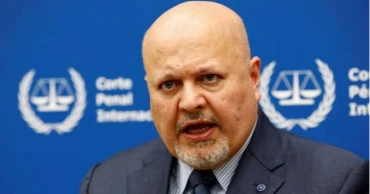
ICC chief prosecutor Karim Khan suspended from British bar
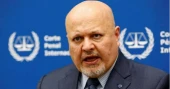
The chief prosecutor of the International Criminal Court (ICC), Karim Khan, has been temporarily suspended from practicing law by Britain's legal regulator as disciplinary proceedings move forward over allegations of misconduct.
The Bar Standards Board (BSB), which regulates barristers in England and Wales, announced Friday that Khan had been suspended pending a hearing expected within four weeks. The decision comes days after the ICC’s oversight body concluded that he had engaged in “serious misconduct” and committed a “serious breach of duty.”
Khan, 56, was formally relieved of his duties at the ICC last week following recommendations by the Bureau of the Assembly of States Parties, the executive committee of the court’s governing body. Member states are scheduled to vote next month on whether to permanently remove him from office.
The British lawyer has strongly denied all allegations against him. His legal team said the BSB’s decision was based on the findings of the ICC oversight body and stressed that Khan “unequivocally denies all allegations of impropriety.” They added that they would challenge the conclusions reached by the Bureau.
The case stems from allegations that Khan engaged in an inappropriate relationship and sexual misconduct involving a female staff member. The controversy has overshadowed the Hague-based court for more than two years.
According to earlier reports, Khan allegedly transferred the woman from another department into his office. In 2025, he temporarily stepped aside from his responsibilities while a United Nations investigation examined the claims.
A report by the UN Office of Internal Oversight Services released in April found evidence suggesting Khan had engaged in non-consensual sexual contact with the aide in several locations, including his office, private residence and during an official mission. However, a separate three-judge panel tasked with reviewing the findings concluded that the evidence was not sufficiently conclusive.
The final decision regarding Khan’s future now rests with the 125-member Assembly of States Parties, which oversees the ICC. A special session has been scheduled for July 24 in New York to vote on his removal. According to officials involved in the process, at least 63 member states would need to support the motion for it to pass.
The embattled prosecutor is also facing pressure from the United States. The administration of US President Donald Trump has imposed sanctions on Khan and several other ICC officials over the court’s investigations involving Israel and American personnel.
The ICC issued arrest warrants in 2024 for Israeli Prime Minister Benjamin Netanyahu and Israel’s former defence minister, alleging there were grounds to believe they had used starvation as a method of warfare and intentionally targeted civilians during Israel’s military campaign in Gaza. Israeli authorities have rejected the accusations.
Diplomatic sources told AP that some countries believe the allegations against Khan may be linked to efforts to undermine the court’s investigations into Israel. However, no evidence has been publicly presented to support that claim.
For the past year, two deputy prosecutors have been carrying out Khan’s responsibilities, and it remains unclear who would succeed him if member states vote to remove him permanently.
1 month ago
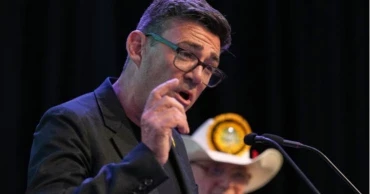
Labour’s Andy Burnham wins by-election, intensifying leadership pressure on UK PM Starmer
Andy Burnham, the Mayor of Greater Manchester, has won a parliamentary by-election in northwest England, a result that could set up a direct leadership challenge to British Prime Minister Keir Starmer.
Burnham secured a clear victory in the Makerfield seat, defeating Rob Kenyon of the anti-immigration Reform UK party. He won nearly 55% of the 45,510 votes cast in a crowded field of more than a dozen candidates, finishing more than 9,000 votes ahead of his nearest rival.
The result strengthens Burnham’s position as a leading figure in the Labour Party and fuels speculation that he could seek to replace Starmer as both party leader and prime minister. Known as the “King of the North,” the 56-year-old politician has led Greater Manchester since 2017 and is widely seen as a popular figure within Labour’s ranks.
In his victory speech, Burnham signalled clear national ambitions.
“Everyone knows that politics isn’t working. Everyone can feel that the country isn’t where it should be. Tonight could, just could, be the turning point,” he said.
He also said Labour had “a final chance to change” and rebuild public trust, calling for “a new politics based on unity and hope” and warning against what he described as a “divided, dark politics” seen elsewhere.
Starmer congratulated Burnham but defended his own leadership, saying voters backed Labour’s “campaign of hope and optimism over division and hate,” in a post on X.
Labour currently holds power but has faced growing public dissatisfaction since its landslide win in July 2024. Starmer has struggled with sluggish economic growth, strained public services, and cost-of-living pressures, along with political setbacks including controversial appointments.
The party is also losing support to both the Green Party on the left and the Reform UK party on the right, which has gained ground in post-industrial areas such as Makerfield.
Burnham’s win is being seen as a boost for Labour’s chances of countering Reform UK’s rise. Reform leader Nigel Farage said he was “disappointed” by the outcome.
The result follows months of internal pressure on Starmer after poor local election results in May led to calls from some Labour MPs for him to step down. While Starmer has rejected those demands, speculation over his leadership has continued to grow.
Former health secretary Wes Streeting resigned in May, warning of a “vacuum” in leadership vision, and has said he would consider running if a contest opens. Makerfield MP Josh Simons stepped down to trigger the by-election, clearing the way for Burnham’s return to Parliament.
Under Labour rules, a leadership challenge can be triggered if at least 20% of Labour MPs back a candidate, currently around 81 lawmakers.
Burnham is expected to take his seat in Parliament soon and may push for talks with Starmer on the party’s future direction. Allies suggest he would favour an orderly transition rather than a sudden confrontation.
However, Starmer has insisted he will not resign and told reporters at the G7 summit that he would “fight if there’s a challenge,” saying he remains committed to the mandate given in the 2024 election.
Political observers say Burnham’s return to Westminster significantly increases pressure on Starmer, especially after defeating Reform UK in a key battleground seat.
Analysts note that Burnham’s victory strengthens his claim that he can reconnect Labour with voters in areas where the party is losing ground.
Professor Rob Ford of the University of Manchester said the result makes it harder for Starmer to ignore internal pressure, arguing that Burnham now has a strong political narrative built around electoral success and voter appeal.
1 month ago