Others
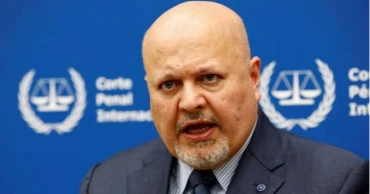
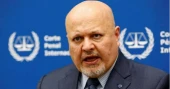
ICC chief prosecutor Karim Khan suspended from British bar
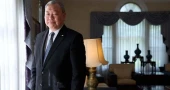
The chief prosecutor of the International Criminal Court (ICC), Karim Khan, has been temporarily suspended from practicing law by Britain's legal regulator as disciplinary proceedings move forward over allegations of misconduct.
The Bar Standards Board (BSB), which regulates barristers in England and Wales, announced Friday that Khan had been suspended pending a hearing expected within four weeks. The decision comes days after the ICC’s oversight body concluded that he had engaged in “serious misconduct” and committed a “serious breach of duty.”
Khan, 56, was formally relieved of his duties at the ICC last week following recommendations by the Bureau of the Assembly of States Parties, the executive committee of the court’s governing body. Member states are scheduled to vote next month on whether to permanently remove him from office.
The British lawyer has strongly denied all allegations against him. His legal team said the BSB’s decision was based on the findings of the ICC oversight body and stressed that Khan “unequivocally denies all allegations of impropriety.” They added that they would challenge the conclusions reached by the Bureau.
The case stems from allegations that Khan engaged in an inappropriate relationship and sexual misconduct involving a female staff member. The controversy has overshadowed the Hague-based court for more than two years.
According to earlier reports, Khan allegedly transferred the woman from another department into his office. In 2025, he temporarily stepped aside from his responsibilities while a United Nations investigation examined the claims.
A report by the UN Office of Internal Oversight Services released in April found evidence suggesting Khan had engaged in non-consensual sexual contact with the aide in several locations, including his office, private residence and during an official mission. However, a separate three-judge panel tasked with reviewing the findings concluded that the evidence was not sufficiently conclusive.
The final decision regarding Khan’s future now rests with the 125-member Assembly of States Parties, which oversees the ICC. A special session has been scheduled for July 24 in New York to vote on his removal. According to officials involved in the process, at least 63 member states would need to support the motion for it to pass.
The embattled prosecutor is also facing pressure from the United States. The administration of US President Donald Trump has imposed sanctions on Khan and several other ICC officials over the court’s investigations involving Israel and American personnel.
The ICC issued arrest warrants in 2024 for Israeli Prime Minister Benjamin Netanyahu and Israel’s former defence minister, alleging there were grounds to believe they had used starvation as a method of warfare and intentionally targeted civilians during Israel’s military campaign in Gaza. Israeli authorities have rejected the accusations.
Diplomatic sources told AP that some countries believe the allegations against Khan may be linked to efforts to undermine the court’s investigations into Israel. However, no evidence has been publicly presented to support that claim.
For the past year, two deputy prosecutors have been carrying out Khan’s responsibilities, and it remains unclear who would succeed him if member states vote to remove him permanently.
1 month ago
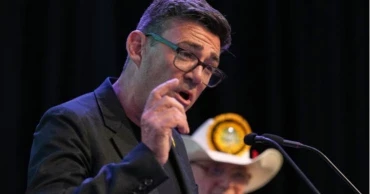
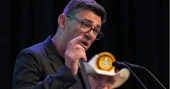
Labour’s Andy Burnham wins by-election, intensifying leadership pressure on UK PM Starmer
Andy Burnham, the Mayor of Greater Manchester, has won a parliamentary by-election in northwest England, a result that could set up a direct leadership challenge to British Prime Minister Keir Starmer.
Burnham secured a clear victory in the Makerfield seat, defeating Rob Kenyon of the anti-immigration Reform UK party. He won nearly 55% of the 45,510 votes cast in a crowded field of more than a dozen candidates, finishing more than 9,000 votes ahead of his nearest rival.
The result strengthens Burnham’s position as a leading figure in the Labour Party and fuels speculation that he could seek to replace Starmer as both party leader and prime minister. Known as the “King of the North,” the 56-year-old politician has led Greater Manchester since 2017 and is widely seen as a popular figure within Labour’s ranks.
In his victory speech, Burnham signalled clear national ambitions.
“Everyone knows that politics isn’t working. Everyone can feel that the country isn’t where it should be. Tonight could, just could, be the turning point,” he said.
He also said Labour had “a final chance to change” and rebuild public trust, calling for “a new politics based on unity and hope” and warning against what he described as a “divided, dark politics” seen elsewhere.
Starmer congratulated Burnham but defended his own leadership, saying voters backed Labour’s “campaign of hope and optimism over division and hate,” in a post on X.
Labour currently holds power but has faced growing public dissatisfaction since its landslide win in July 2024. Starmer has struggled with sluggish economic growth, strained public services, and cost-of-living pressures, along with political setbacks including controversial appointments.
The party is also losing support to both the Green Party on the left and the Reform UK party on the right, which has gained ground in post-industrial areas such as Makerfield.
Burnham’s win is being seen as a boost for Labour’s chances of countering Reform UK’s rise. Reform leader Nigel Farage said he was “disappointed” by the outcome.
The result follows months of internal pressure on Starmer after poor local election results in May led to calls from some Labour MPs for him to step down. While Starmer has rejected those demands, speculation over his leadership has continued to grow.
Former health secretary Wes Streeting resigned in May, warning of a “vacuum” in leadership vision, and has said he would consider running if a contest opens. Makerfield MP Josh Simons stepped down to trigger the by-election, clearing the way for Burnham’s return to Parliament.
Under Labour rules, a leadership challenge can be triggered if at least 20% of Labour MPs back a candidate, currently around 81 lawmakers.
Burnham is expected to take his seat in Parliament soon and may push for talks with Starmer on the party’s future direction. Allies suggest he would favour an orderly transition rather than a sudden confrontation.
However, Starmer has insisted he will not resign and told reporters at the G7 summit that he would “fight if there’s a challenge,” saying he remains committed to the mandate given in the 2024 election.
Political observers say Burnham’s return to Westminster significantly increases pressure on Starmer, especially after defeating Reform UK in a key battleground seat.
Analysts note that Burnham’s victory strengthens his claim that he can reconnect Labour with voters in areas where the party is losing ground.
Professor Rob Ford of the University of Manchester said the result makes it harder for Starmer to ignore internal pressure, arguing that Burnham now has a strong political narrative built around electoral success and voter appeal.
1 month ago
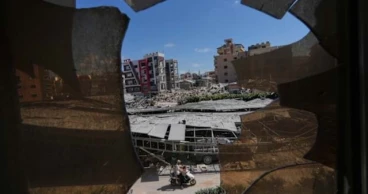
Israeli forces launch fresh strikes in southern Lebanon as US-Iran talks delayed
Israel's military said on Friday that its forces carried out overnight strikes on targets across southern Lebanon, while Hezbollah reported heavy fighting in the area.
The latest clashes came as planned talks between the United States and Iran in Switzerland, aimed at finding a lasting solution to the Iran conflict, were postponed.
Israel's presence in southern Lebanon and its continued military operations against the Iran-backed Shiite group Hezbollah have been among the key issues under discussion.
Israeli officials have argued that the military must maintain control of the area and continue operations against Hezbollah, accusing the group of launching attacks into northern Israel.
The delay in the talks followed a report by pan-Arab satellite channel Al-Mayadeen, which is politically aligned with Hezbollah, saying that Iran had postponed sending its delegation to Switzerland because of Israel's ongoing military campaign in Lebanon.
1 month ago
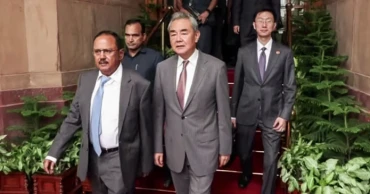
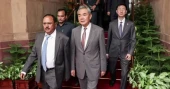
Chinese FM Wang Yi to attend BRICS security meeting in India
Chinese Foreign Minister Wang Yi will attend the 16th Meeting of BRICS National Security Advisers and High Representatives on National Security in India later this month.
“At the invitation of India’s National Security Adviser (NSA) Ajit Doval, Wang Yi, Member of the Political Bureau of the CPC Central Committee and Director of the Office of the Central Commission for Foreign Affairs, will attend the 16th Meeting of BRICS National Security Advisers and High Representatives on National Security to be held in India from June 22 to 23,” a spokesperson for the Chinese Ministry of Foreign Affairs said in a statement on the social media platform X.
1 month ago
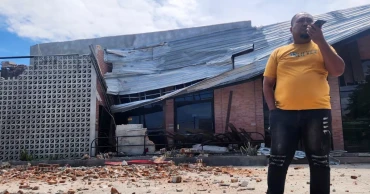
6.7-magnitude quake in Indonesia: Death toll rises to 3
The death toll from a 6.7-magnitude earthquake that struck Indonesia's Central Sulawesi province on Tuesday has risen to three, with 17 people seriously injured, the National Disaster Management Agency (BNPB) said Thursday.
The BNPB also said that 91 people were wounded with minor injuries, while 6,412 people were affected by the disaster. Sigi regency was the worst-hit area, with damage reported in several villages.
The tectonic earthquake struck on Tuesday at 11:27 a.m. local time, with its epicenter located on land about 42 km southeast of Palu City at a depth of 10 km. The earthquake did not trigger a tsunami.
The government has provided emergency supplies, including tents, food packages, mattresses and blankets, while rescue teams continue assessment and relief operations.
1 month ago
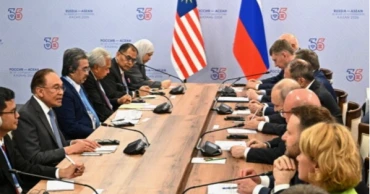
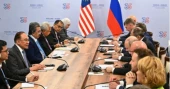
Putin hosts Southeast Asian leaders, pushes for stronger trade ties
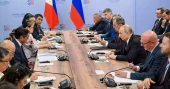
Russian President Vladimir Putin on Wednesday hosted leaders of the Association of Southeast Asian Nations (ASEAN) in a bid to strengthen economic and political ties with the regional bloc.
The two-day meeting is taking place in Kazan and is focused on expanding Russia’s “strategic partnership” with ASEAN members, which include Brunei, Cambodia, Indonesia, Laos, Malaysia, Myanmar, the Philippines, Singapore, Thailand, East Timor and Vietnam, according to Kremlin foreign policy adviser Yuri Ushakov.
Ushakov said ASEAN has long maintained relations with Russia as a “dialogue partner” and has engaged in annual high-level meetings. This year’s summit marks 35 years of Russia-ASEAN relations.
In a message to a business forum held alongside the summit, Putin said the gathering would help create “new opportunities” for expanding trade, investment and industrial cooperation, while also deepening business-to-business contacts.
The Kremlin aide said discussions would also cover global and regional issues, as well as efforts to further develop Russia-ASEAN relations. He added that participants were expected to reaffirm support for a “just and democratic multipolar world order” based on international law and the UN Charter.
Ushakov described Russia-ASEAN engagement as “fruitful, equal and constructive.”
Putin is also holding bilateral meetings with several leaders attending the summit, which he is co-chairing with Philippine President Ferdinand Marcos Jr., whose country currently holds the rotating ASEAN chairmanship.
During a meeting with Marcos, Putin said bilateral cooperation between the two countries was based on “good traditions, mutual respect and consideration of each other’s legitimate interests.” Marcos, in turn, thanked Putin for hosting the summit in Kazan and invited him to the ASEAN summit in Manila in November.
Putin also met Brunei’s Sultan Hassanal Bolkiah and Malaysian Prime Minister Anwar Ibrahim on the sidelines of the event.
Speaking at a reception for delegation heads, Putin said Russia and ASEAN countries jointly support a “fair world order” based on sovereign equality and non-interference in internal affairs.
“All our states follow their own models of development and don’t impose their views on anyone. And this is, indeed, our strength,” he said, adding that Russia was ready to deepen cooperation for the “security, well-being and prosperity” of the region.
Separately, Putin held talks with Turkish Foreign Minister Hakan Fidan, who had also met Russian Foreign Minister Sergey Lavrov a day earlier in Moscow. Putin described Russia-Turkey relations as steadily developing and “truly friendly.”
ASEAN members maintain diverse global alignments, with some closer to the United States and others heavily engaged with China and Russia. Several countries in the bloc, including the Philippines, Indonesia, Thailand and Vietnam, have imported Russian crude oil or shown interest in doing so amid global energy price volatility linked to the war in Iran.
1 month ago
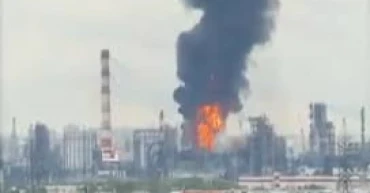
Ukraine strikes Moscow refinery, disrupts air travel in major drone offensive
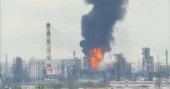
Ukraine launched one of its largest drone assaults since the start of Russia’s full-scale invasion, targeting a major oil refinery in Moscow and causing temporary disruptions to flights at several airports in and around the Russian capital, Russian authorities said Thursday.
The attack hit the Moscow Oil Refinery, one of the country’s largest fuel-processing facilities and a key supplier to the capital region. Russian media footage showed large fires and thick smoke rising from the site, located about 15 kilometers from the Kremlin. The facility had also been targeted earlier this week.
The strike came shortly after Ukrainian President Volodymyr Zelenskyy said he held discussions with U.S. President Donald Trump and French President Emmanuel Macron, describing the talks as important and potentially capable of producing meaningful developments.
According to Zelenskyy, Ukraine also secured additional commitments of support from leaders attending the G7 summit in France, including backing from the United States.
Russian officials reported that air defenses intercepted 555 Ukrainian drones overnight across multiple regions, with nearly 200 heading toward Moscow. Temporary flight restrictions were imposed at four airports serving the capital.
In the Moscow region, drones and falling debris damaged residential and commercial properties, including private homes, a shopping center, a fitness facility and an industrial site. Authorities said one woman was injured. A residential building in the town of Zhukovsky was evacuated after being struck by a drone.
Ukraine has increasingly targeted Russian oil infrastructure in an effort to weaken Moscow’s war financing and bring the effects of the conflict closer to the Russian population.
The latest attack marked another security setback for Russian President Vladimir Putin, following a recent drone strike on St. Petersburg during a major international economic forum.
Speaking on social media, Zelenskyy described the operation as a justified response to Russian attacks on Ukrainian cities and said it was aimed at pressuring Moscow to engage in diplomacy.
Ukrainian Foreign Minister Andrii Sybiha echoed that message, saying Russian citizens should question their leadership about ending the war rather than asking why such attacks are occurring.
Military analysts and Western officials say Ukraine has recently gained momentum through the expanded use of advanced drone technology, enabling it to strike deep inside Russia and disrupt military supply routes in occupied territories.
French President Emmanuel Macron said support for Ukraine remained a key focus of the G7 summit, stressing that continued assistance from Western allies, particularly the United States, was essential for Kyiv's defense and ability to respond to Russian aggression.
1 month ago
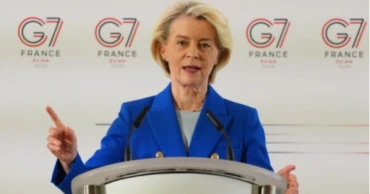
Europe looks to new energy routes after Iran war disrupts fuel supplies
The recent Iran war and the resulting spike in global fuel prices have strengthened the European Union’s push to reduce dependence on vulnerable energy routes, especially those passing through the Strait of Hormuz.
EU leaders are now exploring alternative trade and energy corridors, including new partnerships with Gulf countries and India, to improve energy security and avoid future disruptions caused by conflict.
One of the key proposals under consideration is the India-Middle East-Europe Economic Corridor (IMEC), which would connect Europe with India through the Middle East via transport, energy and digital infrastructure.
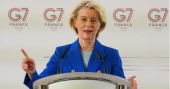
European Commission President Ursula von der Leyen has revived interest in the project, telling G7 leaders that new and more resilient export routes are being developed to diversify supply chains and strengthen Europe’s energy independence.
“We are building alternative routes that offer choices,” she said, referring to IMEC as a major example.
Although the EU has signed a memorandum of understanding on IMEC, only a few of its 27 member states have formally joined the initiative. However, officials say there is strong political backing behind the scenes.
A senior EU diplomat said discussions are now focused on turning the plan into practical projects involving transport links, energy networks and digital connectivity, including possible pipelines and power cables. No official timeline has been announced.
The proposed corridor would pass through Israel, which strongly supports the initiative. Israeli Prime Minister Benjamin Netanyahu has previously described IMEC as a “revolutionary” project after discussions with Indian Prime Minister Narendra Modi.
However, analysts say the success of the plan may depend on broader regional diplomacy, particularly the normalisation of relations between Israel and Saudi Arabia. Saudi Arabia has said such steps would depend on progress toward Palestinian statehood.
The impact of the Iran war has also highlighted Europe’s energy vulnerability. EU officials say the bloc spent an additional €25 billion on oil and gas imports in just the first weeks of the conflict and warned of possible fuel shortages.
EU leaders have said they are open to working more closely with Gulf countries to develop new infrastructure that avoids conflict-prone routes such as the Strait of Hormuz.
Existing infrastructure, such as Saudi Arabia’s East-West Pipeline, which moves oil to the Red Sea, has shown the value of alternative routes, especially during periods of instability.
Experts say early projects are likely to focus on oil and gas pipelines due to faster construction timelines, along with upgrades and repairs to energy facilities affected by recent tensions. Future systems may also be designed to carry hydrogen as part of Europe’s green energy transition.
Another major project under discussion is the Great Seas Interconnector, a planned undersea electricity cable that would link Europe’s power grid with Cyprus and Israel, and potentially extend toward broader regional networks.
Supporters say the project could reduce energy isolation in parts of the Eastern Mediterranean while also contributing to long-term renewable energy goals.
The United States has also shown interest in strengthening energy cooperation in the region, particularly between Greece, Cyprus and Israel, as part of wider efforts to develop Eastern Mediterranean energy resources.
1 month ago
Taiwan needs US weapons for self-defense amid rising China threat, envoy says
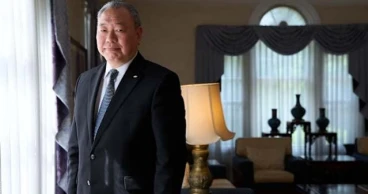
Taiwan needs to continue buying US weapons to strengthen its self-defence capabilities as military pressure from China increases, the island’s top envoy in Washington has said, while noting that US policy toward Taiwan remains unchanged.
Alexander Yui Tah-ray, head of the Taipei Economic and Cultural Representative Office in the United States, said Taiwan is focused on boosting its defence spending and military readiness.
“We need those arms for defensive purposes,” Yui told The Associated Press in an interview in Washington on Wednesday. “We’re trying to increase our defence expenditure. We try to increase our ability to defend ourselves better and survive times of crisis.”
A proposed $14 billion US arms package for Taiwan remains under review, creating uncertainty in Taipei. The issue gained attention after President Donald Trump, following a visit to Beijing in May, said he had discussed the deal in detail with Chinese President Xi Jinping.
The Trump administration has yet to advance the package, which had previously received approval from senior lawmakers. Trump has described the deal as a potential “very good negotiating chip” in dealings with China.
Under US law, Washington is required to provide Taiwan with sufficient defence equipment to deter any aggression from China, which considers the self-governed island part of its territory and has not ruled out using force to achieve unification.
China has consistently opposed US arms sales to Taiwan, which has never been governed by Beijing.
Yui said Taiwan cannot rely on outside support alone for its security.
“This is our responsibility, so we will not wait and depend on the US cavalry to come and save us,” he said, adding that Taiwan is actively purchasing US weapons to strengthen its defence.
He said arms purchases must match the level of threat, which he described as “very high,” pointing to near-daily Chinese military activity around the island.
China regularly sends warships and military aircraft near Taiwan and has staged large-scale military drills in recent years. Beijing views the island as a core national interest and has warned against support for Taiwanese independence.
Yui said there has been no change in Washington’s official position on Taiwan and that Taipei respects the Trump administration’s approach and timing on policy announcements.
US Secretary of State Marco Rubio has also said that Washington’s policy on Taiwan remains unchanged and that arms deals are not negotiated with China. He said the proposed package is still under review, partly due to concerns over US weapons stockpiles following recent global commitments.
A separate $11 billion arms deal for Taiwan was approved in December, including rocket systems and artillery equipment.
Yui, who arrived in Washington in 2023, is now working under the second Trump administration, which has taken a more flexible approach in relations with Beijing compared to earlier tensions.
Despite shifting rhetoric, he expressed confidence in US-Taiwan ties, saying what matters most is policy action rather than statements.
“The big stick is still there,” he said.
1 month ago
Putin hosts ASEAN leaders in bid to deepen trade and strategic ties
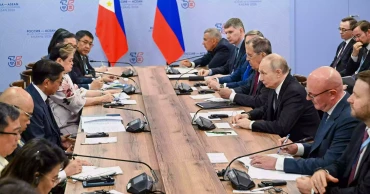
Russian President Vladimir Putin on Wednesday hosted leaders of the Association of Southeast Asian Nations (ASEAN) in Kazan, seeking to strengthen economic, trade and strategic cooperation with the regional bloc amid Moscow’s efforts to expand its partnerships in Asia.
The two-day summit, marking the 35th anniversary of Russia-ASEAN relations, is focused on enhancing what Russian officials describe as a strategic partnership between Russia and the 11-member Southeast Asian grouping.
According to Kremlin foreign affairs adviser Yuri Ushakov, discussions will cover trade, investment, industrial cooperation and key regional and global issues, while also reviewing progress in Russia-ASEAN relations.
In a message to participants at a business forum held alongside the summit, Putin expressed confidence that the gathering would create new opportunities for expanding mutually beneficial trade, investment and industrial cooperation, while fostering closer engagement between business communities.
Ushakov said Russia and ASEAN members would reaffirm their commitment to building what he described as a fair and democratic multipolar world order based on international law and the principles of the United Nations Charter.
He praised the relationship between Russia and ASEAN as a productive, equal and constructive dialogue and noted that Putin would hold a series of bilateral meetings with regional leaders during the summit.
The Russian president co-chaired the meeting with Philippine President Ferdinand Marcos Jr., whose country currently holds ASEAN’s rotating chairmanship.
During talks with Marcos, Putin highlighted the longstanding cooperation between Russia and the Philippines, describing it as mutually beneficial and based on respect for each other’s legitimate interests.
Marcos thanked Putin for hosting the summit and invited him to attend the ASEAN Summit scheduled to be held in Manila in November.
Putin also met Brunei’s Sultan Hassanal Bolkiah on the sidelines of the gathering.
Addressing a formal reception later, Putin said Russia and ASEAN countries shared support for a just international order, sovereign equality of states and non-interference in internal affairs.
He emphasized that each nation follows its own development path without imposing its views on others, calling that diversity a source of strength.
Russia remains committed to expanding cooperation with ASEAN members in areas including security, economic development and regional stability, Putin said.
ASEAN comprises Brunei, Cambodia, Indonesia, Laos, Malaysia, Myanmar, the Philippines, Singapore, Thailand, East Timor and Vietnam.
While some ASEAN members maintain close ties with the United States, others have significant economic and security relations with China and Russia.
Several ASEAN countries, including the Philippines, Indonesia, Thailand and Vietnam, have either imported Russian crude oil or shown interest in doing so following sharp increases in global energy prices linked to the conflict involving Iran.
1 month ago