Others
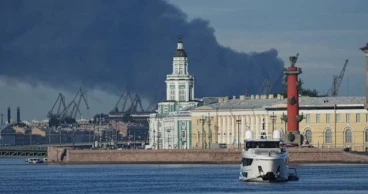
Ukrainian drones hit St. Petersburg oil terminal ahead of Putin’s economic forum
Ukrainian long-range drones struck an oil terminal in Russia’s St. Petersburg, triggering a fire and disrupting airport operations ahead of a major international economic forum expected to feature President Vladimir Putin.
Ukrainian President Volodymyr Zelenskyy said the drones travelled more than 1,000 kilometres to reach the target, describing the strike as part of Ukraine’s campaign against Russia’s energy and military infrastructure.
Videos circulating on social media showed thick black smoke rising above the port area after the attack.
Russian authorities confirmed that Ukrainian drones targeted infrastructure in St. Petersburg but did not provide details about the damaged facility. Flights at the city’s airport were temporarily suspended overnight, while mobile internet services were also disrupted.
The attack came as St. Petersburg hosts its annual international economic forum, a high-profile event promoted by President Vladimir Putin. Although Western leaders and investors have largely stayed away since Russia launched its full-scale invasion of Ukraine in 2022, Saudi Arabia is attending this year as a special guest country with a large business delegation.
The strike is seen as an embarrassment for the Kremlin, coming weeks after security concerns over Ukrainian drone attacks forced authorities to scale back Russia’s Victory Day celebrations in Moscow.
The latest developments follow a large-scale Russian missile and drone assault on Kyiv and other Ukrainian cities a day earlier that killed at least 22 civilians and injured 138 others, according to Ukrainian officials.
As fighting along the front line remains largely unchanged, both Russia and Ukraine have increasingly relied on long-range drone attacks to target infrastructure and military assets deep inside each other's territory.
Zelenskyy said Ukrainian drones also struck the Kronstadt naval base near St. Petersburg and a weapons-related manufacturing facility in Russia’s Tambov region.
Russia’s Defence Ministry said its air defence systems shot down 354 Ukrainian drones overnight.
In Russian-controlled parts of Ukraine’s Donetsk region, local authorities said a Ukrainian strike hit a passenger bus travelling from Moscow to Crimea, killing seven people and injuring 11 others.
Meanwhile, officials in Russia’s Smolensk region reported that two firefighters were killed and three others injured in a separate Ukrainian drone attack.
Ukraine’s Air Force said Russia launched 198 drones overnight, adding that 189 of them were intercepted or neutralised.
Regional authorities in Ukraine reported civilian casualties from continued Russian attacks, including one death and 15 injuries in Sumy region. In the southern Kherson region, an 86-year-old woman was killed and five others were wounded in overnight shelling and drone strikes.
2 months ago
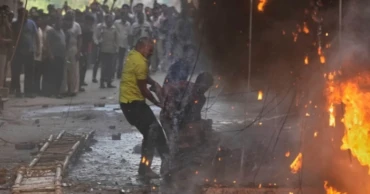
At least 21 dead after blaze sweeps through building in New Delhi
At least 21 people were killed and several others injured after a fire broke out in a multi-storey building in New Delhi on Wednesday, police said.
The building, located in the Malviya Nagar area of south Delhi, housed a restaurant on the ground floor and a hotel on the upper floors. The neighborhood is a densely populated residential area that is popular among students and young professionals.
According to Delhi Police, firefighters brought the blaze under control with the assistance of eight fire engines. More than 40 people were rescued from the building and taken to nearby hospitals for treatment.
The cause of the fire was not immediately known.
Television footage and images from the scene showed thick smoke rising from the building as firefighters worked to extinguish the flames. Several people trapped inside were seen hanging from windows and calling for help while fire and smoke spread through parts of the structure.
Local residents joined rescue efforts, helping evacuate occupants and carrying some injured victims to safety.
Local media reported that some of those killed were foreign nationals who had travelled to India for medical treatment.
Prime Minister Narendra Modi expressed condolences to the families of the victims, according to a post by his office on X. The post also said the families of those killed would receive financial assistance of 200,000 rupees (about $2,088) each.
2 months ago

7 killed as drone strikes passenger bus in Russian-controlled eastern Ukraine
At least seven people were killed and 11 others injured after a drone struck a passenger bus in a Russian-controlled area of eastern Ukraine early Wednesday, according to local authorities installed by Moscow.
Denis Pushilin, the Russia-backed head of the Donetsk region, said the bus was travelling from Moscow to Simferopol in Russian-annexed Crimea when it came under attack near Yenakiyevo.
He said seven civilians were killed in the strike, while the injured were receiving medical treatment.
The incident occurred amid a fresh wave of overnight drone attacks between Russia and Ukraine. Russian officials said air defence systems intercepted more than 350 drones across several regions, including Belgorod, Kursk, areas near Moscow and over the Sea of Azov.
Authorities also reported that more than 50 drones were shot down over the Leningrad region, home to St. Petersburg, where the annual International Economic Forum is set to begin on Wednesday.
The drone activity temporarily disrupted operations at Pulkovo Airport in St. Petersburg, prompting flight restrictions, according to Russia’s aviation authority.
Meanwhile, Ukrainian officials said an 86-year-old woman was killed in a Russian drone attack in the southern Kherson region overnight.
Ukraine’s Air Force said Russia launched 198 drones targeting multiple regions, adding that 189 of them were intercepted or destroyed.
The latest attacks follow one of the largest Russian aerial assaults since the war began in 2022. Ukrainian officials said at least 22 people, including women and children, were killed on Tuesday when Russia launched more than 700 missiles and drones across the country.
Ukrainian President Volodymyr Zelensky said civilian infrastructure and energy facilities were among the targets, and that more than 100 people were injured.
Russia’s Defence Ministry said the strikes were carried out in response to earlier Ukrainian attacks and claimed all intended targets had been hit.
The Kremlin said the campaign of strikes would continue, describing them as retaliatory actions and maintaining that they were aimed at Ukraine’s military infrastructure.
With inputs from BBC
2 months ago

The UK government has set a target of an 87% cut in carbon emissions by 2042
The British government said Tuesday that it's sticking to its net-zero goal, despite pressure on energy supplies from global conflicts, and will reduce the United Kingdom's planet-warming greenhouse gas emissions by 87% of 1990 levels in the next decade and a half.
The U.K. has a legally binding target, set in 2008, of achieving net zero carbon emissions by 2050. By law, the government must legislate for emissions caps for future five-yearly budgets on a strict timetable.
Energy Secretary Ed Miliband said that the government will accept the advice of its independent Climate Change Committee of an 87% target for the next budget, covering the years 2038 to 2042.
The government argues that moving to clean energy will reduce the country's exposure to fuel-price shocks like those seen from the Russia-Ukraine war and the conflict in the Middle East.
"As Britain faces the second fossil fuel shock of the decade, the only way to protect family and business finances is to drive for clean homegrown power that we control," Miliband said.
Scientists said that the goal puts the U.K. on course to meet its 2050 net zero target, though Tuesday's announcement doesn't include details of how it will be achieved.
"I think this is very good news as a milestone to net zero at 2050. But, alongside the ambition, we need both a coherent joined-up plan to achieve it and a delivery board — independent of government, politics and the (Climate Change Committee) — tasked with making it happen," said Martin Siegert, professor of geosciences at the University of Exeter.
The opposition Conservative and Reform UK parties argue that the government should water down renewable energy targets, and extract more oil and gas from the North Sea to reduce Britain's dependence on imported energy.
Conservative Party energy spokeswoman Claire Coutinho said that the emissions target "will make us weaker, poorer and send everyone's energy bills even higher."
2 months ago

Trump criticizes Netanyahu over Lebanon escalation, report says
US President Donald Trump reportedly engaged in a tense phone conversation with Israeli Prime Minister Benjamin Netanyahu over Israel’s recent military actions in Lebanon, amid concerns that the escalation could undermine diplomatic efforts involving Iran.
According to a report by Axios citing US officials familiar with the discussion, Trump strongly criticized Netanyahu's handling of the situation and expressed concern that continued Israeli operations could further damage Israel’s international standing, reports NDTV.
Sources said Trump was particularly frustrated that Israeli military actions in Lebanon were threatening ongoing negotiations aimed at reducing tensions across the region. He reportedly argued that expanding strikes, particularly around Beirut, could isolate Israel diplomatically and complicate efforts to secure broader regional stability.
US officials told Axios that Trump believed Israel’s response had become disproportionate despite Hezbollah's attacks on Israeli territory. He was also said to be concerned about civilian casualties in Lebanon and opposed military operations that could result in extensive destruction while targeting individual Hezbollah figures.
Following the conversation, Israeli officials reportedly signaled that plans for strikes in Beirut had been reconsidered.
Although Trump later publicly described the call as productive, sources characterized the private exchange as one of the most difficult discussions between the two leaders since Trump returned to office.
The two leaders have maintained a long and often complicated relationship, marked by both close cooperation and periodic disagreements, particularly on issues involving regional security and Iran.
After the call, Trump announced that Israeli troops would not advance into Beirut and said he had also communicated indirectly with Hezbollah representatives, who had indicated a willingness to halt attacks on Israel. He expressed hope that both sides would refrain from further hostilities.
In a statement, Netanyahu confirmed speaking with Trump but stressed that Israel would continue taking action against Hezbollah if attacks on Israeli communities persist. He added that Israeli military operations in southern Lebanon would proceed as planned.
The latest tensions come despite a ceasefire that has largely been in place since April. Hostilities resumed after exchanges of fire between Israel and Hezbollah, raising concerns about the stability of the truce and its impact on wider diplomatic efforts involving Iran.
Iran has reportedly insisted that any broader ceasefire arrangement should also cover developments in Lebanon.
Meanwhile, Lebanese officials said efforts are continuing to preserve the ceasefire, including proposals aimed at preventing attacks on Beirut's southern suburbs and northern Israel.
2 months ago

US appeals court rules Pentagon policy unlawfully banned transgender troops
A US federal appeals court panel has ruled that a Pentagon policy illegally barred transgender people from serving in the military, marking another legal setback for President Donald Trump’s agenda.
A divided three-judge panel of the US Court of Appeals for the District of Columbia Circuit said the policy was designed to exclude individuals based on gender identity. However, the ban will remain in place for now as legal proceedings continue, after the US Supreme Court previously allowed its enforcement to begin.
The ruling limits its immediate impact to protecting transgender service members who are already in the military and part of the lawsuit. It does not allow new transgender recruits to join. The court also paused implementation of its decision to give the administration time to seek further review.
The decision partially upholds a 2025 ruling by US District Judge Ana Reyes, who found that Trump’s executive order excluding transgender troops likely violated constitutional protections.
Following that ruling, the administration appealed after an injunction was issued in favour of active-duty transgender service members and individuals seeking to enlist. The appeals court narrowed that order, extending protection only to those already serving.
Another related case in Washington state had also ruled against the ban, but that decision was blocked by the Supreme Court.
The policy stems from a January 2025 executive order signed by Trump, which argued that transgender identity conflicts with military discipline and readiness. In response, Defense Secretary Pete Hegseth introduced a rule that generally disqualifies people diagnosed with gender dysphoria from serving. The condition refers to distress caused when a person’s gender identity does not match their sex assigned at birth.
Writing for the majority, Judge Robert Wilkins said the policy appeared to be motivated by an attempt to target a politically unpopular group, namely transgender people.
The ruling was welcomed by LGBTQ rights advocates. Jennifer Levi of GLAD Law called it a strong validation of the plaintiffs’ position and their service to the country.
The Pentagon has not yet commented on the ruling, though Hegseth indicated on social media that the administration plans to appeal further, referencing the US Supreme Court.
In a dissenting opinion, Judge Justin Walker said courts should not interfere in military decisions regarding troop eligibility, arguing that such authority lies with Congress and the president as commander in chief.
Judge Judith Rogers agreed with the majority that the policy was unlawful but said she would also have allowed transgender individuals seeking enlistment to proceed in the case.
2 months ago

Six killed in family-related shooting in Iowa; suspect found dead
Six people were killed in a series of shootings in the US state of Iowa that police believe were linked to a family dispute. The suspected gunman was later found dead from what authorities said was a self-inflicted gunshot wound.
The suspect was identified as Ryan Willis McFarland, 52, of Muscatine. Police said all six victims are believed to have been members of his family.
The shootings occurred at several locations across the city of Muscatine on Monday.
Police said officers first responded to reports of a shooting shortly after noon at a residence, where they found four people with gunshot wounds. All four victims were pronounced dead at the scene.
McFarland had left the area before officers arrived. He was later located on a riverfront trail near a pedestrian bridge, where police found him with a gunshot wound believed to be self-inflicted. Despite receiving medical assistance, he was declared dead at the scene.
During the investigation, detectives discovered another man dead from an apparent gunshot wound at a separate residence. A further search led officers to a business premises, where they found a sixth victim, also dead from an apparent gunshot wound.
Authorities said preliminary findings suggest the shootings stemmed from a domestic dispute involving family members.
Muscatine Police Chief Anthony Kies described the incident as an "act of evil" and said the investigation remains ongoing.
Police have not yet released the names or ages of the victims. Officials confirmed that McFarland had a previous criminal record but did not provide further details.
Muscatine, a city of about 23,500 people located along the Mississippi River in southeastern Iowa, was left shaken by the tragedy.
In a message posted on Facebook, Muscatine Mayor Brad Bark expressed sympathy for the victims and their families, saying the community's "hearts are heavy" following the deadly shootings.
With inputs from BBC.
2 months ago

Rubio faces questions in Congress over Iran war, foreign policy challenges
US Secretary of State Marco Rubio is expected to face tough questions from lawmakers on Tuesday about the Trump administration’s foreign policy efforts, particularly the ongoing conflict with Iran, as he appears before Congress for the first time since the war began.
Rubio will testify before both House and Senate committees to present the State Department’s annual budget request. However, much of the discussion is expected to focus on the fragile ceasefire between the United States and Iran, which has come under strain amid recent exchanges of attacks.
Rubio and other senior administration officials have defended President Donald Trump’s decision to enter the conflict, despite Trump's long-standing promises to avoid lengthy military engagements in the Middle East. The administration has also faced criticism over what opponents describe as shifting objectives in the war.
Shortly after the conflict started on February 28, Rubio participated in a classified briefing for lawmakers following the first US and Israeli strikes. At the time, Democrats criticized the administration for acting without congressional approval, while most Republicans supported the military action.
But after two months of fighting, concerns are growing in both parties over the war’s rising costs and its economic impact ahead of this year's midterm elections.
Last month, the Senate advanced a measure that would require Trump to end US involvement in the conflict. The effort gained momentum after Republican Senator Bill Cassidy joined Democrats in supporting the proposal.
A similar resolution was expected to be voted on in the House, but Republican leaders blocked it after realizing they might not have enough votes to defeat it.
The developments highlight increasing divisions within the Republican Party, with some lawmakers becoming more willing to challenge Trump’s handling of the conflict.
After Tuesday’s hearings before the Senate Foreign Relations Committee and a House Appropriations subcommittee, Rubio is scheduled to return to Capitol Hill on Wednesday for additional testimony before the House Foreign Affairs Committee and a Senate appropriations panel.
Lawmakers are also expected to question Rubio about the administration’s increasingly tough stance toward Cuba. Trump has suggested that Cuba could become a future focus of US policy after the situation with Iran is resolved.
Although US and Cuban officials have held several meetings, Trump and Rubio have continued to issue warnings toward the Cuban government. Those tensions intensified after the administration announced criminal charges against former Cuban leader Raúl Castro.
Rubio, whose parents immigrated from Cuba, has long argued that the country poses a security challenge because of its ties with governments viewed by Washington as adversaries. He has repeatedly said the Trump administration remains committed to addressing those concerns.
2 months ago

Republican senators seek clarity on $1.8bn settlement fund as Trump weighs its future
Republican senators are set to discuss the future of a controversial $1.8 billion settlement fund on Tuesday after the US Justice Department said it would follow a court order temporarily blocking the programme.
Several Republican lawmakers, who had already voiced concerns about the fund before Congress recessed two weeks ago, say they want clearer answers from the Trump administration. The fund was created as part of a settlement linked to President Donald Trump’s lawsuit against the IRS over the disclosure of his tax returns.
Critics within Trump’s own party worry that some of the money could be used to compensate individuals involved in the January 6, 2021 attack on the US Capitol. At the same time, Trump is reportedly reconsidering whether the fund should move ahead at all, according to a person familiar with the matter.
The dispute has also delayed a Senate bill that would provide three years of funding for immigration enforcement agencies, including Immigration and Customs Enforcement (ICE) and the Border Patrol. Republicans postponed action on the bill after Democrats threatened amendments aimed at eliminating or reducing the settlement fund.
Senate Majority Leader John Thune said Monday that it remains unclear whether the immigration funding package will advance this week.
The controversy began after Trump announced the settlement fund without prior consultation with lawmakers. The announcement came while Congress was already debating immigration funding legislation that included an additional $1 billion for White House security projects.
The move angered many Senate Republicans, who later removed the White House security funding from the bill and warned they would not support the legislation unless significant changes were made to the settlement plan.
Thune said he believes the administration should consider shutting down the fund on its own and indicated senators would decide their next steps after a Republican conference meeting on Tuesday.
Republican lawmakers said they need a stronger commitment from the administration before supporting any related legislation.
Senate Judiciary Committee Chairman Chuck Grassley said the president must clearly state that the fund will not be used in a way that could be politically motivated.
Senators Jim Lankford and Lisa Murkowski also said they want an explicit assurance that the programme will be fully withdrawn.
Meanwhile, John Kennedy warned that the immigration bill is unlikely to move forward without a resolution to the dispute.
The Justice Department said it would comply with a ruling by US District Judge Leonie Brinkema, who last week temporarily suspended the fund for two weeks and scheduled a hearing on June 12 to consider extending the pause.
Although the department said it strongly disagrees with the decision, senators from both sides of the debate insist they need more details about what the administration plans to do once the court order expires.
The issue has become one of the most contentious disputes among Senate Republicans in recent months. According to Texas Senator Ted Cruz, a recent closed-door meeting with Acting Attorney General Todd Blanche was among the most heated he has witnessed during his time in the Senate.
Republican lawmakers have discussed several options, including restricting who could receive payments, changing oversight of the fund, introducing judicial review of claims, or scrapping the programme entirely.
The debate comes amid broader political tensions within the Republican Party as Trump continues to challenge GOP lawmakers he considers insufficiently loyal, creating additional uncertainty over support for his legislative agenda in the narrowly divided Senate.
2 months ago
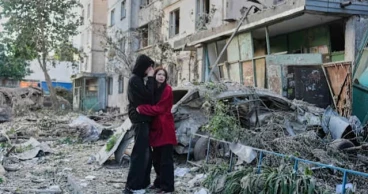
Russian attack on Ukraine kills at least 18 and traps others in damaged buildings
Russia launched hundreds of drones and dozens of missiles against Kyiv and other Ukrainian cities overnight, killing at least 16 civilians and wounding more than 100 others, authorities said Tuesday.
The damage trapped some people under the rubble of apartment buildings. Emergency crews digging through the wreckage pulled out the body of a 3-year-old child and the bodies of a mother and her 8-year-old son in the central Ukrainian city of Dnipro, officials said.
The attack stretched from night into day and the boom of explosions reverberated across cities.
Kyiv residents had been on edge for days after Russia warned that a massive aerial attack was coming and warned foreign diplomats to leave the Ukrainian capital. None appeared to heed the call.
“A large-scale attack and an explicit statement by Russia: If Ukraine is not protected from ballistic missiles and other missile strikes, those strikes will continue,” President Volodymyr Zelenskyy said in response to the attack, urging more support from the U.S. and European countries.
Russian President Vladimir Putin has stepped up Moscow’s aerial campaign against Ukraine, with Russian forces recently launching a powerful hypersonic Oreshnik ballistic missile for only the third time in the four-year war.
The Russian strategy seeks to take advantage of Ukraine’s shortage of U.S.-made Patriot air defense missiles, with international stocks depleted by the Iran war. That has left civilians especially vulnerable to the Russian ballistic missile barrages, even as air defenses stop most of the attack drones.
Kyiv mother and daughter shelter in a bath tub
At least 64 people were wounded in the capital, emergency services said. Kyiv resident Iryna Salikova, 37, spent the night lying in a bath tub for protection with her 3-year-old daughter, as blasts reverberated across the city.
“Our window was broken, a cobblestone flew into the children’s room,” Salikova said, though they weren't hurt. “Thank God we’re alive. Today we’re alive, today we’re lucky.”
Russia unleashed 73 missiles and 656 drones across Ukraine, according to the country’s air force, with the main targets including Kyiv, the central city of Dnipro, and the eastern cities of Poltava, Kharkiv and Zaporizhzhia. Ukrainian air defense forces destroyed or suppressed 40 missiles and 602 drones.
Putin seeks to change the narrative of the war
Putin is keen to generate some positive news from the conflict that began with Russia’s February 2022 invasion of its neighbor and hasn’t gone according to plan.
Western officials and analysts say Ukrainian drones are pinning down Russian troops on the front line, choking Russian supply lines in occupied regions of Ukraine and disrupting oil facilities deep inside Russia that provide vital revenue for Moscow. That has made the war, which Moscow refers to as a “special military operation,” more visible to Russians and increased pressure on Putin.
U.S.-led peace efforts have fizzled out as the sides made no progress on key differences and after the Gulf and Middle East grabbed Washington’s attention. Zelenskyy accepted an unconditional ceasefire demanded by U.S. President Donald Trump but Putin refused.
Russia’s Defense Ministry said in a statement that the military launched a “massive” strike with long-range precision weapons on military-industrial facilities in the Kyiv, Zaporizhzhia, Kharkiv, Dnipropetrovsk, Poltava, Khmelnytsk and Sumy regions.
Putin signaled that Russia won’t let up its attacks. He said Tuesday that Ukraine’s May 22 drone attack on a college dormitory in Starobilsk in the Russia-controlled Luhansk region of Ukraine that killed 21 had given the war “a whole new dimension.”
Ukraine said it hit a Russian drone pilot training center in Starobilsk.
Man thrown out of Kyiv apartment by blast
Hits of 30 ballistic missiles, three cruise missiles and 33 drones were recorded at at least 38 locations across Ukraine, according to regional authorities. Debris from destroyed drones fell on 15 locations, the air force said.
At least four people were killed in Kyiv and 63 people were injured, including three children, Ukraine's state emergency service said. Residential buildings and other civilian infrastructure were damaged in eight Kyiv districts.
Olena Dniprovska, 65, and her husband Yevhen, 64, were wounded in their apartment in Kyiv’s Podilskyi district during the attack.
“I went out into the corridor with the phone, and before I understood what happened, everything fell on my head, the glass, and the door blew off,” said Dniprovska, dried blood streaked across her face and a bandage wrapped around her chin. “I ran out into the front door and started calling my husband from the room, but he was also blown out by the blast wave.”
“Now I have nowhere to live, the apartment is completely destroyed, no doors, no windows, no balcony. You can step straight from the room out onto the street,” she said.
In Kharkiv, at least 14 people were wounded and residential homes, garages and cars were damaged. People were also trapped beneath the rubble of a four-story apartment block.
2 months ago