Others
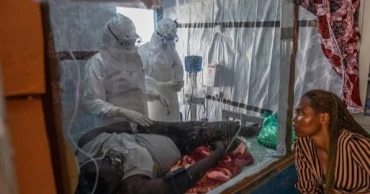
Ebola cases top 7,400 in DR Congo as outbreak shifts
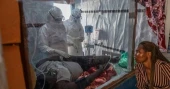
The Ebola outbreak in the Democratic Republic of the Congo (DRC) is shifting, with transmission easing in its long-time epicenter of Ituri but rising rapidly in North Kivu, where treatment facilities face a 94.7 percent bed occupancy rate with 373 patients hospitalized.
As of Tuesday, the DRC reported 7,404 confirmed cases, 3,577 deaths-representing a 48.3 percent fatality rate-and 1,776 recoveries. Spanning 62 health zones across seven provinces, Ituri remains the primary epicenter, accounting for 77.7 percent of cases.
National Institute of Biomedical Research head Jean-Jacques Muyembe noted that Ituri has passed its peak, whereas North Kivu remains a growing hotspot. WHO Director-General Tedros Adhanom Ghebreyesus cited encouraging signs in Ituri, but warned that weekly cases in North Kivu doubled from 100 to over 200, describing the situation as "many outbreaks, in many places".
This outbreak is the deadliest in DRC history and the world's second-largest after the 2014–2016 West Africa epidemic.
1 month ago
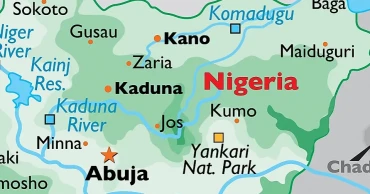
Toxic liquor tragedy in Nigeria: 48 dead, 100 hospitalized in Ondo state
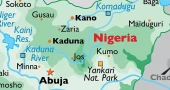
At least 48 people have died and around 100 others are hospitalized in southern Nigeria after consuming a locally brewed alcoholic drink suspected to contain toxic methanol, officials said Thursday.
Banji Ajaka, commissioner for health in Ondo state, reported that 182 people were affected across the Odigbo and Irele local government areas. He warned that methanol rapidly damages organs, causing kidney failure, blindness and brain damage.
Locals suspect a popular high-proof herbal concoction, known as "Monkey Tail," was adulterated with methanol. Ondo state police spokesman Abayomi Jimoh said that 15 people have been arrested, including a producer suspected of manufacturing the toxic liquor.
Unregulated, low-cost local alcohol is widely consumed across rural Nigeria. The deaths occur as Nigeria's National Agency for Food and Drug Administration and Control enforces a nationwide ban on alcohol sold in sachets and small plastic bottles.
1 month ago
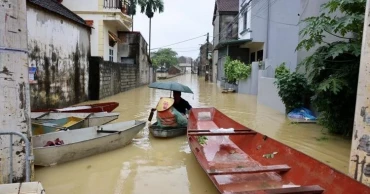
Heavy rain floods northern Vietnam, disrupts travel and daily life
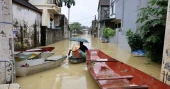
Heavy rain triggered flooding across parts of northern Vietnam on Thursday, inundating homes, disrupting travel and pushing several rivers above dangerous levels, authorities and state media reported.
Rain has fallen across northern and north-central parts of the country throughout the week, with some areas receiving more than 50 centimeters (19.7 inches), according to the disaster prevention department.
More than 2,000 homes have been flooded, while key transport routes have been blocked and more than 1,000 households have been cut off.
Ninh Binh and Thanh Hoa provinces, which cover both lowland and hilly areas south of Hanoi, have been among the worst affected.
Vietnam is one of the world’s most climate-vulnerable countries and frequently experiences flooding. A series of major storms last year prompted the government to explore new ways to prepare for and manage floods.
In Thanh Hoa, authorities asked students to stay home because flooding had made travel unsafe, state media reported.
Floodwaters have submerged or damaged about 10,014 hectares (24,745 acres) of rice fields and other crops, with the biggest losses reported in Ninh Binh, Thanh Hoa and Nghe An provinces. Thousands of livestock and poultry have also died.
“The flood happens every year,” Ninh Binh resident Tran Ngoc Tai told national broadcaster VTV, adding that residents had prepared food and drinking water.
Hanoi streets floodedSeveral streets in Hanoi were deeply flooded Thursday morning, with water reaching nearly a meter (3.2 feet) in some areas.
The flooding disrupted traffic and made it difficult for residents to travel to work, take children to school or leave their homes.
Some areas received more than 15 centimeters (5.9 inches) of rain from Wednesday night through Thursday morning, state media said.
Many high schools and universities in Hanoi remained closed or moved classes online Thursday afternoon as widespread flooding continued.
Rising water levels in the Bui River on Hanoi’s southwestern outskirts also threatened nearby homes. Authorities deployed hundreds of soldiers to help residents move their belongings to higher ground, state media reported.
More rain forecast for southern VietnamA cold air mass moving south is expected to bring five days of heavy rain to southern Vietnam, including flood-prone Ho Chi Minh City, starting Thursday, according to the Southern Regional Hydro-Meteorological Center.
Forecasters expect widespread rainfall through Sept. 21 and authorities have warned of possible flooding in low-lying areas and along waterways.
Ho Chi Minh City is expected to receive 10 to 20 centimeters (4 to 8 inches) of rain, with some areas receiving even more.
Vietnam experienced several major floods in 2025.
Tropical Storm Wipha brought heavy rain and flooding in July, followed by further flooding and landslides in August when Tropical Storm Kajiki hit the country.
Typhoon Bualoi killed at least 26 people in September.
In October, the historic central cities of Hue and Hoi An were flooded, along with large parts of northern Vietnam.
1 month ago
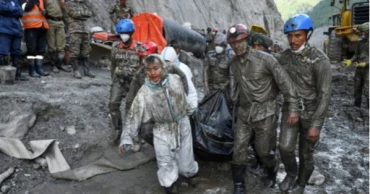
Rescuers recover 4 bodies from Nepal hydropower tunnel
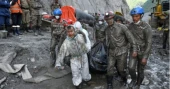
Rescue teams in Nepal have recovered four bodies from a hydropower plant tunnel as the search continues for thousands of people still missing nearly three weeks after a devastating flash flood that killed hundreds.
Families of those missing have been demanding answers from authorities about the whereabouts of their loved ones.
Nepal’s army said four bodies and a body part were recovered Wednesday from the Chilime Hydropower plant, located on the Trishuli River, which flooded on Aug. 26.
The country’s disaster management agency said five more bodies had been located at another site and equipment was being sent there to recover them.
The number of bodies recovered since the disaster has reached 1,403, while 6,150 people remain missing, according to Nepal’s National Disaster Risk Reduction and Management Authority.
Families have been urging the government to speed up rescue and recovery operations, particularly in the tunnels.
They have organized rallies and many are calling on the government to officially declare the missing people dead. Such declarations would allow families to obtain death certificates, complete legal procedures and religious rites, and gain some emotional closure.
At Tribhuvan University Teaching Hospital in Kathmandu, photographs of hundreds of missing people have been placed on the lobby walls. Relatives regularly visit the hospital hoping to find information about their loved ones.
Usha Khatri’s husband, Indra Bahadur, was working as a cook with a group of pilgrims when the flood struck near the Nepal-China border.
Since then, she has traveled to several towns along the river where bodies have been recovered in search of her husband.
“The government has not done much for us. They have not met us or given us any information or any assurances. I am by myself searching for my husband,” Khatri said.
The flooding damaged 13 hydropower plants, with many workers swept away or trapped by the powerful currents and debris.
Locating trapped workers has been a priority for government agencies and rescue teams. However, thick mud, debris and damaged infrastructure have made it difficult for rescuers to reach the tunnels.
Two Nepali workers were rescued alive on Sept. 4, several days after the flooding. A Chinese worker was also pulled alive from another location the following day.
The Nepalese government estimates that rebuilding the areas affected by the disaster will cost about $4.78 billion.
1 month ago
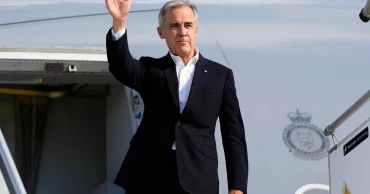
Carney to speak at EU Parliament as Canada seeks closer ties with Europe
Canadian Prime Minister Mark Carney will address the European Parliament on Thursday, with his speech drawing added attention after US President Donald Trump warned that a move to make Canada an associate member of the European Union could be a “hostile act.”
Trump’s comments have raised expectations about Carney’s address and whether he will again criticize the use of economic power to pressure smaller countries, as he did at the World Economic Forum in Davos in January.
European Commission President Ursula von der Leyen proposed making Canada the EU’s first associate member on Wednesday, in a major diplomatic gesture as Trump’s trade policies and repeated demands have pushed Ottawa closer to Europe.
Speaking in Charlotte, North Carolina, Trump said the US could respond to the proposal with heavier tariffs on the EU.
He linked the threat to the “intention” behind the European move, saying, “If it’s a good intention, that’s fine. If it’s a bad intention, we’ll put very heavy tariffs on Europe.”
Trump also suggested the US could restrict trade with Europe in some areas.
He described the possibility of Canada joining the EU as “laughable” and called Canada a “terrible trade partner.”
For decades, Canada has built its economy around close ties with the United States. But Trump’s tariffs, demands for economic concessions and repeated comments about making Canada the 51st US state are prompting Ottawa to reduce its dependence on Washington and strengthen economic, security and political ties with Europe.
Europe offers Canada closer tiesVon der Leyen’s proposal would make Canada the EU’s first associate member. Such a status does not currently exist under the bloc’s treaties and would have to be established.
She said Europe wants to take its relationship with Canada to “the highest level possible.”
Carney, who was sitting in the front row of the European Parliament chamber, nodded and stood to embrace von der Leyen as lawmakers gave the proposal a standing ovation.
Von der Leyen said Canada and the EU should go beyond their existing free trade agreement and establish an “Alliance for the Future” covering a “common prosperity and economic security space.”
Carney is scheduled to host EU leaders at a Canada-EU summit in Montreal on Oct. 29-30. The proposed new relationship is expected to be discussed in greater detail at the meeting.
Canada sends about 70% of its exports to the United States, leaving its economy highly exposed to Trump’s tariffs.
Ottawa has imposed retaliatory measures and rejected demands that Carney says threaten Canadian sovereignty. The EU has taken a different approach, suspending retaliation and accepting tariffs of up to 15% on most of its exports to the US.
Carney brings Davos message to EuropeCarney has repeatedly called on middle powers to resist economic pressure from dominant countries.
At the World Economic Forum in Davos in January, he warned that countries negotiating individually with a powerful nation “negotiate from weakness” and “accept what is offered.”
Trump criticized Carney the following day, and Thursday’s speech could add to tensions between the two leaders.
Jonathan Wilkinson, Canada’s ambassador-designate to the EU, said Wednesday that Ottawa is not seeking full EU membership because that would require Canada to give up some sovereignty.
Instead, he said Canada wants “to get as close as we possibly can” to Europe while becoming more economically independent.
The exact terms and powers of any associate membership have yet to be negotiated.
Canada has already taken a major step toward closer cooperation with Europe. This year, it became the first non-European country to join the EU’s 150-billion-euro ($173 billion) SAFE defense procurement program, allowing Canadian companies to participate in joint procurement as European countries increase defense spending.
Canada and the EU have also discussed closer cooperation in energy, critical minerals, artificial intelligence and digital trade.
“The policies and rhetoric of the Trump administration are clearly pushing both Canada and the EU to imagine a world without strong U.S. leadership and to act accordingly,” said Daniel Béland, a political science professor at McGill University in Montreal.
Nelson Wiseman, professor emeritus at the University of Toronto, said Carney’s handling of Trump has increased European interest in the Canadian prime minister.
“Carney’s shrewdness in dealing with Trump has captured Europe’s attention,” Wiseman said.
Washington watching closelyWiseman said Europeans have traditionally viewed Canada as a country with a deep understanding of the United States because of their close economic and political ties.
He said Carney’s decision to resist Trump rather than quickly accept Washington’s demands has strengthened that perception.
Béland said Carney may avoid directly naming Trump in his speech while making clear who his broader message is aimed at.
“He knows that, beyond Europe, the world will be watching, including the White House,” Béland said.
1 month ago
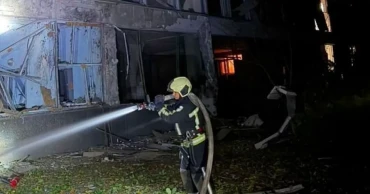
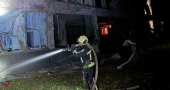
Russian missile and drone attack on Kyiv injures at least 16
At least 16 people were injured in a Russian overnight attack involving missiles and drones targeting Ukraine’s capital, local authorities said Thursday.
The Kyiv City Military Administration said the attacks hit more than 10 locations. A 10-year-old girl and a 12-year-old boy were among those injured, it said in a statement on Telegram.
Ukraine’s Air Force said it destroyed or disrupted 131 Russian aerial targets during the overnight attack.
The main targets were in the Kyiv, Zaporizhzhia and Odesa regions, according to the Air Force. Strikes were reported at 36 locations, while debris from intercepted targets fell at five other sites.
The attack involved ballistic and cruise missiles as well as 157 drones and decoy targets, the Air Force said.
In Kyiv’s Dniprovsky district, a warehouse, an office building, residential buildings and several cars were damaged.
A warehouse was also damaged in the Solomyansky district, while a warehouse and cars were damaged in the Darnitsky district.
Authorities said the roof of a non-residential building was damaged in the Podilsky district.
1 month ago
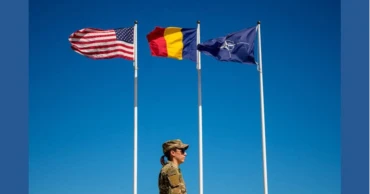
Romanian border residents fear rising drone threat from Ukraine war
The warning messages come first, followed by explosions.
For 48-year-old Robert Marian, who lives in Isaccea, a small town in Romania’s eastern Tulcea County on the Danube River, the increasing frequency of Russian drone strikes just across the border has become a constant source of fear.
The town has a crossing into Ukraine, and some of the attacks take place only a few hundred meters across the river.
“There are alerts warning us that something is coming,” Marian told The Associated Press. “It happened two weeks ago, maybe three. I was asleep at midnight … One was quieter, but another was really loud. I got scared and ran out of the house.”
As Russia’s war in Ukraine continues, drone incidents in Romanian airspace have increased sharply. Explosions across the Danube serve as a reminder of how close the conflict is to NATO territory, amid concerns that Russian President Vladimir Putin could test the alliance’s resolve.
Ukrainian President Volodymyr Zelenskyy said Sept. 1 that a Ukrainian border crossing with Romania had been “deliberately damaged ... as well as export infrastructure.” Romanian customs announced the same day that operations at the Isaccea-Orlivka crossing had been temporarily suspended.
Another Isaccea resident, Alina Mihail, said the drone alerts and explosions across the border make her feel sick.
“I have so many nights where I don't sleep anymore,” she said. “I live in terror, me and my husband.”
Romania records sharp rise in drone incursionsFigures from Romania’s Ministry of National Defense show that drone incursions into the country’s airspace have tripled so far this year compared with all of 2025 — 27 incidents compared with nine.
The number of drones and pieces of drone debris found on Romanian territory, which is part of NATO, has also more than doubled, from 16 last year to 37 this year.
There have been 73 attacks near the Romanian border on Ukrainian territory this year, prompting the deployment of about 56 military aircraft to “monitor and manage the situation.” In 2025, there were 28 such attacks and 21 aircraft were scrambled. During the first year of the war, there was only one attack near the border.
In May, a drone crashed into an apartment building in the eastern Romanian city of Galati, injuring a mother and her child.
Last week, another drone that entered Romania from neighboring Moldova was tracked across several counties before returning to Moldova and crashing into a sunflower field.
Moscow has denied sending combat drones into Romanian territory.
European officials warn of Russian provocationsThe increasing number of drones entering Romanian airspace, many of which Romanian officials have blamed on Russia, has led Romania to shoot down four drones this year. It was the first time the NATO member had done so since Russia launched its full-scale invasion of Ukraine.
NATO members across Europe have accused Moscow of carrying out a series of “hybrid war” activities, including drone incursions, sabotage, an attempted attack at a German airport and an incident in which a Danish helicopter was fired on with flares in the Baltic Sea.
NATO Secretary-General Mark Rutte said Sept. 2 that “Russia has grown increasingly reckless” as the war continues.
“We have seen more drones and missiles crossing into our airspace, along our eastern flank, creating increased risk,” he said. “The dangers Russia poses are clear.”
Polish Prime Minister Donald Tusk also warned last week that he had received information from CIA Director Jim Ratcliffe suggesting Europe should prepare for increased Russian provocations, including along the EU’s eastern flank.
Romanian minister calls security situation ‘highly fluid’Romanian Defense Minister Radu Miruta told The Associated Press that Russia is considered a “primary, significant threat” to Romania and NATO’s eastern flank under both Romania’s National Defense Strategy and NATO assessments.
“We are engaged in discussions regarding the capabilities needed to counter this common threat — facing the same risks as Poland and the Baltic states — and we are coordinating to ensure these capabilities are distributed in a way that allows for interconnection,” he said.
After Russia’s full-scale invasion of Ukraine in 2022, NATO increased its military presence along Europe’s eastern flank by deploying additional multinational battle groups to Romania, Hungary, Bulgaria and Slovakia.
However, the US reduced its troop deployments in Eastern Europe, including Romania, last year after Washington changed its military posture. US officials denied the move indicated a reduced commitment to NATO.
Miruta said more than 1,000 US troops are currently stationed in Romania, which he said is more than the number there following last year’s troop rotation.
“We have a solid relationship,” he said. “The security dynamics along the eastern flank are highly fluid.”
Little time to respond to drone incursionsMiruta said discussions about NATO’s Article 5, under which an attack on one member can trigger a collective response, “can take various directions.”
However, he said Romania currently has no information indicating that a ground invasion is imminent or likely.
“From this perspective, we can rest easy,” he said.
At the same time, he said Romania faces a unique threat because Russia frequently attacks Ukrainian ports along the Danube, which are only a short distance from the Romanian border.
“Once the border is crossed, the distance involved is merely tens of meters, leaving very little reaction time,” he said. “In contrast, in the Nordic countries, targets are tens of kilometers away, providing a sufficiently comfortable window for various forms of intervention.”
In some areas of Romania, residents can see and hear the fighting across the border, keeping communities on edge.
“We see the drones coming, we see them heading toward those ports,” Miruta said. “Most stop there, bombarding port infrastructure, but we cannot know if any might cross over to the other side … If one does cross over, our communities … would be at risk.”
Romania increases defense spendingAmid growing security concerns, Romania and Poland have acquired the MEROPS system, which uses short-range counter-drones to intercept incoming drones.
Romania’s Defense Ministry also announced last month that it had received its first 2.5 billion euros from the EU’s Security Action for Europe program, out of a total allocation of 16.6 billion euros.
In June, the ministry announced a $2 billion contract with an Israeli company to purchase short- and very-short-range air defense systems “designed to protect against aerial threats, including drones and cruise missiles.”
Romanian President Nicusor Dan said at the Ankara summit that defense spending would rise to as much as 3.7% of GDP this year.
He also said Romania had joined NATO’s Drone Edge project, which aims to invest more than $40 billion in “counter-drone capabilities” over the next five years.
Back in Isaccea, Mihail said she and her husband remain inside their home when text alerts warn of possible airspace violations.
“We have no support, no one to help us,” she said.
1 month ago
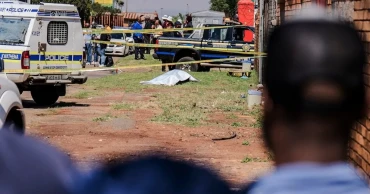
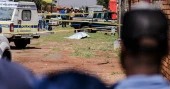
Deaths of 8 women spark fear, anger in South Africa
South African police have found the bodies of eight women in the Kempton Park area, east of Johannesburg, over the past two months, prompting widespread concern and anger.
The deaths have led to a high-level police investigation and renewed attention to femicide and violent crime in South Africa.
Police investigate possible links
Gauteng provincial police commissioner Fred Kekana said investigators are examining whether the cases are connected but cautioned against concluding too early that a serial killer or a single suspect was responsible.
"Investigators are considering all possibilities, including the possibility of multiple suspects or separate perpetrators," he said.
Police are comparing evidence, timelines, locations, victim profiles and other circumstances before drawing conclusions.
Kekana said, however, that the similarities among the cases and the close proximity of the locations where the bodies were found were concerning.
Some of the more recently discovered bodies were found in Olifantsfontein and Kwa-Thema, about 25 kilometers (15 miles) and 34 kilometers (21 miles), respectively, from Kempton Park, where the first five bodies were found.
"While investigations are still underway and SAPS has not, at this stage, confirmed that the deaths are linked to a serial killer, the similarities are sufficiently concerning for the police to issue a public warning and intensify investigations," Kekana said.
All victims were young women
Police said Wednesday that eight women had been identified as victims. They were between 20 and 38 years old and were found either naked or partially clothed, with bruises on their bodies.
The first body was found July 17. The woman was naked and had been restrained with cable ties. Police arrested a suspect believed to be her boyfriend, who remains in custody.
One of the victims was identified as 38-year-old runner Elizabeth "Tsontso" Moselakgomo, who went missing last week.
Her disappearance was reported after her 8-year-old daughter told relatives that Moselakgomo had not returned from her usual afternoon run. Her body was found several days later.
Another body recovered in Olifantsfontein on Tuesday was found naked and in an advanced state of decomposition.
The youngest victim was identified as a 20-year-old woman.
Deaths highlight high levels of violence
The cases have renewed concerns over femicide and violent crime in South Africa and triggered an outcry over women's safety.
The country recorded 5,427 murders between April and July this year, an average of about 45 killings a day, according to the latest crime statistics.
The United Nations agency responsible for gender equality says South Africa has one of the world's highest femicide rates.
A 2022 study by a South African think tank found that more than 35% of adult women in the country had experienced physical or sexual violence at some point.
Police have offered a cash reward for information that could help solve the killings.
1 month ago
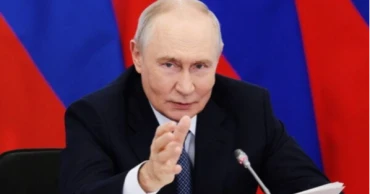
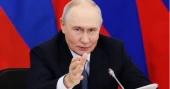
Russia's parliamentary election offers little room for opposition to Putin
Russia's parliamentary election features President Vladimir Putin's main political vehicle, United Russia, along with nine other parties that broadly support his policies. The only registered party that openly opposed the war in Ukraine has been removed from the ballot.
The lack of a significant opposition force is expected to allow the Kremlin to maintain its strong control over Russian politics as the economy faces growing pressure and Ukrainian attacks increasingly target oil refineries and online retailers.
Those drone strikes have brought the effects of the war closer to ordinary Russians more than 4½ years after the conflict began.
The Kremlin wants the election the first parliamentary vote since Russia launched its full-scale invasion of Ukraine in 2022 — to demonstrate public support for the war and give its actions an appearance of legitimacy. Authorities have also moved to prevent even limited signs of political dissent.
Three days of voting
Voting will take place from Friday through Sunday, with Russians electing members of the lower house, the State Duma, as well as officials in local elections.
Voters in 11 regions will choose governors, while 39 regions will elect members of regional legislatures.
The three-day voting period is intended in part to encourage turnout among about 111 million eligible voters. It also includes territories in Ukraine that Russia illegally annexed. Electronic voting is available.
Of the Duma's 450 seats, half will be allocated through party lists and the other half through single-member constituencies.
United Russia is expected to retain its dominant position, while other parties that make up Russia's so-called "systemic opposition" are also expected to remain in parliament. These parties generally support the government on major issues.
The liberal Yabloko Party, the only registered political party to oppose the war, was initially included on the ballot. However, Russia's Supreme Court ordered in August that it be removed, citing several reasons, including the argument that its anti-war position amounted to seeking a violation of Russia's territorial integrity.
Yabloko can now field candidates only in single-member races.
United Russia dominates the Duma
United Russia, whose symbol is a bear beneath the Russian tricolor, won more than two-thirds of the Duma's seats in the 2021 election and is again expected to dominate the chamber.
Despite growing public fatigue, an economic downturn and stagnant living standards, the party's control over the political system and the extensive state propaganda apparatus make another strong showing likely.
Its candidate list is headed by Foreign Minister Sergey Lavrov, 76, who has served as Russia's top diplomat for 22 years, and Moscow Mayor Sergei Sobyanin, 68.
In an apparent effort to bring newer faces into a party often associated with government officials, war correspondent Yevgeny Poddubny is ranked No. 3 on the list. He was seriously wounded in a Ukrainian drone attack.
United Russia members have pledged to support Russia's war effort and Putin's stated goals in Ukraine, which the Kremlin calls a "special military operation."
Sobyanin, however, has rejected calls from Russian hard-liners for a wider mobilization of conscripts and for placing the entire economy on a wartime footing.
"To destroy a normal economy is to destroy the country altogether," he said, reflecting the Kremlin's preference for pursuing the war without a broad and potentially unpopular mobilization.
Communists support Putin's main policies
The Communist Party has remained an important force in parliament since the 1990s. It has been led for more than three decades by 82-year-old Gennady Zyuganov, a former Soviet official.
During Putin's more than 25 years in power, the Communists have criticized some government policies but have largely avoided direct criticism of Putin himself. The party strongly supports the war in Ukraine.
"We strictly adhere to President Putin's directives," Zyuganov said last month while overseeing a shipment of military supplies.
The party has also increased its presence on social media as it seeks to attract younger voters instead of relying mainly on its traditional older supporters.
Liberal Democrats have a new leader
Despite its name, the Liberal Democratic Party is an ultranationalist political force that has held a significant parliamentary presence since the early 1990s.
It was founded by Vladimir Zhirinovsky, a prominent nationalist who frequently called for restoring former Soviet territories and at times threatened Russia's enemies with nuclear weapons.
After Zhirinovsky died in 2022, the party came under the leadership of Leonid Slutsky, a former professor who faced sexual harassment allegations.
Like the Communists, the LDPR strongly supports the war and includes several war veterans among its members.
One of its candidates is Viktor Bout, a former arms dealer known as the "Merchant of Death." Bout was serving a 25-year prison sentence in the US before being exchanged in December 2022 for WNBA player Brittney Griner, who had been arrested in Moscow 10 months earlier for possessing cannabis oil.
Smaller parties complete the ballot
A Just Russia has been part of Russia's political system for about two decades. The social-democratic party competes with the Communists for older and middle-aged voters who have nostalgia for the Soviet era and supports the war in Ukraine.
Its leader, 73-year-old Sergei Mironov, previously drew attention after displaying a sledgehammer given to him by late Wagner mercenary chief Yevgeny Prigozhin shortly before Prigozhin's failed 2023 mutiny. Wagner fighters were reported to have used sledgehammers to kill people they considered traitors.
The New People Party was formed shortly before the 2021 parliamentary election. It initially sought to present itself as a liberal alternative representing younger voters and technocrats.
The party won slightly more than 5% of the vote, allowing it to establish a small parliamentary faction. But after the election, it adopted Putin's policies, disappointing some of its supporters.
Led by cosmetics company executive Alexei Nechayev, the party has been widely viewed as a Kremlin-friendly project aimed at attracting liberal voters while maintaining the appearance of political competition.
Other parties competing for seats include the Communists of Russia, a smaller rival to the main Communist Party; the Party of Pensioners; the Green Party; the Party of Direct Democracy; and the Motherland Party.
Motherland is a hard-line nationalist party that has undergone several changes in its structure and leadership since it was founded in the early 2000s.
It is led by Alexei Zhuravlev, who holds the party's only Duma seat and is known for strongly criticizing the West on Russian state television.
Zhuravlev was also the politician who appealed to the Supreme Court seeking to remove Yabloko from the ballot.
1 month ago
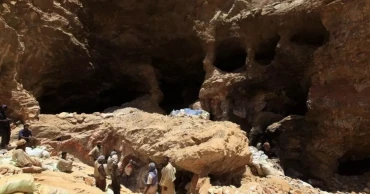
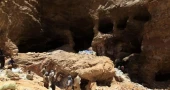
Sudan gold mine collapse kills at least 82, dozens missing
The death toll from the collapse of an informal gold mine in remote Sudan has risen to at least 82, with dozens more missing as rescuers struggle with inadequate equipment, local officials and activists said Wednesday.
The disaster occurred at the al-Zara gold mine in Nuhud, a town in West Kordofan province controlled by the paramilitary Rapid Support Forces (RSF).
According to local emergency responders and administration officials, the collapse began Sunday in one mine shaft before spreading through interconnected shafts. Rescuers pulled out 82 bodies by Wednesday, but search efforts remain severely hampered by a lack of heavy machinery, relying on a single forklift to search fragile, sandy soil at depths exceeding 30 meters.
The unregulated mine, stretching over one kilometer, lacked basic safety measures.
Sudan, a major gold producer where deadly mining accidents are common, has been engulfed in civil war between the RSF and the military since April 2023. UN experts note that gold smuggled from RSF-controlled regions helps fund the paramilitary group.
1 month ago