others

Very strong El Niño could fuel floods, droughts, extreme heat into 2027: WMO
The El Niño weather phenomenon is firmly established and is expected to intensify into a very strong event in the coming months, increasing the risks of floods, droughts and extreme heat across different parts of the world, the World Meteorological Organization (WMO) said.
According to the latest WMO update, forecasts from its Global Producing Centres show an exceptionally high likelihood of nearly 100% that El Niño will continue through February 2027.
The latest forecast marks the first time a WMO El Niño/La Niña update has expressed such a high level of certainty, reflecting strong agreement among meteorological and climate forecasting centres worldwide.
El Niño is being driven by unusually warm ocean temperatures across the tropical Pacific. The phenomenon is expected to strengthen further over the next several months, reaching very strong intensity and likely peaking toward the end of 2026. Its effects on global climate and weather patterns are expected to continue well into 2027.
UN Secretary-General António Guterres described the developing phenomenon as an exceptionally large El Niño and warned that rising sea-surface and global temperatures could put the world at greater risk of extreme weather.
“The science leaves no room for doubt: the planet is in uncharted waters, and those waters are heating up,” Guterres said, calling for stronger climate action to protect vulnerable populations.
WMO Secretary-General Celeste Saulo said El Niño could have severe consequences for communities and economies worldwide, noting that droughts, floods and other disruptions are already being experienced in various regions.
She stressed the need for exceptional preparedness and response as the phenomenon intensifies.
Saulo said the WMO has launched a major mobilisation with National Meteorological and Hydrological Services, describing them as being on the frontline of providing forecasts and early-warning services aimed at protecting lives and livelihoods.
The WMO will also work with UN agencies, humanitarian organisations and other partners to provide climate information needed for disaster preparedness and response, as well as for climate-sensitive sectors including agriculture, health, energy and water management.
“We have no time to lose,” Saulo said.
The WMO El Niño/La Niña Updates are considered a key source of information for governments and decision-makers. The forecasts are based on a consensus of climate models from WMO Global Producing Centres, along with assessments from national meteorological and hydrological services and climate prediction centres worldwide.
36 minutes ago
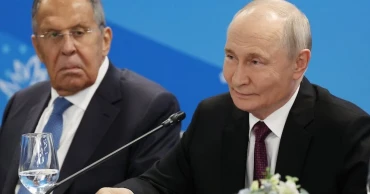
Russia to close German cultural centers after Berlin accuses Moscow over airport drone plot
Russia said Thursday it will close several German cultural centers after Berlin accused Moscow of being behind an attempted drone attack at Leipzig/Halle Airport and announced the closure of Russian diplomatic and cultural facilities in Germany.
Russian Foreign Minister Sergey Lavrov said centers operated by Germany's Goethe-Institut would be shut down in Moscow, St. Petersburg and Yekaterinburg.
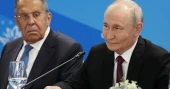
Speaking at the Eastern Economic Forum in Vladivostok, Lavrov said Germany should have understood that closing the Russian House cultural center in Berlin would bring an end to Germany's cultural presence in Russia.
The move came after German authorities blamed Russia for an alleged plot involving a drone carrying explosives that was found near a Ukrainian aircraft at Leipzig/Halle Airport on Aug. 4. The device was later defused.
The airport is a major international cargo hub and has been used to provide support and supplies to Ukraine.
Western officials have repeatedly accused Russia of carrying out sabotage and other disruptive activities across Europe in an effort to weaken support for Ukraine and destabilize European countries.
Russian President Vladimir Putin rejected the accusations, claiming that Germany was trying to divert attention from its own domestic problems and growing voter dissatisfaction. He also said any evidence presented against Russia had been fabricated.
EU considers response
European Union foreign ministers discussed possible responses to the alleged drone attack on Wednesday but faced difficulties in finding new measures that would address the threat without military action.
EU foreign policy chief Kaja Kallas said the incident appeared to have the characteristics of state-sponsored terrorism. Possible measures discussed included additional sanctions, visa restrictions and the closure of Russian consulates.
The EU has already imposed nearly two dozen rounds of sanctions on Russia since the start of the war in Ukraine, targeting more than 3,000 Russian officials, business figures and organisations, including banks, energy companies and drone manufacturers.
Kallas said the bloc was also preparing additional travel bans and asset freezes against around 1,600 more individuals.
Germany said it was “not at war” with Russia but had become a regular target of what it described as the Kremlin's hybrid campaign.
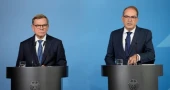
German Foreign Minister Johan Wadephul said Berlin had carefully prepared its response and that Moscow would now have to face the consequences.
He also called on Russia to demonstrate its willingness to engage in meaningful talks and negotiations, particularly over the war in Ukraine.
53 minutes ago
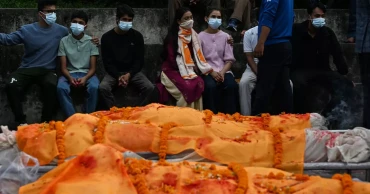
Symbolic funerals held in Nepal as some missing tourists contact authorities
Some tourists previously reported missing after Nepal's devastating floods have made contact with authorities, offering a glimmer of hope, while families of locals who remain unaccounted for are holding symbolic funerals for loved ones feared dead.
Nepal's Foreign Ministry said 324 foreign nationals have been rescued, while 590 people from 39 countries are still missing following the Aug. 26 disaster. The country's disaster management agency said at least 1,204 people have been killed and more than 4,200 remain missing.
Australian Prime Minister Anthony Albanese said the number of Australians reported missing had dropped from 43 to 38 after five people were confirmed safe overnight.
“Amidst all of this tragedy, we are seeing some positive news,” Albanese said while attending a regional summit in Palau, adding that efforts were continuing to locate others.
Australia said Thursday it would send a team of drone operators to Nepal within days to support search and rescue operations.
Nepal Tourism Board spokesperson Sunil Sharma said at least five other tourists previously listed as missing had contacted authorities by phone or email in recent days.
The disaster is believed to have been triggered by a glacial collapse in the Himalayas, sending huge amounts of rock, ice and meltwater into valleys and causing rivers in Tibet and Nepal to rise rapidly. Floodwaters swept away homes, roads, bridges and other infrastructure.
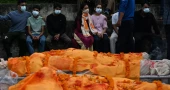
Families hold symbolic funeralsIn Nuwakot, one of the hardest-hit districts, some families have held symbolic funerals for relatives who remain missing and are feared dead.
For Hindu families, cremation is an important final rite. Performing the ceremony without recovering the bodies can offer families a sense of spiritual closure.
Mukunda Rijal said several of his cousins and their daughters were still missing, prompting the family to carry out symbolic funeral rites.
Along the banks of the Trishuli River, a priest placed straw effigies representing the missing relatives on funeral pyres and set them alight as family members gathered with traditional offerings.
Authorities have also been burying recovered bodies in temporary graves until they can be identified. DNA samples are being preserved, while photographs and other identifying details are being recorded to help match the bodies with missing people and eventually return them to their families.
China opens access route for rescue teamsAcross the border in China, rescue workers have completed a temporary road to reach the disaster-hit area near Gyirong Port, state broadcaster CCTV reported Wednesday.
The route will allow heavy machinery to reach the border crossing area, which was severely damaged by the floods and buried under water, mud and rocks.
China's state news agency Xinhua said at least 21 people had been killed and 541 others remained missing on the Chinese side of the disaster zone.
Survivors seek shelter in KathmanduMeanwhile, hundreds of flood survivors have fled to Kathmandu in search of shelter.
About 400 people, most of them from the town of Timure, around 110 kilometers west of the capital, are staying at the Yellow Gumba monastery. Local residents, relatives and charity groups are providing food and other relief supplies.
Among them is 21-year-old Riya Tamang, who escaped with her 10-month-old baby as floodwaters approached her home. She said she lost her grandparents in the disaster.
“I was the last one to leave the house. It was so difficult to escape,” she said.
Her husband, who works as a cook in Gyirong on the Chinese side of the border, also survived. The couple are now staying in contact through video calls.
1 hour ago
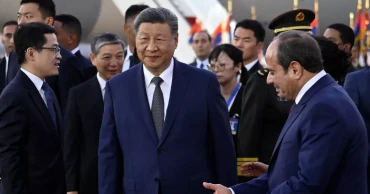
Palestinian issue remains core of Mideast question, must not be marginalized: China's Xi
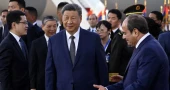
Chinese President Xi Jinping met with Egyptian President Abdel Fattah el-Sisi in Cairo, backing Middle East nations in building a new security architecture and emphasizing that the Palestinian issue remains the core of the regional question and must never be overlooked or marginalized.
According to China's state-run media, Xi called for a comprehensive solution for common security in the region. He urged external powers to abandon "double standards" and supported an effective role for the United Nations.
Addressing tensions in the Strait of Hormuz amid the U.S.-Iran war, Xi said that China is ready to collaborate with Middle Eastern nations to safeguard international shipping lanes.
Xi arrived in Cairo on Tuesday for a two-day state visit, marking his first trip to Egypt in 10 years.
With inputs from: Al Jazeera
12 hours ago
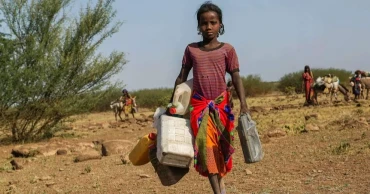
Over 162 mln children in eastern, southern Africa vulnerable to El Nino: UNICEF
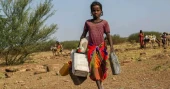
More than 162 million children, representing over two-thirds of all children in eastern and southern Africa, live in regions vulnerable to the intensifying 2026/2027 El Nino phenomenon, the United Nations Children's Fund (UNICEF) warned on Tuesday.
According to UNICEF, intensifying droughts, extreme heat and severe flooding threaten children's nutrition, health, education, safety, and access to safe water and sanitation.
Etleva Kadilli, UNICEF regional director for eastern and southern Africa, warned that the threat from El Nino is accelerating and the risks to children are already clear, adding that forecasts provide a narrow yet critical window to act before the worst impacts materialize.
"Across the region, children are facing food and water insecurity, overstretched health services and disrupted learning. Further, major climate shocks will likely push children and the systems they rely on to breaking point," Kadilli said in a statement.
UNICEF assessments highlight compounding and immediate risks for children across Djibouti, Eritrea, Ethiopia, Kenya, Madagascar, Malawi, Mozambique, Somalia, South Sudan, Sudan, Uganda, Zambia, and Zimbabwe.
In Somalia, severe flooding could directly affect up to 2.5 million people, fueling displacement and disrupting access to food, healthcare, safe water and education, UNICEF said.
In Ethiopia, tens of thousands of children face heightened risks, particularly in regions already grappling with acute food insecurity and deep vulnerability.
Meanwhile, in South Sudan, a combination of drought, extreme heat and localized flooding threatens to exacerbate food insecurity and malnutrition, trigger disease outbreaks, and compound the risks of famine and large-scale displacement, it said.
Less than 1 percent of international humanitarian assistance is currently allocated to anticipatory action, a critical oversight given its vital role in saving lives, mitigating human suffering and safeguarding hard-won development gains, according to UNICEF.
It said early, flexible financing is essential to blunt the impact of El Nino before conditions deteriorate further.
To address these critical response gaps before impacts peak, UNICEF is calling for urgent investments to scale up nutrition services, including by pre-positioning life-saving supplies and expanding early screening and treatment.
It also called for stronger health systems, improved disease surveillance and vaccination campaigns, safe water access, and measures to keep children learning, including by reinforcing school infrastructure and establishing alternative learning spaces.
16 hours ago
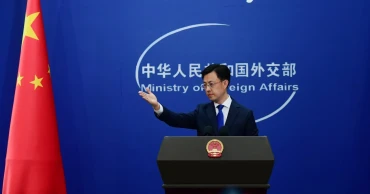
China to send 3rd batch of emergency relief supplies to Nepal
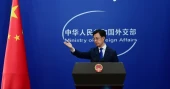
China is preparing a third batch of emergency relief supplies for Nepal, Chinese Foreign Ministry spokesperson Guo Jiakun said at a regular press briefing on Wednesday.
The second batch of China's emergency relief supplies arrived in Nepal's capital Kathmandu on Tuesday afternoon, along with five DNA identification experts to assist Nepal in carrying out related work.
Nepal has expressed appreciation for China's additional emergency assistance and technical support, Guo said.
Based on Nepal's needs, China is preparing a third batch of emergency relief supplies, including Bailey bridges, mortuary cabinet, epidemic prevention supplies and emergency communications equipment, Guo said, adding that China will also send a second team of DNA identification experts.
Noting that nearly 100 Chinese nationals are missing in disaster-hit areas of Nepal, Guo said that China attaches great importance to the safety of its nationals and institutions in Nepal and is working with the Nepali side to search for missing Chinese nationals and help evacuate those affected to safe areas.
So far, 261 foreign nationals from 23 countries have been identified as missing in the mudslide disaster in Gyirong County, southwest China's Xizang Autonomous Region, Guo said.
He added that the Chinese Foreign Ministry had briefed the embassies of relevant countries in China about information concerning the missing foreign nationals and would continue to maintain close communication with the embassies through various channels.
China will stand firmly together with Nepal and jointly overcome the difficulties as part of our efforts to carry forward the traditional friendship as neighbouring countries, Guo said.
20 hours ago
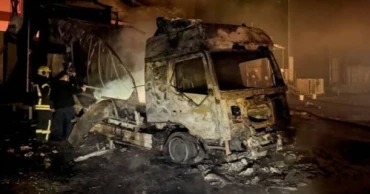
Russian attacks wound 8 in Ukraine as Moscow and Kyiv trade threats
Russian drone and missile attacks hit residential and other civilian areas in Ukraine's Kyiv and Odesa regions overnight and Wednesday morning, wounding at least eight people, local officials said.
The latest attacks came as Russia and Ukraine traded fresh threats, raising concerns that the nearly five-year war could escalate further.
Ukraine's air force said the Kyiv and Odesa regions were among the main targets of the overnight Russian assault.
Russia launched 174 attack drones, including around half described as jet-powered drones that are harder to intercept, along with two ballistic missiles and two air-launched missiles, the Ukrainian air force said.
In the southern city of Odesa, an attack damaged a 24-story residential building, destroying apartments on several floors. Eight people, including a child, were injured, officials said.
Office buildings and two educational institutions were also damaged, while power outages temporarily disrupted electric public transport.
In the Kyiv region, a man and a woman were wounded by shrapnel during morning attacks, officials said.
It was the seventh consecutive day of attacks on Kyiv, although Wednesday's assault was less intense than in previous days. The attacks also caused a fire at a warehouse, while an educational facility and a medical practice were damaged.
The air war has intensified as the conflict continues, while the front lines in eastern and southern Ukraine remain largely deadlocked and efforts by the United States to broker a peace deal have yet to produce a breakthrough.
Late Tuesday, Ukrainian President Volodymyr Zelenskyy warned foreign airlines that Russian airspace was becoming increasingly unsafe because of Ukraine's long-range drone attacks. He said continued military pressure was aimed at pushing Moscow toward peace negotiations.
Russian President Vladimir Putin, however, accused Zelenskyy of “state terrorism” and rejected the possibility of negotiating with what he described as terrorists.
Speaking on the sidelines of the Shanghai Cooperation Organization summit in Kyrgyzstan, Putin was also asked whether Russia could target British military facilities if the United Kingdom continued supplying weapons to Ukraine.
He did not rule out such action, saying the matter was a “military secret.”
Meanwhile, Russia said its air defenses shot down 130 Ukrainian drones overnight over 11 Russian regions, as well as Crimea and the Black Sea.
In Russia's Belgorod border region, Ukrainian drone attacks killed two people and injured 16 others, acting regional governor Alexander Shuvayev said.
Ukraine has increasingly used domestically developed long-range drones to target Russian oil facilities and other infrastructure, seeking to put pressure on Russia's economy and bring the effects of the war closer to the Russian public.
Western analysts say Russia's attempts to make major gains on the battlefield have recently slowed.
The Washington-based Institute for the Study of War said Russia's territorial gains in August were only a fraction of those made during the same month last year.
It said Moscow's spring and summer offensive had failed to break through Ukraine's front-line defenses, with Russian advances remaining slow and limited.
20 hours ago
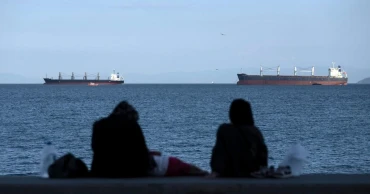
10 feared dead after Turkish cargo ship sinks off Istanbul following collision
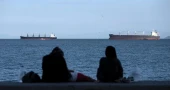
Ten crew members are feared dead after a Turkish cargo ship sank following a collision with a tanker in the Marmara Sea off Istanbul early Wednesday, authorities said.
The 90-metre cargo ship, Tugberk Imamoglu, sank after colliding with the Turkish-flagged tanker Alsu at around 3 a.m., according to Turkey's General Directorate of Maritime Affairs.
A lifeboat and other debris from the cargo ship have been found, but there was no immediate sign of the 10 crew members.
Transport Minister Abdulkadir Uraloglu said all those on board, including the captain, were Turkish nationals.
“The sinking occurred rapidly in 11 minutes. No one has been found alive,” he said.
Two helicopters and 12 search-and-rescue vessels were deployed to search the area.
The collision took place about 32 kilometres south of Silivri, a western suburb of Istanbul. The cargo ship was carrying rolled steel and was travelling from the Mediterranean port city of Iskenderun to Eregli on the Black Sea.
Authorities said an emergency signal was received from the Tugberk Imamoglu, and the first rescue vessel reached the area at around 4:10 a.m.
Officials said they believe the ship sank after it stopped responding to calls and the mobile phones of crew members could no longer be reached.
The 91-metre Alsu, an oil or chemical tanker, was travelling from Kocaeli, east of Istanbul, to Aliaga on Turkey's Aegean coast.
The search operation comes just days after Turkish naval units joined efforts to find passengers missing after a ferry sank off the coast of Cyprus on Sunday. Eight people were confirmed dead and 20 others remained missing.
The Turkish Straits, including the Bosphorus and Dardanelles, are among the world's busiest shipping routes, with hundreds of thousands of vessels passing between the Mediterranean and Black Seas every year.
22 hours ago
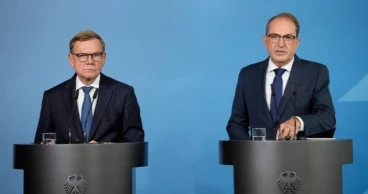
EU's Kallas calls alleged Russian drone plot 'state-sponsored terrorism'
European Union foreign policy chief Kaja Kallas on Wednesday described an alleged Russian drone attack plot targeting a German airport as “state-sponsored terrorism” as EU countries considered how to respond.
The German government on Tuesday blamed Russia for the attempted attack at Leipzig/Halle Airport on Aug. 4, involving a drone carrying explosives. Berlin also announced plans to close a Russian consulate among other measures.
The drone was found near a Ukrainian aircraft, and the explosive device was safely defused. German officials said the incident represented a new level of danger.
“It is clear that it has all the hallmarks of state-sponsored terrorism. The question is: what do we do about this,” Kallas told reporters before chairing a meeting of EU defence ministers in Ireland.
Western officials have repeatedly accused Moscow of carrying out sabotage and other disruptive activities across Europe to weaken support for Ukraine and create instability.
The EU is already preparing additional sanctions against individuals and organisations linked to Russia's war in Ukraine.
Kallas said about 1,600 people and entities linked to Russia's military-industrial complex are already being considered for sanctions, with more potentially to be added.
The alleged airport attack and its attribution to Russia could prompt the EU, and possibly NATO, to consider a stronger response. However, European countries remain cautious about taking steps that could lead to a direct confrontation with nuclear-armed Russia.
The EU has already imposed nearly two dozen rounds of sanctions on Russia since its invasion of Ukraine, targeting around 3,000 individuals and organisations.
Those targeted include Russian President Vladimir Putin, wealthy businessmen who support him and numerous lawmakers.
The sanctions have also targeted Russian banks and financial institutions, as well as hundreds of vessels accused of being part of a “shadow fleet” used to transport oil and support Russia's war effort.
Energy companies, drone manufacturers and other businesses have also faced restrictions.
Most EU measures involve freezing assets and imposing travel bans. The bloc has also sanctioned individuals and companies in countries accused of supporting Russia, including Belarus, China, Iran and North Korea.
1 day ago
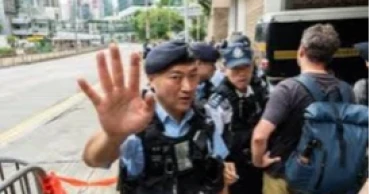
Hong Kong activist Joshua Wong pleads guilty in second national security case
Prominent Hong Kong pro-democracy activist Joshua Wong pleaded guilty Wednesday to a charge of conspiring to collude with foreign forces to endanger national security under a Beijing-imposed law.
It is the second national security case against Wong, a former student leader and one of the best-known figures of Hong Kong's pro-democracy movement.
The national security law was introduced in Hong Kong in 2020 following months of massive anti-government protests in 2019. Authorities say the law is necessary to protect national security and maintain stability, while critics say it has severely restricted political freedoms and silenced dissent.
Wong, 29, appeared thinner as he arrived at court wearing a blue shirt.
He is expected to be sentenced later. The offense carries a prison term of three to 10 years, while cases considered “of a grave nature” can result in life imprisonment. A guilty plea can lead to a reduced sentence.
Wong is already serving four years and eight months in prison after pleading guilty in a separate national security case linked to an unofficial political primary. He had been expected to be released next January before his arrest in June 2025 over the latest charge.
Prosecutors alleged that Wong and fellow activist Nathan Law had agreed years ago to seek international support for democratic self-determination in Hong Kong.
They said that after the national security law came into effect, Law and other activists who had left Hong Kong continued campaigning overseas by meeting foreign politicians and organizing petitions.
According to prosecutors, Wong supported those efforts from Hong Kong by using foreign media and social media, including sharing Law's posts, to encourage other countries to impose sanctions, blockades or other measures against Hong Kong and China.
Prosecutors also referred to a Facebook post in which Wong shared an online petition urging digital forensic companies to stop cooperating with Hong Kong police.
They said one company later announced that it would stop selling its digital intelligence products to customers in Hong Kong and mainland China.
The prosecution further alleged that Wong claimed in a work report that he had helped end the company's supply of forensic software to police and had contacted foreign companies over their cooperation with the Chinese government.
Wong told the court that he agreed with the details presented by prosecutors.
Before the hearing, a supporter shouted, “Hang in there,” as Wong arrived at court.
His friend Louis Lee said Wong had spent his time in prison reading books, studying, learning guitar and exercising.
“I believe he and I, or friends outside, we will do our best in our own roles and continue to work hard in our fields,” Lee said.
Wong first gained public attention in 2012, when he was a high school student leading protests against the introduction of national education in Hong Kong schools.
He later became a prominent figure in the 2014 Occupy Movement.
In 2016, Wong co-founded the political party Demosisto with other young activists, including Law, who became Hong Kong's youngest lawmaker that year.
During the large-scale protests in 2019, Wong sought international support for the democracy movement, including from the United States. Chinese authorities accused him of seeking foreign interference in Hong Kong.
Demosisto was dissolved after Beijing imposed the national security law in 2020.
Many other prominent activists have also been jailed under the law, including former media tycoon Jimmy Lai, while others have left Hong Kong for countries such as the United States and Britain.
Hong Kong authorities have separately offered rewards of 1 million Hong Kong dollars ($127,600) for information leading to the arrest of Law and other activists living overseas.
1 day ago