others
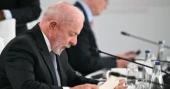
Brazil condemns trump's 25% tariff as politically motivated
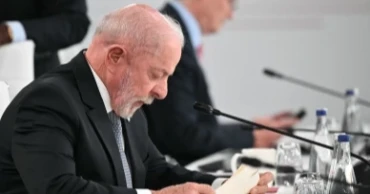
Brazil has denounced a new 25% US tariff on selected Brazilian imports as unjust and politically motivated, warning it could impose reciprocal duties on American goods.
The tariffs, announced by Washington on Wednesday and effective next week, target around 3,000 products but exempt items such as coffee, beef, oranges, orange juice and aircraft components to avoid supply chain disruptions.
Márcio Elias Rosa, Brazil’s Industry Minister, said the measure affects about 18% of the country’s exports to the US, valued at roughly $7.4 billion based on 2024 figures. President Luiz Inácio Lula da Silva’s administration rejected US claims of unfair trade practices, noting that 76% of US imports entered Brazil duty-free in 2025 and that the average tariff on American products was only 3.1%.
Foreign Minister Mauro Vieira strongly criticized US Secretary of State Marco Rubio for accusing Lula of failing to negotiate in good faith, calling the remarks offensive and reaffirming Brazil’s commitment to dialogue while defending its sovereignty.
Despite President Donald Trump’s claims, the US has long maintained a trade surplus with Brazil, reaching nearly $42 billion last year. Brazilian industry groups warned the tariffs would increase uncertainty for businesses, while analysts said Brazil is likely to accelerate efforts to diversify export markets beyond the United States.
17 days ago
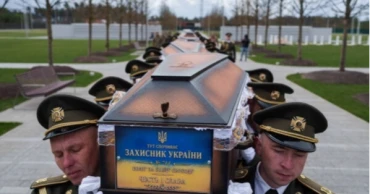
Ukraine buries unidentified soldiers as families wait years for answers
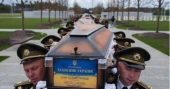
At a military cemetery in Kyiv, rows of crosses bear the words "Unknown Defender of Ukraine", each marked with an identification number and a note saying the identification process is still underway.
Among them is one grave that now carries a photograph of Ihor Yalynych, a Ukrainian soldier who went missing in the Kharkiv region in 2022. After searching for four years, his children, Stanislav and Oleksandra Yalynych, were finally able to find and identify their father's burial place.
The effort to identify thousands of soldiers killed in Russia's war is expected to continue for years, becoming one of the conflict's longest-lasting human tragedies. Many families are still waiting for confirmation, while some graves may never be identified.
For much of the war, Ukraine had no dedicated place to bury unidentified soldiers. Their bodies remained in refrigerated storage while the country's national military cemetery was under construction. Even before the cemetery officially opened in January, the first unidentified soldiers were buried there in August. Today, more than 300 graves carry only numbers instead of names, with more burials continuing.
"I was always close to my father, and losing him was very painful," said 21-year-old Oleksandra. "For four years, all I wanted was a place where I could come, sit with him and talk. Now I'm happy we found him."
A father's final mission
Ihor Yalynych was killed in eastern Ukraine in April 2022. He had served in the military since 2015, after fighting first broke out in eastern Ukraine and Russia illegally annexed Crimea in 2014.
When Russia launched its full-scale invasion in 2022, he was serving with a brigade in eastern Ukraine. He safely completed his first combat mission and even sent photos to his son. But he never returned from the second.
After weeks without contact, Stanislav posted online that his father was missing. Later, someone recognised Ihor in a photograph shared on a Russian Telegram channel showing nine dead Ukrainian soldiers lying side by side.
Ukraine's National Police in the Kharkiv region confirmed to AP that an investigation is ongoing into the deaths of the group of Ukrainian soldiers whose bodies were found there in April 2022, as well as efforts to identify them.
Although Ihor's body was recovered after Ukrainian forces retook the area in September 2022, his family spent four years dealing with official procedures, including DNA testing, before they could reclaim his remains.
Stanislav said the process was delayed because his father's case file was reportedly sent to police in Mykolaiv region, where Ihor was originally from, and remained unprocessed for more than two years.
In a written response to AP, Mykolaiv police did not comment on the family's claim that the file had been lost or delayed. They only said no criminal complaint had been filed regarding Ihor's identification.
Because of the missing file, Stanislav said he was only able to provide a DNA sample about six months ago. The match was confirmed two months later.
State keeps the flags until families are found
During military funerals in Ukraine, the national flag covering a soldier's coffin is normally folded and presented to the family.
For unidentified soldiers, however, there is no family member to receive it. Veterans Affairs Minister Natalia Kalmykova said the state accepts and keeps each flag until the soldier is identified.
She said honouring those who die defending the country is important not only for the fallen but also for those left behind, reminding Ukrainians of the price paid for their country's independence and democratic future.
Kalmykova said three of the first unidentified soldiers buried at the cemetery have since been identified.
She said one reason so many soldiers remain unidentified is that those who joined the military during the early years of the conflict were not required to provide DNA samples. Ukraine only created a DNA database later, and about half of the country's troops have now submitted samples, according to a senior military official who was not authorised to speak publicly.
When no DNA sample exists, identification depends on close relatives providing samples. Many relatives, however, remain in Russian-occupied areas, have left the country, are estranged from the soldier or cannot be located.
Since Russia's full-scale invasion began, more than 40,000 DNA samples from unidentified bodies have been registered, said Ruslan Abbasov, deputy director of the State Scientific Research Forensic Center under Ukraine's Interior Ministry. Most have now been matched with some of the 170,000 DNA samples collected from relatives.
When DNA samples are unavailable, investigators sometimes search a soldier's home or personal belongings to obtain genetic material.
Each unidentified body is buried with a unique identification number placed inside the coffin, marked on the outside and engraved on the grave's cross. Officials maintain a registry linking every number to the corresponding body, allowing graves to be located once a DNA match is confirmed.
A long process that will continue after the war
Bodies arrive from battlefields and through exchanges with Russia. Since the invasion began, Ukraine has brought home 24,805 bodies, according to the Coordination Headquarters for the Treatment of Prisoners of War.
Although many bodies are found carrying passports, military cards or driver's licences, DNA testing remains essential because investigators cannot be certain those documents belong to the deceased.
Forensic medical examiner Maksym Paziura said identification is often made more difficult because the remains of several people can sometimes be mixed together in a single bag. Most bodies are also in advanced stages of decomposition.
His office in the Kyiv region now processes between 15 and 20 bodies every day, storing them in refrigerated facilities until they are identified or buried. He said the workload has increased about five times compared with before the war.
"Even if the war ends, we will still have a huge amount of work," Paziura said. "Identification is a difficult and lengthy process that will continue long after the fighting stops."
For families, confirming a loved one's death is not only emotionally important. Without official identification, relatives cannot settle inheritance matters, remarry or receive government compensation provided to families of fallen soldiers.
Abbasov noted that countries in the Western Balkans are still identifying victims decades after their wars ended, adding that Ukraine is likely to face a similar challenge.
For Stanislav Yalynych, placing his father's photograph on the grave finally brought some peace.
"Now it won't only be us who know our father is buried there," he said. "People stop and ask about him. It means his sacrifice was not in vain, and he will be remembered."
18 days ago
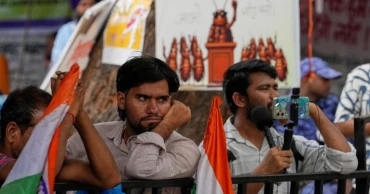
Indian youth protest movement rallies around activist Sonam Wangchuk's hunger strike
A youth-led protest movement in India has gathered around climate activist Sonam Wangchuk, whose ongoing hunger strike has become the centrepiece of a campaign demanding reforms to the country's examination system and the resignation of the education minister.
At a protest camp in New Delhi, student demonstrators continue to spend their days and nights at Jantar Mantar, while Wangchuk, 59, remains on hunger strike inside a tent after weeks without food.
"If not fasting, then what? Riots in the streets? That's what we don't want. This is a peaceful way to make the government hear our voice," Wangchuk said.
Wangchuk has emerged as the face of the Cockroach Janta Party, a youth-driven movement that began online two months ago and quickly gained nationwide attention over alleged social media leaks linked to India's highly competitive college entrance examinations.
With the hunger strike entering its third week, organisers say they are trying to maintain pressure on Prime Minister Narendra Modi's government, accusing it of ignoring their demand for the resignation of Education Minister Dharmendra Pradhan.
"There has been no response from the government. They have left Sonam Wangchuk to die," said Abhijeet Dipke, founder of the Cockroach Janta Party and a student at Boston University.
The movement began in May after Supreme Court Chief Justice Surya Kant referred to some unemployed young people as "cockroaches" during a court hearing on an unrelated issue. Supporters adopted the term as a symbol of resilience, turning it into a satirical political campaign that attracted more than 21 million Instagram followers within days.
Besides seeking the education minister's resignation, protesters are calling for major reforms to the examination system and compensation for families of students who died by suicide following alleged exam paper leaks or examination results.
For millions of young Indians, admission to medical colleges and recruitment to government jobs depend heavily on a single competitive examination.
Dipke said the movement has expanded beyond social media. Since its first major rally in New Delhi in early June, thousands of supporters have participated in demonstrations at universities and in several other cities.
The involvement of Wangchuk, widely known for his environmental activism, has also drawn professionals and public figures beyond the student community. Opposition politicians and several Bollywood personalities have visited the protest site or expressed support in recent days.
Despite its strong online following, attendance at the New Delhi protest has remained relatively modest. A few hundred people usually join the sit-in each day, with numbers rising to around 1,000 in the evening. Many protesters have continued camping at the site despite heavy monsoon rains.
Unlike traditional political parties, the movement has no formal organisational structure. Supporters cover their own travel and living expenses while staying at Jantar Mantar, a designated protest venue under police supervision. So far, police have not attempted to disperse the demonstrations.
Ajay Zingade, a 33-year-old IT professional, said repeated reports of exam paper leaks motivated him to join the campaign.
"I am just exercising my fundamental right to dissent," he said.
Organisers say the campaign has grown into a broader demand for greater accountability and the restoration of public trust in institutions, including the education system, judiciary, political leadership and the media.
"The system needs a complete overhaul because it is no longer accountable or taking basic responsibility," Dipke said.
The government has neither responded publicly to the protesters' demands nor entered into talks with organisers. The Education Ministry did not respond to questions from the Associated Press.
Senior government leaders have largely dismissed the movement. Education Minister Dharmendra Pradhan has accused its members of acting against the country's interests, while other officials have said there is no need for the government to negotiate with the protesters despite acknowledging students' concerns.
Organisers say the government's silence has only strengthened their determination as Wangchuk continues his fast.
"In a democracy, the government should listen to the people, engage in dialogue and remain accountable. I don't know why the government isn't doing that," Dipke said.
Wangchuk said his hunger strike is intended to promote peaceful protest rather than violence.
"It is about demanding accountability, which is essential for any government," he said.
Organisers are now preparing a march to Parliament on Monday to take their demands directly to lawmakers.
"We hope the government is wise enough to respond to peaceful methods instead of waiting for less peaceful ones," Wangchuk said.
Dipke said the protesters are ready for a prolonged campaign.
"The government may have thought we were just young people who would eventually go home. But we have shown that we are prepared for a long struggle, and we are not leaving," he said.
18 days ago
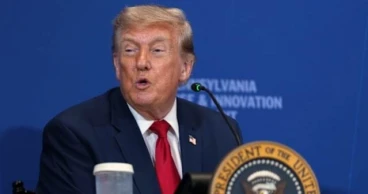
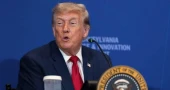
After six years, Trump set to revisit 2020 election claims in White House address
US President Donald Trump is expected to revisit his long-standing claims about the 2020 presidential election during a primetime address from the White House on Thursday, despite years of official findings that the election was secure, legitimate and free of widespread fraud.
Following Trump's 2020 election defeat to Joe Biden, officials appointed by Trump to lead the Justice Department, intelligence agencies and cybersecurity bodies consistently concluded that there was no evidence of major fraud or foreign interference that could have changed the election outcome.
Since returning to office for a second term, Trump has sought to challenge those conclusions. He has appointed senior officials who support his claims that the 2020 election was stolen and has made clear that he expects his administration to align with that position.
The issue has become a key loyalty test for many of Trump's nominees. During his Senate confirmation hearing on Wednesday, Jay Clayton, Trump's nominee for national intelligence director, avoided directly saying Biden won the election.
"He had the most electoral votes," Clayton said. "He was declared the winner."
When Democratic Senator Mark Kelly pressed him on whether the person with the most electoral votes is the winner, Clayton declined to answer directly.
Trump has repeatedly promoted conspiracy theories alleging that an international network manipulated US voting machines in 2020, claims that have been rejected by courts and election officials and have triggered several high-profile defamation lawsuits.
Ahead of Thursday's address, Trump promised to reveal "really big news," saying that "without free and fair elections, you don't have a country."
Election experts, however, fear the speech could revive false claims that have already been extensively investigated.
"There have been more than six years of consistent findings from intelligence agencies and election experts showing there was no foreign interference in the 2020 election and that US voting systems were secure," said Victoria Bassetti of States United, a nonpartisan organisation that supports state election officials. She said any new claims without evidence would contradict years of documented findings.
Years of reviews found no widespread fraud
Numerous court rulings, audits, recounts and investigations — including several conducted by Republican officials — found no evidence of widespread fraud or significant problems with the 2020 election.
Trump and his allies lost dozens of legal challenges seeking to overturn the election results, including cases heard by judges appointed by Trump himself.
Former Attorney General William Barr, who served under Trump, said there was no evidence of significant election fraud, a conclusion that drew Trump's criticism.
Chris Krebs, the former head of the federal cybersecurity agency responsible for protecting election infrastructure, also declared the 2020 election secure and said there was no evidence of vote tampering. Trump dismissed Krebs shortly afterward and later ordered an investigation into him after returning to office in 2025.
An intelligence assessment completed on Jan. 7, 2021, during Trump's final days of his first term, also found no evidence that foreign actors altered vote totals or election equipment.
In addition, Trump signed a federal review document last year stating that there was no evidence any foreign government had altered vote counting or the outcome of any US election.
Fresh federal review underway
After returning to office, Trump ordered a new federal review of the 2020 election.
Federal investigators have seized voting records from Fulton County, Georgia, and Maricopa County, Arizona — two key counties that featured prominently in post-election conspiracy theories.
Trump appointed attorney Kurt Olsen to lead the investigation. Olsen has been associated with election fraud claims and was previously sanctioned by the Arizona Supreme Court for making false statements in a lawsuit challenging the 2022 Arizona governor's race.
David Becker, a former Justice Department lawyer who now heads the Center for Election Integrity & Research, criticised the renewed investigation.
"He has committed untold taxpayer resources," Becker said. "They've found nothing."
According to Becker, search warrant documents filed in the Fulton County investigation repeated conspiracy theories that had already been disproved, while the FBI reassigned hundreds of analysts to review the material.
Conspiracy theories fuel costly lawsuits
Despite repeated official findings, supporters of election conspiracy theories continue to claim that Trump will eventually present conclusive evidence of widespread fraud.
One widely circulated theory alleges that Venezuela and other countries manipulated US voting machines to prevent Trump's victory.
Those allegations have led to major defamation lawsuits against media organisations and individuals.
Fox News agreed to pay $787.5 million to settle a lawsuit over broadcasting false claims about voting machines after the 2020 election. Newsmax and One America News have also reached settlements with voting technology companies over similar allegations.
Separately, a Denver jury found Mike Lindell, a leading promoter of election conspiracy theories whom Trump recently endorsed for governor of Minnesota, liable for defaming an employee of a voting machine company by calling him a traitor.
Becker said the pattern over the past six years has remained consistent: broad public allegations have repeatedly failed when tested in court because they lacked supporting evidence.
"If someone's alleging a crime that occurred six years ago, we shouldn't simply respond to the claims," Becker said. "We should require evidence that proves them."
18 days ago
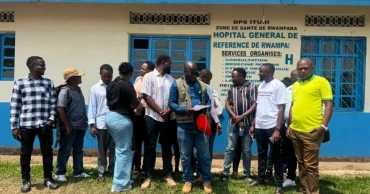
Ebola cases in Congo top 2,000 as health workers strike over unpaid wages
Congo's Ebola outbreak has surpassed 2,000 confirmed cases, with 2,011 infections and 754 deaths, according to government data released overnight, marking what authorities describe as the fastest-growing outbreak on record.
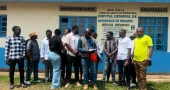
Health workers at Bunia General Hospital, the region's largest medical facility, went on strike Wednesday over unpaid wages, joining other frontline workers protesting compensation despite working under difficult conditions. Staff barricaded the hospital entrance, while the World Health Organization (WHO) said more than 100 healthcare workers have been infected since the outbreak began on May 15.
Ebola treatment workers strike in DR Congo over unpaid wages amid worsening outbreak
The Health Ministry said 753 patients remain in isolation or hospital care, while 366 have recovered. Contact tracing remains limited, reaching only 67% of exposed individuals.
WHO said about 80% of new infections are linked to unknown transmission chains, while authorities have yet to identify the outbreak's first patient. Conflict-driven displacement and mining-related movement have further complicated efforts to trace contacts.
WHO emergencies chief Dr Chikwe Ihekweazu, said many recent deaths occurred in communities before patients could reach health facilities.
The response has also been hindered by funding shortages, attacks on health centres, insecurity, community mistrust and the absence of approved vaccines or treatments for the Bundibugyo strain. A clinical trial of two potential Ebola treatments has recently begun in Ituri province.
19 days ago
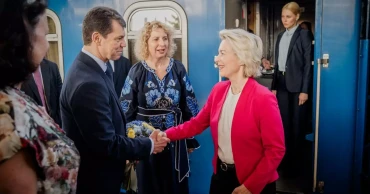
Top EU official visits Kyiv, reaffirms support for Ukraine against Russia
European Commission President Ursula von der Leyen visited Kyiv on Wednesday to mark Ukraine's Statehood Day, reaffirming the European Union's continued military and financial backing for the country as it continues to resist Russia's full-scale invasion, now in its fourth year.
Ukraine has faced ongoing threats to its sovereignty since Russia occupied and illegally annexed Crimea in 2014. Eight years later, Moscow launched its full-scale invasion in February 2022. Statehood Day, observed as a national holiday, celebrates Ukraine's independence and self-determination.
The war has claimed thousands of military and civilian lives, displaced millions, devastated cities and heightened concerns that the conflict could escalate into a broader confrontation between Russia and NATO, whose members have continued to support Kyiv. Despite diplomatic efforts, there is still no sign of a peace agreement.
Senior officials from several southeastern European countries were also expected in Kyiv on Wednesday for a regional summit focused on Black Sea and broader security issues. A similar meeting held in the southern city of Odesa last year reaffirmed support for Ukraine's sovereignty and territorial integrity.
In recent weeks, Ukrainian President Volodymyr Zelenskyy has secured renewed commitments of assistance from the Group of Seven (G7) industrialized nations and the Coalition of the Willing.
Von der Leyen, making her 11th wartime visit to Ukraine, said Europe remains alert to Russia's wider ambitions and has already provided Ukraine with billions of euros in financial aid, military assistance and diplomatic support.
She said the EU would announce new measures to strengthen cooperation between European and Ukrainian defense industries and provide additional assistance to improve Ukraine's air defense systems ahead of winter, when Russia has repeatedly targeted the country's energy infrastructure.
Her visit comes as Western officials and analysts say Ukraine has stepped up long-range drone and missile strikes deep inside Russian territory, hitting strategic targets, disrupting military supply routes and contributing to fuel shortages in some areas.
"It's a special moment," von der Leyen wrote on social media. "Ukraine has built a strong military momentum. The tide is turning."
Also attending the Southeast Europe Summit in Kyiv was Serbian President Aleksandar Vucic, whose country maintains close ties with Moscow.
Although Serbia officially supports Ukraine's territorial integrity, it has declined to join Western sanctions against Russia following the invasion, largely because of its heavy dependence on Russian energy supplies.
Meanwhile, Ukrainian authorities said Russian aerial attacks killed at least eight civilians and injured 11 others on Wednesday.
In the northern Sumy region, Russian forces dropped six glide bombs, mainly targeting infrastructure, killing three people and injuring seven, according to regional military administration chief Oleh Hryhorov.
Another Russian strike on the southern city of Odesa killed three people and wounded three others, local military administration head Serhii Lysak said.
In the northern Chernihiv region, Russian drone attacks killed two people and seriously injured an 18-year-old, according to regional military administration chief Viacheslav Chaus.
Russia's Defense Ministry said its air defense systems intercepted 93 Ukrainian drones overnight over several Russian regions, as well as over Crimea, the Sea of Azov and the Black Sea.
19 days ago
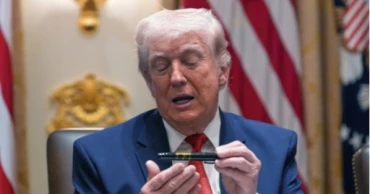
Trump to address defense summit as Iran war strains US missile stockpiles
President Donald Trump is set to speak at a defense technology summit at the U.S. Army War College on Wednesday, where he is expected to highlight major investments in military technology as the recent conflict with Iran has significantly reduced U.S. stockpiles of key missiles.
The summit, held in Carlisle, Pennsylvania, is being organized by Republican Senator David McCormick. It has brought together top military, intelligence and business leaders, including Defense Secretary Pete Hegseth, Chairman of the Joint Chiefs of Staff Gen. Dan Caine, Army Secretary Dan Driscoll, CIA Director John Ratcliffe and U.S. Ambassador to the United Nations Mike Waltz.
The White House said the event aims to bring together senior defense officials and leading global investors to discuss national security priorities and explore investment opportunities in the defense sector.
Among those attending are JPMorgan CEO Jamie Dimon, Blackstone President Jon Gray, Lockheed Martin CEO Jim Taiclet, General Dynamics CEO Phebe Novakovic, Boeing CEO Kelly Ortberg, SpaceX director Antonio Gracias and Palantir Chief Technology Officer Shyam Sankar.
Trump has made frequent visits to Pennsylvania, a key political battleground, including a trip last month to a Mack Trucks factory near Allentown to support Republican Congressman Ryan Mackenzie's reelection campaign.
Although McCormick is not facing reelection this year, Republicans are increasingly concerned about the political impact of the Iran conflict, the continuing high cost of living and Trump's low approval ratings as they seek to retain control of Congress in November's midterm elections.
Trump spoke at a similar summit hosted by McCormick in Pittsburgh last year, where the senator announced $90 billion in pledged investments for energy technology and robotics projects across Pennsylvania.
This year's summit began on Tuesday. Ahead of Trump's address, Pennsylvania-based artificial intelligence company ZeroEyes announced plans to invest $10 million in AI and machine learning research and development.
Pittsburgh-based Gecko Robotics also announced plans to open a new 10,000-square-foot manufacturing facility to expand the use of robotics in defense production and strengthen the country's defense industrial base.
The summit comes as concerns grow over U.S. weapons supplies. A report released in May found that defense contractors may need at least three years to rebuild stockpiles of Tomahawk cruise missiles, Patriot air defense missiles and THAAD interceptors, which have been heavily used in military operations, including recent strikes on Iran.
The shrinking inventory has raised concerns that the U.S. could face shortages if a future conflict breaks out with China.
China has said it wants its military to be capable of taking Taiwan by force, if necessary, by 2027, although experts view that timeline as an ambition rather than a fixed deadline. During Trump's recent visit to Beijing, Chinese President Xi Jinping warned that poor handling of U.S.-Taiwan relations could increase tensions and potentially lead to direct conflict between the two countries.
Trump has also pledged to allow Ukraine to produce Patriot air defense systems under license, although experts say it could take years before such production becomes operational.
To strengthen U.S. military capabilities, Trump has proposed a record $1.5 trillion defense budget for 2027. However, the spending package remains stalled in Congress, and even if approved, expanding production capacity for advanced weapons would take considerable time.
Jake Loosararian, co-founder and CEO of Gecko Robotics, said U.S. defense manufacturers need to significantly strengthen supply chains to speed up production of advanced military technologies.
"President Trump uniquely understands the importance of pragmatic impact today," Loosararian said. "He also understands big, beautiful things for tomorrow."
19 days ago
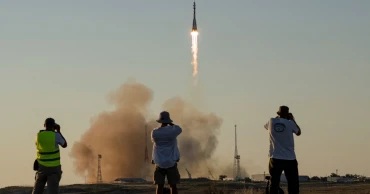
US-Russian crew reaches International Space Station for eight-month mission
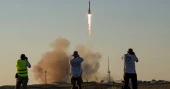
A joint U.S.-Russian crew arrived at the International Space Station (ISS) on Tuesday, hours after launching from the Russia-leased Baikonur Cosmodrome in Kazakhstan.
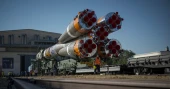
NASA astronaut Anil Menon and Russian cosmonauts Pyotr Dubrov and Anna Kikina lifted off as scheduled aboard the Roscosmos Soyuz MS-29 spacecraft at 7:47 pm local time (10:47 am EDT, 1447 GMT) for an eight-month mission aboard the orbiting laboratory.
The Soyuz spacecraft docked automatically with the ISS about three hours after launch.
NASA Administrator Jared Isaacman attended the launch, marking the first visit by a NASA chief to Baikonur in eight years. The visit underscored continued cooperation between Washington and Moscow in space despite tensions over Russia's military action in Ukraine.
Ahead of the launch, Isaacman met Roscosmos chief Dmitry Bakanov. During a meeting with the crew on Monday, he thanked the Russian space agency for its efforts in preparing the mission, saying the work carried out over the past several months reflected the professionalism and dedication of everyone involved.
Isaacman also met Russian Deputy Prime Minister Denis Manturov. According to Manturov's office, the two discussed future cooperation on the International Space Station and other space projects.
The mission marks Menon's first journey into space, while Dubrov and Kikina are each making their second spaceflight.
The three newcomers will join NASA astronauts Jessica Meir, Jack Hathaway and Chris Williams, European Space Agency astronaut Sophie Adenot, and Roscosmos cosmonauts Sergei Kud-Sverchkov, Sergei Mikaev and Andrei Fedyaev aboard the station.
Although the United States and Russia were fierce rivals during the Cold War space race, they have continued to cooperate on the ISS and other space projects. That partnership has come under strain since Russia launched its military operation in Ukraine in 2022, but both countries have maintained crew exchange missions using each other's spacecraft.
However, broader cooperation has stalled. Plans for possible Russian participation in NASA's Artemis lunar exploration programme have been shelved, while Roscosmos has expanded cooperation with China on a planned lunar mission as Russia has become increasingly dependent on Beijing for technology imports and energy exports amid Western sanctions.
20 days ago
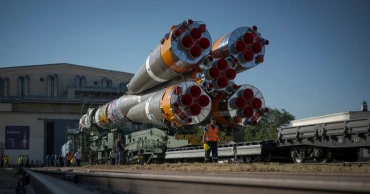
NASA chief visits Russia's Baikonur for US-Russian crew launch to ISS
NASA Administrator Jared Isaacman attended Tuesday's scheduled launch of a joint U.S.-Russian crew to the International Space Station (ISS), highlighting continued space cooperation between Washington and Moscow despite ongoing tensions over Russia's war in Ukraine.
Isaacman's visit to the Russia-leased Baikonur Cosmodrome in Kazakhstan marked the first trip by a NASA chief to the facility in eight years.
During a meeting with the crew on Monday, Isaacman thanked Russia's state space agency, Roscosmos, for its efforts in preparing the mission, saying the work carried out over the past several months demonstrated the professionalism and dedication of everyone involved.
Ahead of the launch, Isaacman also met Roscosmos chief Dmitry Bakanov.
NASA astronaut Anil Menon and Russian cosmonauts Pyotr Dubrov and Anna Kikina were set to lift off aboard the Roscosmos Soyuz MS-29 spacecraft for an eight-month mission aboard the ISS.
The mission will be Menon's first journey to space, while it marks the second spaceflight for both Dubrov and Kikina.
Once aboard the station, the three will join NASA astronauts Jessica Meir, Jack Hathaway and Chris Williams, European Space Agency astronaut Sophie Adenot, and Roscosmos cosmonauts Sergei Kud-Sverchkov, Sergei Mikaev and Andrei Fedyaev.
Former Cold War rivals, the United States and Russia have continued to cooperate on the ISS and other space activities despite strained relations following Russia's military action in Ukraine in 2022. The two countries have maintained crew exchange missions, with American and Russian astronauts flying aboard each other's spacecraft.
However, broader space cooperation has stalled. Plans for possible Russian participation in NASA's Artemis lunar exploration programme have been abandoned, while Roscosmos has expanded cooperation with China on a planned lunar mission as Russia deepens economic and technological ties with Beijing amid Western sanctions.
20 days ago
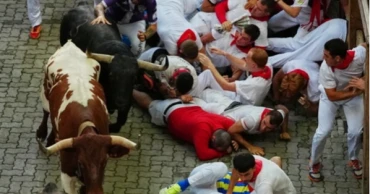
2 Spaniards gored as San Fermin festival ends with final bull run
Spain's famous San Fermin festival ended on Tuesday with two Spanish runners being gored during the eighth and final bull run.
An 18-year-old man from Pamplona was gored in the thigh at the first bend of the route after a bull charged into a small group of runners. The animal knocked two men onto the cobblestone street and tossed another over its horns.
A 46-year-old man from central Spain was gored in the chest near the end of the route, where the path narrows before entering the bullring. The bulls are later killed there by matadors during the day's bullfights.
Both injured men were taken to a local hospital for treatment. Eight other runners, including an 86-year-old British man, received medical care for minor injuries.
The six fighting bulls, accompanied by steers, completed the 875-metre route from the holding pen to the bullring in about two and a half minutes. Their speed often catches runners off guard, especially with more than a thousand people packed into the narrow streets.
The last death during the San Fermin bull runs occurred in 2009. However, serious injuries, including gorings and broken bones, remain common as many first-time participants and foreign tourists join experienced local runners. Many injuries also happen when frightened runners fall.
This year's San Fermin festival marked the 100th anniversary of the publication of Ernest Hemingway's novel The Sun Also Rises, which helped bring the festival worldwide recognition.
20 days ago