others
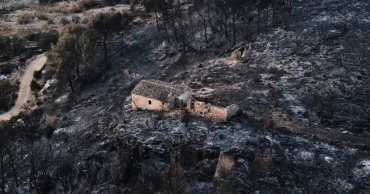
Firefighters battle deadly wildfire in southern Spain
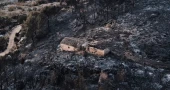
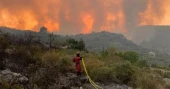
Hundreds of firefighters backed by helicopters and fixed-wing aircraft struggled on Saturday to contain one of Spain's deadliest wildfires that erupted earlier this week and killed a least 12 people.
The blazes, which also lashed France this week, came as parts of Western Europe are facing their third heat wave in six weeks. Europe is the world’s fastest-warming continent, with temperatures increasing twice as fast as the global average since the 1980s, according to the European Union’s Copernicus Climate Change Service.
In Spain's Andalusia, a combination of light winds and high humidity are helping crews but the sheer size of the fire still poses challenges, Antonio Sanz, head of the region's emergency services, said. The fire has so far scorched some 66 square kilometers (25 square miles) of forest and farmland — about the size of Manhattan.
Sanz said fire crews carried out controlled burns overnight around the perimeter of the fire, which broke out late Thursday in a semi-arid area near the Sierre de Los Filabres mountains in in Almería province, just as Spain was sizzling.
Most of the victims, who are believed to be foreign nationals, died after ignoring shelter-in-place instructions, authorities said. Seven people died while on foot after abandoning their cars.
Four of the dead were believed to be British because the steering wheel of their burned-out car was on the right side, as with British vehicles, regional authorities said.
Sanz said Saturday that authorities had completed autopsies and DNA samples were collected to identify them.
Spain’s Foreign Minister José Manuel Albares has spoken with his counterparts from the U.K., Belgium, Canada and the Netherlands about the fire, Spain's official EFE news agency reported. Almería is home to one of the largest communities of foreign nationals in Andalusia.
Authorities proactively evacuated 1,448 people from some 11 areas.
Many are fleeing the flames
Jeffrey Kember and his wife, Christine, were watching a favorite TV show in their Los Pinos farmhouse when the blare of a siren alerted them to the fire. The couple jumped into their respective cars while also trying to help a neighbor with two toddlers.
The husband described how they got separated and how he was unable to speak to his wife because she didn't have a phone on her.
“I'm driving through the flames. It was actually flames. I though, ‘I can’t stop, I just gotta go,” he told The Associated Press, his wife now next to him outside an evacuation center. "It was eerie because all of a sudden I came out of the flames and it was all bright sunshine. It was like surreal.”
Meanwhile, Spanish authorities arrested two people for ignoring evacuation orders and returning to a high-risk area, according to EFE. Authorities are still combing through the Bédar area in search for any victims.
Europe withers in intense heat
Spain has battled frequent and severe heat waves in recent years, with temperatures often exceeding 40 degrees Celsius (104 degrees Fahrenheit). Wind, high temperatures and little rainfall help small wildfires grow into unchecked blazes.
Justice Minister Félix Bolaños on Saturday attributed the ferocity of the Almeira wildfire to a “climate emergency.” He said the fire, at its most intense, advanced as fast as 100 meters per minute (328 feet per minute.)
Spain’s Meteorological Agency warned that the wildfire risk over the weekend will remain very high.
In June, Spain experienced several days of record-setting heat, with over 1,000 excess deaths. Globally, 2025 was the third-hottest year on record, bringing several intense heat waves across Europe.
Wildfires lash France
Several wildfires remained active across France on Saturday as temperatures soared. Interior Minister Laurent Nunez said that 32 people have been arrested across the country since the beginning of the summer in connection with wildfires.
“Those unacceptable acts, which have disastrous consequences and mobilize our firefighters at the risk of their lives, now fall into the hands of the justice system,” he said. “We will continue our determined action and will not let anything slide.”
French President Emmanuel Macron also weighed in, recalling in a post on X that nine out of 10 wildfires start because of human activity. More than 25,000 hectares (62,000 acres) of land have burned in France since the start of 2026, roughly double the area compared to the same period last year.
France is experiencing the peak of its third heat wave this summer, with temperatures reaching 40 C across western and central areas and around 37 C (98 F) in Paris. In the French capital, the Eiffel Tower will close in the afternoon over the weekend instead of late at night, as it usually does. The Louvre and Orsay museum have also announced reduced opening hours because of the heat wave.
Last month was France’s hottest June on record, with deaths surging by nearly a third during the hottest week.
Spain and Portugal have faced deadly fires before
Spain is no stranger to wildfires, with last year's fire season burning more than 393,000 hectares (971,000 acres). according to the European Forest Fire Information System, an area twice as large as London. Four people died.
Spain's deadliest wildfire was in 1979, when 21 people perished in Lloret de Mar, a coastal town about an hour north of Barcelona.
In 2017, a wildfire in neighboring Portugal left 66 people dead in Pedrogao Grande, located 200 kilometers (120 miles) northeast of Lisbon. In that blaze, 47 people died on one road while similarly attempting to flee in their cars.
23 days ago

15 Indian tourists killed as speedboat capsizes off southern Vietnam
Fifteen Indian tourists were killed after a tourist speedboat capsized off southern Vietnam on Saturday while returning from an island trip, according to state media.
The boat was carrying 32 Indian tourists and four crew members when it overturned about 400 metres (1,310 feet) from Hon May Rut Ngoai Island near Phu Quoc, Vietnam's largest island, authorities said.
Witnesses told VN Express that nearby boats rushed to the scene and began rescuing passengers before border guards, the navy, coast guard and other emergency responders arrived.
The rescue operation was hampered by rough waves, and many passengers were trapped inside the overturned boat, the report said.
Authorities said 21 people were rescued, while all 15 bodies were recovered. Those injured were taken to nearby hospitals for treatment.
Phu Quoc, located in the Gulf of Thailand, is one of Vietnam's most popular beach destinations. Hon May Rut Ngoai Island, around 10 kilometres (6 miles) south of Phu Quoc, is well known for its white sandy beaches and clear waters, attracting millions of local and foreign tourists each year.
The cause of the accident was not immediately known, and an investigation is underway.
23 days ago
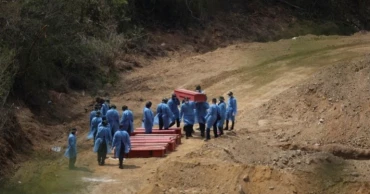
Venezuela earthquake death toll rises above 3,500 as health crisis fears grow
The death toll from last week's twin earthquakes in Venezuela has climbed to more than 3,500, while nearly 18,000 people remain homeless, raising fears of a worsening public health crisis.
Lawmaker Jorge Rodriguez said on Monday that the official death toll had reached 3,535. The earthquakes also injured 16,740 people and left 17,854 without homes.
At least 12,800 displaced people are now staying in 80 temporary shelters across Caracas and the coastal state of La Guaira, the areas worst affected by the disaster.
The powerful earthquakes, measuring 7.2 and 7.5 in magnitude, struck within seconds of each other on June 24, causing widespread destruction in and around Caracas and La Guaira. Around 60,000 buildings were damaged or destroyed.
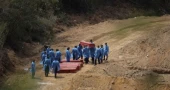
In La Guaira, Reuters witnesses saw trucks carrying coffins and forensic teams working as heavy machinery dug burial trenches in an area marked with white crosses.
Health experts have warned that the disaster could trigger a major public health emergency as thousands of survivors continue to live in overcrowded shelters or outdoors without clean water or proper sanitation.
Many people are still suffering from untreated injuries, while infectious diseases are becoming an increasing concern as Venezuela's already strained healthcare system struggles to cope.
"The next major challenge will be infections among people who have been exposed to the disaster for a long time," said Eugenio Cova, head of the trauma unit at Hospital Jose Gregorio Hernandez in Caracas.
He said hospitals were continuing to treat patients with serious injuries, but infections were making the situation more difficult.
Reports of illness are already increasing. Residents in temporary shelters have complained of diarrhoea and other diseases, while calling for portable toilets, better sanitation and government support to reduce overcrowding and prevent the spread of infections.
Meanwhile, frustration is growing over the government's rescue and relief efforts. In many affected communities, local residents, volunteers and humanitarian workers have taken the lead in searching for survivors and distributing aid.
Carolina Jimenez, president of the Washington Office on Latin America (WOLA), said the government's response had been inadequate.
"In most countries, the state is the first responder after a disaster. In Venezuela, the state has been the last responder," she said.
In areas such as Catia la Mar, north of Caracas, residents said government assistance had either not arrived or remained insufficient, forcing volunteers and civil society groups to fill the gap.
Source: Al Jazeera
23 days ago
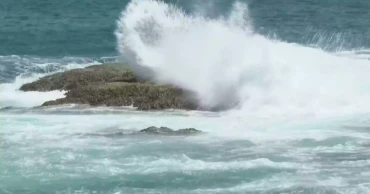
Typhoon Bavi heads for China after Taiwan shuts schools as deadly storms batter region
A powerful typhoon was moving toward China's eastern coast on Friday, adding to the country's severe weather crisis after other storms killed at least 50 people earlier this week.
Typhoon Bavi, packing maximum sustained winds of 155 kilometres per hour (96 mph), was expected to pass north of Taiwan, bringing heavy rain to the island of 23 million people from Friday night through Saturday.
Authorities closed schools in Taipei on Friday as a precaution. Fishing boats were secured in northern ports, while many flights to Japan, Hong Kong and other destinations were cancelled through Saturday, according to Taiwan's Central News Agency. Some flights, however, were still operating.
Forecasters said the typhoon was following a northwesterly path that would take it over remote Japanese islands before passing north of Taiwan on Saturday. It is expected to make landfall in China on Saturday night, south of Shanghai near the border of Fujian and Zhejiang provinces.
Chinese authorities have evacuated more than 17,000 people in Zhejiang province and deployed about 170,000 rescue workers on standby, the state-run Xinhua News Agency reported. In neighbouring Fujian, some ferry services have been suspended due to strong winds and rough seas, while fishing boats have been ordered back to port.
Bavi has weakened since earlier this week, when it was a super typhoon and brought destructive winds to Saipan and other US territories in the Pacific.
Meanwhile, southern China is still recovering from the impact of Tropical Storm Maysak. Authorities said on Thursday that flooding caused by the storm killed 39 people in the Guangxi region after days of record-breaking rainfall.
The heavy rains caused reservoirs to overflow, including the partial collapse of a dam in Hengzhou, sending muddy floodwaters across nearby areas. Many residents were trapped for days on the upper floors of buildings, often without electricity, until rescue teams reached them.
Earlier this week, severe thunderstorms and tornadoes killed 11 people in Hubei province in central China.
In a separate incident unrelated to the storms, a landslide in Gansu province in western China killed 21 forestry workers on Tuesday.
23 days ago
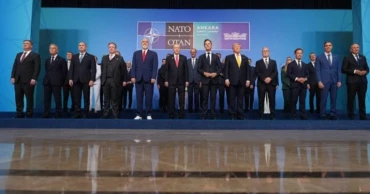
Erdogan gifts engraved revolvers to NATO leaders after Turkey summit
NATO leaders who gathered in Turkey this week to discuss global security returned home with an unusual souvenir from Turkish President Recep Tayyip Erdogan — an engraved revolver and six rounds of ammunition.
The gift was intended to highlight Turkey's expanding defence industry, but it left several leaders facing legal and practical challenges over what to do with the firearms.
Canadian Prime Minister Mark Carney said the revolver had been handed over to police because of Canada's gun laws.
"It struck me that my gift of maple syrup kind of undermatched," Carney told reporters. "I would like to reassure Canadians, they keep guns away from me."
Hungarian Prime Minister Péter Magyar shared a photo on X showing a Magnum revolver engraved with his name alongside six cartridges. It was not immediately known what he planned to do with the gift.
European Commission President Ursula von der Leyen thanked Erdogan for the present, but her spokesperson said the firearm would be decommissioned and donated to a military museum.
British Prime Minister Keir Starmer said the gift package included a document waiving export controls. However, he left the revolver behind because importing it into the United Kingdom would be illegal. It will also be decommissioned.
Belgian Prime Minister Bart De Wever handed his revolver over to airport police after returning home.
Officials said the firearms presented to German Chancellor Friedrich Merz and Dutch Prime Minister Rob Jetten were left at their countries' embassies in Ankara and would also be taken out of service.
Jetten said the gift was unlike anything he had seen before.
"My first reaction was, this is something a bit different to the box of syrup waffles that we gave out at the NATO summit in The Hague," he said. He added that Erdogan appeared to be showcasing Turkey's defence industry, which has become one of the strongest in the region.
Croatian President Zoran Milanović said he only learned after returning home that Erdogan had given him a revolver. His office said it would most likely be donated to a police museum.
"I didn't take it. I shoot from different weapons," Milanović joked, referring to his political style.
The White House did not immediately comment on the gifts.
Erdogan's office has also not officially commented. Turkish media identified the gift as the Gumusay .357 Magnum, a vintage six-shot revolver produced by state-owned arms manufacturer MKE.
According to local reports, the revolvers were meant to demonstrate the progress of Turkey's defence industry, which has evolved from relying heavily on foreign suppliers to producing advanced military equipment, including drones, warships and a next-generation fighter jet currently under development.
Gun ownership has long been part of Turkish culture, and the gifts drew little reaction within the country. However, the gun control advocacy group Umut Vakfi says armed violence remains a serious concern, reporting more than 2,700 gun-related incidents across Turkey last year.
In addition to the revolver, summit participants also received a copy of Erdogan's biography, "The Politics of Courage: Erdogan and the Rise of Türkiye," according to Turkey's state-run Anadolu Agency.
23 days ago
US seeks public Iranian commitment on Strait of Hormuz security
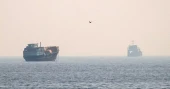
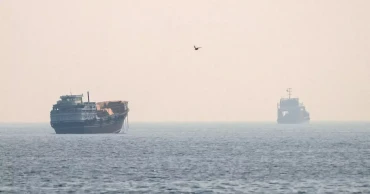
The United States is urging Iran to publicly declare that the Strait of Hormuz is open to international shipping and that it will no longer target vessels passing through the strategic waterway. According to senior U.S. officials, internal political divisions within Iran have complicated efforts to maintain a ceasefire and advance negotiations.
U.S. officials said recent attacks on ships were allegedly carried out by a hard-line faction within Iran seeking to undermine the truce. Although President Donald Trump described the interim ceasefire as effectively over, he stated that diplomatic efforts toward a long-term agreement would continue. The administration has reportedly given negotiators only a limited period to reach an agreement while keeping other options available if diplomacy fails.
Washington is also seeking assurances that Iran will respect freedom of navigation in the Strait of Hormuz, a crucial route for global oil and gas shipments. U.S. officials claimed Iranian representatives privately acknowledged the recent maritime attacks were a mistake and expressed interest in continuing negotiations. However, Iran's ambassador to the United Nations insisted that all activities in the strait, including navigation and security operations, fall solely under Iran's authority and warned against outside involvement.
Iran has argued that it should have exclusive control over the waterway and has suggested that commercial vessels pay transit fees. The conflict previously disrupted energy markets, although oil prices have eased from wartime highs.
The United States also maintains that any future nuclear agreement must require Iran to surrender its stockpile of highly enriched uranium. Officials warned that if negotiations fail, the U.S. has military options to ensure Iran cannot use its nuclear material. They emphasized that progress on nuclear talks depends on Iran fully honoring the ceasefire and ending attacks on shipping.
The conflict has created political and economic challenges for the Trump administration, which faces pressure to avoid a prolonged war while pursuing its security objectives.
Meanwhile, unexplained airstrikes continued inside Iran after Washington announced it had ended its military campaign. No group claimed responsibility. Iranian officials accused the United Arab Emirates of secretly assisting the United States, while Gulf nations and Israel declined to comment on the latest strikes.
Iran responded by launching missiles toward several Gulf countries, including Bahrain, Jordan, Kuwait, and Qatar, with reports indicating limited casualties. Regional leaders and diplomats have intensified efforts to prevent further escalation. Iranian Foreign Minister Abbas Araghchi is scheduled to meet his Omani counterpart to discuss the Strait of Hormuz, while Pakistan, Qatar, Oman, and other regional partners continue diplomatic outreach. Israel has also reaffirmed that it is prepared to respond forcefully if tensions with Iran increase again.
23 days ago
Wildfires in Spain leave at least 11 dead
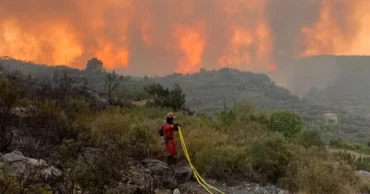
A wildfire in southern Spain has killed at least 11 people, making it one of the country's deadliest on record, as soaring temperatures grip much of the country, authorities said early Friday.
Several victims of the fire in Almeria were found inside burnt-out vehicles, local media reported. Eight others have been injured in the blaze, which 150 firefighters and 220 soldiers from Spain's military emergency unit battled Friday.
Regional Spanish emergency authorities said four British nationals appeared to be among the victims.
Authorities reported earlier that 12 people had died, but revised the death toll Friday morning. Andalusia's regional leader Juan Manuel Moreno told the Cadena Ser radio station on Friday that 19 people were unaccounted for.
The fire broke out in a hamlet in a semi-arid area near the Sierra de Los Filabres mountains. Authorities have not confirmed the cause of the fire, but said people who called to report it said that a fallen power line had sparked a blaze that spread rapidly into a nearby forest.
The fire also led to road closures, while 1,000 residents were evacuated, according to emergency services.
Spanish Prime Minister Pedro Sánchez expressed his condolences, writing on X of his “Immense sadness and desolation in the face of the terrible consequences of the fire affecting the province of Almeria."
Spain has battled frequent and severe heat waves in recent years, with temperatures often exceeding 40 C (104 F). Wind, high temperatures and little rainfall help small wildfires grow into unchecked blazes.
In June, Spain experienced several days of record-setting heat, with over 1,000 excess deaths attributed to heat.
Parts of Western Europe are facing their third heat wave in six weeks.
Europe is the world’s fastest-warming continent, with temperatures increasing twice as fast as the global average since the 1980s, according to the European Union’s Copernicus Climate Change Service. Globally, 2025 was the third-hottest year on record, bringing several intense heat waves across Europe.
Scientists warn that climate change caused in part by the burning of fuels like gasoline, oil and coal is exacerbating the frequency and intensity of heat and dryness, making certain regions more vulnerable to wildfires.
24 days ago
Shoe factory fire kills 28 in China, renews concerns over workplace safety
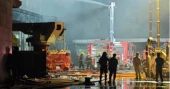
Chinese authorities are investigating a devastating fire at a shoe factory in the southeastern province of Fujian that killed 28 people, once again highlighting ongoing concerns over workplace safety in the country.
State-run Xinhua News Agency reported Friday that search operations had ended and investigators were working to determine the cause of Thursday's fire, which destroyed the Fujian Huiteng shoe factory in Jinjiang, one of China's largest footwear manufacturing centres.
According to product listings on online sales and import platforms, Fujian Huiteng manufactures shoes for both Chinese and international brands.
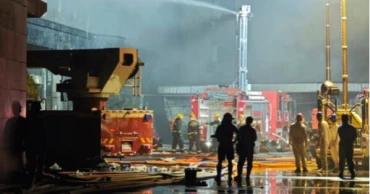
Footage aired by local media showed several people trapped on the roof of the five-storey factory as thick black smoke billowed from the building. Firefighters struggled to control the blaze, with water from fire hoses initially failing to reach flames on the upper floors. Xinhua said the factory owner and managers have been arrested, while the company's bank accounts have been frozen.
Authorities said 237 factory workers and two visitors were inside the building when the fire broke out. Of the 213 people rescued, two later died in hospital. The remaining 26 people who had been reported missing were later confirmed dead, according to state broadcaster CCTV.
The tragedy is the latest in a series of deadly industrial accidents in China despite repeated government efforts to improve workplace safety. In May, an explosion at a fireworks factory in Changsha, Hunan province, killed at least 37 people. Last year, a fire at a refrigeration facility under construction in Xinyu, Jiangxi province, claimed 39 lives.
Chinese authorities have repeatedly instructed businesses to identify and remove workplace hazards. Official figures show that 18,261 people died in nearly 20,000 workplace accidents across China in 2025, a decline from the previous year.
Chinese President Xi Jinping ordered a swift investigation into the fire and called for those responsible to be held fully accountable.
Jinjiang, known as China's "shoe capital," is home to thousands of footwear factories and produces about one-fifth of the world's athletic shoes—more than one billion pairs each year—according to state media and industry reports.
The city's rise from small workshops to a major export manufacturing hub, often described by Xi as the "Jinjiang Experience," is widely seen as a model of China's industrial development.
CCTV reported that the fire started on the ground floor of the concrete building, where a workshop and warehouse were located. A local fire official said large quantities of shoe sole materials stored in stairwells blocked firefighters' access and hampered rescue efforts. The materials were highly flammable, contributing to the rapid spread of the fire.
The fire department deployed 183 firefighters and 35 vehicles to tackle the blaze, which was brought under control after about four hours. Xinhua later reported that more than 500 people took part in the rescue and search operation.
24 days ago
Iran enters a new chapter as Khamenei laid to rest
He is the grandson of an influential Shiite cleric, born in Qom — the heart of religious studies in Iran — and raised in a traditional family that embraced the theocracy. But by his late 20s, he had stopped praying and given up on clerical rule. Now, he can barely discuss politics or religion with his siblings and father.
The tech worker, now in his mid-30s, says Iranian society is deeply divided, even among opponents of the Islamic Republic, and he blames one man — Ayatollah Ali Khamenei. The supreme leader who ruled Iran for over three decades was laid to rest early Friday after being killed at the start of the war.
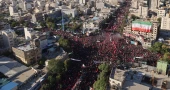
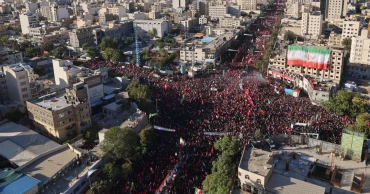
Processions of his coffin in Tehran and other cities brought out gigantic crowds of supporters in a show of strength by the hard-liners at the core of the Islamic Republic, who lionized him as a defender of clerical rule who had stood up to the West and Israel.
But underneath run deep veins of discontent that have grown over decades of bloody repression, international sanctions and economic mismanagement, and have widened since authorities killed thousands of anti-government protesters in January.
“A gap has opened up in homes across the country that is really remarkable,” said the tech worker by phone from Tehran, where he now lives. Like others interviewed by The Associated Press to discuss Khamenei’s rule, he spoke on condition of anonymity out of security fears.
The funeral has brought Iran’s divide into focus
Khamenei’s death, in Israeli strikes on Feb. 28, crowned his legacy in the eyes of Iran’s rulers and his supporters, who consider him a martyr. Echoing the slogans of ultra-hardliners who oppose talks with the U.S., some who turned out for the funeral called for U.S. President Donald Trump to be killed in revenge.
“Our goal is to prove to the world that we will not submit to oppression and tyranny, and that we will avenge the blood of our leader,” said Hossein Akbari, a 60-year-old mourner in Tehran.
Khamenei took the reins in 1989 after the death of Ayatollah Ruhollah Khomeini, the charismatic ideologue who had led the overthrow of the U.S.-allied shah a decade earlier and inspired a mass following.
Under the banner of resisting the West, Khamenei defied sanctions to build up the country’s nuclear program, its arsenal of missiles and its network of militant allies across the region.
Within Iran, he entrenched hard-line clerical rule by largely neutralizing the reform movement. He gave the Revolutionary Guard immense military, political and economic power. As younger Iranians sought liberalization, he tried to maintain strict control over people’s personal lives and dress codes.
The 2009 protests marked a turning point
A critical turning point came in 2009 with the repression of protests sparked by vote-rigging allegations in that year’s presidential elections. Dozens were killed in the first major crushing of a large protest movement.
It generated widespread hopelessness, according to an Iranian activist and former political prisoner who writes for a reformist-leaning magazine in Tehran.
A senior aide to Iran’s reformist President Masoud Pezeshkian acknowledged last month that Iran was “severely polarized” between hard-core supporters of the Islamic Republic and those who want its downfall. But Ali Rabiei said there was a large part of society between the “two poles” that the government could lean on to deliver change within the system. His remarks were carried by the state news agency IRNA.
There is no reliable polling in Iran, but elections offer a glimpse of public opinion.
Turnout in Iran’s last presidential elections dropped to some of the lowest levels ever, seen as a sign that millions hoping for change saw no use in voting. Still, the hard-line candidate garnered 13.5 million votes, while Pezeshkian, the reformist, received 16.3 million.
Many are scarred by January’s crackdown
Repeated eruptions of protests since 2009 were met with bloody crackdowns. January’s was the deadliest, when security forces killed thousands to crush nationwide demonstrations that started over economic woes and then snowballed into calls for Khamenei’s overthrow.
The sister of a protester who was shot to death on Jan. 9 in Tehran summarized Khamenei’s legacy in one word: injustice.
For working-class families, Iran’s plunging economy has only worsened since the war. “Workers can barely afford to buy bread, everything is so expensive,” she said.
“Since my sister died, mentally, financially, our life has fallen apart. All we do is look at photos and videos of my sister and cry. What do we have left?” she said from her home in eastern Iran.
A quiet form of dissent appeared over the past month as Iranians marked the holy period of Ashoura, commemorated with funeral-style marches honoring a martyred 7th-century Shiite saint. Videos posted on social media have shown some Iranians joining the processions with photos of family members killed in the January crackdown.
Iranians feel despair, uncertainty over the future
One legacy of Khamenei is the Islamic Republic’s ability to survive his death and the massive U.S.-Israeli assault. The leadership emerged from the war with an interim deal with the U.S. that won it some immediate gains. The deal promises an even greater windfall — a lifting of sanctions — if Iran and the U.S. reach a final nuclear agreement, though that is uncertain.
“It’s a victory for the Islamic Republic,” a 35-year-old woman who joined the January protests said of the deal. But “for Iran’s people, until we see the results, we won’t know if it is.”
She worries about the chasm in Iranian society and rifts among opponents of the theocracy, some of whom hope for its quick overthrow while others see the potential for gradual change.
“The space for dialogue is very closed, and I don’t mean only the government, I mean the people,” she said.
After losing his job at a tech company, a 33-year-old Tehran resident who also joined the January protests said his main concern was the wrecked economy, where unemployment and prices have surged. Many of his friends are now jobless, and his wife’s employer slashed salaries.
“All of us, frankly, are just trying to stay alive and all of our struggle is taken up with meeting basic needs like rent and food,” he said.
The theocracy is still under threat
Rebin Rahmani, a Kurdish activist once imprisoned in Iran and now living in Paris, said the theocracy under Khamenei lacked any answer to multiplying political and economic problems — except further repression.
“Its insistence on iron-fisted, security-driven approaches will only trigger further unrest,” said Rahmani, a director at the Kurdish Human Rights Network. Protests are “reigniting every few years with renewed force.”
Pezeshkian and other pragmatists within the system want to use U.S. talks to try to get sanctions lifted and rebuild the economy. For now, they appear to have the backing of Khamenei’s son and successor, Ayatollah Mojtaba Khamenei, who is still in hiding but lent his tentative support to talks in a written statement.
Peacetime might prove the real test of the elder Khamenei’s legacy, said Ali Vaez, Iran director at the International Crisis Group, as rival factions vie to define the future of the Islamic Republic.
“Wartime gave the system a degree of cohesion under shared duress. But the governance challenges remain just as stark.”
24 days ago
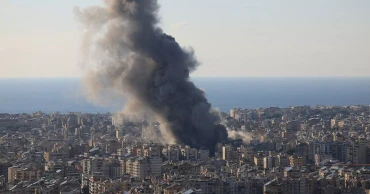
Iran slams fresh US strikes targeting southern provinces, bridges
The Iranian Foreign Ministry on Thursday condemned the latest U.S. strikes against several regions in Iran's southern coastal provinces and two bridges in the country's northeastern provinces.
In a statement, the ministry described the attacks on two bridges along the rail routes from Gorgan to Incheh Borun and Mashhad to Tehran as "flagrant war crimes."
It stressed that the U.S. strikes within the past 48 hours, carried out under the "false pretext" of responding to earlier incidents involving ships crossing the Strait of Hormuz, were in blatant violation of the United Nations Charter and a recently signed memorandum of understanding (MoU) between the two countries on ending the war.
The ministry also accused the United States of using the strikes to justify its "continued non-compliance" with the MoU.
It added that Iran is determined to punish the "aggressors" and will in no way let the U.S. government's "breach of promises, bullying and vileness" affect Iran's rights and national interests.
In reaction to the U.S. attacks, Iran's Parliament Speaker Mohammad Baqer Qalibaf said in a Thursday post on social media platform X, "The United States has not learned yet that bullying and breach of promises are no longer without costs."
He warned that if the United States hits Iran, it will receive blows, underlining that the Strait of Hormuz will only reopen with Iran's arrangements, and not by U.S. threats.
The U.S. Central Command said in a post on X early Thursday that its forces had completed an additional round of strikes against Iran to "further degrade Iran's ability to attack commercial shipping and innocent civilian mariners in the Strait of Hormuz," marking the second consecutive day of such action.
In retaliation, Iran's IRGC and army said they have struck U.S. military bases and facilities in Kuwait, Bahrain, and Qatar.
Meanwhile, Hossein Kermanpour, head of the Iranian Health Ministry's public relations, said in a post on X that at least 14 people were killed and 78 others wounded in the U.S. attacks against five Iranian provinces on Wednesday and Thursday.
25 days ago