others
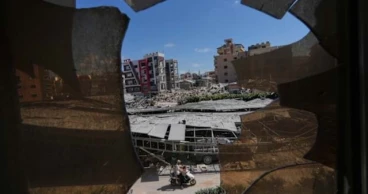
Israeli forces launch fresh strikes in southern Lebanon as US-Iran talks delayed
Israel's military said on Friday that its forces carried out overnight strikes on targets across southern Lebanon, while Hezbollah reported heavy fighting in the area.
The latest clashes came as planned talks between the United States and Iran in Switzerland, aimed at finding a lasting solution to the Iran conflict, were postponed.
Israel's presence in southern Lebanon and its continued military operations against the Iran-backed Shiite group Hezbollah have been among the key issues under discussion.
Israeli officials have argued that the military must maintain control of the area and continue operations against Hezbollah, accusing the group of launching attacks into northern Israel.
The delay in the talks followed a report by pan-Arab satellite channel Al-Mayadeen, which is politically aligned with Hezbollah, saying that Iran had postponed sending its delegation to Switzerland because of Israel's ongoing military campaign in Lebanon.
1 month ago
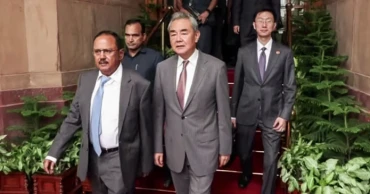
Chinese FM Wang Yi to attend BRICS security meeting in India
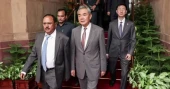
Chinese Foreign Minister Wang Yi will attend the 16th Meeting of BRICS National Security Advisers and High Representatives on National Security in India later this month.
“At the invitation of India’s National Security Adviser (NSA) Ajit Doval, Wang Yi, Member of the Political Bureau of the CPC Central Committee and Director of the Office of the Central Commission for Foreign Affairs, will attend the 16th Meeting of BRICS National Security Advisers and High Representatives on National Security to be held in India from June 22 to 23,” a spokesperson for the Chinese Ministry of Foreign Affairs said in a statement on the social media platform X.
1 month ago
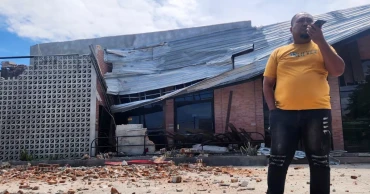
6.7-magnitude quake in Indonesia: Death toll rises to 3
The death toll from a 6.7-magnitude earthquake that struck Indonesia's Central Sulawesi province on Tuesday has risen to three, with 17 people seriously injured, the National Disaster Management Agency (BNPB) said Thursday.
The BNPB also said that 91 people were wounded with minor injuries, while 6,412 people were affected by the disaster. Sigi regency was the worst-hit area, with damage reported in several villages.
The tectonic earthquake struck on Tuesday at 11:27 a.m. local time, with its epicenter located on land about 42 km southeast of Palu City at a depth of 10 km. The earthquake did not trigger a tsunami.
The government has provided emergency supplies, including tents, food packages, mattresses and blankets, while rescue teams continue assessment and relief operations.
1 month ago
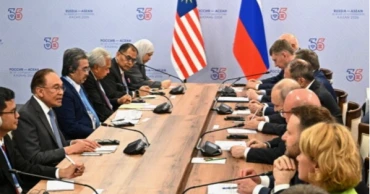
Putin hosts Southeast Asian leaders, pushes for stronger trade ties
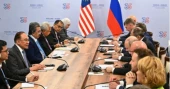
Russian President Vladimir Putin on Wednesday hosted leaders of the Association of Southeast Asian Nations (ASEAN) in a bid to strengthen economic and political ties with the regional bloc.
The two-day meeting is taking place in Kazan and is focused on expanding Russia’s “strategic partnership” with ASEAN members, which include Brunei, Cambodia, Indonesia, Laos, Malaysia, Myanmar, the Philippines, Singapore, Thailand, East Timor and Vietnam, according to Kremlin foreign policy adviser Yuri Ushakov.
Ushakov said ASEAN has long maintained relations with Russia as a “dialogue partner” and has engaged in annual high-level meetings. This year’s summit marks 35 years of Russia-ASEAN relations.
In a message to a business forum held alongside the summit, Putin said the gathering would help create “new opportunities” for expanding trade, investment and industrial cooperation, while also deepening business-to-business contacts.
The Kremlin aide said discussions would also cover global and regional issues, as well as efforts to further develop Russia-ASEAN relations. He added that participants were expected to reaffirm support for a “just and democratic multipolar world order” based on international law and the UN Charter.
Ushakov described Russia-ASEAN engagement as “fruitful, equal and constructive.”
Putin is also holding bilateral meetings with several leaders attending the summit, which he is co-chairing with Philippine President Ferdinand Marcos Jr., whose country currently holds the rotating ASEAN chairmanship.
During a meeting with Marcos, Putin said bilateral cooperation between the two countries was based on “good traditions, mutual respect and consideration of each other’s legitimate interests.” Marcos, in turn, thanked Putin for hosting the summit in Kazan and invited him to the ASEAN summit in Manila in November.
Putin also met Brunei’s Sultan Hassanal Bolkiah and Malaysian Prime Minister Anwar Ibrahim on the sidelines of the event.
Speaking at a reception for delegation heads, Putin said Russia and ASEAN countries jointly support a “fair world order” based on sovereign equality and non-interference in internal affairs.
“All our states follow their own models of development and don’t impose their views on anyone. And this is, indeed, our strength,” he said, adding that Russia was ready to deepen cooperation for the “security, well-being and prosperity” of the region.
Separately, Putin held talks with Turkish Foreign Minister Hakan Fidan, who had also met Russian Foreign Minister Sergey Lavrov a day earlier in Moscow. Putin described Russia-Turkey relations as steadily developing and “truly friendly.”
ASEAN members maintain diverse global alignments, with some closer to the United States and others heavily engaged with China and Russia. Several countries in the bloc, including the Philippines, Indonesia, Thailand and Vietnam, have imported Russian crude oil or shown interest in doing so amid global energy price volatility linked to the war in Iran.
1 month ago
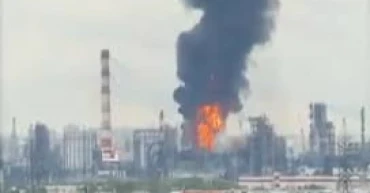
Ukraine strikes Moscow refinery, disrupts air travel in major drone offensive
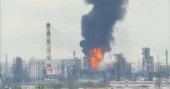
Ukraine launched one of its largest drone assaults since the start of Russia’s full-scale invasion, targeting a major oil refinery in Moscow and causing temporary disruptions to flights at several airports in and around the Russian capital, Russian authorities said Thursday.
The attack hit the Moscow Oil Refinery, one of the country’s largest fuel-processing facilities and a key supplier to the capital region. Russian media footage showed large fires and thick smoke rising from the site, located about 15 kilometers from the Kremlin. The facility had also been targeted earlier this week.
The strike came shortly after Ukrainian President Volodymyr Zelenskyy said he held discussions with U.S. President Donald Trump and French President Emmanuel Macron, describing the talks as important and potentially capable of producing meaningful developments.
According to Zelenskyy, Ukraine also secured additional commitments of support from leaders attending the G7 summit in France, including backing from the United States.
Russian officials reported that air defenses intercepted 555 Ukrainian drones overnight across multiple regions, with nearly 200 heading toward Moscow. Temporary flight restrictions were imposed at four airports serving the capital.
In the Moscow region, drones and falling debris damaged residential and commercial properties, including private homes, a shopping center, a fitness facility and an industrial site. Authorities said one woman was injured. A residential building in the town of Zhukovsky was evacuated after being struck by a drone.
Ukraine has increasingly targeted Russian oil infrastructure in an effort to weaken Moscow’s war financing and bring the effects of the conflict closer to the Russian population.
The latest attack marked another security setback for Russian President Vladimir Putin, following a recent drone strike on St. Petersburg during a major international economic forum.
Speaking on social media, Zelenskyy described the operation as a justified response to Russian attacks on Ukrainian cities and said it was aimed at pressuring Moscow to engage in diplomacy.
Ukrainian Foreign Minister Andrii Sybiha echoed that message, saying Russian citizens should question their leadership about ending the war rather than asking why such attacks are occurring.
Military analysts and Western officials say Ukraine has recently gained momentum through the expanded use of advanced drone technology, enabling it to strike deep inside Russia and disrupt military supply routes in occupied territories.
French President Emmanuel Macron said support for Ukraine remained a key focus of the G7 summit, stressing that continued assistance from Western allies, particularly the United States, was essential for Kyiv's defense and ability to respond to Russian aggression.
1 month ago
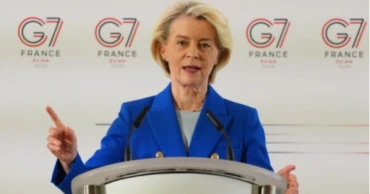
Europe looks to new energy routes after Iran war disrupts fuel supplies
The recent Iran war and the resulting spike in global fuel prices have strengthened the European Union’s push to reduce dependence on vulnerable energy routes, especially those passing through the Strait of Hormuz.
EU leaders are now exploring alternative trade and energy corridors, including new partnerships with Gulf countries and India, to improve energy security and avoid future disruptions caused by conflict.
One of the key proposals under consideration is the India-Middle East-Europe Economic Corridor (IMEC), which would connect Europe with India through the Middle East via transport, energy and digital infrastructure.
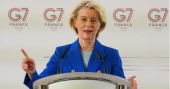
European Commission President Ursula von der Leyen has revived interest in the project, telling G7 leaders that new and more resilient export routes are being developed to diversify supply chains and strengthen Europe’s energy independence.
“We are building alternative routes that offer choices,” she said, referring to IMEC as a major example.
Although the EU has signed a memorandum of understanding on IMEC, only a few of its 27 member states have formally joined the initiative. However, officials say there is strong political backing behind the scenes.
A senior EU diplomat said discussions are now focused on turning the plan into practical projects involving transport links, energy networks and digital connectivity, including possible pipelines and power cables. No official timeline has been announced.
The proposed corridor would pass through Israel, which strongly supports the initiative. Israeli Prime Minister Benjamin Netanyahu has previously described IMEC as a “revolutionary” project after discussions with Indian Prime Minister Narendra Modi.
However, analysts say the success of the plan may depend on broader regional diplomacy, particularly the normalisation of relations between Israel and Saudi Arabia. Saudi Arabia has said such steps would depend on progress toward Palestinian statehood.
The impact of the Iran war has also highlighted Europe’s energy vulnerability. EU officials say the bloc spent an additional €25 billion on oil and gas imports in just the first weeks of the conflict and warned of possible fuel shortages.
EU leaders have said they are open to working more closely with Gulf countries to develop new infrastructure that avoids conflict-prone routes such as the Strait of Hormuz.
Existing infrastructure, such as Saudi Arabia’s East-West Pipeline, which moves oil to the Red Sea, has shown the value of alternative routes, especially during periods of instability.
Experts say early projects are likely to focus on oil and gas pipelines due to faster construction timelines, along with upgrades and repairs to energy facilities affected by recent tensions. Future systems may also be designed to carry hydrogen as part of Europe’s green energy transition.
Another major project under discussion is the Great Seas Interconnector, a planned undersea electricity cable that would link Europe’s power grid with Cyprus and Israel, and potentially extend toward broader regional networks.
Supporters say the project could reduce energy isolation in parts of the Eastern Mediterranean while also contributing to long-term renewable energy goals.
The United States has also shown interest in strengthening energy cooperation in the region, particularly between Greece, Cyprus and Israel, as part of wider efforts to develop Eastern Mediterranean energy resources.
1 month ago
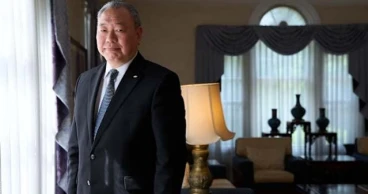
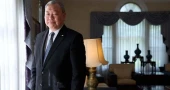
Taiwan needs US weapons for self-defense amid rising China threat, envoy says
Taiwan needs to continue buying US weapons to strengthen its self-defence capabilities as military pressure from China increases, the island’s top envoy in Washington has said, while noting that US policy toward Taiwan remains unchanged.
Alexander Yui Tah-ray, head of the Taipei Economic and Cultural Representative Office in the United States, said Taiwan is focused on boosting its defence spending and military readiness.
“We need those arms for defensive purposes,” Yui told The Associated Press in an interview in Washington on Wednesday. “We’re trying to increase our defence expenditure. We try to increase our ability to defend ourselves better and survive times of crisis.”
A proposed $14 billion US arms package for Taiwan remains under review, creating uncertainty in Taipei. The issue gained attention after President Donald Trump, following a visit to Beijing in May, said he had discussed the deal in detail with Chinese President Xi Jinping.
The Trump administration has yet to advance the package, which had previously received approval from senior lawmakers. Trump has described the deal as a potential “very good negotiating chip” in dealings with China.
Under US law, Washington is required to provide Taiwan with sufficient defence equipment to deter any aggression from China, which considers the self-governed island part of its territory and has not ruled out using force to achieve unification.
China has consistently opposed US arms sales to Taiwan, which has never been governed by Beijing.
Yui said Taiwan cannot rely on outside support alone for its security.
“This is our responsibility, so we will not wait and depend on the US cavalry to come and save us,” he said, adding that Taiwan is actively purchasing US weapons to strengthen its defence.
He said arms purchases must match the level of threat, which he described as “very high,” pointing to near-daily Chinese military activity around the island.
China regularly sends warships and military aircraft near Taiwan and has staged large-scale military drills in recent years. Beijing views the island as a core national interest and has warned against support for Taiwanese independence.
Yui said there has been no change in Washington’s official position on Taiwan and that Taipei respects the Trump administration’s approach and timing on policy announcements.
US Secretary of State Marco Rubio has also said that Washington’s policy on Taiwan remains unchanged and that arms deals are not negotiated with China. He said the proposed package is still under review, partly due to concerns over US weapons stockpiles following recent global commitments.
A separate $11 billion arms deal for Taiwan was approved in December, including rocket systems and artillery equipment.
Yui, who arrived in Washington in 2023, is now working under the second Trump administration, which has taken a more flexible approach in relations with Beijing compared to earlier tensions.
Despite shifting rhetoric, he expressed confidence in US-Taiwan ties, saying what matters most is policy action rather than statements.
“The big stick is still there,” he said.
1 month ago
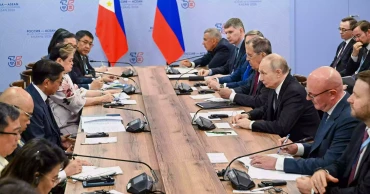
Putin hosts ASEAN leaders in bid to deepen trade and strategic ties
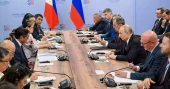
Russian President Vladimir Putin on Wednesday hosted leaders of the Association of Southeast Asian Nations (ASEAN) in Kazan, seeking to strengthen economic, trade and strategic cooperation with the regional bloc amid Moscow’s efforts to expand its partnerships in Asia.
The two-day summit, marking the 35th anniversary of Russia-ASEAN relations, is focused on enhancing what Russian officials describe as a strategic partnership between Russia and the 11-member Southeast Asian grouping.
According to Kremlin foreign affairs adviser Yuri Ushakov, discussions will cover trade, investment, industrial cooperation and key regional and global issues, while also reviewing progress in Russia-ASEAN relations.
In a message to participants at a business forum held alongside the summit, Putin expressed confidence that the gathering would create new opportunities for expanding mutually beneficial trade, investment and industrial cooperation, while fostering closer engagement between business communities.
Ushakov said Russia and ASEAN members would reaffirm their commitment to building what he described as a fair and democratic multipolar world order based on international law and the principles of the United Nations Charter.
He praised the relationship between Russia and ASEAN as a productive, equal and constructive dialogue and noted that Putin would hold a series of bilateral meetings with regional leaders during the summit.
The Russian president co-chaired the meeting with Philippine President Ferdinand Marcos Jr., whose country currently holds ASEAN’s rotating chairmanship.
During talks with Marcos, Putin highlighted the longstanding cooperation between Russia and the Philippines, describing it as mutually beneficial and based on respect for each other’s legitimate interests.
Marcos thanked Putin for hosting the summit and invited him to attend the ASEAN Summit scheduled to be held in Manila in November.
Putin also met Brunei’s Sultan Hassanal Bolkiah on the sidelines of the gathering.
Addressing a formal reception later, Putin said Russia and ASEAN countries shared support for a just international order, sovereign equality of states and non-interference in internal affairs.
He emphasized that each nation follows its own development path without imposing its views on others, calling that diversity a source of strength.
Russia remains committed to expanding cooperation with ASEAN members in areas including security, economic development and regional stability, Putin said.
ASEAN comprises Brunei, Cambodia, Indonesia, Laos, Malaysia, Myanmar, the Philippines, Singapore, Thailand, East Timor and Vietnam.
While some ASEAN members maintain close ties with the United States, others have significant economic and security relations with China and Russia.
Several ASEAN countries, including the Philippines, Indonesia, Thailand and Vietnam, have either imported Russian crude oil or shown interest in doing so following sharp increases in global energy prices linked to the conflict involving Iran.
1 month ago
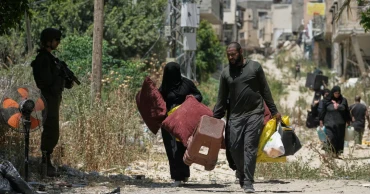
Over 1,000 killed in Gaza during ceasefire, Health Ministry says
Israeli operations in the Gaza Strip have killed 1,005 Palestinians since a ceasefire was reached between Israel and the militant group Hamas last October, the Gaza Health Ministry said Wednesday.
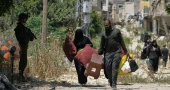
The enclave has seen near-daily strikes, as well as shelling and gunfire along the boundary that divides Gaza into Israeli and Palestinian-controlled zones. The most recent deaths were recorded after a series of Israeli drone strikes in the past few days on towns and refugee camps in central Gaza and Gaza City.
Also Wednesday, an Israeli strike killed two Palestinians and wounded six others in Khan Younis in southern Gaza, health officials at Nasser Hospital said. The Israeli military acknowledged carrying out the strike and said the target was a “terrorist” but did not elaborate. Families at the hospital said the strike targeted a group of people near the beach in the sprawling tent camp of Mawasi, where hundreds of thousands of displaced Palestinians live.
Israel has said it is continuing to operate against Hamas and allied militants in Gaza and has expanded the amount of territory it controls inside the strip.
In a separate statement Wednesday, the Israeli military said that it killed two militants from Hamas and Palestinian Islamic Jihad in strikes over the weekend.
Gaza’s Health Ministry on Sunday said the death toll from the Israel-Hamas war that started in October 2023 had surpassed 73,000 in Gaza. The ministry does not differentiate between civilians and combatants. It is staffed by medical professionals and maintains detailed records viewed as generally reliable by the international community.
1 month ago
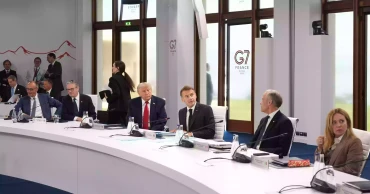
G7 leaders endorse Trump’s Iran deal, urge swift implementation
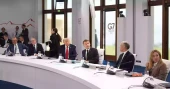
Leaders of the Group of Seven (G7) nations have voiced support for US President Donald Trump’s proposed agreement with Iran aimed at reopening the Strait of Hormuz and extending a fragile ceasefire, although details of the deal remain largely undisclosed.
In a joint declaration issued at the summit in France, G7 leaders described the proposed agreement as a “historic opportunity” to prevent Iran from acquiring nuclear weapons and address concerns related to its regional influence and ballistic missile programme.
The leaders pledged support for implementing the agreement, despite the fact that neither Washington nor Tehran has officially released the text.
According to leaked versions of the interim accord, Iran would immediately move to reopen the Strait of Hormuz after the deal is signed and would be permitted to resume unrestricted oil exports. The agreement is expected to be formally signed in Switzerland on Friday.
The proposed framework also envisions the United States working toward lifting American and United Nations sanctions on Iran if a comprehensive agreement on Tehran’s nuclear programme is reached.
Speaking on the sidelines of the summit during a meeting with Egyptian President Abdel-Fattah el-Sissi, Trump said the agreement remained confidential but described it as a strong memorandum of understanding.
“Nobody knows what it is but it’s very strong,” Trump told reporters, adding that the United States could abandon the deal if it proves unsatisfactory.
While backing the initiative, G7 leaders acknowledged the importance of restoring maritime traffic through the Strait of Hormuz, through which around one-fifth of globally traded oil and natural gas passed before the conflict began.
The summit declaration said a maritime mission led by France and the United Kingdom could help secure commercial shipping routes, protect merchant vessels and support efforts to clear any remaining threats in the waterway.
The proposed agreement also includes an immediate halt to hostilities in Lebanon between Israel and the Iran-backed Hezbollah group. However, questions remain over Israel’s military presence in parts of southern Lebanon, a point that has generated disagreement between Tehran and Tel Aviv.
G7 leaders expressed support for efforts to strengthen Lebanon’s sovereignty and implement a robust ceasefire while advancing the disarmament of Hezbollah.
Trump also criticised the prolonged fighting in Lebanon, saying too many lives had been lost during the conflict.
The final day of the summit focused on economic growth, artificial intelligence and concerns over global trade, with leaders from India, South Korea, Kenya and Brazil also participating in discussions.
1 month ago