others
Middle East on edge as Iran and US exchange fire again
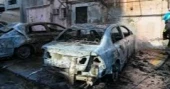
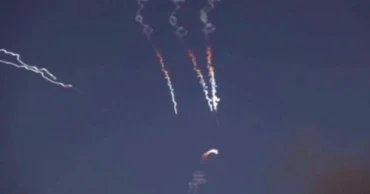
Iran retaliated against U.S. air and cruise missile strikes as hostilities escalated Thursday with attacks against Kuwait and Bahrain in renewed fighting after U.S. President Donald Trump warned that Tehran would “pay the price” for stalled negotiations.
The exchange came shortly after the U.S. launched a second round of airstrikes overnight Thursday. Bahrain is the headquarters of the U.S. Navy’s 5th Fleet.
The new assault across multiple Iranian cities came as efforts to negotiate an end the war appeared to have stalled, with Iran insisting it would maintain its grip on the Strait of Hormuz. Talks have also faltered because of Israel’s attacks against the Iranian-allied Hezbollah militant group in Lebanon. On Monday, Iran and Israel targeted each other.
In a first exchange of missile fire from Iran and airstrikes by the U.S. on Wednesday, Iranian missiles were launched at missiles at Bahrain, Kuwait and Jordan. Those came in the wake of American strikes in reprisal for the shooting down of a U.S. helicopter in the strait.
The U.S. Central Command said it completed its latest round of airstrikes just before the sun rose Thursday in Iran. It said the strikes targeted military surveillance, communications and air defense sites
and were carried out by the U.S. Air Force, Marines and Navy. It did not elaborate on the damage done by the strikes.
Explosions from the strikes echoed around Iran’s capital, Tehran, as well as in the port city of Bandar Abbas and other southern areas along the strait.
Iran’s says US attacks have rendered ceasefire meaningless
Iran’s Foreign Ministry issued a statement Thursday saying the U.S. attacks had “effectively rendered the ceasefire ... meaningless,” without saying it was abandoning it.
1 month ago
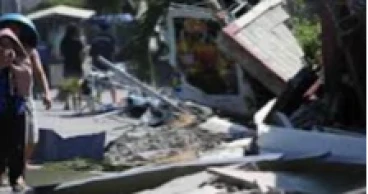
Philippine town urgently requests airlifts of food aid for quake-isolated communities
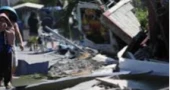
The mayor of a southern Philippine municipality severely affected by a powerful earthquake has appealed for the immediate deployment of helicopters to deliver food and relief supplies to villages cut off by landslides.
The 7.8-magnitude offshore earthquake struck Monday near the southern province of Sarangani, making it one of the strongest tremors to hit the Philippines in the last 50 years. The disaster has claimed at least 47 lives, injured 688 people and left 31 others missing.
More than 45,000 residents remained displaced as of Thursday, with roughly half taking shelter in evacuation centers. Authorities said over 12,600 homes were damaged across several farming towns and urban areas, while ongoing aftershocks have discouraged many families from returning home.
Sarangani recorded the highest death toll among affected areas, with 20 fatalities. Most of the deaths were linked to a landslide that buried homes in the coastal town of Glan, according to the Office of Civil Defense.
Glan Mayor Victor James Yap said electricity has yet to be restored, and 10 of the town’s 31 villages remain largely inaccessible because of landslides. He urged the national government to dispatch military helicopters to transport food, drinking water and emergency supplies to isolated residents.
According to Yap, relief efforts are being hampered by damaged roads and blocked routes, leaving some communities without adequate access to basic necessities. He warned that food shortages were becoming critical in several villages.
Although a major road leading to the town has been reopened, allowing fuel deliveries to resume, power outages persist and mobile phone services remain unreliable in many areas.
The Office of Civil Defense said the government has distributed more than 26 million pesos (about $426,000) worth of food packs, cash assistance and other relief items. It added that 180 aircraft, helicopters, ships and trucks have been mobilized to support rescue and recovery operations.
Around 3,400 government workers and military personnel are engaged in search-and-rescue missions, road-clearing efforts, damage assessments and other emergency response activities.
President Ferdinand Marcos Jr. visited General Santos City on Wednesday to inspect damaged schools and hospitals and review recovery measures. He approved the release of 100 million pesos (about $1.6 million) for repairs to the partially damaged city hall and ordered financial assistance of 50,000 pesos ($820) for each family that lost a loved one in the disaster.
Most fatalities were caused by collapsing structures and landslides in Sarangani, General Santos City, South Cotabato and Davao Occidental.
The earthquake also triggered hazardous sea conditions. Two swimmers drowned and another remains missing after being swept away by strong waves off General Santos shortly after the tremor. Waves reaching up to 1.4 meters above normal tide levels were recorded in southern Philippines, while smaller waves reached parts of Indonesia, Palau and southern Japan.
The quake ranks among the strongest to strike the Philippines since the devastating 8.1-magnitude earthquake and tsunami of August 1976, which killed an estimated 8,000 people.
Located along the Pacific Ring of Fire, the Philippines frequently experiences earthquakes and volcanic activity due to its position on a major zone of tectonic movement.
1 month ago
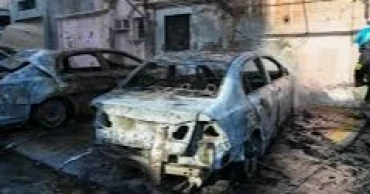
US launches second consecutive day of strikes on Iran as Tehran retaliates against Gulf states and Jordan
The United States and Iran exchanged attacks for a second straight day, raising fears of a renewed full-scale conflict across the Middle East.
The latest U.S. strikes, which continued into Thursday morning in Iran, appeared broader and more intense than the previous day's operation. Iranian authorities, however, provided few details regarding the extent of the damage. Meanwhile, an Indian official reported that a U.S. strike on an oil tanker accused of breaching Washington's blockade of Iranian ports killed three Indian sailors, highlighting the growing risks faced by maritime workers in the region.
The latest hostilities marked the third major exchange of fire in the region this week. The violence began with clashes between Iran and Israel and was followed by two rounds of attacks between Washington and Tehran, affecting several countries that host U.S. military facilities.
The escalation comes as diplomatic efforts to end the conflict remain deadlocked. U.S. President Donald Trump warned that Iran would "pay the price" if negotiations continued to stall. In response, Iran's Foreign Ministry said Thursday that recent U.S. attacks had "effectively rendered the ceasefire meaningless," though it stopped short of announcing a formal withdrawal from the agreement.
A key issue in the negotiations remains Iran's control over the Strait of Hormuz, a critical shipping route whose disruption has affected global energy markets, increased fuel costs and contributed to rising prices for essential goods worldwide.
Iran announced on Thursday that the strait had been closed, although the practical implications remained uncertain. Maritime traffic has already been severely restricted since the outbreak of the conflict, with only limited shipping activity continuing through the waterway. U.S. Central Command rejected Tehran's claim, while Trump stated that the U.S. had been conducting a covert operation in recent weeks to move vessels safely through the strategic passage.
Another major sticking point remains Iran's nuclear programme. Tehran maintains that its nuclear activities are intended solely for peaceful purposes, while the United States and Israel argue that Iran's stockpile of highly enriched uranium could potentially be used to develop nuclear weapons. Both Washington and Tel Aviv have cited this concern as a primary reason for launching military operations against Iran on Feb. 28.
1 month ago
Amnesty accuses Israel of ‘ethnic cleansing’ in West Bank
Amnesty International accused Israel on Wednesday of carrying out a campaign of “ethnic cleansing” of Palestinians from the occupied West Bank with the intention to annex the Palestinian territory.
The accusation came in a new, 149-page report alleging that the forced displacement of West Bank Palestinians resulted from a concerted state policy, and not just the actions of violent settlers. While much of the displacement is driven by settlers who build outposts on Palestinian land, the report asserts that the process could not occur without the support of the government.
U.N. data says that over 100 West Bank villages have been fully or partially emptied out between January 2023 and April 2026. At the same time, the United Nations has tracked more than 7,280 instances of individual Palestinian displacement because of demolition of homes and structures by Israeli forces, a figure that includes people who were displaced more than once.
Israel has in the past denounced such accusations — including allegations of ethnic cleansing — as reflecting longtime unfair bias. It did not immediately respond to the report.
“These abuses are not the result of a few ‘bad apples.’ Settler violence is a core component of a state-sanctioned campaign of ethnic cleansing,” said Agnès Callamard, the head of Amnesty. “What we are witnessing is deliberate, state-led annexation, in complete violation of international law unfolding before the eyes of the entire world.”
Israeli leaders have condemned particularly grave violence by Jewish settlers but tend to denounce them as exceptions. Key Cabinet ministers from Prime Minister Benjamin Netanyahu’s right-wing government are pushing for a formal annexation of the territory, and officials have voiced support for Israeli sovereignty over the West Bank.
Amnesty says it has identified dozens of bills in Israel’s parliament, the Knesset, to extend Israeli civil law and jurisdiction over settlement blocs, as well as over courts that try Palestinians. Recently, the parliament approved a measure making the death penalty the default punishment for West Bank Palestinians convicted of killing Israelis.
Last year, U.S. President Donald Trump said he would not allow Israel to annex the West Bank. The U.S.-brokered ceasefire between Israel and the Hamas militant group that aimed to stop the war in Gaza also acknowledged Palestinian aspirations for statehood.
Amnesty says the large-scale displacement of Palestinian Bedouin communities in the territory is caused by settler violence, advancement of new settlements and the Israeli takeover of large swaths of unregistered land. Rights groups have raised the alarm about this form of displacement before 2023, but say it dramatically intensified after Hamas’ Oct. 7 attack on Israel that year that triggered the war.
Rights groups say Bedouin herding communities in remote areas of the West Bank are most vulnerable to displacement. Unlike Palestinians in cities and towns across the West Bank, the villagers are less able to withstand the pressure from often-armed settlers as they establish new outposts around Palestinian villages.
The anti-settlement monitoring group Peace Now says that 212 of at least 363 existing outposts in the West Bank were created since 2023. The outposts are built without permission from Israeli authorities, who sometimes dismantle them but other times turn a blind eye or even legalize them retroactively.
The international community overwhelmingly considers the settlements illegal. Israel, meanwhile, views the West Bank as disputed territory and says its final status is subject to negotiations.
Amnesty said its report looked into 27 hamlets and villages in the West Bank where Palestinians were displaced between 2023 and 2025. Researchers interviewed dozens of Palestinians and lawyers, spoke with witnesses of settler violence, watched over 420 videos and analyzed government statements and other reports.
The group also said the international community has failed to act to stop the displacement.
More than 700,000 Israelis live in the occupied West Bank and east Jerusalem, territories captured by Israel in 1967 and sought by the Palestinians for their independent state, along with the Gaza Strip.
1 month ago

Iran taking ‘too long to negotiate a deal’: Trump
Hours after Bahrain, Kuwait and Jordan came under Iranian fire, US President Donald Trump posted on his Truth Social platform that Iran was taking “too long to negotiate a deal” and that “now they will have to pay the price.”
It wasn’t clear what exactly that would mean, but the back-and-forth strikes Wednesday again raised the question of how much pressure the deal can take before it cracks.
The exchange of fire was the second time this week that such strikes have tested the ceasefire after Iran and Israel targeted each other on Monday.
1 month ago
Ukraine carries out long-range strikes on Russian military and energy targets
Ukraine launched a series of long-distance attacks on military and energy facilities deep inside Russia on Wednesday, aiming to increase pressure on Moscow by targeting key industrial and energy infrastructure.
President Volodymyr Zelenskyy said Ukrainian forces struck several sites, including a military factory that he claimed produces components for Russian drones and missiles.
In a social media post, Zelenskyy said Ukrainian FP-5 Flamingo long-range missiles hit a facility in Cheboksary in Russia’s Chuvashiya region, more than 900 kilometres from the front line.
Russia’s Defence Ministry said its air defences intercepted 326 Ukrainian drones overnight.
Oleg Nikolayev, head of Chuvashiya, confirmed the attack but did not share details. However, the Astra news outlet reported that the strike hit the VNIIR-Progress plant, which manufactures drone antennas.
Zelenskyy also said Ukrainian forces targeted a refinery in Russia’s Samara region. Regional governor Vyacheslav Fedorishchev said several industrial sites were damaged in drone strikes and three people were injured, though he did not specify which facilities were hit. Astra published images showing a large fire at the refinery.
He added that Ukraine’s security service (SBU) also struck two oil infrastructure sites in Russia’s Vladimir region, around 700 kilometres from the front line.
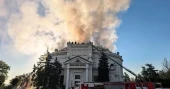
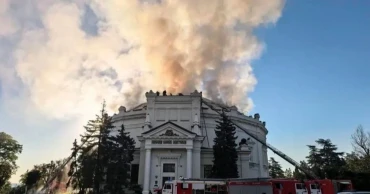
In Russian-occupied Crimea, a Ukrainian drone hit a building housing a large historical panorama painting depicting the 19th-century Crimean War defence of Sevastopol. Kremlin-appointed official Mikhail Razvozhayev said the artwork by Franz Roubaud was effectively destroyed.
With the front line largely static after more than four years of war, both sides have increasingly relied on long-range drone and missile strikes.
Ukrainian officials say these deeper strikes are intended to disrupt Russia’s military supply chain and energy sector, while also challenging President Vladimir Putin’s claims of progress in the war.
Russia, meanwhile, said it downed 181 of 207 Ukrainian drones in separate attacks. Ukrainian officials reported renewed Russian strikes across several regions, including Kharkiv, Zaporizhzhia and Odesa, leaving multiple civilians injured and several dead or wounded.
1 month ago
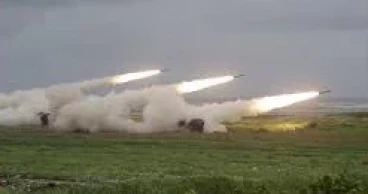
Taiwan fires US-supplied rockets toward China in military drill
Taiwan’s military on Wednesday launched rockets in the direction of China using US-supplied mobile launchers in a drill designed to simulate how the island would respond to a potential Chinese attack.
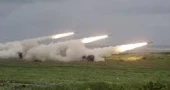
The exercise featured the High Mobility Artillery Rocket System (HIMARS), which was fired for the first time into waters of the Taiwan Strait, the narrow waterway separating Taiwan from mainland China. The system had been tested previously, but not in this specific live-fire setting.
A military official said the drills reflect Taiwan’s determination to strengthen its defence capabilities amid rising tensions.
“Due to the current enemy threat, we will continue HIMARS training with unwavering determination to protect Taiwan as the nation’s strongest force,” said army Sergeant Wang Ming-hui.
The military said it used reduced-range training rockets that fell into the sea shortly after launch.
China, which claims Taiwan as part of its territory, regularly sends military aircraft and naval vessels near the island and has stepped up large-scale drills in recent years. The United States does not recognise Taiwan as an independent state but opposes any attempt to change its status by force and remains its key arms supplier.
HIMARS, a truck-mounted mobile rocket system, is designed for rapid deployment, allowing forces to fire from hidden positions and quickly relocate, a tactic known as “shoot-and-scoot.”
The system was the centrepiece of the second day of Taiwan’s west coast exercises, which also included 155mm howitzers. The drills simulated a response to a possible Chinese invasion and focused on speed, precision and mobility.
During the exercise, the HIMARS units moved into position after receiving firing orders and launched rockets within minutes, demonstrating rapid strike capability.
In December, the United States announced plans to sell 82 additional HIMARS units to Taiwan as part of a major arms deal. However, the package has reportedly been put on hold following recent diplomatic talks between US President Donald Trump and Chinese President Xi Jinping.
1 month ago
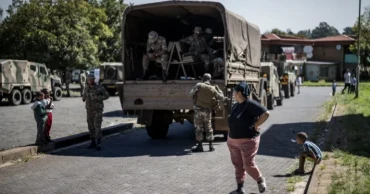
Twelve killed in mass shooting near Johannesburg; police hunt suspects
South African police have launched a manhunt for more than 10 suspects following a deadly shooting at an informal settlement near Johannesburg that left 12 people dead and nine others injured.
According to police, a group of armed assailants arrived at the settlement shortly after 11 pm on Tuesday and opened fire on residents at multiple locations before fleeing in a vehicle.
Police spokesperson Colonel Dimakatso Nevhuhulwi said 11 victims—eight men and three women—were pronounced dead at the scene, while another victim later succumbed to injuries in hospital.
The attackers reportedly entered the settlement through separate access points and carried out the shooting across different parts of the community.
The incident took place at the Jumpers informal settlement in Cleveland, located about six kilometres east of central Johannesburg.
Authorities have not yet determined a motive for the attack and are continuing investigations.
South Africa continues to grapple with high levels of violent crime. The country records more than 60 murders on average each day, with gun violence frequently linked to gang-related activities, criminal disputes and competition among informal businesses.
Source: AL Jazeera
1 month ago
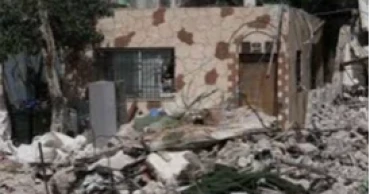
Israel steps up demolitions and evictions in east Jerusalem, activists say
Israel has intensified the demolition of Palestinian homes and the eviction of residents in east Jerusalem, according to rights groups and activists, who say the pace of such actions has increased significantly in recent years amid reduced international pressure and shifting global attention to conflicts in Gaza, Lebanon and Iran.
For Palestinian resident Fakhri Abu Diab, the issue is deeply personal. After years of legal battles to save his home in the al-Bustan neighborhood of Silwan, Israeli authorities demolished it in 2024. He and his wife now live in a mobile home placed on the site, which is also under threat of removal.
Abu Diab said the demolition erased much of his family's history, including the home where he grew up and the garden he cultivated as a child.
Rights group Ir Amim said more than 260 homes and structures in east Jerusalem have been demolished in 2025, marking a sharp rise from three years ago. The group reported at least 116 demolitions so far this year and described the current situation as unprecedented in scale.
Israel captured east Jerusalem, the West Bank and Gaza during the 1967 Middle East war. Palestinians seek these territories for a future independent state, while much of the international community regards them as occupied territories. Israel considers Jerusalem its unified capital.
Human rights groups say Israeli authorities continue to promote the expansion of Jewish settlements while restricting development in Palestinian neighborhoods, making it extremely difficult for Palestinians to obtain building permits.
According to Israeli rights organization Bimkom, nearly 9,000 building permits were approved for Jewish residents in Jerusalem last year, compared with fewer than 700 for Palestinians, who account for around 40% of the city's population.
Israeli officials argue that Palestinians submit relatively few permit applications, while many Palestinians say obtaining approval is nearly impossible.
Those who build without permits risk demolition orders. At the same time, settler organizations have used various legal mechanisms to acquire or take control of Palestinian properties.
The issue has become more prominent since President Donald Trump's first administration recognized Jerusalem as Israel's capital, departing from previous US policies that viewed settlement expansion as an obstacle to peace efforts.
The US State Department said policies in Jerusalem are determined by Israeli authorities but expressed an expectation that due process and the rule of law be respected.
In al-Bustan, located near the Old City and close to the Al-Aqsa Mosque compound, around 1,500 Palestinians face the possibility of losing their homes. The area is part of Silwan, a densely populated Palestinian district that is also of significant religious and archaeological interest.
The Jerusalem municipality said homes in al-Bustan are being removed because they were built without permits on land not designated for housing. Authorities say a public park and parking facilities will be developed in the area and that alternative housing plans had been proposed to residents.
Abu Diab said part of his home existed before 1967 but was later expanded without permits because obtaining authorization was not feasible.
Elsewhere in Silwan's Batan al-Hawah neighborhood, Palestinian families continue to face eviction orders. Resident Zuhair al-Rajabi said he and dozens of relatives were instructed to leave their property after Israel's Supreme Court ruled against them following years of legal proceedings.
He said his family possesses documents dating back to 1966 proving ownership but now faces relocation with few affordable housing options available in Jerusalem.
According to rights group B'Tselem, March saw the highest rate of state-backed evictions in the neighborhood in decades, with 15 families removed and hundreds more residents facing potential displacement.
Israeli law allows Jews to reclaim properties owned by Jewish families before the 1948 Arab-Israeli war. Palestinians who lost homes during that conflict, however, are generally unable to reclaim those properties.
B'Tselem said the evictions reflect cooperation between settler groups and state institutions under laws it considers discriminatory, with the result being increased Jewish settlement and reduced Palestinian presence in east Jerusalem.
Israel's judiciary rejected accusations of coordination with settler organizations, saying courts decide cases based on legal merits, evidence and established precedent.
Settler group Ateret Cohanim defended its activities, saying it seeks to restore Jewish communities that existed in parts of east Jerusalem before the early 20th century. The organization said dozens of Jewish families have moved into Batan al-Hawah since 2004 and more are expected to follow.
For many displaced Palestinians, however, the struggle remains deeply emotional. Khalil Basbous, who was evicted from his home in January, now lives with relatives nearby but passes his former house every day. He said he still hopes to return one day.
1 month ago

ICC chief prosecutor suspended over misconduct allegations
The chief prosecutor of the International Criminal Court (ICC), Karim Khan, has been suspended from his duties after the court’s oversight body initiated disciplinary proceedings over allegations of sexual misconduct.
The decision was announced late Monday by the Bureau of the Assembly of States Parties, the executive committee of the ICC’s governing body, following a review of findings from a United Nations investigation.
Khan, a 56-year-old British barrister, has been accused of sexual misconduct involving a female aide. He has consistently denied the allegations.
The Bureau said its decision was based on a report by the United Nations Office of Internal Oversight Services (OIOS), supporting evidence, advice from an ad hoc panel of judicial experts and written submissions.
It stressed that the suspension does not predetermine the outcome of the case.
The allegations, which first surfaced more than two years ago, prompted an investigation by the UN oversight office. According to a copy of the report seen by The Associated Press, investigators found evidence suggesting Khan engaged in non-consensual sexual contact with the staff member in his office, at his residence and during official travel.
However, a three-judge panel appointed to assess the findings concluded that the investigation did not provide sufficiently conclusive evidence.
Khan had already stepped aside temporarily in May 2025 while the investigation was underway.
The Assembly of States Parties, which represents the ICC’s 125 member countries, will now decide whether Khan can remain in office. A special session is expected to be convened soon, though no date has yet been announced.
Only the Assembly has the authority to remove the prosecutor from office. Such a move would require a majority vote in a secret ballot, meaning at least 63 member states would need to support his dismissal.
The allegations include claims that Khan transferred the woman from another department into his office and that she frequently accompanied him on official trips. Whistleblower documents cited allegations of inappropriate conduct during foreign travel and at the prosecutor’s office.
Khan’s legal team said a formal response would be issued on Tuesday.
1 month ago