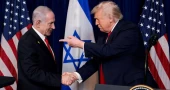
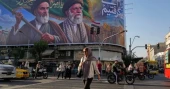
others
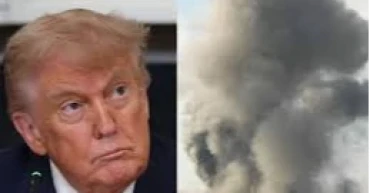
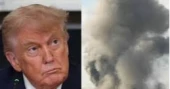
Trump urges Israel and Iran to halt attacks immediately
US President Donald Trump has urged Israel and Iran to cease hostilities immediately amid growing concerns that renewed exchanges of fire could undermine efforts to secure a lasting peace agreement.
“Israel and Iran must immediately stop ‘shooting,’” Trump wrote in a brief message on his Truth Social platform, reports AL Jazeera .
The appeal came as Iran's armed forces announced the suspension of their military operations against Israel, while warning that any future Israeli attacks, particularly in Lebanon, would trigger a much stronger response, according to Iran's semi-official Fars News Agency.
In a statement carried by the agency, Iran's Khatam al-Anbiya Central Headquarters said the country's armed forces had delivered a “painful response” to Israel following what it described as Israeli attacks in southern Lebanon and Beirut's Dahieh district, allegedly backed by the United States.
The statement followed a series of attacks between Israel and Iran that threatened to derail diplomatic efforts aimed at ending a conflict that has weighed heavily on regional stability and the global economy.
Israel did not immediately respond to Iran's announcement. However, an Israeli military official, speaking on condition of anonymity, told Reuters that Israel remained prepared for various scenarios in Iran and was ready to continue operations for as long as necessary.
The latest developments have intensified concerns about a possible resurgence of broader regional hostilities despite ongoing international efforts to preserve the fragile ceasefire.
1 month ago
Israel-Iran exchange of strikes raises fears of renewed regional war
Israel and Iran exchanged missile and air strikes early Monday in their first direct military confrontation since a ceasefire brokered by the United States two months ago, raising concerns that the Middle East could once again slide into a broader conflict.
Several hours after the attacks, Iran’s military announced it was suspending offensive operations, while warning that any further Israeli action would trigger a stronger response.
The latest escalation threatens to unravel the fragile truce reached in April following a conflict that began on February 28 with coordinated US and Israeli strikes on Iran. The war disrupted global markets, pushed up energy costs and contributed to rising prices of essential goods worldwide.
Despite the ceasefire, tensions have remained high. Iran has continued to exert influence over the strategically vital Strait of Hormuz, a key route for global oil and gas shipments, while Israel has maintained military operations against Hezbollah in Lebanon. Yemen’s Iran-aligned Houthi rebels also entered the fray on Monday, launching attacks toward Israel and renewing threats against Israel-linked vessels in the Red Sea.
With peace negotiations showing little progress, the renewed exchanges between Israel and Iran, coupled with Houthi involvement, have heightened fears of a wider regional conflict.
US President Donald Trump urged both sides to halt hostilities, posting online that Israel and Iran “must immediately stop shooting.”
Shortly afterward, Iran’s military command said it was halting offensive actions but warned that any new “aggression” by Israel or its allies, including in southern Lebanon, would be met with “far more severe” measures.
Diplomatic Push to Preserve CeasefireRegional diplomats have intensified efforts to prevent the ceasefire from collapsing.
According to two regional officials, Egypt, Saudi Arabia, Turkey, Pakistan and Qatar have urged Washington to pressure Israel to scale back attacks on Iran and Beirut while also encouraging Tehran to cease strikes against Israel.
Trump confirmed that discussions aimed at maintaining the ceasefire were continuing but did not provide further details.
Fresh Military ExchangesIran launched multiple waves of attacks on Israel on Monday, prompting retaliatory Israeli strikes on targets in central and western Iran.
Iranian media reported explosions in Tehran, Isfahan, Karaj and Tabriz, while authorities temporarily closed airspace around Tehran’s Imam Khomeini International Airport.
Iranian news agencies reported that Israeli strikes targeted a petrochemical facility in Mahshahr. The Israeli military later confirmed attacks on sites it said were involved in producing ballistic missile materials and on mobile missile-launching systems.
Israel said the operations were carried out in response to Iranian missile attacks. Tehran had previously vowed retaliation after Israeli strikes in Beirut’s southern suburbs.
Iran’s Revolutionary Guard claimed responsibility for attacks on two Israeli military installations.
Air raid sirens sounded across parts of Israel and neighboring Jordan as air defense systems attempted to intercept incoming projectiles.
Iran accused Washington of being complicit in the escalation, with Foreign Ministry spokesman Esmail Baghaei saying Israel would not have acted without US coordination. The White House did not immediately comment on the allegation.
Strains Between Trump and NetanyahuAlthough Trump and Israeli Prime Minister Benjamin Netanyahu closely coordinated military operations at the start of the conflict, signs of tension between the two leaders have emerged in recent weeks.
Analysts suggest Netanyahu faces domestic pressure ahead of upcoming elections and ongoing security concerns along Israel’s northern border, while Trump is eager to reduce international tensions and limit the economic fallout before congressional elections later this year.
Houthis Rejoin the ConflictYemen’s Houthi movement claimed responsibility for attacks on Israel and warned that vessels linked to Israel would again be targeted in the Red Sea, Gulf of Aden and Bab el-Mandeb Strait.
The group had launched similar operations during the Gaza conflict, carrying out more than 100 attacks on commercial shipping, disrupting one of the world’s most important maritime trade routes.
Civilians Prepare for UncertaintyResidents on both sides of the conflict expressed concern that the latest escalation could mark the beginning of another prolonged confrontation.
In Tehran, some residents said they expected fighting to continue despite the ceasefire, while in Israel schools remained closed nationwide. Although many businesses stayed open, daily life was disrupted as residents repeatedly sought shelter during missile alerts.
1 month ago
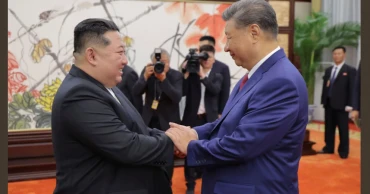
Xi in North Korea for closely watched talks with Kim
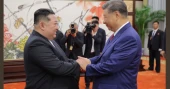
Chinese President Xi Jinping arrived in Pyongyang on Monday for a rare state visit that experts say is likely meant to reassert China’s unique influence over North Korea in return for providing economic and political benefits.
During a two-day trip, his first visit to North Korea in seven years, Xi is to meet leader Kim Jong Un. It will be their first summit since September, when they met in Beijing after viewing a military parade alongside Russian President Vladimir Putin and other foreign leaders.
China's official Xinhua News Agency reported that Xi had arrived in Pyongyang, after earlier reporting that Xi's entourage includes his wife Peng Liyuan, Foreign Minister Wang Yi and top Communist Party official Cai Qi.
No specific agenda has been mentioned. Foreign experts predict the meeting will have big ramifications on bilateral ties and beyond, as they both seek to fully restore their traditional alliance in the face of separate confrontations with the U.S.
“A Chinese leader doesn’t just visit North Korea because a visit is due. Xi’s trip will have real implications for China-DPRK relations,” said Leif-Eric Easley, a professor at Ewha Womans University in Seoul, using the abbreviation for North Korea’s full name.
Sway over North Korea could help Xi's dealings with US
Xi’s trip comes after his back-to-back summits with U.S. President Donald Trump and Putin in Beijing last month. Xi is expected to meet Trump again on a planned U.S. visit in September.
Xi will try to demonstrate China’s “sway over the Korean Peninsula” and “a leadership role in entire Northeast Asia in the ages of strategic competitions with the U.S.,” said Kwak Gil Sup, the head of One Korea Center, a website specializing in North Korea affairs.
China has long been North Korea's economic lifeline and main diplomatic backer. Experts say China has avoided fully enforcing U.N. sanctions on North Korea and sent clandestine aid to help its impoverished neighbor stay afloat. This year marks 65 years since the two countries signed a mutual defense treaty.
But there have been questions about their ties in recent years, with North Korea prioritizing cooperation with Russia by supplying troops and weapons to support its war against Ukraine. In return, North Korea has received economic and military assistance from Russia.
Restoring an exclusive influence over North Korea would give Xi a leverage in dealings with Trump, who has repeatedly expressed his desire to restart diplomacy with Kim, experts say.
“Implementing U.N. Security Council resolutions and enforcing sanctions do not appear to be priorities for China," Easley said.
In an article published on the North’s main Rodong Sinmun newspaper Monday, Xi said China and North Korea must boost strategic cooperation and work together to oppose “hegemonism and coercive politics” and pursue an orderly multipolar world.
Kim needs Xi's support for his push for nuclear state
Xi would likely offer Kim economic aid packages such as shipments of rice and fertilizers, a resumption of Chinese group tourism to North Korea. and joint economic projects, analysts said.
“North Korea can’t solely rely on Russia. It needs to align with China,” Kwak said.
In a Monday editorial, the Rodong Sinmun newspaper called Xi “the most honored state guest,” saying Pyongyang’s streets “are filled with an atmosphere of friendship.”
Xi could also refrain from pressing Kim on the issue of denuclearization of North Korea, and vaguely speak about peace and stability on the Korean Peninsula. That would be essential for Kim, who is desperate to win international recognition as a nuclear weapons state as a way to call for lifting of U.N. sanctions on North Korea.
“Chinese officials have taken the position of not speaking publicly about denuclearization on the Korean Peninsula while still maintaining it as a long-term goal. Kim appears to want Xi to accept North Korea as a nuclear neighbor,” Easley said.
After last month’s summit between Trump and Xi, the White House said the two leaders confirmed their shared goal to denuclearize North Korea. But China only said the leaders discussed the nuclear issue on the Korean Peninsula. On Sunday, Kim’s sister and senior official, Kim Yo Jong, dismissed as “false information” the U.S. readout of the Xi-Trump meeting.
Last week, Kim unveiled a new plant to produce nuclear ingredients and vowed to bolster the country’s nuclear forces “at an exponential rate.” He also observed sea trials of a new naval destroyer and called for speeding up efforts to build a nuclear-armed navy.
South Korean President Lee Jae Myung told reporters Monday that North Korea is producing enough nuclear ingredients annually for about 10-20 bombs and is close to perfecting intercontinental ballistic missile technology. Lee said the world must first focus on convincing North Korea to freeze its nuclear materials production and ICBM program as a short-term goal.
On Sunday, Kim’s sister and senior official, Kim Yo Jong, echoed her brother, calling a U.S. push for the denuclearization of North Korea an “escapist and anachronistic dream.”
Kim Jong Un has rebuffed U.S. and South Korean offers for talks and focused on enlarging and modernizing his nuclear arsenal since his high-stakes diplomacy with Trump collapsed in 2019. The North Korean leader said in September that he still had "good personal memories” of Trump but urged the U.S. to withdraw its demand for North Korea to denuclearize as a precondition for resuming diplomacy.
Experts say Kim would eventually want arms reductions talks with the U.S. to win concessions in return for partially surrendering his nuclear weapons.
1 month ago
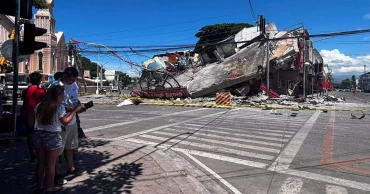
Powerful quake kills 19 in Philippines; triggers tsunami
An offshore magnitude 7.8 earthquake rocked the southern Philippines Monday, killing at least 19 people, injuring more than 200 others mostly in damaged buildings and sending a 1-meter (3-foot) tsunami into nearby coasts.
A few buildings collapsed and key infrastructure sustained quake damage in the city of General Santos, and tsunami damage was reported in at least one coastal village. Smaller waves were measured in Indonesia and Palau and as far away as southern Japan.
“It’s a major earthquake," Teresito Bacolcol, the director of the Philippine Institute of Volcanology and Seismology said, warning people to seek advise before returning to damaged buildings and houses which could collapse due to aftershocks.
“Our pickup truck suddenly jerked and I thought we had a flat tire,” said Rod Sosmeña, regional director of the Office of Civil Defense, told The Associated Press from the hard-hit port city of General Santos, where he was traveling when the quake struck at 7:37 a.m.
“The shaking was very strong and people dashed out of houses into the streets," Sosmeña said.
Another regional disaster-response official, Ednar Dayanghirang, told The AP that he was able to “hardly stand and keep my balance when the ground shook as I was leaving my house” in the southern port city of Davao.
General Santos is a port city of more than 700,000 people that is a regional hub for the tuna export industry and other commerce.
It was the strongest quake to strike the Philippines this year, and was was centered at sea off Mindanao, the second most populous island in the Philippines. According to Bacolcol, the quake occurred at a depth of 33 kilometers (20 miles), about 32 kilometers (20 miles) southwest of Maasim town in Sarangani province.
Philippine President Ferdinand Marcos Jr. ordered the cancellation of classes and directed disaster-response agencies to immediately get to work in quake-hit provinces, saying “the national government is moving and we will not leave Mindanao behind.”
The Pacific Tsunami Warning Center said the threat of a tsunami largely passed about five hours after the quake. Philippine officials also lifted a tsunami warning by mid-afternoon. Six shanties on stilts were damaged in a coastal village in Zamboanga del Sur due to the quake and taller waves, officials said.
Assessing damage and casualties At least 19 people were killed, mostly in collapsed buildings and landslides, while thousands of villagers were displaced, Office of Civil Defense spokesperson Junie Castillo said without providing specific details.
Among the dead were seven people in General Santos, where a few small buildings, including a popular hamburger joint, collapsed or were severely damaged, Sosmeña said.
The other deaths were caused by falling debris, a damaged mosque and a landslide in the southern provinces of Sarangani, South Cotabato and Davao Occidental and on Balut Island, Sosmeña and another reginal disaster-response official, Ednar Dayanghirang, said.
Sosmeña said authorities were checking reports of some students being trapped in a two-story school that collapsed in General Santos. He could not immediately provide details but the national police said at least 12 people were missing in General Santos.
The Bureau of Fire said without elaborating that it was involved in search and rescue efforts in a damaged building and a warehouse in General Santos.
Public schools had reopened nationwide Monday after the summer vacation from April to May. Dayanghirang said more than 100 students attending morning flag-raising ceremonies in his southern region sustained bruises and some fainted in panic.
The international airport in General Santos was temporarily shut, and 17 domestic flights were canceled, the Civil Aviation Authority of the Philippines said.
The DZRH radio network in Manila reported that a small commercial building where its provincial station was located partly collapsed and staffers dashed to the ground floor without injuries. It wasn’t clear if other people were trapped in the rubble of the four-story office building. Debris also fell from other buildings, hitting tricycle taxis parked below.
Tsunami waves near 3 feet measuredWaves of 1 meter (3 feet) were generally monitored in the provinces of Sultan Kudarat and Sarangani. A 1.4-meter (4.6-foot) wave was monitored at one time in the coastal area of Kiamba town in Sarangani, Bacolcol said.
The quake was also felt in Malaysia's Sabah state on Borneo island. Sabah is just a boat ride away from southern Philippines. An 83-centimeter (2.7-feet) tsunami was measured by a gauge off Indonesia's Sulawesi island, and the PTWC said 30-centimer (1-foot) waves were measured in Palau.
Waves up to 20 centimeters (7.8 inches) were detected on the remote Japanese island of Chichijima and the central Japanese town of Kushimoto, the Japan Meteorological Agency said.
The U.S. Geological Survey reported the depth of the original quake at 55 kilometers (34 miles). Variations in measurements by different agencies are common in the immediate aftermath of an earthquake. Aftershocks as strong as 6.5 magnitude were recorded.
The Philippines, one of the world’s most disaster-prone countries, is often hit by earthquakes and volcanic eruptions due to its location on the Pacific “Ring of Fire,” an arc of seismic faults around the ocean. The archipelago is also lashed by about 20 typhoons and tropical storms each year.
1 month ago
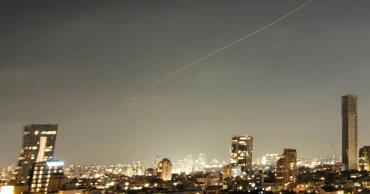
Israel retaliates against Iran amid fresh missile fire
Israel said Monday that Iran had launched missiles targeting it, hours after Israel launched airstrikes targeting central and western Iran in response to missile fire from Tehran. The exchange of strikes threatened to drag the wider Middle East back into a regional war.
Sirens sounded in central Israel, and the government urged the public to seek shelter. Explosions could be heard in central Israel as Israeli air defenses sought to intercept the incoming Iranian fire. Iran did not immediately acknowledge the attack.
Monday marked the 100th day of the Iran war, launched Feb. 28 when Israel and the United States killed Supreme Leader Ayatollah Ali Khamenei and other senior Iranian leaders. The war raged until reaching a nominal ceasefire on April 8, but a permanent end to the hostilities have been challenged by Iran's chokehold on the Strait of Hormuz, through which a fifth of all oil and natural gas traded once passed in peacetime, as well as fighting between Israel and the Lebanese Shiite militia Hezbollah.
With global energy supplies threatened, Iran still holding a vast stockpile of highly enriched uranium and even Yemen's Houthi rebels apparently getting involved in the fighting Monday, the risks of the war fully erupting again appears to be rising.
Israel strikes Iran
Iranian state television reported the sound of explosions being heard in Isfahan, Karaj, Tabriz and Tehran, without immediately elaborating. A witness in Tehran described hearing at least one large blast somewhere to the west of the country’s capital city. Iran closed the airspace around Tehran’s Imam Khomeini International Airport, the country’s main airfield, after the Israeli attack.
Sirens sounded across Israel on Monday after its military said a missile launched from Yemen targeted the country, without elaborating. Israel’s rescue services said there were no reports of casualties or impacts from the launch from Yemen.
Yemen is home to the Iranian-backed Houthi rebels. The Houthis have fired missiles at Israel during the Israel-Hamas war and later, but haven’t been fully involved in the Iran war. The Houthis did not immediately claim the attack, though it can take them hours or even days to acknowledge their assaults.
In Iran, officials offered no details on what had been struck, nor any damage information. Iran’s paramilitary Revolutionary Guard said that Israel used air-launched ballistic missiles in its attack Monday morning, without elaborating.
The Israeli military at dawn in Iran issued a short statement as the strikes started: “A short while ago, the Israeli Air Force struck military targets belonging to the Iranian terror regime in western and central Iran.” It did not elaborate.
In Saudi Arabia, missile alert sirens sounded Monday morning in an area home to an air base that hosts U.S. forces. Saudi state media reported the alert around its Al Kharj governorate, home to Prince Sultan Air Base. The alert came after Israel’s strikes on Iran. Saudi Arabia shortly after said the missile danger in the area had passed, without elaborating.
Trump says ‘I call the shots,’ not Israel
The White House did not respond to messages about the strikes and whether they were done in coordination with the U.S.
A senior U.S. official on Sunday said U.S. President Donald Trump had called Israeli Prime Minister Benjamin Netanyahu to urge him not to retaliate immediately for the Iranian missile attack. The official, who spoke on condition of anonymity to describe a private phone call, said that Trump believed he had convinced Netanyahu to wait.
Trump “got Bibi to hold off for the time being,” the official said. The official would not offer any other details of the call, and there was no immediate comment from Netanyahu’s office.
For days, negotiations between Iran and the United States over the fragile ceasefire in the war had been stalled by the fighting between Israel and the Lebanese Shiite militia Hezbollah. Israel now occupies southern Lebanon and had moved into areas of the country it hadn't held in a quarter century — leading to fears about them further widening their campaign.
On Sunday, Israel launched airstrikes in Beirut's southern suburbs. Iran retaliated with its own strike on Israel, which led to Monday morning's attack by Israel on Iran.
Trump earlier told a Fox News Channel reporter that he wanted the Iranians to stop firing missiles and return to the negotiating table. He also said that Israel’s strikes in Lebanon earlier Sunday were not coordinated with the U.S. and “I’m not happy about it.”
Speaking to The Financial Times before the Israeli strikes on Iran, Trump insisted he dictated terms to Netanyahu on how the war should be prosecuted.
“He won’t have any choice,” Trump told the newspaper in a telephone interview. “I call the shots. I call all the shots. He (Netanyahu) doesn’t call the shots.”
1 month ago
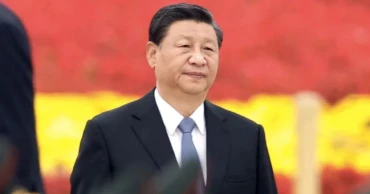
Xi leaves for state visit to DPRK
Xi Jinping, general secretary of the Communist Party of China (CPC) Central Committee and Chinese president, left Beijing on Monday for a state visit to the Democratic People's Republic of Korea (DPRK).
Xi's trip is at the invitation of Kim Jong Un, general secretary of the Workers' Party of Korea and president of the State Affairs of the DPRK.
Xi's entourage includes his wife Peng Liyuan, Cai Qi, a member of the Standing Committee of the Political Bureau of the CPC Central Committee and director of the General Office of the CPC Central Committee, and Wang Yi, a member of the Political Bureau of the CPC Central Committee and foreign minister.
1 month ago
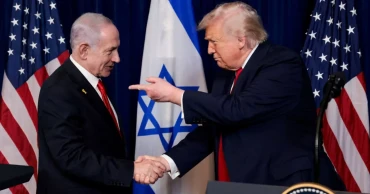
Netanyahu has "no choice" but to accept any U.S.-Iran deal: Trump
U.S. President Donald Trump has said Israeli Prime Minister Benjamin Netanyahu would have "no choice" but to accept any agreement reached between the United States and Iran, the Financial Times reported late Sunday.
Washington, not Israel, would determine the outcome of negotiations with Tehran, Trump said during a telephone interview with the British daily shortly after Iran launched a salvo of ballistic missiles at Israel.
"He won't have any choice," Trump was quoted as saying. "I call the shots. I call all the shots. He doesn't call the shots."
Asked whether Iran's missile strikes on Israel would affect Washington's willingness to continue negotiations with Tehran, Trump said the attacks would have no impact on a potential agreement.
"I think the deal is going on. We'll see what happens," he said, adding that any agreement would succeed or fail on its own merits and that the strikes would not alter his calculations.
Trump also downplayed the attacks, saying they "did not kick at all," and described the conflict between Iran and Israel as "one of those things that's been going for 3,000 years, or 47 years, depending on how you count."
When asked what would happen if negotiations ultimately failed, Trump outlined two possible options. One would involve military action to address what he described as unfinished objectives in Iran, and the other would be to maintain a blockade on the country.
"The blockade has been probably more powerful than any attack that was ever made on that country," he said.
Trump's remarks came after U.S. media outlet Axios reported details last week of a heated telephone conversation between Trump and Netanyahu.
According to a U.S. official cited in the report, Trump told the Israeli leader: "You'd be in prison if it weren't for me. Everybody hates you now. Everybody hates Israel because of this."
Trump confirmed to the Financial Times that the call had taken place and did not challenge the characterization of the exchange.
Despite several U.S.-brokered ceasefires between Israel and Lebanon, Washington has been unable to prevent Israel from carrying out near-daily strikes inside Lebanon. Israel on Sunday launched another strike on a Hezbollah stronghold in Beirut.
Iran said its latest missile attacks on Israel were carried out in retaliation for that strike.
1 month ago

"Trump rejects claims that Iran policy contradicts his ‘no new wars’ pledge"
President Donald Trump is dismissing the idea that launching the war with Iran this year betrayed his refrain of “No new wars” that he made repeatedly as he campaigned again for the White House.
Trump, in an interview that aired Sunday on NBC’s “Meet the Press,” said he “didn’t guarantee” there would be no wars if he were back in office.
“First of all, I didn’t guarantee no war. Why would I have built the strongest military in the world?” Trump said.
Trump also defended plans for a now-scrapped $1.8 billion fund that would have compensated allies of the Republican president and he repeated his baseless claims of mass fraud in California’s drawn-out vote count from Tuesday’s primary. He ended the interview abruptly when he became frustrated with pushback from NBC’s Kristen Welker.
Iran ‘is not an endless war’In his 2024 campaign, Trump repeatedly cast his Democratic opponents as warmongers and said he was a president who started “no new wars” and would bring an era of peace.
But Trump said in the NBC interview, taped Friday in Wisconsin, that as a candidate, “I didn’t promise anything.”
“I don’t like these endless wars. This is not an endless war. We’ve been doing this for three months,” he said of the war with Iran, which began Feb. 28.
Trump said he was “doing the world a service” and “doing our country a service” because he had to stop Iran from having a nuclear weapon. But elsewhere in the interview, Trump repeated a contradictory message where he said U.S. strikes last year “obliterated” Iranian nuclear sites.
He also defended his decision in his first term to withdraw from Democratic President Barack Obama’s nuclear deal with Iran, an agreement he has heavily criticized, without negotiating the “better deal” he has promised to reach.
“It takes years to do these things,” Trump said.
1 month ago
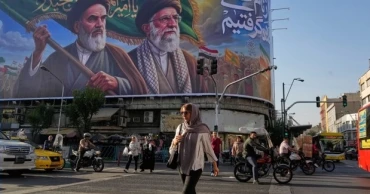
Pakistan renews mediation efforts as US downs Iranian drones over Hormuz
Pakistan's interior minister arrived in Tehran on Sunday in a renewed effort to help revive talks between Iran and the United States, as the US military said it shot down two more Iranian drones over the Strait of Hormuz after they posed a threat to international shipping.
The latest development comes as Washington continues to push Tehran toward an agreement aimed at ending the ongoing Middle East conflict, which has put pressure on the global economy and raised concerns about worsening hunger in some of the world's most vulnerable countries.
Although the most intense phase of the fighting ended with a preliminary ceasefire on April 8, the parties have yet to reach a lasting agreement to formally end the conflict.
At the same time, clashes between Israel and the Lebanese armed group Hezbollah continued despite the extension of a US-brokered ceasefire announced last week.
Pakistani Interior Minister Mohsin Naqvi is visiting Tehran to deliver a message from Pakistan Army Chief Field Marshal Asim Munir to Iran's Supreme Leader Ayatollah Mojtaba Khamenei, according to Iran's state news agency IRNA.
Khamenei has not appeared in public since becoming Iran's leader after the death of his father during the opening day of the war on Feb. 28, when the United States and Israel launched a major bombardment campaign against Iran.
Naqvi met Iranian Interior Minister Eskandar Momeni on Saturday and held talks with Foreign Minister Abbas Araghchi on Sunday, Iranian media reported.
Officials did not disclose details of the message. Pakistan has previously said it is working with regional countries including Qatar, Turkey and Egypt to help narrow differences between Washington and Tehran, reduce tensions and support efforts to reopen the Strait of Hormuz.
Meanwhile, hopes for a sustained ceasefire in Lebanon appeared uncertain.
Hezbollah, which is backed by Iran, has rejected the US-mediated proposal and instead supports Tehran's position that any agreement to end the broader conflict should also include Lebanon.
Israel said it carried out strikes on more than 150 Hezbollah targets across southern Lebanon over the weekend, including rocket launchers and command centres.
On Sunday, the Israeli military said at least five projectiles were fired from Lebanon toward northern Israel. The projectiles were either intercepted or landed in open areas. Hezbollah did not immediately claim responsibility but said it had attacked Israeli troops in southern Lebanon.
The Israeli military said two soldiers were killed during fighting in southern Lebanon on Saturday.
The ongoing violence in Lebanon threatens efforts to secure a broader regional truce and reopen the Strait of Hormuz, a vital route for global oil and gas supplies. Disruptions in the waterway have already shaken international energy markets.
Iran insists that any long-term ceasefire must also cover Lebanon. Israeli Prime Minister Benjamin Netanyahu has indicated that military operations will continue until Israel believes Hezbollah no longer poses a security threat.
In a related development, Lebanese Army Commander Gen. Rodolphe Haikal travelled to Pakistan on Saturday at the invitation of Pakistan's army chief. Lebanese authorities did not provide further details about the visit.
The US military said on Saturday it intercepted several Iranian missiles and drones heading toward the Strait of Hormuz and Gulf Arab states, and later struck Iranian coastal radar sites used for surveillance.
US Central Command said the drones posed an immediate threat to maritime traffic in the region.
Iran's Revolutionary Guard said it had targeted the Ali Al Salem Air Base in Kuwait, where US forces are stationed, as well as the US Navy's Fifth Fleet headquarters in Bahrain, according to IRNA.
The US military said there were no reports of casualties among American personnel.
Earlier this month, Iranian drone attacks heavily damaged a passenger terminal at Kuwait's main airport, killing one person and injuring dozens more.
Washington has maintained its blockade of Iranian ports in response to Tehran's control over the Strait of Hormuz, a key route for global energy exports.
The conflict has driven up energy prices, creating political challenges for US President Donald Trump's Republican Party ahead of congressional midterm elections later this year.
1 month ago

100 days on, Mideast conflict raises economic alarms
The Middle East conflict is approaching its 100-day mark, with U.S.-Iran talks still seesawing and the outlook for shipping through the Strait of Hormuz remaining uncertain.
Since fighting broke out in late February, the war has spilled far beyond the region, disrupting energy supplies, reigniting inflationary pressures and unsettling financial markets. International institutions are now warning that the conflict is becoming a growing drag on the global economy.
The Organization for Economic Cooperation and Development (OECD) and other bodies have recently lowered their forecasts for global growth, citing the prolonged conflict as a major source of uncertainty. What began as market concern over a short-term spike in oil prices has evolved into broader anxiety over weaker growth, higher inflation and longer-lasting damage to supply chains.
ENERGY SUPPLY SHOCK
The most immediate impact has come through energy supplies. The blockage of the Strait of Hormuz has triggered what the International Energy Agency (IEA) has described as the largest supply disruption in the history of the global oil market, pushing up oil and gas prices as well as shipping costs.
According to a recent IEA report, global oil supply losses since February have reached 12.8 million barrels per day. Gulf producers affected by the closure of the strait are producing 14.4 million barrels per day less than before the war. Based on the daily shortfall of 12.8 million barrels, more than 1.2 billion barrels of supply have been affected since the conflict began, underscoring the strain on global energy inventories and transport capacity.
The IEA expects global oil supply in 2026 to remain, on average, 3.9 million barrels per day lower, even if shipping through the strait gradually resumes.
In a joint statement, the IEA and other bodies warned that if shipping fails to return to normal and global oil inventories continue to fall rapidly, global economic resilience could face serious risks.
The shock is not limited to oil. The World Bank expects global energy prices to rise 24 percent in 2026 because of the conflict. Overall commodity prices are projected to increase 16 percent, driven mainly by energy, fertilizer and some metals.
John Roper, chief executive for the Middle East at German energy company Uniper, said the strait's closure and damage to facilities took most of the gas supply growth between 2025 and 2026 off the market, warning that the pain from the supply shortfall could last at least until 2030.
INFLATION PRESSURES RETURN
The International Monetary Fund (IMF) said in a recent report that even under a scenario involving a short-lived conflict and moderate increases in energy and commodity prices, global inflation would reach 4.4 percent in 2026, significantly deviating from the recent disinflation trend.
Signs of renewed inflationary pressure have already appeared in Europe and the United States. U.S. gasoline prices in April were more than 50 percent higher than before the war, while real disposable personal income fell for a third consecutive month. In the eurozone, inflation in France, Italy, Spain and Germany has stayed above the European Central Bank's 2 percent target for three months in a row, with higher energy costs spreading into food and services prices.
"The longer the disruptions last, the larger the economic and social costs become," OECD Secretary-General Mathias Cormann said.
Developing economies face a heavier burden. The World Bank expects inflation in developing economies to average 5.1 percent in 2026, 1 percentage point higher than prewar forecasts.
"The poorest people, who spend the highest share of their income on food and fuels, will be hit the hardest, as will developing economies already struggling under heavy debt burdens," World Bank chief economist Indermit Gill said. "All of this is a reminder of a stark truth: war is development in reverse."
GROWTH OUTLOOK DARKENS
The conflict is also clouding the growth outlook.
The OECD expects global growth to slow from 3.4 percent in 2025 to 2.8 percent in 2026, down 0.1 percentage point from its March forecast. If disruptions to Gulf energy production and exports persist into 2027, global growth in 2026 could fall further to 2.1 percent.
The IMF has listed the Middle East conflict as a major test for the global economy, projecting growth to slow to 3.1 percent in 2026, down from its January forecast of 3.3 percent. The United Nations expects global growth of 2.5 percent, 0.2 percentage point lower than its January projection.
The war is weighing on growth through inflation, consumption and investment. Higher energy and raw material costs squeeze corporate profits and dampen investment appetite. Rising prices erode real incomes and curb consumer spending. Higher financing costs add pressure on companies and governments already carrying heavy debt burdens.
That leaves major economies facing a sharper policy dilemma. Slower growth, weaker consumption and higher business costs call for policy support, but rising energy prices and renewed inflation limit the scope for monetary easing. After the pandemic and years of high interest rates, many governments have less capacity to offset the energy shock through subsidies or tax cuts.
1 month ago