others
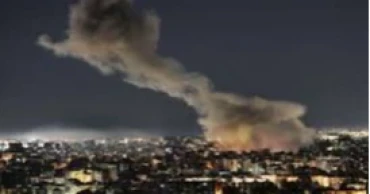
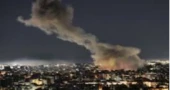
Israel orders strikes on Beirut suburbs after Hezbollah rocket attacks
Israel on Monday ordered military strikes on Beirut’s southern suburbs after Hezbollah launched rockets toward northern Israel, including areas near the coastal city of Haifa, marking a further escalation despite an existing ceasefire.
In a joint statement, Israeli Prime Minister Benjamin Netanyahu and Defence Minister Israel Katz accused Hezbollah of repeatedly violating the ceasefire and targeting Israeli cities and civilians. They said the military had been instructed to strike targets in Beirut’s southern suburbs, known as Dahiyeh, a Hezbollah stronghold.
The announcement prompted many residents to flee the area, causing heavy traffic on roads leading out of the suburb.
The latest developments came a day after Israeli ground troops advanced deeper into southern Lebanon than at any time in the past 26 years.
Overnight Israeli airstrikes on southern Lebanon killed six people, including a Syrian national near the city of Nabatiyeh, according to Lebanon’s state-run National News Agency.
The Israeli military said it intercepted two projectiles fired from Lebanon and also neutralised a suspicious aerial target near areas where Israeli forces are operating in southern Lebanon. No casualties were reported.
Hezbollah claimed responsibility for a series of rocket and missile attacks on northern Israel on Sunday.
The renewed hostilities occurred despite a ceasefire that has been in place since April 17 and ahead of a new round of talks between Lebanese and Israeli officials scheduled to begin in Washington on Tuesday.
The negotiations, which started in April, are the first direct discussions between the two countries in more than three decades. Hezbollah has opposed direct talks and continues to rely on diplomatic pressure from Iran, which is also engaged in discussions with Washington regarding regional tensions.
Although Beirut has largely been spared airstrikes since the ceasefire took effect, two targeted attacks struck the city’s southern suburbs in May.
According to a US official, Secretary of State Marco Rubio recently spoke with Lebanese President Joseph Aoun and Israeli Prime Minister Benjamin Netanyahu to explore a framework aimed at sustaining negotiations and reducing tensions.
Under the proposal, Hezbollah would cease attacks on Israel while Israel would avoid escalating military operations in Beirut. However, Lebanese Parliament Speaker Nabih Berri reportedly insisted that Israel must first halt its military actions.
Berri, a close ally of Hezbollah, said the group was prepared to fully comply with a ceasefire but questioned who would ensure Israel ends its attacks.
President Aoun condemned what he described as ongoing Israeli aggression and said his government remains committed to ending the suffering of the Lebanese people, particularly in the south.
The latest conflict between Israel and Hezbollah has killed more than 3,400 people in Lebanon and displaced over one million others.
Israel's military also reported that one soldier was killed overnight in a Hezbollah drone attack in southern Lebanon. According to Netanyahu's office, at least 26 Israeli soldiers, a defence contractor and two civilians have been killed since the fighting intensified.
2 months ago

Pro-Trump-backed candidate leads Colombia election amid dispute over results
A tough-on-crime outsider seen as supportive of US President Donald Trump has taken the lead in Colombia’s presidential election, while the ruling political camp has raised doubts over the first-round results, setting up a tense runoff vote.
Aberaldo de la Espriella led the first round held on Sunday, securing about 44% of the vote, according to nearly complete official results. He will face progressive senator Iván Cepeda, who won around 41%, in a second round scheduled for June as no candidate crossed the 50% threshold.
Cepeda, an ally of outgoing President Gustavo Petro, and Petro himself questioned the outcome, alleging without evidence that large-scale vote manipulation and foreign interference may have influenced the results. Electoral authorities have not confirmed any irregularities.
Cepeda said he would wait for a full review before fully accepting the outcome, though he acknowledged a runoff was likely. “Only when the vote-counting commissions have fully clarified what happened will we comment on tonight’s results,” he said.
De la Espriella, a political newcomer known as “El Tigre” (The Tiger), has campaigned on a hardline security agenda, promising a strong crackdown on armed groups and organized crime. He has also called for international observers, saying he wants US and democratic institutions to monitor the runoff.
Cepeda, a left-leaning senator, has pledged to continue Petro’s peace-focused approach, including negotiating agreements with guerrilla groups and criminal networks under a “total peace” strategy. However, critics say the policy has struggled to reduce violence on the ground.
The close results reflect a sharp political divide in Colombia over how to deal with long-running insecurity, with one side backing peace talks and reforms, and the other pushing for tougher security measures.
De la Espriella is expected to benefit in the runoff from voters who supported other conservative candidates in the first round.
The election is widely seen as a referendum on Petro’s presidency, coming a decade after Colombia’s landmark peace deal with the FARC rebel group. While the 2016 agreement raised hopes of ending decades of conflict, violence has resurfaced in several regions, with armed groups expanding their influence.
In recent years, Colombia has also seen rising attacks, including drone strikes and political violence. The campaign period was marked by insecurity, including the killing of presidential hopeful Miguel Uribe Turbay at a rally last year.
Across the country, voters remain divided. Some support a tougher military-style crackdown similar to policies seen under El Salvador’s President Nayib Bukele, which reduced crime but drew criticism over human rights concerns. Others warn such approaches could deepen cycles of violence and undo fragile peace efforts.
Political analyst Juan Acevedo said the vote carries wider regional significance. “Whoever wins here will suggest to the region if progressive policies will continue or if things are going to return to the right,” he said.
2 months ago
Israeli forces seize strategic Beaufort Castle in deepest Lebanon incursion in decades
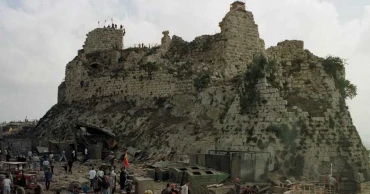
Israeli troops have captured a strategic hilltop in southern Lebanon crowned by the historic Beaufort Castle, marking their deepest military advance into the country in 26 years, the Israeli army said Sunday.
The seizure of the Crusader-era fortress near Nabatiyeh came after days of heavy airstrikes and intense ground fighting with Hezbollah fighters in surrounding villages.
The advance represents a significant escalation in the ongoing Israel-Hezbollah conflict, which has seen Israel launch a ground offensive into southern Lebanon and take control of multiple border-area towns, while Hezbollah has responded with rocket and drone attacks targeting Israeli forces and northern Israel.
The Israeli military move came despite a ceasefire framework that has been in place since April 17 and ahead of planned indirect negotiations involving Lebanon and Israel in Washington.
U.S. Secretary of State Marco Rubio held separate calls with Lebanese President Joseph Aoun and Israeli Prime Minister Benjamin Netanyahu, proposing a new diplomatic framework to keep talks alive, according to a U.S. official. The proposal reportedly includes a halt to Hezbollah attacks on Israel in exchange for Israel avoiding further escalation in Beirut.
Lebanese Parliament Speaker Nabih Berri, a Hezbollah ally, said the group is prepared to fully commit to a ceasefire, but questioned whether Israel would also halt its military operations.
French Foreign Minister Jean-Noël Barrot called for an emergency meeting of the UN Security Council, describing Israel’s expanded operations as “unacceptable” and warning against deeper occupation of Lebanese territory.
Historic fortress with long military history
The Israeli military said its forces raised the Israeli flag over Beaufort Castle, a site Israel previously held during its 1982 invasion before withdrawing in 2000.
Defense Minister Israel Katz said Israel intends to maintain control of the area while continuing operations against what it describes as Hezbollah military infrastructure in southern Lebanon.
Perched above the Litani River, Beaufort Castle has long been considered a key strategic position. Built during the Crusader period in the 12th century, it has been controlled over centuries by several empires and forces, including Muslim armies, the Ottomans and later regional groups. It was also a major stronghold during Israel’s earlier occupation of southern Lebanon.
The site, known locally as Al-Shaqif, has also been given protective status by UNESCO during recent regional conflicts due to its cultural importance.
Fighting expands deeper into Lebanon
In recent days, Israeli forces have pushed beyond the Litani River, traditionally seen as a dividing line, and ordered evacuations in several areas of southern Lebanon.
Prime Minister Netanyahu said the capture of Beaufort Castle marks a “major shift” in Israel’s military approach along its borders with Lebanon, Syria and Gaza, adding that Israel has killed thousands of Hezbollah fighters since the start of the conflict. Hezbollah has not confirmed its casualties.
Israeli troops are now advancing toward areas close to Nabatiyeh and have also issued evacuation warnings for Tyre, a major coastal city in southern Lebanon.
Lebanese officials and Hezbollah have not immediately commented on the latest advance.
Analysts say the expanded Israeli presence could strengthen its position in upcoming negotiations in Washington.
“We are at a turning point,” said Beirut-based analyst Joe Macaron, adding that territorial gains could shape future ceasefire terms.
Continued cross-border fighting
Despite diplomatic efforts, fighting has continued along the border.
Lebanese health authorities reported casualties from recent Israeli strikes near Tyre and Nabatiyeh, while Hezbollah said it had carried out attacks on Israeli troops and military vehicles near the border and deeper inside northern Israel.
The Israeli military said it has issued multiple alerts to civilians in northern Israel over drone and missile threats.
Since the latest escalation began, more than 3,000 people have been killed in Lebanon and over 1 million displaced, according to Lebanese figures. Israel says dozens of its soldiers and civilians have also been killed in the conflict.
2 months ago

No agreement with US without tangible results, Iran’s Ghalibaf says
Iran's Parliament Speaker and chief negotiator Mohammad Bagher Ghalibaf has said Tehran will not agree to any deal with the United States unless it can guarantee the protection of the Iranian people's rights, according to state media reports.
Speaking during a virtual parliamentary session on Sunday, Ghalibaf stressed that Iran remains sceptical of US assurances and will judge any agreement based on concrete outcomes rather than promises.
"We do not trust the enemy's statements and commitments," he said, adding that Iran's primary condition is to see tangible results before fulfilling its own obligations under any potential agreement.
Ghalibaf made the remarks after being sworn in for another term as speaker of parliament along with other members of the parliamentary leadership.
Source: Al Jazeera
2 months ago

NYC Mayor Zohran Mamdani skips Israel Day parade
New York City Mayor Zohran Mamdani has announced that he will not attend the annual Israel Day Parade, ending a long-standing tradition in which city leaders typically participate in the event. Mamdani cited his previously stated views on the Israeli government and his support for Palestinian rights as the reason for his absence.
Despite not attending, the mayor emphasized that the city has been preparing extensively to ensure the parade proceeds safely and peacefully, with a strong police presence in place. Police Commissioner Jessica Tisch said she would personally participate in the parade, describing it as her own decision.
Mamdani's decision has drawn criticism from some Jewish leaders and political opponents, who argue that his stance toward Israel is divisive. Rabbi Marc Schneier called the mayor's absence disrespectful to New York's Jewish community and also criticized a recent city-produced video marking the Nakba, which commemorates the displacement of Palestinians during the 1948 Arab-Israeli war.
The video featured personal testimony from a Palestinian woman who was displaced as a child and reflected on her longing for her homeland. Critics argued that it failed to acknowledge the displacement of Jewish communities from Arab and Muslim-majority countries and the impact of the Holocaust on the creation of Israel.
New York City leaders have traditionally been strong supporters of Israel, reflecting the city's large Jewish population. However, public opinion in the United States has become increasingly divided over Israel, particularly in light of the conflict in Gaza.
Mamdani, New York City's first Muslim mayor, has continued to advocate for Palestinian rights while also affirming Israel's right to exist. He has pledged to protect Jewish residents and highlighted the efforts of the city's Office to Combat Antisemitism.
2 months ago

Rising costs from Iran war threaten tourism recovery in Asia
Soaring fuel prices and global disruptions linked to the Iran war are putting pressure on tourism-dependent economies across Southeast Asia, just as the region heads into its peak travel season.
Countries such as Thailand, Vietnam and Cambodia are facing weaker travel demand, higher airfares and flight disruptions driven by rising jet fuel costs and uncertainty over the conflict’s impact on global energy supplies.
Tourism in Asia is still recovering from the COVID-19 pandemic, but officials say the new shock is hitting the sector before it fully stabilises. Higher transport and living costs are also prompting many families to cut back on travel.
“With fuel prices going up and tourists declining, how can we earn?” said Siv Pech, a 58-year-old tuk-tuk driver near Cambodia’s famous Angkor Wat temple complex in Siem Reap.
Tourism plays a key role in many Southeast Asian economies, accounting for nearly 13% of GDP in Thailand, around 9% in Vietnam, and supporting millions of jobs in Cambodia. It is also a major source of foreign currency for import-reliant countries such as the Philippines and Nepal.
The conflict has pushed up global oil prices, raising transport costs across the region, particularly for countries dependent on fuel imports that previously relied on stable shipping routes through the Strait of Hormuz.
Industry experts warn that the combined impact of the pandemic and the war is creating a difficult environment for recovery.
“This, coming within five years of the pandemic, is devastating for tourism,” said Jitsai Santaputra of energy consultancy The Lantau Group.
Airlines cut flights as fuel costs surge
Higher jet fuel prices and supply pressures have forced several airlines, including Vietnam Airlines, AirAsia and Cathay Pacific, to reduce flights or adjust schedules.
Airspace restrictions in parts of the Persian Gulf and longer flight routes have also increased operating costs for carriers flying between Europe and Asia.
As a result, ticket prices have risen sharply. Cathay Pacific, for example, has significantly increased fuel surcharges for both medium- and long-haul flights.
Company officials say jet fuel costs remain elevated, adding further pressure on pricing. Travelers are also booking later than usual, reflecting uncertainty over travel conditions.
Travel plans disrupted
For many travellers, the rising costs are forcing difficult decisions.
Freelance travel writer Sandra Awodele had planned a long-awaited trip to Thailand this summer but abandoned her plans after checking flight prices.
“I looked at the fares and that was the end of it,” she said.
Local workers feel the strain
The impact is also being felt on the ground across Southeast Asia, where tourism supports millions of small businesses and informal workers.
In Cambodia’s Siem Reap, tuk-tuk driver Siv Pech said his income has fallen sharply. He now earns as little as $5 a day, down from about $20 previously, with fuel costs taking up most of his earnings.
“Some days I don’t earn anything at all,” he said.
Restaurants and small businesses are also under pressure as rising gas and food prices squeeze profits.
Weak outlook for regional tourism
Tourism accounts for a significant share of economic activity across Southeast Asia, with the industry contributing nearly 11% of GDP in ASEAN countries before the pandemic.
Economists warn the Iran conflict could slow growth across Asia-Pacific by reducing travel demand and increasing costs for businesses and consumers.
“Higher prices and weaker demand will weigh on tourism and overall growth,” said Albert Park, chief economist at the Asian Development Bank.
In Vietnam, hotel operators say travellers are increasingly choosing cheaper accommodation options or cutting back on trips altogether.
“This will affect the entire tourism chain,” said hotel operator Le Tuyet Lan.
Thailand sees drop in arrivals
Thailand, one of the region’s top tourist destinations, has already recorded a decline in visitor numbers. Official data show an overall 7% drop in April, with sharp declines from Europe and the Middle East.
In Cambodia, tourism officials also report a steep fall in arrivals to Siem Reap, home to the Angkor Wat temple complex.
Business owners say rising energy and food costs are adding further pressure, making it harder to stay profitable.
“We are worried about inflation and rising costs,” said restaurant owner Sokha Sambo, who employs 14 staff in Siem Reap.
2 months ago

US says it struck cargo ship attempting to breach Iranian blockade
The United States military says it struck a commercial cargo vessel trying to force its way through a blockade of Iranian ports, hitting the ship’s engine room with a missile, according to U.S. Central Command.
The Gambia-flagged cargo ship ‘Lian Star’reportedly ignored more than 20 warnings from U.S. forces overnight as it attempted to enter an Iranian port, the military said.
A U.S. official, speaking on condition of anonymity, said the ship was left drifting in the Gulf of Oman and had not been boarded by U.S. forces.
The incident marks the latest in a series of enforcement actions, with the U.S. military saying it has now stopped six ships trying to breach the blockade. One vessel was allowed to pass, while more than 100 others have been redirected.
The blockade was launched on April 17 in response to tensions in the region after earlier U.S. and Israeli strikes in late February. A fragile ceasefire has been in place since early April, while diplomatic discussions continue over extending it and addressing Iran’s nuclear programme.
U.S. officials say the blockade aims to restrict Iran’s shipping activity and limit its access to revenue, adding pressure on an already struggling economy.
President Donald Trump met advisers on Friday but has not yet decided on extending the ceasefire agreement and reopening key maritime routes. Iran, meanwhile, says no final agreement has been reached.
Despite tensions, commercial shipping continues to pass through the region, though at reduced levels. Iran has insisted it must approve transit through the waterway.
Iran’s joint military command warned that any violation of its regulations would put vessels at serious risk, according to a statement carried by state media. It also said foreign military interference could be targeted.
Iran has also reportedly imposed high transit fees in some cases, a move critics say violates international maritime norms guaranteeing free navigation.
Qatar’s Deputy Prime Minister Sheikh Saoud bin Abdulrahman bin Hassan bin Ali Al Thani said his country opposes charging transit fees, though he noted that temporary arrangements linked to operations such as mine-clearing could be negotiated to help restore normal shipping through the Strait of Hormuz.
A U.S. official earlier told The Associated Press that no mines have been discovered or destroyed in the strait so far.
2 months ago
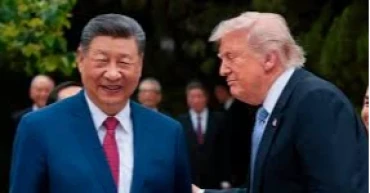
US revokes Chinese journalist's visa after Beijing expels NYT reporter
The United States has revoked the visa of a journalist working for China's state-run Xinhua News Agency in an apparent reciprocal move following Beijing's expulsion of New York Times correspondent Vivian Wang.
The action marks a rare direct response by Washington to China's removal of an American journalist. Beijing reportedly expelled Wang after a New York Times DealBook event featured Taiwanese President Lai Ching-te, despite her having no role in the interview.
The New York Times condemned the decision and called for Wang's reinstatement, warning that her expulsion would further limit independent reporting from China.
The latest dispute has raised concerns among international media organizations operating in China, where authorities closely regulate foreign journalists through accreditation and visa controls.
Media tensions between the United States and China have persisted since 2020, when both countries imposed restrictions on journalists, significantly reducing the number of American reporters based in China.
Although the two sides later reached a limited agreement allowing some journalists to return, the latest developments highlight ongoing strains over press freedom and media access between Washington and Beij
2 months ago

Trump weighs Iran agreement but not reached a final decision
President Donald Trump met with senior advisers in the White House Situation Room on Friday to discuss a potential agreement with Iran aimed at extending the current ceasefire and reopening the Strait of Hormuz. However, no final decision was reached, and Iranian officials stated that the deal remains incomplete.
Before the meeting, Trump said he was preparing to make a final judgment on the proposal. According to a senior administration official, the approximately two-hour discussion ended without a resolution. The official added that Trump would only approve an agreement that aligns with his key conditions, particularly those related to limiting Iran’s nuclear capabilities.
The meeting followed reports from The Associated Press and other outlets indicating that U.S. and Iranian negotiators had tentatively agreed on a framework. The proposed arrangement would prolong the fragile ceasefire for another 60 days while negotiations continue over Iran’s nuclear program.
Trump reiterated on social media that Iran must commit to never developing nuclear weapons. He also insisted that the Strait of Hormuz be reopened to international shipping and that all naval mines be removed from the waterway.
Iranian Parliament Speaker Mohammad Bagher Qalibaf responded skeptically, stating that Iran relies on concrete actions rather than promises. He emphasized that Iran would not make concessions before the other side takes meaningful steps and suggested that military strength, not negotiations alone, secures outcomes.
Nuclear Disputes Still UnsettledIranian Foreign Ministry spokesperson Esmail Baghaei later confirmed that no final agreement had been reached. While U.S. Vice President JD Vance suggested negotiators were establishing broad principles for future nuclear discussions, Baghaei said Iran’s current priority remains ending hostilities rather than debating detailed nuclear arrangements.
Iran also seeks provisions covering a ceasefire between Israel and Hezbollah in Lebanon and the release of billions of dollars in Iranian assets frozen abroad. Ebrahim Azizi, chairman of Iran’s parliamentary national security commission, emphasized that Tehran expects reciprocal concessions, stating that any exchange must be balanced.
According to the International Atomic Energy Agency, Iran possesses approximately 440.9 kilograms (972 pounds) of uranium enriched to 60% purity, close to weapons-grade levels. Tehran continues to maintain that its nuclear activities are peaceful and has not agreed to surrender its stockpile, much of which is believed to be located at facilities heavily damaged by U.S. strikes last year.
Trump renewed his demand that the enriched uranium be removed and destroyed under U.S., Iranian, and IAEA supervision.
Strait of Hormuz Central to Proposed DealUnder the proposed agreement, Iran would be prohibited from charging transit fees in the Strait of Hormuz and would be required to clear all sea mines from the strategic passage within 30 days. In exchange, the United States would gradually ease restrictions on Iranian ports and relax sanctions, enabling Iran to increase oil exports.
Baghaei stated that Iran and Oman, which share control over opposite sides of the strait, would manage shipping through the waterway while considering both national and international interests. Iranian Foreign Minister Abbas Araghchi said he discussed the issue with his Omani counterpart and expressed support against external threats.
Earlier in the week, Trump warned Oman against entering any arrangement with Iran that would involve shared control of the strait, threatening military action if such a deal proceeded.
Iran has largely restricted access to the Strait of Hormuz since U.S. and Israeli attacks on February 28 that killed Iran’s supreme leader and several senior officials. Prior to those events, the route handled roughly one-fifth of global oil and gas shipments.
The disruption has driven up fuel and commodity prices worldwide. Although Iran has recently allowed limited commercial traffic through the strait, vessel movements remain far below pre-war levels. Tehran has also imposed fees on some ships and created a new oversight body, the Persian Gulf Strait Authority, prompting additional U.S. sanctions.
The authority criticized the sanctions while portraying them as evidence of its effectiveness.
Despite occasional military exchanges and mutual accusations of ceasefire violations during the past seven weeks, the United States and Iran have avoided a return to full-scale conflict and have continued diplomatic negotiations.
2 months ago
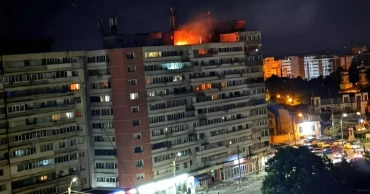
Stray Russian drone hits residential building in NATO member Romania
A Russian drone involved in an overnight attack on Ukraine went off course and crashed into an apartment building in eastern Romania, injuring two people and heightening concerns about the war spreading beyond Ukraine’s borders into NATO territory.
Romania’s Defense Ministry said the drone was detected and tracked by radar after entering Romanian airspace before crashing onto the roof of a residential building in the city of Galati, located on the Danube River near the borders with Ukraine and Moldova. The impact sparked a fire, leaving two people with minor injuries and forcing the evacuation of several residents.
The Romanian military scrambled two F-16 fighter jets and a helicopter authorized to engage aerial threats, while emergency alerts were issued to residents in affected areas. However, the aircraft did not engage or shoot down the drone.
Romania’s Foreign Ministry described the drone’s flight as a serious violation of international law and called on NATO to speed up the transfer of anti-drone capabilities to the country’s military.
Gen. Gheorghe Maxim, acting commander of Romania’s joint military staff, said the incident was not a deliberate Russian attack on Romania but warned that Russia remains a threat to regional security.
The incident was the latest in a series of drone incursions involving both Russia and Ukraine that have unsettled NATO member states. Ukraine’s air force said Russia launched 232 drones and one ballistic missile overnight, with 217 drones intercepted and strikes recorded in 14 areas.
2 months ago