others
“Ancient Buddhist Site of Sarnath” inscribed in UNESCO World Heritage list
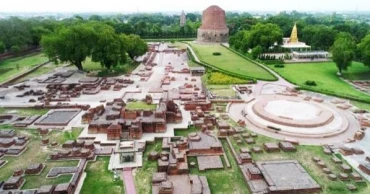
In a remarkable decision taken at the 48th Session of the World Heritage Committee being held at Busan, South Korea, India’s official nomination for 2025-26 cycle, “Ancient Buddhist Site of Sarnath” got inscribed on the UNESCO World Heritage List, becoming India’s 45th property to receive this recognition.
This global accolade celebrates India’s enduring cultural legacy, showcasing its diverse traditions of architectural brilliance, regional identity, and historical continuity.
Indian Prime Minister Narendra Modi, Union Minister of Culture Gajendra Singh Shekhawat along with Chief Minister of Uttar Pradesh Yogi Adityanath lauded the historic milestone and congratulated the people of India for this achievement, said the Press Information Bureau of India on Saturday.
With this global recognition, India affirms its commitment to protect Sarnath's Outstanding Universal Value by Manage tourism sustainably and prevent unplanned development in the buffer zone in order to preserve authenticity and integrity of the property.
The inscribed serial property comprises two component parts – Chaukhandi Stupa and the Archaeological Remains of Sarnath (Dhamekh Stupa, Dharmrajika Stupa, Mulagandgakuti Vihara, Ashokan Pillar, etc.) – located within Varanasi in Uttar Pradesh.
Together these two components preserve the architectural and archaeological remains of the ancient site of Sarnath, known in the Buddhist tradition under different names – Rishipatana, Ishipatana, Mrigadava.
They all refer to a sacred geography, where the Buddha visited in the 6th century BCE and delivered his first sermon known as the “Turning of the Wheel of the Law” (Dharmachakra pravartana).
This event marked the inception of the Buddhist sangha and the establishment of the principles of the Noble Eightfold Path.
Indicated by the Buddha himself to be one of the four key sites of Buddhist pilgrimage, Sarnath developed over centuries through royal, monastic and lay patronage.
9 days ago
Russian missile strike near Kyiv kills 10 after Zelenskyy meets Patriot maker Raytheon
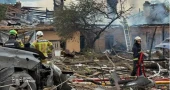
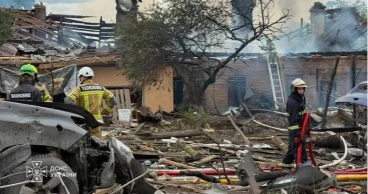
A Russian ballistic missile strike near Kyiv on Friday killed at least 10 people and injured nearly 100 others after hitting a site hosting a defence industry event, Ukrainian officials said.
The attack came a day after Ukrainian President Volodymyr Zelenskyy met in Kyiv with senior representatives of US defence company Raytheon, which manufactures Patriot air defence systems that Ukraine says are essential to counter Russia's ballistic missile attacks.
Raytheon did not immediately comment on whether any of its employees were present at the event.
"Missiles for Patriot systems are the number one priority," Zelenskyy wrote on social media while confirming the attack.
According to acting regional military administration head Ruslan Oliinyk, the missile struck the grounds of a privately operated military training facility in Bucha district, about 20 to 30 kilometres from central Kyiv. The site was hosting a defence-related gathering when it was hit.
Emergency teams rushed to the scene, where 27 houses and 44 vehicles were also damaged, officials said.
The Ukrainian Defence Industry Council, the country's largest association of private defence manufacturers, confirmed that industry representatives were attending the event, but did not disclose further details.
Prosecutor General Ruslan Kravchenko said authorities had launched a war crimes investigation into the Russian strike, along with a separate probe into possible negligence over the organisation of the event. Investigators will examine who approved the venue, timing and format of the gathering and whether sufficient safety measures had been taken.
The Ukrainian government later imposed restrictions on reporting details of the attack.
Meanwhile, Ukrainian officials said a separate strike on a military facility in Russia killed six people and injured 26 others, according to the regional governor.
Zelenskyy pushes for Patriot co-productionThe meeting between Zelenskyy and Raytheon representatives took place less than three weeks after US President Donald Trump pledged to allow Ukraine to produce Patriot systems under licence.
Zelenskyy said the company was ready to work with Ukraine on the joint production of Patriot interceptor missiles, adding that government officials and private-sector representatives would continue discussions on the project.
Ukraine has repeatedly urged its Western allies to provide more Patriot systems, which are considered one of the few effective defences against Russian ballistic missiles. While Ukraine has developed its own air defence technologies, officials say expanding domestic production remains critical, though experts caution that establishing local manufacturing could take years.
The meeting also reflected improving ties between Kyiv and Washington. Laura Loomer, a prominent Trump ally, also visited Kyiv on Thursday and criticised Russian President Vladimir Putin over missile attacks on Ukraine.
Ukraine expands drone strikes inside RussiaUkraine has continued stepping up long-range drone attacks inside Russia, targeting military and logistical infrastructure as it seeks to disrupt Moscow's war effort.
On Friday, Zelenskyy said Ukrainian forces had struck an oil facility about 1,350 kilometres from the Ukrainian border, along with a military plant in Russia's Kirov region that produces aircraft and missile components.
Regional Governor Alexander Sokolov said six people were killed and 26 injured in the attack on the military facility. Russian outlet Astra identified the site as the Avitec plant, which manufactures air defence missiles and aircraft components.
Ukraine also targeted several logistics centres belonging to Wildberries, Russia's largest online retailer. Company founder Tatyana Kim said warehouses in St. Petersburg, the neighbouring Leningrad region and Simferopol in Russian-annexed Crimea came under attack. Russian media published images showing thick smoke rising over St. Petersburg.
Ukrainian forces had struck four other Wildberries facilities earlier this week, causing major fires.
Kyiv says its campaign aims to disrupt Russia's military logistics and bring the impact of the war closer to ordinary Russians.
Russia's Defence Ministry said its air defence systems shot down 571 Ukrainian drones overnight.
9 days ago
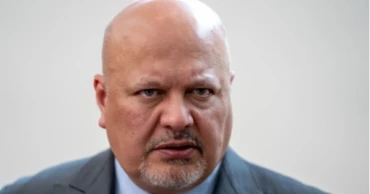
ICC removes chief prosecutor Karim Khan over sexual misconduct allegations
The International Criminal Court (ICC) on Friday voted to remove its chief prosecutor, Karim Khan, from office over sexual misconduct allegations, nearly two years after the claims first surfaced.
The ICC's 125 member states approved the decision by a large majority, citing "serious misconduct and serious breach of duty," according to the court's oversight body, the Assembly of States Parties.
Khan, a 56-year-old British lawyer, has denied allegations that he engaged in sexual misconduct involving a female aide. According to documents reviewed by The Associated Press, he had a sexual relationship with the woman and allegedly tried to stop her from pursuing the accusations.
Human Rights Watch welcomed the decision, saying the ICC must uphold the highest standards of accountability and ensure a safe workplace with effective systems for addressing abuse, including sexual harassment.
The Assembly of States Parties will now begin the process of electing a new chief prosecutor. The successor is expected to inherit major challenges, including sanctions imposed by the Trump administration against the court.
Khan's legal team criticised the process that led to his removal, arguing he was not given a fair chance to defend himself. His lawyer, Tayab Ali, said Khan was prevented from addressing Friday's session and claimed the rules had been changed to disadvantage him. He said the decision would be challenged through all available legal avenues.
The leadership change comes as the ICC faces mounting pressure from the United States.
Last week, US Secretary of State Marco Rubio announced what he described as a broad campaign to weaken the ICC, saying Washington would encourage member states to leave the court, sanction organisations cooperating with it and restrict travel to the United States for court staff. He also urged countries benefiting from US security support to reject the court's jurisdiction over American citizens.
Hours after the vote, Venezuela announced it was withdrawing from the ICC. Foreign Minister Félix Plasencia accused the court of showing geographical bias by focusing disproportionately on African and Latin American countries.
Earlier this year, ICC prosecutors ended an investigation into whether US sanctions on Venezuela amounted to crimes against humanity, citing insufficient evidence. However, a separate investigation into alleged crimes committed by Venezuelan security forces under former President Nicolás Maduro remains ongoing.
The Trump administration has already imposed sanctions on Khan and 12 other ICC staff members in response to arrest warrants issued against senior Israeli officials, including Prime Minister Benjamin Netanyahu and former Defence Minister Yoav Gallant, over the Gaza war, as well as investigations involving US personnel in Afghanistan.
Experts say the allegations against Khan became intertwined with the court's Gaza-related investigations, particularly because they involved arrest warrants against officials from a close US ally.
Khan's removal will not affect the arrest warrants issued in 2024 against Netanyahu and Gallant, as only ICC judges have the authority to withdraw them.
Assembly President Päivi Kaukoranta urged the international community to respect the dignity and privacy of everyone involved in the case and thanked member states for handling the matter with unity while safeguarding the court's integrity.
9 days ago
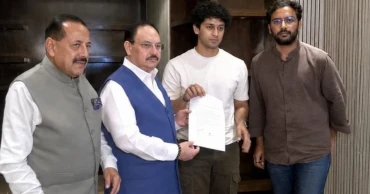
Education minister's resignation remains key hurdle ahead of fresh Centre-CJP talks
The Cockroach Janta Party (CJP) has hardened its position ahead of the third round of talks with the Indian government, saying there is no point in continuing discussions unless Education Minister Dharmendra Pradhan resigns.
CJP spokesperson Ashutosh Ranka said on Saturday that the minister's resignation is "non-negotiable."
"Dharmendra Pradhan's resignation is non-negotiable. If it's a no from the government, there's no point in further discussion," Ranka wrote on X.
The third round of talks is scheduled for Saturday afternoon after Union Ministers JP Nadda and Jitendra Singh held nearly two hours of discussions with CJP representatives on Friday at the Constitution Club.
According to the protesters, the CJP has placed three key demands before the government: the resignation of the education minister, assurance that no legal action will be taken against protesting students, and Rs 1 crore in compensation for the families of students who died by suicide following the alleged NEET examination paper leak.
Government representatives reportedly agreed in principle to the demands for no legal action against protesters and compensation. However, Pradhan's resignation remains the main point of disagreement.
After Friday's meeting, Nadda said the government would review the demands internally before responding in the next round of talks.
"The meeting lasted for almost two hours. They raised three main demands and suggested five reforms for the examination system. We will meet them again on Saturday and share the government's position," he said.
Government sources said the Centre is not considering the education minister's resignation and continues to support him.
According to the sources, the government believes stepping down would be the easiest option but is not justified. They said the government intends to fulfil its responsibilities under the mandate it received from the public.
Meanwhile, the Centre has announced several measures to address examination paper leaks. Prime Minister Narendra Modi has said fast-track courts will be set up to handle such cases, while the government is preparing amendments to strengthen penalties and fines for those involved in paper leak crimes.
The government has also replaced the education secretary, removed 47 officials from the National Testing Agency (NTA), and promised a comprehensive overhaul of the examination body.
Reacting to the dismissal of the NTA officials, Ranka said the move alone was insufficient.
He argued that the education minister must take responsibility for the repeated paper leaks and the deaths of students linked to the NEET controversy, insisting that Pradhan's resignation remains essential.
Source: NDTV
9 days ago
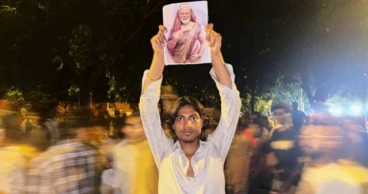
Humour and memes fuel India's 'Cockroach' protest movement against Modi government
Young protesters in India are using humour, memes and parody videos to amplify their demonstrations, turning social media into a key battleground as they press the government for education reforms and greater accountability.
As thousands continue protesting in New Delhi, many are sharing jokes, satirical videos and viral content online, targeting Prime Minister Narendra Modi's government, police actions and pro-government television coverage.
Observers say the online campaign has helped expand the movement beyond street protests, reaching a wider audience and increasing pressure on the government.
The movement, led by the satirical Cockroach Janta Party (CJP), has embraced humour as a form of protest.
Videos of demonstrators running from police have been edited to resemble the popular mobile game Subway Surfers, while others joked about maintaining their fitness app records during clashes with security forces.
Some women protesters have also adopted social media trends by posting "get ready with me" videos before joining marches and showcasing homemade protective gear such as helmets and goggles.
Participants have also created parody videos mocking television anchors who have labelled the protesters as "anti-national" or accused them of being backed by foreign interests.
Several protesters interviewed by The Associated Press said humour helps them cope with the stress of the demonstrations and connects with younger audiences.
One 25-year-old protester said her generation is less willing to tolerate problems than previous generations and uses social media to express its frustration.
The protests began about a month ago following allegations of irregularities in several competitive examinations, including the leak of entrance exams for India's national medical programme.
Protesters have demanded the resignation of Education Minister Dharmendra Pradhan, accusing the government of failing to protect the integrity of the examination system.
Since then, the demonstrations have grown into a broader movement calling for greater government accountability and have spread to several cities.
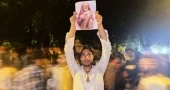
At protest sites in New Delhi, many demonstrators carry humorous placards, wear costumes such as Spider-Man or Batman, and use pop culture references to communicate their message.
One sign asked, "When will AI take his job?" while another declared, "Every joke is a (tiny) revolution."
Some slogans have also used stronger language, reflecting the informal style common on social media.
A 23-year-old student said younger people prefer short, direct messages over lengthy speeches.
"We are the summary generation. We consume information quickly, so we use the same style to spread our message," the student said.
The movement has also increasingly targeted Prime Minister Modi personally.
Known for building his political image through social media, Modi has rarely been the subject of widespread public mockery. However, protesters have recently turned his speeches, gestures and public appearances into parody videos and memes.
After Modi released a selfie-style video on Thursday promising strict action against those responsible for examination paper leaks, social media users responded with edited versions featuring humorous voice-overs and references to previous promises they claimed had not been fulfilled.
One widely shared parody video edited Modi's opening greeting to protesters before cutting to three young women replying, "No, we are not."
A 21-year-old student said using social media was the most effective way to challenge the prime minister.
"We're just answering him in his own language," the student said.
9 days ago
Biden drops lawsuit over release of interviews with memoir ghostwriter
Former US President Joe Biden has withdrawn a lawsuit seeking to block the release of audio recordings and transcripts of interviews he gave to his memoir ghostwriter before becoming president, clearing the way for the material to be handed over to a Republican-led congressional committee.
Biden's lawyers filed a notice on Friday to voluntarily dismiss the case, less than a week after a divided federal appeals court rejected his request to stop the release of the recordings.
The decision means Biden will no longer pursue legal efforts to prevent the material from being disclosed. He had the option to ask the US Supreme Court or the full appeals court to review the ruling but chose not to do so.
In a 2-1 decision issued on Monday, a panel of judges on the US Court of Appeals for the District of Columbia Circuit said there was a "substantial" public interest in releasing the recordings.
One judge, Florence Pan, disagreed, saying Biden had a significant privacy interest in keeping the interviews confidential.
The recordings were made in 2016 and 2017 during interviews between Biden and writer Mark Zwonitzer, who helped write Biden's memoirs Promises to Keep and Promise Me, Dad. Biden's legal team argued that the conversations were personal, candid and intended to remain private.
The recordings were later obtained by Special Counsel Robert Hur during his investigation into Biden's handling of classified documents from his time as a US senator and vice president.
Although Hur decided not to bring criminal charges against Biden, Republican lawmakers later sought access to the recordings.
Biden filed the lawsuit to stop the Justice Department under the Trump administration from releasing the material to Congress and the conservative Heritage Foundation.
In June, US District Judge Dabney Friedrich ruled that the public interest in the recordings outweighed Biden's privacy concerns, prompting the former president to appeal before ultimately dropping the case.
9 days ago

Trump administration says clean energy grants were canceled based on states' political affiliation
The Trump administration has acknowledged in court filings that it canceled $7.6 billion in funding for hundreds of clean energy projects based on the political affiliation of the states receiving the grants.
According to the court documents, the grants were canceled because the projects were located in 16 states that voted for Democrat Kamala Harris in the 2024 presidential election.
The admission differs from previous statements by Energy Secretary Chris Wright and other administration officials, who had said the projects were dropped because they did not meet the country's energy priorities or represented poor use of taxpayer money.
Democratic lawmakers and environmental groups criticized the disclosure, accusing the administration of using federal funding for political purposes.
Representative Marcy Kaptur of Ohio and Senator Patty Murray of Washington said the court filing confirmed what they had long suspected—that nearly 300 energy projects were canceled simply because they were located in states that did not support President Donald Trump in the 2024 election.
They called the move an abuse of power and urged congressional Republicans to hold the administration accountable.
Last October, the Department of Energy announced that it had canceled 321 funding awards covering 223 projects, saying they failed to meet national energy needs or were not economically viable.
The canceled projects included efforts to build battery manufacturing plants, develop hydrogen technology, modernize the electric grid and expand carbon capture systems.
White House budget director Russell Vought defended the cuts at the time, saying funding intended to support what he described as the political left's climate agenda was being eliminated.
The affected projects were located in California, Colorado, Connecticut, Delaware, Hawaii, Illinois, Maryland, Massachusetts, Minnesota, New Hampshire, New Jersey, New Mexico, New York, Oregon, Vermont and Washington—all states that supported Harris in the 2024 election.
The funding cuts were challenged in court, while more than two dozen Democratic members of Congress requested a formal investigation by the Department of Energy's inspector general. The department's internal watchdog launched an inquiry in December.
Earlier court filings had already indicated that grant selections were influenced by whether recipients were based in Democratic-leaning, or "blue," states.
In the latest case, federal government lawyers also acknowledged using keywords related to diversity, gender, COVID-19 and vaccine hesitancy when reviewing projects to determine whether they conflicted with the administration's policy priorities.
Environmental groups said the court filing showed the administration had prioritized politics over energy infrastructure.
Holly Bender, chief program officer at the Sierra Club, said canceling the projects could lead to job losses, higher energy costs and increased pollution, while shifting billions of dollars toward fossil fuel projects instead of clean energy initiatives.
9 days ago
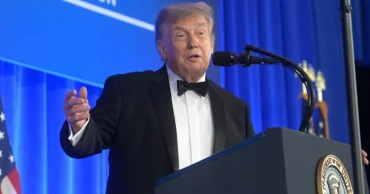
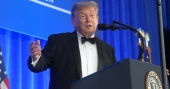
Trump returns to White House correspondents' dinner with jokes, criticism and calls for press respect
US President Donald Trump returned to the rescheduled White House Correspondents' Association (WHCA) dinner on Friday, delivering an hour-long speech filled with jokes, criticism of political opponents and media figures, and references to his presidency.
The event, originally scheduled for April, was postponed after a shooting near the venue raised security concerns.
Opening his remarks, Trump said he had removed the harshest parts of the speech he had originally planned for the April dinner.
"As I said three months ago, the show must go on," he told the audience, recalling the attempted attack that forced the postponement before shifting to lighter remarks.
Trump's appearance marked a notable moment in his relationship with the media. Since returning to office for a second term, he has frequently criticised news organisations, filed lawsuits against media outlets and taken actions affecting press access. Several journalists attending the dinner had previously been publicly criticised or barred from White House events.
During the speech, Trump mixed praise for some journalists with criticism of others. He joked about several public figures, including entertainers, politicians and television hosts, and also poked fun at his own speechwriters.
He also referred to journalism awards presented earlier in the evening, many of which recognised reporting critical of his administration, jokingly asking whether he had any influence over the winners.
Trump briefly mentioned the conflict involving Iran and highlighted construction of a new ballroom at the White House. He also joked about seeking a third presidential term, despite the US Constitution limiting presidents to two terms.
"The second time is always better," he said before adding, "I'm only kidding."
At the end of his speech, Trump put on a red "Trump 2028" cap and jokingly suggested he was running again.
Earlier in the evening, outgoing WHCA President Weijia Jiang of CBS News welcomed attendees and thanked Trump for attending. She said rescheduling the dinner reflected the determination of the White House press corps not to be intimidated by violence.
"Tonight our message is this: We are back," Jiang said.
The ceremony also honoured Secret Service agent Victor Gonzales, who was injured while responding to the April shooting, and staff at the Washington Hilton hotel, where the original dinner had been planned.
Security at the rescheduled event was significantly tighter than usual, with multiple identification checks, armed officers and security dogs. Attendance was also smaller, with about 700 guests.
One journalism award recipient, New York Times reporter Tyler Pager, had recently faced a subpoena from the Justice Department over reporting related to a luxury aircraft gifted to Trump by Qatar. The subpoena was withdrawn a day before the dinner.
The event took place amid continued tensions between the White House and the news media. Critics have long argued that the annual correspondents' dinner creates an appearance of overly close relationships between journalists and the public officials they cover.
Despite his frequent criticism of the press, Trump ended his speech on a conciliatory note, telling journalists he respected their profession before joking that they would struggle without him as a newsmaker.
"I have a lot of respect for your profession," Trump said. "When I'm not around, you're all gonna be broke."
9 days ago
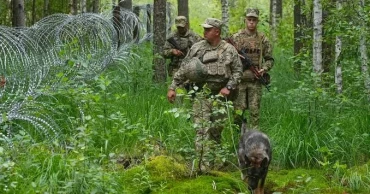
Ukraine continues to strengthen Belarus border more than four years after Russian invasion
More than four years after Russian forces launched their attack on Kyiv through Belarus, Ukraine is continuing to reinforce its border with its northern neighbor, keeping the area heavily fortified against any potential threat.
What was once a busy border crossing has become a restricted zone filled with landmines and closed to civilians.
Along the 1,084-kilometre border, roads are covered with anti-drone netting, while razor wire and rows of concrete anti-tank barriers, known as "dragon's teeth," line large sections of the frontier.
An Associated Press team visited parts of the northern border earlier this month after tensions rose between the two countries. Ukraine had asked Belarus to remove Russian communications relay stations installed to extend the range of drones used in attacks on Ukrainian cities.
According to Ukrainian officials, Belarus complied with the request, helping ease tensions between the two countries.
Although Ukraine says it has seen no signs of a Russian troop buildup inside Belarus, officials insist that strengthening the border remains a key security priority.
Belarusian President Alexander Lukashenko has repeatedly said his country's forces will not join the war unless Belarus itself is attacked.
However, residents living near the border say they remain concerned that Belarus could become more directly involved in Russia's war against Ukraine.
For many local people, the extensive fortifications serve as a reminder of the early days of the war while also providing reassurance that Ukraine is preparing for any future threat.
Ukrainian border guards continue to patrol the area around the clock using armored vehicles, drones and advanced surveillance systems.
Officials say work to reinforce the border will continue, describing Belarus—Russia's closest military ally—as a long-term security concern.
9 days ago
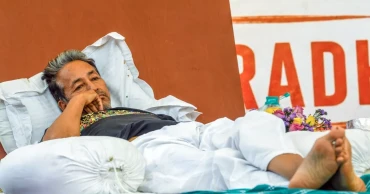
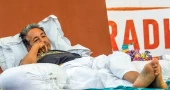
Sonam Wangchuk says he ended hunger strike to protect protesting students
Activist Sonam Wangchuk has said he ended his 26-day hunger strike without securing the resignation of India's Education Minister Dharmendra Pradhan because his immediate priority was to protect student protesters from legal action.
Wangchuk, 59, had been on an indefinite fast since June 28 in support of members of the satirical Cockroach Janta Party (CJP), who launched a "Sansad Chalo" march demanding accountability over alleged irregularities in competitive examinations, reforms in the education system and the resignation of Pradhan.
He ended the fast shortly after midnight on Thursday after the Indian government provided a written assurance that no cases would be filed against peaceful protesters. The government also agreed to hold a detailed discussion in Parliament on examination reforms and paper leaks and said it was considering compensation for the families of students who died by suicide following the alleged NEET paper leak.
His decision drew criticism from some supporters who questioned why he ended the protest without obtaining the minister's resignation.
In a YouTube video released late Friday, Wangchuk said Pradhan's resignation remained an important issue but was not his main focus during negotiations with the government.
"I don't consider it essential for me personally to bring about this resignation," he said in the video recorded from his hospital bed.
He argued that the government was already facing growing public criticism over the issue and expressed confidence that the minister would eventually step down.
"My focus was that students should not suffer. My main concern was legal action and FIRs. I did not think it was necessary for me personally to secure the minister's resignation," he said, adding that the movement would continue demanding Pradhan's resignation.
Wangchuk also denied allegations that he had struck a deal with the government to end the fast.
He said he feared a possible crackdown on protesters and wanted to prevent violence or legal action against students.
"I felt that if I ended my fast and appealed for peace, perhaps the situation could be defused," he said, recalling a security crackdown in Ladakh in September 2025.
Responding to criticism over ending the fast in the presence of Union ministers JP Nadda and Jitendra Singh, Wangchuk said the circumstances surrounding the negotiations had been misunderstood.
"If I had to make a deal, would I have remained hungry for 26 days? Could I not have struck a deal sitting in an air-conditioned room instead of fasting in Delhi's heat?" he asked.
According to Wangchuk, the ministers met him at Medanta Hospital in Gurugram and agreed to consider compensation for families of students who died by suicide following the alleged NEET paper leak and to hold a parliamentary discussion on reforms and accountability in the examination system.
He said he refused to end the fast until the government gave a written assurance that peaceful protesters would not face legal action.
"They initially agreed to compensation and discussion in Parliament but were not ready to assure that no cases would be filed against protesting students. They offered only a verbal assurance. I insisted on a written assurance and did not relent until they agreed," Wangchuk said.
He also claimed he had hoped to end the fast in the presence of MPs, CJP members and representatives from Ladakh, but many of them were not allowed to meet him before the ministers arrived late at night.
Source: NDTV
9 days ago