others

ICC member states to vote on prosecutor Karim Khan's future amid misconduct allegations
Member states of the International Criminal Court (ICC) are set to decide Friday whether to permanently remove Chief Prosecutor Karim Khan in an unprecedented vote that comes amid sexual misconduct allegations and mounting political pressure on the global tribunal.
Diplomats representing the court's 125 member states gathered at the United Nations headquarters in New York for a special session of the Assembly of States Parties (ASP), the ICC's governing body, to determine Khan's future.
The British lawyer has denied allegations of sexual misconduct involving a female aide, despite findings by the court's oversight body that he committed serious misconduct and breached his official duties.
Khan was formally suspended from his duties in June after the ICC oversight committee concluded that he had engaged in an inappropriate relationship with a staff member and later attempted to discourage her from pursuing the allegations. He has rejected those findings.
A majority vote of member states is required to remove him permanently from office.
Khan is not attending the closed-door meeting because US sanctions imposed by the Trump administration over the ICC's investigation into Israeli officials prevent him from entering the United States.
His legal team has criticized the decision to proceed in his absence, arguing that he should have the opportunity to defend himself before such a significant disciplinary decision is made.
Khan has also been suspended from practising law in the United Kingdom while the British Bar Standards Board conducts its own investigation into the allegations.
The Netherlands, which hosts the ICC in The Hague, has publicly announced that it will vote in favour of Khan's removal. No other member state has disclosed its position ahead of the secret ballot.
The disciplinary proceedings have unfolded alongside the ICC's investigation into the war in Gaza, a case that has drawn sharp criticism from several governments.
In 2024, the court issued arrest warrants for Israeli Prime Minister Benjamin Netanyahu and former Defence Minister Yoav Gallant over alleged crimes against humanity related to the conflict in Gaza, prompting sanctions by the United States against Khan and other ICC officials.
The controversy has exposed divisions within the court. Earlier this year, a group of ICC staff expressed concern over Khan's possible return, saying his leadership had been significantly weakened. Meanwhile, several Palestinian organisations accused the court's oversight body of political interference in the disciplinary process.
If Khan is removed, ICC member states will begin the process of selecting a new chief prosecutor. Until then, the prosecutor's office will continue to be led by Khan's two deputies.
11 days ago
More than 10,000 evacuated as wildfire spreads near popular tourist town in France
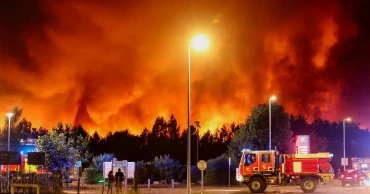
More than 10,000 people were evacuated overnight after a fast-moving wildfire spread near the popular Atlantic coastal town of Lège-Cap-Ferret in southwestern France, authorities said Thursday.
The fire has burned more than 2,000 hectares (4,900 acres) of land, although no injuries have been reported so far.
The Gironde prefecture said around 500 firefighters are battling the blaze, but warned that weather conditions remain unfavourable, making it difficult to bring the fire under control.
As a safety measure, authorities evacuated more than 10,000 people, including many tourists staying at eight holiday camps and campgrounds in the area southwest of Bordeaux.
More than 1,000 residents living near forested areas were also asked to leave their homes.
Authorities have opened emergency shelters in nine municipalities, where more than 2,500 evacuees have taken refuge.
France and several other southern European countries have experienced a series of major wildfires this summer, driven by prolonged heatwaves and dry weather.
Scientists say climate change is increasing the frequency and intensity of extreme heat and drought, creating conditions that make wildfires more likely and more destructive.
France has been hit by repeated heatwaves since before the start of summer, leaving forests and vegetation extremely dry and vulnerable to fire.
Interior Minister Laurent Nunez said more than 12,500 wildfires have broken out across the country since the beginning of the year, burning nearly 44,000 hectares of land.
11 days ago
Houthis claim attacks on two Saudi oil tankers as US continues strikes on Iran
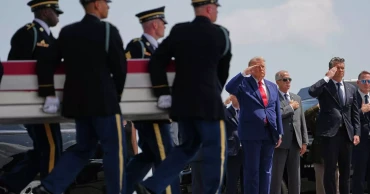
Yemen's Iran-backed Houthi rebels said early Thursday they attacked two Saudi oil tankers in the Red Sea, while the United States carried out a 12th consecutive night of airstrikes on Iran, further escalating tensions in the region.
The latest developments have raised fears of a wider conflict that could further disrupt global shipping and energy supplies, with no signs of progress in diplomatic efforts to ease the crisis.
The US Central Command (CENTCOM) said the overnight strikes were aimed at weakening Iran's ability to threaten commercial shipping and civilian vessels in regional waters as Washington seeks to restore safe navigation through the Strait of Hormuz.
Earlier on Wednesday, President Donald Trump warned that the US would target one Iranian bridge or power plant every time Iran attacked a ship in the Strait of Hormuz.
"From this point forward, any time the Islamic Republic of Iran shoots at a ship in the Strait of Hormuz... the United States will bomb and destroy one bridge or power plant," Trump wrote on social media.
US Secretary of State Marco Rubio, speaking at a regional summit in the Philippines, said Iran had expressed interest in negotiations but questioned its willingness to honour any agreement.
"The problem is making a deal with people who don't keep their commitments," Rubio said.
Houthis claim tanker attacksThe Houthi-run SABA news agency said the rebels targeted the Saudi-linked oil tankers Encelia and Layla in the Red Sea, claiming both vessels caught fire.
If confirmed, the attacks would be the Houthis' first reported strike on commercial ships since they announced a blockade of Saudi-linked shipping through the Bab el-Mandeb Strait earlier this week.
The group said the move was in retaliation for Saudi Arabia's blockade of Houthi-controlled areas in Yemen and a recent attack on Sanaa's international airport.
Bab el-Mandeb is one of the world's busiest maritime routes, linking the Red Sea with the Gulf of Aden. Around 12% of global trade, including roughly one-quarter of the world's container shipping, passes through the waterway.
A senior Houthi official said the blockade would continue until Saudi Arabia lifted its restrictions on Yemen.
Saudi Arabia's state news agency confirmed that the tanker Encelia was attacked and caught fire while sailing in the Red Sea, but said there were no casualties. It did not mention the Layla.
The UK Maritime Trade Operations (UKMTO) also reported that a tanker had been struck by an unidentified projectile southwest of Saudi Arabia's Al Shuqaiq area. No casualties were reported.
Rubio urged the Houthis to avoid further escalation, saying continued attacks would only worsen the situation.
Strait of Hormuz tensions continueThe US air campaign comes as tensions remain high over the Strait of Hormuz, one of the world's most important oil shipping routes.
The waterway, through which about one-fifth of globally traded oil and gas normally passes, has been severely disrupted by the conflict.
Iran says it has the right to regulate shipping through the strait and has targeted vessels using routes protected by US forces.
In response, Washington has tightened its blockade on Iranian ports and expanded military operations across Iran.
Trump also indicated this week that US forces could target an Iranian nuclear facility currently under construction.
Iranian Parliament Speaker Mohammad Bagher Qalibaf dismissed the US threats, saying conditions in the Strait of Hormuz would not return to how they were before the conflict.
Overnight strikes and regional concernsIranian state media reported that US missiles hit areas near Ahvaz, Ramshir and Andimeshk in western Iran overnight. Two people were reportedly killed in a strike near the Iraqi border town of Shalamcheh.
Iran has responded to US attacks by targeting energy facilities and desalination plants in neighbouring Gulf countries.
Kuwait's military said its air defence systems intercepted hostile drones, while Iranian Foreign Minister Seyed Abbas Araghchi warned that Tehran would respond forcefully to any further attacks.
"Any aggression against Iran, including our infrastructure, will receive a strong and decisive response," he wrote on X.
Diplomatic efforts remain stalledIranian Interior Minister Eskandar Momeni recently held talks in Pakistan, which has been trying to mediate between the parties, but there has been little indication of any diplomatic breakthrough.
Pakistan's Prime Minister Shehbaz Sharif strongly condemned the attacks on the Saudi oil tankers.
Meanwhile, Iran's Interior Ministry said diplomatic contacts were continuing despite the ongoing fighting.
An Arab diplomat, speaking anonymously, said Gulf countries were becoming increasingly pessimistic about the chances of reducing tensions and remained deeply concerned about the latest escalation in the region.
11 days ago
Indian legend Naseeruddin Shah questions Bollywood's silence on student protests
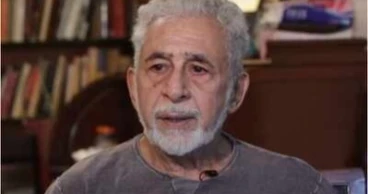
Veteran Indian actor Naseeruddin Shah has questioned why many of Bollywood's biggest names have remained silent on the student protests over education reforms, saying some people speak up only after it no longer costs them anything.
Speaking to The Wire, a media outlet based on Delhi, Shah was asked why many leading actors had not commented publicly on the demonstrations, which have spread across India over the past week.
"They will do it when their conscience tells them to," Shah said. "There is a saying: a dog with a bone in its mouth can't bark. As soon as the bone drops out of their mouth, or it breaks their teeth, then they will bark."
When asked whether celebrities were staying silent because they benefited from doing so, Shah replied, "Absolutely. And how long can they do that? Time will tell."
Shah had voiced support for the protesters a day earlier in a video message, condemning what he described as the treatment of students by authorities.
"I want to tell all these children not to lose hope," he said. "Many people sympathise with you. Many people are with you. Keep fighting."
He ended the message with the words, "Sab yaad rakha jayega" ("Everything shall be remembered"), directed at the government.
Several figures from India's film industry, including Ratna Pathak Shah, Shabana Azmi, Dia Mirza, Swara Bhasker, Prakash Raj, Diljit Dosanjh and Vir Das, have also expressed support for the protests.
The demonstrations at Jantar Mantar in New Delhi gathered momentum after educator and environmentalist Sonam Wangchuk began an indefinite hunger strike.
Protesters are seeking talks with the central government and have called for the resignation of Union Education Minister Dharmendra Pradhan over the alleged NEET-UG paper leak and other alleged irregularities in the examination process.
11 days ago

Thai authorities launch manhunt after attack kills 5 soldiers in troubled south
Thai security forces have launched a search for those behind a deadly attack in the country's conflict-hit southern region that left five soldiers dead and injured several civilians.
According to the Internal Security Operations Command (ISOC), around 10 armed attackers opened fire and hurled pipe bombs at soldiers manning a security checkpoint near a residential area in Narathiwat province on Wednesday evening before escaping.
The attack also injured six civilians, including a 10-year-old boy who remains in hospital in stable condition.
Authorities released photographs of the suspected attackers, who were dressed in black clothing and hats and were seen riding in the back of a black pickup truck. Security officials later found the vehicle abandoned and set on fire about 21 kilometres from the attack site.
The attackers also took three AK-47 rifles, three bulletproof vests and three mobile phones belonging to the soldiers, officials said.
Narathiwat, along with neighbouring Yala and Pattani provinces, has a Muslim-majority population in predominantly Buddhist Thailand. The three southern provinces have been affected by a long-running separatist insurgency since 2004, which has claimed thousands of lives.
Many Muslims in the region have long complained of discrimination and unequal treatment, while security crackdowns have often intensified tensions. Although the violence has declined compared with previous years, sporadic attacks continue.
In a Facebook post, ISOC Region 4, which oversees security operations in southern Thailand, said authorities would speed up the investigation and make every effort to arrest those responsible.
Prime Minister Anutin Charnvirakul strongly condemned the incident, describing it as a terrorist attack that deliberately targeted government personnel and posed a serious threat to national security, government spokesperson Rachada Dhnadirek said.
Video footage aired by Thai PBS showed that nearby homes and properties were also damaged in the attack. One house suffered damage to its roof, doors and windows, while a motorcycle parked outside was destroyed. Another home had multiple bullet holes in its front metal gate.
11 days ago
PM Modi announces fast-track courts for paper leak cases
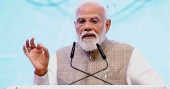
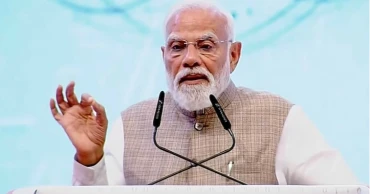
Indian Prime Minister Narendra Modi on Thursday announced that the government will set up fast-track courts to ensure quick trials and strict punishment in paper leak cases, amid growing student protests and political pressure over alleged examination leaks.
In a post on X, Modi said protecting the future of young people is the government’s top priority.
“Nothing is more important than the welfare and future of our youth,” he wrote, adding that he has directed the authorities to take all necessary steps to establish the special courts.
The Prime Minister said the move is part of a series of measures aimed at protecting students’ interests and warned that those responsible for paper leaks would face strict action.
The announcement came as opposition parties and the satirical online group Cockroach Janta Party (CJP) continued protests over the issue, demanding the resignation of Education Minister Dharmendra Pradhan.
Leader of the Opposition Rahul Gandhi criticised the Prime Minister’s statement, accusing the government of failing to protect the country’s education system.
In a post on X, Gandhi alleged that the government had allowed the education system to deteriorate and had failed to act against those responsible for repeated paper leaks.
He repeated the Opposition’s demands, calling for the dismissal of Education Minister Dharmendra Pradhan, an apology to students and action against those accused of assaulting student protesters.
A day earlier, Rahul Gandhi claimed that more than 150 examination paper leaks had taken place in India over the past 10 years without a single conviction.
Following the Prime Minister’s announcement, the Cockroach Janta Party renewed its demand for Dharmendra Pradhan’s resignation.
Earlier this week, Modi described paper leaks as a “grave sin” during a meeting of the National Democratic Alliance (NDA).
The Opposition has been demanding that the Prime Minister make a statement in Parliament on the paper leak issue and the police action against protesting students in New Delhi.
While the government has agreed to hold a debate in Parliament, it has accused the Opposition of delaying the discussion by insisting on the Education Minister’s resignation as a precondition.
Source: NDTV
11 days ago
Venezuela earthquake: Death toll rises to 5,346
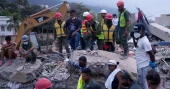
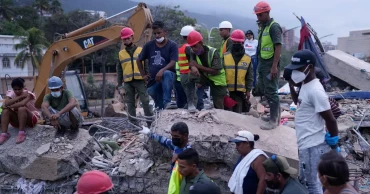
The death toll from the June 24 earthquakes in Venezuela has risen to 5,346, National Assembly President Jorge Rodriguez said on Tuesday.
The number of the injured remained at 16,740, while 17,265 people were left homeless, according to an official report posted on X by Rodriguez. Currently, 23,122 people are staying in 107 temporary camps set up in the capital of Caracas and the central states of La Guaira, Miranda and Aragua.
Nearly 40,000 individuals were treated in medical facilities, and more than 128,000 families received government assistance, said the report.
Since the twin earthquakes of 7.2-magnitude and 7.5-magnitude jolted the South American country more than three weeks ago, authorities have recorded 1,331 aftershocks.
12 days ago
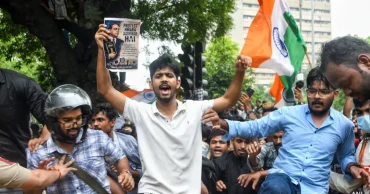
Govt set for fresh talks with CJP as Centre offers detailed debate on NEET paper leak
The government is set to hold its second meeting in three days with a delegation of the Cockroach Janta Party (CJP), although, unlike Monday's discussion, the talks will not take place at Union Minister JP Nadda's residence. The venue for the meeting has not yet been announced.
Amid mounting protests over the alleged NEET paper leak, Union Parliamentary Affairs Minister Kiren Rijiju said on Wednesday that the Centre is prepared for a comprehensive discussion on the issue in Parliament.
Government sources dismissed opposition demands for the resignation of Union Education Minister Dharmendra Pradhan, describing them as politically motivated. They maintained that the government acted promptly after the alleged leak came to light.
Protests over the controversy entered their third consecutive day on Wednesday. Demonstrations continued despite clashes between protesters and police on Monday, during which authorities said dozens of police personnel were injured.
Addressing the issue, Prime Minister Narendra Modi called for the toughest possible action against those responsible for the alleged paper leak.
Quoting the prime minister after the NDA Parliamentary Party's 'Mangal Milan' meeting, Rijiju said Modi urged alliance partners to remain united in ensuring the smooth functioning of Parliament and appealed to opposition parties to cooperate constructively.
According to Rijiju, the prime minister said that although political differences are natural, all lawmakers share a collective responsibility to work for the country's future and safeguard the interests of its youth.
source: NDTV
12 days ago

Iran fires missiles at Jordan as regional tensions escalate
Iran launched missiles at Jordan on Wednesday, prompting air raid sirens in the port city of Aqaba, as renewed hostilities across the Middle East continued to overshadow diplomatic efforts aimed at restoring a collapsed interim ceasefire.
Jordan's military said it intercepted four Iranian missiles, while two others landed in uninhabited areas without causing reported casualties. Videos recorded from the nearby Israeli city of Eilat showed plumes of smoke rising over Aqaba.
The latest attack came after the US military said it had completed its 11th consecutive night of strikes on targets inside Iran.
Iranian air defence systems were activated around the capital, Tehran, while the state-run IRNA news agency reported explosions in Bushehr, East Azerbaijan, Hamadan, Hormozgan, Khuzestan, and Sistan and Baluchistan provinces. According to the US military, the strikes targeted aircraft hangars and drone storage facilities.
On Tuesday, Iran also attacked a tanker in the Strait of Hormuz, forcing its crew to abandon the vessel. Tehran has simultaneously expanded its military operations against US allies in the region, launching attacks on Bahrain, Jordan and Kuwait.
The renewed violence has further complicated diplomatic efforts to end the conflict. Iranian Interior Minister Eskandar Momeni visited Pakistan, which has been acting as a mediator, in an attempt to revive negotiations. However, there has been no indication of progress toward a new ceasefire agreement.
Speaking from the Oval Office on Tuesday, US President Donald Trump expressed little optimism about renewed talks, saying Washington had "no interest in meeting." He also indicated that US forces could soon strike areas near one of Iran's principal uranium enrichment sites.
Meanwhile, Yemen's Iran-backed Houthi rebels have intensified regional tensions by announcing a naval blockade of Saudi Arabia, threatening global oil shipments and trade routes. With shipping through the Strait of Hormuz severely disrupted, Saudi Arabia has increasingly relied on its pipeline to the Red Sea to maintain crude oil exports.
12 days ago
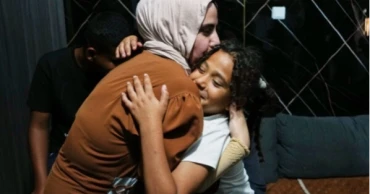
Palestinian siblings separated by war reunite in Israel after losing parents in Gaza
A Palestinian family divided between Israel and Gaza has reunited after nearly two years of war, displacement and personal tragedy.
Mais al-Gharam, 23, had not seen her seven younger siblings since leaving Gaza for Israel shortly before the war began. During the conflict, an Israeli airstrike destroyed the family's home in central Gaza, killing her parents and one of her brothers.
Earlier this month, Mais waited outside Israel's Kerem Shalom crossing, searching the crowd for her surviving siblings as they emerged from Gaza.
"We never stopped being a family," she said. "But every day I wondered whether I would see them again."
After years of legal efforts, Mais was finally able to bring her brothers and sisters, aged 8 to 22, to Israel. The siblings reunited at the border crossing and then travelled together to Nazareth, where relatives welcomed them with hugs and home-cooked meals.
The reunion brought both relief and grief. Although the family was together again, they were also mourning the loss of their parents and younger brother.
Their grandfather, Faraj al-Gharam, described the moment as "coming back from the grave."
The family's story began in 2002 when Murad al-Gharam, a resident of Gaza, met Amal Karim, a Palestinian citizen of Israel from Nazareth, while working in Israel on a temporary permit. After marrying, the couple moved permanently to Gaza, where they raised eight children in Nuseirat refugee camp.
Life changed dramatically after the Hamas-led attack on southern Israel on October 7, 2023, which killed about 1,200 people and led to Israel's military campaign in Gaza.
Mais had already returned to Nazareth, where she married and found work. Her seven siblings, who were born in Gaza, were eligible to apply for Israeli citizenship through their mother, but their father was not.
The family initially decided to remain together in Gaza rather than leave without him.
As fighting intensified, they were displaced multiple times before returning to their home in Nuseirat. On July 10, 2024, an airstrike struck the house, killing Murad, Amal and their 11-year-old son, Maisara.
The surviving children were injured but managed to reach Al Aqsa Hospital in Deir al-Balah, where doctors confirmed the deaths of their parents and brother.
The Israeli military did not immediately comment on the strike.
After the attack, the older siblings took responsibility for caring for the younger children. They cooked, cleaned, collected firewood for heat and water, and even opened a small bakery to earn money while receiving support from relatives in Nazareth.
Meanwhile, Mais worked with Israeli rights group HaMoked to secure permits, legal guardianship papers and citizenship applications for her siblings.
According to HaMoked, the Israeli Interior Ministry initially rejected the request because the children's mother had died. The family was later required to undergo DNA testing to prove their relationship to Mais before the applications were approved.
Nearly two years after the airstrike, the siblings crossed into Israel on July 8 and travelled to Nazareth.
After arriving, they spoke not about politics but about ordinary plans for the future, including going back to school, seeing doctors and spending time with relatives.
"Family is the most important thing," said Jwaher, one of the siblings.
12 days ago