others
Ukraine launches over 400 drones toward Moscow as Zelenskyy faces domestic political pressure
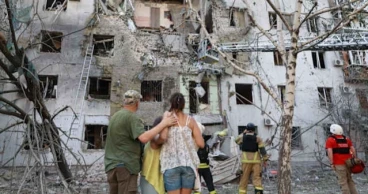
Ukraine launched more than 400 drones toward Moscow overnight in one of its largest attacks on the Russian capital, Russian officials said Monday, as both sides continued exchanging large-scale air strikes with no sign of the war easing.
The drone attack came just hours after Russia launched ballistic missiles and drones at Kyiv and other Ukrainian cities, continuing the cycle of retaliatory attacks that has marked the conflict, now in its fifth year.
At the same time, Ukrainian President Volodymyr Zelenskyy is facing growing political pressure at home following last week's government reshuffle, which triggered protests and exposed divisions within the country's military leadership.
Zelenskyy said he would hold "key talks" on Monday as he seeks to ease tensions after replacing 35-year-old Mykhailo Fedorov as defence minister while keeping Gen. Oleksandr Syrskyi, 60, as commander of Ukraine's armed forces.
The decision sparked several days of protests by supporters of Fedorov, who criticized Zelenskyy's move.
Moscow Mayor Sergei Sobyanin said more than 400 Ukrainian drones were launched toward the Russian capital between late Sunday and early Monday. He said most were intercepted far from the city, while air defence systems shot down another 85 drones near Moscow.
Andrei Vorobyov, governor of the Moscow region, said 10 people were injured and several residential buildings and civilian facilities were damaged.
The attack also caused a fire at the Yuzhnye Vrata industrial park, about 30 kilometres south of Moscow, according to local officials.
Independent Russian news outlet Astra reported that an oil depot in Podolsk, south of Moscow, also caught fire during the attack, although Russian authorities did not immediately confirm the report.
Ukraine has significantly expanded its long-range drone capabilities during the war, increasingly targeting Russian oil facilities and other strategic infrastructure deep inside Russia.
Earlier this year, Russia's Defence Ministry said it had intercepted 1,054 Ukrainian drones within a 24-hour period.
Meanwhile, Ukraine continues to urge its Western allies to provide more advanced air defence systems capable of intercepting Russian ballistic missiles, which are more difficult to shoot down than drones or cruise missiles.
Russia has increased its use of ballistic missiles in recent weeks. Ukrainian officials said a missile and drone attack on Sunday killed at least six people and injured dozens more.
The Washington-based Institute for the Study of War said Russia has launched more ballistic missiles this month than it is believed to produce monthly, suggesting Moscow is drawing from its existing stockpiles to sustain the intensified attacks.
Russia's Defence Ministry said its forces struck fuel storage facilities in the southern Ukrainian port city of Odesa overnight.
Ukraine's Air Force said Russia launched two missiles and 94 long-range drones overnight. It said Ukrainian air defences intercepted or electronically jammed 81 drones, while one missile and nine drones struck targets at nine locations, causing damage.
14 days ago

Cash surplus cripples banking system and businesses in Israeli-occupied West Bank
An unusual cash crisis is disrupting daily life in the Israeli-occupied West Bank, where banks are overwhelmed with more Israeli shekels than they can handle, making it difficult for businesses to deposit money and carry out routine financial transactions.
The problem has become so severe that some businesses are refusing cash payments because their banks are no longer accepting deposits of banknotes and coins.
Unlike most economies where cash shortages can create problems, Palestinian banks in the West Bank are running out of space to store huge amounts of physical currency.
Palestinian officials say the crisis stems from restrictions imposed by the Bank of Israel, which limits the amount of cash it accepts back from Palestinian banks. They argue that the cap has not been updated to match economic growth and has become another source of pressure on the territory's struggling economy.
As banks cannot return excess cash to Israel, they are unable to convert it into electronic funds needed for transfers, supplier payments and other financial transactions.
Mohammad Manasra, deputy governor of the Palestinian Monetary Authority, said the restrictions have severely limited the banking sector's ability to operate.
"The banks have been tied down," he told The Associated Press, describing the situation as a form of "economic warfare."
More cash enters than banks can return
The West Bank has relied mainly on the Israeli shekel for decades and depends heavily on Israel for trade, tax collection and payments for imported goods.
Large amounts of cash flow into the territory because many Palestinians working in Israel and Israeli settlements receive their wages in cash. Palestinian citizens of Israel also bring shekels into the West Bank when buying goods such as fuel and cigarettes.
Economist Moayad Afaneh, an adviser to the Palestinian Authority, said Palestinian banks now receive around 30 billion shekels annually, while Israel allows them to transfer back only 18 billion shekels (about $5.9 billion) each year.
Israeli authorities have previously said they limit cash transfers because of concerns about money laundering, tax evasion and terrorism financing.
The Bank of Israel said it follows government policy on cash transfers and noted that fewer Palestinians have been working in Israel since the Gaza war began, reducing some cash inflows.
Growing economic pressure
Palestinian officials say the cash restrictions are part of broader economic measures introduced by Israel since the Gaza war began in October 2023.
Israel has revoked most work permits for Palestinians employed in Israel and has withheld tax and customs revenues collected on behalf of the Palestinian Authority. As a result, the Palestinian Authority has struggled to fully pay salaries of public employees, including teachers and healthcare workers, for more than a year.
Banks are also facing rising costs as they spend more on storing and insuring cash that cannot be transferred out of the territory. Many have reduced the amount of cash they accept from businesses and individuals, forcing customers to find other ways to store their money.
Manasra said the cash surplus is affecting both government operations and private businesses.
Since most fuel, electricity and water used in the West Bank are purchased from Israel, customers need electronic payments to pay suppliers. However, banks with large amounts of idle cash often cannot process those transactions.
Afaneh said fears of Israeli military raids have encouraged more Palestinians to deposit cash in banks for safekeeping, adding further pressure on the banking system.
He also noted that excess cash has reduced banks' profitability because they cannot lend the money or invest it. An International Monetary Fund study in 2022 estimated the problem had cut bank profits by around 20%, although Afaneh believes the impact is now much greater.
Businesses struggle despite holding cash
The crisis has hit businesses that rely mainly on cash payments.
Hussni Jaber, executive manager of the Al-Huda Group, which operates fuel stations, supermarkets and other businesses, said companies are collecting millions of shekels every month but cannot deposit much of the money because banks have reached their limits.
To make electronic payments to suppliers, some businesses have had to take loans or exchange cash into other currencies while also paying more to safely store large amounts of money.
Jaber said some fuel stations have temporarily stopped selling fuel because they could not pay suppliers electronically. The Palestinian Authority also cited the banking crisis after several fuel stations temporarily closed on Saturday.
Last month, fuel station owners across the West Bank staged a 30-minute strike to highlight the problem, but business leaders say no solution has yet been offered.
Jaber warned that if the cash crisis continues, companies may struggle to import essential goods, including fuel, food and medical supplies.
"If this problem is not solved, all sectors of the economy could collapse," he said.
14 days ago

Thousands gather in New Delhi as 'Cockroach' movement seeks march to Parliament
Thousands of supporters of India's youth-led "Cockroach" movement gathered in New Delhi on Monday in an attempt to march to Parliament, demanding the resignation of the country's education minister despite police refusing permission for the protest.
Heavy police deployment surrounded the barricaded protest site at Jantar Mantar, close to Parliament, raising fears of clashes if demonstrators tried to move forward. Television footage showed police using batons to disperse some protesters after they attempted to cross security barricades.
The crowd included students, professionals and families, many carrying food, water and backpacks in preparation for a day-long demonstration. Protesters waved Indian flags and chanted slogans against Education Minister Dharmendra Pradhan and Prime Minister Narendra Modi, while police repeatedly urged them to leave the area through loudspeakers.
The "Cockroach" movement began in May after India's chief justice referred to some unemployed young people as "cockroaches" during an unrelated Supreme Court hearing. Supporters later adopted the term as a symbol of protest, turning it into a satirical campaign that has gained millions of followers on social media.
The movement has grown rapidly amid public anger over repeated leaks of entrance examination papers for medical colleges and government jobs. It gained further attention after police forcibly moved activist Sonam Wangchuk, who had been on a hunger strike, to a hospital on Saturday.
For the past month, protesters calling themselves "cockroaches" have been camping at Jantar Mantar. Student organisations from across the country have joined Wangchuk's hunger strike, while similar demonstrations have taken place at universities and in several other cities.
The protesters are demanding the resignation of the education minister, reforms to the country's examination system and compensation for families of students who died by suicide after examination paper leaks.
Before Monday's planned march, Wangchuk said he would end his nearly three-week hunger strike only if the government accepted responsibility for failures in the education system and the exam leaks, or if protesters were allowed to march to Parliament and lawmakers agreed to raise the issues in both houses.
Delhi Police said permission for the march had not been granted because security restrictions were in place around Parliament during the monsoon session, which began on Monday.
The protests have emerged as one of the most significant public challenges to Prime Minister Modi's government since it began its third term. The movement has received support from opposition parties, rights groups and some Bollywood personalities.
Protesters argue that freedom of dissent has declined under Modi's government, which has faced criticism from rights organisations over its handling of demonstrations, including arrests of activists and police crackdowns.
Senior government leaders have rejected the movement's demands. Education Minister Dharmendra Pradhan accused the protesters of acting against national interests, while other ministers acknowledged students' concerns but said there was no need for formal talks with the movement.
Among the demonstrators was yoga teacher Jyoti Rajput, who said she joined the protest because the authorities had failed to address students' concerns.
"This broken system refuses to take action. It does not understand the suffering of students, and that is why so many people have joined this movement," she said.
14 days ago
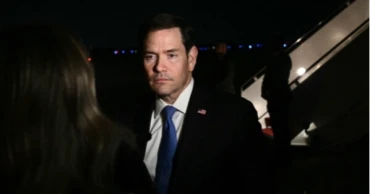
Iran conflict, Myanmar crisis and South China Sea tensions to dominate ASEAN
The ongoing conflict between the United States and Iran, Myanmar's civil war and rising tensions in the South China Sea are expected to dominate discussions as Southeast Asian foreign ministers meet in Manila from Tuesday.
The three-day meeting is being hosted by the Philippines, which currently chairs the 11-member Association of Southeast Asian Nations (ASEAN). Senior diplomats from the United States, China, Russia, the European Union and other countries will also take part in the annual gathering.
Among the key participants are US Secretary of State Marco Rubio, Chinese Foreign Minister Wang Yi and Russian Foreign Minister Sergey Lavrov. Ukraine's Foreign Minister Andrii Sybiha has been invited to attend a separate ASEAN ceremony marking a 1976 non-aggression treaty but will not participate in the main ministerial meetings.
Neither Rubio nor Lavrov has announced any plans for bilateral meetings during the event.
Iran conflict high on agendaASEAN foreign ministers are expected to express concern over the renewed fighting between the United States and Iran, which has spread to other parts of the Middle East and raised fears of a wider regional war.
According to two Southeast Asian diplomats, the ministers plan to issue a joint statement urging both sides to return to dialogue and avoid further escalation.
The conflict has disrupted shipping through the Strait of Hormuz, a key global oil route that normally carries about one-fifth of the world's oil supplies.
Many Southeast Asian countries depend heavily on oil and gas imports from the Middle East and have been affected by higher energy prices and supply disruptions. In the Philippines, President Ferdinand Marcos Jr. declared a national energy emergency in March to help ensure the supply of fuel, food and other essential goods.
The conflict has also raised concerns that the United States may shift more military resources to the Middle East, reducing its focus on the Indo-Pacific, including disputes involving China in the South China Sea and around Taiwan.
Rubio expected to meet Quad counterpartsThe United States said Rubio's visit is intended to reaffirm Washington's commitment to a "free and open Indo-Pacific."
Before leaving for Manila, Rubio said no meeting with Chinese Foreign Minister Wang Yi had been confirmed but added that he would be willing to meet him.
He also said disagreements between the United States and China should not prevent continued dialogue.
During the ASEAN meetings, Rubio is also expected to hold talks with his counterparts from the Quad grouping—the United States, India, Japan and Australia—which Washington sees as an important partnership in the Indo-Pacific. China has repeatedly criticised the Quad, saying it is aimed at limiting Beijing's growing influence.
Myanmar crisis remains unresolvedASEAN ministers are also expected to discuss the worsening conflict in Myanmar, where violence has continued since the military seized power in 2021.
According to the Assistance Association for Political Prisoners, more than 8,100 people have been killed and nearly 22,500 remain detained since the military takeover.
ASEAN's five-point peace plan, introduced in 2021, has failed to end the conflict, largely because Myanmar's military government has not fully implemented its commitments. As a result, ASEAN has continued to bar Myanmar's military leaders from high-level meetings.
Earlier this month, ASEAN foreign ministers, led by Philippine Foreign Secretary Theresa Lazaro, held their first meeting in five years with Myanmar's foreign minister in Bangkok. They urged all sides to reduce violence and restart dialogue.
Lazaro and Thailand's foreign minister also met representatives of Myanmar's ethnic armed groups in Pattaya as part of efforts to encourage peace talks.
However, several human rights organisations criticised the meeting with Myanmar's foreign minister, arguing that it weakened ASEAN's policy of isolating the country's military leadership.
Lazaro rejected the criticism, saying engagement with all parties was necessary to achieve lasting peace and did not represent a departure from ASEAN's five-point peace plan.
South China Sea disputesThe ministers are also scheduled to meet Chinese Foreign Minister Wang Yi to review progress on negotiations for a proposed Code of Conduct in the South China Sea, aimed at preventing disputes from escalating.
China, Taiwan and several ASEAN members—Brunei, Malaysia, the Philippines and Vietnam—have overlapping territorial claims in the strategic waterway. Tensions, particularly between Chinese and Philippine coast guard and naval vessels, have increased significantly in recent years.
14 days ago

5.5-magnitude earthquake kills at least five in Peru's Andes
A 5.5-magnitude earthquake struck Peru's Andes region, killing at least five people and injuring more than 20, while forcing around 300 residents to leave their homes, local authorities said on Sunday.
According to the US Geological Survey (USGS), the quake occurred at 9:24 pm local time on Saturday. Its epicentre was located about 2 kilometres (1.24 miles) west-southwest of Sicaya city in Huancayo province, at a depth of 10 kilometres (6.21 miles).
Peru's National Civil Defense Institute said the number of people missing remained unknown.
The earthquake caused the collapse of several buildings and inflicted structural damage on others, including a local church and convent.
Television footage aired by local media showed scenes of devastation in Chongo Bajo, one of the worst-affected agricultural areas. Relatives of victims gathered outside heavily damaged homes wrapped in blankets, while animals were seen trapped beneath the rubble.
Peru is highly prone to seismic activity as it lies along the Pacific "Ring of Fire," one of the world's most active earthquake zones.
In 2007, the country experienced one of its deadliest earthquakes when a 7.9-magnitude tremor struck Pisco province in the Ica region, killing nearly 600 people.
15 days ago

Ferry with 116 people on board capsizes off coast of Guyana
A ferry carrying 116 passengers capsized off the coast of Guyana on Sunday, local media said.
So far, at least 53 people were rescued from the ferry that capsized near Iron Punt, on its route from Georgetown to Port Kaituma, the report said.
15 days ago

Chinese firm seeks compensation after UK nationalises British Steel
Chinese company Jingye Group has demanded compensation from the British government, saying it suffered major financial losses after the UK nationalised British Steel last week.
In a statement posted on WeChat on Sunday, Jingye criticised the UK government's decision, saying it had damaged Britain's reputation among international investors and violated international investment rules.
The company said it had started negotiations under bilateral investment agreements and reserved the right to pursue international arbitration if necessary.
Jingye also claimed it would represent British taxpayers in seeking legal action against the UK government and British Steel's management, although it did not explain how it planned to do so.
"The UK ignored Jingye's continued investment and significant contribution and was only willing to offer almost no compensation," the company said.
The UK government took operational control of British Steel last year after Jingye warned it was considering shutting down the blast furnaces at its Scunthorpe plant in northern England. The site is the UK's last facility producing "virgin steel" directly from raw materials.
Last week, the UK government announced it had formally nationalised the company, saying the move would protect thousands of jobs and ensure a domestic supply of steel for major infrastructure projects and the country's defence sector.
British officials said an independent assessment would determine whether Jingye is entitled to any compensation.
British Steel has been producing steel at its Scunthorpe plant for more than 130 years and currently employs around 2,700 workers.
Jingye acquired British Steel in 2020, saying at the time that it had rescued the company from financial collapse.
China's Foreign Ministry also criticised the UK's decision on Saturday, warning that the way the dispute is handled would affect Chinese investors' confidence in Britain's business environment.
The ministry urged the UK to respect market principles and contractual obligations and to reach a solution on compensation that is acceptable to both sides.
It added that China supports companies in protecting their legal rights through lawful means.
15 days ago

Suspected Somali pirates hijack Tanzanian-flagged tanker off Yemen
A Tanzanian-flagged oil tanker was hijacked by suspected Somali pirates off the coast of Yemen and later taken to waters near Somalia's northeastern Bari region, security sources and local officials said on Sunday.
The vessel, identified as the MT ASANA, was reportedly seized on Friday after leaving the Yemeni port city of Mukalla.
Officials said the tanker is now being held off the coast of Caluula in Puntland's Bari region.
According to security sources, seven armed Somali pirates were involved in the hijacking. They spoke on condition of anonymity because they were not authorised to discuss the incident publicly.
Vessel-tracking data reviewed by The Associated Press showed the tanker moving slowly through the Gulf of Aden on Friday while transmitting Bosaso, Somalia, as its destination. The ship was travelling at about two knots, an unusually slow speed that matches earlier reports indicating it had sent a distress signal during the incident.
It was not immediately known how many crew members were on board or whether anyone was injured. The nationalities of the crew have also not been disclosed.
Authorities in Puntland have not yet commented publicly on the reported hijacking. There has also been no immediate statement from the vessel's owner or operator, while international naval forces patrolling the region have yet to issue an update.
The incident is the latest in a growing number of attacks blamed on Somali pirates, whose activities have resurfaced in the Gulf of Aden and the western Indian Ocean after years of relative calm.
Maritime security experts say the recent increase in piracy has been linked to ongoing security challenges at sea and a reduction in international naval patrols in the region.
15 days ago
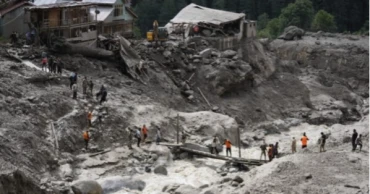
Flash floods, landslides kill 11, leave seven missing in Indian-controlled Kashmir
At least 11 people were killed and seven others remain missing after heavy rainfall triggered flash floods and landslides in Indian-controlled Kashmir, local media reported on Sunday.
The disaster struck the border districts of Poonch and Rajouri, southwest of Srinagar, the summer capital of the region.
Officials said continuous overnight rain caused rivers to overflow, flooding low-lying areas and forcing hundreds of residents to evacuate to safer places.
Floodwaters also inundated the new bus terminal at Bela Colony in Rajouri during the early hours of Sunday.
Several vehicles were swept away or left submerged as swollen rivers burst their banks, causing widespread damage and disrupting transport.
Authorities have launched a large-scale rescue operation involving multiple agencies to search for the missing and evacuate people stranded in flood-affected areas. Rescue efforts have been hampered by ongoing rainfall and damaged roads.
Meanwhile, weather officials have warned of more moderate to heavy rainfall across Indian-controlled Kashmir through July 23, raising concerns over further flooding and landslides.
15 days ago
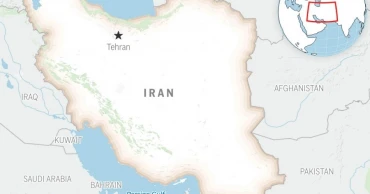
US military death toll in Iran war rises to 16 after two more service members killed
Two more US service members have been killed in the conflict with Iran, raising the total number of American military deaths to 16, the US military said on Saturday.
The latest casualties occurred in Jordan, where US forces were defending against Iranian ballistic missile and drone attacks, according to US Central Command. The military also said one service member remains missing following the attack.
Officials did not release the identities of the deceased, saying their names would be withheld until at least 24 hours after their families had been notified.
The rising death toll highlights the dangers faced by US forces across the Middle East, even without large numbers of ground troops. American military personnel stationed in the region remain vulnerable to missile and drone attacks as tensions with Iran continue to escalate.
President Donald Trump has said the military campaign is aimed at preventing Iran from developing nuclear weapons. As of Saturday afternoon, he had not publicly commented on the latest deaths. The White House instead referred reporters to the statement issued by US Central Command.
The first American casualties occurred shortly after the war began on Feb. 28, when an Iranian drone strike on a civilian port in Kuwait killed six US soldiers from an Iowa-based supply and logistics unit.
A seventh soldier later died from injuries suffered during an Iranian attack on Prince Sultan Air Base in Saudi Arabia on March 1.
Later in March, six more US service members were killed when a KC-135 aerial refuelling aircraft supporting military operations against Iran crashed in Iraq. US Central Command said the aircraft was flying in friendly airspace when an unspecified incident involving another aircraft occurred.
Earlier this week, the US military also confirmed the death of a Navy pilot following a helicopter crash in the Arabian Sea. The Navy said the July 1 incident was an emergency landing and found no evidence that hostile action caused the crash. Three other sailors aboard the helicopter were rescued.
The conflict has also claimed many lives beyond the US military.
Iranian authorities say US airstrikes over the past three weeks have killed at least 50 people and injured more than 500 others. Among the latest casualties were eight people killed in a strike on a bridge on Friday.
The war has also resulted in deaths among merchant ship workers, foreign nationals and civilians in several countries across the region, including Gulf states, Israel and Lebanon.
15 days ago