others
One killed, eight injured in overnight Russian missile attack on Kyiv
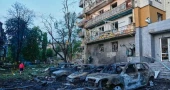
At least one person was killed and eight others were injured after Russia launched an overnight missile attack on Ukraine's capital, Kyiv, local authorities said on Saturday.
The attack began around 1:30 a.m. local time and lasted for several hours, with multiple explosions heard across the city.
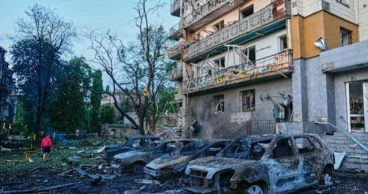
According to Ukraine's State Emergency Service, the strikes triggered fires in five districts of Kyiv, damaging homes, office buildings, industrial facilities, a student dormitory and several vehicles.
Rescue teams pulled four people from a burning house in the Sviatoshynskyi district. In the Shevchenkivskyi district, firefighters evacuated residents from a three-storey building that caught fire following the attack. Authorities later recovered one body from the site.
Emergency crews also extinguished fires in the Solomyanskyi, Desnianskyi and Dnipro districts.
The latest strike comes as Russia has intensified large-scale attacks on Kyiv in recent weeks while Ukraine continues to face a shortage of Patriot air defence missiles, which are considered its most effective system for intercepting Russian ballistic missiles.
US President Donald Trump has said he is willing to allow Ukraine to produce Patriot interceptor missiles under licence, a move that could strengthen the country's air defence capabilities. However, details of the plan and when it could be implemented have not yet been announced.
15 days ago

2 US troops dead, one missing after Iran attacks base in Jordan
The U.S. military on Saturday announced the first U.S. troop deaths due to direct Iranian fire since the opening days of the war, saying two were killed and another was missing in an attack on a base in Jordan.
They were killed Friday as the U.S. and partner forces defended against Iranian ballistic missile and drone attacks, a statement said. Four other service members who were medically evacuated to Jordanian hospitals were later discharged. The dead were not identified.
Since the war began, 16 U.S. service members have now been killed and over 430 wounded.
Minutes earlier, Iran’s supreme leader had warned of “unforgettable lessons” if the United States keeps attacking the Islamic Republic.
The remarks read out on state TV and attributed to Mojtaba Khamenei, still unseen since the war began, also called President Donald Trump’s signature “worthless and invalid.” The comments came hours after a negotiator said Tehran was suspending its commitments to the interim deal signed about a month ago.
Tehran's declarations snapped another fragile thread as the war shows no end in sight. The deal was aimed at permanently ending the fighting. Now Khamenei warns of “lessons” not only from Iran but its armed proxies in the region, calling them the “Axis of Resistance."
The United States and Iran have been exchanging strikes aimed at infrastructure and military targets. Their battle over the Strait of Hormuz has intensified in a conflict increasingly focused on control of the essential waterway that previously carried a fifth of the world's crude oil. The strikes threaten civilians and services to them, including desalination plants for drinking water, while the global economy again is on alert.
The U.S. Central Command said early Saturday that its seventh straight night of strikes hit “surveillance sites, military logistics infrastructure, underground weapons storage, and maritime capabilities.”
The U.S. has violated its commitments under the deal that was signed about a month ago and now Iran is “no longer implementing them,” Kazem Gharibabadi, Iran’s deputy foreign minister, told state TV.
There was no new word on mediation efforts.
Kuwait sees the most striking damage
The most significant damage from Iranian strikes on Saturday occurred in Kuwait, where a water desalination plant and an oil facility were hit, according to the Kuwait authorities and the Kuwait Petroleum Corporation. Both declined to provide locations.
The strikes injured several people at the oil facility and caused a fire at the desalination plant, forcing several power generation units offline. It was the second attack against a desalination plant in two days in the tiny desert nation that depends on desalination for 90% of its drinking water.
Several firefighters and a worker were injured while battling two other blazes sparked by Iranian strikes, according to the Kuwait Fire Force. Kuwait briefly closed its airspace due to missile threats, and Kuwait Airways said it was rescheduling most flights to and from the capital.
Meanwhile, Iraq said it shot down attack drones over the city of Irbil. Jordan’s state-run Petra news agency said the kingdom’s air defense systems had downed Iranian missiles, while air sirens sounded multiple times in Bahrain throughout the day and in Saudi Arabia in the morning, according to their governments.
The secretary general of the six-nation Gulf Cooperation Council, Jasem Mohamed al-Budaiwi, accused Iran of war crimes for strikes on infrastructure and civilian facilities.
US strikes hit infrastructure in Iran
U.S. airstrikes hit an electricity and desalination plant in Iran’s southern Hormozgan province, Iranian state TV reported. IRNA said the Bonji desalination plant was destroyed, cutting off water supplies to about 10,000 people, and that a desalination plant on strategic Qeshm Island inside the strait was damaged.
Overnight strikes damaged two tunnels and a bridge, disrupting one of the main highways toward Bandar Abbas, Iran’s main port that sits near the narrowest part of the strait, according to Iran's state-run news agency. IRNA said three bridges were hit Saturday, including one on a route to Bandar Abbas.
Iran acknowledged “attacks on power infrastructure” during the U.S. airstrikes for the first time Friday when its Energy Ministry issued a call for people to use less power in southern provinces “experiencing extreme heat.” It did not specify what was hit.
The Islamic Revolutionary Guard Corps stepped up its warning that countries hosting U.S. forces should be “prepared to receive a corresponding response,” according to Iran’s state TV.
Iranian authorities said at least 50 people have been killed and more than 500 wounded in U.S. strikes in the past three weeks, including eight killed in a strike on a bridge Friday.
U.S. officials acknowledged 13 additional U.S. service members — 10 Army soldiers and three Navy sailors — had been injured since Monday, but offered no details.
Iran and US vie for Strait of Hormuz
Iran effectively closed the strait to shipping traffic after the war started with U.S. and Israeli strikes on Feb. 28. That sent the price of oil soaring and has given Tehran significant leverage in negotiations.
Iran has said the strait must be under its sole control and that vessels should pay fees to Tehran, even though the world for decades has considered it an international waterway. It fired on ships on recent days. Crossings through the strait fell to a three-week low, according to an international shipping tracker.
Trump has resumed threats to target power stations and bridges to try to compel Iran to loosen its hold. The U.S. in the past week reimposed a naval blockade on Iranian ports to halt its shipments of crude oil.
A growing amount of the region’s energy is being shipped through pipelines, but not nearly enough to offset the decline in shipping.
Before the war began, the U.S. had been in talks with Iran over its nuclear program. Trump now faces political pressure to end the war and avoid the kind of prolonged Middle East conflict he had campaigned against.
16 days ago
Rescuers search for survivors after landslide kills 8, leaves 34 missing in southwest China
Rescue teams continued searching for survivors on Saturday after a landslide in southwest China's Chongqing municipality killed at least eight people and left 34 others missing.
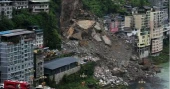
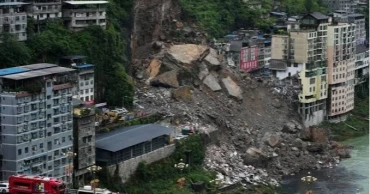
The landslide struck Pengshui County on Friday morning when a huge mass of rocks and soil rushed down a hillside, burying more than 10 residential buildings, according to state broadcaster CCTV.
Ten people were rescued and taken to hospital, while more than 1,100 residents have been evacuated from the area.
Photos and video from the scene showed massive boulders scattered across the steep hillside. One of the rocks appeared larger than a multi-storey building. Several homes were badly damaged, with one building's upper section crushed and a car partially buried under debris.
Officials said the landslide involved around 18,000 cubic metres of rocks and debris. The largest single boulder measured about 3,000 cubic metres, according to Wang Chuanjun, head of Planning and Natural Resources in Pengshui County.
Rescue efforts were made more difficult by heavy rain, which continued from Friday night into Saturday morning. CCTV reported that nearly 19.2 centimetres (about eight inches) of rainfall was recorded at a local weather station.
As the rain eased, rescue workers resumed ground searches around collapsed buildings and along the nearby riverbank.
State media reported that rescuers are currently searching around the giant rocks before moving underneath them, where unstable boulders could pose a serious risk. After checking surrounding areas, teams plan to drill into the largest rocks and use controlled explosives to break them apart and continue the search.
Search dogs have also been deployed to help locate survivors trapped beneath the debris.
China's National Development and Reform Commission has allocated 30 million yuan (about US$4.4 million) in emergency funding to help restore damaged infrastructure and public services in the affected area.
The landslide occurred near the Wujiang River, which flows through the mountainous region of Pengshui County in southeastern Chongqing, close to the provinces of Hubei and Guizhou.
16 days ago

Why Britain is getting a new prime minister without holding a general election
Britain is set to have a new prime minister on Monday without holding a general election, as veteran Labour politician and former Greater Manchester mayor Andy Burnham prepares to replace Keir Starmer.
Burnham was elected leader of the governing Labour Party after securing the support of 349 of the party's 401 lawmakers. Since Labour has a majority in Parliament, its leader automatically becomes the country's prime minister.
Although Burnham was confirmed as Labour leader at a special party conference on Friday, he will officially take office on Monday after meeting King Charles III at Buckingham Palace. Until then, Starmer will remain caretaker prime minister.
Why no general election?
Under Britain's parliamentary system, a governing party can change its leader during its term in office without calling a general election. If the ruling party has a majority in Parliament, its new leader automatically becomes prime minister.
The next UK general election is not due until 2029, five years after the last national vote in 2024.
Starmer announced his resignation as Labour leader on June 22 after serving for less than two years as prime minister.
His leadership came under increasing pressure following a series of political controversies, including his appointment of a man with close ties to convicted sex offender Jeffrey Epstein as Britain's ambassador to the United States.
Labour's poor performance in local elections in May also triggered growing calls from party lawmakers for him to step down. Pressure increased further after Burnham won a parliamentary by-election, strengthening support for him to take over the party leadership.
Under Labour Party rules, a leadership contest is triggered when a challenger secures the backing of at least one-fifth of Labour lawmakers. Burnham was the only candidate to meet that requirement.
Seventh prime minister in 10 years
Burnham will become Britain's seventh prime minister in the past decade.
Leadership changes without a general election are common under the UK's parliamentary system. Former Conservative prime ministers Theresa May, Boris Johnson, Liz Truss and Rishi Sunak all took office after winning internal party leadership contests rather than national elections.
The frequent changes in leadership have marked a turbulent period in British politics following the country's departure from the European Union.
Formal transfer of power
The change of leadership will follow Britain's long-established constitutional process.
On Monday, Starmer will deliver a farewell statement before travelling to Buckingham Palace, where he will formally resign during a meeting with King Charles III.
Burnham will then meet the King, who will invite him to form a new government. The ceremony, traditionally known as the "Kissing of Hands," no longer involves kissing hands and usually consists of a formal handshake.
After the meeting, Burnham will travel to 10 Downing Street, the official residence of the British prime minister, where he is expected to deliver his first speech as the country's new leader.
The entire transition is expected to be completed within a few hours and will be broadcast live across the UK.
16 days ago
Landslide in southwest China kills 8, leaves 34 missing
At least eight people were killed and 34 others remain missing after a landslide struck the outskirts of southwest China's Chongqing municipality on Friday, burying homes and forcing more than 1,100 residents to evacuate, local authorities said.
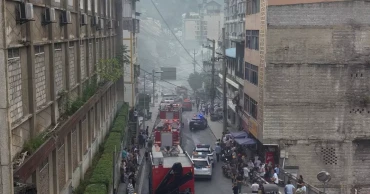
The landslide occurred around 9:08 am in Pengshui County, when a huge mass of rocks and soil swept down a hillside, burying more than 10 residential buildings, according to state broadcaster CCTV.
Rescue teams pulled 10 people from the debris, including two who were seriously injured, Pengshui County Mayor Ren Xujiang said.
Chinese President Xi Jinping instructed authorities to investigate the cause of the disaster and continue rescue efforts, state media reported.
Officials said the landslide involved about 18,000 cubic metres of rocks and debris. Wang Chuanjun, head of Planning and Natural Resources in Pengshui County, said the largest single rock measured around 3,000 cubic metres.
He warned that the area remains at risk of further landslides, especially during heavy rain or prolonged hot and dry weather. Experts who inspected the site found unstable rock formations at the top and along the sides of the steep cliff.
As a precaution, authorities cut water, electricity and gas supplies within a one-kilometre radius of the affected area.
More than 800 rescue workers have been deployed to search for survivors and clear the debris, according to a local government statement.
16 days ago
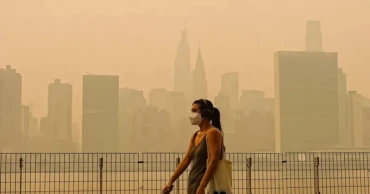
Trump threatens new tariffs on Canada over wildfire smoke affecting US cities
US President Donald Trump has threatened to impose new tariffs on Canada, accusing the country of allowing wildfire smoke to pollute American cities with what he described as "filthy" air.
The comments came as massive wildfires continued to burn across parts of Canada, sending thick smoke into several US states and worsening air quality from the Midwest to the East Coast.
Canadian leaders rejected the criticism, saying the country is using every available resource to battle the fires and urged the United States to provide assistance instead of blaming Canada.
Ontario Premier Doug Ford said Canada has repeatedly helped the US respond to natural disasters, including wildfires in California and hurricanes in North Carolina.
"Maybe what you should do rather than complain is send support, send help, because we have done the exact same thing for our American friends," Ford said.
Ford noted that the US states of Michigan and Massachusetts have already offered help by sending water bombers, firefighters and rescue teams.
Canadian Prime Minister Mark Carney also responded, saying climate change is a shared global challenge.
"Climate change is everyone's responsibility — including the United States," Carney told reporters, adding that his government remains in close contact with provincial authorities and affected communities.
Ford defended Ontario's response, saying more than 150 firefighting crews, over 80 water bombers and helicopters have been deployed to contain the blazes.
"We are throwing every single resource we can," he said.
Wildfires continue to spread
Several communities in northern Ontario have been evacuated as fires continue to spread. A First Nations leader said one community had been "burnt to ashes."
Wildfires are also raging in British Columbia, where officials reported more than 59 active fires on Friday. The British Columbia Wildfire Service said 39 new fires started within the previous 24 hours, while 31 remain out of control.
A large group of fires in northwestern Ontario has produced massive smoke clouds that have spread across Canada and into the United States.
Smoke disrupts daily life across US
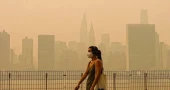
Heavy smoke reduced visibility in New York City on Thursday, partially obscuring landmarks including the Empire State Building and the Statue of Liberty. Similar hazy conditions affected Washington, DC, where national monuments were barely visible.
Health officials advised residents to stay indoors, while some communities distributed free face masks because of the health risks linked to poor air quality.
The smoke also forced the cancellation of outdoor activities across parts of the northern United States, including Chicago, Detroit, Pennsylvania and New England. Summer camps moved activities indoors, concerts were postponed and at least one popular lakeside beach was temporarily closed.
Poor visibility also disrupted air travel, causing flight delays at several airports.
Concerns ahead of World Cup final
The wildfire smoke has also raised concerns ahead of Sunday's FIFA World Cup final between Argentina and Spain at MetLife Stadium in New Jersey, which President Trump is expected to attend.
US officials, including Andrew Giuliani, who heads the White House World Cup Task Force, have been holding informal discussions with FIFA and other agencies monitoring the wildfire situation.
However, weather forecasts suggest rainfall over the weekend is expected to improve air quality before kickoff.
Meanwhile, residents of several First Nations communities in northern Ontario continue to evacuate as the fires advance. Videos shared online showed some families leaving remote areas by boat.
Matthew Hoppe, incident commander for the Namaygoosisagagun First Nation, said the community had been devastated after the wildfire spread with little warning.
Source: BBC
16 days ago

Indian police hospitalize activist after health worsens during hunger strike over education reform
Indian police on Saturday shifted prominent activist Sonam Wangchuk to a hospital after his health deteriorated during a 20-day hunger strike demanding education reforms.
Security was tightened around Jantar Mantar in New Delhi, the city's designated protest site, where Wangchuk had been staging the hunger strike with students and activists from the Cockroach Janta Party.
The protesters are demanding the resignation of Education Minister Dharmendra Pradhan following allegations that examination papers were leaked before tests. They are also calling for major reforms to the country's examination system and compensation for families of students who died by suicide following the alleged leaks or exam results.
Wangchuk, a 59-year-old engineer and education reform campaigner, has become the face of the movement, which emerged in May after Supreme Court Chief Justice Surya Kant compared some unemployed young people to "cockroaches" during a court hearing on an unrelated matter.
Supporters later adopted the term as a symbol of resilience, launching a satirical political movement that quickly gained more than 21 million followers on Instagram.
Delhi Police said Wangchuk was taken to hospital on medical advice and under a court directive after his condition worsened due to the prolonged hunger strike.
Police said a brief scuffle broke out when some protesters tried to stop the authorities from moving him to hospital.
However, the Cockroach Janta Party claimed in a social media post that Wangchuk had been "forcefully abducted" by the government without his or his family's consent.
Authorities deployed additional police and paramilitary personnel and set up extra barricades around the protest site. Police said the increased security was a precautionary measure and urged protesters to cooperate with law enforcement.
16 days ago
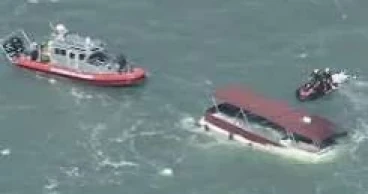
Wreckage located as search continues for two missing after San Francisco Bay boating tragedy
Authorities have located the wreckage of a boat that sank in San Francisco Bay earlier this week, while the search continues for two people who remain missing following the deadly accident.
The San Francisco Police Department’s Marine Unit confirmed Friday that it found the submerged remains of the Volare, a 49-foot cabin cruiser that capsized Wednesday afternoon after being struck by a large wave. The vessel was carrying 20 people who had gathered to scatter the ashes of a loved one.
Officials also identified a body recovered Thursday as Tondra Madruga, 58, who was also known as Tondra Miller. She was one of three passengers initially reported missing after the boat went down.
Police said the Volare rests on a rocky section of the bay floor about 120 feet (36 meters) below the surface. Investigators used sonar equipment to locate the vessel and are now deploying a remotely operated underwater vehicle to inspect the wreckage and determine whether it can be safely recovered.
Following confirmation of Madruga’s death, her family shared a statement expressing their grief.
“Our family is heartbroken by the loss of our beloved mother, daughter, sister, and aunt, Tondra Madruga,” family member Quin Madruga wrote on Facebook. “Our hearts remain with every family affected, and we truly appreciate the support and compassion shown during this difficult time.”
Another passenger, Clifford Boisa, died shortly after being pulled from the cold waters on Wednesday. Although the U.S. Coast Guard ended its search operation later that day, local police continue searching for the two remaining missing passengers.
The other 17 people aboard were rescued by first responders and nearby boaters who rushed to help after the vessel overturned.
According to Ralph Boisa, many of those on board were relatives and close friends gathered to honor the memory of his daughter, who passed away more than a decade ago. Madruga was among the family’s longtime friends.
The two individuals still missing are Ralph Boisa’s sister, Carol Boisa, and Clifford Boisa’s wife, Jackie Boisa, he said.
Madruga’s body was found near Treasure Island, a former naval base in San Francisco Bay, after another boater reported the discovery to authorities.
The search has been especially difficult because of the bay’s powerful currents. Within hours of the accident, rescue teams expanded operations beyond the Golden Gate Bridge into the Pacific Ocean.
According to the Coast Guard, search crews covered more than 800 square miles (over 2,000 square kilometers) of water—an area roughly half the size of Rhode Island—before suspending their efforts.
16 days ago
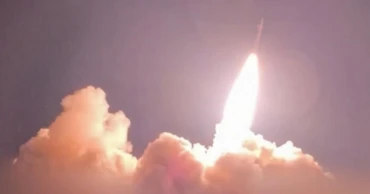
US and Iran intensify Middle East strikes as bridges, port Infrastructure, water plant hit
The United States and Iran stepped up their military campaign across the Middle East on Friday, exchanging attacks on key infrastructure and military sites as tensions over the Strait of Hormuz continued to escalate.
The United States broadened its offensive by striking additional bridges, energy facilities, and a surveillance tower at Iran’s strategic Chabahar port. The attacks align with President Donald Trump’s pledge to increase pressure on Tehran over its control of the Strait of Hormuz, a vital global shipping route for oil and gas.
Iran responded by launching missile attacks against U.S.-aligned countries, including Qatar and Kuwait. In Kuwait, a missile strike damaged a desalination plant, a critical source of the country’s drinking water, while Qatar reported injuries from falling debris after its air defenses intercepted incoming missiles.
After days of escalating exchanges, the conflict remains centered on control of the Strait of Hormuz. An earlier ceasefire has collapsed, leaving little indication that the war—now more than four months old—will end soon.
The U.S. Central Command (CENTCOM) said Friday’s operation marked the seventh consecutive night of strikes targeting Iran’s military infrastructure. According to the military, the attacks struck surveillance facilities, logistics hubs, underground weapons depots, and maritime assets.
Iranian officials said recent U.S. airstrikes have killed dozens of civilians and injured hundreds, while the U.S. military acknowledged additional injuries among American service members.
Early Saturday, Iran claimed two oil tankers exploded after entering a mined section of the Strait of Hormuz. The country offered no evidence, and CENTCOM rejected the allegation, calling it false.
Since the conflict began in late February, Iran has effectively restricted shipping through the strait, pushing global oil prices above $86 a barrel and significantly reducing maritime traffic. Shipping activity has fallen to its lowest level in three weeks, according to international tracking data.
In a televised address Thursday, President Trump said U.S. operations were succeeding and predicted the results would soon become evident. Before the war, Washington and Tehran had been negotiating over Iran’s nuclear program, but Trump now faces growing political pressure to end the conflict and avoid a prolonged military engagement.
Bridges and Power Infrastructure TargetedIranian state media reported that overnight U.S. airstrikes struck bridges in Hormozgan province, including routes connecting Bandar Abbas—Iran’s largest port—to the country’s interior. The attacks also affected Bandar Khamir along the Strait of Hormuz.
Iran’s Energy Ministry acknowledged attacks on electrical infrastructure for the first time, urging residents in southern provinces to conserve electricity during extreme summer temperatures, although officials did not specify the damaged facilities.
Authorities said at least 46 people have died and more than 400 have been injured in recent U.S. strikes, including eight fatalities in Friday’s bridge attack.
Meanwhile, the Pentagon confirmed 13 additional U.S. service members were wounded this week, bringing total American casualties since the war began to 14 killed and 427 injured.
Strategic Port Tower DestroyedFriday’s strikes also brought down a surveillance tower at Iran’s Chabahar port on the Gulf of Oman, an important commercial gateway serving Afghanistan and regional trade. Iranian officials described the structure as part of the port’s commercial operations, while CENTCOM said it supported Iran’s Revolutionary Guard by monitoring commercial shipping and identifying potential maritime targets.
Iranian media later reported explosions in several provinces, including Khuzestan, Fars, Yazd, and Hormozgan, though authorities provided few details.
Iran Expands Retaliatory AttacksIran broadened its retaliation by firing missiles toward Qatar, Bahrain, and Kuwait. Qatar activated air defenses twice, with one child reportedly injured by falling debris. Kuwait said a missile strike damaged a power and desalination facility, temporarily disrupting a key source of drinking water.
Kuwaiti officials also reported Iranian drone attacks on military installations that wounded several personnel. Jordan’s military intercepted three incoming Iranian missiles, while explosions were reported in northern Iraq’s Kurdish region. Local officials said an attack targeting the Iranian Kurdish opposition group Komala killed at least nine people.
Separately, British maritime authorities reported that a commercial tanker sustained minor damage while sailing through the Strait of Hormuz near Oman. No injuries were reported, and Iran did not comment on the incident.
Strait of Hormuz Remains the Conflict’s FocusIran continues to insist that the Strait of Hormuz falls under its exclusive authority and has argued that ships passing through should pay transit fees, despite the waterway being internationally recognized as open to global navigation.
President Trump has repeatedly threatened further attacks on Iranian infrastructure—including bridges and power facilities—to pressure Tehran into loosening its grip on the strait. The United States has also reinstated a naval blockade on Iranian ports in an effort to restrict the country’s oil exports.
Although some regional energy exports have shifted to pipelines, analysts say alternative routes cannot fully replace the shipping capacity of the Strait of Hormuz, through which roughly one-fifth of the world’s oil and natural gas trade normally passes. Recent data show vessel traffic through the waterway has dropped to its lowest level in weeks, underscoring the conflict’s growing impact on global energy markets.
16 days ago

Strong 7.3 earthquake hits Mexico-Guatemala border region
A strong earthquake struck the southern Mexican Pacific coast on Friday, right on the border with Guatemala, and was felt from Mexico City to El Salvador. Authorities have not immediately reported any severe damage or casualties in any country.
The U.S. Geological Survey (USGS) informed the earthquake had a magnitude of 7.3 with epicenter 48 kilometers (30 miles) southwest of Aquiles Serdan, near the coast of Chiapas and at a depth of 15 kilometers (9 miles).
It was preceded by a smaller quake with epicenter a bit further out in the ocean.
17 days ago