others
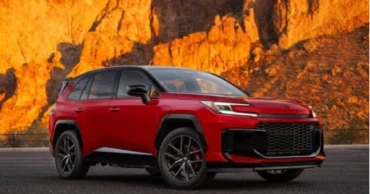
Toyota RAV4 vs Hyundai Tucson: Which plug-in hybrid SUV is the better choice?
You want to cut fuel costs but are not ready to switch to a fully electric vehicle, the 2026 Hyundai Tucson Plug-in Hybrid and the 2026 Toyota RAV4 Plug-in Hybrid could be good options.
Both SUVs combine a conventional hybrid system with a rechargeable battery, allowing drivers to travel a certain distance using only electric power. Regular charging at home can help reduce petrol consumption. But which of these two popular compact SUVs offers better overall value? Edmunds tested both vehicles to find out.
Range and fuel economyThe Toyota RAV4 Plug-in Hybrid has a clear advantage in electric range and fuel efficiency.
Toyota estimates that most RAV4 Plug-in Hybrid trims can travel up to 54 miles using only electric power, while the sportier GR Sport is rated at 48 miles. In Edmunds' real-world test, however, the GR Sport managed an impressive 58 miles before the battery was depleted.
After the battery runs out, the RAV4 is estimated to deliver up to 40 mpg in combined city and highway driving, a figure that Edmunds also found realistic in its testing.
The Tucson Plug-in Hybrid trails behind, with an EPA-estimated electric range of 32 miles and fuel economy of 35 mpg after the battery is depleted. Although it performed slightly better than those estimates in Edmunds' testing, it could not match the RAV4's advantage.
Winner: Toyota RAV4 Plug-in Hybrid
Passenger comfort and cargo spaceThe two SUVs offer similar cargo capacity, although the RAV4 has a slight edge in the plug-in hybrid versions.
The RAV4 provides 33.6 cubic feet of cargo space behind the rear seats, compared with 31.9 cubic feet in the Tucson. Edmunds found both cargo areas spacious and practical, with their boxy shape making it easier to load luggage and other items.
However, the Tucson offers significantly more room for rear-seat passengers. It has 41.3 inches of rear legroom, compared with 37.8 inches in the RAV4. The difference is noticeable for adults, teenagers and families using child seats.
Edmunds' testers also found the Tucson's front seats softer and more supportive. Its ride quality over rough roads was also more comfortable than that of the RAV4.
Winner: Hyundai Tucson Plug-in Hybrid
Technology featuresBoth SUVs performed exceptionally well in Edmunds' infotainment testing, receiving scores of 9.7 out of 10 for usability and connectivity.
The RAV4 features a newer and improved infotainment system compared with other Toyota models. However, some important functions, including navigation and voice controls, depend on an internet connection and may require a paid subscription after the free trial ends.
The Tucson includes these functions directly in its system without requiring an internet connection, although its navigation search is not as capable.
Hyundai provides a standard 12.3-inch central touchscreen. Toyota offers either a 10.5-inch display on lower trims or a larger 12.9-inch screen on higher-end models.
Overall, the technology packages are closely matched.
Winner: Tie
Pricing and valueBoth SUVs start at just over $42,000, including destination charges, and their prices rise to around $50,000.
At the top end of the price range, the Tucson comes with nearly all available features. A similarly equipped RAV4 XSE requires additional options, pushing its price above $52,000.
Edmunds also rated the Tucson's interior more highly, citing better-quality materials and a more premium look and feel. Hyundai also offers stronger basic and powertrain warranty coverage than Toyota.
Winner: Hyundai Tucson Plug-in Hybrid
Style and choiceToyota offers buyers more options.
Besides the SE and XSE trims, the RAV4 Plug-in Hybrid is also available in the more adventure-focused Woodland version and the sportier GR Sport model. These choices give buyers more flexibility in terms of styling, capability and driving character.
The Tucson Plug-in Hybrid, meanwhile, is available only in SEL and Limited trims. Hyundai's more rugged-looking XRT version is not offered as a plug-in hybrid.
For buyers looking for more variety and distinctive styling, the RAV4 offers more choices.
Winner: Toyota RAV4 Plug-in Hybrid
Edmunds saysThe competition is close, with the Tucson standing out for passenger comfort, interior quality, value and warranty coverage.
However, the RAV4 Plug-in Hybrid's biggest strengths are the features that matter most to many plug-in hybrid buyers: a longer all-electric driving range and better fuel economy.
For drivers mainly focused on reducing fuel use and making the most of electric driving, Edmunds says the Toyota RAV4 Plug-in Hybrid is the better overall choice, despite the Tucson's advantages in comfort and value.
19 hours ago

A guide to choosing chrysanthemums for a colourful fall garden
September marks the transition from summer to fall, and while many summer flowers are still blooming, gardeners are beginning to turn their attention to one of the season's most popular plants — the chrysanthemum, commonly known as the mum.
Most mums sold in ready-made containers at garden centres are traditional “cushion” mums. These compact, rounded plants are popular for their colourful flowers, but gardeners have many other varieties to choose from.
Around 40 species of wild chrysanthemums are recognised worldwide. Over the centuries, breeders have developed thousands of different varieties, making chrysanthemums one of the largest and most diverse groups of flowering plants.
The National Chrysanthemum Society classifies mums into 13 categories based on flower shape. Although some types require special care and are mainly grown for exhibitions, many attractive varieties are suitable for home gardens.
Perennial mums can return every yearMany chrysanthemums are perennials and can bloom again year after year if they are planted early enough to allow their roots to become established before winter.
Gardeners should, however, be careful when buying florist mums, often sold in foil-covered pots at supermarkets and other stores. These are usually grown as temporary fall decorations and may not survive the winter.
Checking the plant label is important to see whether a variety is suitable for the local climate and growing zone.
Perennial cushion mums are among the easiest to find. Their compact, rounded shape is covered with small, double flowers in colours ranging from white and yellow to pink, purple, red, orange, bronze and rust. They usually begin blooming in late summer or early fall and can continue flowering for four to six weeks.
Most cushion mums grow well in hardiness zones 5 to 9, while some varieties can survive in colder areas as low as zones 3 or 4.
Other varieties can add something differentDaisy chrysanthemums have flowers that resemble daisies, with a flat centre surrounded by petals. Their stems often produce several blooms in colours including white, yellow, pink, lavender, orange, bronze and even two-tone combinations.
Most varieties are suitable for zones 5 to 9, although cold-hardy types such as Mammoth can survive in zones as low as 3.
Gardeners looking for something more unusual may consider Fuji, or spider, mums. Their long, narrow, tube-shaped petals curl at the ends, giving the flowers an appearance similar to spider legs.
These mums can be harder to find and may be available mainly at specialist nurseries or through mail-order catalogues. Most are hardy to zone 5 and often begin blooming in early November, with flowers lasting between four and eight weeks.
Homecoming, also known as Football mums, are among the largest and most striking chrysanthemum varieties. They became popular during the early and mid-20th century when their large blooms were commonly used in corsages for college homecoming events.
Their flowers are large and densely packed, with petals that curve inward. These mums can be grown as perennials in zones 5 to 9 and are generally available from specialist nurseries or mail-order suppliers.
With so many shapes, colours and varieties available, chrysanthemums offer gardeners plenty of ways to brighten their fall gardens beyond the familiar cushion mum.
2 days ago

Harry and Meghan reportedly spend $120,000 on private jet for UK move
Prince Harry and Meghan Markle have reportedly returned to the United Kingdom with their children, Archie and Lilibet, six years after stepping back from their roles as working members of the royal family.
Their reported move has drawn widespread attention, but their journey to the UK has also made headlines, with reports saying the Duke and Duchess of Sussex spent around $120,000 on a private jet.
According to Page Six, Harry and Meghan chartered a private aircraft through global private aviation company Planet 9. The reported hourly cost of the jet was about $12,000.
With a flight from the United States to the UK taking around 10 hours, the total cost of the journey was estimated at approximately $120,000.
The couple reportedly travelled with their son Archie, 7, and daughter Lilibet, 5, aboard a Bombardier Global Express XRS. The aircraft can carry up to 13 passengers and includes two bathrooms, five beds and space for several pieces of luggage.
Reports said Harry and Meghan chose a private jet partly because they wanted to take their family dogs with them. The couple reportedly travelled with Pula, a black Labrador, and Mia, a beagle.
Meanwhile, the family’s rescue chickens will reportedly remain at their home in Montecito, California, where they will continue to be cared for.
According to reports, Harry and Meghan have decided to spend an extended period in the UK after living in California for several years.
The Telegraph reported that the family plans to live in the Cotswolds region of central England and has enrolled Archie and Lilibet in a school in or near the area, with the children expected to begin classes in September.
It remains unclear whether the move will be permanent. Reports suggest the couple will continue to keep their homes in California and Portugal.
The reported return to the UK has also renewed attention on Harry's relationship with the royal family. While reports suggest he has improved his relationship with his father, King Charles III, he is still believed to have a strained relationship with his brother, Prince William, and William's wife, Catherine.
Source: NDTV
5 days ago
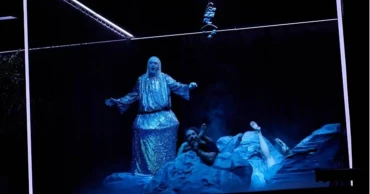
A Kyiv theatre reimagines Homer’s Odyssey through the pain of Ukraine war
The pain of war — death, captivity, long waits and the longing to return home — has taken centre stage in Kyiv through a new adaptation of Homer’s ancient epic The Odyssey.
The play, titled “Odysseus, Maeotis,” is set to premiere in the Ukrainian capital, retelling the story of the legendary Greek hero through the experiences of Ukrainians living through Russia’s war.
The production features professional actors alongside active-duty Ukrainian soldiers, including serviceman Daniil Mireshkin, who plays Odysseus.
Mireshkin said the combination of ancient mythology and modern war allows the production to explore the importance of returning home — whether it is soldiers returning to civilian life, occupied territories returning to Ukraine, or Ukrainians reconnecting with their national identity.
The premiere has been delayed several times because of repeated Russian attacks on Kyiv.
Staged at the Ivan Franko National Academic Drama Theater, the production presents a dark and disturbing vision of war. The mythical monsters from Homer’s story, including the Cyclops and the sirens, have been replaced with buzzing drones and robotic war machines.
The story follows two parallel journeys — Odysseus’ difficult path home and the painful wait of his wife Penelope.
Director Ivan Uryvskyi said the play was written from scratch, with only the central idea of Odysseus’ return home taken from Homer’s original epic.
The title also refers to Maeotis, the ancient Greek name for the Sea of Azov. The sea borders Mariupol, the Ukrainian port city captured by Russia after a devastating siege in 2022.
The play draws on the experiences of defenders of Mariupol from the Azov brigade, now part of Ukraine’s 1st Corps Azov under the National Guard.
Mireshkin and playwright Oleksii Dorychevskyi are members of the corps. Dorychevskyi spent a year interviewing former prisoners of war while developing the production. According to the corps, about 600 Azov servicemen remain among thousands of Ukrainians held in Russian captivity.
For actress Daryna Leheida, who plays Penelope, the character reflects the experiences of countless Ukrainian women waiting for their loved ones to return from the war.
She said the story is about women who continue to wait, hope and believe, even as they struggle with feelings of helplessness and despair. It also reflects occupied Ukrainian land, children and families waiting for reunion, and the heavy emotional toll of war.
6 days ago

Prince Harry, Meghan return to UK for fresh start after six years in US
Prince Harry and his wife Meghan arrived in the United Kingdom on Wednesday, marking a fresh start in Britain after spending more than six years in the United States, British media reported.
Their return came less than a week after the couple surprised the public with plans to move back to Britain.
The BBC and Daily Telegraph reported that Harry and Meghan arrived at Birmingham International Airport around noon. Flight-tracking websites showed a private charter flight from Van Nuys, California, landing at the airport at 11:56 a.m.
Their children, Prince Archie, 7, and Princess Lilibet, 5, have already been enrolled in British schools and are expected to begin classes in September.
The family plans to live at a private residence outside London. However, they have not disclosed the exact location.
Harry and Meghan stepped back from their royal duties and moved to California more than six years ago, where they pursued commercial deals, including major contracts with Netflix and Spotify.
Their relationship with the royal family soon became strained. The couple accused palace staff of failing to properly support Meghan over her mental health and also alleged racism and media manipulation within the royal establishment.
Harry has recently shown interest in repairing ties with his family so he can spend more time with his father, King Charles III, who is undergoing treatment for an undisclosed type of cancer.
However, his relationship with his elder brother, Prince William, the heir to the British throne, remains strained.
8 days ago
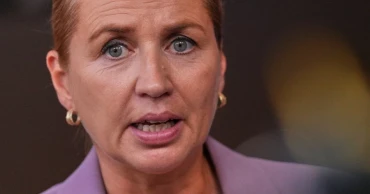
Denmark PM responds sharply to plastic surgeon’s Instagram message
Danish Prime Minister Mette Frederiksen has hit back at unsolicited comments about her appearance after a plastic surgeon offered her advice on Instagram.
The 48-year-old prime minister said Monday that she had just returned home from Ukraine, where she heard air raid sirens amid the ongoing war, when she received a message from a plastic surgeon offering to “fix that little spot” on her nose.
Frederiksen said she had received countless comments about her appearance over the years, including remarks about her teeth, thin hair and a mark on her nose, along with suggestions that she should get Botox.
She shared a screenshot of the surgeon’s message on Instagram but did not reveal his identity.
She also posted her response, saying she was happy with her body and did not need a male plastic surgeon to comment on it.
Frederiksen, a Social Democrat and Denmark’s second female prime minister, has led the country since 2019 and is serving her third term.
She has taken a firm position against US President Donald Trump’s ambitions for Greenland, a semiautonomous territory of the Kingdom of Denmark, and has continued to support Ukraine in its war with Russia.
In her Instagram post, Frederiksen said she does not comment on other people’s looks and is comfortable with her body as she approaches 50.
“If you’re going to write to me, I hope you’ll use your time to talk about something more meaningful. Not my nose,” she said.
She added that such unsolicited beauty advice made her feel “indignant” and sent her support to people who deal with pressure over their appearance and the “perfect imperfections” everyone has.
9 days ago

Buc-ee's faces Ohio backlash over beaver logo trademark lawsuit
Texas-based convenience store chain Buc-ee's is facing growing criticism in Ohio after suing a small mini mart in Beavercreek over its beaver logo.
The lawsuit has sparked an online backlash, calls for a boycott and even support from comedian John Oliver, who highlighted Buc-ee's history of defending its trademark against businesses using animal-themed logos.
Buc-ee's sued Beaver's Mini Mart in federal court in Ohio in late July, arguing that the shop's beaver logo is too similar to its well-known Buc-ee, or "Bucky," mascot. The company is seeking a jury trial.
The dispute began about four months after Buc-ee's opened its first Ohio location near Dayton. The 74,000-square-foot store has more than 100 fuel pumps, 24 electric vehicle chargers and 700 parking spaces.
Buc-ee's says it has a responsibility to protect its trademark. The company said it first became aware of Beaver's Mini Mart after owner Vic Boparai registered the business name in October. The store, originally known as Hanes Road Carryout, changed its name to Beaver's Mini Mart in January 2025.
According to Buc-ee's, it repeatedly tried to contact Boparai about the alleged trademark conflict but was unable to reach him, leaving the company with no option but to file a lawsuit.
Boparai thanked supporters but did not directly respond to Buc-ee's allegations.
"We want to say thank you to the community and the entire country for supporting us and our business," he said.
The dispute has attracted widespread support for the small business. Customers have criticized Buc-ee's for taking legal action against a much smaller store.
"I love Buc-ee's, but I don't plan on going back until they start making better business decisions," said Austin Collins, a 32-year-old project manager from Fairborn, during a visit to Beaver's Mini Mart to protest the lawsuit.
Beavercreek backs its beaverThe Beavercreek City Council joined the response by unanimously passing a resolution on Aug. 10 recognizing the beaver as an official and permanent part of the city's more than 200-year history.
Social media users have also mocked the dispute, with one image showing Ohio State University's Brutus Buckeye mascot tackling Buc-ee's beaver.
A GoFundMe campaign created to help Beaver's Mini Mart cover its legal costs had raised at least $69,000. Local businesses have also offered support by selling beaver-themed cookies and donating part of the proceeds toward the store's legal expenses.
Several Dayton-area businesses, including a Lego store and a root beer shop, temporarily changed their logos to include beavers in solidarity with the mini mart.
Ohio Gov. Mike DeWine, who attended the opening of the Dayton-area Buc-ee's store in April, also criticized the lawsuit.
"It is Beavercreek, for heaven's sake," DeWine told reporters, calling the legal action "absurd."
10 days ago
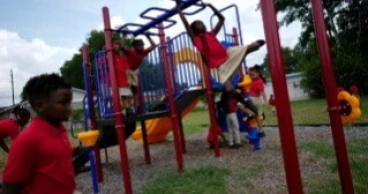
How parents can help children make friends at a new school
For children starting at a new school, the first day can bring many worries: Will they know anyone? Who will they sit with at lunch? Who will they play with during breaks?
“I’m this much nervous,” said 5-year-old Iman Fair-Seldon, holding her hands about 10 centimetres apart. Iman will begin first grade next month at a new school in southern New Jersey, near Philadelphia. Despite feeling nervous, she is excited about making new friends.
Starting at a new school or moving from elementary to middle school can be difficult for children. Parents often want to help but may not know the best way. Experts and students who have experienced such changes offer some simple advice.
Arrange playdates and attend partiesParents have a strong influence on young children's social lives, experts say. Taking children to parks, playgrounds, birthday parties and other activities can give them chances to meet others. Parents can also decide when their children are ready for activities such as sleepovers.
“Initially, parents have a huge impact when it comes to the friends that children have,” said Dr Asha Barber Sutton, a licensed marriage and family therapist and associate dean of academic affairs at National University in San Diego.
Iman’s mother, Amira Fair, said she normally prefers to keep to herself but makes an effort to help her daughter build friendships.
“I make it my business to exchange numbers and try to schedule monthly playdates,” she said. She also attended birthday parties at Iman’s previous school to meet other parents and families.
Let children build their own friendshipsParents cannot choose or manage every friendship their children have. Instead, they can help children understand what makes a good friend, such as kindness, honesty and being able to feel comfortable around someone.
Difficult experiences can also teach children how to deal with disagreements and what qualities they value in friends, Sutton said.
Parents can ask questions such as: What do you like about your friends? Who makes you feel comfortable being yourself?
Fourteen-year-old Jaiden Journet, who is starting at a new high school in North Carolina, suggested parents ask their children whether they have found anything in common with another student.
Encourage children to get involvedJoining clubs, sports teams and other activities can help children meet classmates who share their interests. Parents can encourage shy or nervous children to try something new.
Shia Watts, 16, said joining a theater production at Notre Dame High School in Sherman Oaks, California, helped her make new friends.
“I’d never done that before, but I met so many amazing people,” she said.
When Jamir Gonzalez transferred to Uncommon Camden Prep High School in New Jersey last year, he joined the baseball and debate teams.
“If you have any hobbies, find out if they have that at your school, and if they do, talk to the people that are there,” said Jamir, now 16.
Once children find an opportunity to connect, experts say they can start with a smile, a compliment or a simple question.
Iman remembers meeting her best friend after complimenting her shirt.
“I think I said, ‘I like your shirt,’ and then she said, ‘Thank you.’ And I said, ‘So what’s your name?’” she recalled.
Encourage some screen-free timePhones, headphones and other devices can sometimes make it harder for students to start conversations. Parents can encourage children, especially teenagers, to put their devices away at certain times and interact with people around them.
Some teachers and experts also suggest parents avoid constantly texting their children while they are at school.
However, parents should avoid imposing overly strict technology rules on older children because this could make them feel socially isolated, Sutton said. Families should instead discuss reasonable limits on phones, social media and gaming and talk about who children interact with online.
Technology can also help children maintain friendships when they move away. Video calls, for example, allow children to stay in touch with old friends.
One good friendship can be enoughHaving a sense of belonging at school can make an important difference to a child’s well-being. According to the Centers for Disease Control and Prevention, students who feel supported by school staff and classmates are less likely to experience poor mental health, substance use or violence. They are also more likely to have better attendance and grades.
But children do not need a large group of friends to feel connected.
“Even if you only have one really strong friendship or one strong trusted adult, one strong sense of belonging, that can be enough to really positively affect your well-being and your trajectory through school and life,” said Nicole Hockley, co-founder and CEO of Sandy Hook Promise, a nonprofit focused on preventing gun violence in schools.
For children who are nervous about starting at a new school, Hockley said it may help to remember that other students are likely looking for friends, too.
“There’s also someone else just like you in that same space who’s also saying, ‘I would like to meet someone. I’d like to make a friend,’” she said.
Starting a conversation may feel difficult at first, but with practice, making new friends can become much easier.
12 days ago

Yellow school buses evolve as US education and transport needs change
For generations, the yellow school bus has been a familiar sight across the United States. Although early school buses came in different colors, the distinctive yellow shade eventually became the national standard because it was easy to see on the road.
The color was not chosen by Congress. In 1939, transportation officials from all 48 US states selected the yellow shade, which has a slight orange tone, as an early safety measure. At their peak in the 1980s, yellow school buses carried more than 60% of US students to school.
The school bus has its roots in rural America. In Georgia, car dealer Albert Luce designed a metal bus to transport cement workers. When his company rejected the idea, he began marketing the vehicle to schools.
The timing was right. School districts were replacing small, one-room schools with larger schools located farther away, creating a growing need for school transportation.
“I don’t think you could’ve had one without the other,” said Matt Anderson, head transportation curator at the Henry Ford Museum of American Innovation in Dearborn, Michigan, which houses Luce’s 1927 bus.
School buses later played an important role in desegregating US schools by carrying Black and white children across racial boundaries. However, the practice of using buses for desegregation has largely ended, and many US schools have since become more segregated.
Carl Fisher spent 66 years driving school buses before retiring in 2012 at the age of 86. The Guinness Book of World Records recognized him as the longest-serving school bus driver.
His first bus was a modified Dodge truck that carried about 20 children in Pleasant Hope, Missouri. A family friend converted the vehicle by adding benches, stools and windows.
Over the years, features such as padded seats and folding stop signs became standard, along with other safety improvements.
Brad Beauchamp of electric bus maker Blue Bird said school buses remain among the safest forms of road transportation per passenger and mile, even without seat belts.
Today, however, driver shortages and other challenges mean many students no longer have access to a yellow school bus. This has put additional pressure on families to find other ways to get their children to school.
Jim Oppegard, who drove school buses for more than two decades in Brooklyn Park, a Minneapolis suburb, retired at 94 as the oldest recorded school bus driver.
He said the job was rewarding because it allowed him to help children and contribute to the wider community.
“You’re helping the kids and helping the overall society,” Oppegard said. “You’re doing an important job.”
12 days ago
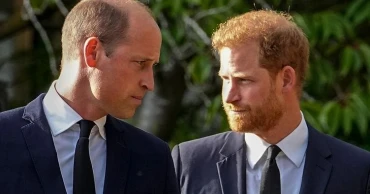
Harry’s UK return raises questions over ties with Prince William
Prince Harry and his wife Meghan are preparing to return to the United Kingdom from California within weeks, raising questions about whether Harry can repair his strained relationship with his elder brother, Prince William.
The couple have already enrolled their children, Prince Archie, 7, and Princess Lilibet, 5, in British schools for the autumn term.
The unexpected decision has sparked debate over where the family will live, who will cover their security costs and whether Harry and Meghan could ever return to royal duties.
The biggest challenge, however, may be Harry’s relationship with William, heir to the throne. Their ties have deteriorated following Harry and Meghan’s public criticism of the royal family, including allegations of mistreatment by palace staff, racism and problems within the monarchy.
Royal experts also say there could be concerns about Harry and Meghan drawing attention away from William and his wife, Catherine, when they are again in Britain.
Craig Prescott, an expert on the UK constitution and monarchy at Royal Holloway University of London, said the palace would have to consider how the couple’s return could affect the work of the royal family.
Harry wants his children to grow up BritishHarry and Meghan are expected to live in a private home outside London and will not resume their royal duties, which they gave up after moving to California six years ago, British media reported.
Their return comes as King Charles III, Harry’s 77-year-old father, continues cancer treatment. Harry has previously spoken about wanting his children to spend more time with their grandfather.
Royal historian Ed Owens said several recent developments may have paved the way for the family’s return. Harry has spoken about reconciliation, while he, Meghan and their children reportedly had a positive meeting with Charles at his Highgrove estate in western England last month.
Harry has also said he wants his children to grow up British. Owens noted that the UK may also appear safer to the family amid growing divisions in US society.
Royal experts expect Charles to forgive HarryOwens said he expects Charles to forgive his younger son, partly because of his position as supreme governor of the Church of England and the Christian value placed on forgiveness.
He said William may find it harder to forgive Harry, although he could eventually do so publicly.
“Privately William never fully forgives his younger brother” may be possible, Owens told The Associated Press, but traditional Christian values could encourage a public reconciliation.
Charles was informed about Harry and Meghan’s plans on Sunday. The issue was not discussed during their recent UK visit.
Relations remain strainedHarry and Meghan’s relationship with the royal family has been tense since they stepped down from royal duties and moved to California in 2020 to become financially independent.
The rift grew after the couple gave a series of interviews and Harry published his memoir, “Spare.” They said they left Britain because of the pressures of royal life and accused palace officials of failing to support Meghan’s mental health.
They also alleged that a member of the royal family had made a racist comment about their unborn child. Meghan has described herself as biracial.
In a widely watched 2021 interview with Oprah Winfrey, Harry said the reasons for leaving Britain were “lack of support and lack of understanding.”
Security and legal disputes remainHarry’s tensions with the UK media have also added to the difficulties. He has been involved in a long-running legal battle with British tabloid publishers, accusing them of illegally accessing his phone and invading his privacy.
Harry and other plaintiffs lost a lawsuit against the publisher of the Daily Mail last month, leaving them facing potentially millions of pounds in legal costs. Associated Newspapers has said its costs were 34.5 million pounds ($47 million).
Harry has also challenged a UK government decision not to provide him and his family with police protection whenever they visit Britain.
Prime Minister Andy Burnham said Thursday that the couple’s security arrangements were a private matter for Harry and Meghan.
Harry lost his legal challenge over the security decision in May 2025. At the time, he said he hoped to reconcile with his family but remained critical of those in Britain whom he believed had mistreated him and Meghan.
Royal historian Owens said the focus could now shift from the family’s disputes to efforts to rebuild their relationships.
“Time is a great healer,” he said, suggesting that reconciliation between Harry and his father could eventually lead to a possible reconciliation between the two brothers.
13 days ago