Foreign-Affairs
Saudi vice minister in Dhaka on two-day official visit
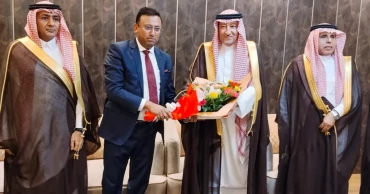
Vice Minister for Foreign Affairs of the Kingdom of Saudi Arabia Eng. Waleed Elkhereji arrived in Dhaka on Monday.
Foreign Affairs Adviser to the Prime Minister, Humaiun Kobir, received him at Hazrat Shahjalal International Airport.
The Saudi vice minister is on a two-day official visit to Bangladesh.
He is scheduled to leave Bangladesh on Tuesday afternoon.
7 hours ago
US Embassy reminds visa applicants to prove financial self-sufficiency
The US Embassy in Dhaka has reminded prospective travellers to the United States to demonstrate that they have sufficient financial means to support themselves during their stay and are unlikely to become dependent on public assistance.
In a nonimmigrant visa reminder posted on its official Facebook page on Monday, the embassy advised visa applicants to come prepared for their visa interviews with evidence showing they can cover their travel expenses, including any unexpected travel disruptions or medical emergencies.
"If you're planning travel to the United States, make sure you have the financial means to pay your own way—including any travel disruptions or medical emergencies that could arise," it said.
The embassy also urged applicants to bring proof to their visa interviews demonstrating that they are unlikely to become a public charge after being admitted to the United States.
It warned that abusing US taxpayer-funded public benefits could have long-term immigration consequences. "Abusing U.S. taxpayer-funded benefits may have permanent consequences that make you ineligible to travel, study, or work in the United States in the future," it said.
9 hours ago
FM seeks greater regular migration opportunities in Australia
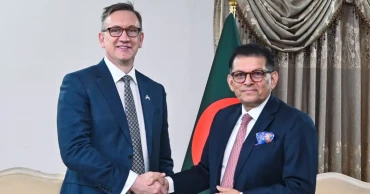
Foreign Minister Dr Khalilur Rahman on Monday highlighted the importance of expanding regular migration opportunities for Bangladeshi nationals to Australia.
During his meeting with Australia's Assistant Minister for Citizenship, Customs and Multicultural Affairs and Assistant Minister for International Education Julian Hill, he sought Australia's continued cooperation in combating irregular migration and human trafficking.
They underscored the importance of strengthening collaboration between Australian and Bangladeshi universities through joint academic programmes and institutional partnerships.
During the meeting, the Australian Minister commended the growing Bangladeshi community in Australia for its valuable contributions to the country's economy and multicultural society.
10 hours ago

Any engagement with US to be considered on basis of national interest: Shama Obaed
State Minister for Foreign Affairs Shama Obaed Islam on Monday said Bangladesh views the US proposal on civil nuclear cooperation positively, stressing that any engagement with Washington will be considered if it serves the interests of the people of Bangladesh.
She said the government's approach remains “positive”, and any bilateral agreement with the United States will be considered based on Bangladesh's national interest.
While responding to a question at the Ministry of Foreign Affairs, Shama Obaed said the government would move forward with any agreement that benefits the people of Bangladesh, contributes to the country's economy, and helps deepen bilateral relations.
However, if any proposed agreement is found to be against the interests of the people, the government will reconsider it, she added.
10 hours ago
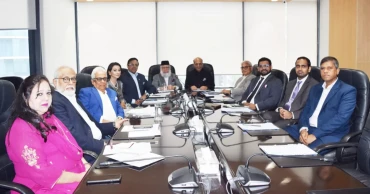
Dhaka, Delhi possess all ingredients to emerge as global economic powerhouse: Dinesh Trivedi
Indian High Commissioner to Bangladesh Dinesh Trivedi on Monday said Bangladesh and India possess all the ingredients necessary to emerge as a global economic powerhouse.
During a meeting with the leaders of International Chamber of Commerce-Bangladesh (ICC Bangladesh) at its Secretariat, he observed that both countries have exceptional strengths in innovation, education, healthcare and human capital, and stressed that these advantages should be translated into stronger economic cooperation and sustainable development.
The High Commissioner said many longstanding bilateral issues could be resolved through sustained engagement and dialogue at the highest political level.
He emphasised the indispensable role of the private sector in driving economic growth, investment and employment, noting that businesses are the foundation of a stable and prosperous economy.
The Indian envoy also highlighted the significant opportunities for establishing joint venture industries in border areas, which could strengthen regional value chain, attract investment and create employment.
Reaffirming the High Commission's commitment to supporting the business community, he encouraged Bangladeshi entrepreneurs and investors to approach the High Commission whenever they encounter challenges in expanding bilateral trade and investment.
At the meeting, both sides exchanged views on strengthening bilateral trade, investment and regional economic cooperation.
Welcoming the High Commissioner, ICC Bangladesh President Mahbubur Rahman highlighted the longstanding friendship and growing economic partnership between Bangladesh and India.
He underscored the importance of stronger private sector engagement to unlock the full potential of bilateral cooperation and promote sustainable economic growth.
Bangladesh and India continue to enjoy largest trading relationships in South Asia. Bilateral merchandise trade reached approximately US$11.39 billion in FY2024–25, with Bangladesh exporting goods worth US$1.76 billion to India and importing US$9.62 billion.
The ICC Bangladesh President emphasised the importance of improving market access for Bangladeshi products, reducing non-tariff barriers, harmonising standards, simplifying customs procedures and concluding the proposed Comprehensive Economic Partnership Agreement (CEPA) at the earliest opportunity to reduce the trade gap.
The meeting also discussed opportunities to deepen cooperation in investment, regional value chain, multimodal connectivity, renewable energy, cross-border power trade, digital commerce, fintech, artificial intelligence, climate finance, sustainable manufacturing, healthcare, education and skills development.
ICC Bangladesh President further highlighted the importance of revitalising regional cooperation through SAARC, expediting implementation of the Bangladesh-Bhutan-India-Nepal (BBIN) Motor Vehicles Agreement, and advancing practical cooperation under BIMSTEC to enhance connectivity, reduce logistics costs and strengthen regional supply chains.
Rahman reiterated the importance of resolving the anti-dumping measures affecting Bangladeshi exports, particularly jute and jute products, and called for continued dialogue to ensure fair and transparent trade remedies.
During the interactive discussion, ICC Bangladesh Vice-President Naser Ejaz Bijoy emphasised the importance of facilitating business travel and called for further improvement in the issuance of business visas to strengthen commercial engagement between the two countries.
ICC Bangladesh Executive Board Member Simeen Rahman highlighted the vast opportunities for expanding bilateral cooperation in trade, business, healthcare, medical services and tourism.
She noted that India is home to many globally recognised companies and institutions, creating significant potential for enhanced partnerships and greater people-to-people and business-to-business collaboration.
ICC Bangladesh Executive Board Member Abdul Hai Sarker expressed his optimism that many of the longstanding unresolved bilateral trade and business issues could be addressed during the tenure of the new High Commissioner, paving the way for stronger economic cooperation between the two neighbouring countries.
Speaking on behalf of the business community, ICC Bangladesh reaffirmed its commitment to promoting stronger business-to-business cooperation through joint business councils, CEO forums, SME collaboration, startup exchanges, investment missions and technology partnerships.
The ICC Bangladesh President expressed its commitment to working closely with the High Commission of India and ICC India, under the aegis of the Federation of Indian Chambers of Commerce and Industry (FICCI), to further strengthen economic collaboration and promote a more prosperous, sustainable and mutually beneficial future for both Bangladesh and India.
The Meeting was also attended by ICCB Executive Board Member Tapan, Chowdhury, Pawan Kumar Badhe, Deputy High Commissioner of India to Bangladesh, Gourab Kumar Agarwal, Second Secretary (Economic & Commerce) High Commission of India to Bangladesh, ICCB Secretary General Ataur Rahman, General Manager Ajay Bihari Saha & Deputy General Manager Syeda Shahnewaz Lotika.
11 hours ago
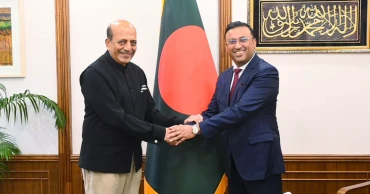
Dhaka seeks Delhi’s cooperation to stop Hasina’s political activities from its soil
Ahead of former prime minister Sheikh Hasina’s reported August 5 programme, Bangladesh on Monday conveyed to India that Dhaka expects New Delhi’s cooperation in ensuring that any person, including fugitive Hasina, cannot use Indian territory to make political statements or conduct any activities aimed at creating instability within Bangladesh.
Prime Minister's Foreign Affairs Adviser Humaiun Kobir conveyed the message when newly appointed Indian High Commissioner to Bangladesh Dinesh Trivedi met him at the Prime Minister's Office in Tejgaon, according to the Ministry of Foreign Affairs.
Adviser Kobir mentioned that such activities could harm the positive progress of bilateral relations between the two countries.
The Indian High Commissioner assured that the matter would be duly considered, necessary inquiries would be made, and efforts would be made in this regard.
12 hours ago

India can clear its position on Hasina's planned online programme: Shama Obaed
State Minister for Foreign Affairs Shama Obaed Islam on Monday said Bangladesh is pursuing a forward-looking approach in its engagement with New Delhi and that the Indian government will have to clear whether it supports the planned online meeting of former Prime Minister Sheikh Hasina.
“We are moving forward with India with a forward-looking approach. We don't want it to be damaged, and I firmly believe that India doesn't want it either. So, India has to clear whether it is supporting it or not,” she told reporters at the Ministry of Foreign Affairs when a reporter wanted to know about Hasina’s planned virtual programme in New Delhi, scheduled for August 5.
Hasina will be arrested whenever she comes to Bangladesh: Shama Obaed
The State Minister referred to the recent meeting with Indian High Commissioner to Bangladesh Dinesh Trivedi and said they want the Bangladesh-India relationship to improve. “You saw that we had a very cordial meeting with the new High Commissioner who came here. We had a lot of good discussions.”
Indian media reported that Hasina is set to make her first public appearance in India exactly two years after she fled the country following a massive student-led protest.
According to multiple media reports, Hasina will attend a virtual event hosted by the Foreign Correspondents' Club of South Asia (FCC South Asia) in New Delhi.
“We want relations with India to improve. I believe India also wants that," said the State Minister.
Responding to a separate question, she said Bangladesh could communicate with the Indian government if it considers it necessary over the reported event in India on August 5 involving Hasina, while stressing that Dhaka does not want the issue to undermine bilateral relations.
The State Minister, however, said the reported programme is not being organised by the Indian government and Dhaka would decide on any diplomatic communication if circumstances required.
"If we think it is necessary, the government will contact the relevant foreign ministry," she said.
Asked whether Bangladesh would formally protest or seek an explanation from New Delhi before the reported event, Shama Obaed said the Indian government is not organising the programme.
Referring to Hasina and other Awami League leaders staying abroad, the State Minister said Bangladesh has repeatedly conveyed its position to India that fugitives or convicted individuals should not use Indian soil for political activities aimed at destabilising Bangladesh.
She said the issue has been raised both verbally and in writing during bilateral engagements.
Shama Obaed also referred to recent remarks by the Indian government, saying New Delhi had indicated it did not expect a fugitive accused to make political statements from Indian territory.
She said political activities by fugitives from India that sought to create instability in Bangladesh could negatively affect bilateral relations.
"It can. But we don't want that," she said when asked whether such programmes could damage ties between the two neighbours.
On Bangladesh's broader foreign policy, Shama Obaed said the country would maintain balanced relations with all partners based on its national interests.
"Bangladesh is an independent and sovereign country," she said. "We will maintain relations with everyone while protecting Bangladesh's interests."
Shama Obaed said Dhaka would continue to engage with India, China and other countries in areas including trade, investment and bilateral cooperation.
Asked about an invitation to Prime Minister Tarique Rahman to attend the BRICS Summit in September, she indicated that no decision had yet been made.
"Time will tell.... I can’t tell you now," she said, adding that the Prime Minister would decide on overseas visits at an appropriate time.
The State Minister mentioned two separate invitations extended to the Prime Minister in February and the recent one, and said the Prime Minister is spending 24 hours a day on Bangladesh's affairs. “So, time will tell when, how and in which country he will take a decision.”
India, which is going to host the 18th BRICS Summit in New Delhi on September 12-13, last month invited Prime Minister Tarique Rahman to attend the important event, which will focus on global cooperation, trade and sustainable development.
Inviting his Bangladesh counterpart and his family to visit India, Indian Prime Minister Narendra Modi in February said Bangladesh and India can truly become catalysts for each other's sustainable growth, work for each other's security, and enable mutual prosperity as two fast-growing economies and aspiring societies.
“I look forward to working closely with you to strengthen our multifaceted bilateral relations, enhance regional cooperation, and advance our common goals in wide-ranging areas of connectivity, trade, technology, education, skill development, energy, healthcare, as well as cultural and people-to-people exchanges,” he said in a letter that was handed over to Prime Minister Tarique in February this year.
13 hours ago
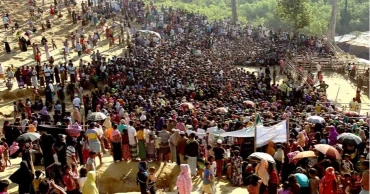
Australia commits AUD 25.25m to sustain life-saving support for Rohingyas
The Government of Australia and the UN Refugee Agency (UNHCR) on Monday announced a contribution of AUD 25.25 million to sustain life-saving assistance and protection for Rohingya refugees in Bangladesh.
This flexible, multi-year funding, part of Australia's 2026-28 humanitarian assistance package, will help ensure the continuation of essential services for one of the world's most vulnerable refugee populations and their host communities, according to a media statement.
Foreign Minister Khalilur Rahman and Australia's Assistant Minister for Citizenship, Customs and Multicultural Affairs, and Assistant Minister for International Education Julian Hill were present during the announcement.
It will enable UNHCR and partners to maintain key services across the camps, including protection activities, skills development programmes, and disaster risk reduction measures for refugees living in highly fragile and disaster-prone environments, said the statement.
“Australia continues to respond to the most significant humanitarian crises in our region, making our region safer, more stable and resilient” said Assistant Minister Julian Hill. “Australia remains committed to supporting the humanitarian needs of Rohingya in Myanmar and Bangladesh. Displaced Rohingya want to return home, but the conditions in Myanmar need to be in place for their voluntary, safe, dignified and sustainable return. These can only be met by addressing the root cause of the crisis in Myanmar.”
“Nearly nine years on, the Rohingya crisis risks fading from global attention as new emergencies emerge elsewhere,” said Juliette Murekeyisoni, UNHCR Representative in Bangladesh.
“Australia’s continued support sends a strong message that the Rohingya people have not been forgotten. Every refugee I speak to expresses the hope to return home safely, with their rights and dignity restored. Until conditions in Myanmar allow for voluntary, safe, and dignified return with full citizenship, the international community must remain steadfast in its support.”
“Australia remains committed to supporting Rohingya and their host communities in Bangladesh,” said H.E Susan Ryle, Australian High Commissioner to Bangladesh. “This latest contribution of AUD25.25 million to UNHCR will help to provide critical services to the most vulnerable, including for women, girls and people living with a disability”.
Since widespread violence and persecutions forced hundreds of thousands of refugees to seek safety in Bangladesh in 2017, around 1.2 million Rohingya refugees remain displaced there, most in overcrowded refugee camps near Cox’s Bazar.
The majority rely almost entirely on humanitarian assistance to meet their daily needs. Persistent funding gaps have deepened vulnerabilities, sometimes pushing people toward harmful coping mechanisms, including undertaking dangerous sea journeys in search of better opportunities in the region.
According to recent reports, nearly 900 Rohingya refugees went missing or died in 2025 while attempting perilous crossings in the Andaman Sea and Bay of Bengal. Australia’s ongoing assistance to Rohingya and host communities will help promote safer and sustainable coping mechanisms by supporting access to protection and essential services.
Funding shortages continue to disproportionately impact the most vulnerable, including women and girls, persons with disabilities, and older people. Since 2024, an estimated 150,000 new arrivals have joined the camps, many still lacking adequate shelter and access to basic services such as clean cooking fuel.
After years of displacement, most Rohingya refugees remain almost entirely dependent on external assistance. While meeting immediate needs is essential, expanding access to education and skills development is equally crucial for building resilience and preparing refugees for a future beyond displacement.
15 hours ago

Political unity, social stability need to be addressed in Bangladesh’s governance journey: China
Chinese Ambassador to Bangladesh Yao Wen on Monday said challenges such as maintaining "political unity and social stability" under complex circumstances, breaking through the bottleneck of a single-industry structure, and creating a more favorable external environment are important issues that need to be addressed in Bangladesh’s governance journey.
Speaking at a joint training programme, he said Prime Minister Tarique Rahman’s people-centered, pragmatic, and efficient governing style has brought a fresh look to national governance.
The Bangladesh Institute of International and Strategic Studies (BIISS) hosted the joint training programme titled "2026 Comparative Governance Forum" at the BIISS Auditorium.
Prime Minister's Foreign Affairs Adviser Humaiun Kobir spoke as the chief guest while Vice-President of Fudan University Prof Chen Zhimin attended the opening ceremony of the joint training programme as special guest.
17 hours ago
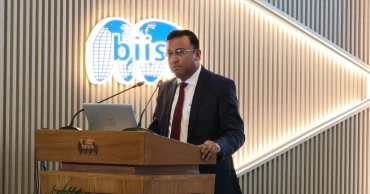
Bangladesh's strategic location provides significant opportunities to strengthen regional connectivity: PM’s Adviser
Emphasising the growing importance of regional connectivity, Prime Minister's Foreign Affairs Adviser Humaiun Kobir on Monday said investments in transport infrastructure, aviation and digital networks are key drivers of economic growth and stronger people-to-people contacts.
"Bangladesh's strategic location provides significant opportunities to strengthen regional connectivity and expand cooperation in trade, tourism, investment and cultural exchanges," he said, noting that Bangladesh welcome greater collaboration with China and other international partners in advancing sustainable infrastructure, aviation, tourism and innovation for the benefit of the peoples.
The Adviser stressed that future prosperity will depend not only on economic success but also on the quality of institutions, social resilience and international cooperation.
The Bangladesh Institute of International and Strategic Studies (BIISS) hosted the joint training programme titled "2026 Comparative Governance Forum" at the BIISS Auditorium.
Vice-President of Fudan University Prof Chen Zhimin and Chinese Ambassador to Bangladesh Yao Wen attended the opening ceremony of the joint training programme as special guests. Director General of BIISS Major General Ridwanur Rahman also spoke.
"The countries of the Global South are becoming increasingly influential in shaping global governance and sustainable development," Kobir said while speaking as the chief guest.
He said Bangladesh believes the international system must be more inclusive, rules-based and responsive to the aspirations of all nations. "We support multilateralism, peaceful dialogue and international cooperation as the most effective means of addressing common global challenges."
The Adviser said lasting progress is achieved when nations invest in knowledge, trust and partnerships built on mutual respect.
"Economic growth creates prosperity, but wisdom, cooperation and mutual understanding are what ultimately secure peace and sustainable development," he said.
The Adviser underscored the importance of deepening Bangladesh-China cooperation through knowledge sharing, dialogue and mutual learning, saying stronger partnerships are essential to addressing increasingly complex global challenges.
He said the initiative reflects the shared commitment of both countries to strengthening academic and institutional cooperation.
"I would like to acknowledge the valuable support of the Embassy of the People's Republic of China and all our partner institutions. This forum reflects our shared belief that dialogue, knowledge and mutual learning remain indispensable in addressing the increasingly complex challenges of our time," he said.
The Adviser said Bangladesh has much to learn from China's development experience while also sharing its own strengths in public policy and governance.
"Comparative governance calls for a comparative perspective on the governance systems of both countries. We can learn tremendously from the People's Republic of China. At the same time, there are areas where Bangladesh has performed well, and we should continue to build on those achievements," he said.
Describing China as one of the world's most remarkable development success stories, the adviser noted that the country has lifted around 800 million people out of extreme poverty over the past four decades through sustained reforms and economic transformation.
"China is a tremendous example of development over the last four decades. It has lifted nearly 800 million people out of extreme poverty through one of the most successful poverty alleviation programmes in history and has implemented major market reforms that have transformed its economy," he said.
At the same time, Kobir said Bangladesh has earned international recognition in several important areas, particularly disaster risk reduction and climate resilience.
"Bangladesh has become internationally recognised for reducing disaster risks and protecting lives. However, climate change is a global challenge that requires global solutions. We must continue to advocate for stronger multilateral cooperation, enhanced climate finance, technology transfer and greater support for vulnerable developing countries," he said.
Expressing optimism about the programme, he said the discussions over the coming days would generate new ideas, strengthen academic and institutional cooperation and further reinforce the enduring friendship between Bangladesh and China.
Chinese Ambassador to Bangladesh Yao Wen said challenges such as maintaining "political unity and social stability" under complex circumstances, breaking through the bottleneck of a single-industry structure, and creating a more favorable external environment are important issues that need to be addressed in Bangladesh’s governance journey.
He said Prime Minister Tarique Rahman’s people-centered, pragmatic, and efficient governing style has brought a fresh look to national governance.
The envoy said President Xi Jinping emphasised that no matter how the world changes, China will not waver in its commitment to the overall direction of China-Bangladesh friendly relations, and will always be a trustworthy good friend, good neighbour or and good partner of Bangladesh.
"This historic height has laid a solid foundation for the next “Golden Fifty Years” of China-Bangladesh relations," Ambassador Yao said.
The Ambassador said both sides agreed to advance high-quality Belt and Road cooperation and further align development strategies.
"Important consensus was reached on comprehensive management of the Teesta River, modernisation and expansion of Mongla Port facilities, and advancing the China-Myanmar-Bangladesh Economic Corridor," he said.
The envoy said Bangladesh-China practical cooperation is steadily moving toward one with more optimised structure, broader scope, and at a higher level.
Exchanges on governance are an integral part of building a Bangladesh-China community with a shared future in the new era, he said.
Since taking office, Ambassador Yao said the new government has adhered to a development-oriented approach, focusing on improving people’s livelihoods.
In June, Prime Minister Tarique Rahman paid an official visit to China.
The leaders of the two countries jointly agreed to elevate their comprehensive strategic cooperative partnership to jointly build a Bangladesh-China community with a shared future in the new era.
They also agreed to strengthen exchanges on governance experience.
"The visit was a complete success and marked a milestone in bilateral relations," said Ambassador Yao.
"Building a China-Bangladesh community with a shared future in the new era signifies that our relationship has transcended existing frameworks of cooperation and ascended to a new strategic height, with mutual trust, shared interests, and solidarity," he added.
The courses cover topics including the Chinese practice of modernising the national governance system and capacity, the four major global initiatives, and the Global South.
The courses have three features - a strong emphasis on practice; a strong emphasis on the spirit of the times and a strong emphasis on mutual learning.
The Ambassador said exchanges on governance are precisely an important vehicle for Bangladesh and China to connect heart to heart.
He hoped that during this forum, each participant will learn with reflection - deeply consider the underlying logic behind Chinese Modernization, and in light of Bangladesh’s national conditions, explore a development path suited to Bangladesh.
"Learn with gains - acquire policy tools and practical methods in areas such as national governance, poverty reduction, and digital governance, contributing to Bangladesh’s economic and social development," Ambassador Yao said.
"Learn with action - translate what you have learned into concrete actions to modernize Bangladesh’s governance system and capacity, and become inheritors and builders of China-Bangladesh friendship," he said, wishing the Comparative Governance Forum a complete success.
18 hours ago