Foreign-Affairs

Dr Titumir calls for UN-led debt relief mechanism to safeguard investment in children, women
Prime Minister's Finance and Planning Adviser Dr Rashed Al Mahmud Titumir has called on the United Nations system to establish an international mechanism for debt restructuring, debt relief, debt suspension and sustainable debt solutions to help developing countries address mounting fiscal pressures arising from the Middle East crisis and other global shocks.
He said such measures are essential to enable developing countries to sustain investment in children, women, education, health, and social protection while keeping progress towards the Sustainable Development Goals (SDGs) on track.
Speaking during a meeting with UNICEF Deputy Executive Director for Humanitarian Action and Supply Operations Ted Chaiban at UNICEF House in New York on Friday, Dr. Titumir said rising energy prices, supply chain disruptions, and increasing debt burdens had significantly narrowed Bangladesh's fiscal space.
Despite these challenges, he said the government remains committed to protecting vulnerable populations and advancing its vision of a democratic human welfare state under the 'Bangladesh First' philosophy, according to the Bangladesh Permanent Mission in New York.
State Minister for Planning Zonayed Saki also attended the meeting.
The Adviser highlighted the government’s commitment to a universal life-cycle-based social security system placing women at the centre of development.
He said the Family Card initiative would support women-led households and provide assistance across different stages of life, including pregnancy, childhood, education, disability and old age.
Zonayed Saki stressed the importance of reliable and integrated data systems and outlined the government’s proposed “One Child, One Card, One Number and One Wallet” strategy to improve birth registration, school enrolment and access to public services.
17 days ago
Hasina's Extradition: Delhi says Dhaka's request being examined
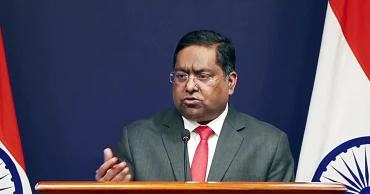
India on Friday reiterated that Bangladesh’s extradition request for former Prime Minister Sheikh Hasina is being taken into consideration, given the legalities and judicial processes involved.
"We have received a request for extradition. This request, as we have said earlier as well, is under examination, and the request is being taken into consideration, given the legalities that are involved and the judicial processes....," Spokesperson at the Indian Ministry of External Affairs Randhir Jaiswal told reporters in New Delhi during a regular media briefing.
Regarding the return of Hasina, State Minister for Foreign Affairs Shama Obaid Islam on Thursday said the Indian government needs to demonstrate political and diplomatic will and all kinds of goodwill.
Shama Obaed said former Prime Minister Sheikh Hasina, currently staying in India, would be arrested whenever she comes to Bangladesh.
"Since she has been convicted, there is no scope for surrender. Whenever she comes to Bangladesh, she will be arrested. It will be done in accordance with the law," she told reporters at the Ministry of Foreign Affairs, noting that efforts are continuing to secure her extradition to Bangladesh.
The State Minister said the people of Bangladesh want court orders to be implemented against those living abroad. She said the Law Adviser and the Home Adviser had already explained the legal aspects.
Bangladesh has formally requested India to extradite Hasina under the bilateral extradition treaty.
Bangladesh is making sustained diplomatic efforts to bring Hasina back to face trial while acknowledging that the extradition process takes time.
Three ministries, including the Ministry of Foreign Affairs, have been pursuing the matter since the new government assumed office in February, building on efforts initiated under the interim government.
The government believes the people of Bangladesh want Hasina to be extradited.
On April 8, Bangladesh renewed its request for the extradition of Hasina and former Home Minister Asaduzzaman Khan Kamal, both of whom have been sentenced to death by the International Crimes Tribunal.
"We will continue to seek her extradition through a transparent judicial process. It has been discussed and will be dealt with through a transparent judicial process," Prime Minister's Foreign Affairs Adviser Humaiun Kobir told reporters in Dhaka.
17 days ago
Telecom Minister attends World Artificial Intelligence Conference in Shanghai
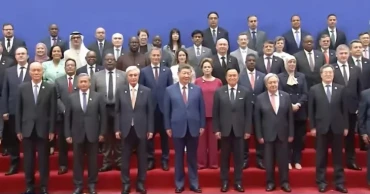
Minister for Posts, Telecommunications and Information Technology and Science and Technology, Faqir Mahbub Anam, is participating in the World Artificial Intelligence Conference (WAIC) 2026, being held in Shanghai, China, from 17 to 20 July 2026.
The four-day global conference was inaugurated today by President Xi Jinping of the People's Republic of China.
During the conference, Minister Faqir Mahbub Anam is scheduled to participate in high-level sessions, bilateral meetings, and discussions with global technology leaders and policymakers, said a PID handout.
He will highlight Bangladesh's progress in digital transformation, AI-driven innovation, smart governance, and human resource development, while exploring opportunities for enhanced international cooperation in artificial intelligence, advanced technologies, research, investment, and capacity building.
Bangladesh's participation in WAIC 2026 reflects the Government's commitment to leveraging artificial intelligence and emerging technologies to build a knowledge-based, innovation-driven, and digitally empowered nation.
The conference has brought together heads of government, policymakers, technology leaders, researchers, innovators, and representatives from leading global technology companies to discuss the future of artificial intelligence, emerging technologies, AI governance, innovation, digital transformation, and sustainable development.
17 days ago
Legendary singer Rafi's timeless classics unite mankind beyond geographical borders: Dinesh Trivedi
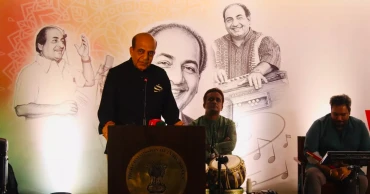
The Indira Gandhi Cultural Centre (IGCC) of the High Commission of India in Dhaka organised a musical evening on Thursday to commemorate the death anniversary of legendary Indian playback singer Mohammed Rafi, whose timeless melodies continue to resonate across generations and transcend national boundaries.
The programme featured popular Indian vocalist Priyangbada Banerjee and Bangladeshi singer Md. Rashed Uddin, who paid tribute to Rafi with a selection of his iconic songs.
Their performances reflected the enduring popularity of Rafi's music in both Bangladesh and India, where his melodies continue to occupy a cherished place in the cultural memory of audiences.
17 days ago

Poised to combat new, emerging threats together, says Ajit Doval seeking solutions through discussions
Noting that BIMSTEC brings together the most significant and vibrant regions of the Indian Ocean, Indian National Security Advisor (NSA) Ajit Doval has said there is an urgent need for them to collaborate, take decisive actions for their mutual benefit, and find solutions through mutual discussions and deliberations to the problems that they are all facing.
"We are poised to combat new and emerging threats together," he said, stressing that they have advanced and strengthened cooperation in fighting terrorism, combating transnational organised crime, cyber threats, meeting maritime challenges.
NSA Ajit Doval made the remarks while chairing the 5th meeting of the BIMSTEC National Security Chiefs in New Delhi on Thursday.
Prime Minister’s Defence Adviser Brig. Gen. (Retd.) Dr AKM Shamsul Islam represented Bangladesh at the meeting.
17 days ago

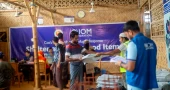
IOM scales up flood response in Bangladesh, calls for sustained international support
The International Organization for Migration (IOM) has stepped up emergency relief operations in Bangladesh as weeks of intense rainfall, flooding and landslides have triggered one of the country's worst monsoon disasters this year, affecting more than 10 lakh people across 10 districts.
As humanitarian needs continue to rise, the UN migration agency is expanding life-saving assistance for flood-hit communities, including Rohingya refugees and their Bangladeshi hosts, while urging sustained international support to strengthen resilience against increasingly frequent climate-related disasters, according to an IOM press release.
Death toll from floods, landslides rises to 57
More than 10 lakh people have been affected across 10 districts, including over 52,000 Rohingya refugees and more than 13,000 persons with disabilities, the organisation said.
According to the government, 57 people have died, and many others have been affected across the country.
“Families have lost homes, livelihoods and loved ones. This emergency underscores the growing human cost of climate-related disasters and the urgent need to strengthen resilience before disasters strike,” said IOM Regional Director for Asia and the Pacific Iori Kato.
“IOM is working closely with the government of Bangladesh and humanitarian partners to deliver life-saving assistance, support recovery and help communities prepare for increasingly frequent and intense climate shocks,” he said.
17 days ago
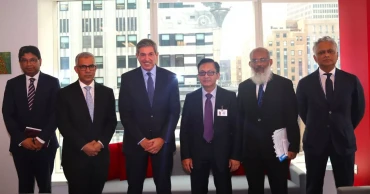
EU and G77 express support for Bangladesh's smooth LDC graduation
The European Union (EU) and the Group of 77 and China (G77) have reaffirmed their support for Bangladesh's efforts to ensure a smooth, sustainable and irreversible graduation from the Least Developed Country (LDC) category.
The assurances came during separate meetings at United Nations Headquarters between Commerce Minister Khandakar Abdul Muktadir and Head of the European Union Delegation to the United Nations Ambassador Stavros Lambrinidis, and Chair of the Group of 77 and China and Permanent Representative of Uruguay to the United Nations Ambassador Laura Dupuy Lasserre.
Bangladesh apparel exports to EU slump 19% in Jan-May
The Commerce Minister explained the rationale behind Bangladesh's request for a three-year extension of the LDC graduation preparatory period, citing the country's ongoing economic and political transition, global economic uncertainties, energy challenges and the need to consolidate wide-ranging structural reforms, according to Bangladesh Permanent Mission to UN.
He reaffirmed the government’s commitment to strengthening governance, improving the financial sector, expanding infrastructure, enhancing domestic resource mobilisation and creating a more investment-friendly business environment.
17 days ago
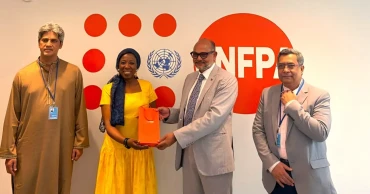
UNFPA pledges to champion Bangladesh’s demographic resilience, people-centred development agenda
UNFPA Executive Director Diene Keita has pledged to champion Bangladesh’s development initiatives globally, praising the country’s political commitment to demographic resilience, women’s empowerment, universal healthcare and inclusive social security system.
The commitment came during a meeting with a Bangladesh delegation led by Adviser to the Prime Minister on Finance and Planning Dr. Rashed Al Mahmud Titumir at UNFPA Headquarters in New York on July 16.
UNFPA, CU convene event series on adolescent wellbeing
State Minister for Planning Zonayed Saki and Member of General Economics Division Dr. Monzur Hossain also attended the meeting.
Dr. Titumir outlined the Government’s priorities, including a universal life-cycle-based social security system centred on women, the Family Card initiative, investment in education and health, youth skills and employment, healthy ageing, credible population data and stronger primary healthcare.
Dr. Titumir also underlined that Bangladesh continues to host more than 1.2 million Rohingya refugees on humanitarian grounds, placing significant economic, environmental, and security pressures on the country.
He called for greater UNFPA engagement to support the early repatriation of the Rohingya to Myanmar and to help ensure that, upon their return, they can live in safety and dignity, enjoy their rights and access sustainable livelihood opportunities.
Dr. Titumir said Bangladesh's large youth population offers a unique demographic dividend while emphasising the need to prepare for a longevity dividend as the population ages.
State Minister Zonayed Saki said the government aims to build an integrated primary healthcare system that reaches every citizen, with particular focus on mothers, children, and underserved communities.
He also sought closer cooperation in strengthening Bangladesh's national statistical system, aligning UNFPA's next Country Programme with the Government's Five-Year Strategic Framework and documenting Bangladesh's development experience as a global best practice.
USG Keita reaffirmed UNFPA's commitment to supporting Bangladesh on demographic resilience, reproductive health, youth development, healthy ageing, population data, and innovative financing.
She said Bangladesh's experience demonstrates how strong political leadership and national ownership can accelerate progress towards the Sustainable Development Goals and pledged that UNFPA would continue promoting the country's achievements internationally.
17 days ago
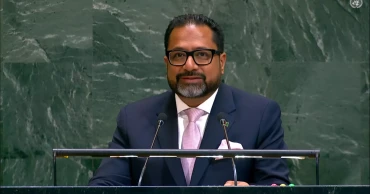
Dhaka reaffirms commitment to inclusive, climate-resilient urbanisation
State Minister for Housing and Public Works Ahammad Sohel Monzoor has reaffirmed Bangladesh's commitment to inclusive, affordable, climate-resilient, and sustainable urban development, highlighting planned urbanisation, affordable housing, and balanced regional development as key priorities of the government's national development strategy.
Addressing the high-level meeting on the Midterm Review of the New Urban Agenda at United Nations Headquarters on July 16, he said Bangladesh views urbanisation as a powerful driver of economic growth, social inclusion and climate resilience.
The State Minister said under Prime Minister Tarique Rahman's ‘Bangladesh First’ principle, the government is advancing coordinated spatial planning, expanding access to affordable housing, strengthening local governance and improving urban infrastructure in line with the New Urban Agenda and the Sustainable Development Goals (SDGs).
He underlined Bangladesh's forward-looking urban development agenda, which focuses on integrated spatial planning, digital land management, innovative urban financing, balanced regional development, and climate-responsive urban infrastructure.
Reaffirming Bangladesh's commitment to international cooperation, the State Minister called for stronger global partnerships, technology transfer, capacity-building, and innovative financing to accelerate sustainable urbanization.
He stressed the need to build cities that leave no one and no place behind.
17 days ago
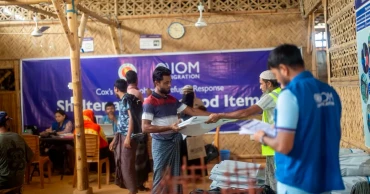
IOM, UNHCR deeply concerned by reports of maritime incidents off Myanmar coast; over 500 feared dead
The International Organization for Migration (IOM) and UNHCR, the UN Refugee Agency, are deeply concerned by reports that two boats carrying more than 500 people may have capsized off the coast of Myanmar in recent days.
According to preliminary information, the two vessels departed from Myanmar’s Rakhine State in late June carrying mostly Rohingya passengers, reportedly including some who had travelled from refugee camps in Cox’s Bazar, Bangladesh.
One boat, believed to have been carrying around 250 people, lost contact shortly after departure.
A second boat, reportedly carrying some 280 people, is believed to have sunk off Myanmar’s Ayeyarwady coast on 8 July.
While the incidents and casualty figures have yet to be officially confirmed, UNHCR and IOM are gravely concerned by the potentially devastating loss of life.
These journeys took place outside the regular sailing season, when maritime conditions are typically more hazardous. Recent torrential rain and flooding across the region have further increased the risks associated with such sea movements.
If verified, this tragedy would add to the nearly 300 people reported to be missing or to have lost their lives in the Andaman Sea and Bay of Bengal so far this year, including Rohingya refugees and Bangladeshi nationals.
These reports underscore the devastating impact of protracted conflict and displacement, as well as the continued lack of sustainable solutions for Rohingya communities. Escalating conflict and a worsening humanitarian situation in Myanmar, along with limited assistance and opportunities in refugee camps in Bangladesh, contribute to increasing numbers of people attempting perilous sea journeys in search of safety and protection.
The reported incidents also highlight the persistent risks posed by smuggling and trafficking networks, which continue to exploit the desperation of people seeking safety.
Stronger regional and international efforts are needed to prevent further loss of life along one of the world's deadliest maritime routes, including through enhanced search and rescue efforts, access to asylum and protection, and actions against smuggling and trafficking networks.
While recognizing Bangladesh’s remarkable generosity in hosting Rohingya refugees for many years, UNHCR and IOM call for sustained international support for Rohingya refugees and the communities hosting them, alongside greater efforts to address the underlying drivers of forced displacement.
UNHCR and IOM are working with national authorities to strengthen protection and solutions for refugees, migrants, and stateless people moving along key routes, including in South and South-East Asia. This “route-based approach” aims to save lives, protect people and reduce harm, and support States in effectively managing mixed movements.
18 days ago